
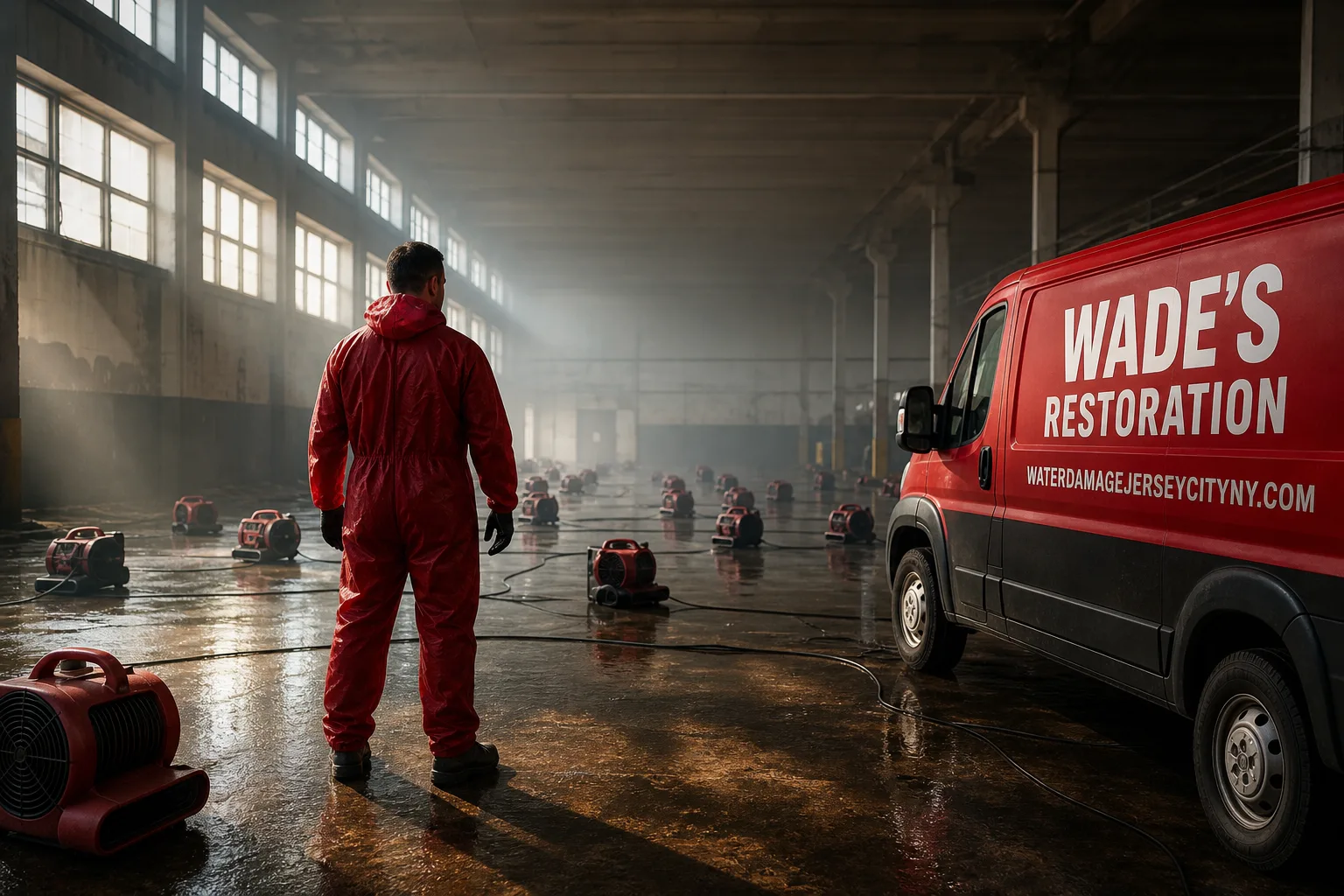
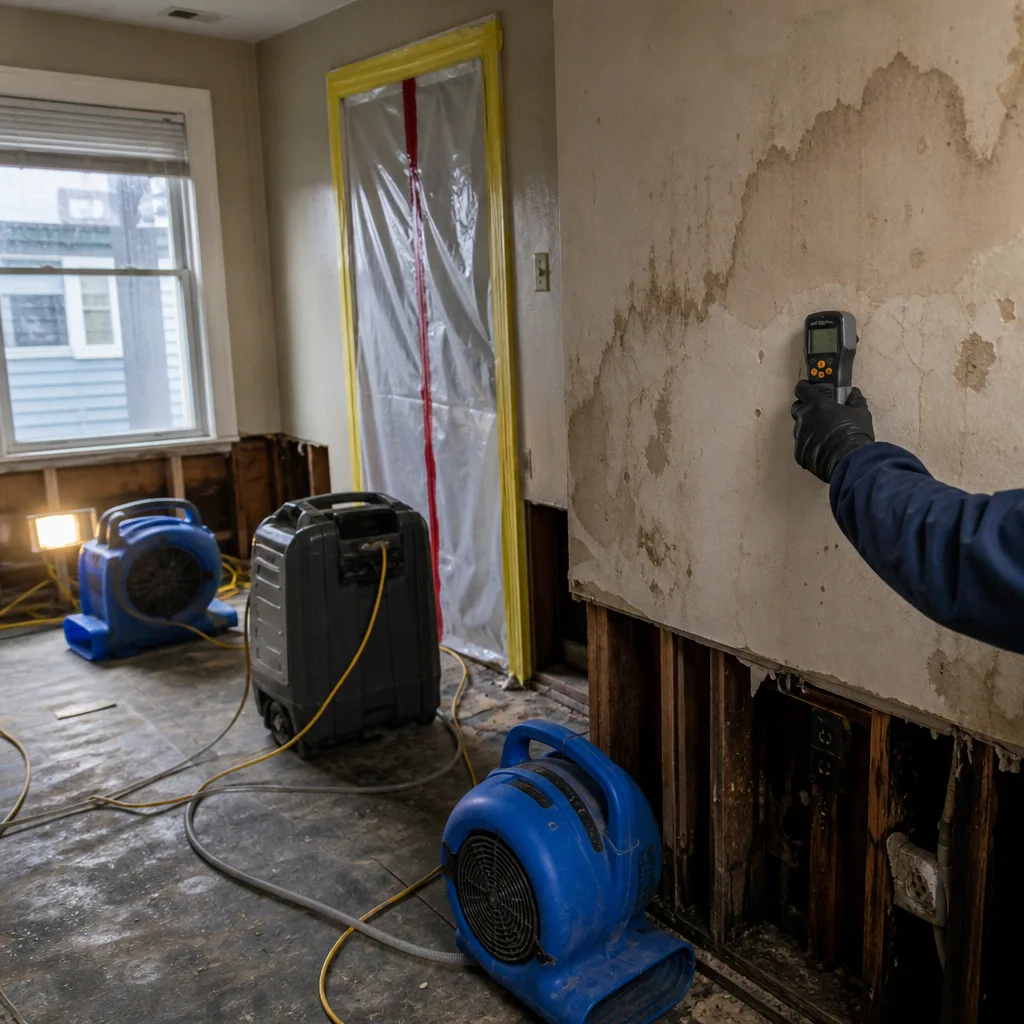
Free visual inspection and a written scope of work before any mitigation begins - photos, moisture readings, and drying logs go in your claim file
The scope we write is the scope we bill. Anything new gets shown to you, in writing, before we touch it.
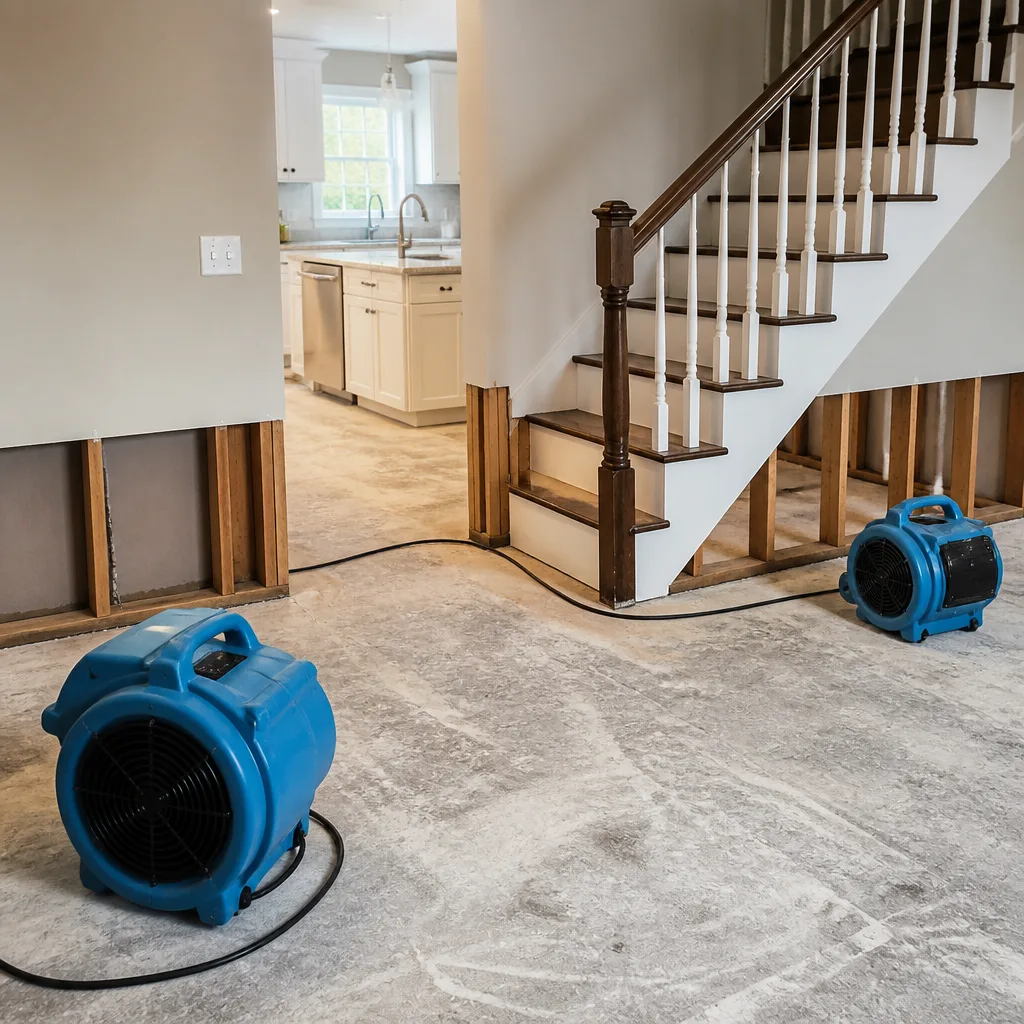
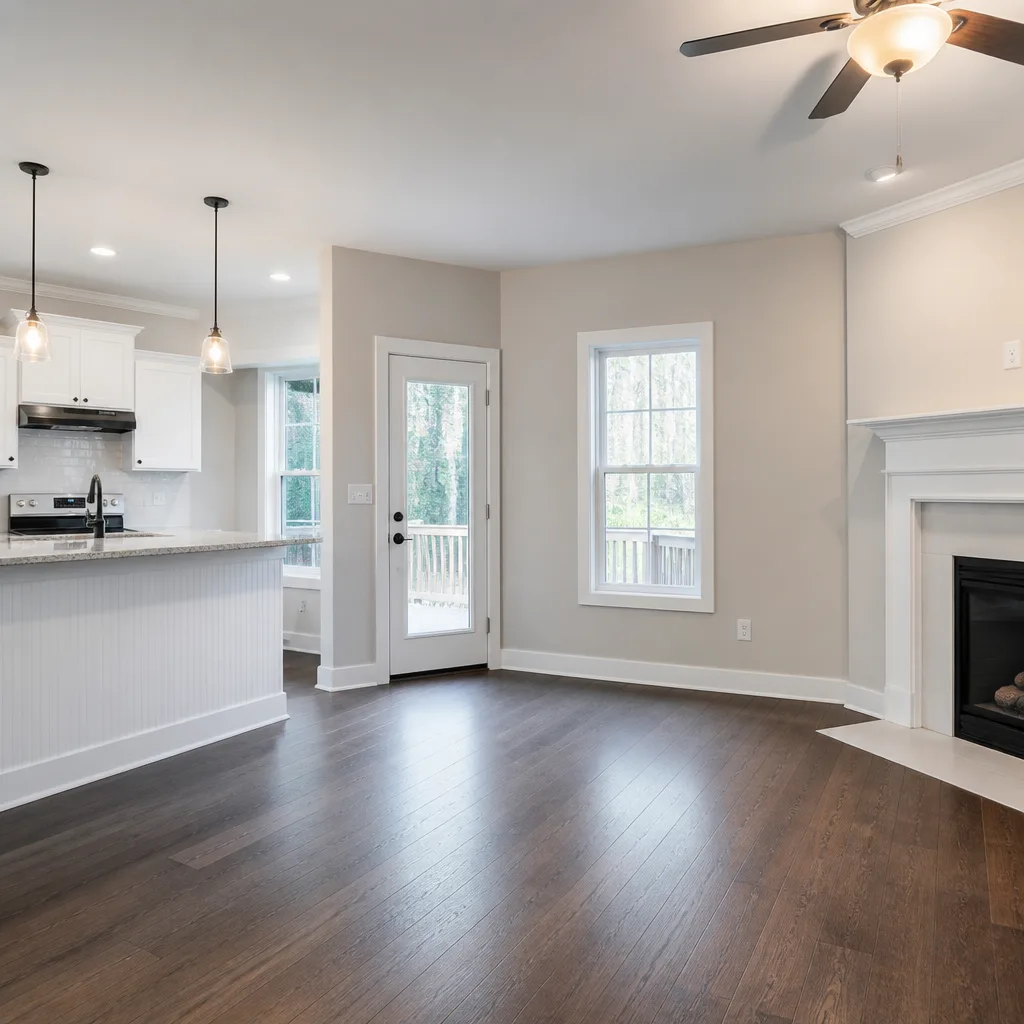
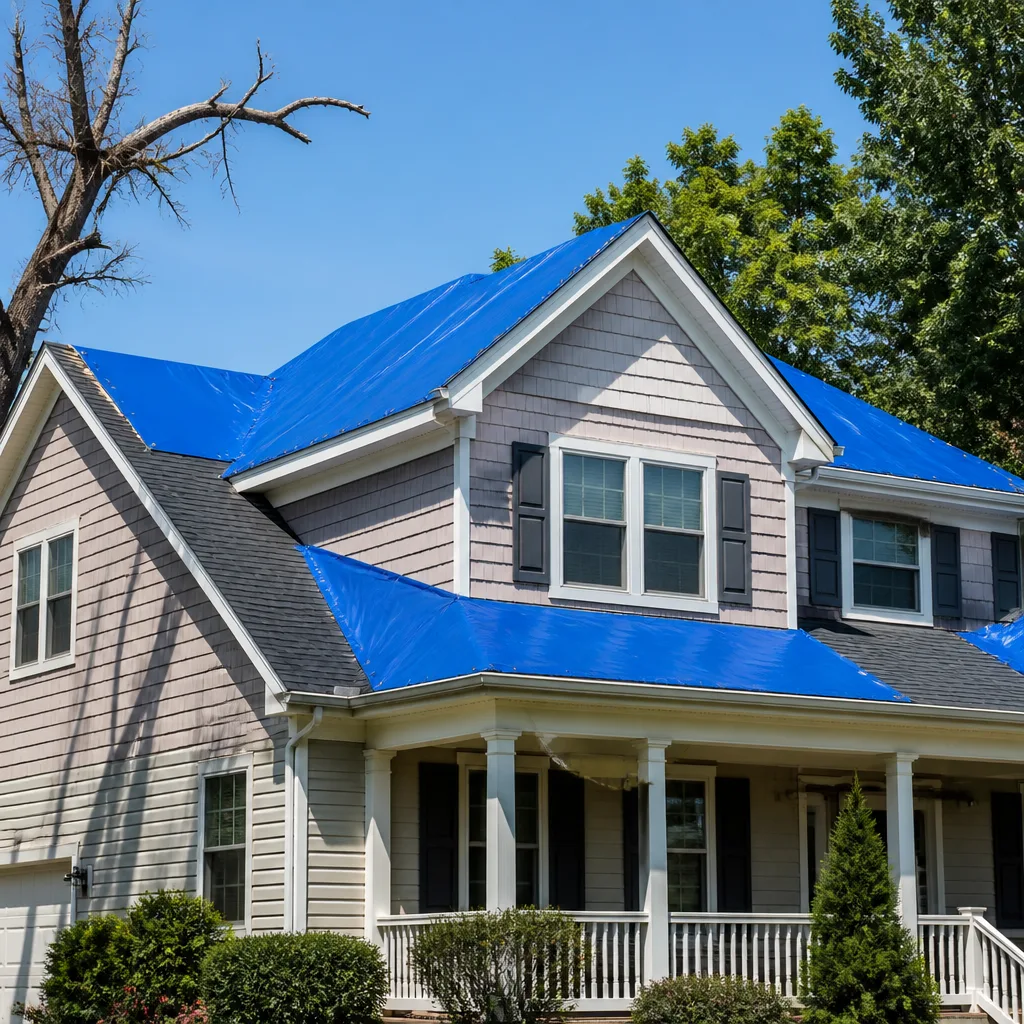
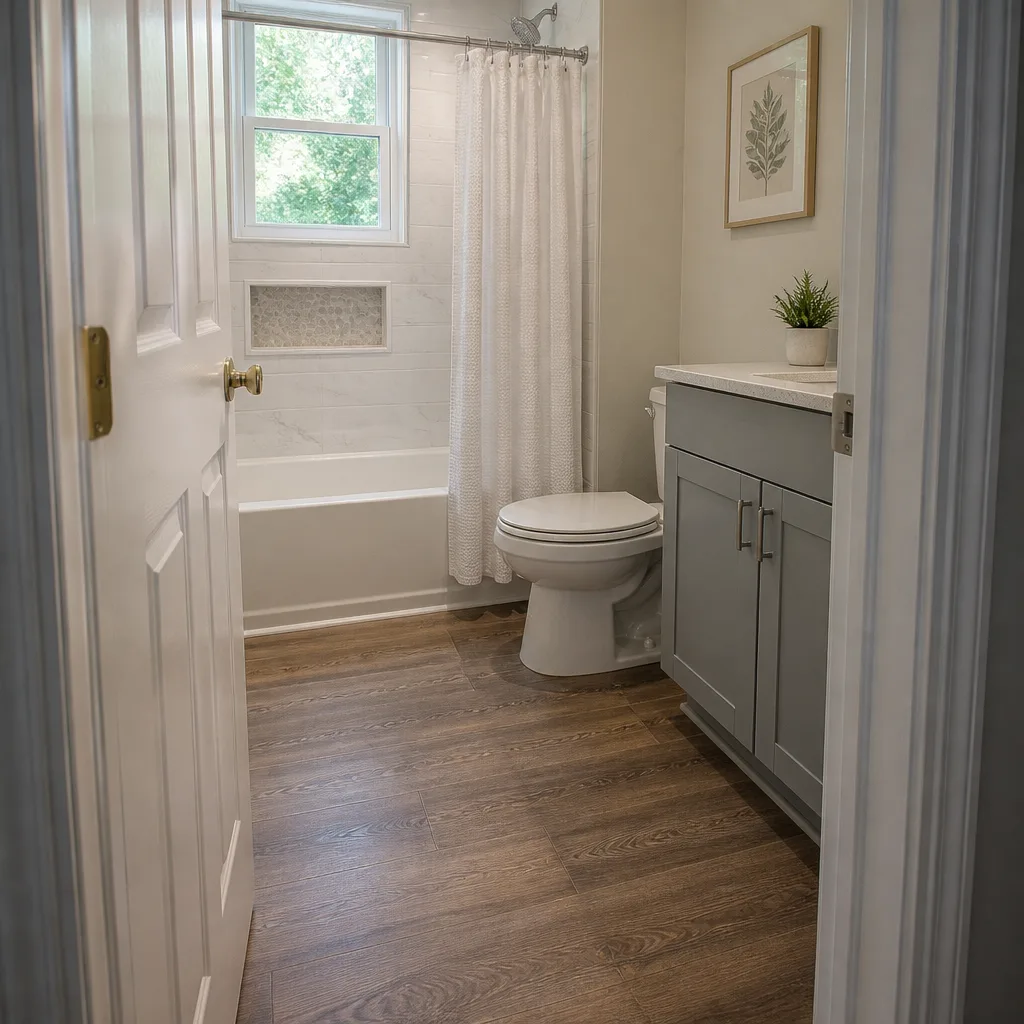
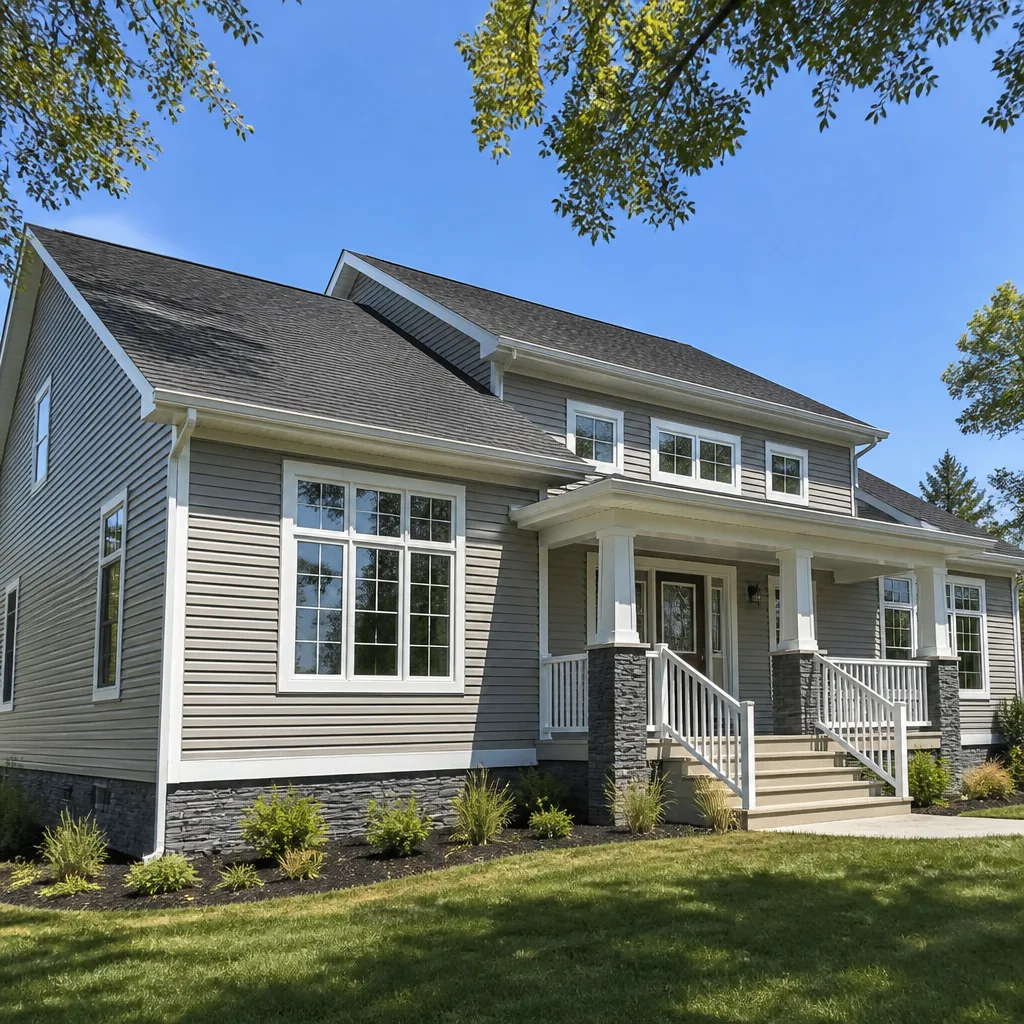
 Before
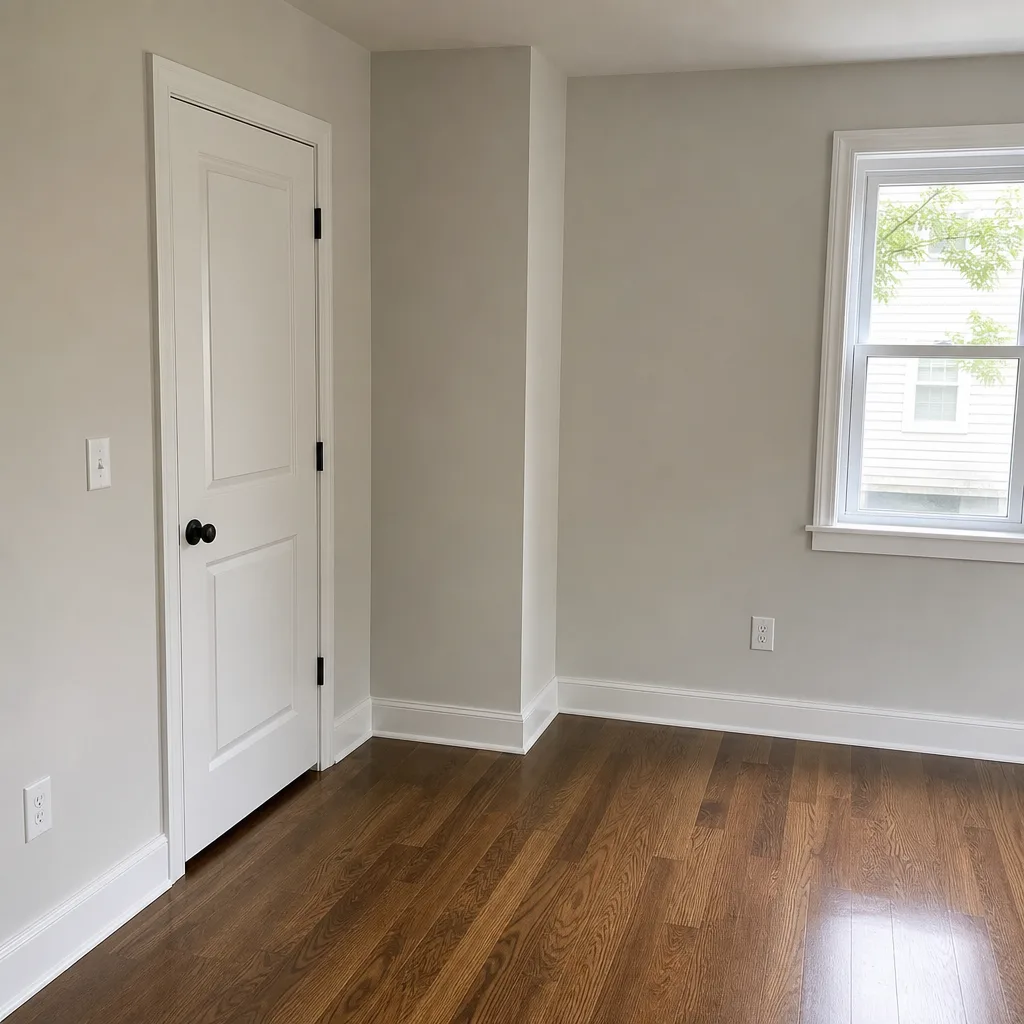 After
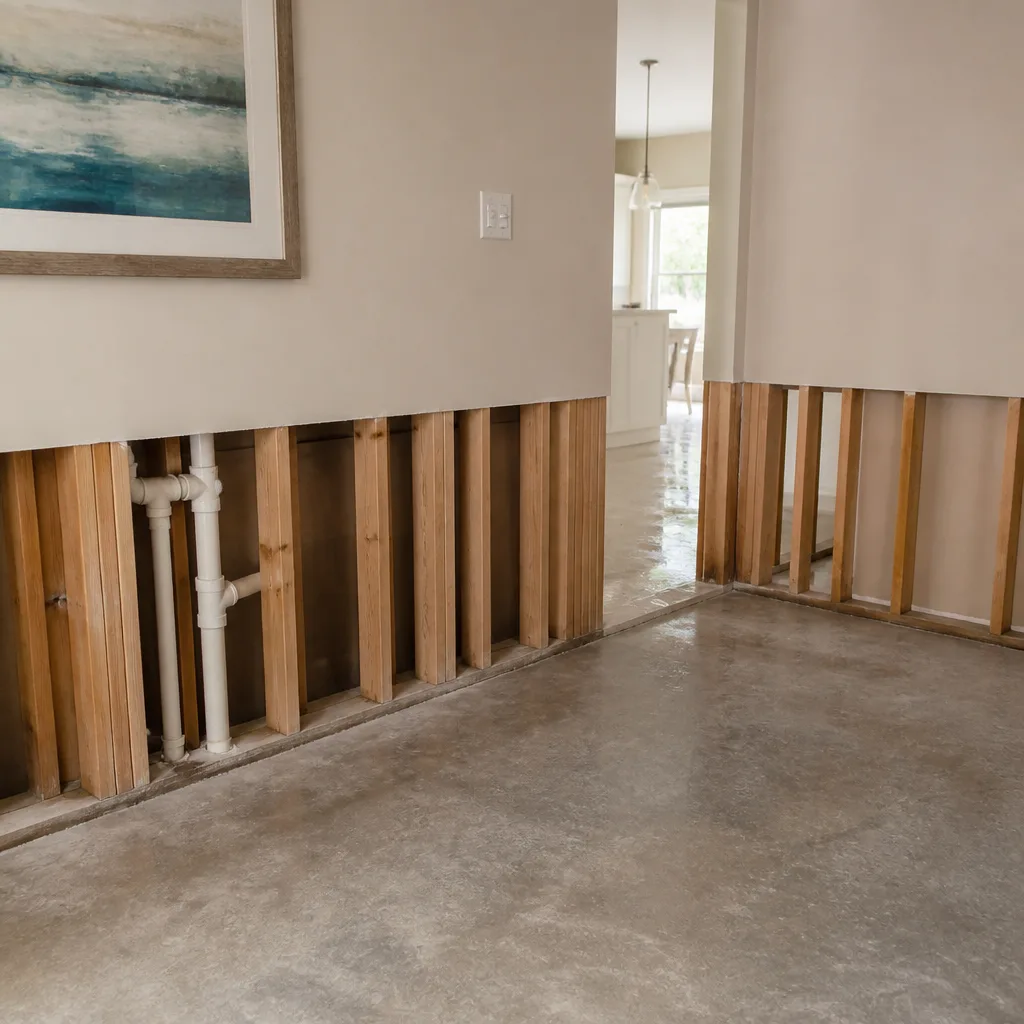
After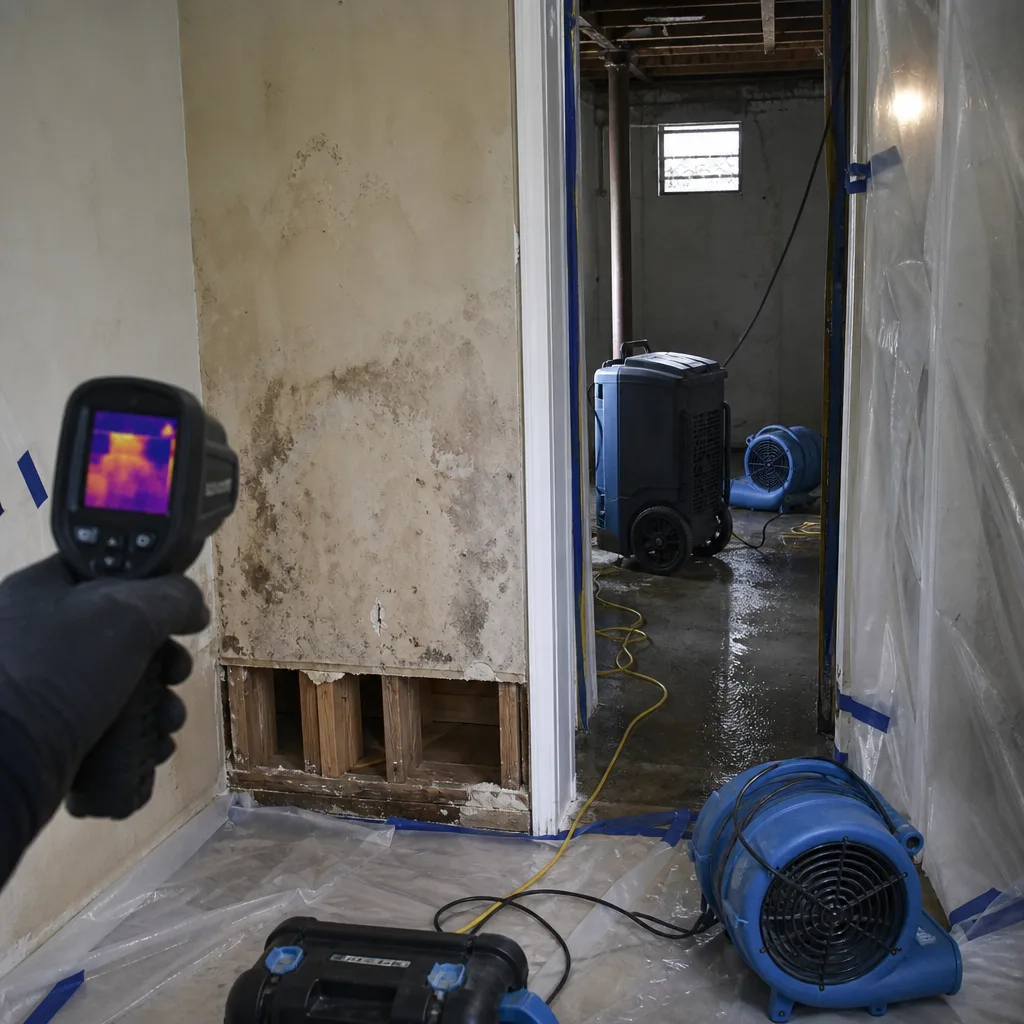 Before
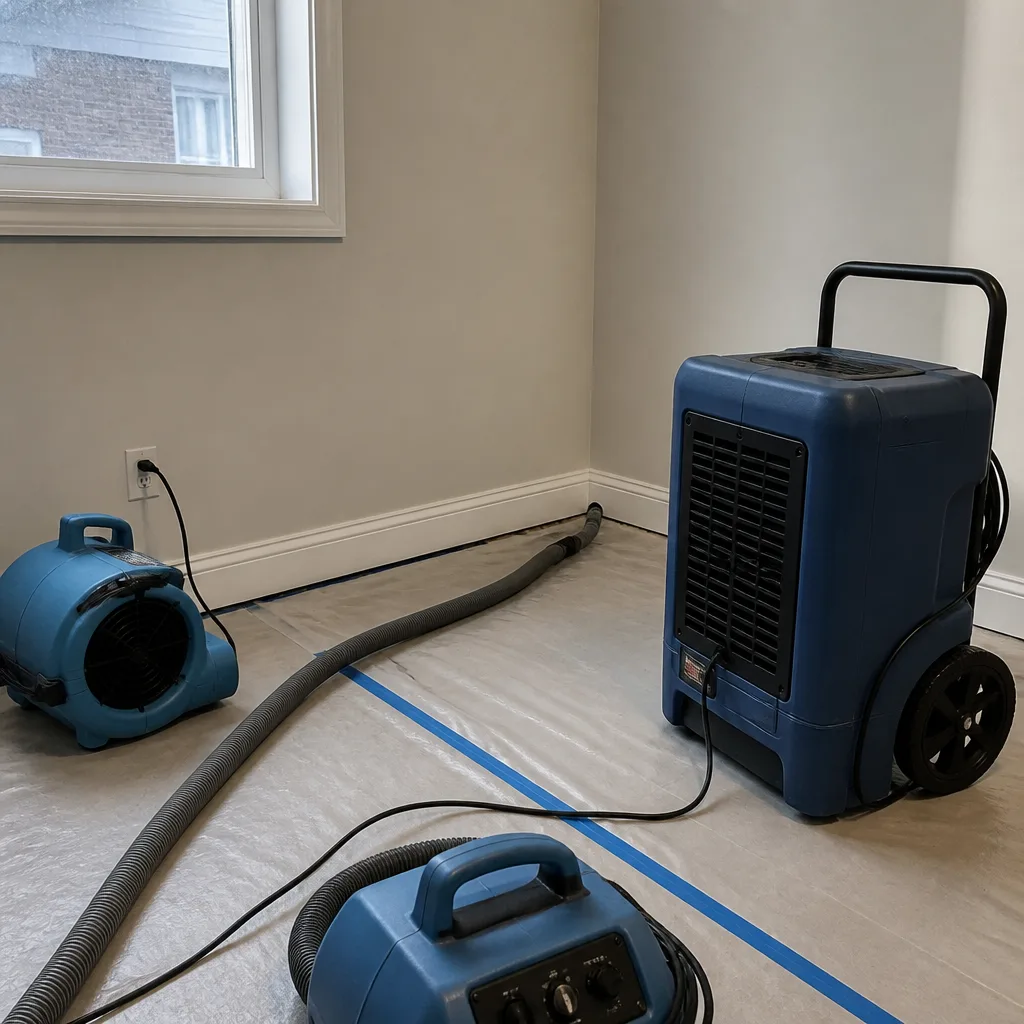 After
After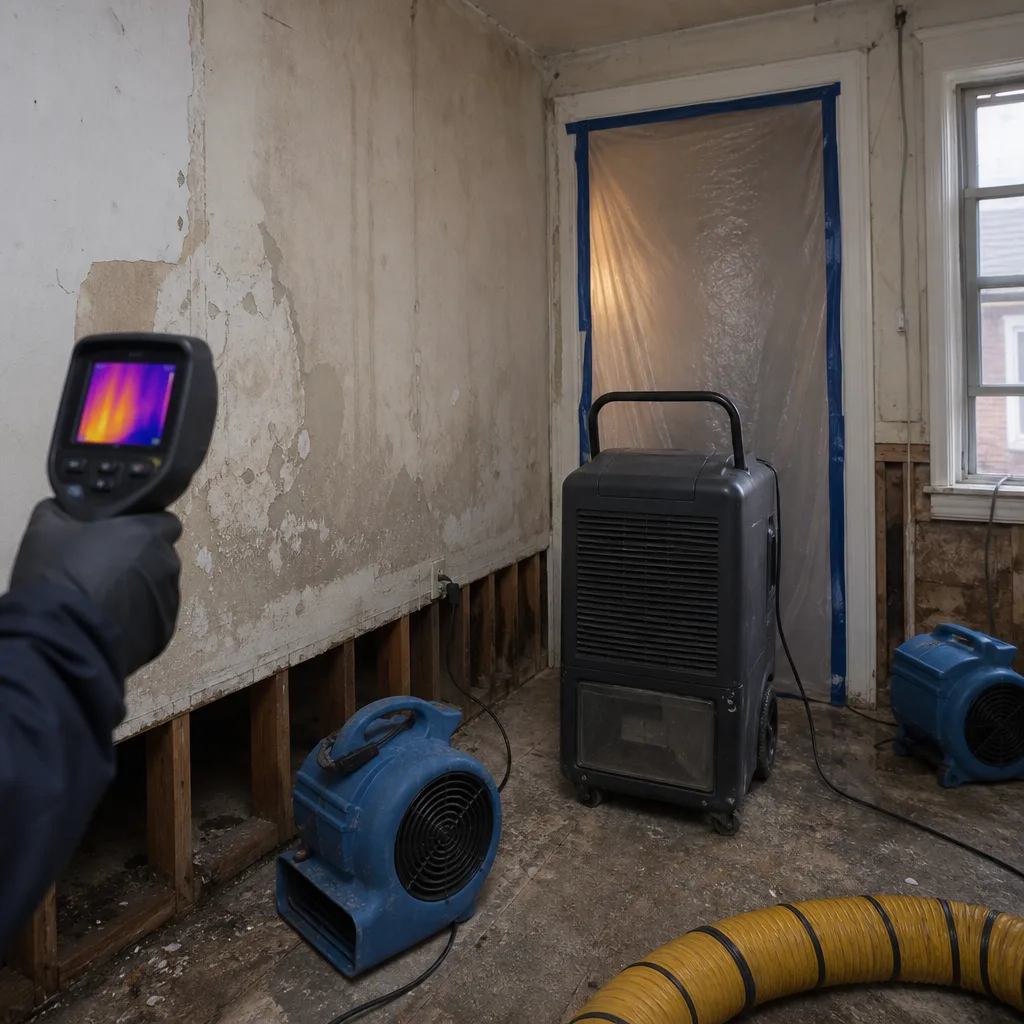 Before
 After
After24/7 Emergency Commercial Restoration in Financial District
Commercial restoration in the Financial District starts with speed, because water in a below-grade mechanical room does not wait for business hours. We answer the phone live around the clock at (201) 903-9581, and Wade Ferris heads out himself, usually with a crew inside the hour, to stabilize the damage before it spreads into elevator pits, switchgear rooms, or retail floors. The first hour after a nor’easter surge or a ruptured riser determines whether you’re looking at extraction and drying, or a full large-loss response with business interruption. We show up, take moisture readings, and hand you a written scope before any work begins. No national chain phone tree. No answering service. Just a local owner who publishes his name and works in this neighborhood every week.
Understanding Commercial Restoration Severity in Financial District Properties
Financial District commercial buildings are not like uptown towers. Most were built between 1910 and 1940, many as Art Deco landmarks like 70 Pine Street and 20 Exchange Place, then converted to residential and office condos starting in the 1990s. That conversion pattern left behind industrial HVAC risers, pre-war plumbing chases, and basement utility rooms that were never engineered for flood risk. When water enters, we classify it Category 1, 2, or 3 based on contamination. Storm surge from the harbor is almost always Category 3, meaning it carries salt, sewage byproducts, fuel residue, and whatever the tide pushed through lower Manhattan’s streets. That changes the remediation protocol entirely: containment, HEPA air scrubbing, removal of saturated porous materials, and structural drying with moisture mapping rather than guesswork. Thermal imaging and hygrometers tell us where water is hiding behind pre-war foundation walls, and in poorly consolidated landfill substrate, that means watching for hydrostatic pressure long after the surface dries. A building that looks dry at floor level is often still wet at the foundation.
Why Financial District Property Owners Choose Wade’s Restoration
- 45-minute response commitment: From the moment you call (201) 903-9581, Wade is on the road. In the Financial District, where every missed hour means water migrating through mechanical chases, that matters.
- 24/7 live answer, a real person: No answering service, no voicemail tree. Wade answers his own phone, including at 2 a.m. when a surge event puts water in an elevator pit.
- IICRC-certified crews: Wade’s team carries WRT, FSRT, and AMRT certifications. That means Water Damage Restoration Technician, Fire & Smoke Restoration Technician, and Applied Microbial Remediation Technician. Not titles you will hear from an unvetted subcontractor.
- Free visual inspection: We walk the loss site, take readings, and tell you honestly whether you need full remediation or a targeted cleanup. No obligation, no pressure.
- Direct insurance billing: Wade deals with the adjuster directly. You are not the one relaying scope details between two sides at 11 p.m.
- One team from extraction to reconstruction: The same crew that extracts Category 3 water from your basement is the crew that rebuilds the lobby wall. No handoffs to strangers.
Our Commercial Restoration Process
Inspection & Assessment
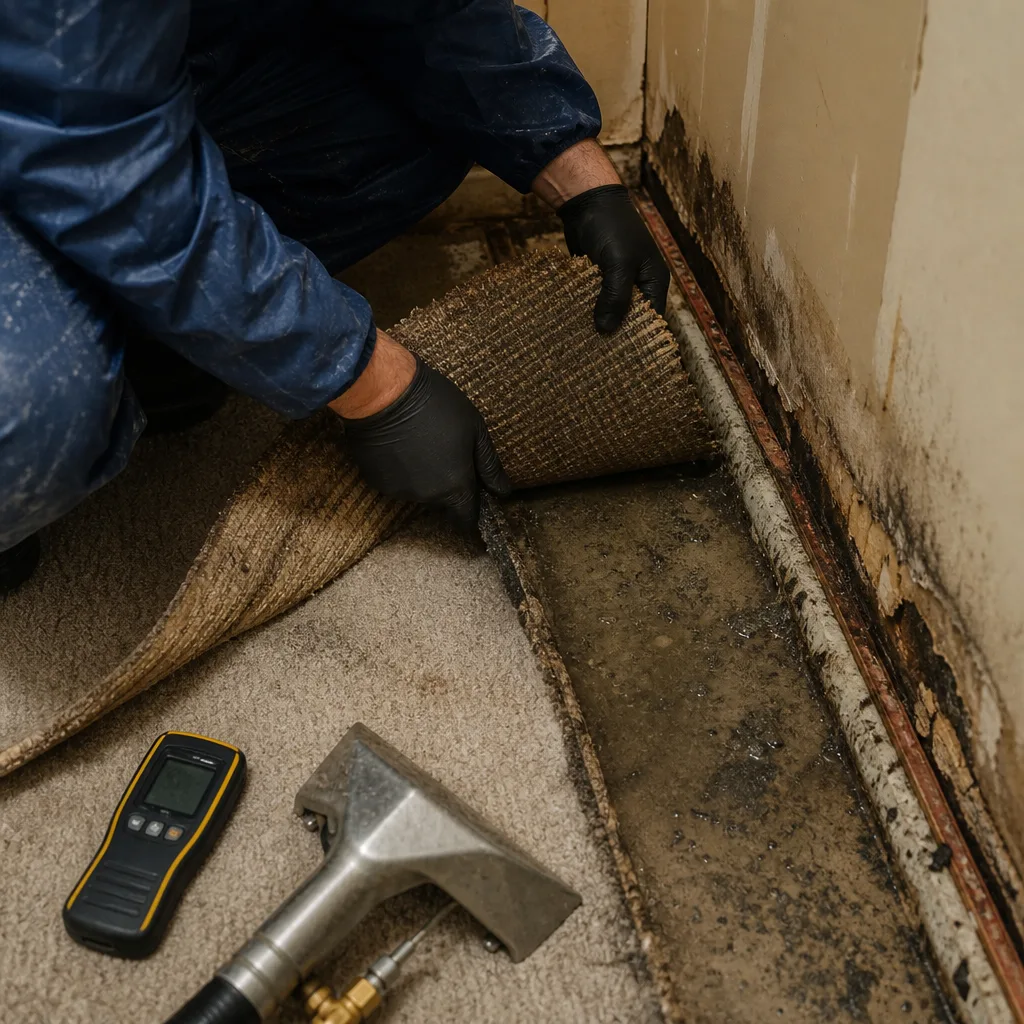
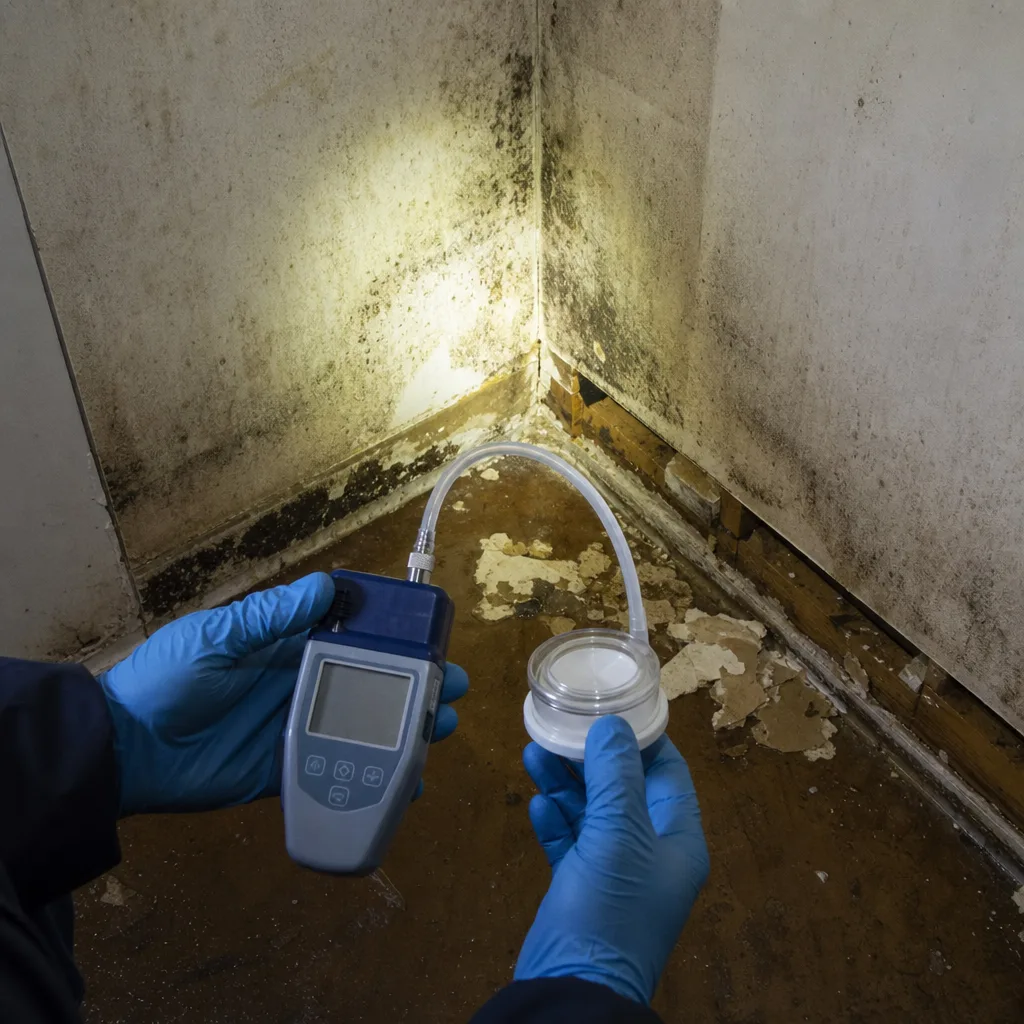
Wade arrives, walks the full loss area, and documents everything. Thermal imaging cameras, hygrometers, and moisture meters locate hidden water behind foundation walls and inside mechanical chases. You get a clear verbal finding and a written scope before any equipment goes in.
Extraction & Stabilization
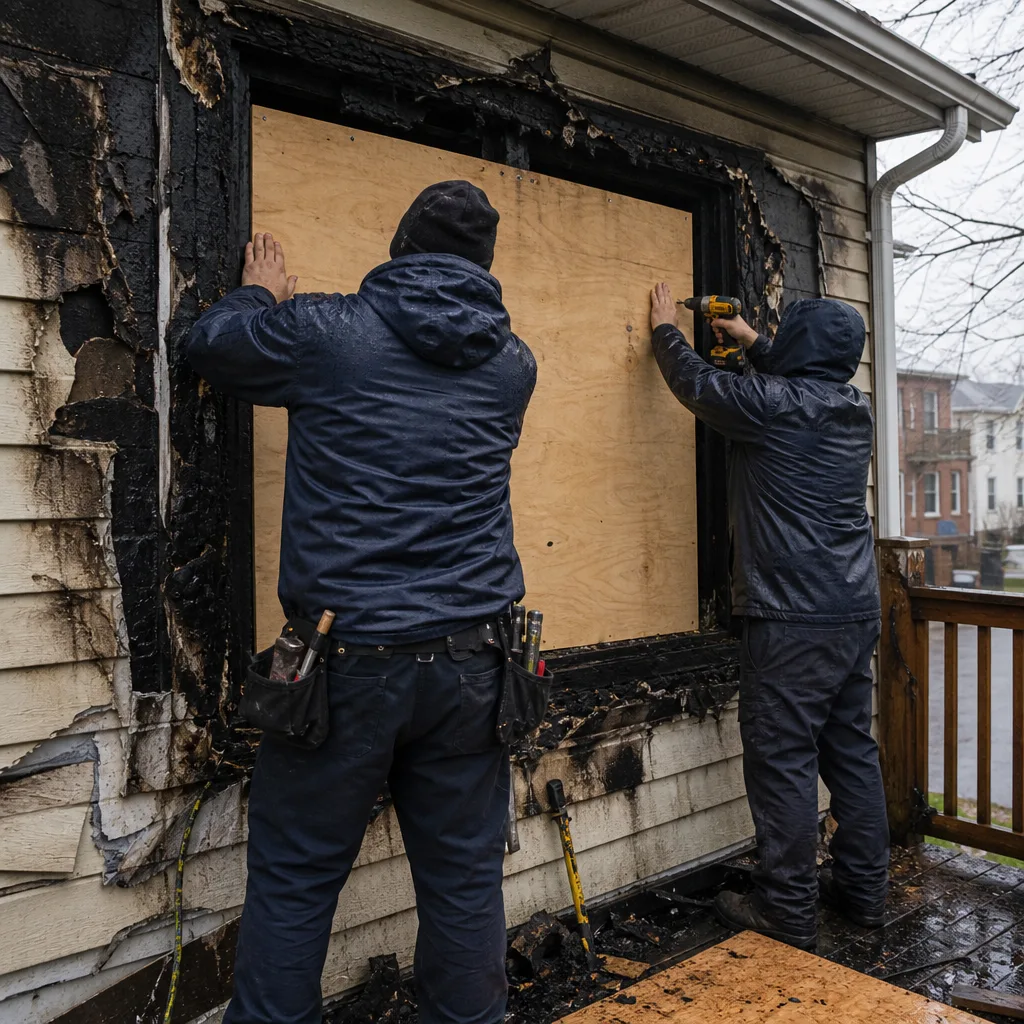
We extract standing water using truck-mounted and portable units from Phoenix and XPOWER. In below-grade mechanical rooms, that often means pumping out elevator pits and sump basins before water reaches electrical switchgear. We board up, tarp, and secure the site the same session.
Drying & Dehumidification
Industrial air movers and dehumidifiers from Dri-Eaz and Phoenix are placed based on moisture mapping, not guesswork. In Financial District buildings with permeable landfill foundations, we leave equipment running longer than an inland job, because groundwater keeps reintroducing moisture into floor slabs.
Cleaning & Sanitization
Category 3 water requires antimicrobial treatment and HEPA air scrubbing. We contain affected areas with negative air pressure so spores and contaminants from stormwater do not migrate into occupied upper floors of your building.
Specialty Treatment for Commercial Restoration
In the Financial District, this means corrosion inspection and treatment of garage-door hardware and mechanical systems exposed to salt air, plus anti-microbial sealing of structural wood and masonry. We also handle document and inventory recovery with freeze-drying and content pack-out for office and retail losses.
Repairs & Restoration
We rebuild what was torn out: drywall, flooring, commercial door systems, elevator pit linings, and mechanical room finishes. Escrow and HOA requirements are respected, and all work is documented for your insurance claim.
Need Emergency Commercial Restoration in Financial District Now?
Crews minutes away, answering live 24 hours a day. The sooner we start, the less it costs.
Working With Your Insurance Company
Insurance is almost always in the room on a Financial District commercial loss, even when nobody says it out loud. Wade has been dealing with adjusters since 2007 and handles the communication directly. That means from the first hour, we photograph everything room by room, log moisture readings daily, and write a line-item scope that matches what your carrier expects to see. We do not inflate claims, and we do not let legitimate damage go undocumented. If your adjuster wants a second moisture reading or a different angle on a photo, Wade sends it the same day. That direct line between our crew and your carrier is the single biggest reason Financial District property managers call us back after the first loss.
What We Provide Your Insurer
- Thorough documentation of the loss
- Photos of all damage, room by room
- Moisture readings and drying logs
- A detailed, line-item scope of work
- Direct coordination with your carrier
Built for Financial District’s Loss Calendar
Financial District losses follow a harbor-driven calendar. January deep freezes burst supply lines in pre-war risers, and because so many buildings converted to residential in the 1990s and 2000s, those risers now feed condo units stacked above commercial floors. Water runs down through the slab and into lobby ceilings and basement mechanical rooms within an hour. Spring thaw brings groundwater seepage through unconsolidated landfill, the kind of slow, persistent moisture that sets off mold in stored inventory and drywall wicking up from floor level. Summer thunderstorms flash-flood the low-lying streets around Water Street and South Street, overwhelming drains and sending surface water into loading docks and below-grade entrances. Nor’easters and tropical systems are the big one: surge pushes into New York Harbor and funnels toward FiDi before any other Manhattan neighborhood, flooding elevator pits, boiler rooms, and fuel oil tank vaults. We plan our seasonal response around these events, not around a generic calendar.
Commercial Restoration Across Financial District’s Neighborhoods
Financial District is not one building type. The blocks around Wall Street and Broad Street are dense pre-war towers with deep basements and heavy stone foundations; water migrates downward through vertical risers and pools in subgrade mechanical space. Along Water Street and South Street, the buildings sit lower and closer to the East River, with ground-floor retail that takes direct surge hit before interior floors even register the event. The Seaport area and the blocks near the Brooklyn Bridge are partly built on the oldest landfill in Manhattan, so groundwater pressure under floor slabs is a constant. In the converted Art Deco residential towers around Pine Street and Exchange Place, we respond to condo board and HOA calls where one flooded unit means damage across ten floors of vertical riser space. And in the new residential conversions west of Broadway near the Hudson, post-Sandy retrofits often moved switchgear up but left sump pumps and secondary systems at original elevation, meaning a routine basement flood can escalate quickly. Knowing which part of the Financial District you’re in changes how we stage equipment and where we dry first.
Specialized Commercial Restoration Services We Offer in Financial District
Office & Retail Restoration
Financial District ground-floor retail takes stormwater and saltwater damage differently than upper-floor office space. We handle storefront glass systems, inventory pack-out, and structural drying behind display walls, with an eye on reopening your doors fast. Corrosion from salt air attacks door hardware and mechanical fasteners years faster here; we document that damage for your claim so the adjuster understands it’s a coastal exposure issue, not deferred maintenance.
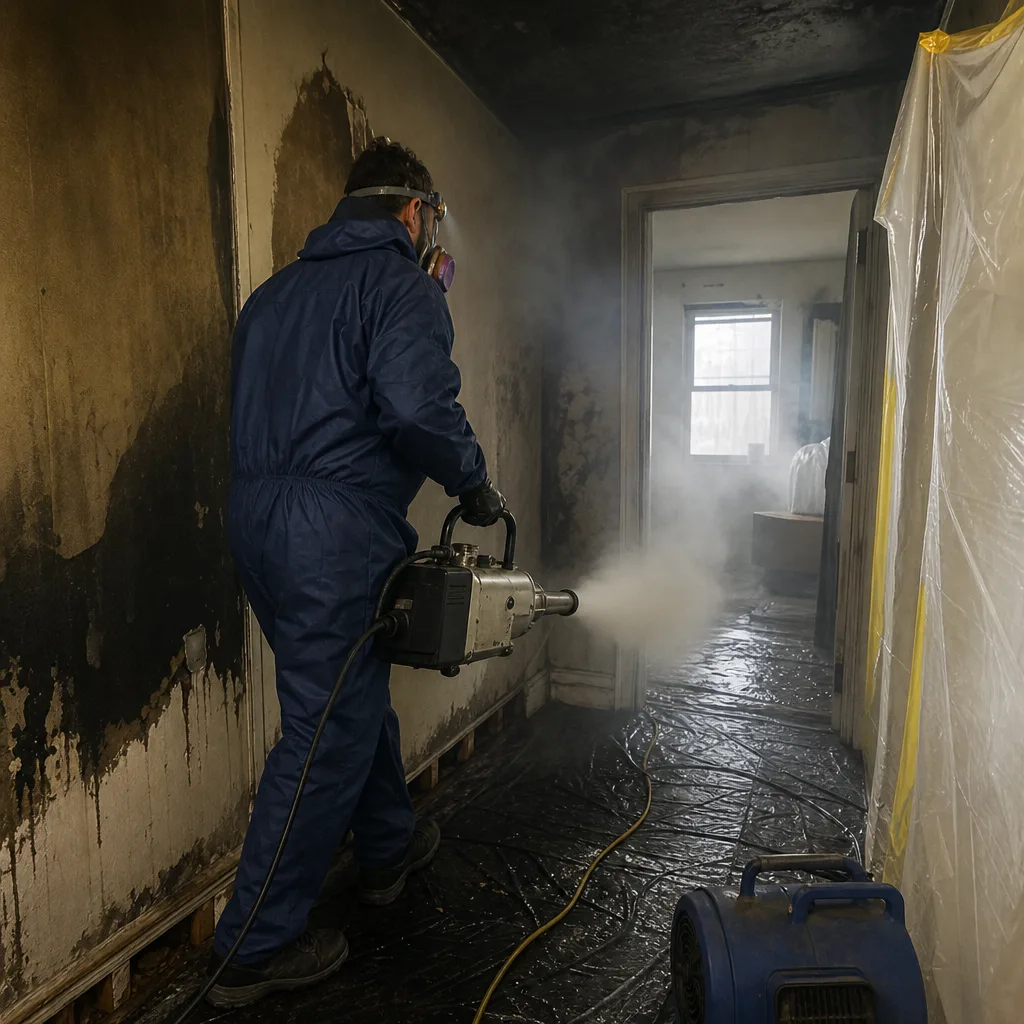
Large-Loss Response
When surge water fills multiple below-grade levels of a FiDi building, this is a large-loss event. We stage equipment across an entire block if needed, run multiple extraction crews simultaneously, and coordinate with building engineers on electrical safety before anyone enters a flooded mechanical room. The post-Sandy reality in this neighborhood is that many buildings remain one bad nor’easter away from a repeat failure. We plan for that from the first call.
Business Interruption Minimization
Every hour a Financial District retail space or office floor is dark costs real money. We prioritize extraction and drying in occupied areas first, run negative-air containment so upper floors stay usable, and give you a written drying timeline so you can tell tenants and employees when they can come back. Our Commercial Restoration team works with building management to keep egress routes and freight elevators operational wherever possible.
Multi-Unit & HOA Restoration
Condo and co-op boards in converted Financial District towers face a particular headache: water entering one unit behind a pre-war plumbing chase spreads into neighboring units through shared riser space. We document every affected line, work with your property manager on access schedules, and handle insurance scope for multiple owners without making the board the messenger. The 90-Day Done Right Promise applies to HOA work too: if a drying or rebuild detail isn’t right, Wade comes back and makes it right, in writing.
Industrial Facility Cleanup
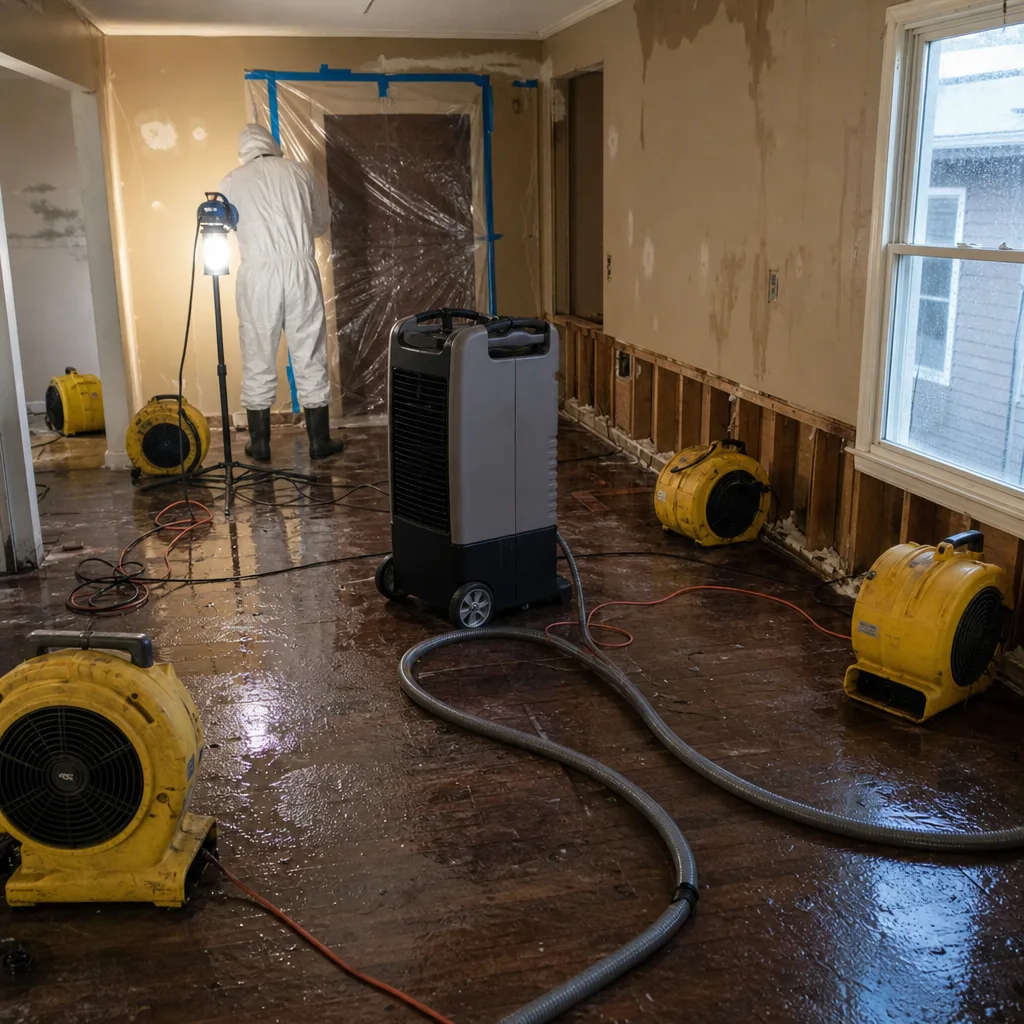
Below-grade mechanical spaces, freight loading docks, and storage vaults in Financial District buildings are industrial cleanup territory. We handle fuel oil residue, saltwater saturation, and contaminated sump water with the appropriate PPE, containment, and disposal protocols. No shortcuts, and no “we’ll just dry it” when the water is Category 3.
Document & Inventory Recovery
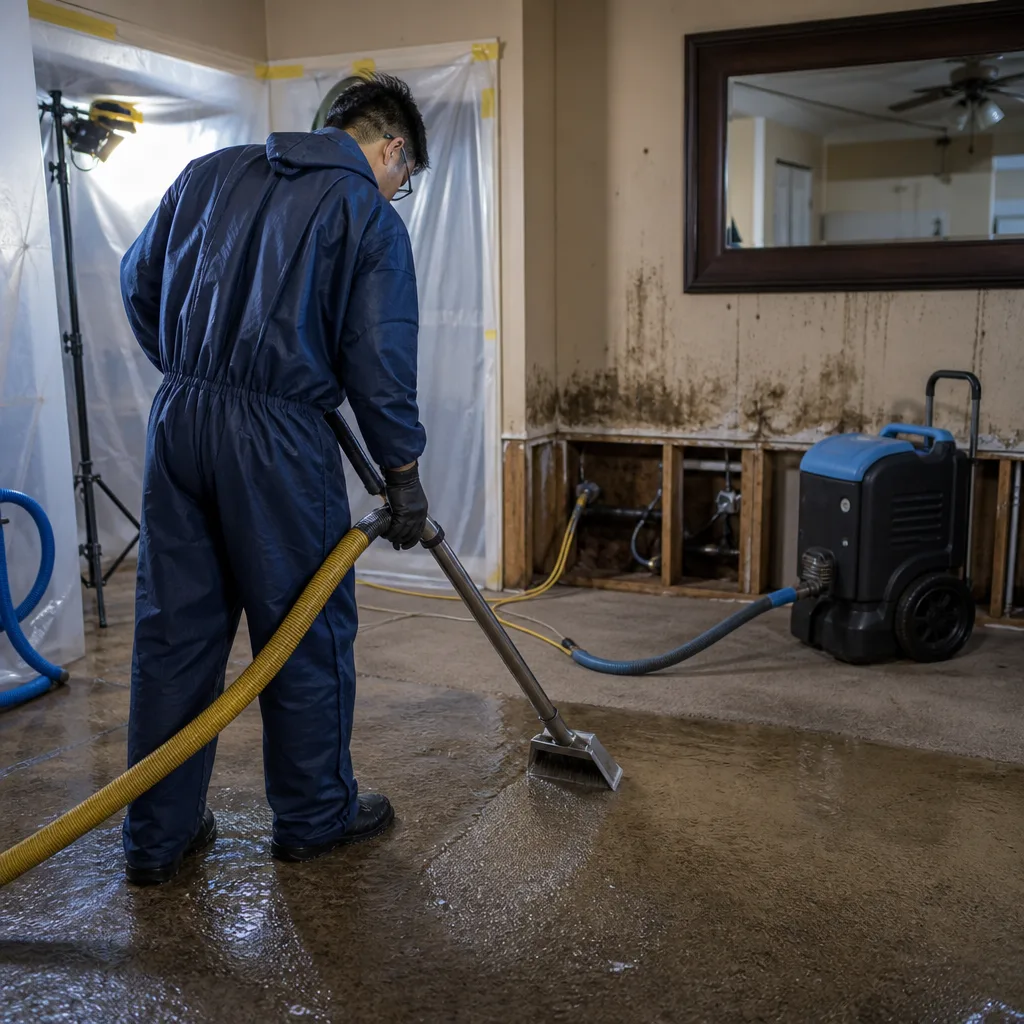
Law offices, trading floors, and title companies still run on paper more than people admit. We freeze-dry documents, pack out water-damaged files, and work with your insurer on valuation for destroyed inventory. In a neighborhood where five blocks of records can represent millions in liability, that service matters.
What happens when you call
- 1
A real person answersNo phone trees - you reach a local pro.
- 2
You get an upfront price rangeHonest numbers before anyone is dispatched.
- 3
A background-checked tech heads outLicensed & insured, dispatched right away.
- 4
You approve before work beginsNothing starts until you say go.
Commercial Restoration Costs in Financial District, NY
Straight numbers, because you should know what to expect before you call. A small office water extraction with drying in the Financial District typically runs $1,800 to $4,500. A basement mechanical room flood with Category 3 water, containment, and full structural drying runs $8,000 to $25,000 depending on square footage and how far water migrated. Large-loss surge events that flood elevator pits and multiple below-grade levels regularly exceed $50,000, and that’s before reconstruction. What moves the price: contamination category, square footage, how long water sat before extraction, whether asbestos or lead remediation is triggered in a pre-war building, and whether contents need pack-out. Most commercial policies cover extraction, drying, and direct physical loss. The fastest way to a firm number is a free visual inspection where Wade takes readings and writes a line-item scope. No trip charge inside New York City, and no charge for the inspection itself.
We Also Serve Cities Near Financial District
Our crews handle Commercial Restoration in Financial District and the surrounding Manhattan market. We regularly work in Lower Manhattan, Midtown Manhattan, Long Island City, and Midtown West. If you manage property in any of those areas, the same live-answer phone and 45-minute response commitment applies.
Serving Financial District, NY - Our Local Coverage Area
We’re based in the Financial District area and know this community well. Use the map below to see our service coverage - if you’re nearby, we can almost certainly help.
Financial District Commercial Restoration Questions, Answered
How often should a commercial garage door in the Financial District have a corrosion inspection due to salt air?
Every six to twelve months, and more often if the door faces the East River or New York Harbor. Salt air attacks springs, hinges, rollers, tracks, openers, and fasteners years faster in FiDi than inland, causing binding seams and snapped springs that trap commercial vehicles. We recommend galvanized or coated springs and stainless hardware at replacement time, and a corrosion inspection every fall before nor’easter season.
What is the typical timeline for drying out a below-grade mechanical room in a Financial District building after a coastal flood?
Five to ten days under air movers and dehumidifiers, but Financial District landfill foundations often extend that timeline. Groundwater keeps reintroducing moisture through the slab, so we monitor daily with hygrometers and adjust equipment placement until readings stabilize. Rushing the timeline leaves hidden moisture that turns into mold and corrosion inside switchgear cabinets.
Why do basement floods in the Financial District often involve category 3 water even without visible sewage backup?
Because the flooding source is usually New York Harbor surge, not a broken clean-water pipe. Harbor water carries sediment, fuel residue, marine debris, and whatever the tide pushed through lower Manhattan streets, which makes it Category 3 by definition. That means full containment, antimicrobial treatment, and disposal of saturated porous materials, not just extraction and drying.
Can you restore a commercial space in the Financial District without interrupting business on the upper floors?
Usually, yes. We run negative-air containment at the loss site so contaminants don’t migrate through stairwells and elevator shafts. Heating, cooling, and freight elevator operation can typically continue during drying. For office or retail spaces on the affected floor itself, we stage drying equipment around occupied hours and give you a written timeline for reopening. We’ll tell you honestly if full closure is unavoidable.
What should a property manager do immediately after a storm surge flood in the Financial District before calling a restoration company?
First, cut power to any flooded mechanical space from a dry location. Do not enter standing water in a basement where switchgear, fuel oil tanks, or elevator equipment may be energized. Then call us at (201) 903-9581; do not pump out water yourself. The extraction sequence matters, because removing water too quickly from saturated landfill-adjacent foundations can cause structural stress. We’ll walk you through what to do in the first five minutes.
How fast can someone actually get to a commercial building in the Financial District?
Wade heads out from the New York City office within minutes, normally inside 45 minutes, traffic permitting. In a surge event when the whole neighborhood is calling, we prioritize buildings with active water intrusion over buildings where water has already receded. Call (201) 903-9581 and you’ll talk to Wade himself, not a call center.
Will my insurance cover commercial storm surge damage in the Financial District, or is this considered flood?
Most commercial property policies cover storm surge as a covered peril, but flood exclusions vary by carrier and property type. What matters for your claim is documentation: We take photos before extraction, log moisture readings daily, and write a scope that matches your policy language. Wade deals with the adjuster directly so you don’t have to translate between us and your carrier.
Do you really answer the phone 24 hours a day, or is that a marketing line?
Wade answers his own phone. Always. At 2 a.m. when a nor’easter pushes water into a FiDi loading dock, the person you talk to is the same person who will show up with the truck a half hour later. That’s the whole point of being owner-operated. Try it once and you’ll hear the difference.
Written by Wade Ferris, Owner at Wade’s Restoration, serving the Financial District with 24/7 commercial restoration.