
Free visual inspection and a written scope of work before any mitigation begins - photos, moisture readings, and drying logs go in your claim file
The scope we write is the scope we bill. Anything new gets shown to you, in writing, before we touch it.
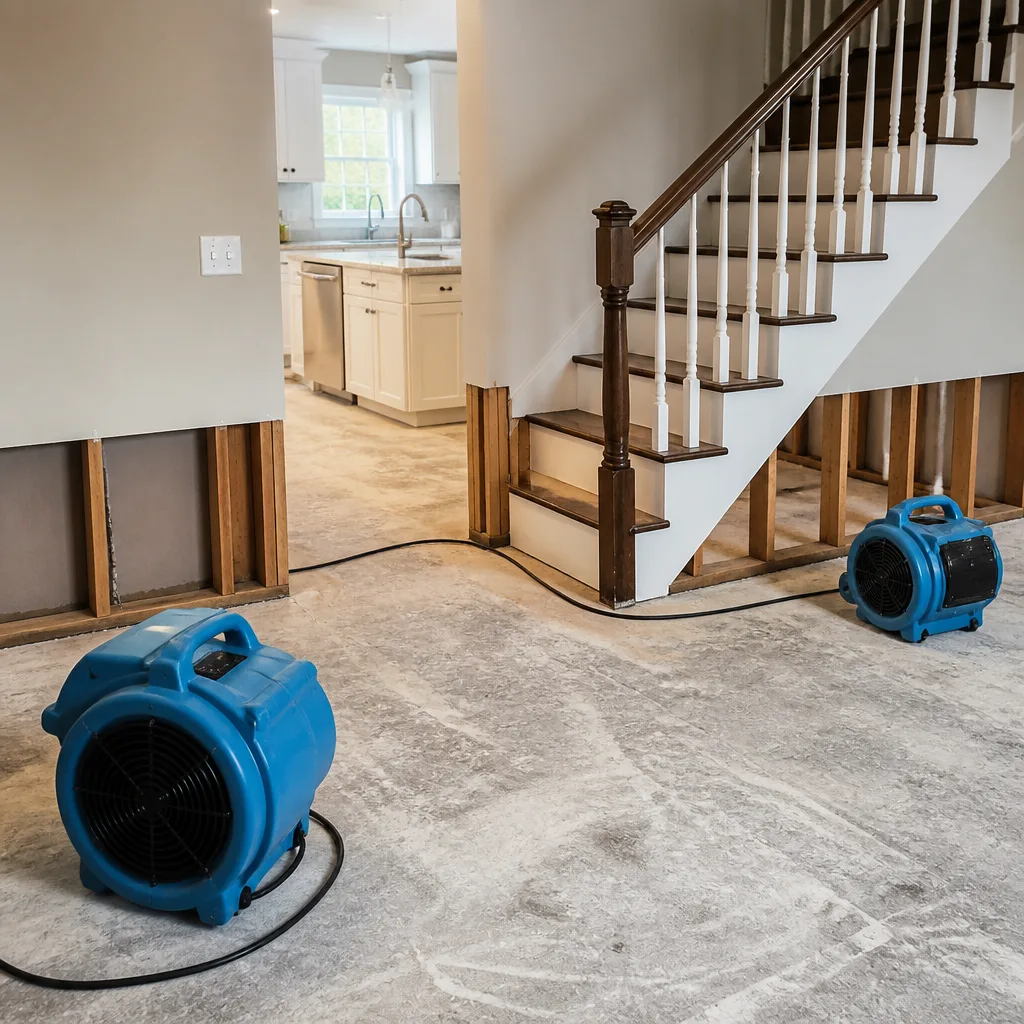
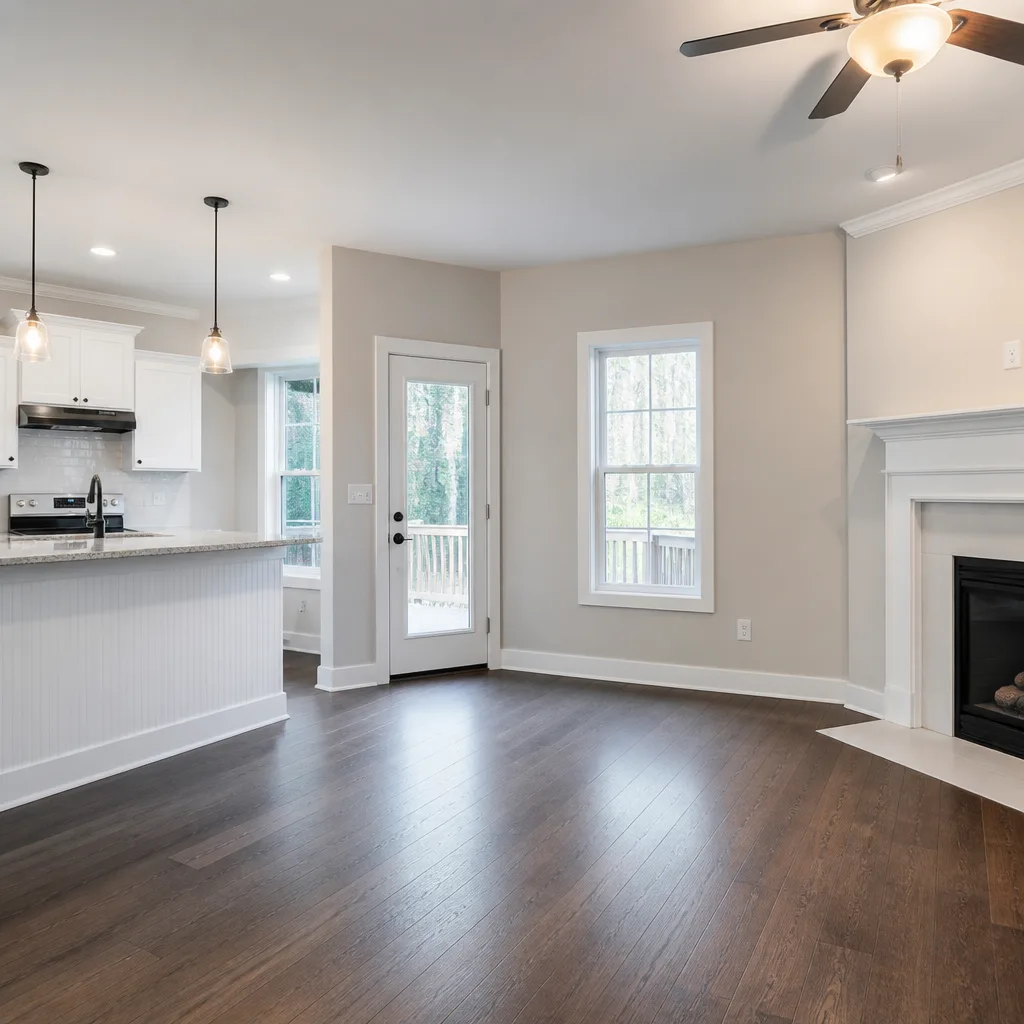
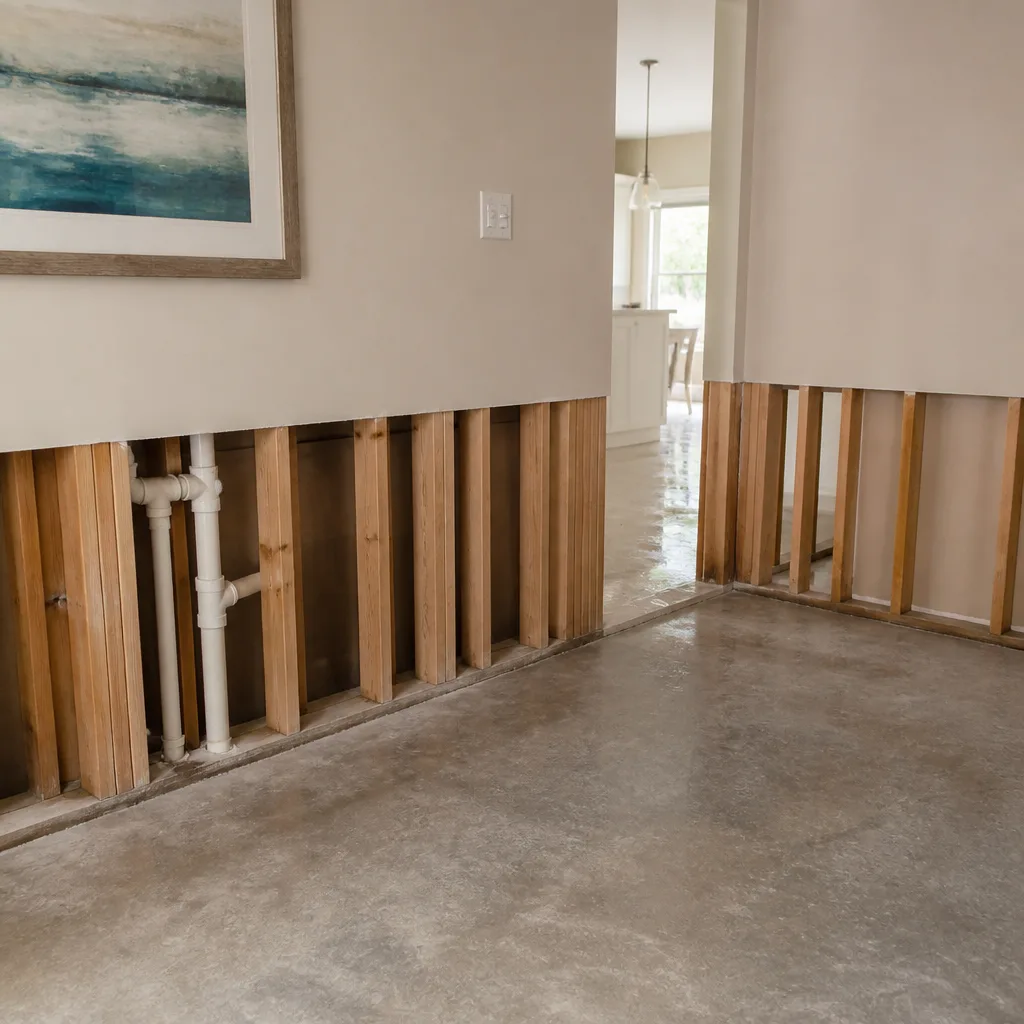
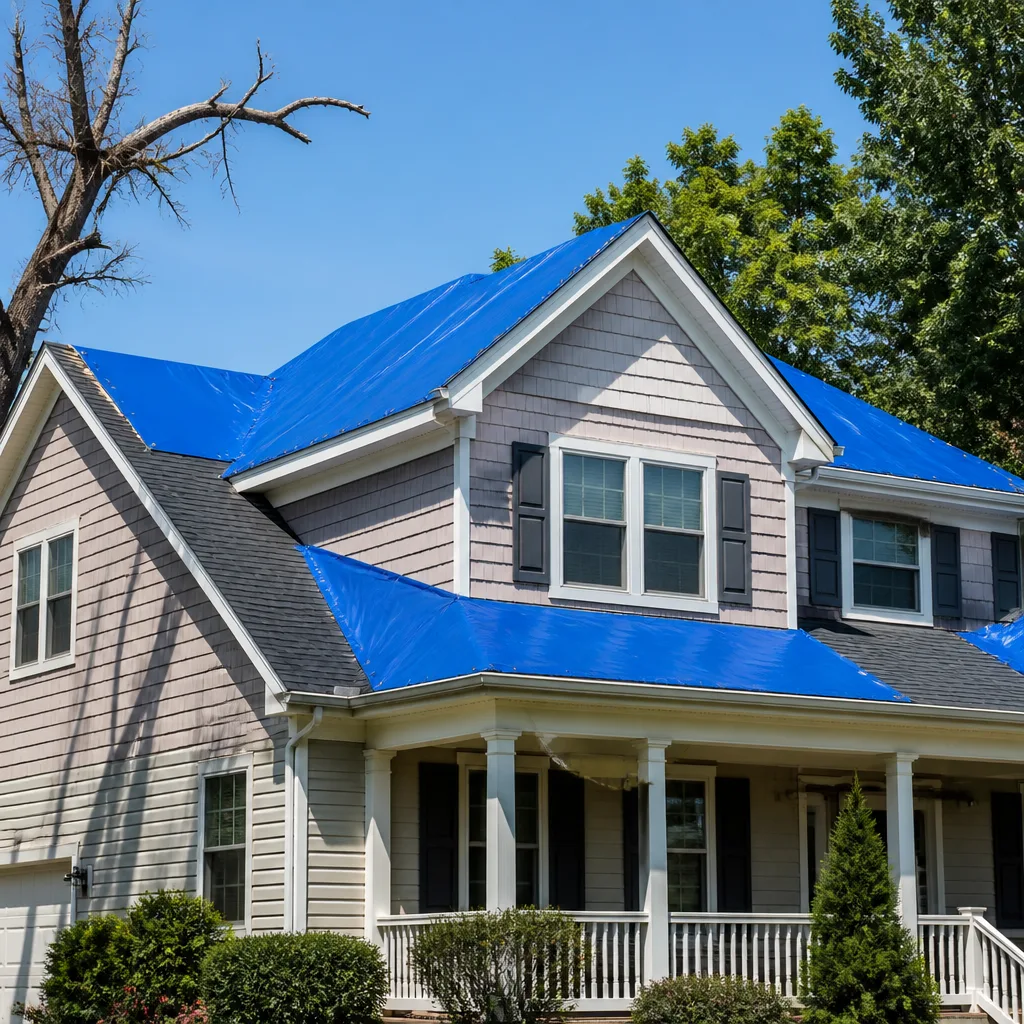
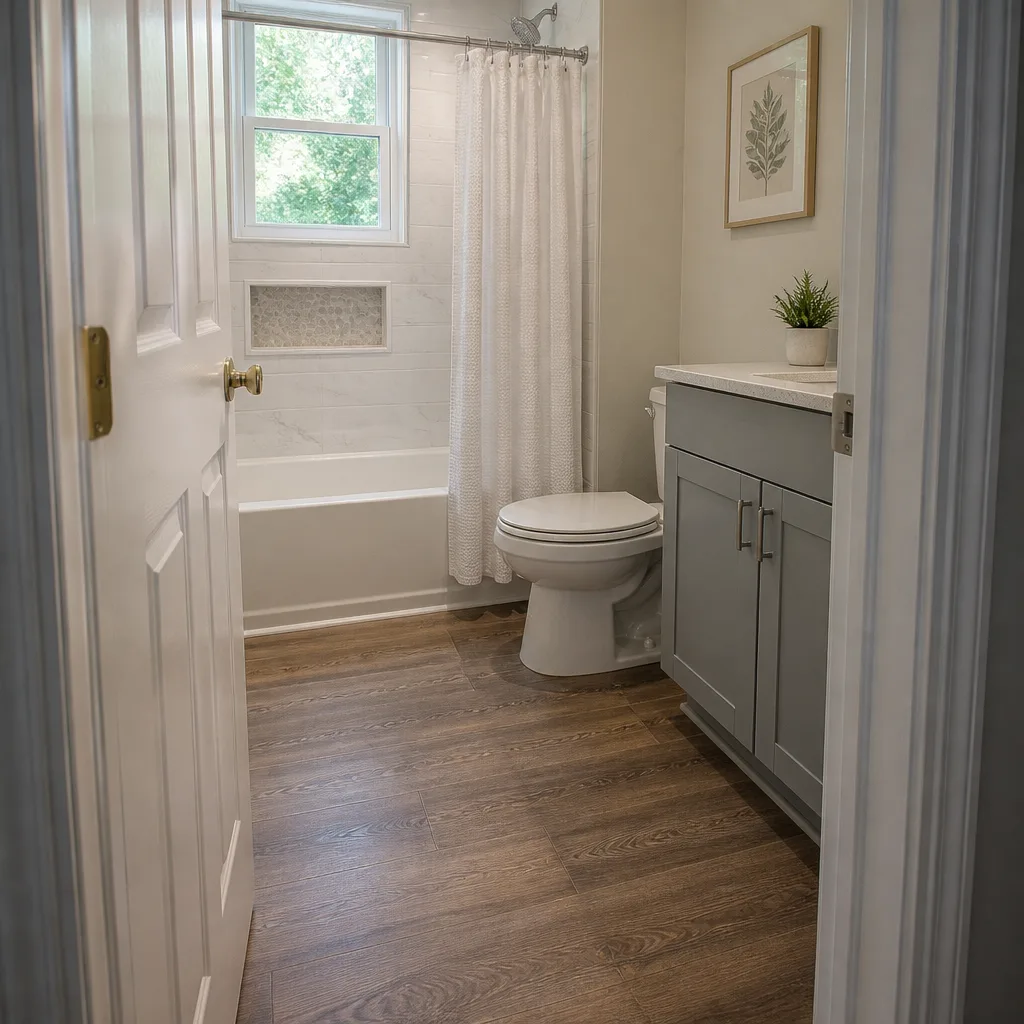
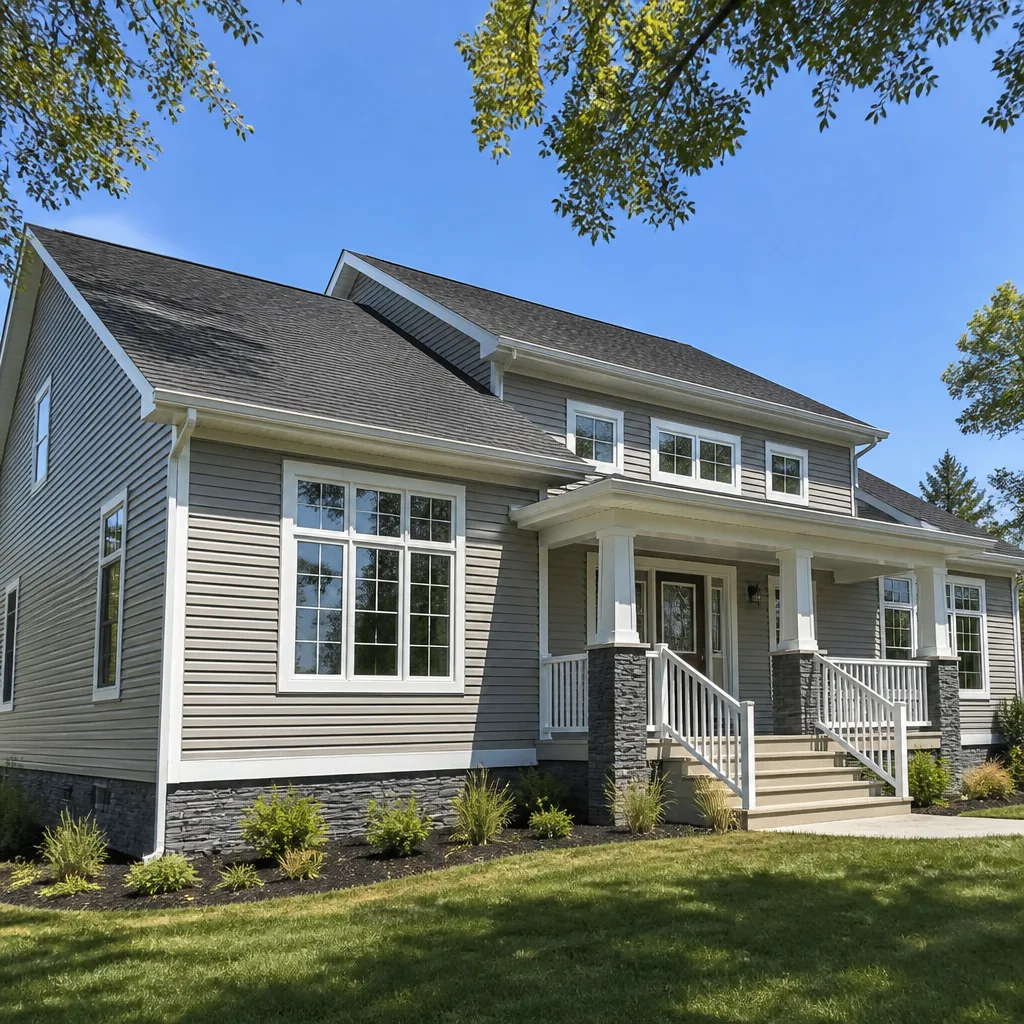
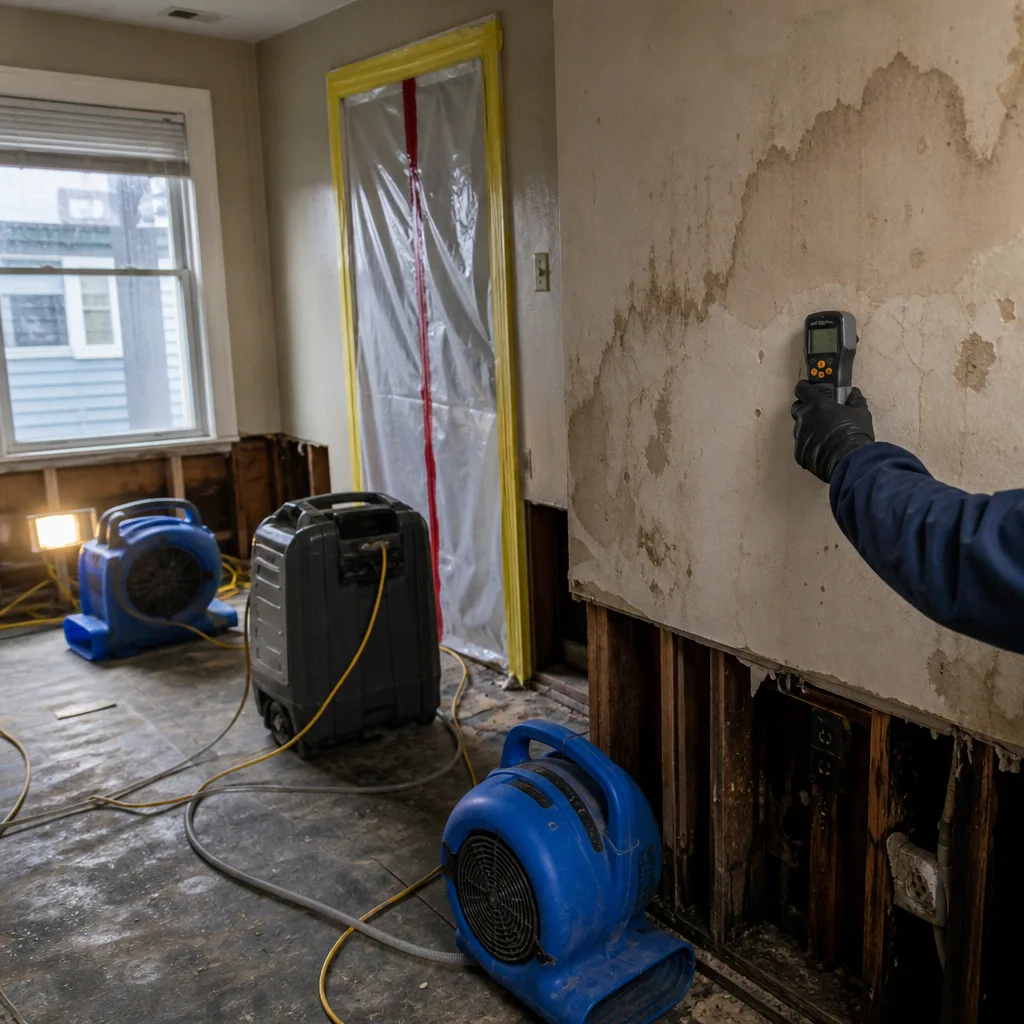 Before
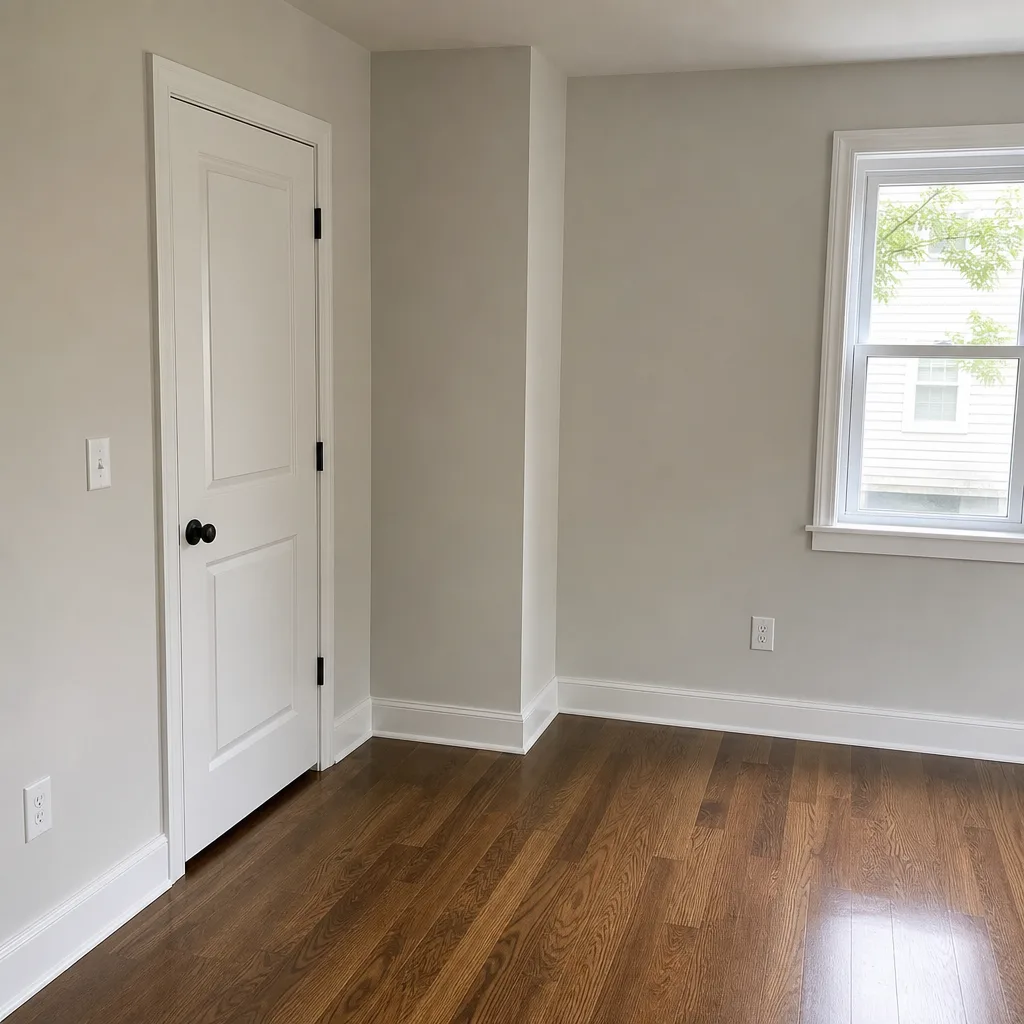 After
After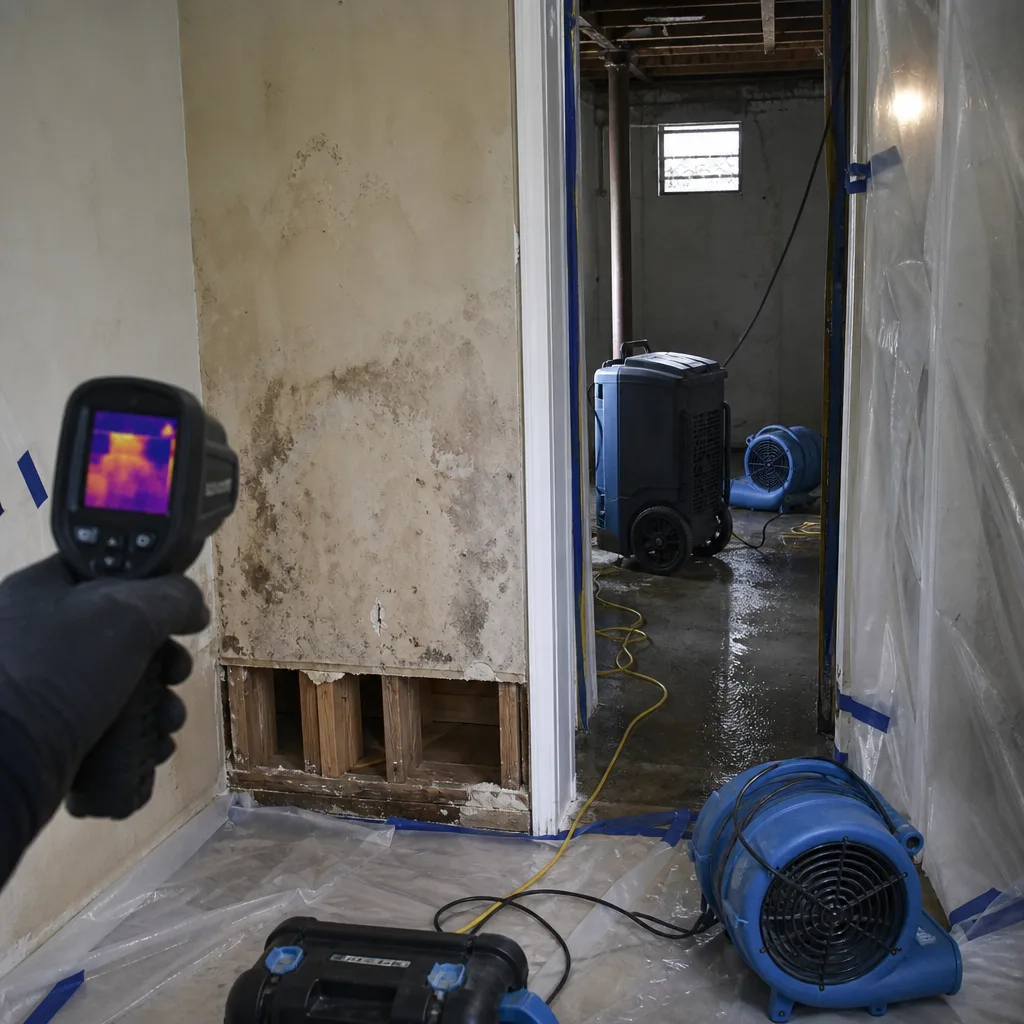 Before
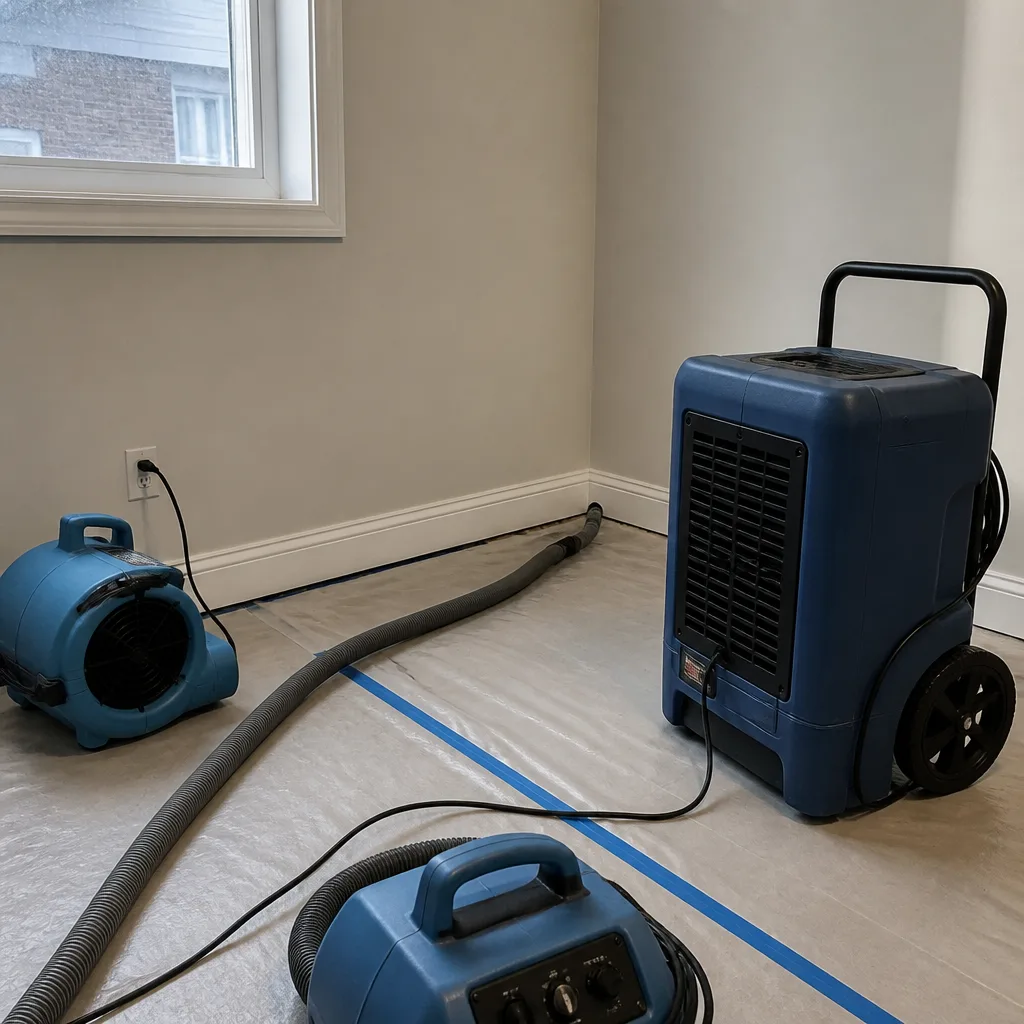 After
After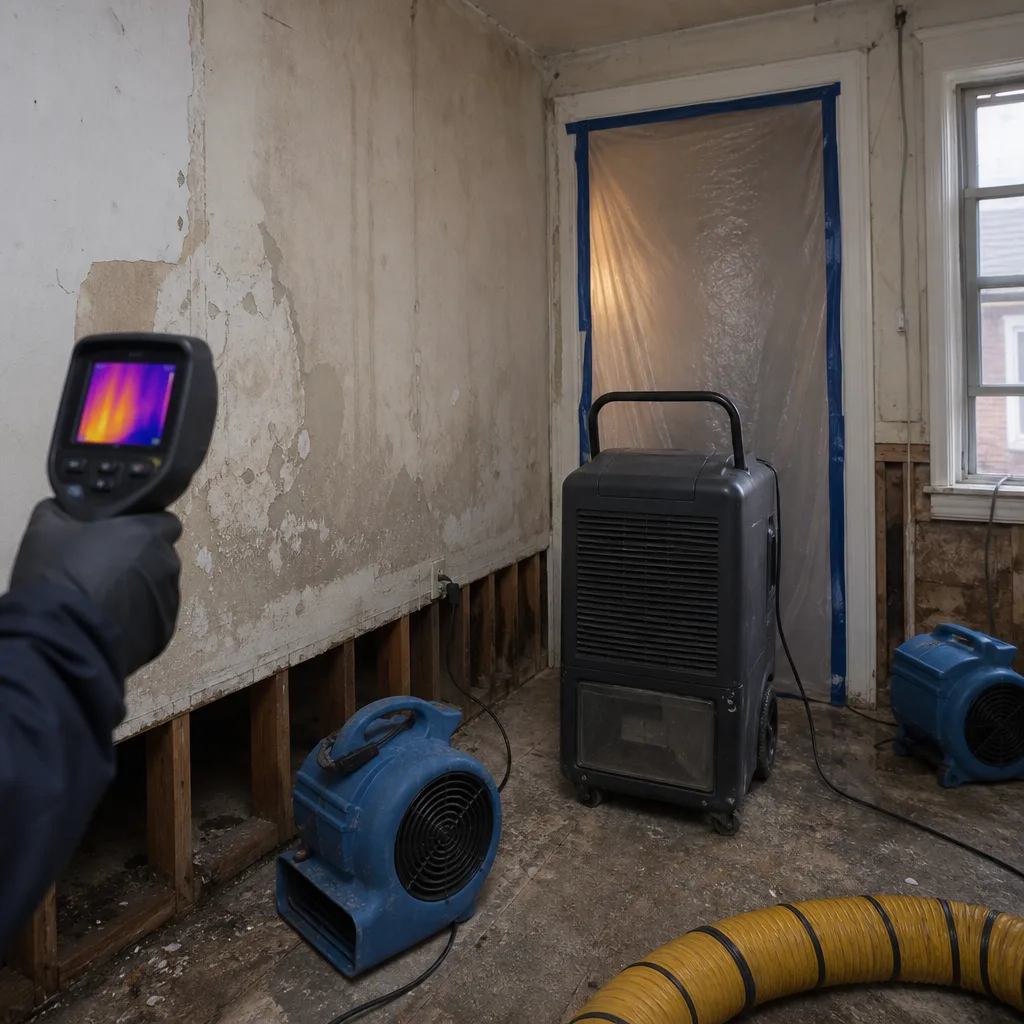 Before
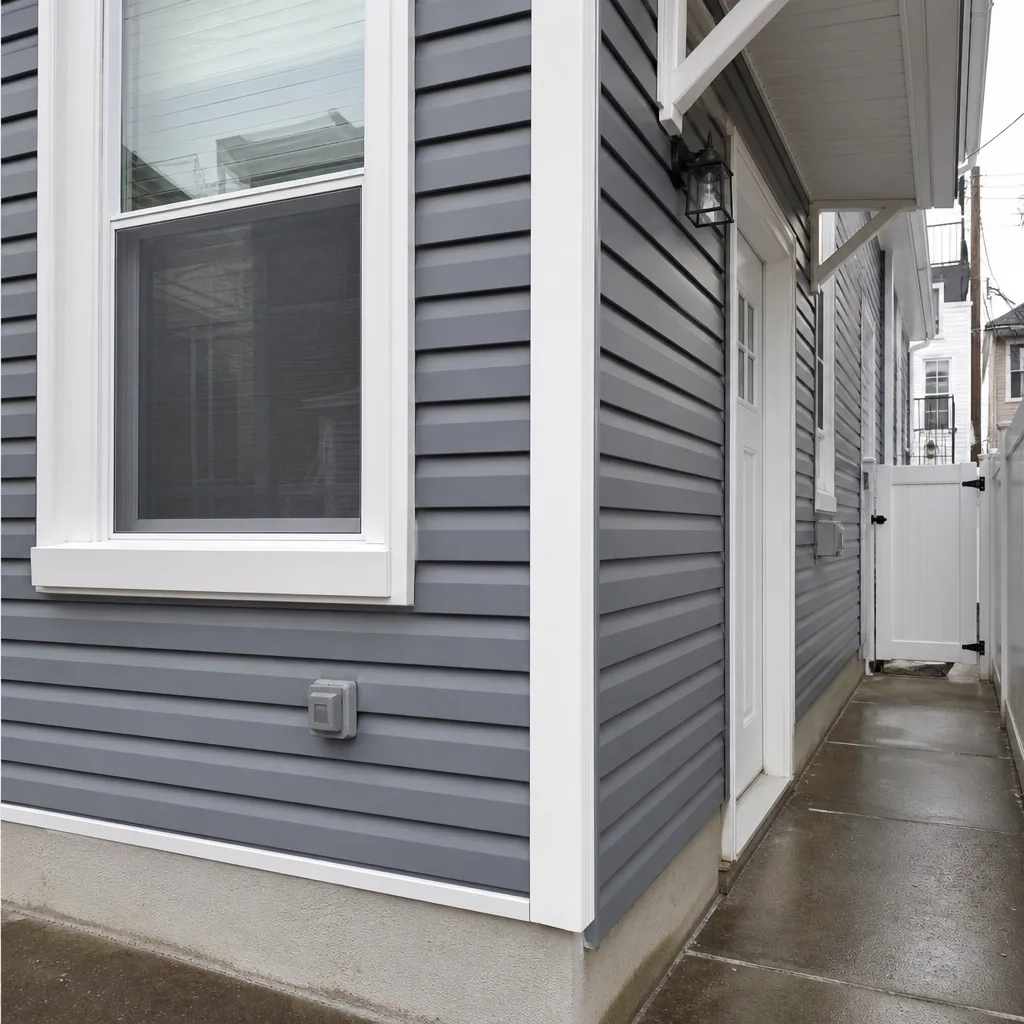 After
After24/7 Emergency Commercial Restoration in Midtown Manhattan
Commercial restoration in Midtown Manhattan runs on one clock: the minutes before water, soot, or steam spreads to the next floor. We answer live, 24/7, and crews can be inside your building within 45 minutes, not the next morning. Call (201) 903-9581 the moment you see water, smell smoke, or hear a pipe let go. The first hour decides whether you’re drying a few offices or gutting half a tower. Wade Ferris has been answering calls himself since 2007. He will tell you exactly what he’s walking into, and he’ll be on the road while you’re still clearing debris.
Understanding Commercial Restoration Severity in Midtown Manhattan Properties
Midtown’s commercial stock was mostly built between 1920 and 1945. That means cast-iron waste lines, galvanized supply risers, and original steam distribution systems that have been patched, spliced, and stressed for nearly a century. When a pipe fails here, it’s rarely a slow drip. A burst standpipe or a failed sprinkler head releases hundreds of gallons in minutes, and gravity does the rest. Water cascades down through chase walls, around electrical conduits, and into tenant spaces 10, 15, sometimes 25 floors below the source. We classify water by contamination level: Category 1 is clean supply water, Category 2 carries soaps or chemicals, and Category 3 is sewage or steam-line condensate that’s been sitting. Midtown sees all three, often in the same job, because a high-rise water event picks up decades of dust, asbestos, and pipe scale on its way down. Moisture mapping with thermal imaging and penetrating meters shows us water that’s hidden inside wall cavities, under finished flooring, and behind drywall. Structural drying in a pre-war tower is not blow-and-go. It means LGR dehumidifiers staged around freight-elevator windows, air movers angled into tight mechanical closets, and daily moisture readings you can see with your own eyes.
Why Midtown Manhattan Property Owners Choose Wade’s Restoration
- 45-minute response commitment. When you call with water running or smoke spreading, Wade heads out immediately. No answering service, no callback in the morning. The clock starts when you hang up.
- A real person answers, 24/7. You call, a human picks up. Often it’s Wade himself. He’s been known to take a call from a flooded basement at 2 a.m. and be on site before the fire department clears out.
- IICRC-certified crews (WRT, FSRT, AMRT). Wade’s team holds the certifications that matter for commercial work: water damage restoration, fire and smoke restoration, and applied microbial remediation. Not a temp crew with rental equipment.
- Free visual inspection. No charge to send someone out and tell you what you’re dealing with, even if you’re a building manager with a board watching every dollar. No trip charge inside the county.
- Direct insurance billing and adjuster coordination. Wade has spent 18 years talking to insurance adjusters so you don’t have to shuttle calls between three parties. He documents, he estimates, he sits on hold. You run your building.
- One team from extraction to reconstruction. The same crew that sucks water out of your lobby floors is the crew that rebuilds the drywall. No handoffs to a third party, no finger-pointing when a corner gets cut.
Our Commercial Restoration Process
Inspection & Assessment
We walk the loss with a thermal camera and penetrating moisture meter, marking a map of every affected floor and wall cavity. For Midtown jobs, that includes locating asbestos-containing pipe insulation before anyone swings a hammer. We give you a written scope and a straight answer.
Extraction & Stabilization
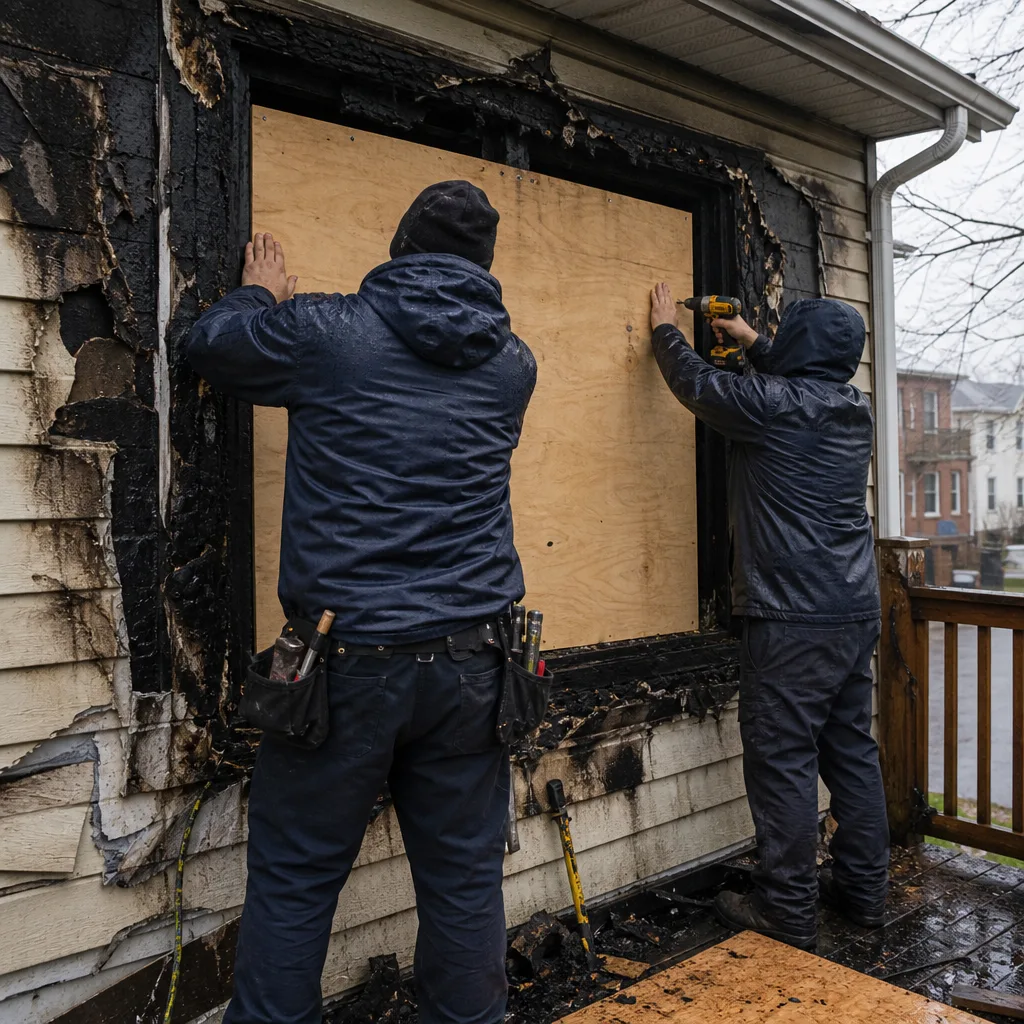
Truck-mounted and portable extraction units pull standing water from floors, mechanical rooms, and elevator pits. If a Con Edison steam line is involved, we coordinate containment and licensed abatement before extraction begins. We board up, cap the source, and stop the bleeding.
Drying & Dehumidification
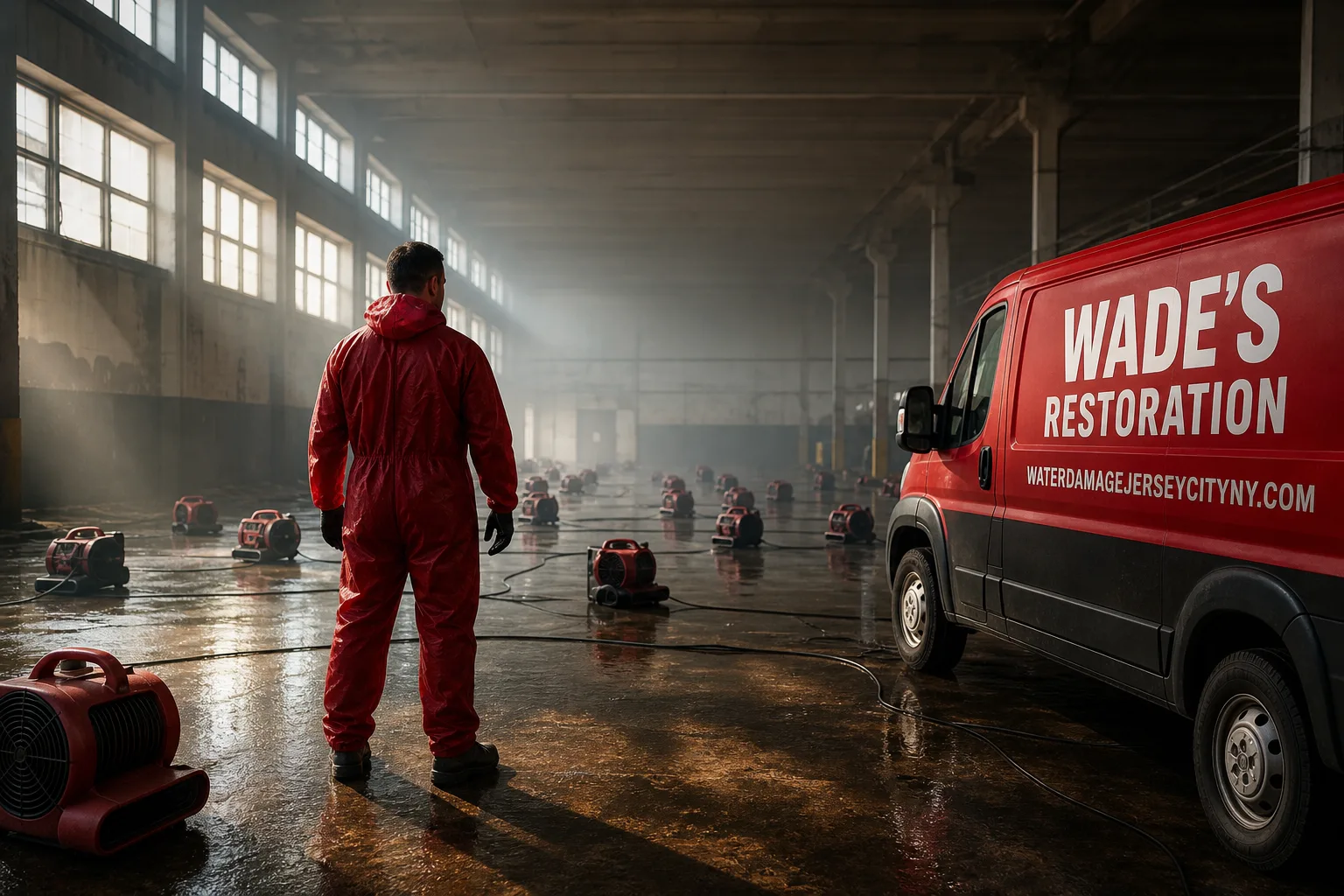
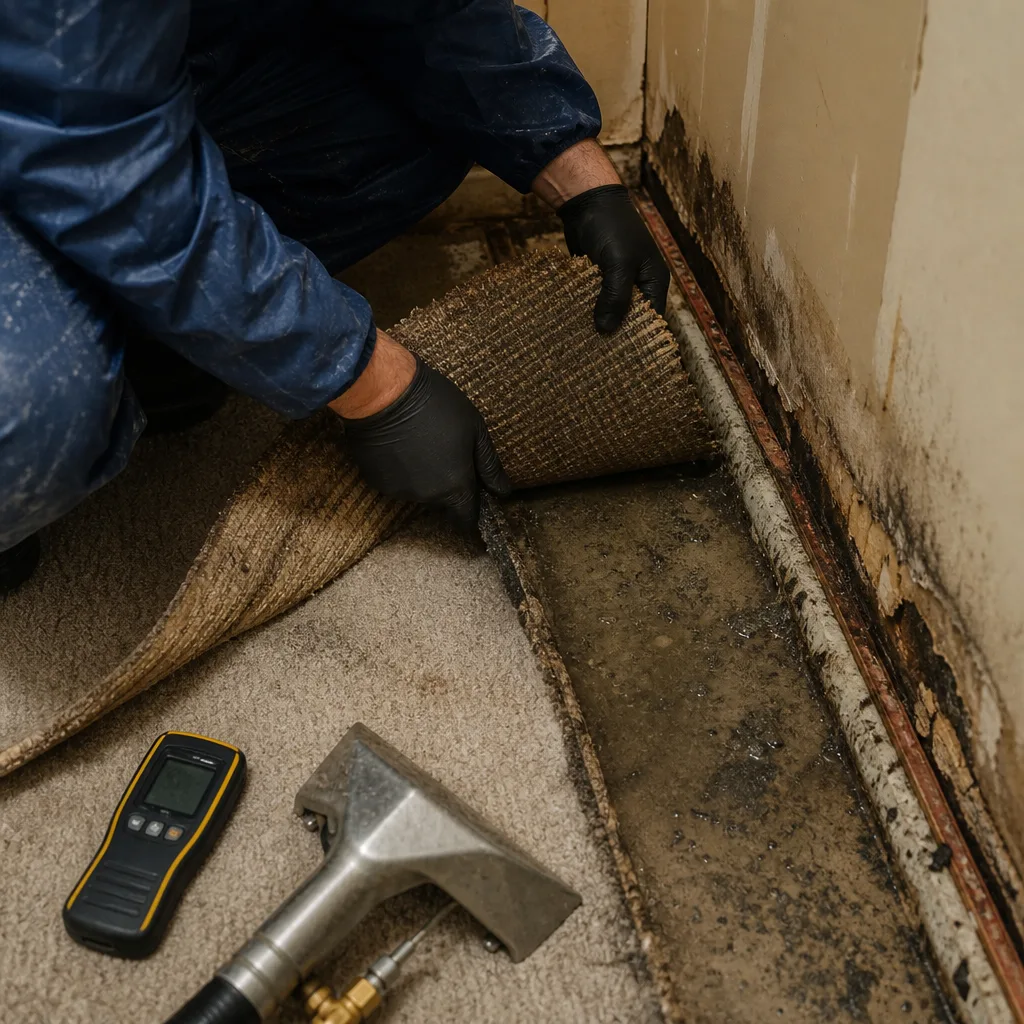
Dri-Eaz LGR dehumidifiers and Phoenix air movers go in pre-staged, sized for the square footage and the building’s freight-elevator windows. We log daily moisture readings and hand you the full drying log at the end. In Midtown’s pre-war buildings, this phase usually runs 3 to 7 days, not 24 hours. Cutting it short is how mold finds a permanent home.
Cleaning & Sanitization
Category 2 and 3 water get antimicrobial treatment and HEPA vacuuming of every affected surface. Soot from a fire gets dry sponge cleaning and chemical sponge work on hard surfaces. We protect tenant belongings, server rooms, and anything that can’t be replaced.
Specialty Treatment for Commercial Losses
Midtown jobs often need document recovery, inventory triage, and electronics stabilization for tenant businesses that can’t afford a week of downtime. We work around business hours, freight elevator schedules, and building management protocols. HEPA air scrubbers run negative pressure where needed, and clearance testing confirms the space is safe for occupancy.
Repairs & Restoration
Same crew, same job. We replace drywall, restore finishes, refinish floors, and coordinate with your building’s engineers on any mechanical, electrical, or plumbing repairs. One written scope, one team, one number to call if anything’s not right. The 90-Day Done Right Promise covers every water, fire, and mold restoration job in writing.
Need Emergency Commercial Restoration in Midtown Manhattan Now?
Crews minutes away, answering live 24 hours a day. The sooner we start, the less it costs.
Working With Your Insurance Company
Commercial restoration in Midtown Manhattan almost always involves an insurer, and the difference between a smooth claim and a denied line item usually comes down to paperwork. We document from the first hour: photos of every affected room, moisture readings taken with calibrated meters, and a line-item scope of work that your adjuster can read without a translator. Wade talks to your carrier directly, because the building owner or facility manager’s job is to run the building, not to play middleman between a restoration crew and a claims department. Every water, fire, and mold job is backed by the 90-Day Done Right Promise in writing.
What We Provide Your Insurer
- Thorough documentation of the loss
- Photos of all damage, room by room
- Moisture readings and drying logs
- A detailed, line-item scope of work
- Direct coordination with your carrier
Built for Midtown Manhattan’s Loss Calendar
The seasons hit Midtown’s buildings differently than a low-rise suburb, and the loss calendar shows it. January deep freezes are the worst. When temperatures drop below 10 degrees, supply risers and fire-service standpipes in pre-war towers let go, and the fall is measured in floors. February and March bring repeated freeze-thaw cycles to rooftop mechanical rooms, where flat roofs and old flashing leak into top-floor offices every time the ice shifts. Spring thaw pushes groundwater into below-grade loading docks and basement mechanical rooms, especially east of Lexington Avenue where the water table and old foundations are unforgiving. Summer convective storms dump an inch of rain in 30 minutes, and aging roof drains can’t keep up. The water finds the path of least resistance, which in a 90-year-old building is often the electrical switchgear. Nor’easters in the fall do the same damage slower, giving facilities managers time to think they’ve avoided the worst until the ceiling stains show up. Midtown’s district steam system, run by Con Edison and the largest in the United States, adds a damage vector no other market contends with. A steam main failure near 41st and Lex can force superheated vapor and asbestos-laden debris into connected basements. It’s a hazmat call and a restoration call at the same time.
Commercial Restoration Across Midtown Manhattan’s Neighborhoods
Midtown Manhattan is not one market. It’s a dozen building types, each with its own failure pattern. The Garment District’s converted loft buildings have thick floors and freight elevators that can handle heavy equipment, but their original cast-iron plumbing is thin and brittle. Bryant Park and the Avenue of the Americas corridor run heavy on Class A office towers where a single sprinkler discharge can flood two floors of trading desks and conference rooms before the valve gets shut off. Up in Times Square, retail storefronts and hospitality spaces share walls with active theaters and hotels, so any water or fire job means coordinating with neighbors whose revenue depends on staying open. The Lexington Avenue and Grand Central corridor is the steam zone. Any below-grade job there, especially east of Park, starts with the question: is this a broken pipe, or is this a Con Edison steam main that’s pushed superheated vapor and legacy asbestos into the basement? The 2007 explosion at 41st and Lex put that street on the map for every restoration crew in the city. Response routes matter here. We stage equipment where the freight elevator will let us in, and we plan dry-downs around tenant business hours, not against them. You can’t run 30 air movers through a lobby at 9 a.m. on a Tuesday and keep the building’s tenants happy.
Specialized Commercial Restoration Services We Offer in Midtown Manhattan
Office & Retail Restoration
Offices in Midtown’s pre-war towers need fast drying and faster documentation. We work overnight and early morning to get tenant spaces back before the 9 a.m. bell. Retail storefronts on Fifth, Madison, and Broadway need display-case salvage, inventory triage, and flooring that can be refinished rather than replaced. We’ve worked on Lexington Avenue near Grand Central, where a 1928 office building’s burst steam line pushed superheated vapor and asbestos-containing debris into connected sublevels. Full containment, negative air, licensed abatement alongside extraction, Dri-Eaz LGRs, Phoenix air movers, and moisture mapping to confirm the mechanical room was dry before the building reopened. That’s a normal Tuesday for us.
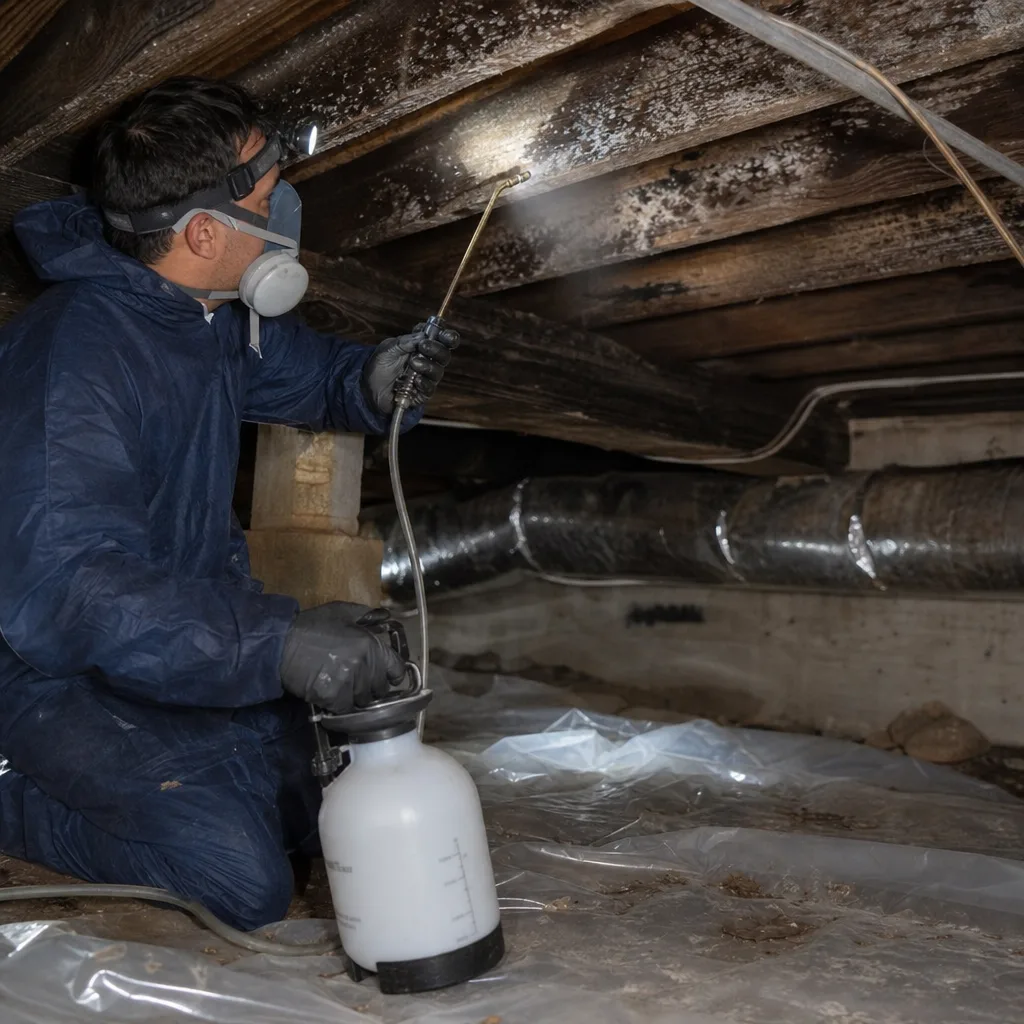
Multi-Unit & HOA Restoration
When water leaves a 25th-floor unit and lands in 10 apartments below it, every owner has a different version of what happened. We photograph everything, label everything, and give the board and property manager one report, not a stack of invoices. Standpipe leaks, sprinkler discharges, and domestic riser failures in Midtown co-ops and condos often mean working in occupied buildings, around residents who are nervous and angry. Wade’s crew is background-checked and uniformed, and Wade himself walks the building before any work starts. That accountability is the reason boards call us back.
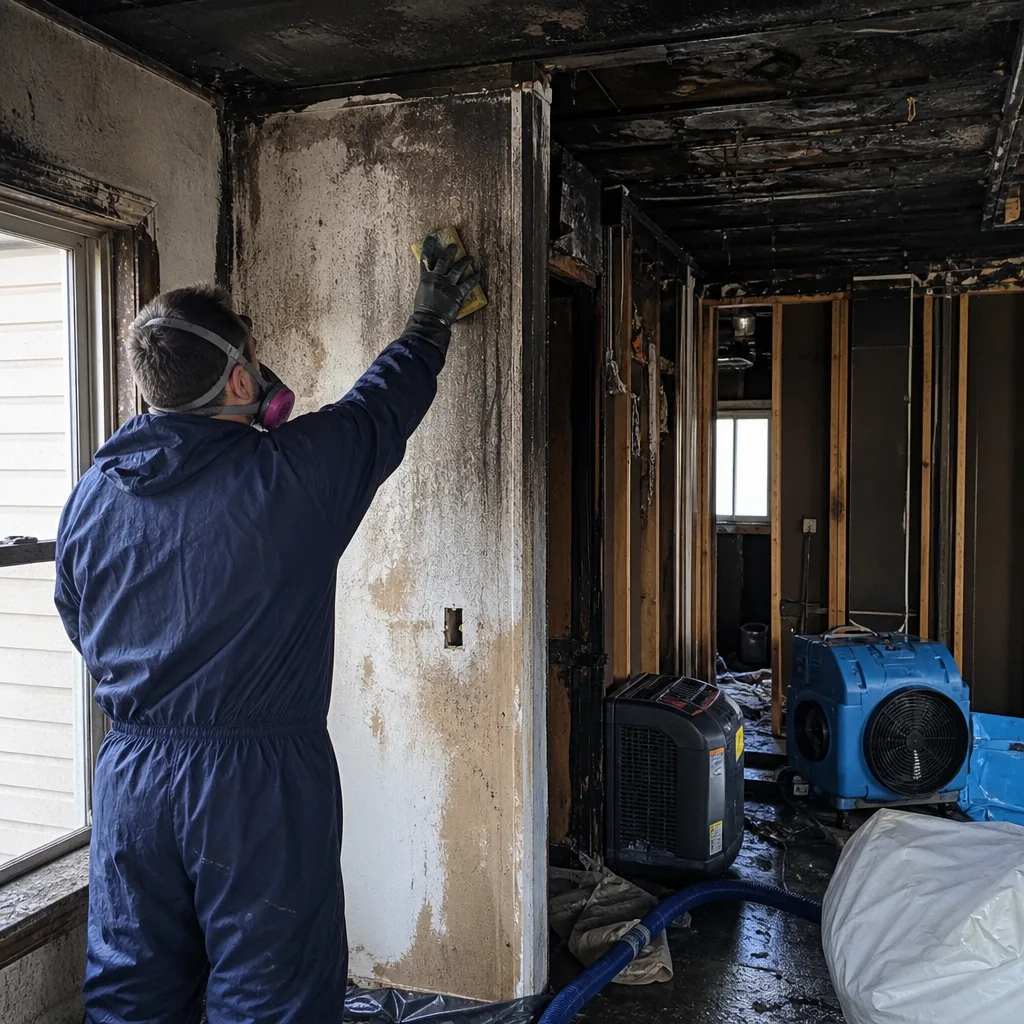
Industrial Facility Cleanup
Midtown’s industrial spaces are mostly below-grade loading docks, mechanical rooms, and sub-basement utility vaults, not factories. But the hazards are real: live electrical gear, legacy pipe insulation, confined access, and water that’s been sitting for weeks before anyone noticed. We bring HEPA air scrubbers, negative air containment, and crew who know how to work around energized switchgear and century-old steam lines without making the problem worse.
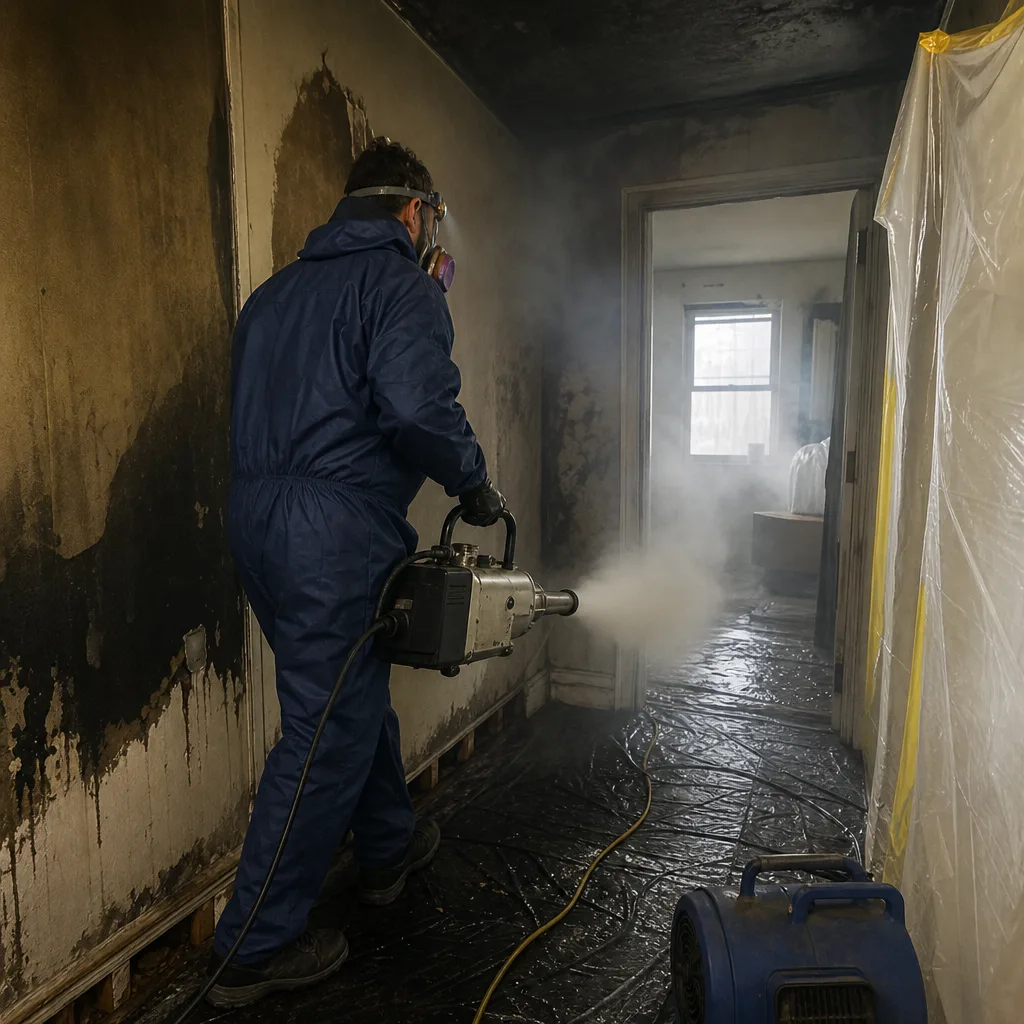
Large-Loss Response
A large loss in Midtown is not a flooded basement. It’s 15 floors of water, 200 tenants displaced, and a freight elevator that can’t be spared for equipment. We deploy pre-staged drying equipment, coordinate with building engineering on elevator windows, and sequence the job so the most critical building systems, electrical rooms, elevator pits, HVAC, come first. Large-loss restoration in Midtown is a logistics problem as much as a water problem. We’ve done it enough to know which corners can’t be cut.
Business Interruption Minimization
Every day a tenant can’t open is lost revenue, and insurers know that number. We document the interruption from hour one and work a schedule that gets critical spaces back online first: the server room, the retail floor, the check-in desk. Quick response doesn’t mean careless response. It means sequencing the work so the building reopens floor by floor, not all or nothing. Midtown’s commercial tenants have short patience for long drying logs. We hand them the log so they can see the numbers moving down, floor by floor.
What happens when you call
- 1
A real person answersNo phone trees - you reach a local pro.
- 2
You get an upfront price rangeHonest numbers before anyone is dispatched.
- 3
A background-checked tech heads outLicensed & insured, dispatched right away.
- 4
You approve before work beginsNothing starts until you say go.
Commercial Restoration Costs in Midtown Manhattan, NY
Office and retail restoration in Midtown Manhattan typically runs $4,000 to $25,000 for a contained, single-floor water loss, depending on category of water and how quickly extraction began. A multi-floor cascade from a broken standpipe or sprinkler discharge in a pre-war tower usually lands between $35,000 and $150,000, and when a Con Edison steam main failure forces concurrent asbestos abatement, the combined restoration and abatement scope can push past $250,000. Those are Midtown numbers, driven by freight-elevator logistics, after-hours building access, and the age of the infrastructure. Industrial facility cleanup in below-grade mechanical rooms runs $6,000 to $40,000, with hazmat protocols adding cost when legacy pipe insulation is involved. Most commercial policies cover sudden water and fire losses, but gradual leaks are often excluded, and that’s where a free visual inspection and a honest written scope keep a building owner from paying for work an insurer would have covered. Call (201) 903-9581 and we’ll walk the loss before you commit to anything.
We Also Serve Cities Near Midtown Manhattan
Midtown Manhattan is our home turf, but we handle commercial restoration throughout the city. Our Commercial Restoration team covers the Financial District, Lower Manhattan, Long Island City, and Midtown West, with the same 45-minute response and the same direct adjuster coordination. If your building is outside Midtown but the water is rising, call anyway. Wade will tell you straight whether we can get there fast enough to matter.
Serving Midtown Manhattan, NY - Our Local Coverage Area
We’re based in the Midtown Manhattan area and know this community well. Use the map below to see our service coverage - if you’re nearby, we can almost certainly help.
Midtown Manhattan Commercial Restoration Questions, Answered
How do you handle a Con Edison steam main failure that has blown asbestos into our Midtown building’s basement?
We treat every below-grade steam failure in Midtown, especially on the Lexington Avenue and Grand Central corridor, as a potential hazmat call. We set up full containment and negative air first, then coordinate licensed asbestos abatement alongside water extraction and structural drying. No one enters the space without proper protection, and no abatement gets skipped to save a day. Call (201) 903-9581 and we’ll start the sequence immediately.
Can your commercial restoration crew work around our freight elevator’s limited scheduling windows?
Yes, and we build the entire job around it. Midtown buildings usually give us 2 to 4 hour freight windows, so we pre-stage Dri-Eaz LGRs, Phoenix air movers, and desiccant units at the loading dock or alley entrance the night before, then move them in and out in the window. The drying sequence gets planned backward from the elevator, not the other way around.
What is moisture mapping and why is it critical for a pre-war Midtown high-rise?
Moisture mapping is a room-by-room record of where water is, how deep it went, and how fast it’s drying, using thermal imaging and penetrating meters. In a 1920s or 1930s Midtown tower, water hides in plaster walls, under terrazzo, inside chase cavities, and behind decades of layered renovations. Without a map, you can’t tell your insurer what’s wet, and you can’t prove the building is dry. We hand you the full drying log at the end of the job.
How fast can you respond to a sprinkler discharge that has flooded multiple floors of our Midtown office tower?
Within 45 minutes of your call, we’re on site. For a multi-floor cascade in Midtown, the first 90 minutes decide whether you’re drying 3 floors or replacing drywall on 9. We extract standing water, stabilize ceilings, and start running air movers and dehumidifiers before the building’s cleaning crew has even arrived. Call (201) 903-9581 the moment the valve is shut and the water is still moving.
Do you have experience with category 2 or 3 water from aging standpipes or sewer backups in Midtown basements?
We do. Category 3 water, what most people call black water, is common in Midtown’s below-grade spaces where sewer lines, steam condensate, and stormwater share the same cramped utilities. We remove contaminated materials, sanitize with antimicrobial agents, and run HEPA air scrubbers until the space passes clearance testing. Category 3 is not a job for a wet vac and a fan. It’s a health hazard, and we treat it like one.
How does Midtown’s strict building-management protocol affect restoration timelines?
Everything moves through building management: freight elevator windows, after-hours access, loading dock schedules, and union doorman logs. We handle all of that, not you. Wade’s team has worked with boards, managing agents, and building engineers across Midtown for years, so we know what a midtown high-rise’s protocols look like before we ever arrive. You approve the work; we wrestle the logistics.
Will insurance cover the cost of commercial restoration in Midtown Manhattan?
Most sudden water, fire, and steam losses are covered, but the coverage depends on how the policy reads and how well the loss is documented. We provide photos, moisture logs, and line-item scopes from the first hour, and we talk to your adjuster directly so you’re not left explaining the difference between Category 2 and Category 3 water to a claims examiner. Free visual inspection, always.
What should we do in the first 30 minutes after a burst pipe or sprinkler discharge in our Midtown building?
Shut off the water source if you can safely reach it, kill power to the affected area if water is near electrical panels, and move what you can lift. Then call (201) 903-9581. Don’t wait for a plumber. Don’t wait for your insurance company to call back. The first 30 minutes are extraction time, and every minute after that is money and demolition. Call first, then call whoever else you need.
Written by Wade Ferris, Owner at Wade’s Restoration. Wade founded the company in 2007 and still answers his own phone, 24/7. Licensed, insured, and proud to serve commercial building owners in Midtown Manhattan.