
Last updated August 26, 2026
Free visual inspection and a written scope of work before any mitigation begins - photos, moisture readings, and drying logs go in your claim file
The scope we write is the scope we bill. Anything new gets shown to you, in writing, before we touch it.


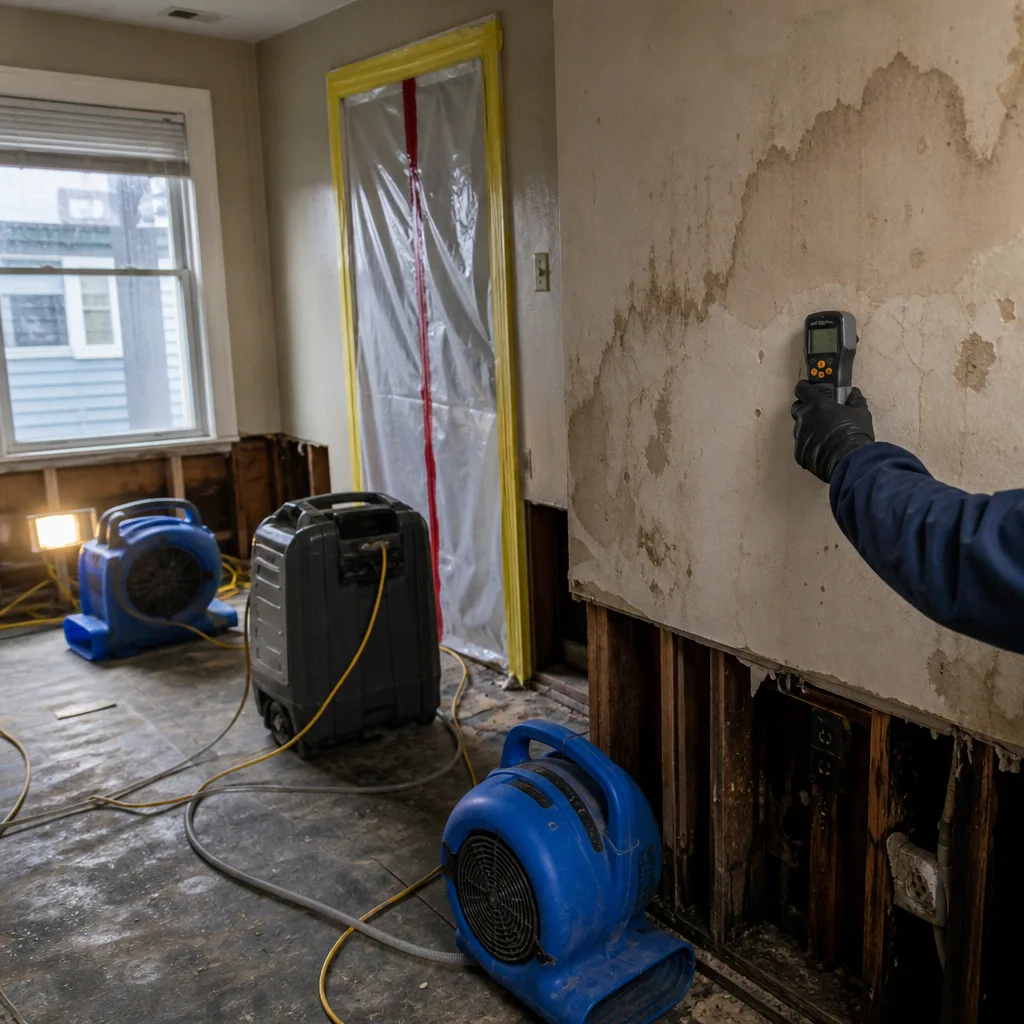 Before
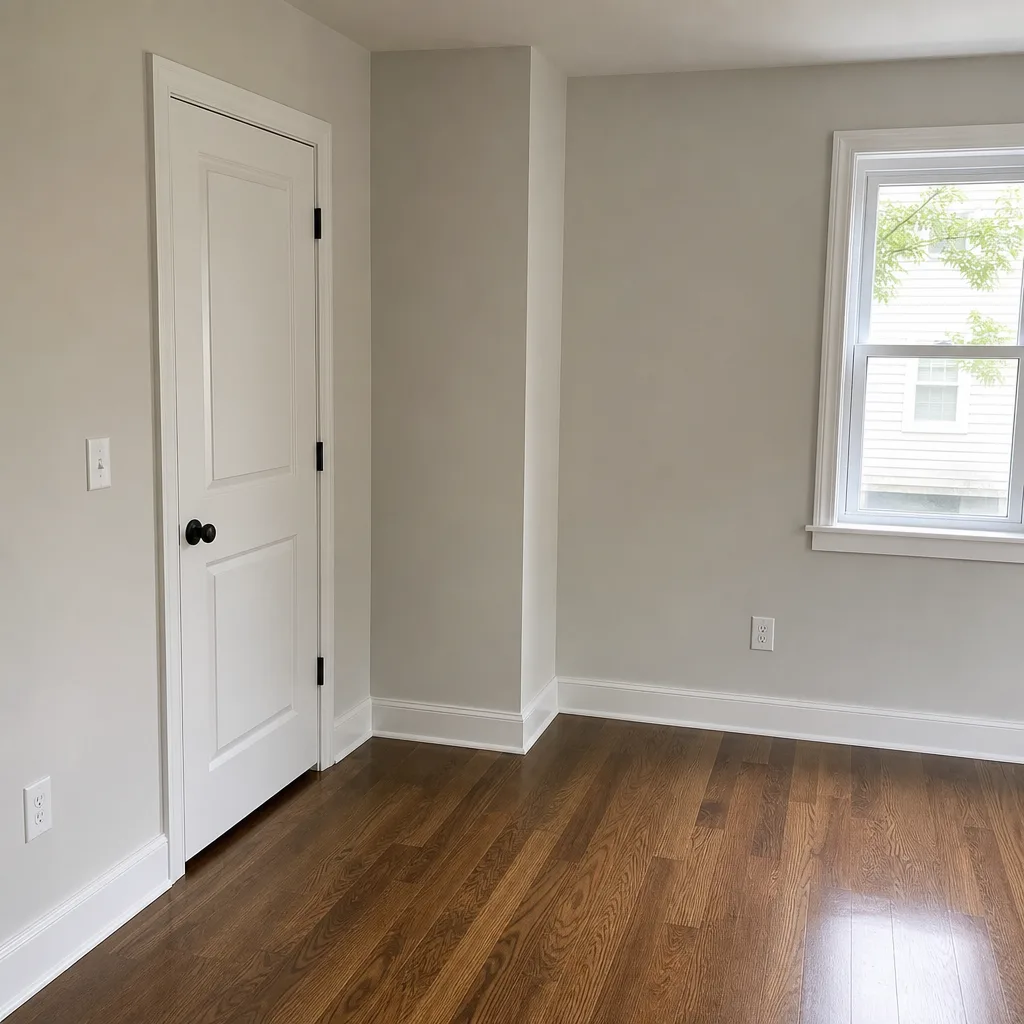 After
After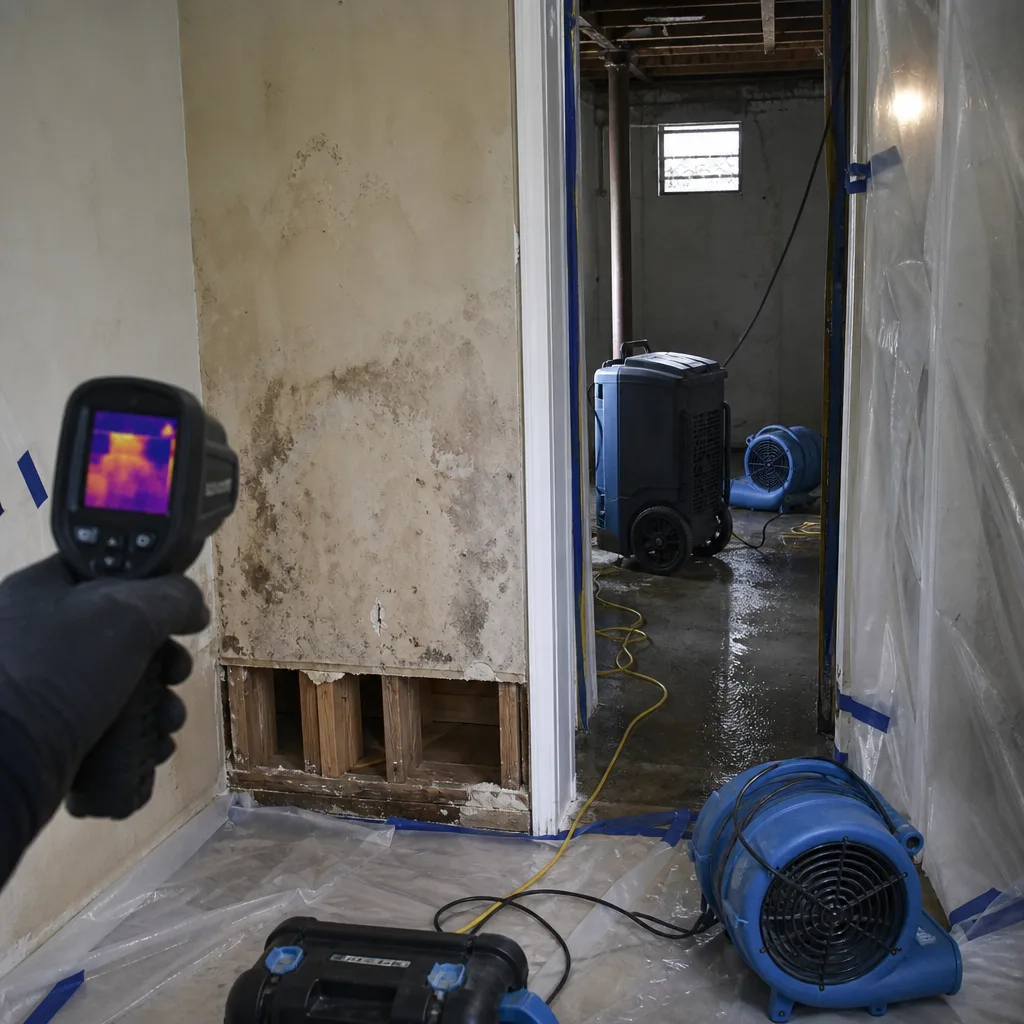 Before
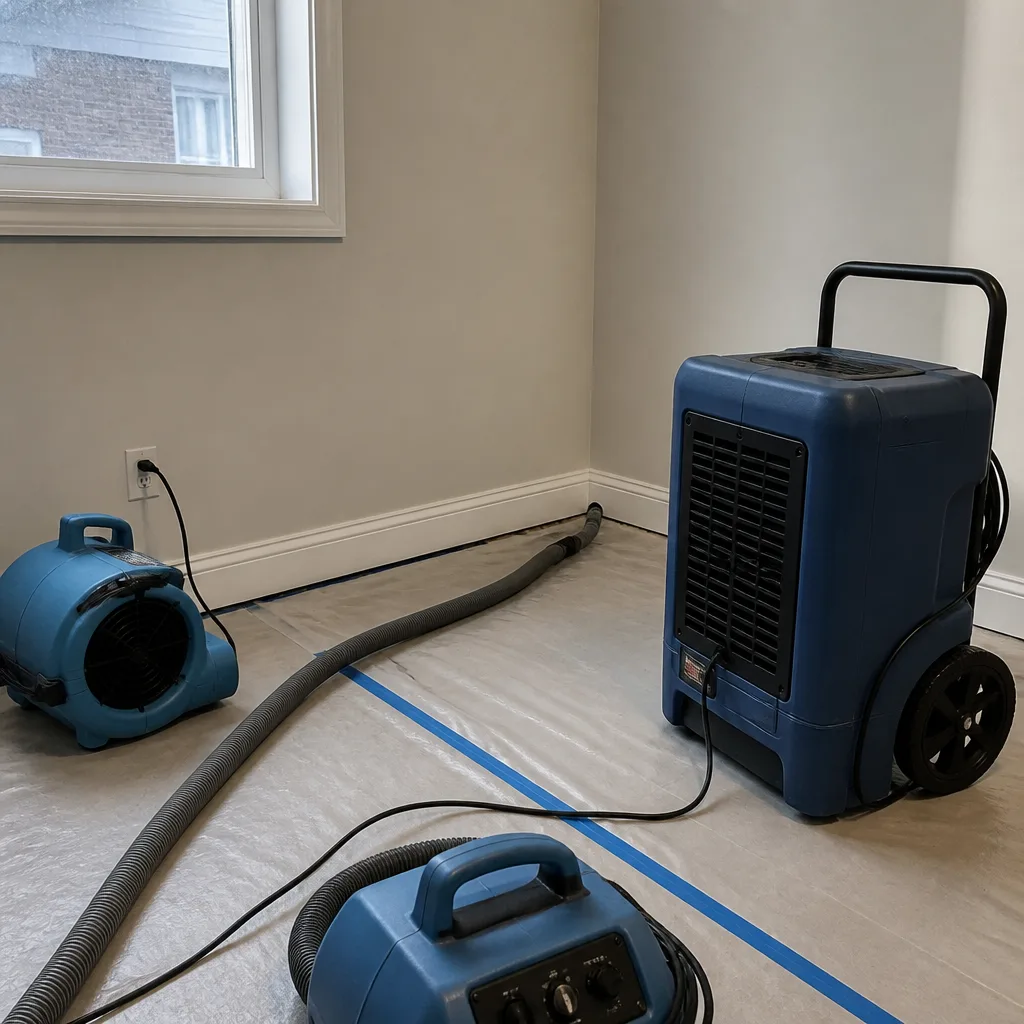 After
After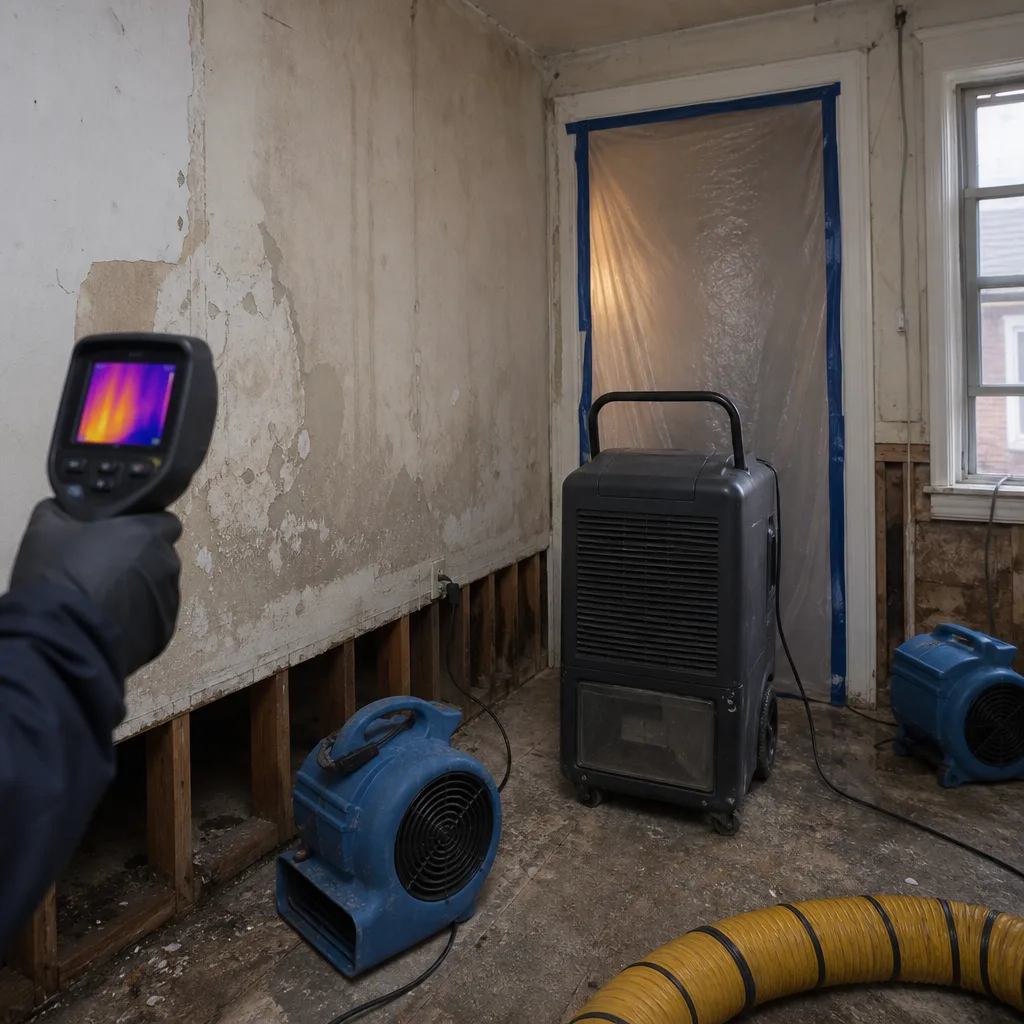 Before
 After
AfterDIY vs Professional Damage Restoration: The Jersey City Homeowner’s Decision Guide
Every year, Jersey City homeowners pump out flooded basements, scrub mold off bathroom ceilings, and patch charred drywall with the sincere belief they’ve solved the problem. Some of them are right. A lot of them are eighteen months away from a much bigger, much more expensive discovery. The difference rarely comes down to skill. It comes down to something quieter: whether the work was documented, whether the moisture was actually gone, and whether a future insurance adjuster or home inspector will accept the fix as legitimate. This guide draws the real line between what you can safely handle yourself and what will quietly cost you far more than the professional bill ever would, and you can find more guides & resources in our blog.
Quick Answer
A Jersey City homeowner can legally and safely handle small, clean-water spills, surface mold under 10 square feet, and cosmetic smoke cleaning. Anything involving Category 2 or 3 water (gray or black), water that sat more than 48 hours, mold behind walls, structural charring, or insurance claims above your deductible is a job where DIY almost always costs more than hiring a professional from the start. The deciding factor isn’t effort, it’s documentation: if you can’t prove the moisture is gone, you haven’t done the work in the eyes of your insurer or a future buyer.
Table of Contents
- Where the Line Actually Sits
- The Insurance Claim Reality Nobody Mentions
- What NJ Law Says You Can Self-Perform
- The Attached Building Problem in Jersey City
- What’s Genuinely Safe to DIY
- What Looks Simple but Isn’t
- When We’d Tell You to Handle It Yourself
Where the Line Actually Sits
Let’s establish the framework before we get into specifics. Damage restoration in Jersey City breaks into three categories that map cleanly to what you should do.
The first category is clean-water surface damage from a known source that started and stopped within the same day. A supply line to a washing machine burst at 2 p.m., you shut the water off at 2:20, and you’re standing on wet concrete. This is your territory.
The second is any water that touched the ground, sewage, a toilet overflow, or sat for more than two days. By hour 48, even clean water has picked up enough bacteria from your own floor to be classified as Category 2. Mold spores that were dormant start colonizing. This is the range where what you can’t see is the entire problem.
The third is anything involving fire, structural framing, or HVAC systems. Smoke travels inside wall cavities and vents in ways you cannot visually track. Charred framing may look intact while carrying less load than the code requires.
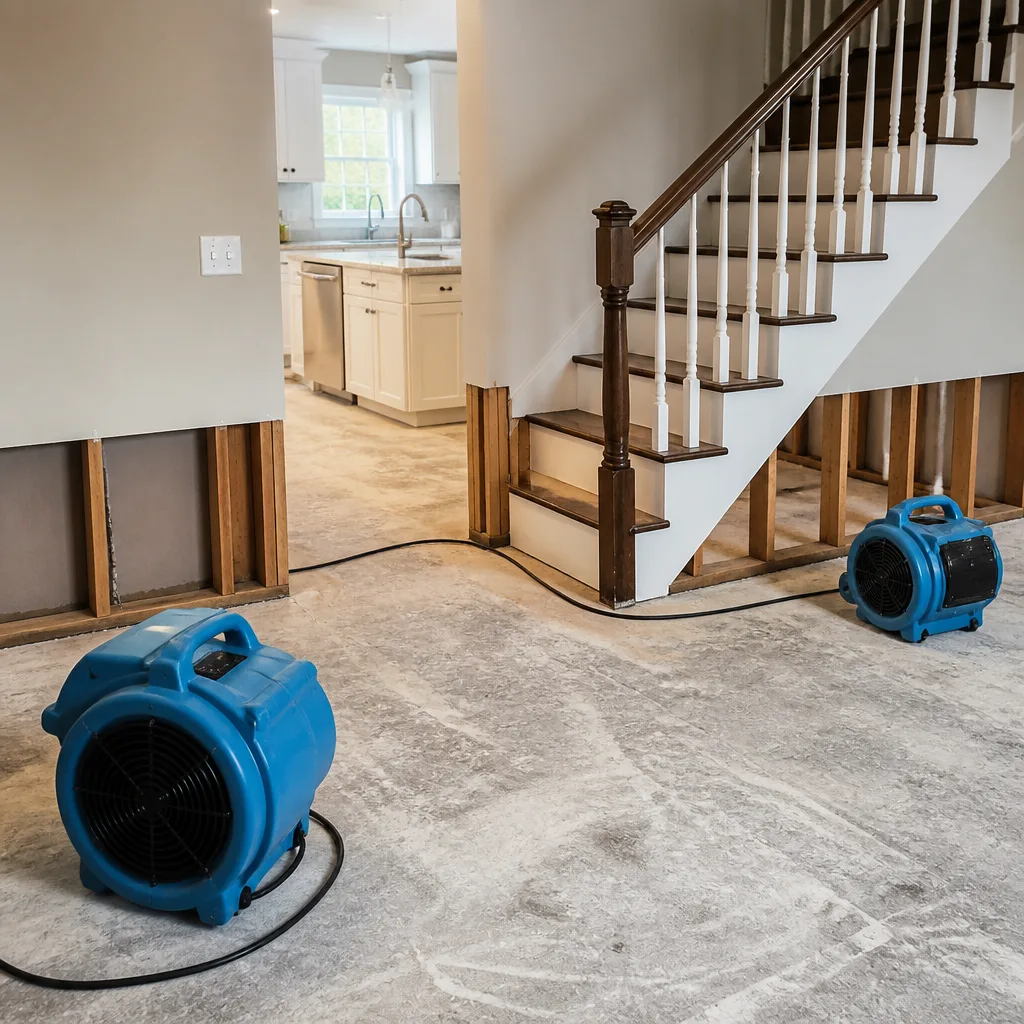
We’ve walked into Jersey City homes where a homeowner spent three weekends drying out a basement with box fans and a dehumidifier from a hardware store. The floor felt dry. The walls felt dry. Eight months later, the baseboards were buckling and the mold test came back positive for stachybotrys. The moisture had wicked into the bottom plates of the walls and into the drywall’s paper backing. The homeowner had spent $800 on rental equipment and his own labor, then $14,000 on remediation. A professional dry-out with daily moisture readings and a Dri-Eaz drying plan would have cost between $2,500 and $5,000, and the mold never would have happened.
The Insurance Claim Reality Nobody Mentions
Here is the part most DIY guides skip, and it’s the part that matters most in Jersey City where flood and water claims are common enough that adjusters arrive already skeptical.
Your homeowner’s insurance policy contains a clause called mitigation of damages. It says you are legally required to prevent the damage from getting worse. That clause cuts both ways. If you do nothing and the damage spreads, your insurer can reduce or deny your claim for failure to mitigate. If you do the work yourself and do it wrong, your insurer can reduce or deny the claim because they can’t verify the work was done properly.
Here’s the mechanics. When a professional restoration company handles a water loss, we create a paper trail: initial moisture readings from every affected room, a written drying plan, daily readings logged on a moisture log, photos before, during, and after, and a final moisture content verification. That file is what your adjuster uses to approve the scope of the claim.
When you do the work yourself, none of that exists. You have no baseline numbers, no drying curve, no third-party verification. Your adjuster has no way to know if the subfloor under your luxury vinyl plank ever actually dried. So they write the check for what they can verify: the visible surface damage. The hidden damage inside your walls, under your flooring, in your ceiling cavities, the stuff that becomes a $30,000 mold job in eighteen months, is not covered because you can’t prove it existed and was addressed.
This isn’t an insurance company being villainous. It’s a structural reality of how claims adjusters are trained to work. They approve what is documented. Anything undocumented is suspect by default.
One more point on this. If you do the work yourself and then later discover the job was incomplete and bring in a professional, many insurers will treat that as a second claim or deny coverage for the original loss entirely, citing your failed mitigation as the reason the damage progressed. We have sat across the table from homeowners in this exact position more times than we can count. It is the single most expensive mistake we see in Jersey City restoration, and it’s entirely preventable.
What NJ Law Says You Can Self-Perform
New Jersey doesn’t require a license for restoration work in the way it does for electrical and plumbing. That’s the loophole a lot of folks think gives them a green light. Let’s look at what the law actually says, because it’s more nuanced than “restoration isn’t licensed.”
Under the New Jersey Consumer Fraud Act and the associated Home Improvement Contractor regulations, anyone performing home improvement work for compensation must register with the Division of Consumer Affairs. Restoration work that includes reconstruction, drywall replacement, painting, or flooring installation falls under this umbrella. The homeowner doing their own work is exempt. So yes, legally, you can do the work on your own home.
But here’s what the homeowner’s exemption doesn’t cover.
- Anyone you hire who isn’t registered. If you decide to “save money” by hiring a handyman from Craigslist for water damage, and that handyman isn’t registered as a home improvement contractor in New Jersey, you’ve just hired an unregistered operator. That matters when the work fails, because the Consumer Fraud Act’s protections, including treble damages for violations, only apply to registered contractors. You have essentially no legal recourse when an unregistered worker walks away from a bad job.
- Mold assessment. New Jersey law specifically regulates mold inspection and assessment professionals. If you’re selling your home in Jersey City, NJ, and you did your own mold cleanup, the buyer’s inspector will still find signs of past mold, and you’ll need a licensed mold assessor to certify the problem is gone. Your DIY cleanup, however thorough, doesn’t satisfy a real estate disclosure requirement. You’ll end up paying for professional assessment anyway, plus the remediation you skipped.
- Permit-triggering reconstruction. Once you move from drying and cleaning into replacing structural members, rewiring affected circuits, or moving plumbing, Jersey City’s building department requires permits and inspection. Uninspected work in your walls becomes a title defect at sale. You will either disclose it and take the price hit, or fail to disclose it and carry the legal liability.
The practical translation: the state won’t stop you from drying out your own basement. But the state also won’t protect you when the shortcut comes back around. And in a market like Jersey City where properties trade hands constantly, the future transaction is where DIY restoration gets exposed.
The Attached Building Problem in Jersey City
Jersey City isn’t the land of single-family homes on acreage. It’s a city of attached houses, rowhomes, multi-family conversions, and condominiums. That physical reality changes the DIY math entirely, and it’s the point most generic restoration guides miss completely.
In a detached house, a failed DIY dry-out is your problem. In a rowhouse or condo, it’s also your neighbor’s problem. And in Jersey City, where buildings share party walls, floor joists can run continuously from one unit into the next, and floor assemblies are shared between your ceiling and the upstairs neighbor’s floor.
When you dry out a wet wall cavity in an attached building using box fans and household dehumidifiers, you’re not actually drying the cavity. You’re drying the surface. The moisture inside that shared wall cavity doesn’t just sit there. It migrates. Through the joists. Through the common framing. Through the masonry party wall. The moisture moves to the path of least resistance, and in an attached building, that path often leads into the building’s shared structural elements or directly into the neighboring unit.
What happens next is a story we’ve seen play out in Jersey City more than once. The neighbor on the other side of that ceiling or wall starts seeing bubbling paint, a musty smell, or mold on their side of the shared surface. They call a mold inspector. The inspector traces the moisture source back to your side of the wall. Your neighbor’s insurance company writes a subrogation letter to your insurance company, or directly to you. Suddenly your DIY dry-out has become a liability claim against your policy or your personal assets.
Even when it doesn’t reach the subrogation stage, you’ve created a disclosure obligation. In New Jersey, you must disclose any known condition that materially affects the property’s value or a neighbor’s enjoyment. If your DIY restoration caused moisture intrusion into a shared wall, and you sell without disclosing, you’re carrying that liability into the next transaction.
The professional approach uses equipment made for cavity drying: Injectidry systems that push dry air directly into wall cavities under pressure, moisture meters that verify the hidden surfaces have dried, and daily monitoring to track the drying curve. That’s not equipment a homeowner rents from a big box store.
What’s Genuinely Safe to DIY
This section matters because we’re not going to tell you everything needs a professional. That’s not true, and saying it would be dishonest. Here’s what a Jersey City homeowner can genuinely handle without creating future problems.
Fresh, clean water on hard, non-porous surfaces
A supply line broke. You caught it within an hour. The water never touched drywall, carpet, or wood. This is a mop-and-fan job. Extract what you can, run a box fan and a household dehumidifier for 48 hours, and you’re done. Concrete basement floors, tile, and linoleum are your friends here.
Surface mold under 10 square feet on non-porous surfaces
The EPA’s own guidance says a homeowner can clean mold patches smaller than 10 square feet. If it’s on tile, glass, metal, or sealed countertops, a solution of water and detergent handles it. Wear an N95 mask, gloves, and eye protection. If the mold is on drywall, stop and read the next section.
Cosmetic smoke cleaning on hard surfaces
A small kitchen fire that didn’t spread through the house leaves soot on the ceiling and cabinets. If the fire was contained to one room, the smoke didn’t enter the HVAC system, and there’s no structural damage, you can clean soot with a dry chemical sponge and a degreaser. This is messy but safe work. The caveat: if you can smell smoke anywhere else in the house, it traveled, and you’re now dealing with a ventilation problem.
Minor sewage backups you caught immediately
A toilet overflowed and you caught it in minutes, the water stayed on tile, and you bleached the floor. Fine. The distinction is time and surface. If the water soaked into the vanity’s MDF base or seeped between the toilet and the flange, the contamination is now inside something porous, and that’s no longer a surface cleaning.
What Looks Simple but Isn’t
Some jobs look like they should be DIY because the tools are simple and the concept is intuitive: wet thing needs to dry. Here’s where that intuition fails, and it fails in ways that cost Jersey City homeowners real money.
Water inside walls, ceilings, or under flooring
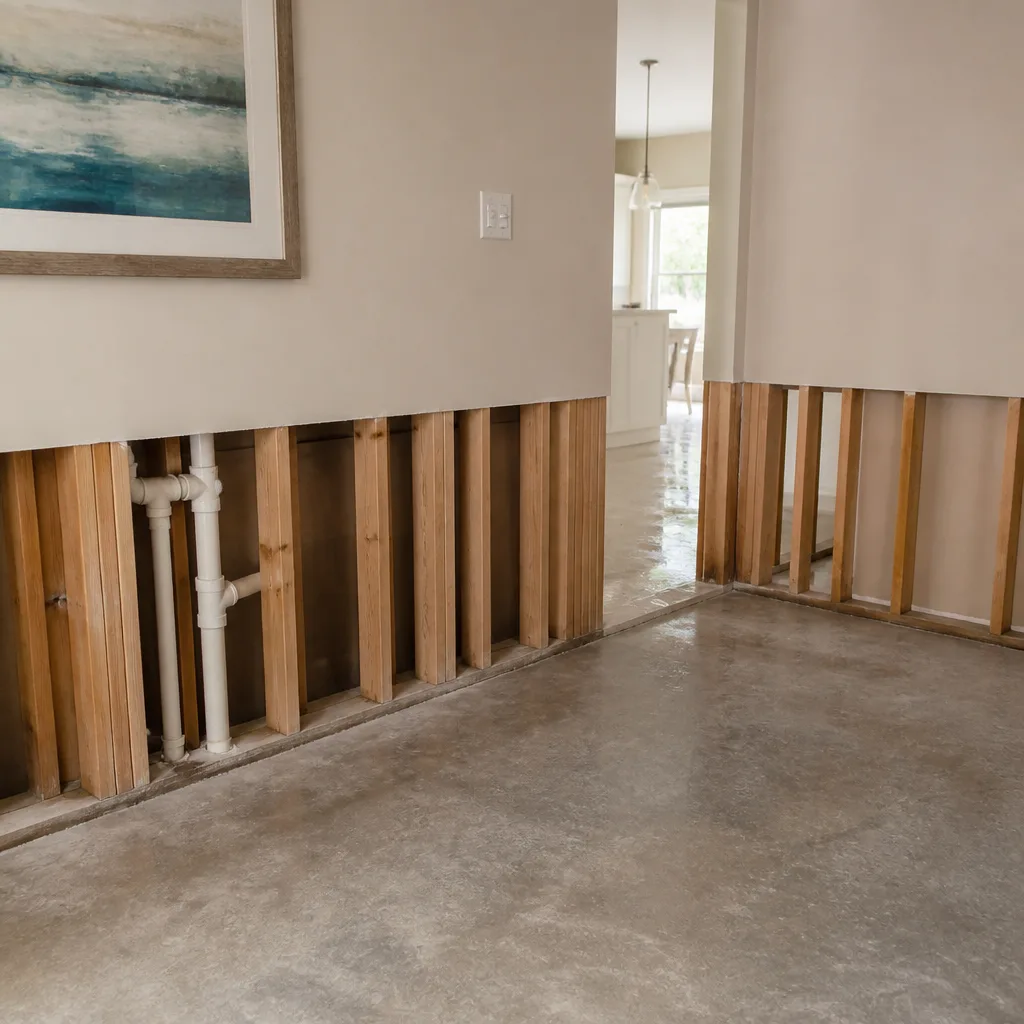
You cannot see inside your wall cavity. You cannot see under your floor. What you can see, the surface, will feel dry to the touch within a day or two while the cavity behind it is still at 40% moisture content. A professional uses moisture meters that measure the actual water content of hidden materials, not just the surface. We’ve had Jersey City homeowners tell us their wall “felt dry” when our meter showed the studs were still saturated. That moisture becomes mold, rot, and framing compromise. This is not a household-tool job.
Water that sat for more than 48 hours
Time is the silent multiplier in restoration. Water that’s been sitting for two days has begun hosting microbial growth, and the classification shifts from Category 1 to Category 2. The water column itself has become a contaminant, regardless of how clean it started. You can’t clean Category 2 water with bleach and elbow grease. The affected porous materials need professional treatment or removal.
Mold on or behind drywall
Drywall is basically compressed paper. Once mold roots into the paper face, no cleaning solution will remove it. You’d have to cut out the affected section, and once you cut, you’ve just disturbed a mold colony and released spores into your home’s air. Professional mold remediation in Jersey City requires containment: negative air pressure, HEPA filtration, sealed workspaces. Without containment, your DIY mold removal turns a localized problem into a whole-house problem.
Anything involving sewage (Category 3 water)
Sewage cleanup is not a cleaning job. It’s a contamination job. The water contains pathogens that require PPE, hospital-grade disinfectants, and careful disposal of any porous material it touched. Carpet, pad, drywall, insulation, anything that absorbed sewage water goes into a bag and out of the house. Homeowners who try to “save” sewage-soaked carpet are keeping a biohazard in their living room. The IICRC standards that professionals follow don’t exist as suggestions; they exist because people have gotten seriously ill from improper sewage cleanup.
Fire damage that reached the structure
If the fire charred or burned framing, you have structural damage. It doesn’t matter that the wall is still standing. Charred wood has lost a significant percentage of its load-bearing capacity, and the only way to verify safety is an engineering assessment. This is also where smoke remediation gets complicated: smoke penetrates porous surfaces and hides inside HVAC ducts, paint layers, and insulation. A household cleaning will not remove smoke odor because the odor lives in the materials, not on them.
High-tension springs and structural components after fire
This one deserves special attention. Garage door springs and similar high-tension components that have been through a fire can lose tempering and fail catastrophically. Even without fire, garage door spring work kills people every year. Add fire exposure to the mix and the failure risk multiplies. This is never a DIY job, under any circumstances. A trained professional with the right tools and experience is the only safe path.
When We’d Tell You to Handle It Yourself
This is the section most restoration companies won’t write, because it sends work away from their door. We’ll write it anyway, because the whole point of this guide is honesty, and we’ve been in Jersey City long enough to know that telling a homeowner the truth builds more trust than scaring them into a job they didn’t need.
If you call us about a small, fresh, clean-water spill on a tile floor and you caught it fast, we’ll tell you to mop it up, run a fan, and call us if anything feels damp in a week. No charge for that. If you have a two-square-foot patch of mold on a bathroom tile and you’re capable of wearing gloves and a mask, we’ll tell you to clean it yourself and keep an eye on it. If you had a small kitchen fire with soot on the ceiling and no structural damage, we’ll tell you which dry sponge to buy.
Where we draw the line is the moment the problem involves hidden moisture, contaminated water, structural damage, or an insurance claim. Those four scenarios share one thing in common: the stakes of getting it wrong are invisible until they’re expensive. And in those cases, the professional call isn’t a sales pitch, it’s the cheapest option.
We’ve also told homeowners the reverse: we’ve told them to call their insurer first, because the loss was big enough that a professional restoration company’s documentation would be the difference between a denied claim and a covered one. That’s the other side of honest advice.
That’s what “done right” means to us. Not just the physical work, but the advice that precedes it. If you’re not sure which category your situation falls into, the phone call is free, and we’ll tell you straight. We’d rather tell you it’s a mop job than charge you for a crew you didn’t need. We’ve been doing that since 2007, and it’s why folks in Jersey City keep passing our number around.
How to Evaluate a Restoration Contractor Before You Commit
Let’s say you’ve read this far and realized your situation is a professional job. The next mistake homeowners make is hiring the wrong professional. Here’s a simple framework, born from seventeen years of seeing what happens when the wrong company gets the call.
Ask for the owner’s name, not the franchise’s
National chains operate on a franchise model. The person who answers the phone works for a call center in another state. The crew that shows up works for a local franchisee you’ve never heard of. The incentive structure rewards upselling. Ask this question: “Who owns the company, and will I meet them?” If the answer is a corporate phone tree, keep looking. Wade Ferris answers his own phone in Jersey City. You’ll get him or you’ll get his team, not a queue.
Ask for a written moisture log
Almost nobody in the trade does this. Ask the contractor if they’ll hand you the daily moisture readings at the end of the job. If they look confused, or say they “don’t really do that,” you’ve learned something important. Wade’s Restoration hands every water damage client a complete moisture log at the end of the job. It’s your paper trail for the insurance company, for a future buyer, and for your own record. It costs us nothing to provide, and it changes everything about accountability.
Ask who talks to the adjuster
This is the question that separates good contractors from great ones. When you hire a restoration company for an insurance job, someone has to communicate your damage to the adjuster. If the contractor says “we’ll give you the estimate and you work it out with your insurance,” you’ve just been handed a second job you didn’t want: coordinator between two parties who don’t trust each other. A restoration company that communicates directly with your adjuster, with photo documentation and written scope, is worth every dollar. That’s how we operate, and we’ve had adjusters thank us for making their job easier.
Check the equipment list
A box fan from a hardware store and a rental dehumidifier is not restoration equipment. Professional drying uses commercial-grade equipment from manufacturers like Dri-Eaz, Phoenix, XPOWER, and B-Air, with pumps and extractors that pull water out of materials rather than just circulating air. Injectidry systems dry wall cavities directly. This equipment matters because it shortens the drying time from weeks to days, and every day of moisture equals more microbial growth.
The same principle applies to credentials. IICRC certification is not a marketing sticker. It means the technician has passed a standardized exam on water damage restoration standards. RIA affiliation and IFA recognition indicate the company is engaged with the industry bodies that set restoration standards. These credentials exist because restoration work is technical, and the consequences of improper technique are severe.
Common Mistakes to Avoid
- Waiting to see if it dries on its own. Moisture doesn’t evaporate out of wall cavities and subfloors the way it does off a countertop. It sits there, feeding mold and rotting framing, while you wait. Every 24 hours of sitting moisture moves you closer to a much bigger remediation job.
- Using bleach on mold. The EPA and industry standards both say it: bleach does not kill mold on porous surfaces, and it can actually make the problem worse by adding moisture. It also presents a false sense of security, because the surface looks cleaner while the roots remain behind the wall.
- Covering the smell with air fresheners. If you’re buying plug-ins and candles to cover a musty odor in your Jersey City home, you’re treating a symptom that indicates active mold growth somewhere you can’t see. Masking the smell doesn’t address the moisture that’s creating it.
- Hiring the cheapest unregistered handyman. In New Jersey, unregistered contractors have no Consumer Fraud Act accountability. The “savings” evaporates the moment the work fails and you have no legal recourse. Spend the money on a documented professional job that carries a written promise.
- Skipping photos and documentation of the original damage. Your adjuster wasn’t there when the flood happened. If you don’t have photos of the standing water, the wet drywall, the soaked flooring, your claim rests entirely on your description. Photograph everything before you touch anything.
- Assuming your policy covers what happened. Flood damage from rising groundwater is not covered by standard homeowner’s insurance. Sewer backup requires an endorsement. Don’t assume coverage exists. Call your agent before you spend money, and get the coverage determination in writing.
- Reporting the claim before you understand the damage. Any claim on your record, even one that’s denied or settled for pennies, can raise your premiums or trigger non-renewal. Understand the scope first. A professional assessment helps you make an informed decision about whether to file at all.
When to Call a Professional
Call if the water touched drywall, flooring, or insulation and sat for more than a couple hours. Call if there’s a sewage smell or the water came from outside your house or a drain. Call if you see mold on anything porous or smell mold you can’t locate. Call if there was a fire that reached any structural member or charred anything other than cosmetic surfaces. Call if you’re in an attached building and the moisture has entered a shared wall or ceiling. Call if your damage is large enough that you’re considering an insurance claim, because professional documentation is the difference between a claim that gets paid and a claim that gets challenged. Wade’s Restoration offers free estimates in Jersey City. Call (201) 903-9581 and Wade will tell you straight what you’re dealing with.
Frequently Asked Questions
Yes. New Jersey law doesn’t require a license for a homeowner doing restoration work on their own property, and drying out a flooded basement with household equipment is legal. The legal right and the smart choice are different things. If the water was contaminated or sat more than 48 hours, a professional restoration with documentation protects you for the insurance claim and the future sale that DIY drying doesn’t.
Professional water damage restoration in Jersey City typically costs $2,500 to $7,500 for a standard clean-water dryout including extraction, equipment, monitoring, and documentation. That range covers most single-room incidents that don’t require rebuild. The cost of doing it wrong yourself is the cost of mold remediation eighteen months later, which can run $10,000 to $30,000, plus whatever your insurer denies because the original mitigation was unverified. For an exact quote, call (201) 903-9581.
Most homeowner’s policies cover water damage from sudden and accidental events like a burst pipe or a supply line failure. They don’t cover flood, groundwater, gradual leaks, or sewer backup without specific endorsements. Call your agent before you spend. A professional restoration company can also document the damage in a way that maximizes an honest claim. We deal with adjusters directly so you’re not the one stuck in the middle.
In Jersey City, if you call Wade’s Restoration at (201) 903-9581, you’ll talk to a live person, and in most cases, Wade or his crew can be on the road within the hour with extraction equipment. Water damage waits for no one, and the first 48 hours are the window where fast response is the difference between a dry-out and a full remediation. Calls are answered 24/7, no voicemail, no answering service.
It depends on surface area and surface type. Under 10 square feet on non-porous surfaces like tile, a cleaning is enough. If the mold is on drywall, behind walls, or covers more than 10 square feet, cleaning is not enough because the mold roots into the material and the spores have spread through your air. Mold remediation in Jersey City requires containment and material removal, not surface cleaning. Get a professional assessment before you decide which path you’re on.
If you hire Wade’s Restoration, we do. That’s the point of hiring a company that’s been doing this in Jersey City since 2007. We compile the moisture logs, photos, written scope, and daily readings, and we communicate directly with your adjuster so you’re not the one relaying information between two parties. That direct communication is one of the biggest reasons insurance jobs go smoothly when we’re involved. See our water damage restoration services in Jersey City for details on how we document the job from first response to final verification.
The Bottom Line
The decision between DIY and professional restoration in Jersey City isn’t about capability. It’s about consequence: whether you can prove the work was done right, whether hidden moisture will come back to collect, and whether your insurance company will honor the claim. Small, fresh, clean-water incidents on hard surfaces are your territory. Everything else belongs to someone with the equipment, the training, and the documentation to make the invisible problems visible. We’ve spent seventeen years in Jersey City doing that work, writing down the numbers, and standing behind the result with a written 90-Day Done Right Promise. If you’re not sure which side of the line you’re on, call (201) 903-9581. The answer is free, and it might save you thirty thousand dollars.
Written by Wade Ferris, Owner at Wade’s Restoration, serving Jersey City since 2007.