
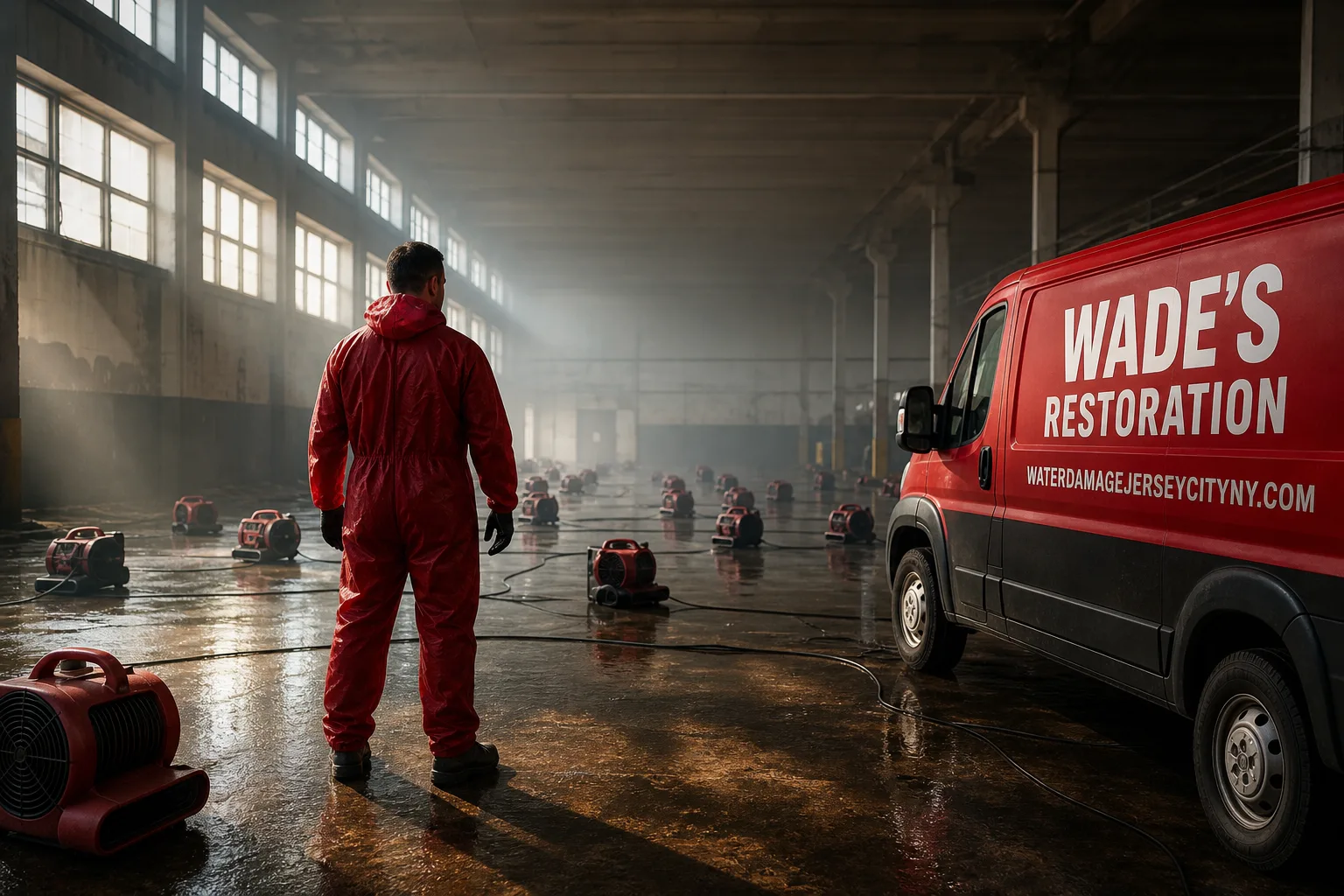
Free visual inspection and a written scope of work before any mitigation begins - photos, moisture readings, and drying logs go in your claim file
The scope we write is the scope we bill. Anything new gets shown to you, in writing, before we touch it.
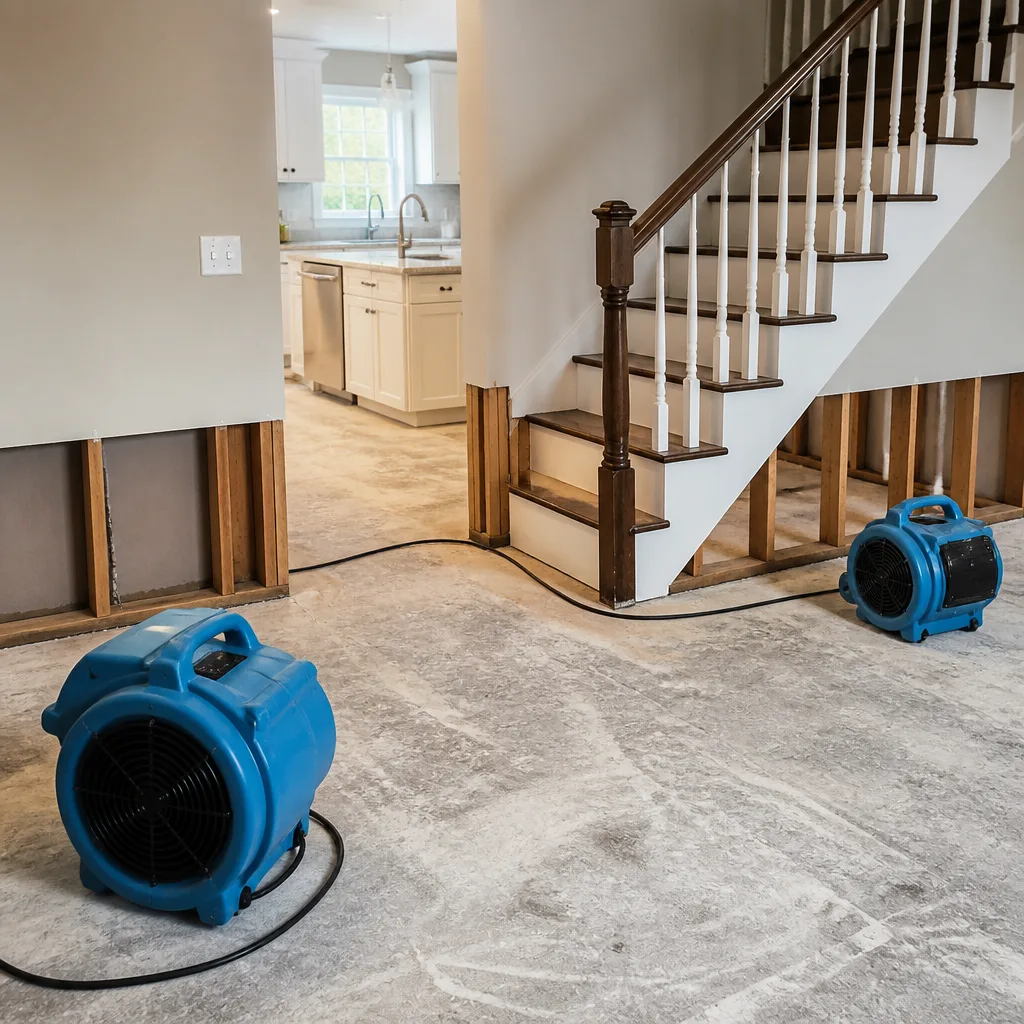
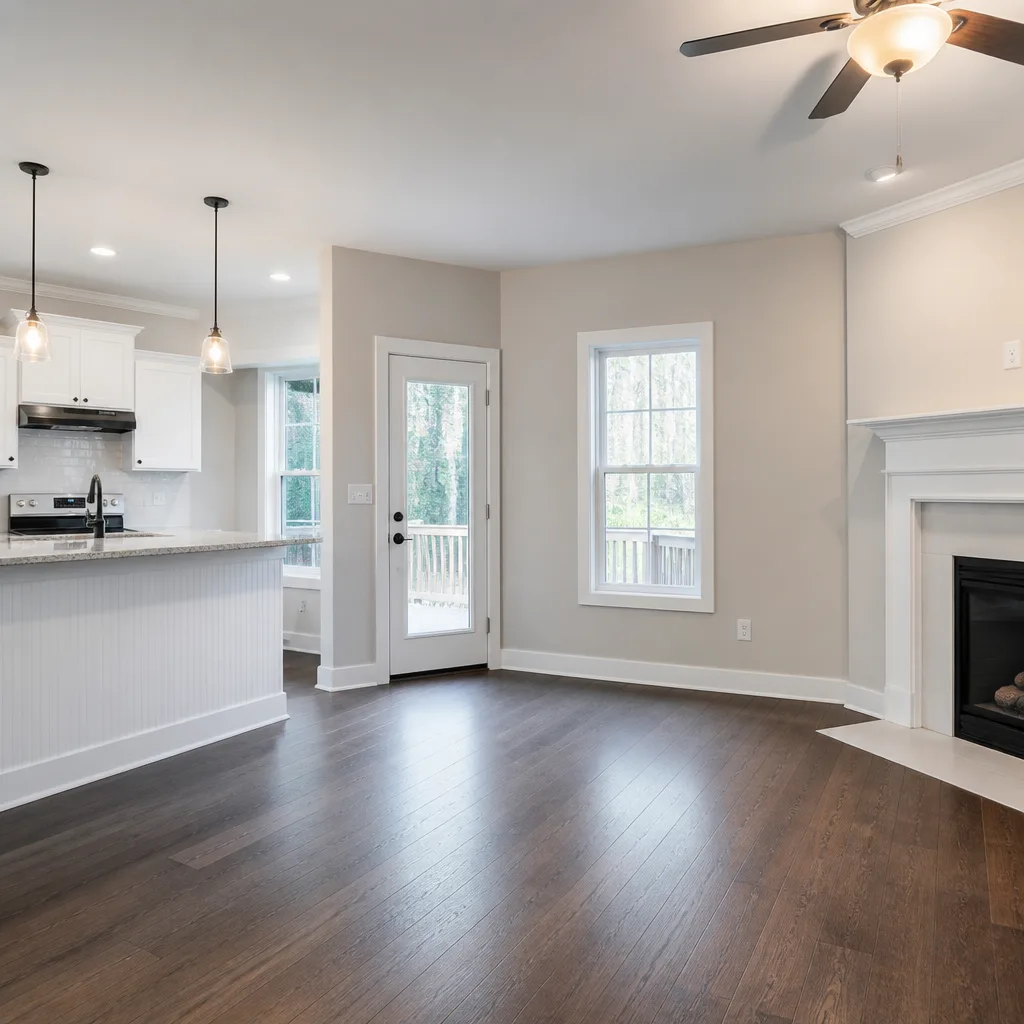
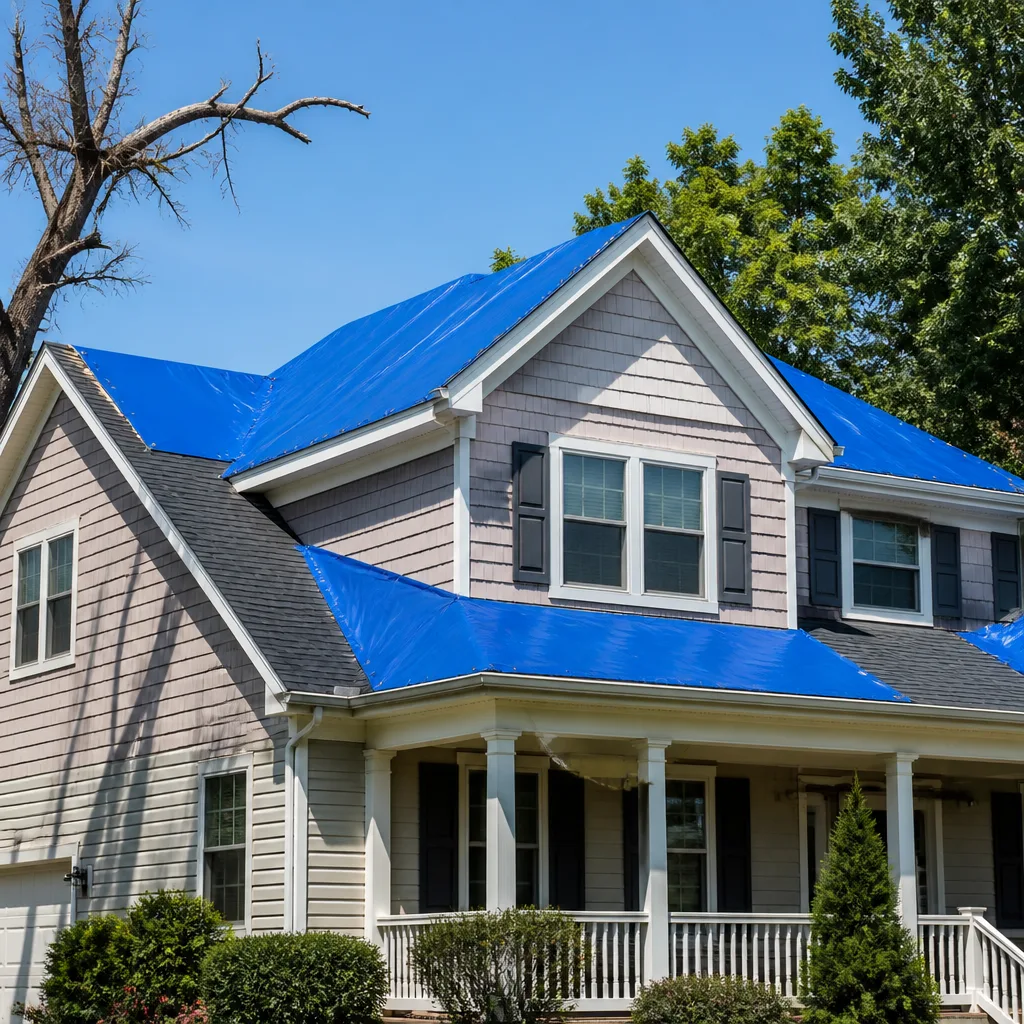
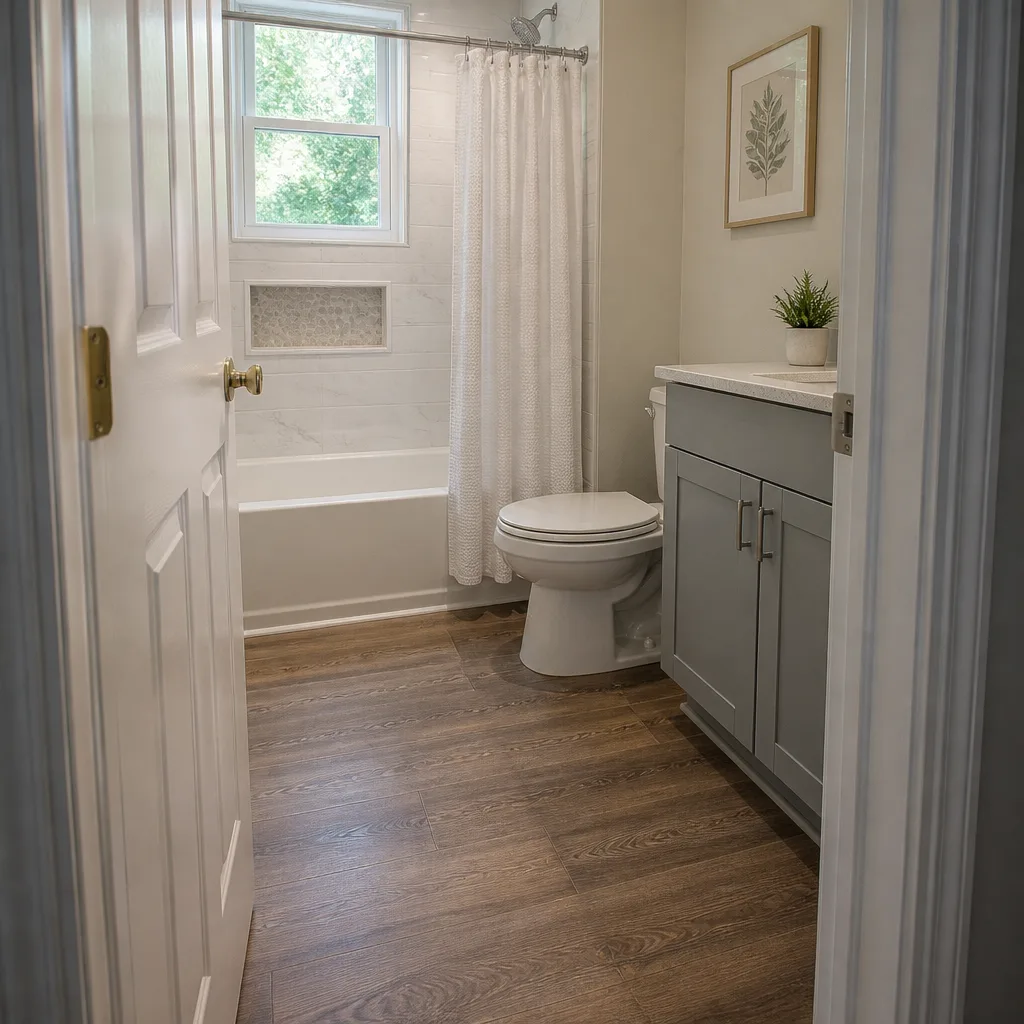
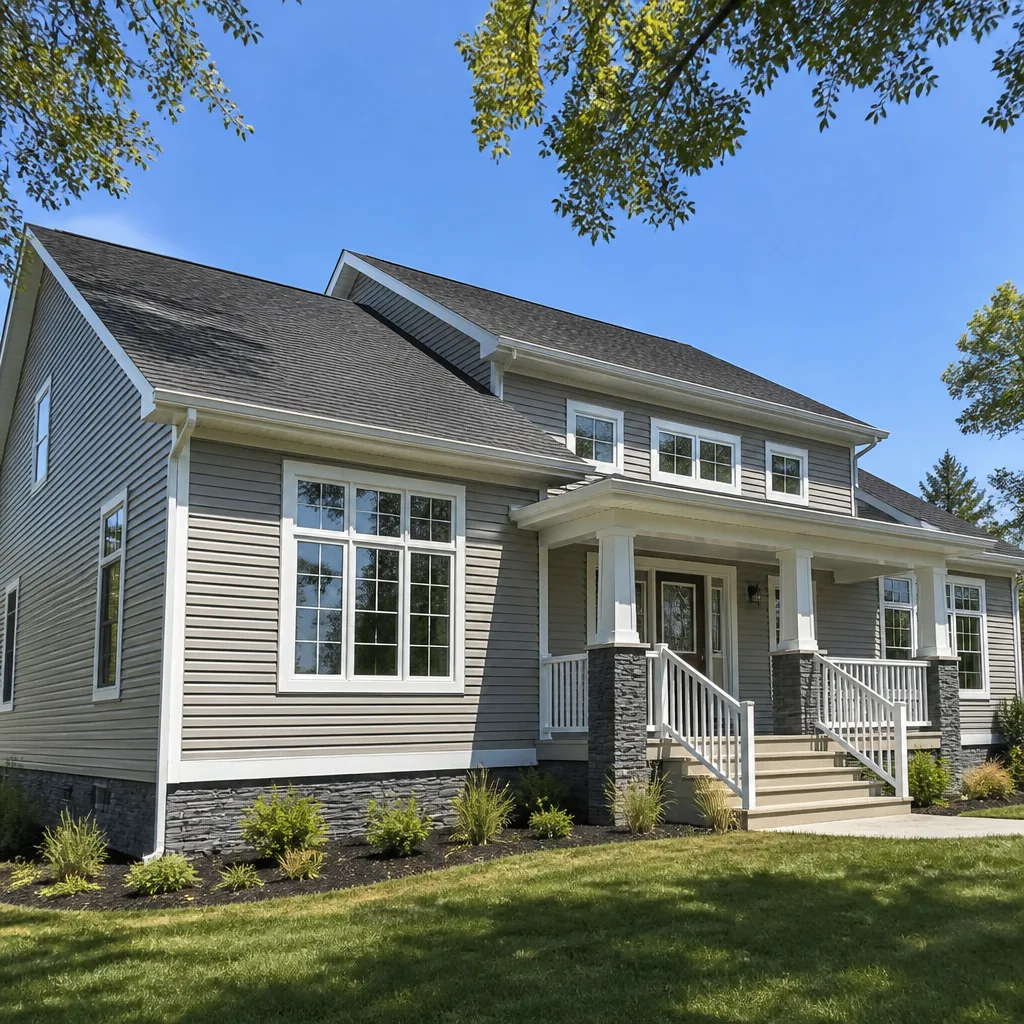
 Before
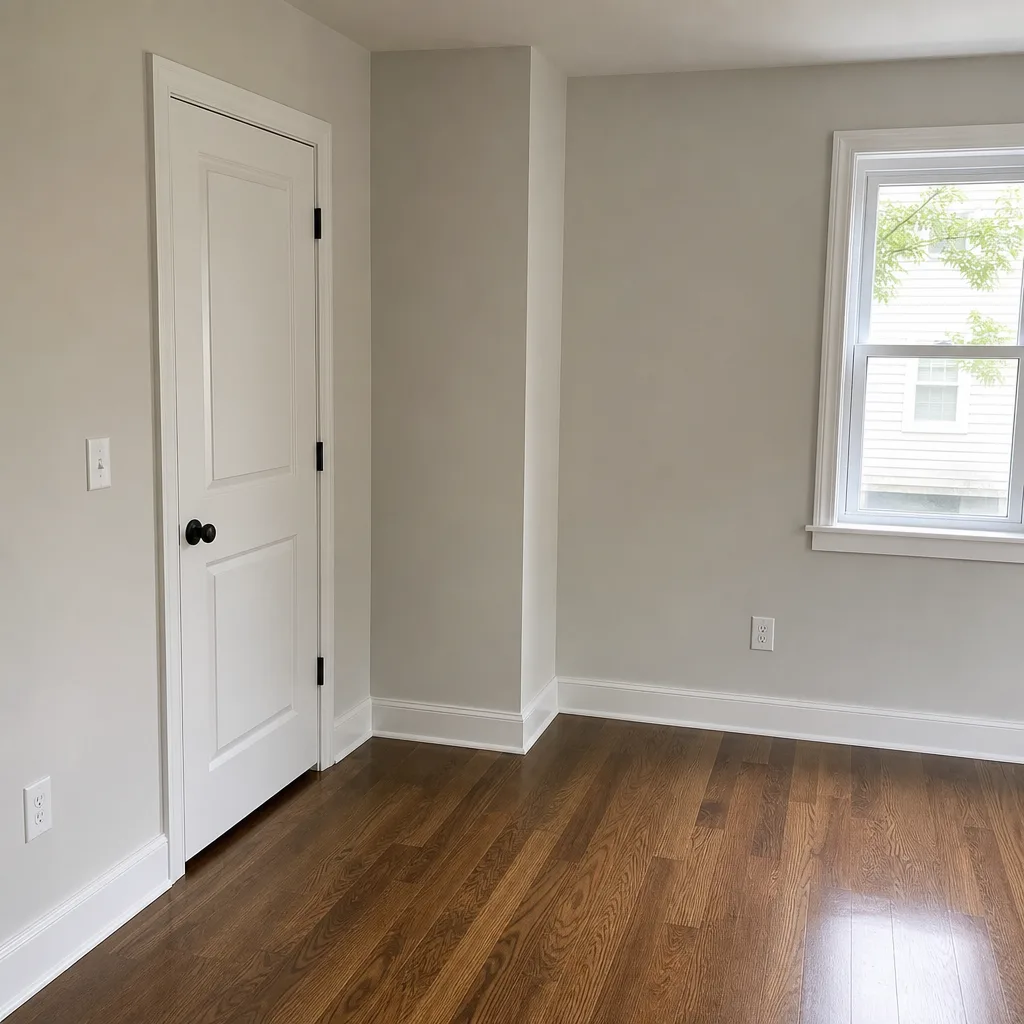 After
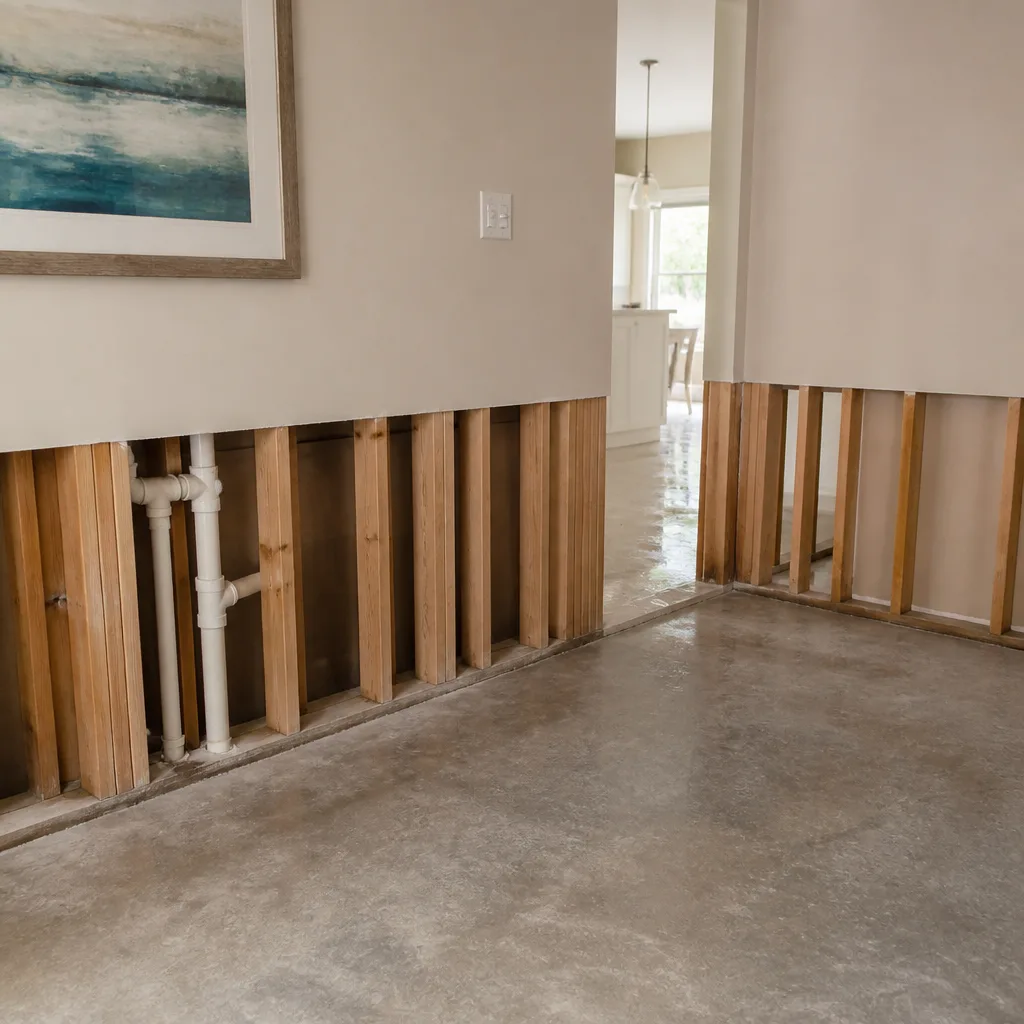
After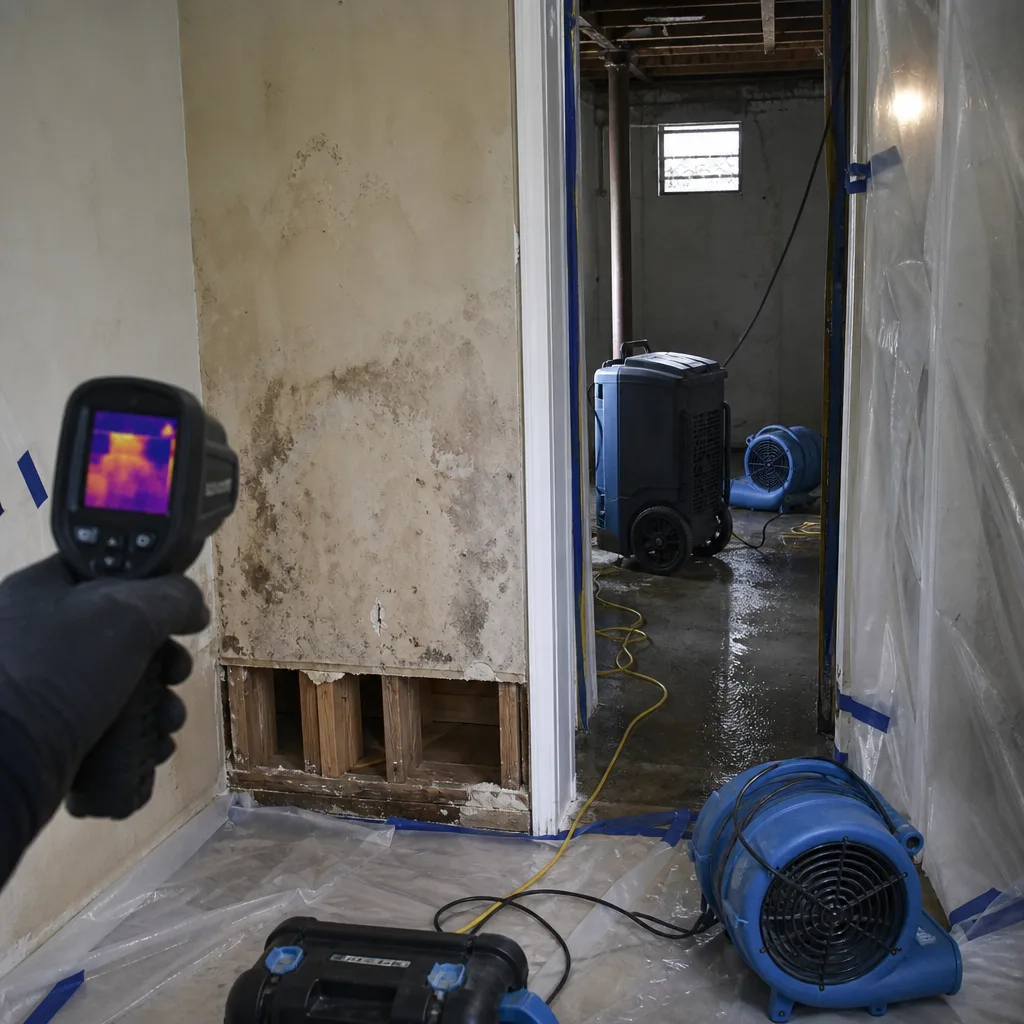 Before
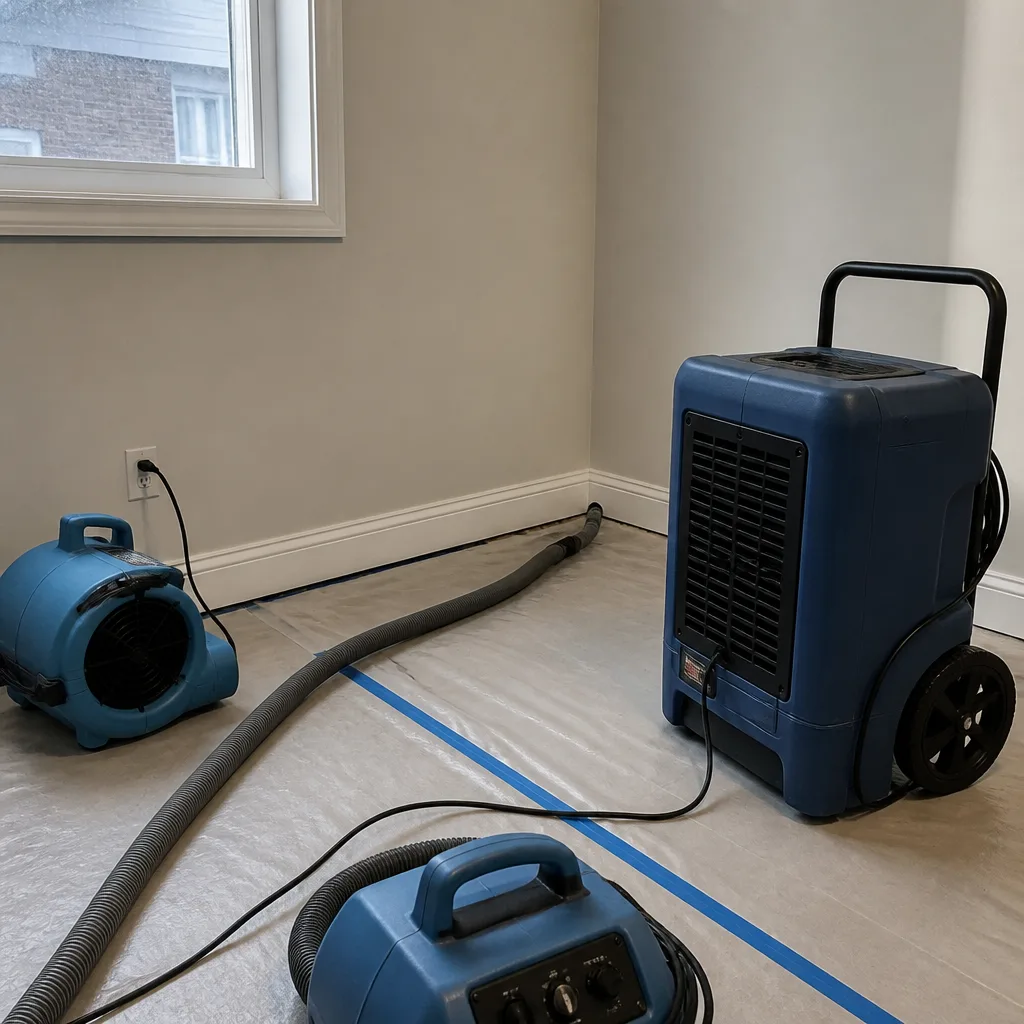 After
After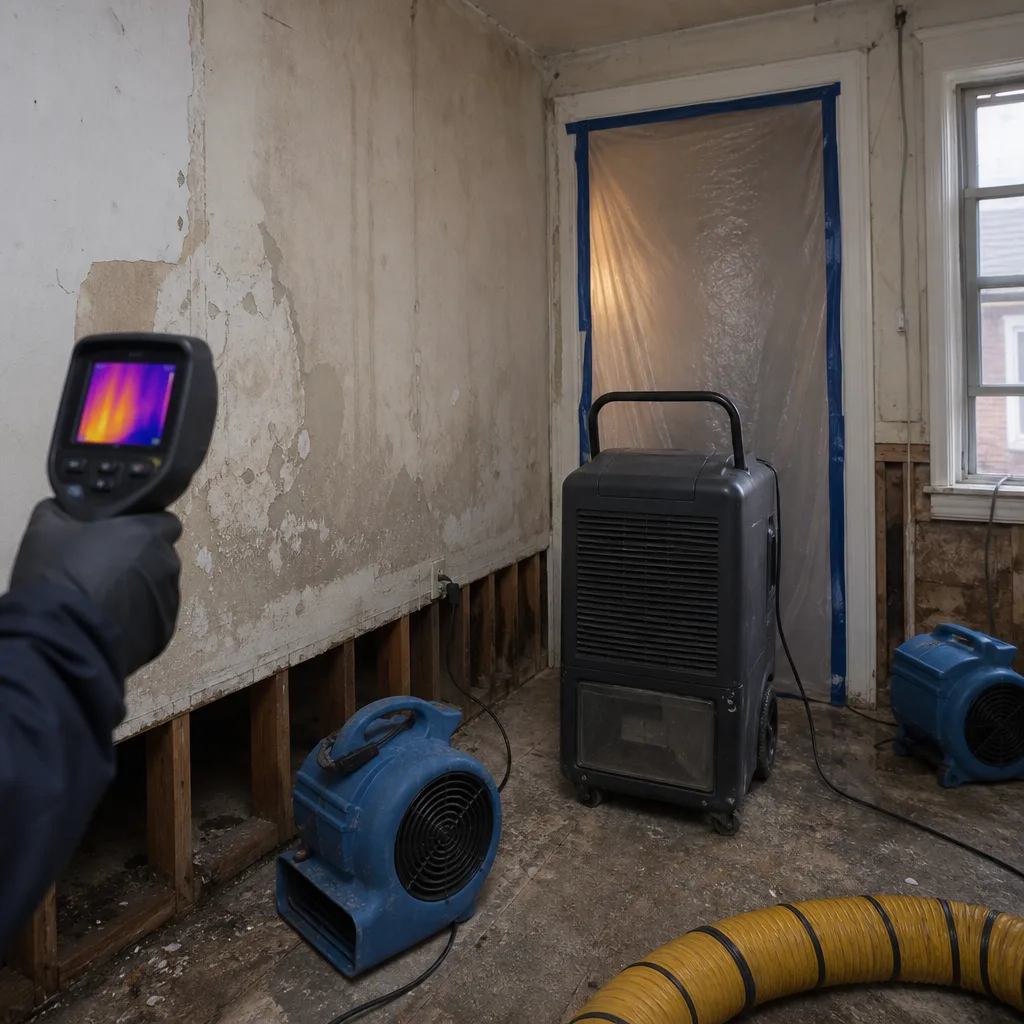 Before
 After
After24/7 Emergency Water Damage Restoration in Midtown Manhattan
Water damage restoration in Midtown Manhattan typically costs $2,800-$19,500 depending on the number of floors affected, the water category, and whether asbestos abatement is triggered near the steam-district corridor. Most high-rise jobs we handle involve 4 to 18 stacked tenant spaces, which means the scope is set by building-management protocols as much as by the water itself.
Wade’s Restoration answers live around the clock. When a pipe lets go on the 31st floor at 2 a.m., the last thing a property owner needs is a voicemail tree. Call (201) 903-9581 and a real person picks up, usually Wade himself. Crews stage out of our New York City office and can be inside most Midtown Manhattan buildings within the hour, extraction equipment already rolling. The first hour matters because water in a pre-war tower does not sit still. It travels down chases, follows conduit, soaks plaster-and-lath ceilings, and finds electrical closets four floors below. Every hour it moves, the claim gets messier and the restoration gets more expensive.
Understanding Water Damage Restoration Severity in Midtown Manhattan Properties
Not all water is treated the same. Restoration crews classify water into three categories: Category 1 is clean supply-line water, Category 2 has some contamination like washing-machine overflow, and Category 3 is grossly contaminated, think sewage or Hudson River storm surge backing through floor drains. In Midtown Manhattan, the same building can host all three on different floors during one event. A sprinkler riser break on 23 sends Category 1 water down through fifteen floors, but if it hits a commercial kitchen or a below-grade mechanical room, it picks up food grease, floor wax, and decades of pipe residue on the way down, becoming Category 2 or worse by the time it pools in the sub-basement.
Moisture mapping is the discipline that keeps hidden water from becoming a mold claim six weeks later. We meter every affected surface: plaster, gypsum board, terrazzo, marble, carpet over concrete. In Midtown’s 1920s-era towers, original plaster-and-lath assemblies hold water differently than modern drywall. The plaster itself is dense and dries slowly, but the wood lath behind it rots fast if the assembly is not opened or aggressively dried. A thermal imaging pass over a ceiling can reveal a wet cavity that a visual inspection misses, and that is the difference between a $4,000 dry-out and a $28,000 reconstruction.
Why Midtown Manhattan Property Owners Choose Wade’s Restoration
- 45-minute response commitment: From the moment you call, Wade’s crew is moving. High-rise freight-elevator windows are tight here, and the first truck in the loading dock gets the slot. Waiting costs time against the 24 to 48 hour mold window.
- 24/7 live answer, no answering service: You call, a person answers. Wade has carried his own cell phone since 2007 and still does. At 3 a.m. with water cascading through a bathroom ceiling, that is the only thing that counts.
- IICRC-certified crews (WRT/FSRT/AMRT): Every crew member Wade sends into Midtown holds current IICRC certifications in water, fire, and mold disciplines. RIA and IFA backing sit behind the paperwork.
- Free visual inspection: Wade will come look at the damage, tell you straight what has to happen and what can wait, and hand you a written scope before any work starts. No charge for that.
- Direct insurance billing: Wade’s office speaks adjuster. We bill your carrier directly, provide the moisture logs and line-item documentation they require, and coordinate with the commercial property insurer when a Midtown high-rise policy is involved.
- One team from extraction to reconstruction: The same crew that pulls the water also handles the structural drying, the pack-out, the drywall, and the finish work. No bouncing between vendors. One name on the job, Wade Ferris, and his phone number on the estimate.
Our Water Damage Restoration Process
Inspection & Assessment
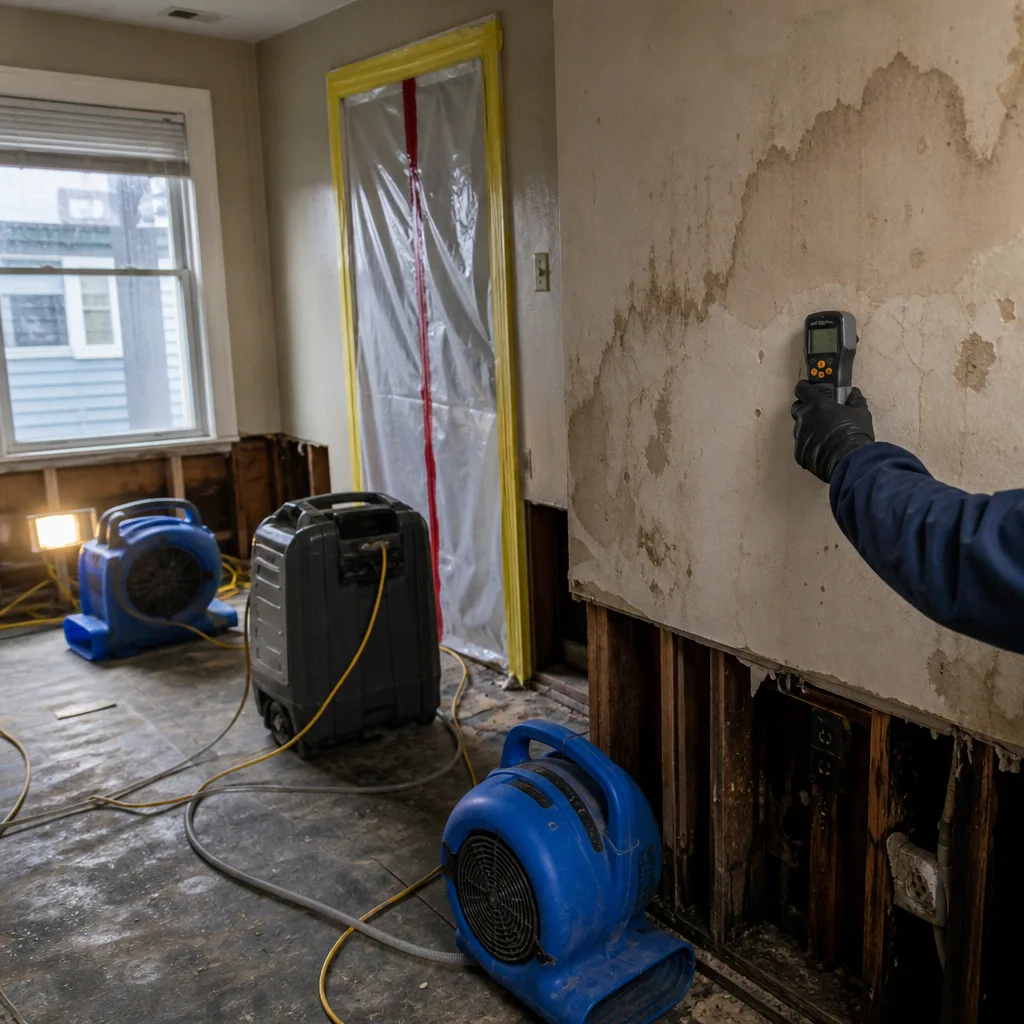
We walk the affected floors with thermal imaging and penetrating moisture meters. In Midtown pre-war buildings, we also look for original standpipes, steam lines, and aging sprinkler risers that may be actively feeding the loss. Every affected space gets photo documentation before anything moves.
Extraction & Stabilization
Submersible pumps and truck-mounted extractors pull standing water off hard surfaces while crew members set containment to keep affected zones isolated from occupied tenant spaces. We route around freight-elevator windows and hit the floor running when the slot opens.
Drying & Dehumidification
Dri-Eaz and Phoenix air movers paired with low-grain refrigerant (LGR) dehumidifiers bring humidity down inside the drying chamber. We take moisture readings every single day, adjust equipment placement, and hand you the full log when the job closes. Hygrometers and thermo-hygrometers stay in place until every affected assembly reads at pre-loss condition.
Cleaning & Sanitization
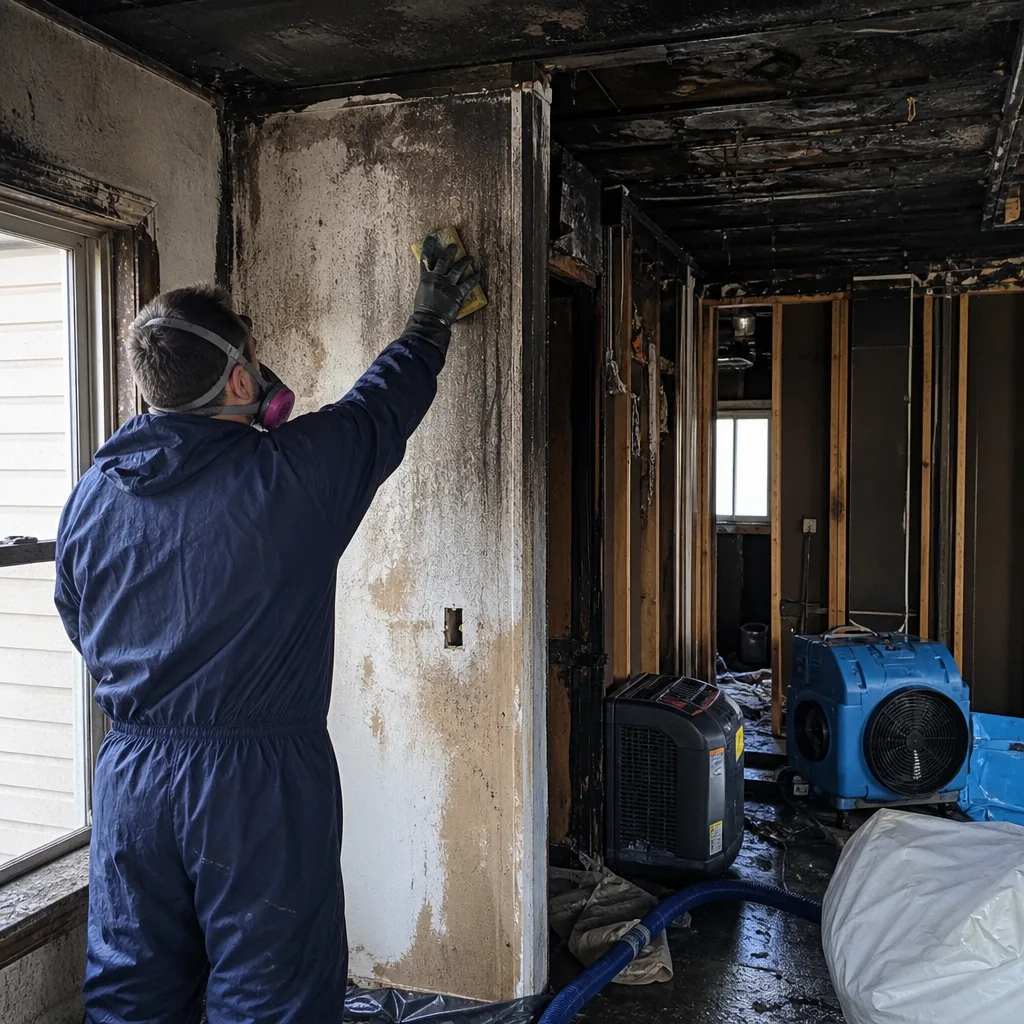
Category 2 and 3 water requires more than drying. We apply hospital-grade antimicrobials to affected surfaces, HEPA-vacuum fine particulate, and run HEPA air scrubbers when ceiling cavities are opened. In steam-district basements, this step runs parallel with any required asbestos assessment.
Specialty Treatment
Midtown jobs often need pack-out coordination, art and document recovery, electronics drying in place, and odor control. Water that has moved through original steam-radiator chases may require injectidry mat systems to dry wall cavities without demolition.
Repairs & Restoration
Wade’s crew handles the repair scope from framing to finish: replacing lath and plaster sections, restoring ceilings to paint-ready, refinishing floors, and re-hanging doors. The goal is a walk-through where you cannot tell we were ever there.
Need Emergency Water Damage Restoration in Midtown Manhattan Now?
Crews minutes away, answering live 24 hours a day. The sooner we start, the less it costs.
Working With Your Insurance Company
Insurance adjusters in New York City see a lot of water claims. What they do not often see is documentation this complete. From the first hour on site, we photograph every affected surface, meter every assembly, and keep a running log of readings and equipment placement. When your adjuster calls, they get an industry-standard estimate with a line-item scope, not a one-page summary with a round number at the bottom. Wade deals with the adjuster directly, so you are not the one stuck relaying information between two sides. If the building’s commercial policy is involved, we coordinate with the property manager and the master insurer as well.
What We Provide Your Insurer
- Thorough documentation of the loss, room by room and floor by floor
- Photos of all damage, timestamped and organized
- Moisture readings and drying logs, updated daily
- A detailed, line-item scope of work with unit pricing
- Direct coordination with your carrier and the building’s insurer
Built for Midtown Manhattan’s Loss Calendar
Midtown Manhattan does not have one water season. It has four overlapping ones, and the building stock makes each worse. January and February bring deep freezes that burst supply lines and freeze fire standpipes in unheated mechanical penthouses. When a freeze hits the rooftop mechanical room of a 40-story tower and the line thaws, water runs down elevator shafts and stair cores for hours before anyone notices. March and April, the freeze-thaw cycle drives water through flat-roof membrane failures and facade penetrations on roof decks and setback terraces. May through August, convective thunderstorms dump an inch of rain in 40 minutes, overwhelming aging below-grade waterproofing in pre-war basements and shorting out switchgear and elevator motor rooms. And September through November, the tail end of hurricane season brings nor’easters that push wind-driven rain into upper-floor window walls and drain stacks. Every one of those losses in Midtown Manhattan arrives through a freight-elevator schedule, a building-management protocol, and usually a commercial tenant who needs to stay open.
Water Damage Restoration Across Midtown Manhattan’s Neighborhoods
The work changes block by block, not just borough by borough. Over near Bryant Park between Sixth Avenue and the Avenue of the Americas, the pre-war office towers have original steam-radiator distribution and century-old standpipes that make drying plans a matter of chasing water through plaster and dense building assemblies. Up in Turtle Bay and the blocks around the United Nations, mixed-use co-ops and condos sit on top of commercial ground floors, so water from a 14th-floor supply line leak complicates retail operations below and forces after-hours scheduling. The Garment District and the blocks around Penn Station have more mid-rise loft conversions with cast-iron plumbing that has simply outlived its design life, bursts are common, and water follows the open floor plates fast. Around Columbus Circle and the southern edge of the Upper West Side, high-floor condos with curtain-wall window systems see wind-driven rain penetration through failed gaskets, which sends water down the interior of exterior walls and into expensive finishes. Grand Central and the Lexington Avenue corridor is its own animal, because a below-grade loss there may not be clean water at all. It can be superheated steam and legacy asbestos from a Con Edison main, and that changes everything about the response.
We covered a Water Damage Restoration job in a pre-war office tower off Lexington Avenue near Grand Central where a cast-iron sprinkler riser let go on the 23rd floor. By the time anyone heard it, water had found its way into 16 stacked tenant spaces. Our crew pulled Category 1 water from open office floors, used moisture mapping to identify saturation in original plaster-and-lath ceilings, and coordinated with building management to run structural drying and dehumidification inside strict freight-elevator windows. The entire pack-out and containment plan had to route around commercial-tenant business hours, and drying logs were maintained every four hours until every moisture reading hit pre-loss condition. That is what Water Damage Restoration in Midtown Manhattan actually looks like on the ground.
Specialized Water Damage Restoration Services We Offer in Midtown Manhattan
Burst Pipe Restoration
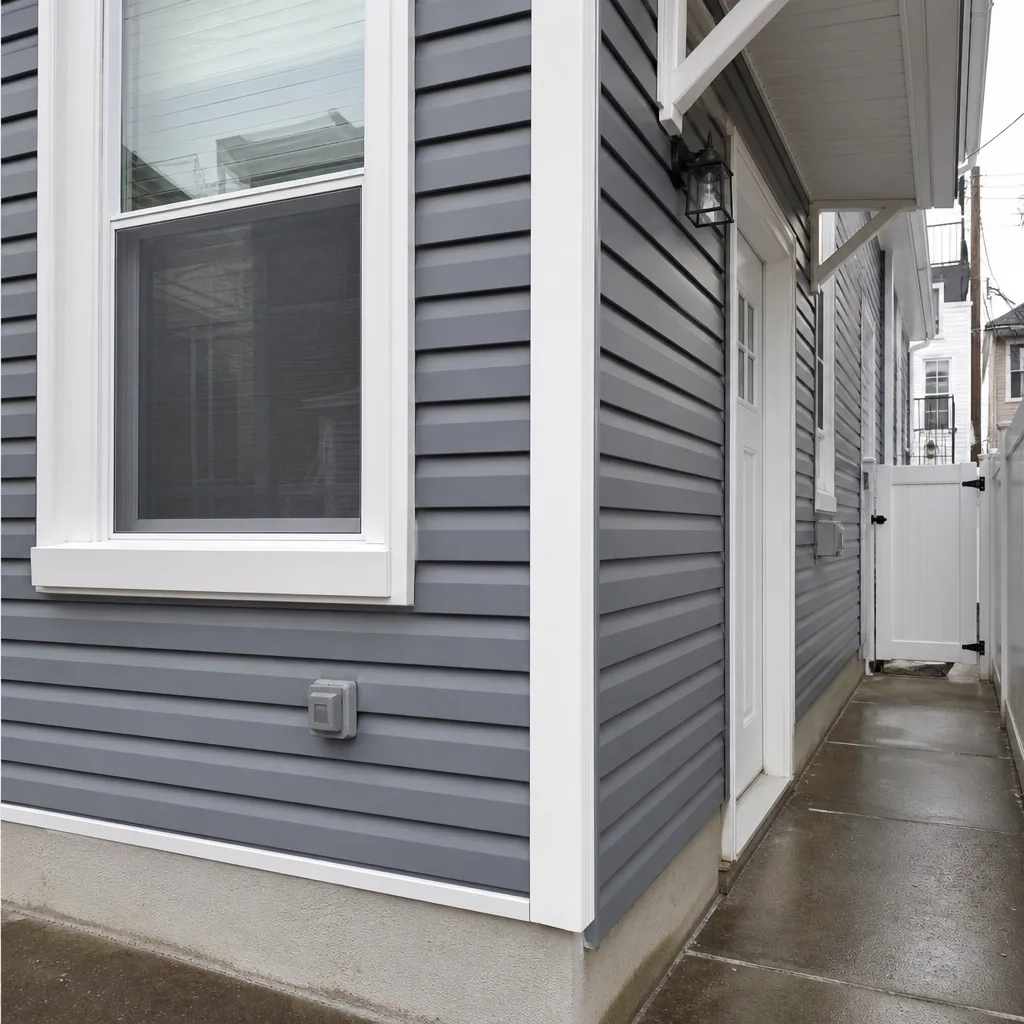
Burst pipe restoration is the backbone of winter work in Midtown Manhattan. When a supply line freezes and splits on a rooftop mechanical level or an unheated stairwell, the resulting flood can travel down through multiple occupied floors. We shut the source, extract fast, and dry the full path the water took, including concealed chases that are hard to access in old construction.
Ceiling & Roof Leak Water Damage
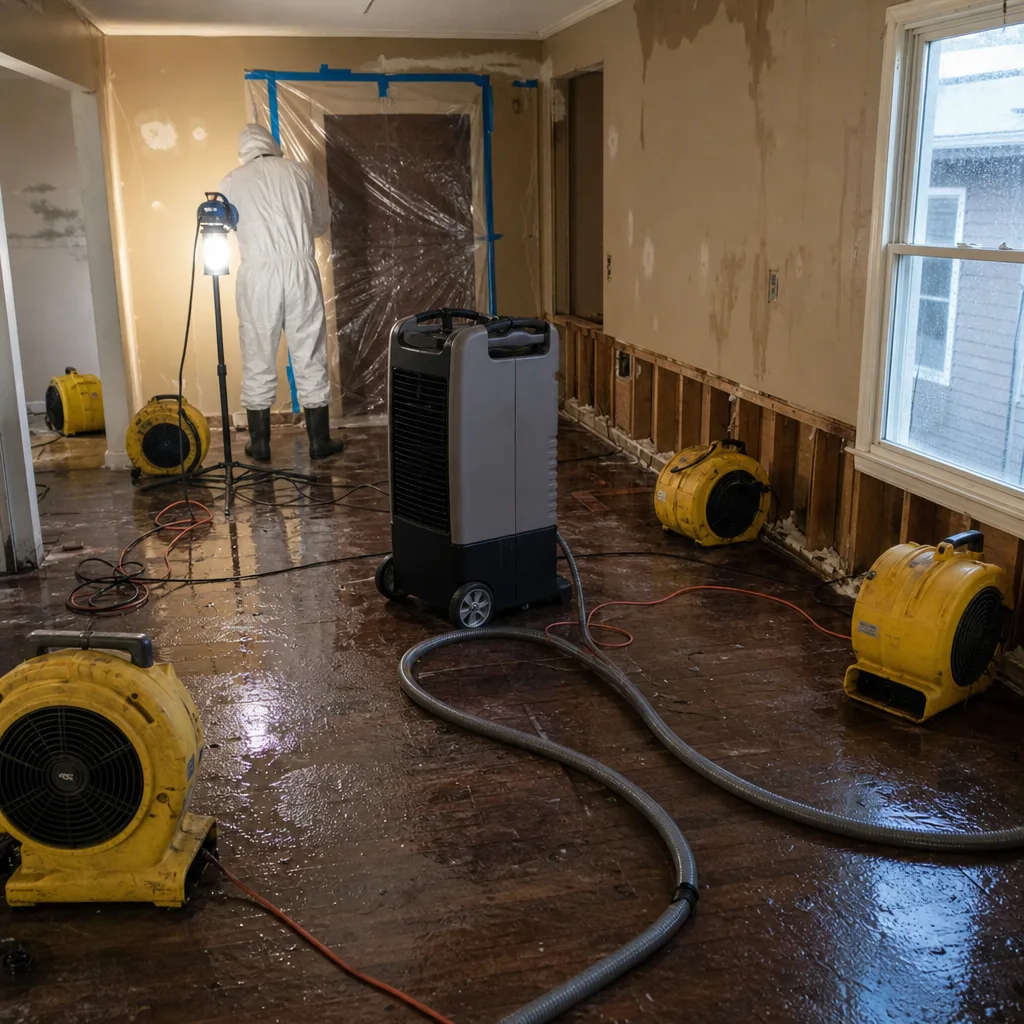
Midtown’s flat-roof towers and setback terraces leak on a schedule. Failed roof membranes, clogged scuppers, and deteriorated parapet flashing send water down through the roof assembly and into the ceiling of the top occupied floor. We dry ceiling cavities, replace saturated insulation, and document the path of water so the building engineer can address the membrane failure separately.
Basement Water Removal
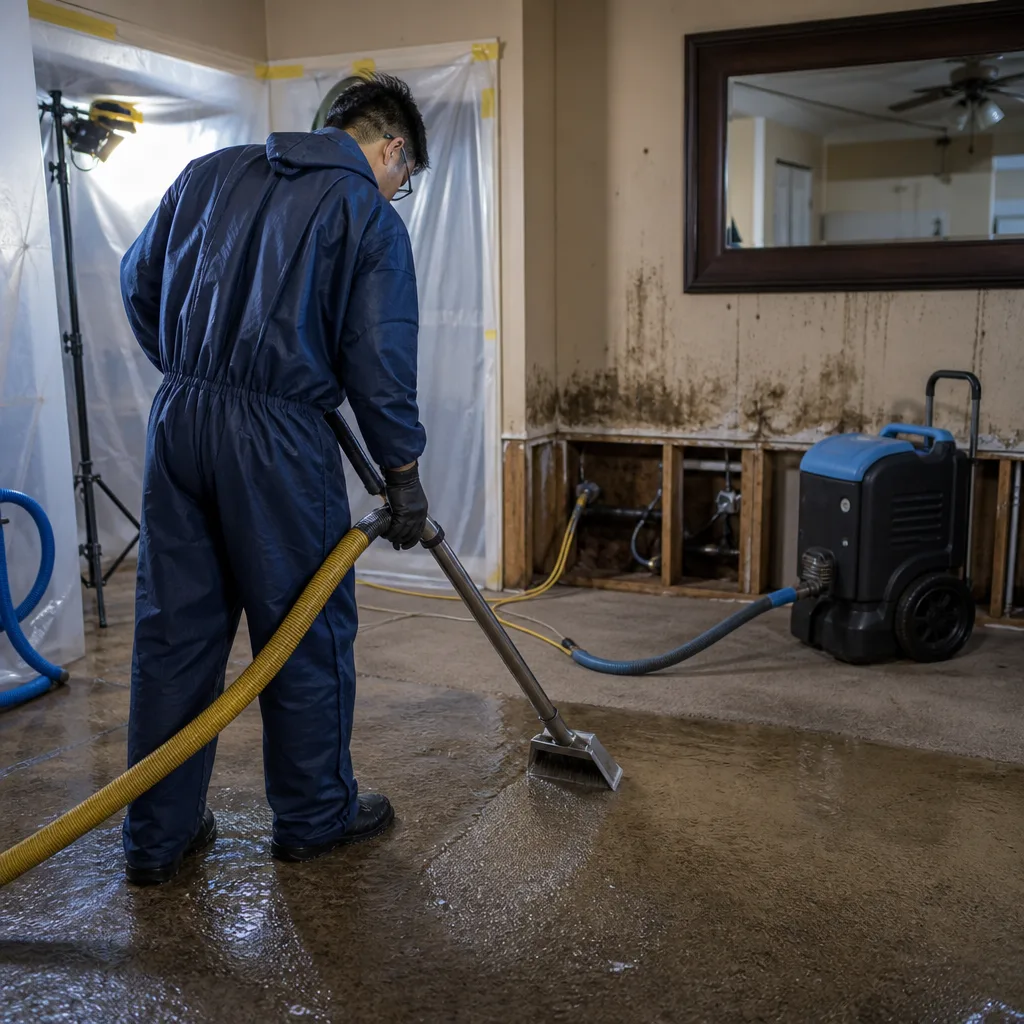
Below-grade spaces in Midtown Manhattan are not like suburban basements. They are mechanical rooms, electrical vaults, storage levels, and sometimes occupied retail. Pumping water out is the easy part. The hard part is the potential hazmat layer. Near the Con Edison steam corridor, we treat every below-grade Midtown break as a potential asbestos and hazardous-material call until proven otherwise, and we coordinate with licensed abatement when needed.
Emergency Water Extraction
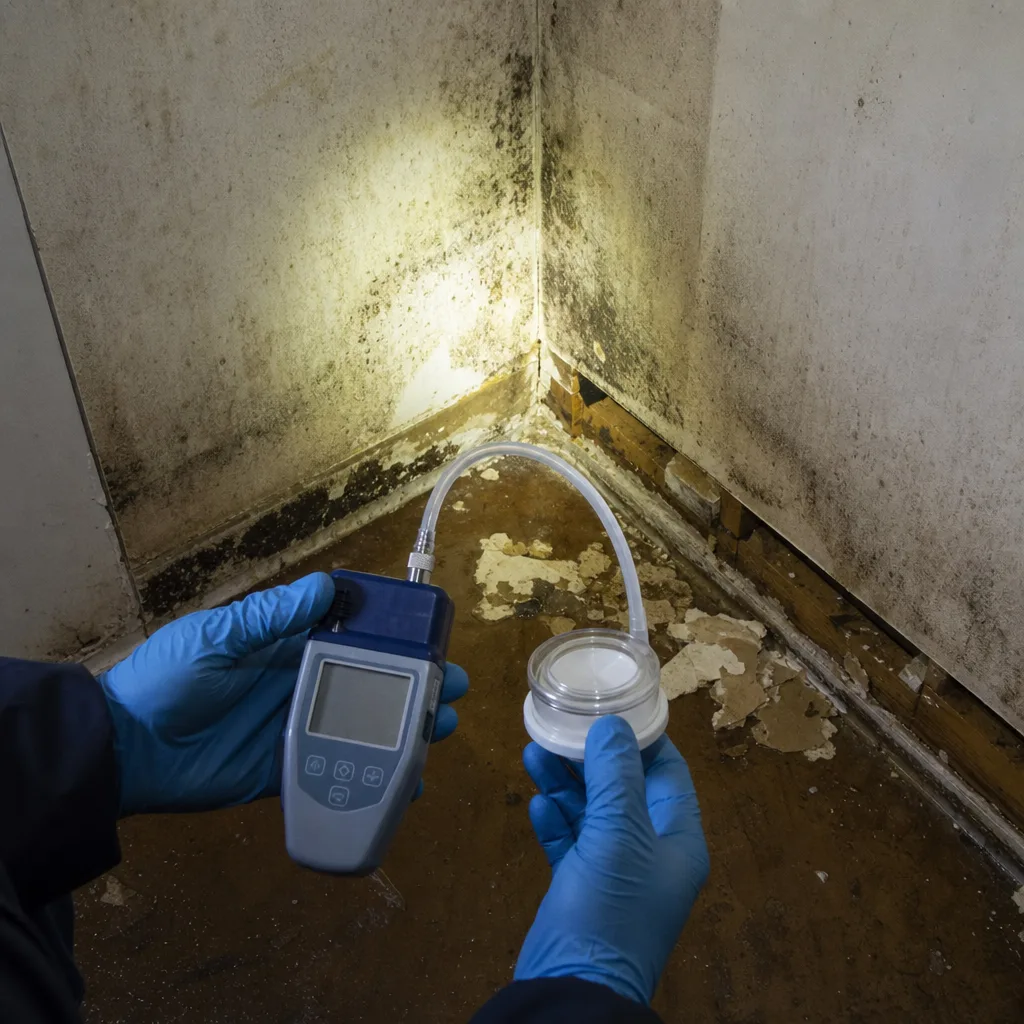
Standing water in a Midtown tower does damage by the hour. Extraction is the first move on every job, using truck-mounted and portable extraction equipment to pull water off floors, out of carpet, and from wall cavities. It buys the drying plan time, and it keeps the loss from spreading into tenant corridors and shared vertical chases.
Structural Drying & Dehumidification
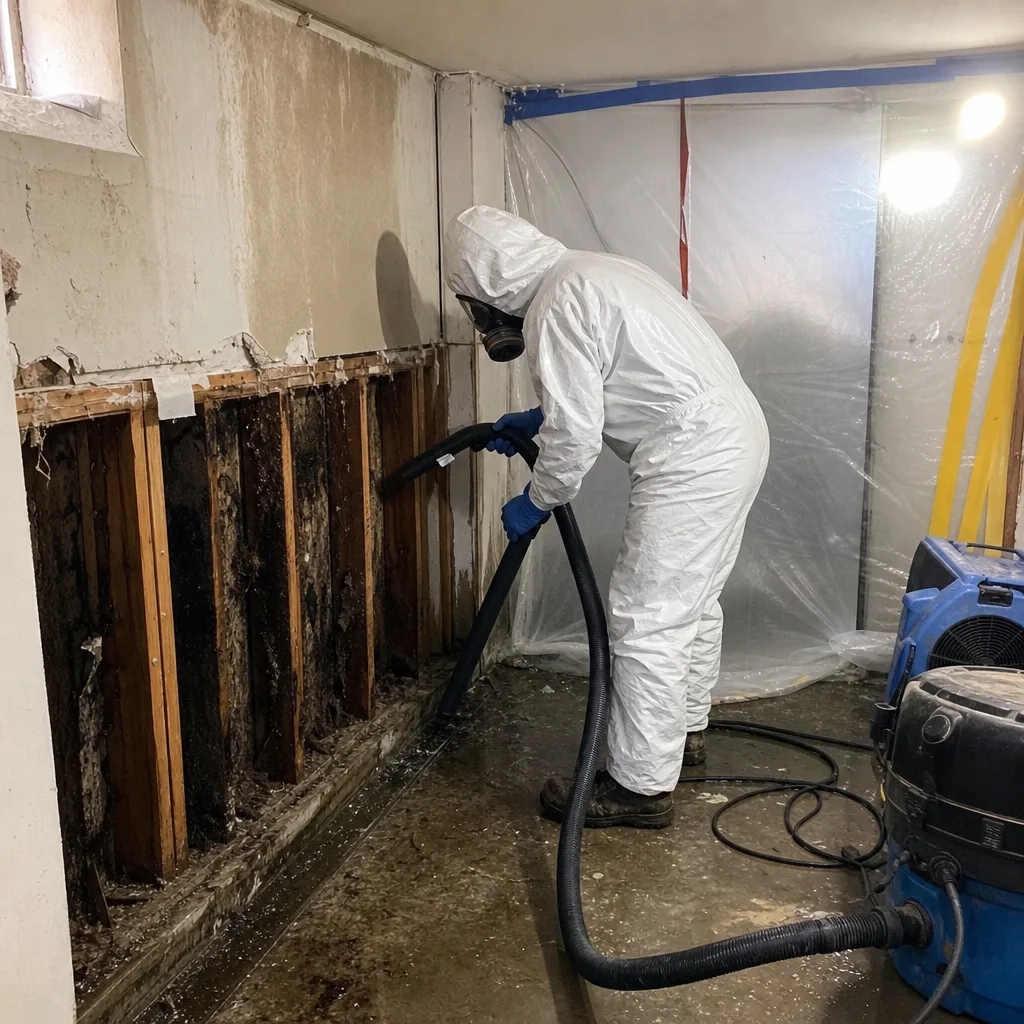
After extraction, the building itself becomes the drying chamber. LGR dehumidifiers and high-velocity air movers push moisture out of plaster, drywall, framing, and concrete. In pre-war Midtown construction, the original materials dry slower than modern ones, so our drying plans run longer and our daily moisture readings tell us exactly when the assembly has actually reached dry standard, not when it looks dry.
Flood Cleanup
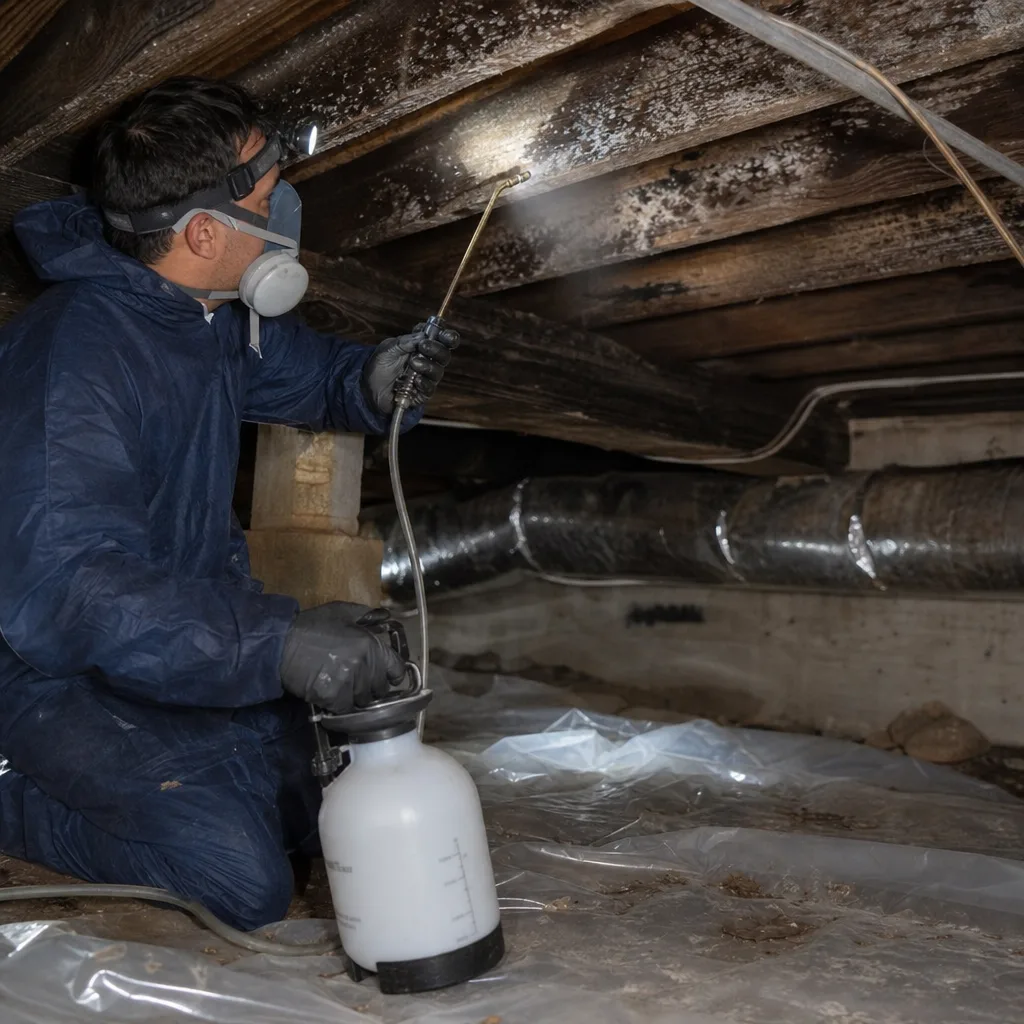
Summer thunderstorms and nor’easters overwhelm below-grade drainage in Midtown Manhattan, pushing water up through floor drains and into building services spaces. This is Category 3 water, loaded with street runoff, salt, and everything the drain system carries. Flood cleanup here means antimicrobial treatment, HEPA air scrubbing, and a sanitation plan that meets commercial property standards.
What happens when you call
- 1
A real person answersNo phone trees - you reach a local pro.
- 2
You get an upfront price rangeHonest numbers before anyone is dispatched.
- 3
A background-checked tech heads outLicensed & insured, dispatched right away.
- 4
You approve before work beginsNothing starts until you say go.
Water Damage Restoration Costs in Midtown Manhattan, NY
Honest numbers help here. A single-ceiling leak in a Midtown Manhattan condo with straightforward drying runs $1,800 to $4,500. A burst supply line that drops water through three or four stacked units typically lands between $5,500 and $14,000 once you factor in ceiling repair, drywall replacement, and load-bearing assessment. A full-building event, like a sprinkler riser failure affecting 10 to 20 floors, starts around $25,000 for extraction and drying and can reach $80,000 or more when finish restoration and commercial tenant interruption are included. Below-grade steam-main events near the Lexington Avenue corridor are in a class by themselves, because the restoration scope runs parallel with licensed asbestos abatement, and that cannot be estimated until an assessment is done. The faster path to a firm number is a free visual inspection. Wade will stand in the affected space with you, take initial readings, and hand you a written scope before any work is authorized. Insurance almost always covers the restoration line items when documentation is this thorough.
We Also Serve Cities Near Midtown Manhattan
Wade’s Restoration covers the full Midtown Manhattan footprint and the neighborhoods around it. If your building sits in the Financial District or along the water in Lower Manhattan, the crews know those pre-war towers and their steam systems. We also respond into Long Island City and across Midtown West, including the blocks west of Eighth Avenue and up toward Lincoln Square.
Serving Midtown Manhattan, NY - Our Local Coverage Area
We’re based in the Midtown Manhattan area and know this community well. Use the map below to see our service coverage - if you’re nearby, we can almost certainly help.
Midtown Manhattan Water Damage Restoration Questions, Answered
How does restoration work in a Midtown high-rise when freight elevators are only available for two hours before 7 a.m.?
We get everything staged the night before or in the loading dock ahead of the window, then move equipment in one aggressive push when the freight elevator opens. The job then runs on battery-powered or strategically placed equipment inside the units until the next freight window. It is slower, but it works, and we have done it in dozens of Midtown towers.
What happens if a Con Edison steam main fails near our Midtown building and pushes steam into the basement?
Steam events change the response from water restoration to combined restoration and hazmat assessment. Superheated steam can carry asbestos from legacy pipe insulation into connected basements. We secure the space, stop any active water movement, and coordinate with a licensed abatement contractor and Con Edison before drying begins. This is the documented pattern from the 2007 41st Street and Lexington Avenue failure.
Can you dry original plaster-and-lath walls in a 1920s Midtown office, or do they always need to be torn out?
Many can be saved, but it depends on saturation depth and how long the water sat. Plaster dries slowly, and the lath behind it rots if moisture lingers. We use injectidry systems and aggressive dehumidification to dry wall cavities in place. When the plaster is delaminated or the lath is already deteriorated, selective removal and repair is the honest call.
Why does a ceiling leak on the 30th floor of a Midtown tower affect my space 15 floors below?
Water in a high-rise follows the path of least resistance: conduit penetrations, pipe chases, elevator shafts, and structural openings between floors. It does not pour straight down in one column. It travels horizontally along the slab above, finds a penetration, and drops into whatever space sits below that opening. We map the full path, not just the visible stain.
Are there hours when your crew cannot run air movers or dehumidifiers in a Midtown commercial space?
Yes. Many high-rises restrict noisy equipment during tenant business hours. We either run equipment on off-hours, use inline ducted dehumidifiers that vent into the corridor, or schedule drying around the building’s noise policy. The drying plan is built around the lease realities of the building, not the other way around.
How fast can a crew actually get to Midtown Manhattan?
Wade’s Restoration crews are staged within short driving distance of Midtown Manhattan and answer live around the clock. Typical arrival is inside the hour, traffic and freight-elevator access permitting. Call (201) 903-9581 and Wade himself can tell you exactly who is coming and when.
Will my insurance cover water damage restoration in a Midtown co-op or condo?
Most of the time, yes, but the split between your unit policy and the building’s master policy depends on where the water originated and what the proprietary lease says. Wade’s office coordinates with both carriers so the documentation matches what each adjuster needs. Photo documentation and daily moisture logs are standard on every job.
What should I do in the first 30 minutes after a pipe bursts in my Midtown apartment?
Shut the water off if you can reach the valve, kill power to the affected area if water is near outlets or fixtures, and call Wade’s Restoration at (201) 903-9581. Then get photos of everything before you mop. The faster our extraction starts, the less the repair scope becomes.
Written by Wade Ferris, owner at Wade’s Restoration. Wade has answered his own phone since 2007 and still shows up on the job when water is moving through someone’s ceiling at midnight.