
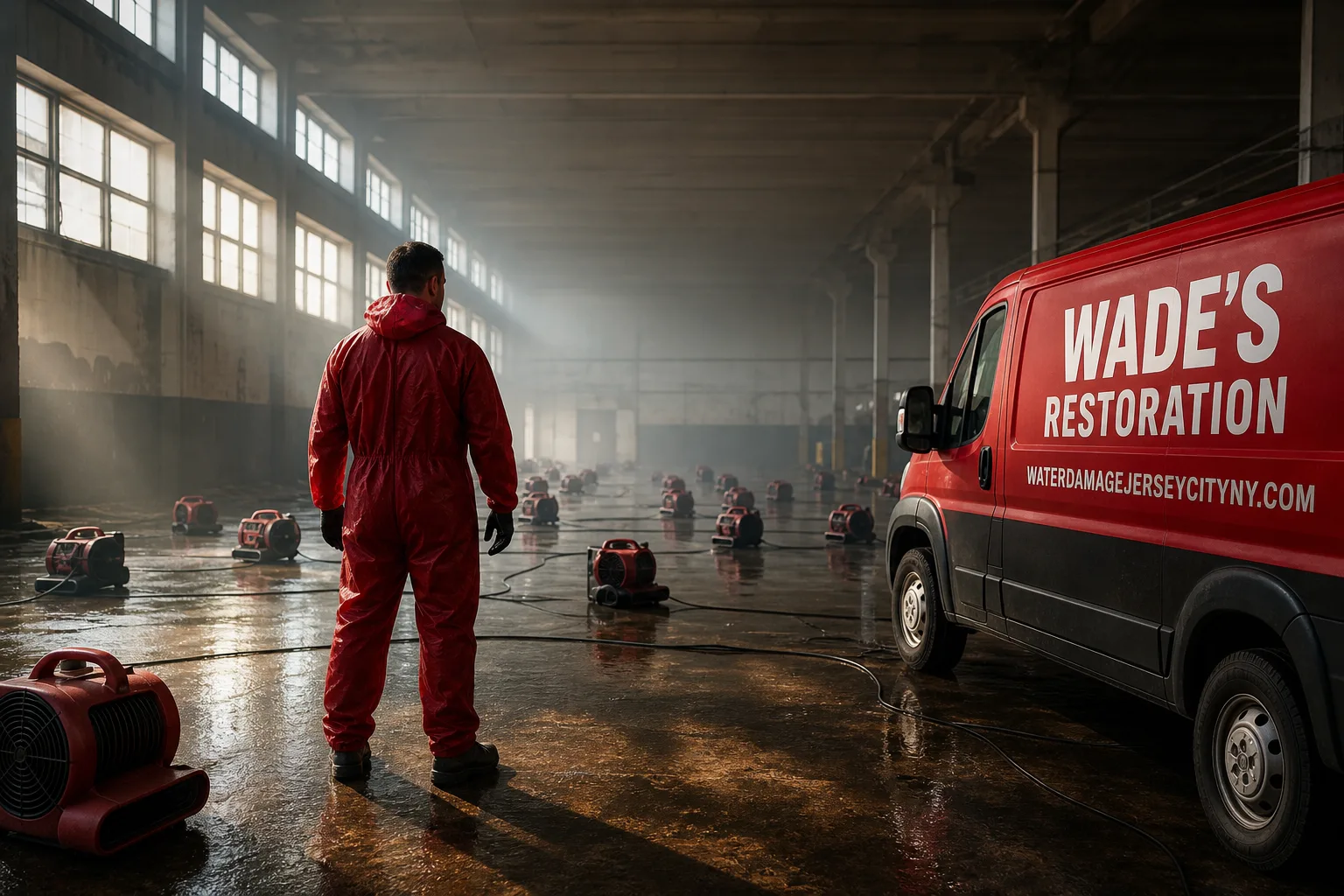
Free visual inspection and a written scope of work before any mitigation begins - photos, moisture readings, and drying logs go in your claim file
The scope we write is the scope we bill. Anything new gets shown to you, in writing, before we touch it.
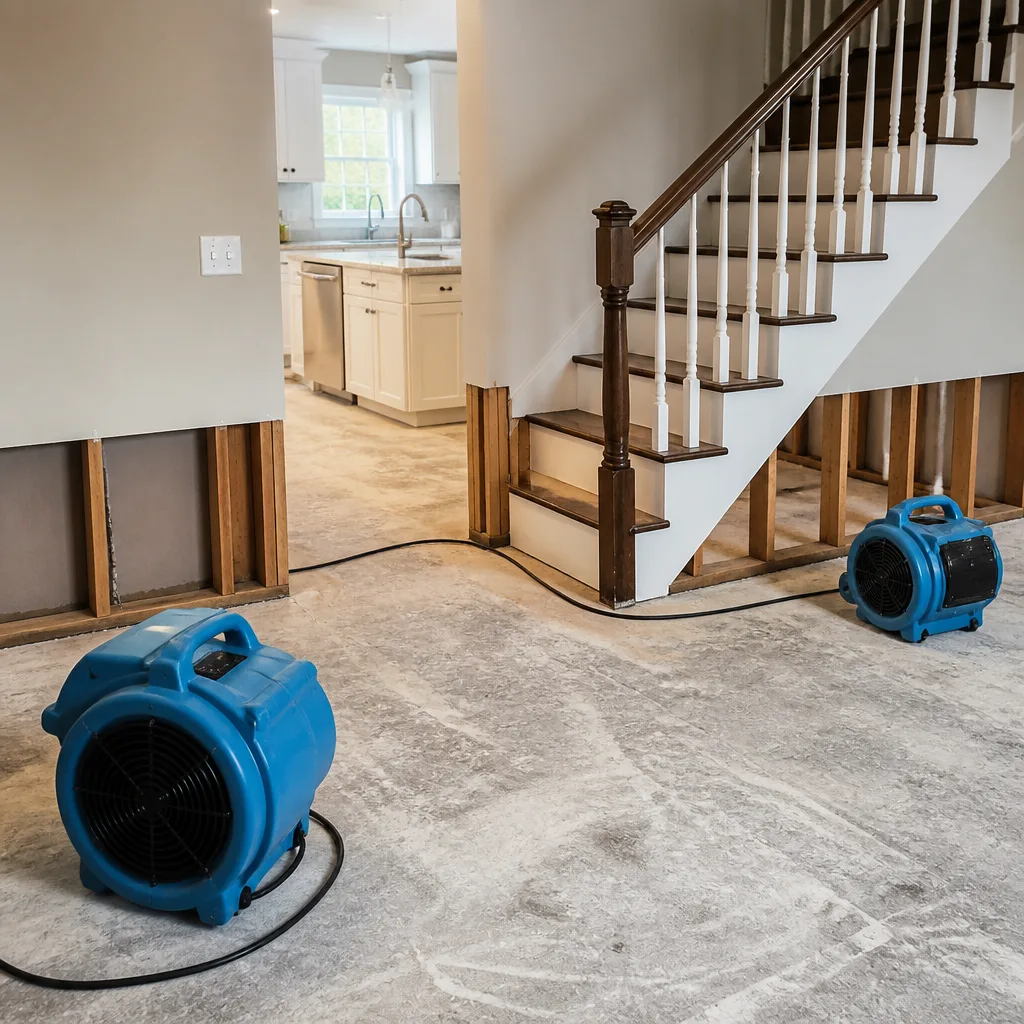
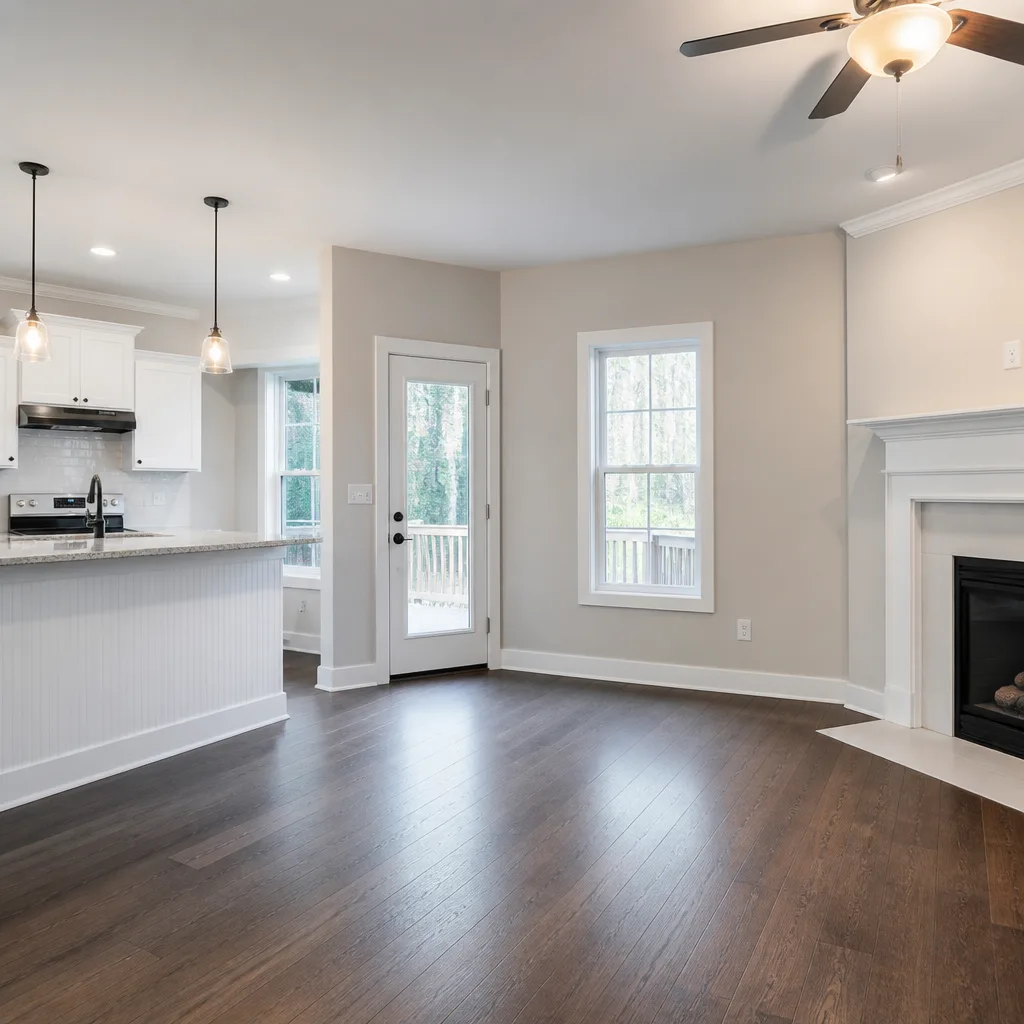
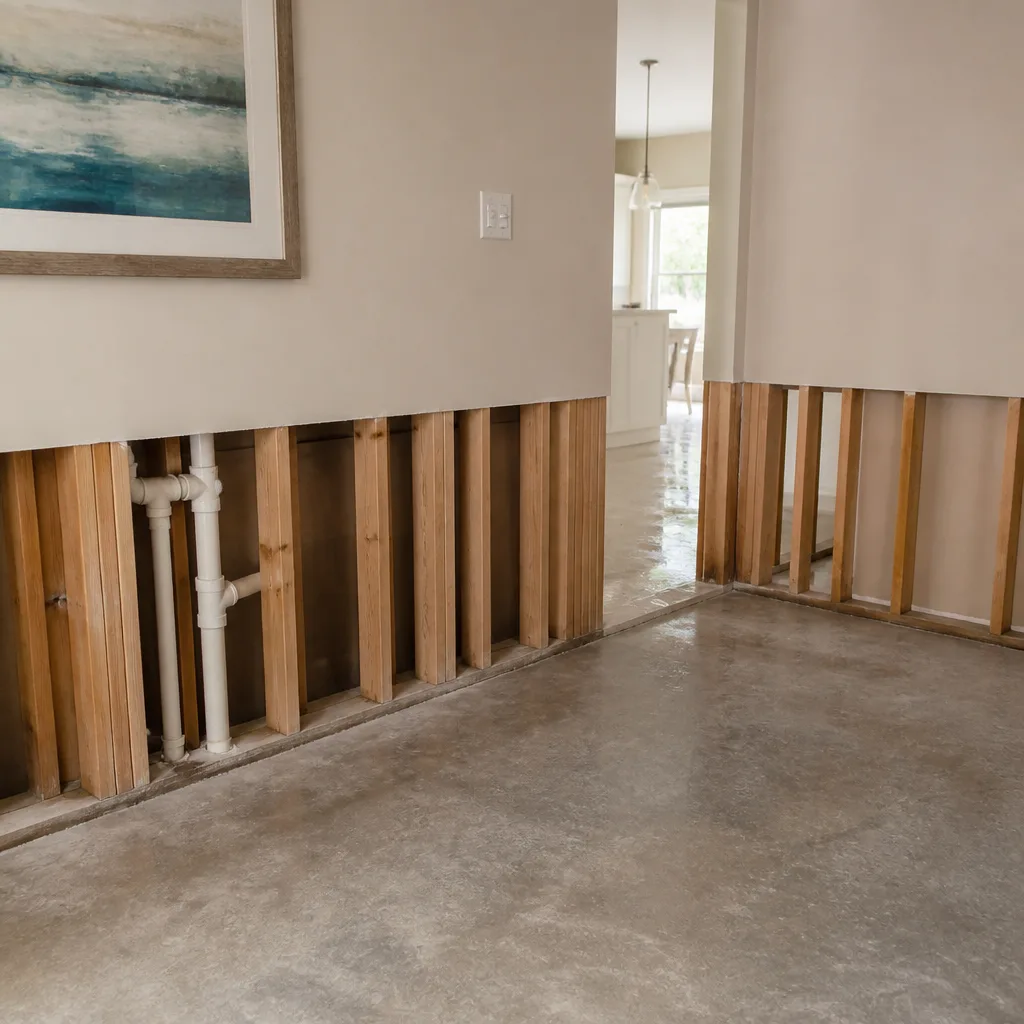
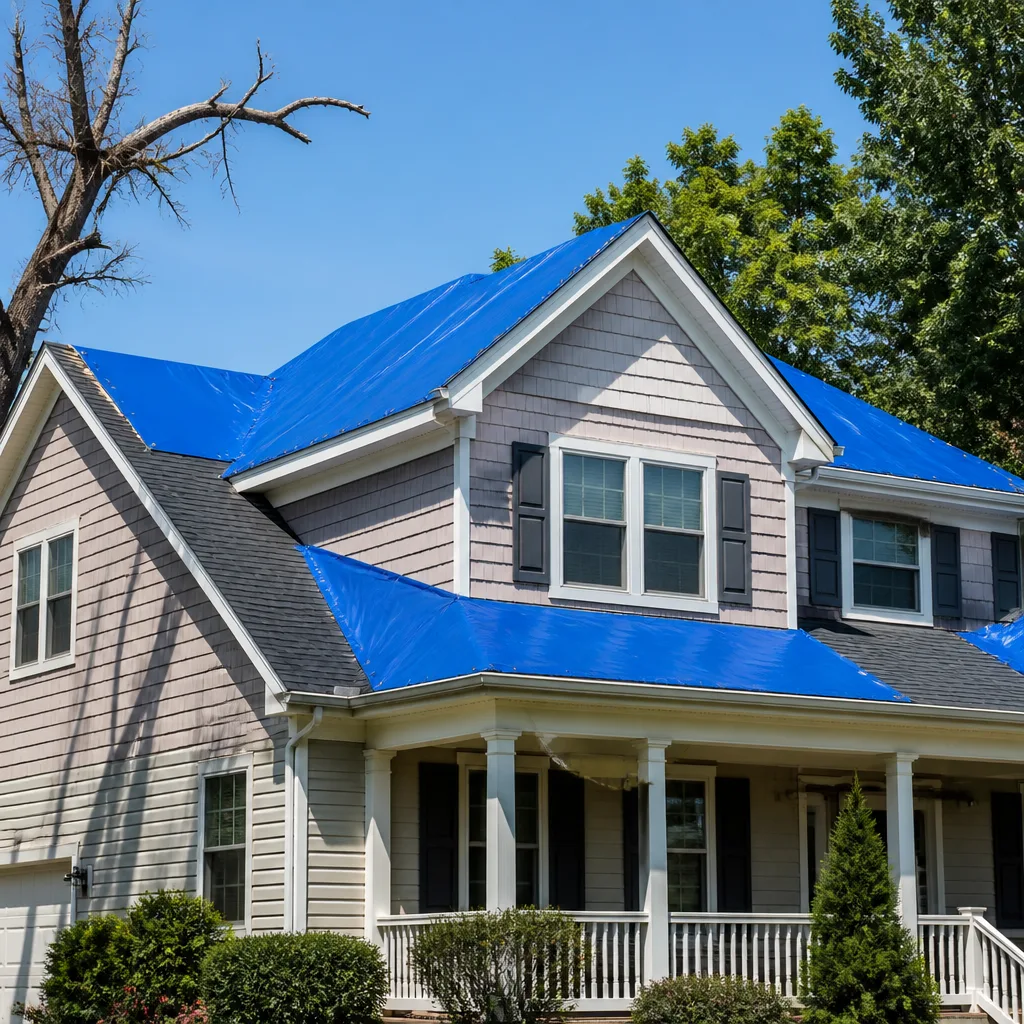
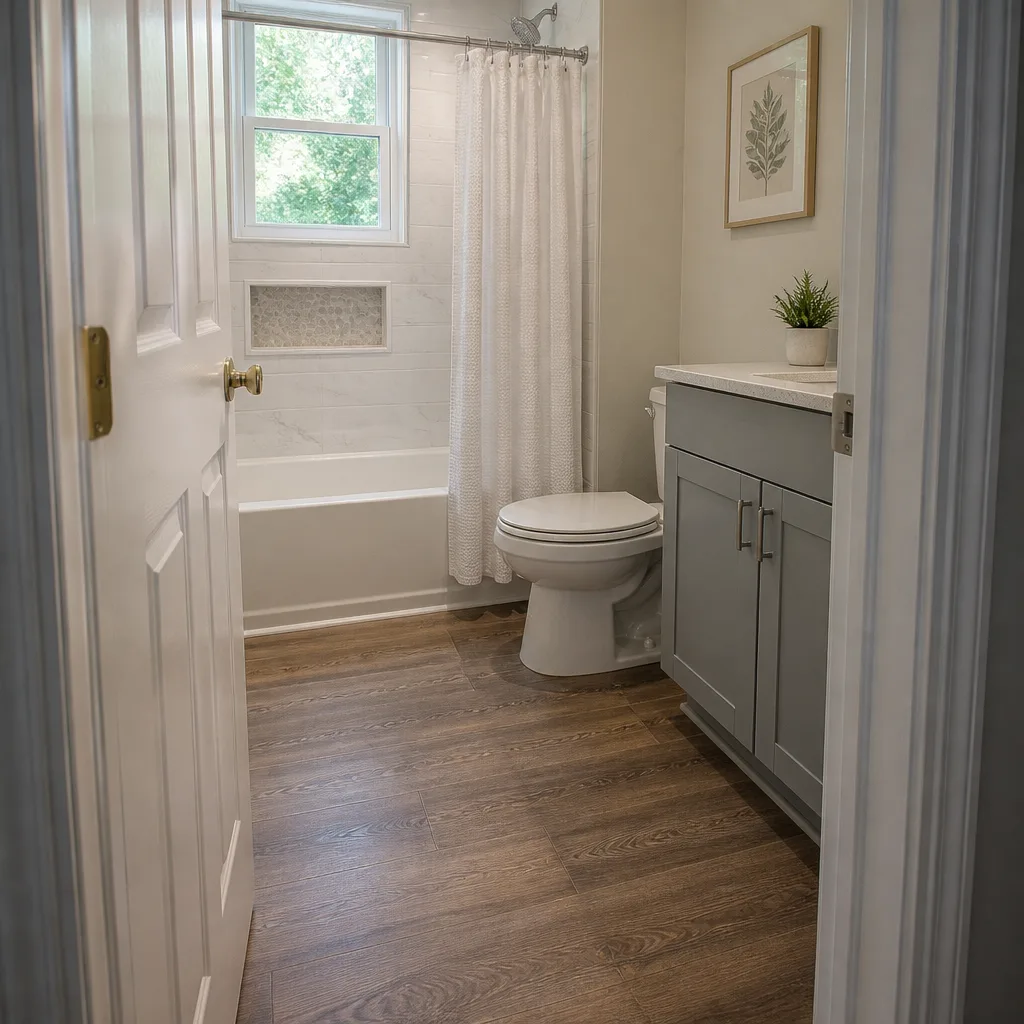
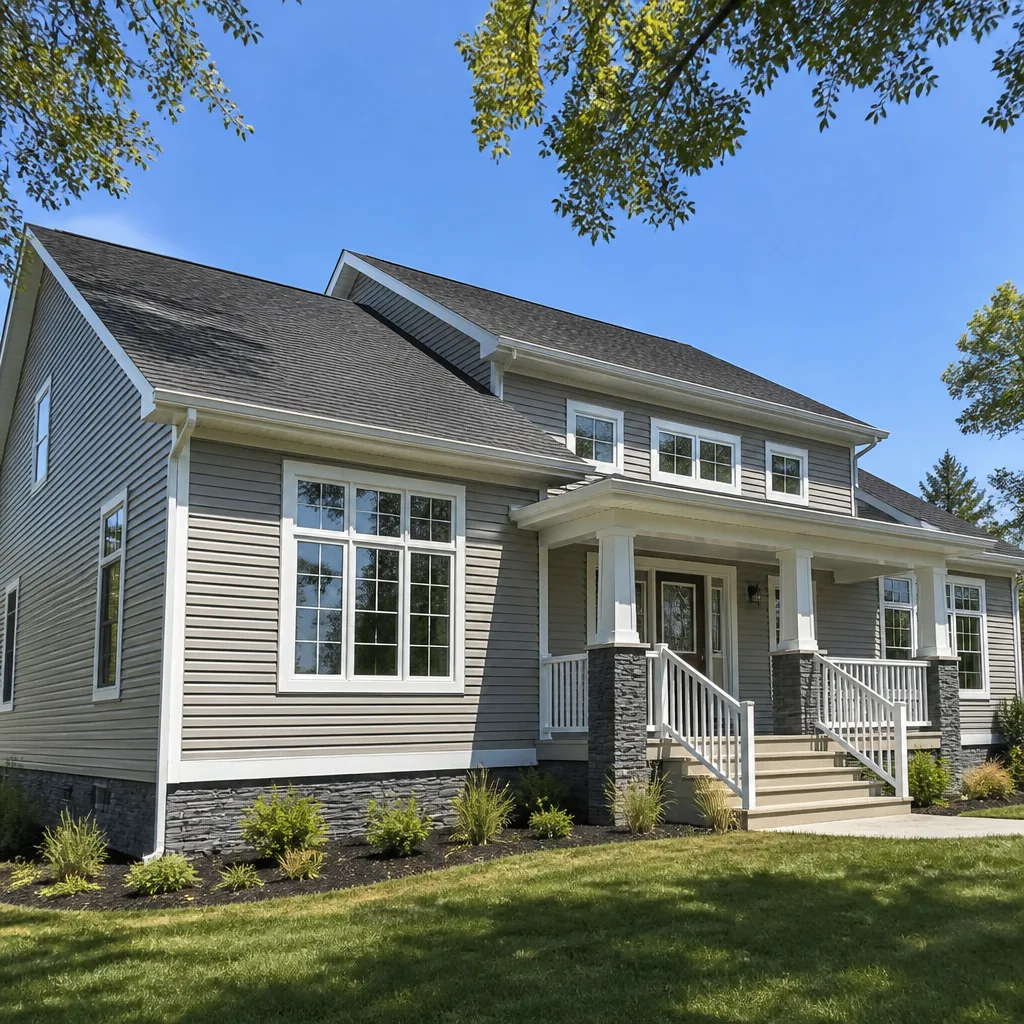
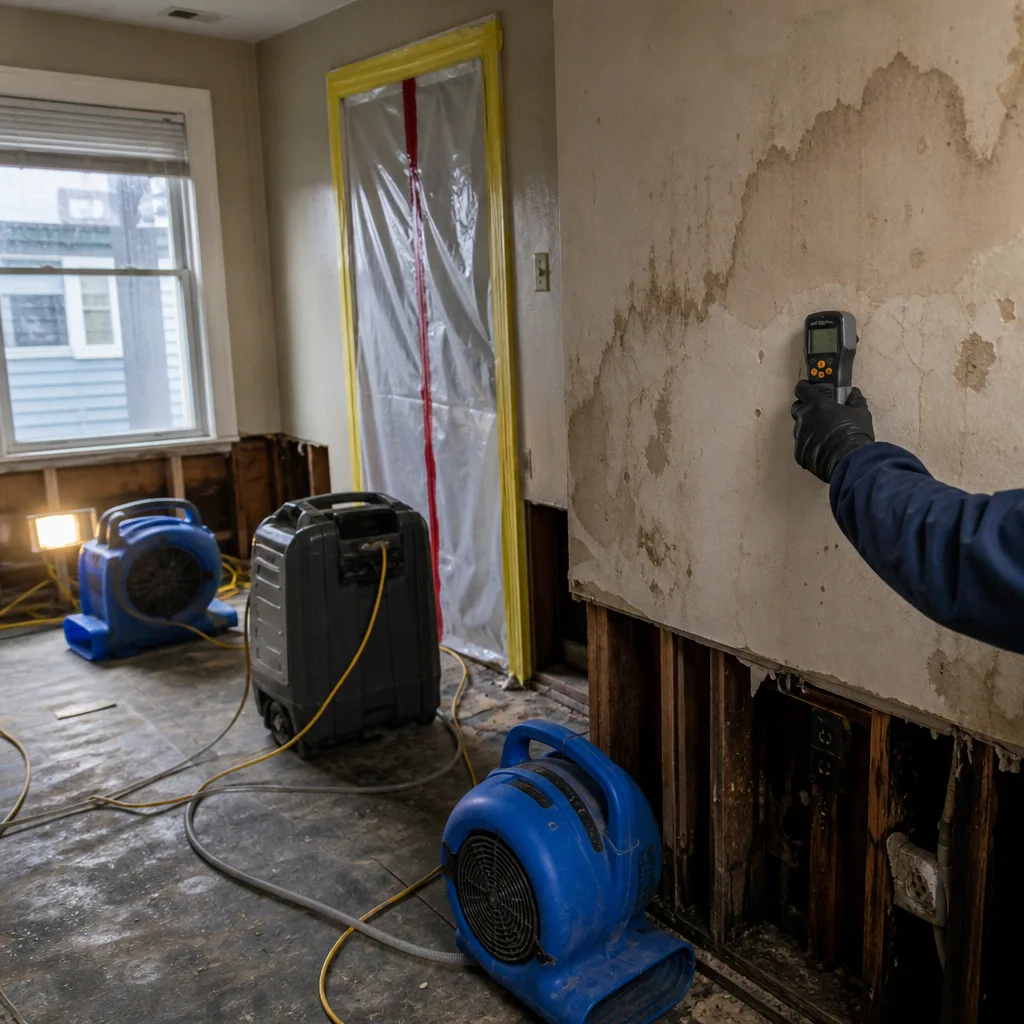 Before
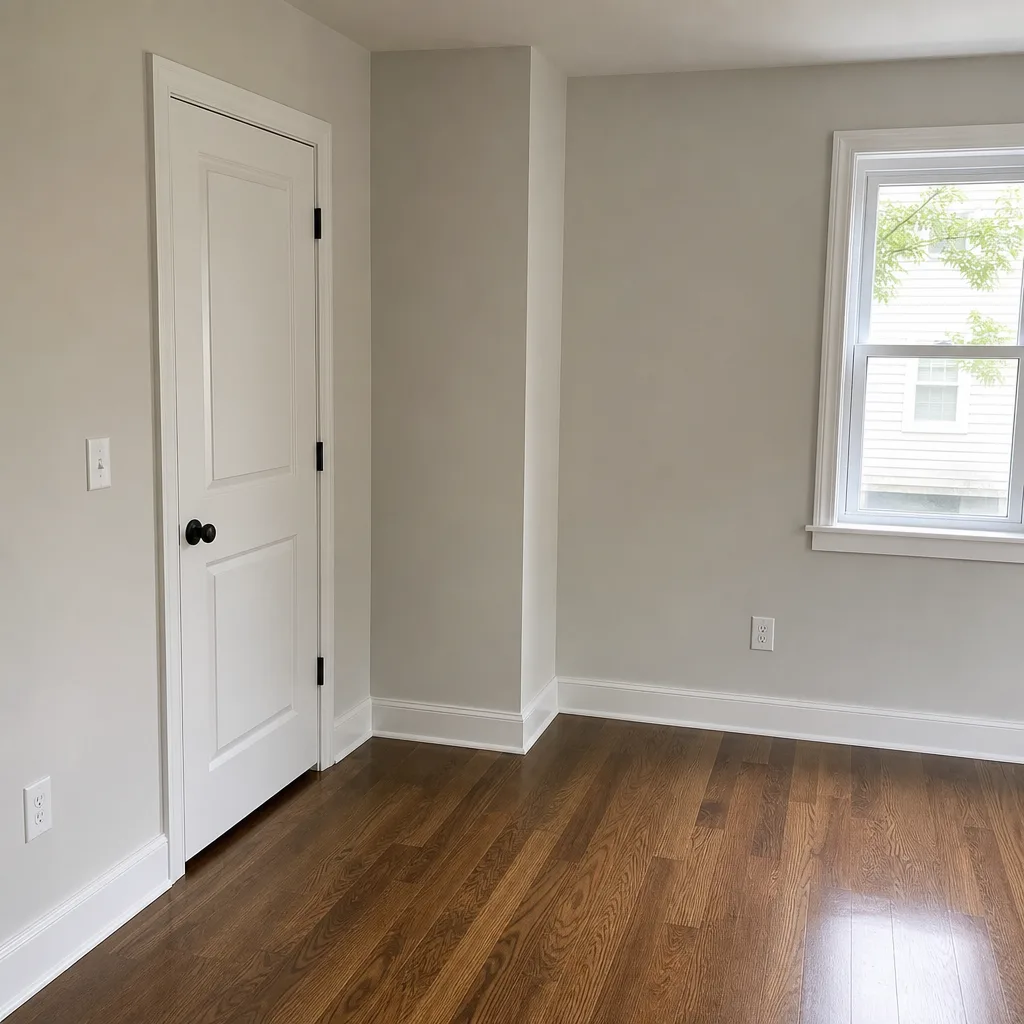 After
After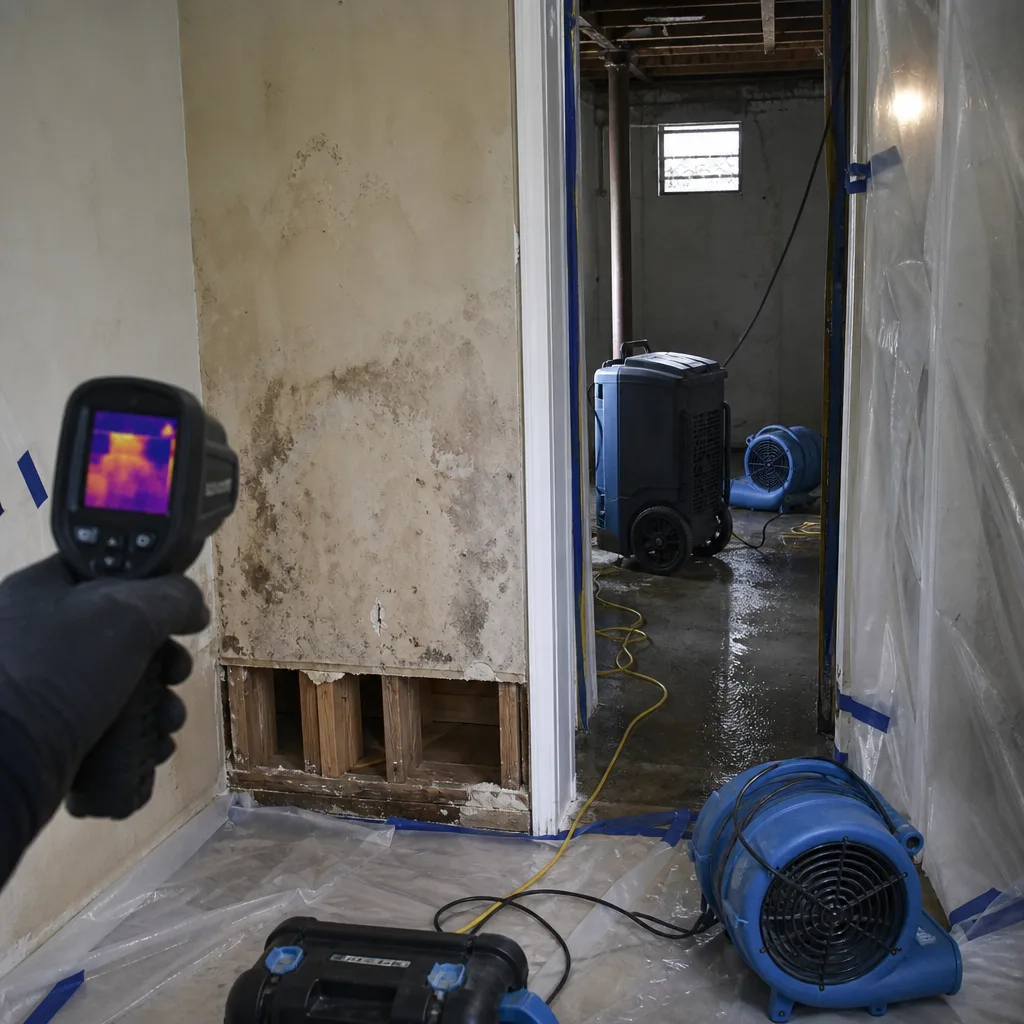 Before
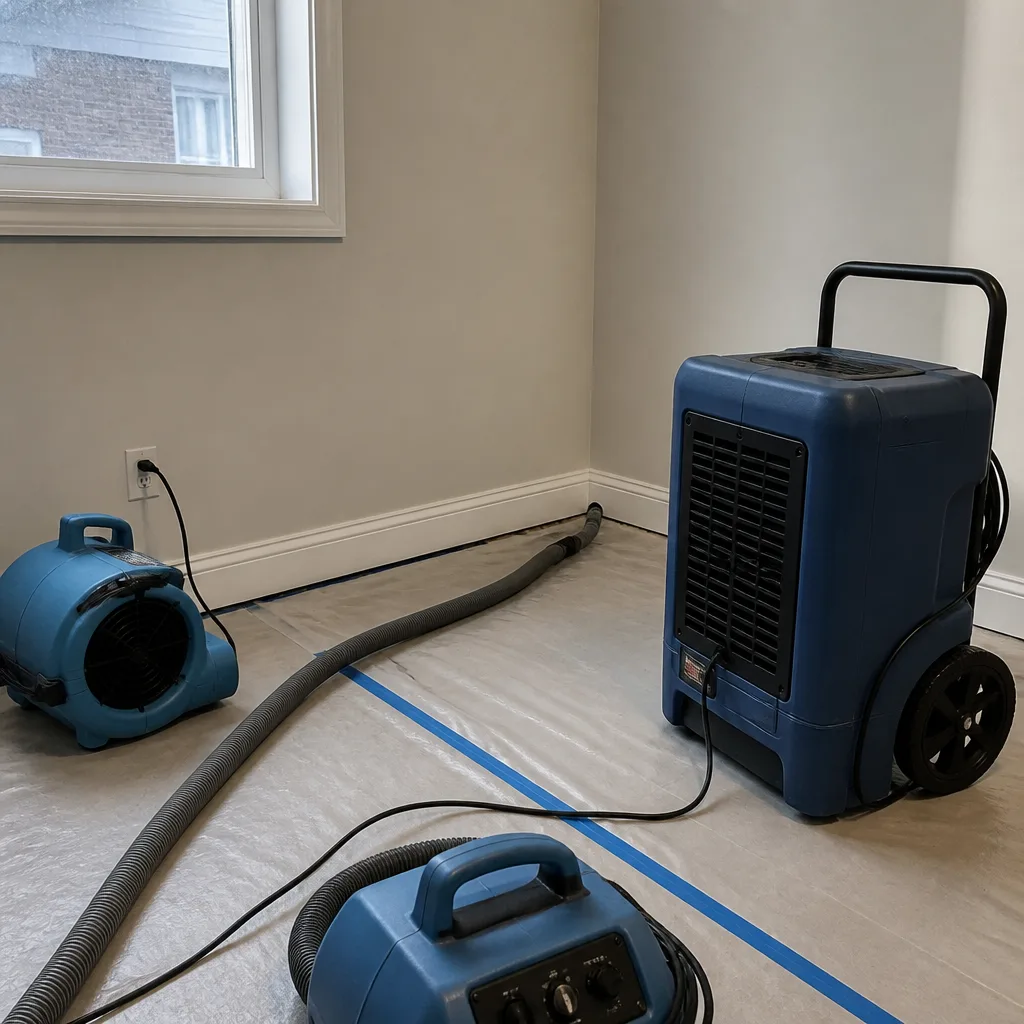 After
After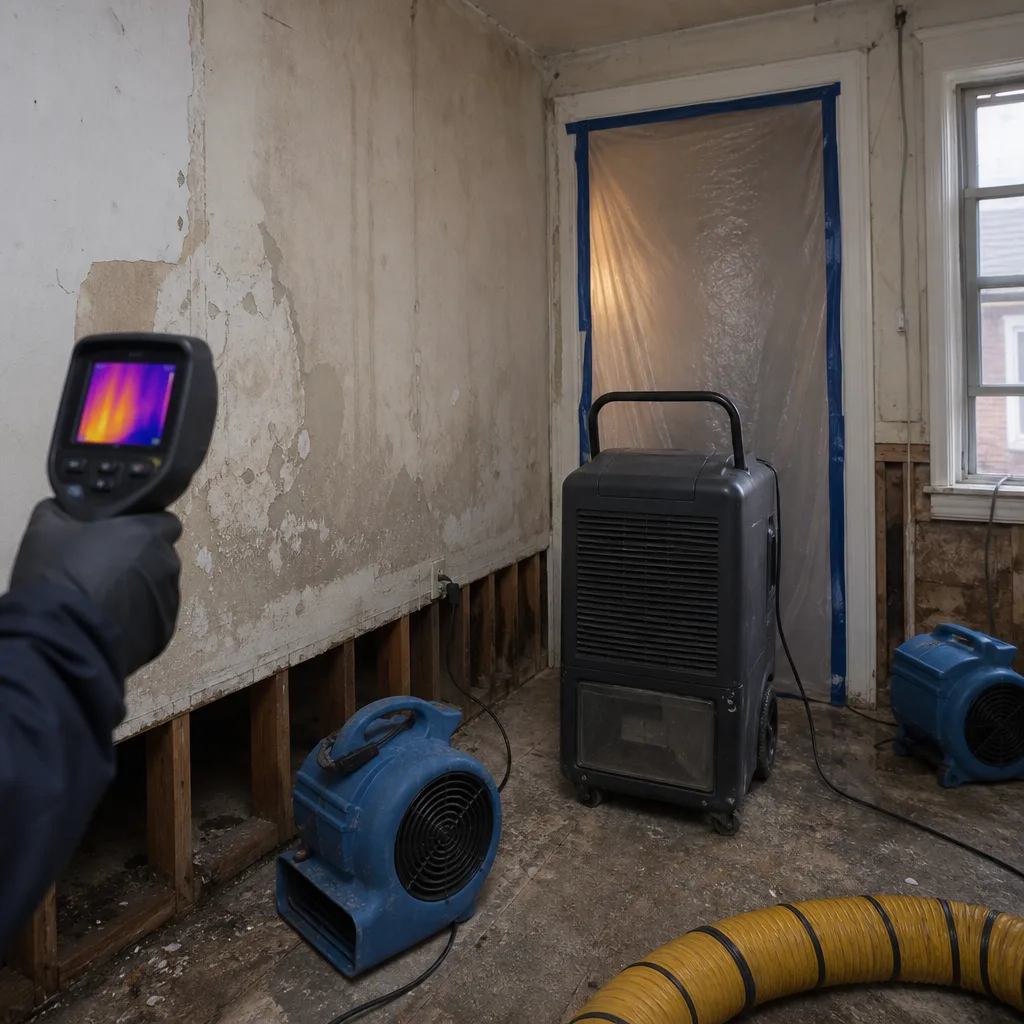 Before
 After
After24/7 Emergency Sanitization Services in Financial District
When a storm surge pushes harbor water into a basement mechanical room on Pine Street or a sewage backup floods a lobby on Exchange Place, sanitization can’t wait until Monday. We answer live 24 hours a day at (201) 903-9581, and Wade himself picks up the phone. Crews are dispatched into the Financial District within the hour, with a free visual inspection before any work begins. The first hour matters because Category 3 water, the kind that carries sewage, harbor contaminants, and bacteria, starts colonizing porous surfaces immediately. Sheetrock wicks it upward. Concrete absorbs it. Carpet traps it. What starts as a two-foot flood line becomes a contamination envelope that climbs walls and seeps into ductwork overnight. We move fast because speed is the cheapest disinfectant there is. Every hour of delay means more square footage under containment, more demolition, and a bigger claim. Call now. We’ll be there before the next tide cycle.
What happens when you call
- 1
A real person answersNo phone trees - you reach a local pro.
- 2
You get an upfront price rangeHonest numbers before anyone is dispatched.
- 3
A background-checked tech heads outLicensed & insured, dispatched right away.
- 4
You approve before work beginsNothing starts until you say go.
Understanding Sanitization Services Severity in Financial District Properties
Sanitization in the Financial District is not a one-size-fits-all wipe down. The severity scale here runs from simple post-illness disinfection of a single office to full Category 3 decontamination of a below-grade mechanical space after a coastal flood event. Category 1 water is clean, from a broken supply line or overflowing sink. Category 2 carries significant contamination, think washing machine discharge or sump pump overflow. Category 3 is grossly contaminated, containing sewage, seawater, harbor pathogens, or all three. The Financial District’s unique problem is that storm surge routinely delivers Category 3 water into buildings whose mechanical rooms sit at or barely above sea level, and whose pre-war plumbing chases were never engineered for repeated inundation. We also distinguish between surface contamination, what you can see and touch, and aerosolized contamination, what moves through shared duct risers in converted high-rise towers. A lobby flood at 20 Exchange Place can push bacteria into the air column that serves forty floors. That’s not a cleaning job. That’s a containment and air-scrubbing job. Severity here is also measured in time: the longer groundwater lingers after surface water recedes, the deeper the microbial load penetrates concrete and mortar.
Why Financial District Property Owners Choose Wade’s Restoration
- 45-minute response commitment: When we say we’re on the way, we mean Wade or one of his lead techs is in a truck inside the Financial District, not a call center scheduling for Thursday.
- 24/7 live answer, no automated system: You call, a person answers. Wade answers his own phone. At 2 a.m. during a nor’easter, that’s who you want on the other end of the line.
- IICRC-certified crews: Our techs hold WRT and AMRT certifications. We don’t send someone who watched a training video to do containment on a Category 3 basement flood.
- Free visual inspection: Before we touch anything, we walk the space with you and map the contamination footprint. You get a straight read on what’s actually needed, not a scare quote.
- Direct insurance billing: We photograph everything, log moisture readings daily, and talk to your adjuster ourselves. You aren’t the one relaying messages between two parties.
- One team from start to finish: The same crew that sets containment runs the HEPA scrubbers and handles the final clearance test. No hand-offs to a sub nobody vetted.
Our Sanitization Services Process
Inspection & Assessment
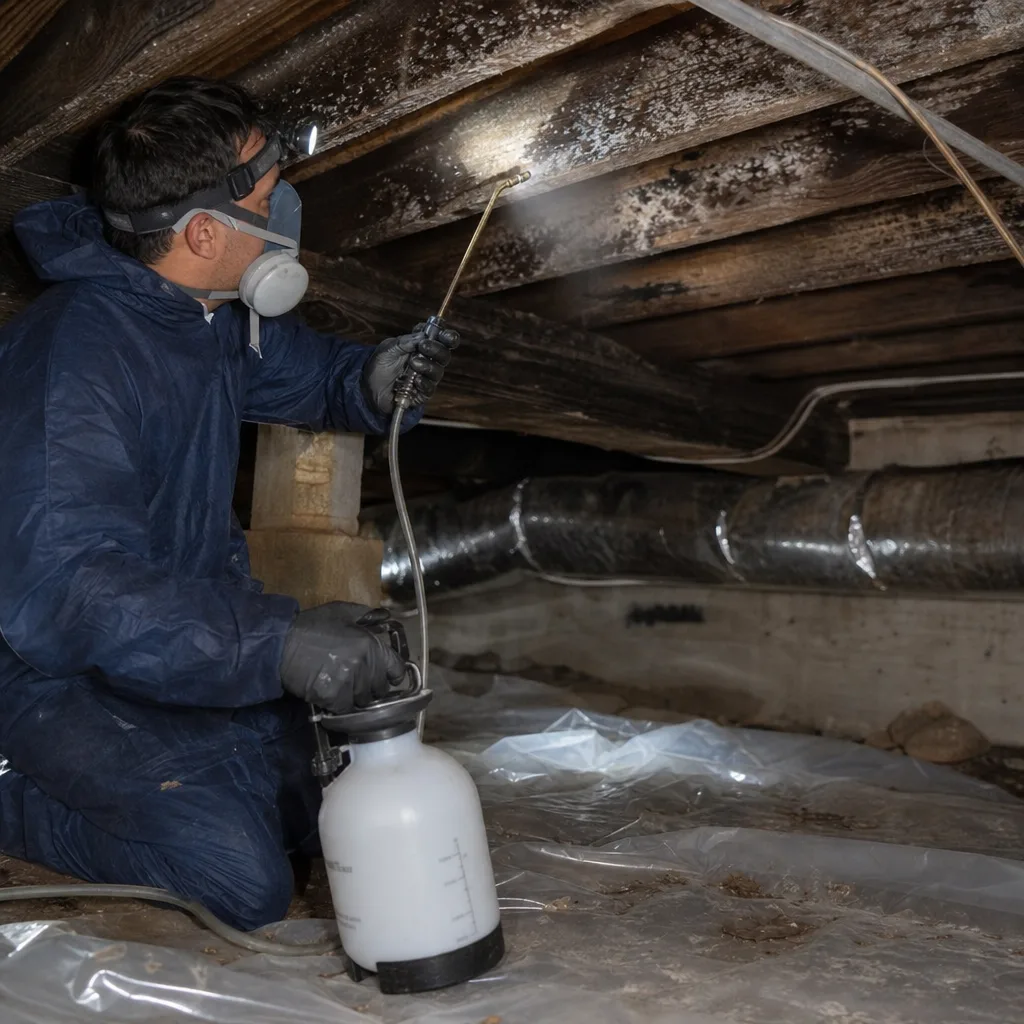
We start with a full walkthrough using thermal imaging and moisture meters. In Financial District buildings, we check not just the visible damage but the plumbing chases, elevator pits, and sump infrastructure. We classify the water category and map the contamination footprint in writing before any work begins.
Extraction & Stabilization
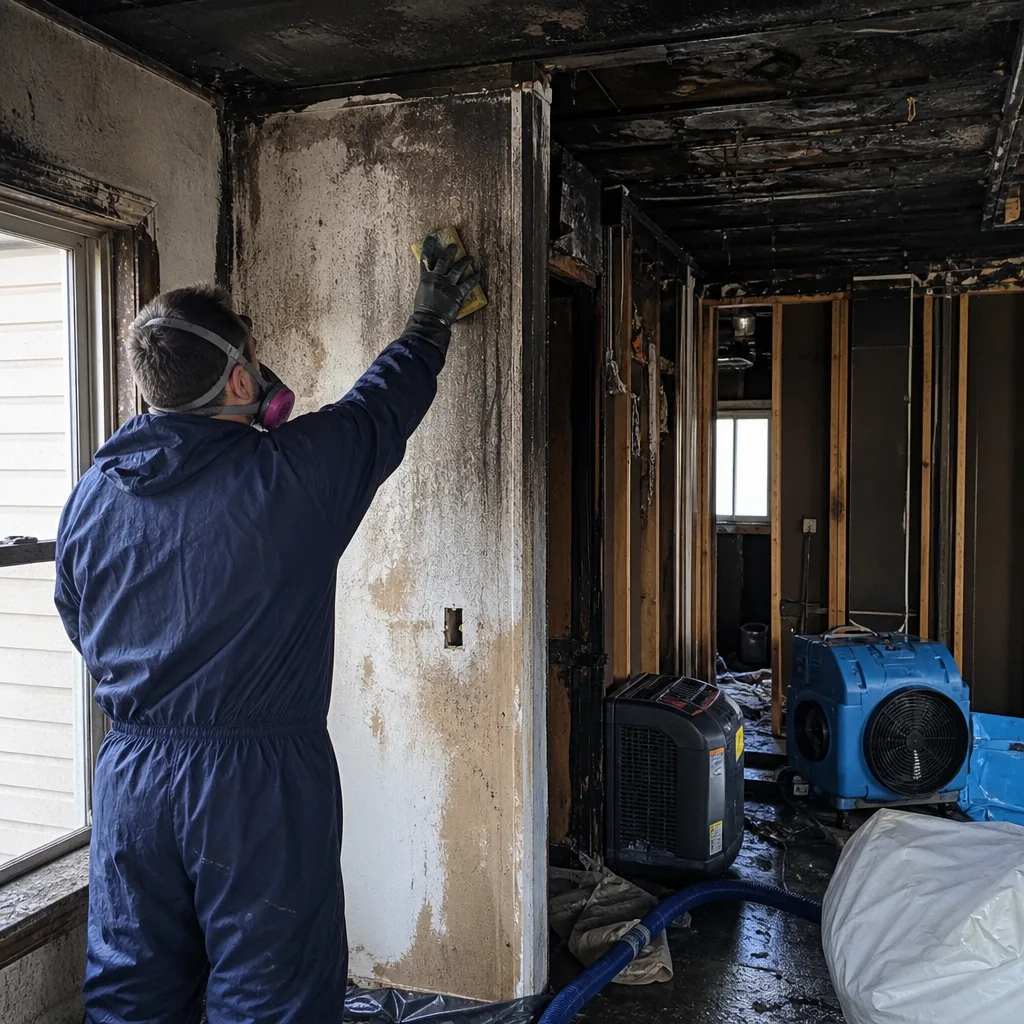
Standing water is removed with truck-mounted and portable extraction units. For basement mechanical rooms and lobby levels, we stabilize the environment to stop the spread. This means removing saturated materials that can’t be salvaged and setting up containment barriers on affected zones.
Drying & Dehumidification
We deploy Dri-Eaz dehumidifiers and XPOWER air movers to drive moisture out of structural cavities. In converted pre-war towers, this stage often runs longer because original masonry and added landfill keeps below-grade spaces saturated. We take readings every day and hand you the log at the end.
Cleaning & Sanitization
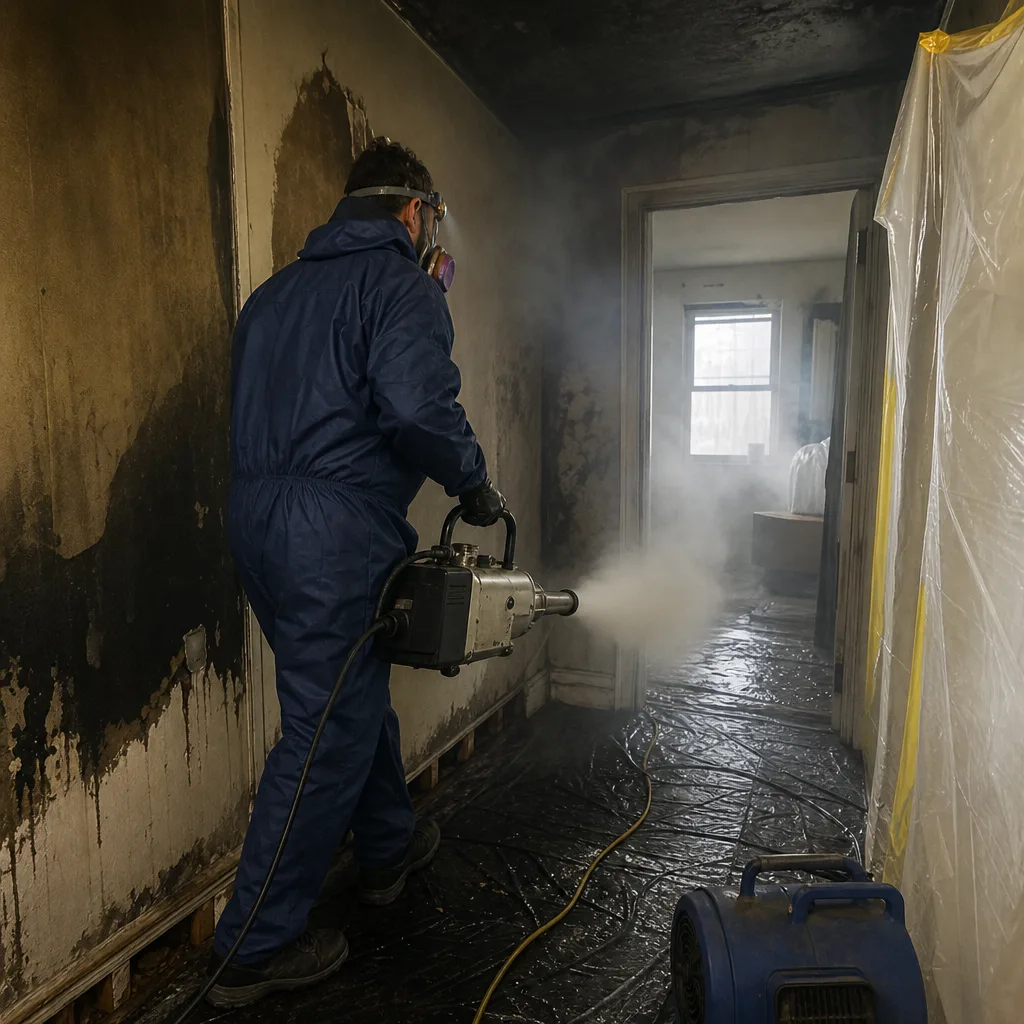
All affected surfaces get antimicrobial treatment appropriate to the water category. For Category 3, that means full decontamination with EPA-registered disinfectants. For Category 1, we target visible contamination and spot-treat. Nothing gets painted over or covered up.
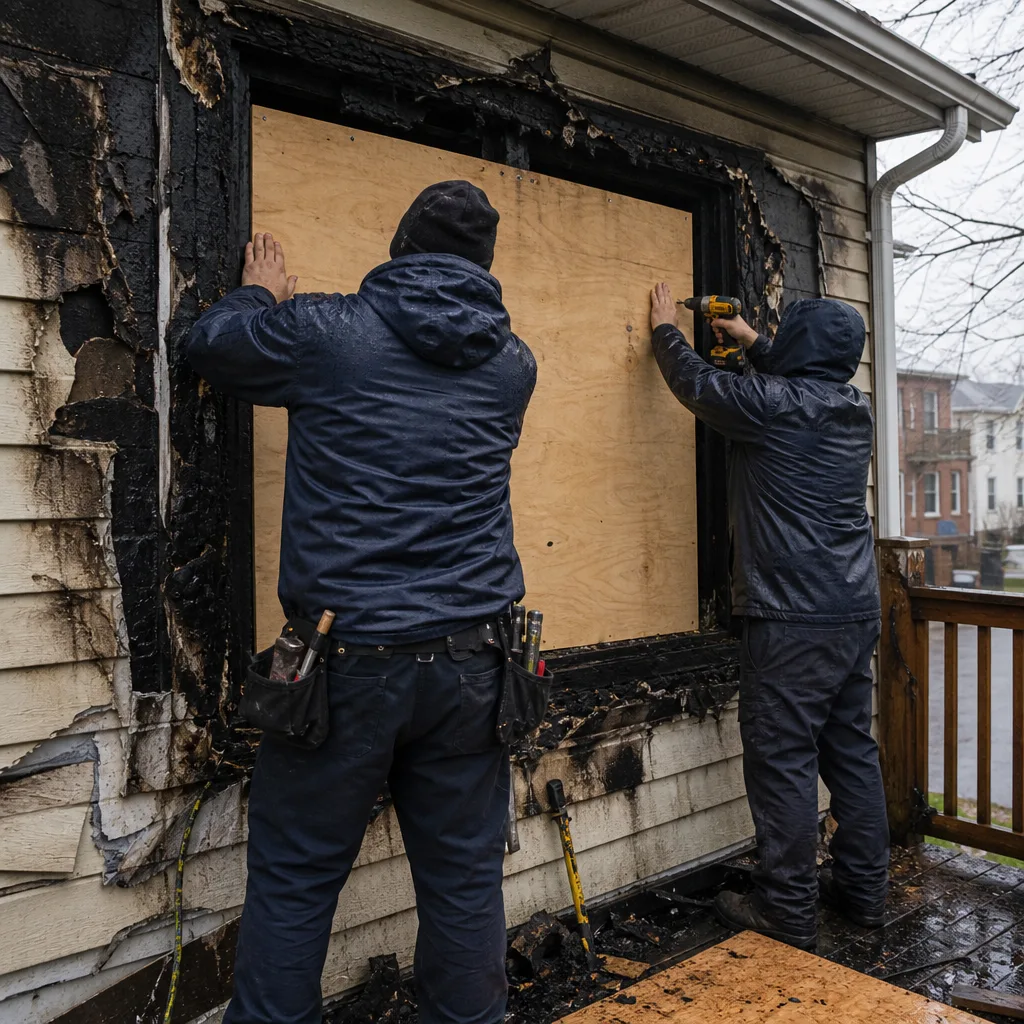
Specialty Treatment: Fogging, Ducts, and Air Scrubbing
In high-rise buildings with shared HVAC risers, we run commercial-grade fogging and air duct sanitization to address what traveled vertically. HEPA air scrubbers run continuously during this phase to capture airborne particulates. This is the step that separates a surface wipe-down from real decontamination.
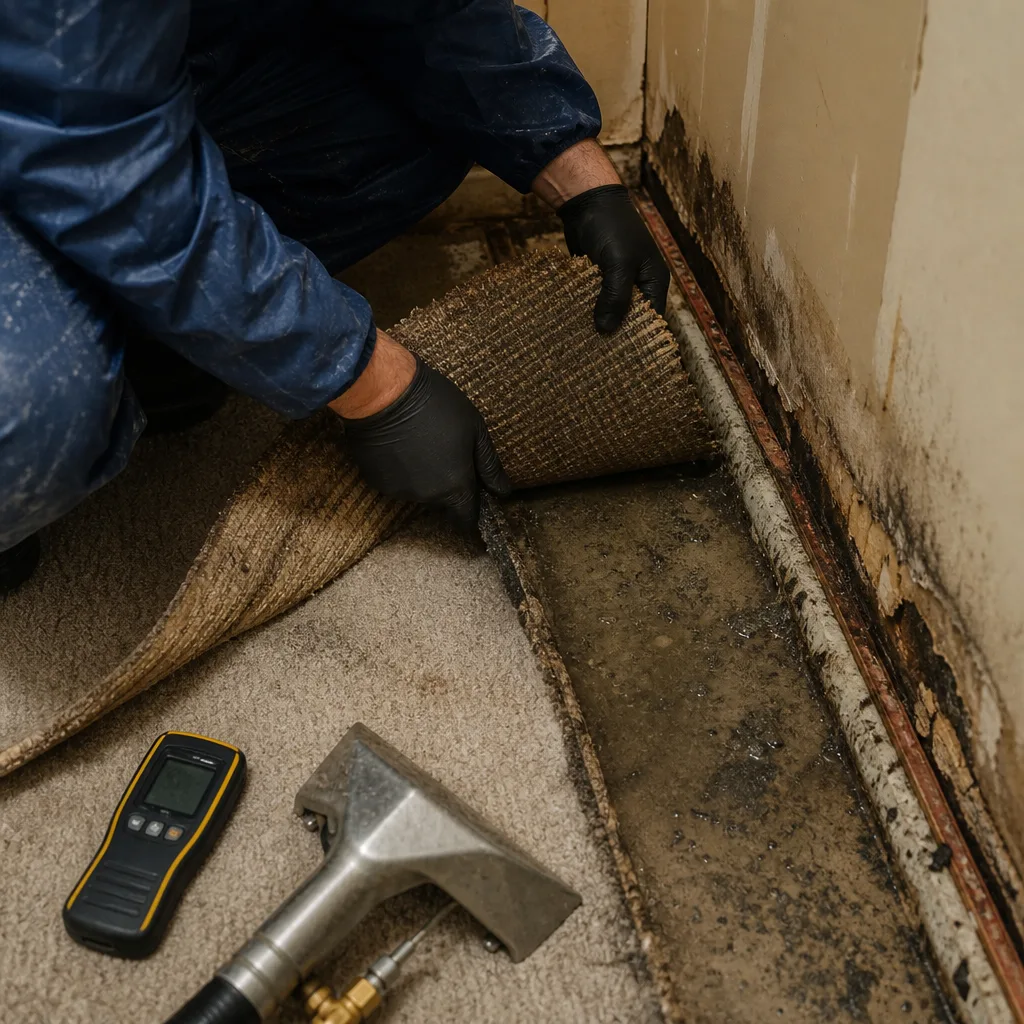
Repairs & Restoration
Once sanitization is complete and clearance testing passes, we handle the rebuild: drywall, flooring, cabinetry, whatever was removed. The same crew that did the remediation does the restoration. One invoice, one accountable team, one 90-Day Done Right Promise in writing.
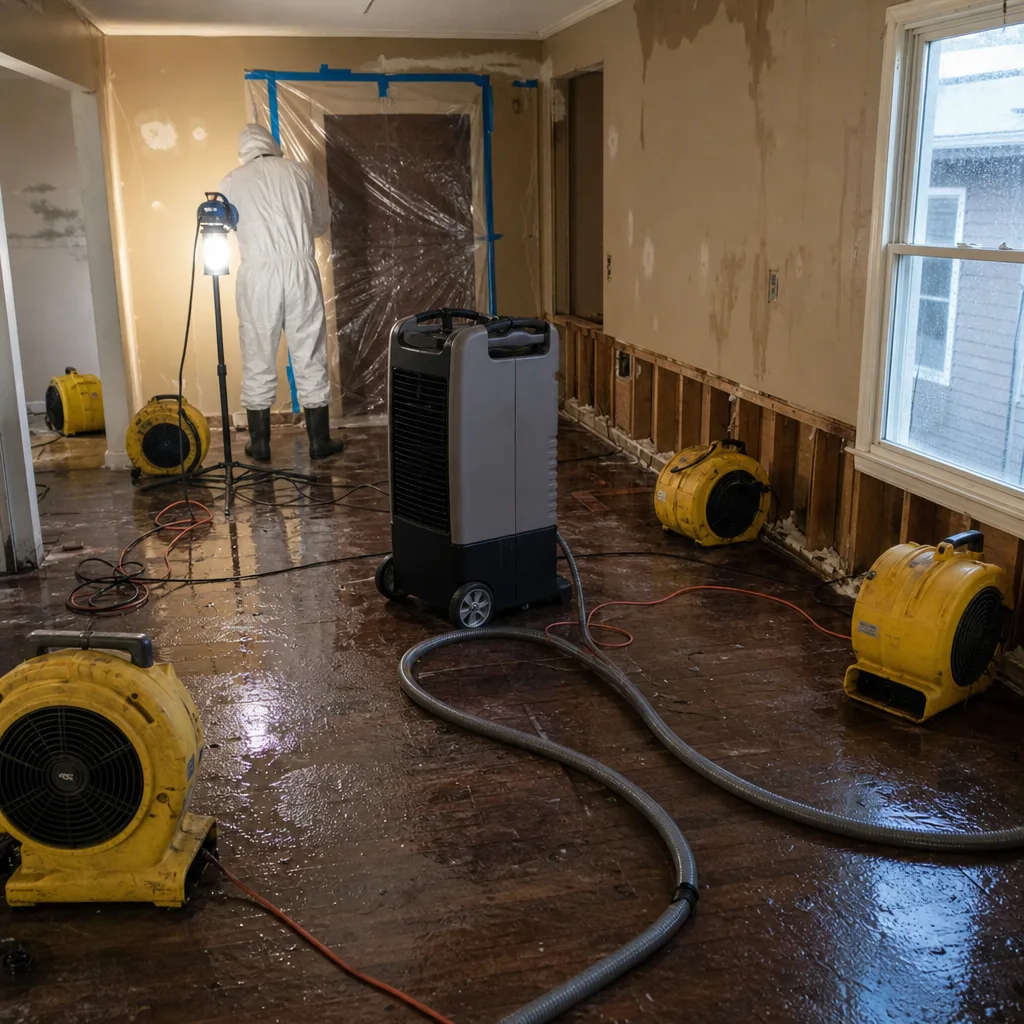
Need Emergency Sanitization Services in Financial District Now?
Crews minutes away, answering live 24 hours a day. The sooner we start, the less it costs.
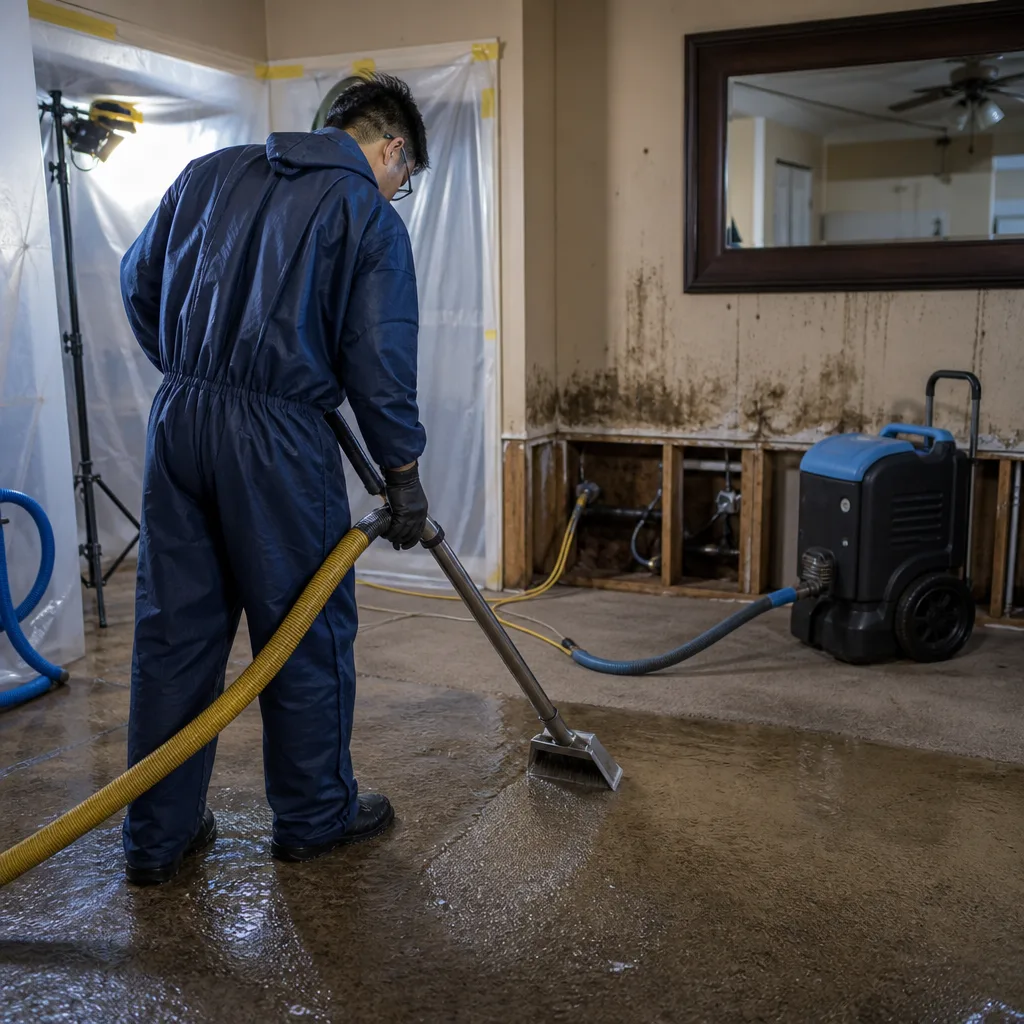
Working With Your Insurance Company
Most sanitization work after a flood, sewage backup, or storm event is covered under standard property policies, but how it’s documented determines what gets paid. We photograph everything from the first hour, room by room, and log moisture readings daily. When the adjuster asks for the scope of work, we hand over a line-item breakdown using industry-standard pricing software, not a number written on the back of a business card. Wade deals with the adjuster directly, so building managers and condo owners aren’t stuck playing telephone between a carrier and a contractor. If a carrier pushes back on sanitization as “redundant” or “preventative,” we go back with the data: moisture maps, air sampling results, photos of microbial growth. The documentation does the arguing.
What We Provide Your Insurer
- Thorough documentation of the loss
- Photos of all damage, room by room
- Moisture readings and drying logs
- A detailed, line-item scope of work
- Direct coordination with your carrier
Built for Financial District’s Loss Calendar
The Financial District’s sanitization calendar is not like the rest of the city. Uptown deals with burst pipes in January and thunderstorm flash flooding in July. Here, the real driver is coastal weather. Nor’easters in early spring and late fall push surge directly into the harbor mouth, funneling water toward FiDi before any other Manhattan neighborhood. Tropical systems in late summer and early fall do the same, only faster and with more volume. Between storms, the reclaimed landfill that this neighborhood sits on stays hydrologically active. Groundwater infiltrates basement walls through porous fill long after surface flooding recedes, and that means recurring microbial growth in below-grade mechanical rooms, storage areas, and lobby levels. Winter adds its own problem: deep freezes burst supply lines in pre-war plumbing chases, and the water follows the path of least resistance down into basement sumps that may not have drained properly since the last storm. A building that flooded once and was “cleaned” without addressing the groundwater intrusion is a building we’ll be back in within a year. The cycle is predictable. The damage doesn’t have to be.
Sanitization Services Across Financial District’s Neighborhoods
The Financial District runs roughly from City Hall down to Battery Park, and the building types shift block by block. Along Wall Street and around the New York Stock Exchange, we’re typically working in early-20th-century office towers where mechanical rooms sit in sub-basements, often a story or more below the sidewalk line. Those spaces flood first in a surge event. Over on Stone Street and South William Street, the buildings are older, shorter, and built directly on landfill with shallow foundations, so groundwater intrusion is constant. The residential conversions around 70 Pine Street and 20 Exchange Place have their own pattern: original HVAC risers and plumbing chases that were never isolated from flood-prone lower floors, so contamination can travel vertically through the building long after the standing water is gone. Battery Park City, just west of the district proper, faces the Hudson River directly and absorbs the first wave of surge during a storm. And the blocks around the South Street Seaport deal with East River flooding mixed with older infrastructure that predates modern waterproofing standards. Each zone has its own failure mode. We know which one we’re walking into before we park the truck.
Specialized Sanitization Services Services We Offer in Financial District
Deep Disinfection
After a Category 3 flood in a FiDi basement, surface cleaning alone won’t cut it. Deep disinfection means treating every affected surface, including the ones you don’t see: the back side of drywall, the interior of electrical chases, the underside of subflooring. We use EPA-registered antimicrobials applied with the dwell times the manufacturer actually specifies, not a quick spray-and-go. In converted high-rises where a lobby flood has been tracked through hallways and elevator cabs, deep disinfection is what separates a real remediation from a cosmetic wipe down.
Virus & Bacteria Decontamination
When a sewage backup or harbor surge introduces pathogens into a below-grade space, we treat it as a biohazard event, not a water event. That means full PPE, containment barriers, and decontamination protocols designed to keep bacteria from being tracked into occupied floors above. Post-illness cleanup in offices and residential units follows a similar protocol: targeted disinfection of high-touch surfaces, soft-surface treatment where applicable, and air scrubbing to reduce aerosolized viral load. This is the work that keeps a norovirus outbreak from becoming a whole-building problem.
Odor Neutralization
Odor after a flood is not a housekeeping problem, it’s a microbial problem. The smell you’re noticing is bacteria and mold off-gassing as they digest organic matter. We don’t mask it with scent. We find the source, which in FiDi buildings is often behind baseboards, inside elevator pits, or within the insulation layer of HVAC risers, and we treat it at the source. Hydroxyl generators and ozone treatments are tools we use after the moisture and microbial load are addressed, not as a substitute for that work.
Air Duct Sanitization
In a 30-story converted office tower, the ductwork is a highway for airborne contamination. A Category 3 flood in the lobby can push bacteria into the return air system and spread it to floors that never saw water. Air duct sanitization in these buildings means accessing the risers, treating the interior surfaces, and running HEPA-filtered negative air to pull contaminants out of the system. We’ve watched buildings skip this step and wonder why the smell came back on the 18th floor six weeks later.
Commercial-Grade Fogging
For large mechanical rooms, storage vaults, and elevator machine rooms, fogging delivers disinfectant into spaces where hand-cleaning can’t reach: the top of a boiler, the underside of a switchgear platform, the interior of a decommissioned fuel oil tank room. We use ULV foggers with EPA-registered disinfectants engineered for commercial application. This is standard practice for us on post-flood FiDi jobs, not an add-on we upsell. The building’s mechanical spaces are too large and too inaccessible for anything less.
Sanitization Services Costs in Financial District, NY
Here’s what sanitization actually runs in the Financial District, straight numbers. A basic post-illness disinfection of a single condo unit runs $350 to $800 depending on square footage and soft-surface count. Air duct sanitization in a converted high-rise starts around $1,200 for a single stack and climbs to $4,000+ if multiple risers are affected. A full Category 3 decontamination of a basement mechanical room after storm surge, with containment, antimicrobial treatment, fogging, and air scrubbing, runs $4,500 to $12,000 depending on the size of the space and the extent of material removal. What moves the price? Water category is the biggest lever. Category 1 is a cleaning job. Category 3 is a decontamination job with PPE, containment, and disposal costs. Access matters too: a sub-basement with no freight elevator and a narrow stairwell costs more than a lobby-level space with street access. Insurance covers most flood-related sanitization when the documentation is solid. The free visual inspection is how you find out where your job lands before committing to anything. Call (201) 903-9581 and we’ll come walk the space with you.
We Also Serve Cities Near Financial District
The same crew that handles sanitization in the Financial District also covers Lower Manhattan, Midtown Manhattan, Long Island City, and Midtown West. Same live answer, same 45-minute response commitment, same equipment loaded on the truck. If your building sits just outside the district line on Nassau Street or spilling over toward Chambers Street, don’t overthink it. Call and we’ll be there.
Serving Financial District, NY - Our Local Coverage Area
We’re based in the Financial District area and know this community well. Use the map below to see our service coverage - if you’re nearby, we can almost certainly help.
Financial District Sanitization Services Questions, Answered
How quickly does mold start growing after a Financial District basement flood, and does the water category matter?
Mold colonization begins within 24 to 48 hours on porous materials after a flood, but in Financial District basements the timeline is often shorter because the space never fully dries out on its own. Water category matters enormously. Category 1 from a clean pipe break gives you a brief window before microbial growth takes off. Category 3 from storm surge or sewage is already carrying bacteria and fungi when it arrives, so the clock starts before the water stops rising. Call (201) 903-9581 the moment water is discovered, not after you’ve tried to shop-vac it yourself.
What makes sanitization in the Financial District different from other Manhattan neighborhoods after a storm?
Three things. First, the neighborhood sits on permeable landfill, so groundwater intrusion continues after surface water recedes, which means the sanitization has to be designed around ongoing moisture, not a one-time event. Second, the housing stock is dominated by converted pre-war skyscrapers with shared HVAC risers, so contamination spreads vertically in ways that aren’t a factor in low-rise uptown buildings. Third, many FiDi buildings still have sump infrastructure and secondary mechanical systems at their original flood-prone elevations, so the same spaces flood and re-contaminate on a predictable cycle.
Can air duct sanitization prevent contamination from spreading between floors after a lobby or basement flood?
Yes, and in a converted Financial District high-rise, it’s often the single most important step. When Category 3 water floods a lobby or basement, bacteria and mold spores get pulled into the return air system and distributed through the building’s duct risers. Water never touches an apartment on the 24th floor, but the smell and the microbial load arrive anyway. Air duct sanitization treats the interior surfaces of those risers and uses HEPA air scrubbing to pull contaminants out of the system. Skipping it is how whole buildings end up with a recurring odor problem nobody can localize.
Why do some buildings in the Financial District have recurring mold problems even after professional sanitization?
Because the sanitization addressed the visible contamination but not the groundwater intrusion feeding it. In a neighborhood built on landfill, hydrostatic pressure keeps pushing moisture through basement walls and slabs long after the storm is over. If you clean, fog, and scrub but don’t address the water that’s still coming in, mold returns within weeks. That’s why our scope of work in FiDi always includes a moisture mapping component: you have to know where the water is still entering before you can claim the sanitization is done. Buildings that skip this step are the ones calling us back every year.
What should a building manager in FiDi expect from a commercial-grade fogging service after a wastewater backup?
Expect containment first. Fogging without containment just pushes contaminated air into adjacent spaces and occupied floors. The fogging itself uses a ULV fogger with an EPA-registered disinfectant, applied at a specific droplet size and dwell time to reach into equipment cavities, tank interiors, and above-ceiling spaces that can’t be hand-cleaned. After fogging, HEPA air scrubbers run to pull the disinfectant and any aerosolized contaminants back out of the air. A legitimate fogging service takes several hours including setup and air exchange. A drive-by fogging quote that takes 20 minutes should worry you.
How fast can you actually get to the Financial District?
We commit to 45 minutes from the time you hang up to wheels rolling into the district, and most calls beat that. We’re already familiar with the district’s access issues: narrow streets like Exchange Place, buildings with freight entrances on side alleys, loading docks that require building management approval after hours. That local knowledge means we’re not circling the block looking for the service entrance while your basement keeps filling. Call (201) 903-9581 and a real person answers, day or night.
Will insurance cover sanitization after a flood or sewage backup in the Financial District?
In most cases, yes. Flood-related sanitization falls under standard property coverage when the cause is a covered peril, and sewage backups are typically covered when a rider or endorsement is in place. What determines whether the claim gets paid is documentation. We photograph every affected area before work starts, log moisture readings daily, and give your insurer a line-item scope using industry-standard pricing. Wade deals with the adjuster directly. You don’t get stuck in the middle. If the carrier questions the sanitization as unnecessary, we go back with air sampling data and moisture maps.
What should I do in the first 30 minutes after discovering a flood or sewage backup?
Call us at (201) 903-9581. Then, if it’s safe, turn off power to the affected area at the breaker. Do not enter standing water that may be in contact with electrical systems, which in FiDi basements is a real hazard given how low the switchgear sits. Do not use a household vacuum or fan. Do not spray bleach on the water. Do not start pulling up carpet yourself, you’ll just spread contamination. Take photos from a safe distance, note the time, and wait for our crew. The first 30 minutes are for documentation and a phone call, not for heroics.
We sanitized a converted Art Deco tower on Pine Street after a nor’easter pushed Category 3 water into its basement mechanical room. Our crew set containment, performed antimicrobial treatment on the pre-war plumbing chases, and ran HEPA air scrubbers to knock down moisture readings before structural drying could begin. The building’s sump infrastructure had been left at its original flood-prone elevation, so the same job will likely repeat next season. That’s the truth of sanitization work in the Financial District: the water leaves, but the building’s design doesn’t change. When you need a team that understands this district’s specific failure modes, call Wade’s Restoration at (201) 903-9581. We answer live. We show up fast. We document everything. And we stand behind the work with the 90-Day Done Right Promise, in writing.
Written by Wade Ferris, Owner at Wade’s Restoration, serving the Financial District with 24/7 emergency sanitization and restoration services. Here is my cell: (201) 903-9581. No charge to come take a look.
Why Financial District Chooses Wade's Restoration
We set the standard for sanitization services in Financial District.
Documented for Your Claim
Every job is photographed before, during and after, with moisture logs where they apply. We hand the full file to your adjuster and bill your insurance directly - you are never the one relaying it.
Licensed & Insured
Fully certified technicians who meet all local and state licensing requirements.
Upfront Pricing
No hidden fees, no surprises. You approve the price before any work begins.
Guaranteed Work
Every repair and installation is backed by our workmanship warranty and satisfaction guarantee.
How It Works in Financial District
Getting your sanitization services handled is simple and fast.
Call or Request a Free Estimate
Tell us about your sanitization services needs and we provide an upfront, transparent quote - no obligation, no hidden fees.
Licensed Technician Dispatched
A background-checked, certified technician arrives in Financial District - typically within 30-60 minutes, with parts stocked on the truck.
Problem Solved, Guaranteed
We complete the job to your full satisfaction, backed by our warranty and 100% satisfaction guarantee.
What happens when you call
- 1A real person answersNo phone trees - talk to a local sanitization services pro.
- 2You get an upfront price rangeHonest numbers before anyone is dispatched. No surprises.
- 3We come out and measureLicensed & insured, at a time that suits you - the visit and the quote are both free.
- 4You get the price in writingLine-itemed, yours to keep, and nothing starts until you say go.
What Financial District Customers Say
Trusted by homeowners across Financial District and surrounding areas.
"Supply line let go under the sink while we were away for the weekend and we came home to two inches through the whole ground floor. Wade had extraction running within the hour of my call and he was the one who answered it."
"The first company I rang wanted to tear out the hardwood immediately. Wade said if he could get it dry in seventy two hours it would come back, and it did. Saved us the floor and a great deal of money."
"He talked me through what would happen next while I was still standing in the water crying down the phone at him. That was worth as much to me that night as the equipment."
Our Work in Financial District
A look at recent damage restoration projects across Financial District and surrounding areas.
Ready for Sanitization Services in Financial District?
Call now for a free estimate - or request one below. Licensed, insured, and here with fast after-hours help in Financial District.
(201) 212-6596Request a Free Estimate in Financial District
Tell us about your sanitization services needs - we'll respond within the hour.