
Quick Summary
High-rise riser failures and coastal runoff create urgent flooding risks in Queens properties, making fast, specialized water damage restoration in Long Island City critical to contain multi-floor water migration. Rather than resorting to disruptive demolition, Wade's Restoration utilizes non-invasive structural drying, thermal imaging, and high-volume extraction to preserve original architectural materials and coordinate insurance documentation. Property owners can call the 24/7 emergency dispatch line immediately to stop active leaks, prevent mold growth, and secure a free visual inspection with a fixed-price estimate.
Water Damage Restoration in Long Island City – Fast 24/7 Relief
When a vertical riser fails in a high-rise tower or storm runoff backs up into a street-level commercial space, water moves rapidly through modern residential developments and historic industrial buildings in Long Island City. Water does not simply pool in place; it travels down plumbing chases, behind party walls, and through concrete deck penetrations into the units below.[3]
Standard restoration contractors often resort to tearing out wet building materials immediately. That approach leads to expensive rebuilds, long displacement times, and complicated condo board conflicts. Professional in-place structural drying, as practiced by specialists like Wade’s Restoration, uses controlled airflow, commercial desiccant systems, and vacuum extraction to dry original framing, subflooring, and finished surfaces where they stand. See also Water Damage Restoration in Jersey City | Call Now-10% Off | Same-Day Service | Free Estimate.
Quick Answer
Quick answer in brief: Emergency water damage restoration in Long Island City stops active leaks, extracts standing water, and dries structural assemblies without unnecessary demolition. Restoration teams use high-volume extractors, floor-mat vacuum drying systems, and commercial dehumidifiers to restore saturated building materials, protect historical hardwood floors, and document moisture readings for insurance records.
Rapid water extraction and technical drying are essential to prevent mold growth and preserve building components. In Long Island City’s high-rise riser stacks and converted factory lofts, fast mitigation contains vertical water migration before moisture compromises lower units and triggers disputes between unit owners and building management.
Rather than defaulting to disruptive gutting, restoration specialists map moisture travel using non-invasive thermal imaging and calibrated probe meters to target only the saturated areas.
How Fast Can Crews Arrive and Halt Vertical Riser Flooding?
Need water damage restoration in Long Island City?
We’re available now - call for a fast, free estimate.
In high-density Queens neighborhoods, dispatch speed determines the extent of secondary damage. While response times vary depending on the service provider, local traffic, and prevailing weather conditions, prompt dispatch helps isolate water pathways, extract bulk water, and set up negative-pressure containment in utility chases before lower-floor ceilings collapse.
High-Rise Riser Leaks and Vertical Water Migration
In neighborhoods like Hunters Point and Court Square, multi-story buildings present unique structural challenges. High-pressure mechanical supply lines and fire suppression risers can release hundreds of gallons of water per minute. Gravity forces that water through vertical utility shafts, elevator conduits, and interstitial spaces between floors.
A single burst pipe on an upper floor can affect ten floors beneath it within an hour. When contractors come in and immediately tear out walls and ceilings across multiple apartments, repair schedules stretch into months. Targeted structural drying halts that vertical progression at the source, extracting moisture from floor assemblies and drying out vertical chases before rot and mold set in.
External flooding risks also compound these vulnerabilities. As shown on the NYC Flood Hazard Mapper published by the New York City Department of City Planning, low-lying coastal areas along the East River and Newtown Creek face heightened storm surge risks. When localized drainage infrastructure backs up during severe weather, storm water can flood sub-basements and ground-floor properties near Vernon Boulevard and the Pulaski Bridge.[1]
For broader municipal emergencies, NYC.gov advises residents to document and report home damage through the NYC Damage Information Form. Additionally, the NYC Housing Recovery Operations portal collects citywide damage data to help direct disaster recovery resources to impacted neighborhoods.[2]
Immediate Containment Protocols for Queens Properties
While an emergency water damage team is on the way, property owners and building superintendents can take these direct containment steps:
- Shut Off the Water Source: Turn off the dedicated branch isolation valve or the floor-level riser valve immediately to cut off pressurized flow.
- Cut Electrical Power: Switch off circuit breakers serving wet rooms, flooded ceiling cavities, and affected light fixtures to prevent electrical shorting.
- Protect Flooring and Furnishings: Place foil or plastic wrap under wooden furniture legs, lift area rugs, and avoid walking through pooled water near electrical outlets.
- Document Visible Water: Take clear photos and short video clips of the water line and damaged items before moving anything, providing initial proof for insurance adjusters.
What Factors Influence Water Damage Restoration Costs?
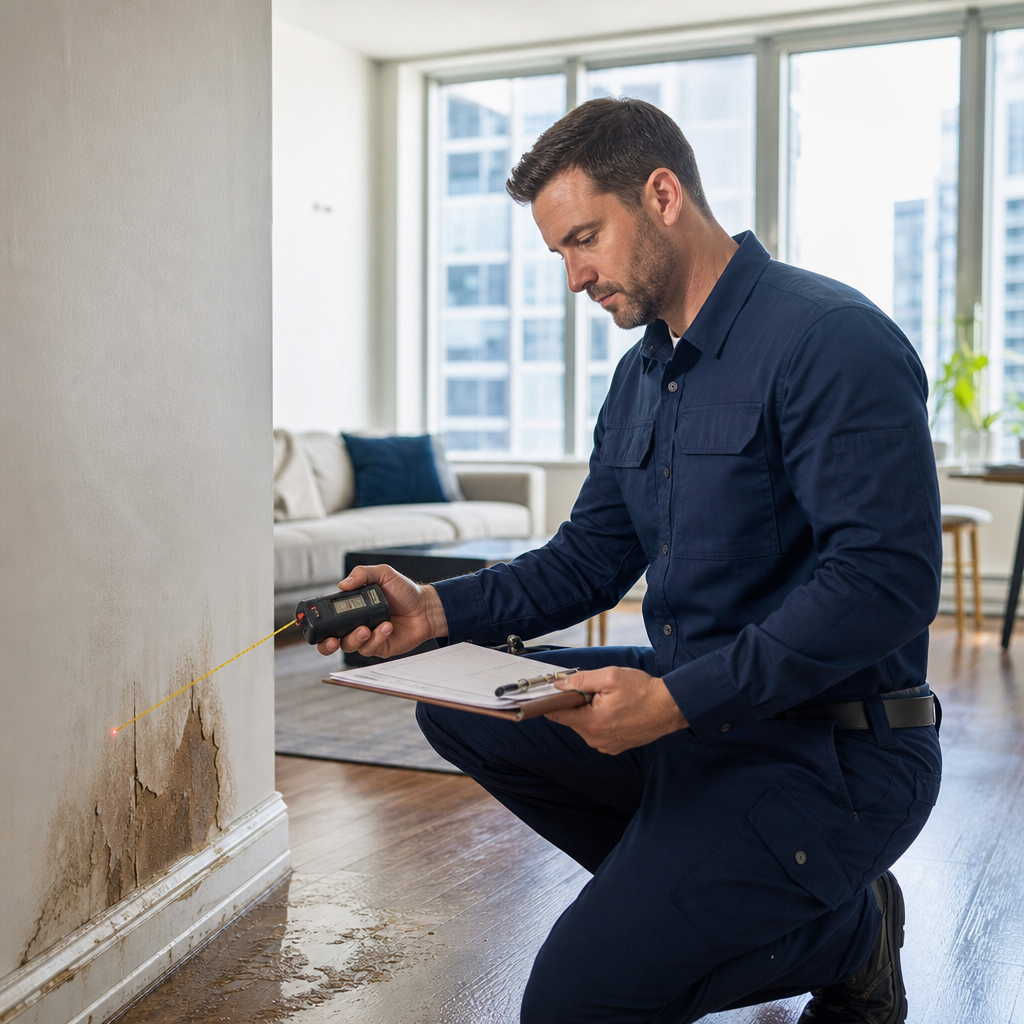
Restoration costs depend directly on the category of water (clean supply lines, gray water from appliances, or contaminated storm/sewer backup), the total square footage affected, and how deeply moisture has penetrated building assemblies.
Typical Restoration Service Considerations
When severe weather strikes Queens, intense rainfall can overwhelm street-level catch basins and drive runoff into garden apartments and commercial storage basements. Handling clean pipe bursts differs significantly from managing biohazard storm backups, which require specialized sanitation and controlled disposal.
| Factor | Technical In-Place Drying | Full Gut-and-Replace | Basic Extraction |
|---|---|---|---|
| Loft Material Preservation | High (Saves original timber and flooring) | Low (Total tear-out and disposal) | None (Surface water only) |
| Condo Board Dispute Risk | Low (Minimal structural alteration) | High (Long construction delays) | High (Hidden moisture and mold) |
| Drying Documentation | Daily psychrometric and moisture logs | Demolition receipts only | Little to no documentation |
Navigating Insurance Claims and Carrier Documentation
Handling property insurance claims requires thorough documentation. Residents should document all visible damage with photos, videos, and inventory notes. Standard property policies often do not cover flood damage resulting from external rising waters or storm surges, which typically requires separate flood coverage.[4]
How Can Restoring Hardwood Floors and Drywall Prevent Costly Demolition?
Need water damage restoration in Long Island City?
We’re available now - call for a fast, free estimate.
Targeted structural drying saves saturated building materials by pulling out trapped moisture before permanent warping or delamination takes place. Using negative-pressure floor mat systems and commercial desiccant dehumidifiers stabilizes original wood and drywall assemblies where they are, avoiding expensive gut renovations and reducing neighbor friction in multi-family buildings.
Industrial Loft Wood Floors vs Default Tear-Outs
Converted industrial lofts across Long Island City often feature thick tongue-and-groove hardwood, original pine planking, and heavy timber framing. Ripping out these original floors permanently damages the architectural character of the property and requires extensive condo board approvals for soundproofing underlayment replacement.
High-pressure vacuum mat systems pull bound water directly up through the wood pores from the subfloor beneath. Prompt technical drying can help mitigate early cupping (when plank edges curl upward) before the wood fibers set permanently into a crowned shape.
| Restoration Factor | Technical In-Place Drying | Default Tear-Out & Rebuild |
|---|---|---|
| Historical Material | Preserves original loft timber and subfloors | Destroys original architectural details |
| Project Duration | 3 to 5 days of active drying | Weeks to months for demolition and rebuild |
| Condo Board Impact | Quiet equipment, no structural permits required | Heavy noise, dust complaints, alteration agreements |
Drywall, Ceilings, and Shared Subfloor Assemblies
In high-rise condos and converted lofts, water easily hides in unvented spaces between finished drywall ceilings and the structural floor above. Rather than tearing down entire ceilings across multiple rooms, technicians from Wade’s Restoration locate moisture pockets using infrared thermography. If the gypsum board remains structurally sound without microbial growth, small access holes are made behind baseboards to inject warm, dry air directly into the wall cavity, preserving the walls and speeding up re-occupancy.
Frequently Asked Questions About Long Island City Water Damage
How Fast Can an Emergency Water Damage Crew Arrive in Long Island City?
Response times in Long Island City vary depending on the restoration provider, traffic, and local weather conditions. Contacting a team promptly helps ensure that pressurized riser leaks and spreading water are addressed before moisture causes extensive damage to adjacent units or commercial spaces.
How Much Does Water Damage Restoration Cost in Long Island City, NY?
Costs vary depending on the category of water, the extent of structural saturation, and the overall square footage affected. Minor clean-water extractions generally require fewer resources than multi-level riser floods or contaminated storm backups that require extensive structural drying and sanitization.
Does Homeowners or Renters Insurance Cover Water Damage Repairs?
Residents should document all damage thoroughly with photos and written records for their insurance provider. Standard homeowners and renters insurance policies often do not cover flood damage from rising outdoor waters or storm surges, which typically requires separate flood insurance coverage.[5]
What Should I Do Immediately While Waiting for Water Cleanup Professionals?
Shut off the main water shut-off valve immediately to stop the flow. Switch off the circuit breakers for any wet areas if it is safe to access the breaker panel. Move small valuable items and electronics to a dry area, and place foil or plastic under wooden furniture legs to prevent permanent stain bleeding onto wet floors.
How Do Restoration Contractors Prevent Mold Growth After Water Intrusion?
Restoration professionals such as Wade’s Restoration mitigate mold risks by extracting standing water quickly, thoroughly drying affected building materials, and documenting moisture levels throughout the drying process.
What Are the Top Causes of Water Damage in Long Island City Apartments and Commercial Properties?
The most common causes include pressurized mechanical riser pipe failures in residential towers, clogged air conditioning condensate drain pans, burst washing machine and dishwasher hoses, aging fire sprinkler lines, and storm runoff overwhelming low-lying drainage systems near coastal waterfront zones.
Need water damage restoration in Long Island City?
We’re available now - call for a fast, free estimate.
Sources
- News Archive 2025 – Brooklyn Community Board 4 – NYC.gov – nyc.gov (2025)
- REPORT FLOOD DAMAGE AND SUBMIT 311 SERVICE … – nyc.gov (2025)
- NYCEM Copy to Edit_Ida Damage Analysis Report [SHAREDwithJP] – nyc.gov (2021)
- [PDF] THE CITY OF NEW YORK – NYC.gov – nyc.gov (2010)
- Help for Renters Affected by Floods – nyc.gov
Related reading: Water Damage Restoration in Hoboken – 10% Off & Free Estimate – Same-Day Service
Related reading: Water Damage Restoration in Bayonne – 10% Off & Free Estimate – Same-Day Service
Related reading: Water Damage Restoration in Harrison | 10% Off & Free Estimate | Same-Day Service
Frequently Asked Questions
Can cupped hardwood floors in Long Island City lofts be saved without total replacement?
Yes, if technical drying begins before the wood fibers permanently set into a crowned shape. Wade's Restoration uses specialized vacuum-mat systems and commercial desiccant dehumidifiers to draw trapped subfloor moisture directly through the wood pores, restoring floorboards without costly demolition.
How does in-place structural drying simplify insurance claims and condo board relations?
In-place drying avoids the noisy demolition and lengthy alteration permits that often trigger multi-family building disputes. Wade's Restoration provides daily psychrometric readings, thermal imaging maps, and complete insurance claim coordination to ensure your carrier receives accurate, fixed-price documentation.
What is included during an emergency water damage inspection in Long Island City?
Emergency crews conduct a comprehensive moisture assessment using non-invasive thermal imaging and calibrated probe meters to map hidden vertical water migration behind walls. Wade's Restoration provides a free visual inspection along with a fixed-price estimate to outline immediate extraction and structural drying steps.
About the author
 |
Daniel Preston Daniel Preston is a certified structural drying expert with over 12 years of experience in disaster restoration across the New York metropolitan area. Holding an Environmental Science degree from Rutgers University, he specializes in rapid response strategies for water damage mitigation, mold remediation, and fire recovery. Daniel combines his technical knowledge with a practical approach to help property owners navigate the complexities of emergency restoration and insurance claims. |
Water damage, flood, or mold emergency?
We’re available now - call for a fast, free estimate.
Call Now - Free Estimate