
Last updated August 26, 2026
Free visual inspection and a written scope of work before any mitigation begins - photos, moisture readings, and drying logs go in your claim file
The scope we write is the scope we bill. Anything new gets shown to you, in writing, before we touch it.
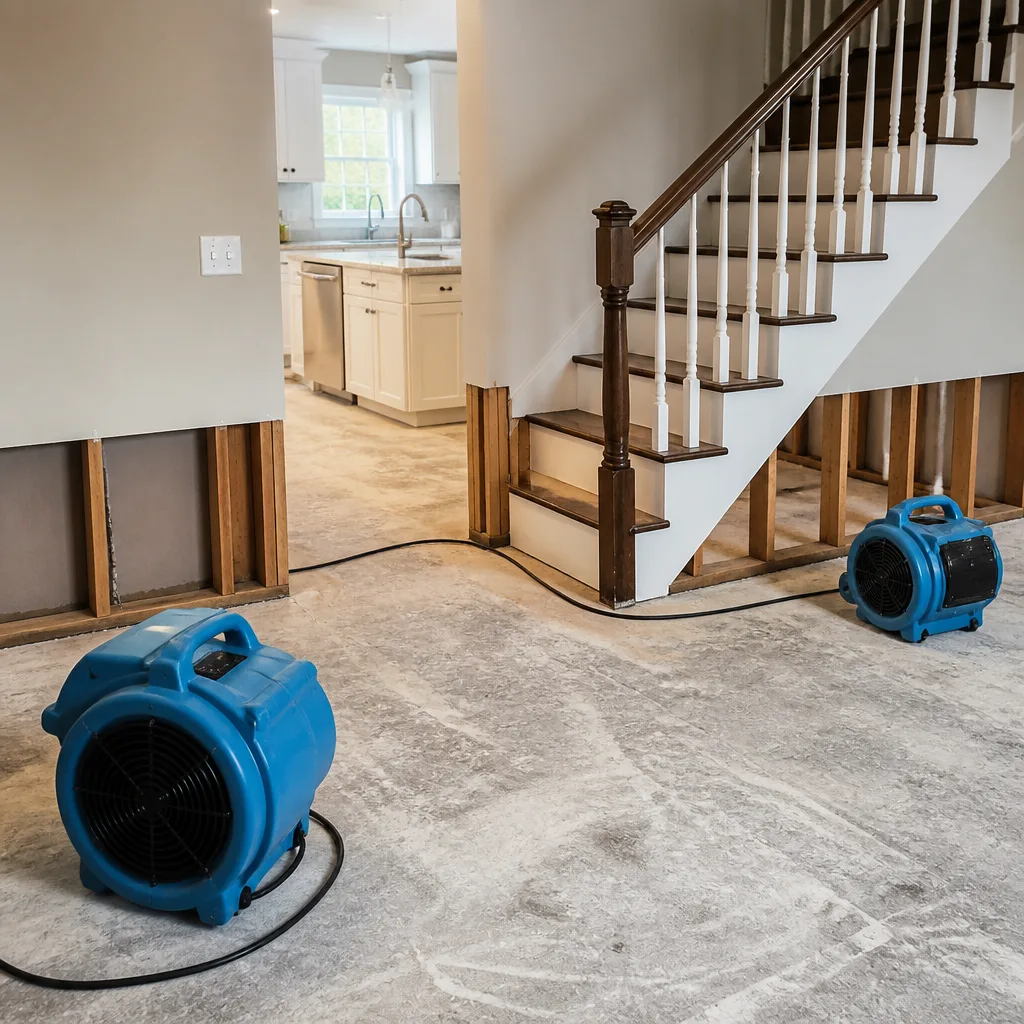

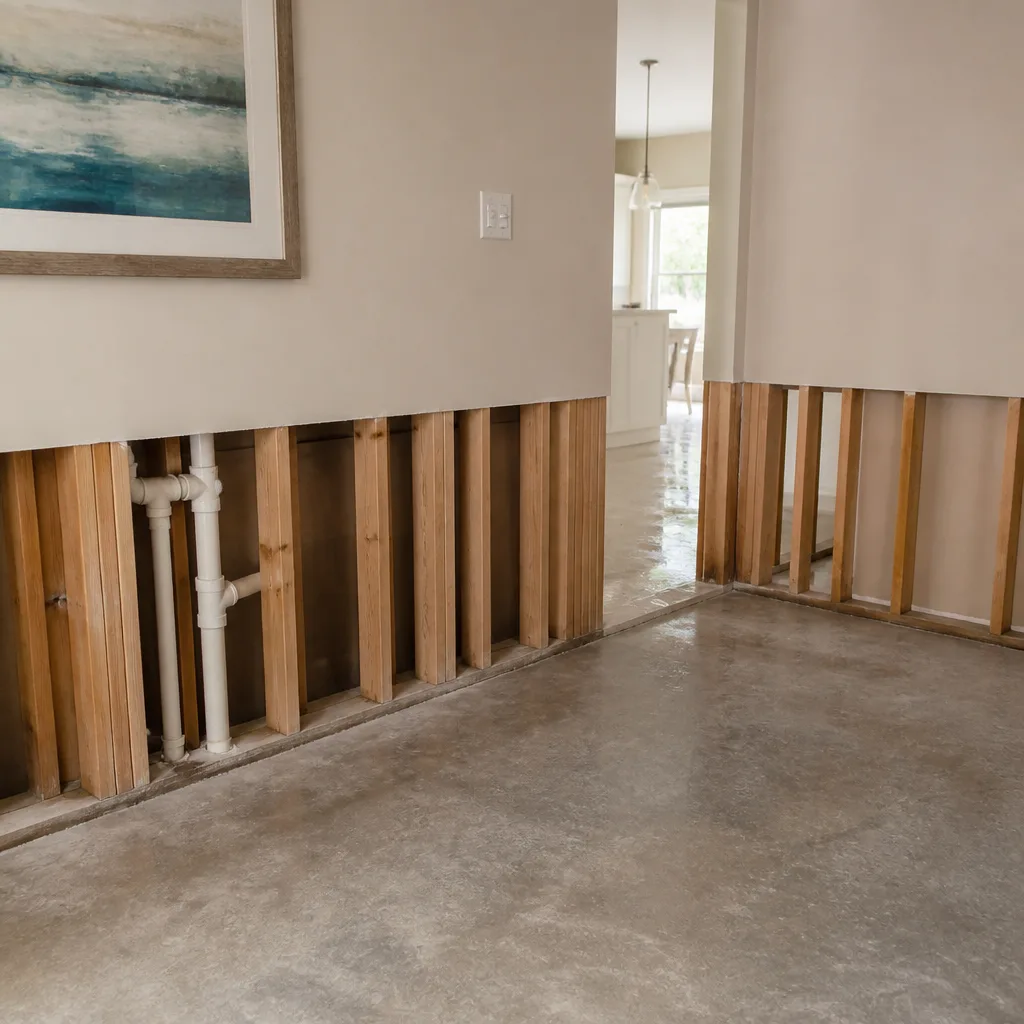



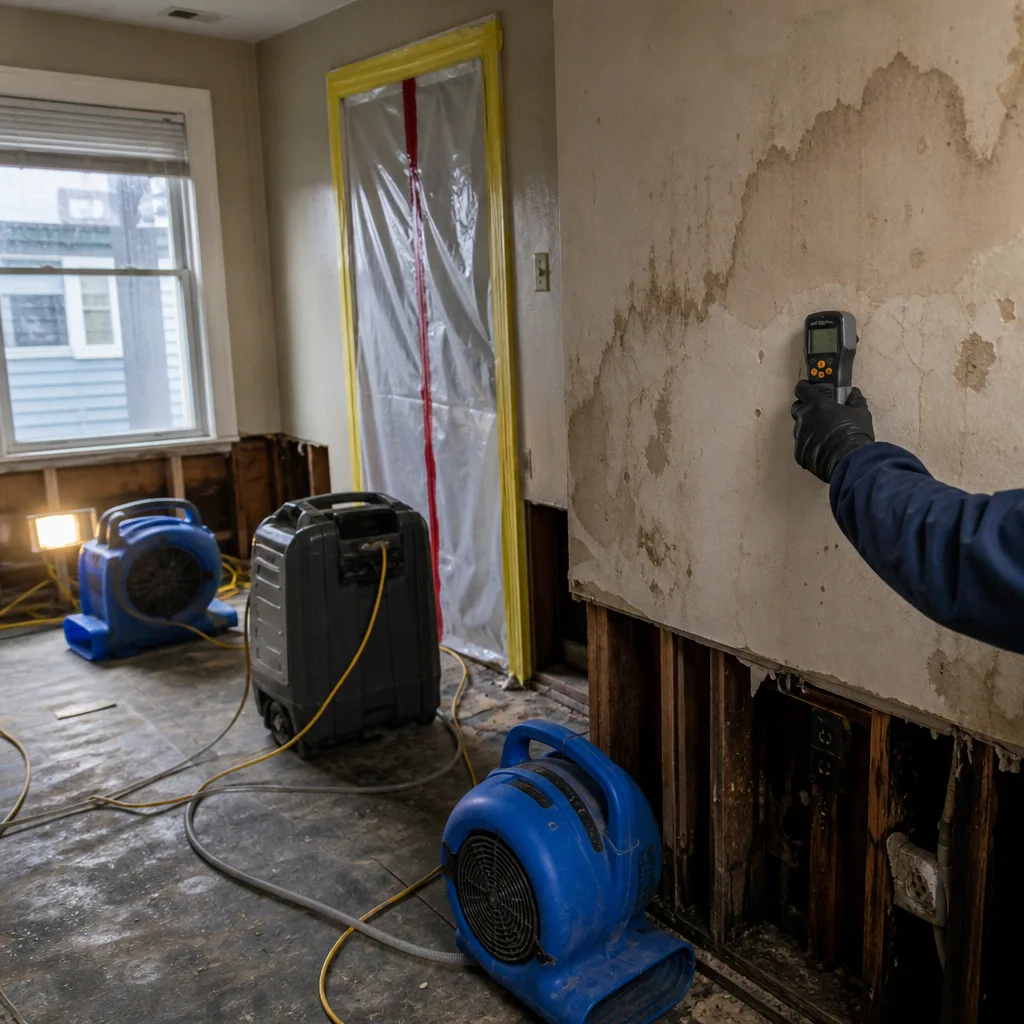 Before
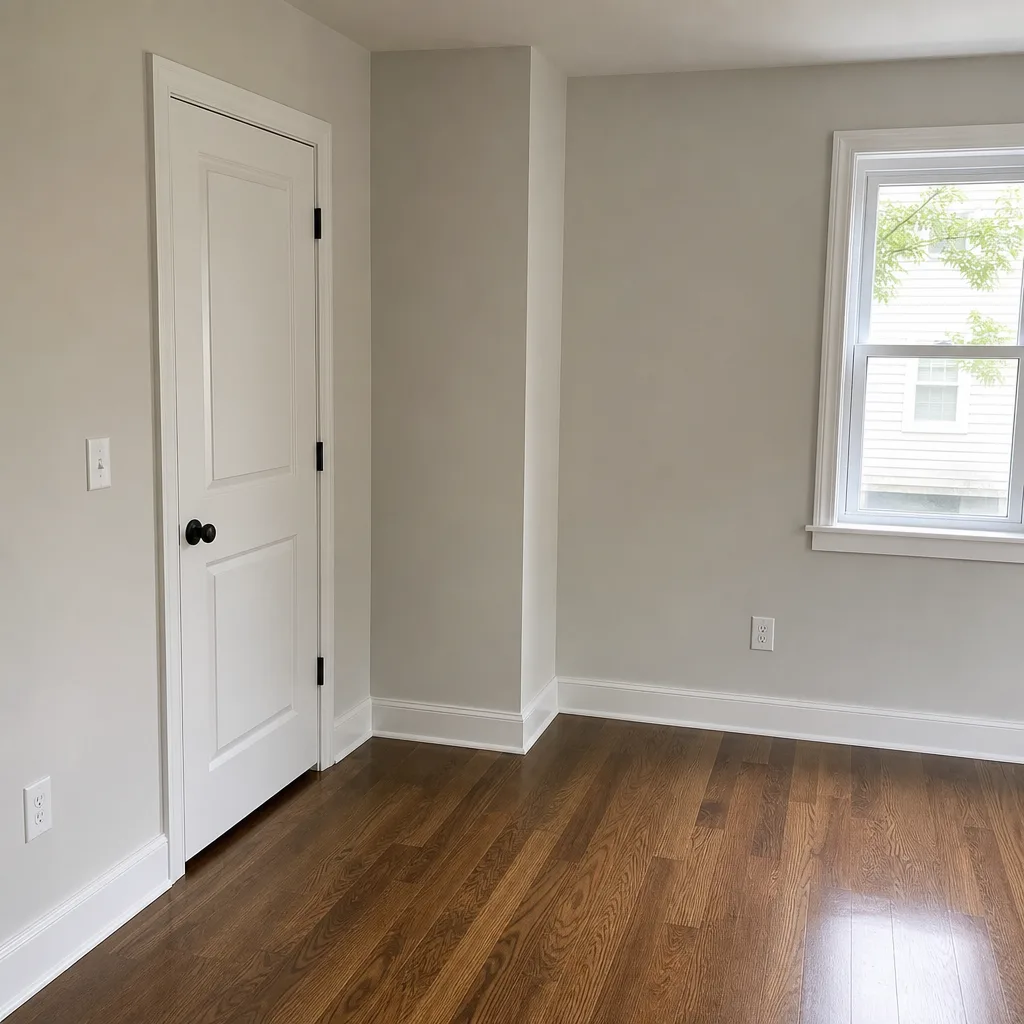 After
After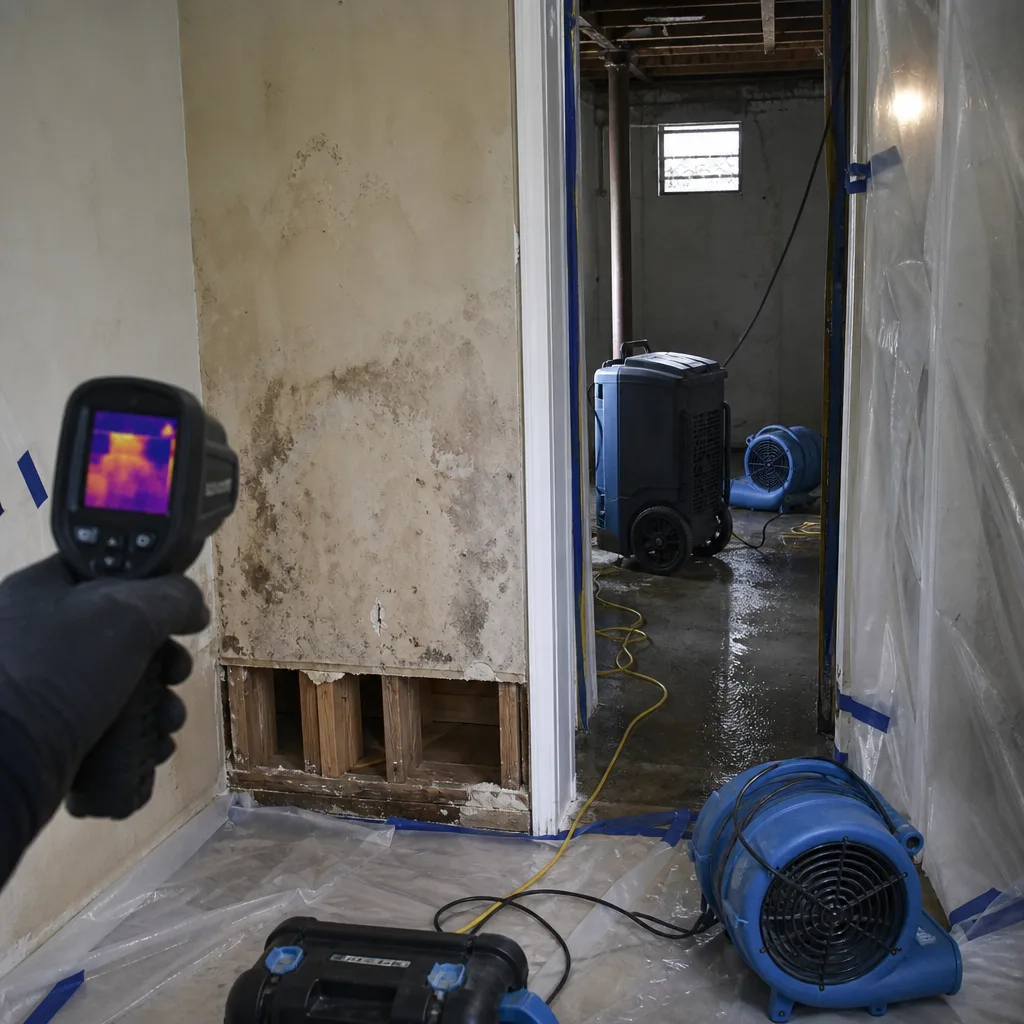 Before
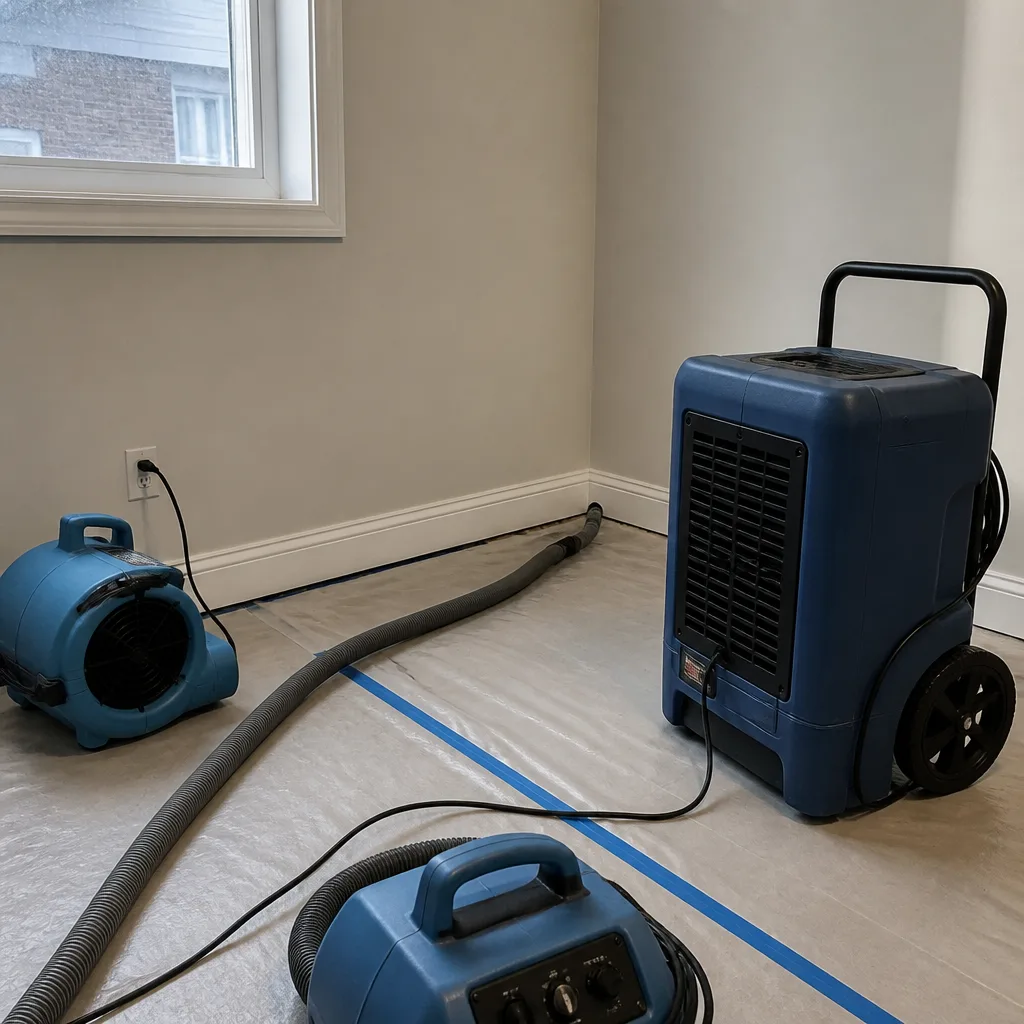 After
After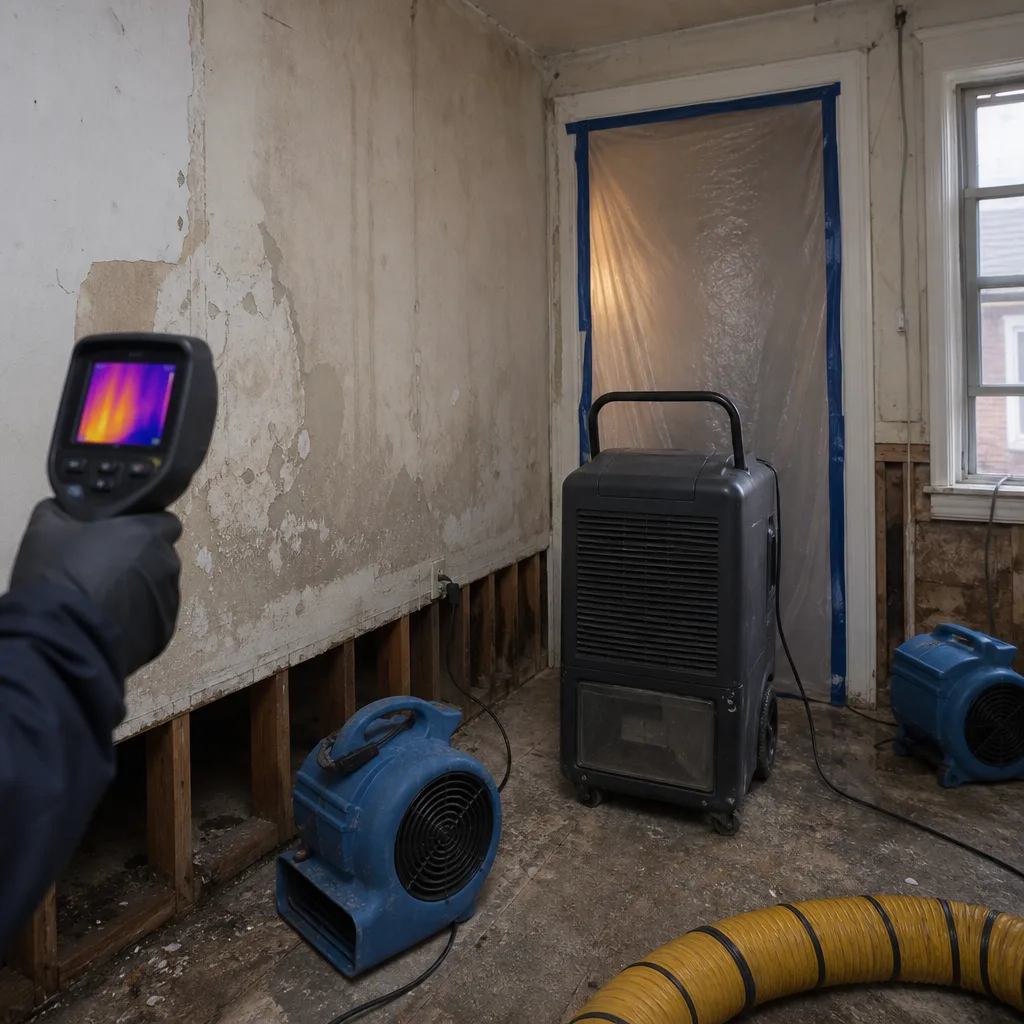 Before
 After
AfterDamage Restoration Warning Signs: A Jersey City Homeowner’s Reference Guide
A smell that comes and goes is worth more attention than a stain that stays put. In Jersey City, where basements sit below the water table for half the year and brownstones breathe through 150-year-old brick, the earliest sign of a water problem is rarely a visible puddle. It’s a whiff of damp air on a dry Tuesday, a window that only sticks in March, a water bill that crept up $30 for no reason you can name. This guide lays out the quiet signals that show up weeks or months before the emergency, and tells you exactly what each one means in a Jersey City house, so you can catch a small problem before it becomes a gut-job. For more guides & resources, visit our blog. By the time you finish reading, you’ll know which signs demand a call today, which ones you can watch for a week, and which ones mean the damage is already done and hiding behind the drywall.
Quick Answer
The water damage warning signs that matter most in Jersey City are intermittent musty odors that come and go with the weather, efflorescence (white chalky residue) on basement or foundation walls, windows and doors that stick seasonally rather than year-round, unexplained increases in your water bill, and ceiling stains that change shape or color over time. Any one of these can mean active moisture inside walls, floors, or framing, and active moisture is active damage. If you notice two or more together, call a water damage restoration professional in Jersey City for an assessment before the problem spreads behind finished surfaces.
Table of Contents
- What Efflorescence on a Jersey City Foundation Wall Is Actually Telling You
- Sticking Doors and Windows: Moisture Movement vs. Normal Seasonal Expansion
- Active Mold vs. Old Staining in a Poorly Lit Basement or Crawl Space
- The Unexplained Water Bill Spike: Tracing a Hidden Leak Before You Call Anyone
- Ceiling Stain Progression: Roof, Supply Line, or Drain, and Why the Difference Determines the Cost
- Intermittent Odors: Why a Smell That Comes and Goes Is More Serious Than One That Stays
- Jersey City Housing Stock: What the Age of Your Building Means for Damage Risk
- Common Mistakes to Avoid
- When to Call a Professional
- Frequently Asked Questions
- The Bottom Line
What Efflorescence on a Jersey City Foundation Wall Is Actually Telling You
Efflorescence is the white, chalky, crystalline deposit you see on brick, block, or poured concrete foundation walls. It forms when water moves through masonry, dissolves mineral salts inside the material, and carries them to the surface, where the water evaporates and leaves the salt behind. In Jersey City, efflorescence on a basement wall or brownstone foundation is not cosmetic. It is proof that water is actively moving through your wall, right now or recently enough that the salts are still fresh. A wall that is dry does not bloom.
The worst possible response is painting over it. Paint traps moisture behind the coating, and the trapped water either pushes the paint off in sheets within a season or stays inside the wall and feeds mold growth in the dark. Either way, the problem keeps worsening where you can’t see it. If you paint over efflorescence in a Jersey City basement and the paint blisters or peels within a year, you now have two problems: the original water intrusion and a sealed surface that hid it from you.
Here’s what the specific pattern tells you:
- White powder low on the wall, near the floor line: Groundwater wicking up through the footing or cove joint, common in Jersey City homes with shallow foundations or high water tables in neighborhoods near the Hackensack River or Newark Bay.
- White deposits in vertical streaks from the top of the wall: Water entering through the sill plate or rim joist, often from a grading issue outside or broken gutter discharging against the foundation.
- Efflorescence around mortar joints only: Repointing failure. Water is entering through deteriorated mortar, not through the brick itself, and repointing with the right mortar is a contained fix.
- Fluffy, powdery growth that rubs off easily: That’s active moisture. Hard, crusty, well-adhered deposits may be old, but fluffy means the water is moving through right now.
In our experience in Jersey City, efflorescence shows up most often in row houses built before 1920, where the foundation is rubble stone or soft brick laid with lime mortar. These materials were never waterproofed from the outside, and they were never meant to be sealed from the inside. The fix is usually drainage, grading, and dehumidification, not coating. If you’re seeing white powder on your walls, call us for a moisture reading before you spend money on paint.
Sticking Doors and Windows: Moisture Movement vs. Normal Seasonal Expansion
Wood swells when it takes on moisture and shrinks when it dries. Every wood door and window frame in a Jersey City house moves a little with the seasons, and that’s normal. What’s not normal is a pattern that tracks with rainfall or indoor humidity rather than temperature, or a door that sticks in every season, or a door that sticks at the top corner while swinging freely at the bottom.
Normal seasonal expansion follows the heating season: doors and windows tighten in the warm, humid months of July and August when outdoor air is carrying 80 percent humidity, then loosen again when the heat comes on in October and the indoor air dries out. In Jersey City, this pattern is predictable and consistent.
Moisture-related structural movement looks different:
- A door that sticks at the top corner only: The frame above it is sagging. That means the header or floor joist that supports the wall is damp and losing strength. This is a sign of an active leak above, often in a bathroom supply line or a roof penetration.
- A window that sticks at the bottom sash in winter: Condensation from indoor humidity is collecting on the sill and swelling the wood from below. This is less a window problem and more a ventilation problem, but it still means the sash is absorbing water every single day.
- A door that sticks every summer but the problem has gotten worse each year: Progressive swelling, not cyclical. The wood is retaining moisture through the winter because it never gets dry enough to release it. That points to a source inside the wall, not seasonal humidity.
- Multiple doors on the same level sticking for the first time in the same season: This can be a footing or foundation issue driving slight frame racking. In Jersey City’s clay-heavy soils, a broken sewer line or a failed downspout can soften the ground near the foundation enough to cause measurable movement within a single wet season.
If you’re not sure, mark the sticking point with a pencil line on the jamb. Check again in six weeks. If the line hasn’t moved and the weather has changed, the swelling isn’t responding to temperature and you should treat it as a moisture problem, not a wood problem.
Active Mold vs. Old Staining in a Poorly Lit Basement or Crawl Space
Most Jersey City basements have some staining somewhere. The question is whether the stain is old or active, and telling the difference matters because old staining is cosmetic and active growth is a live moisture problem that is spreading right now. Here’s a reliable field test we use with homeowners before any equipment comes out.
- Dry test: Put on a nitrile glove and run a dry finger firmly across the stain. If it smears, it’s active growth. If it feels dry and powdery and stays put, it may be old staining or mineral deposits.
- Bleach test: Place a drop of household bleach on the edge of the stain. If the color fades within one to two minutes, you’re looking at active organic growth. If it takes longer than that or doesn’t fade, it’s more likely old staining or a mineral stain. Do not mix bleach with any other cleaner, and do this in a ventilated area.
- Light test: Active mold often appears three-dimensional, slightly raised, or fuzzy under a strong flashlight held at an angle. Old staining is flat and uniform.
- Smell test: Stand in the space for five minutes with the door closed, then leave and come back. If the musty smell hits you as soon as you re-enter, the growth is active and releasing spores. Old staining doesn’t smell.
When this distinction matters is when a home inspector flags mold during a sale. Jersey City housing stock is old, and sellers often hear “mold” and panic, or buyers hear “old staining” and dismiss it. Neither reaction is correct. If the stain is old and dry and there is no odor, it’s typically a cleaning issue. If it’s active, you have a moisture source that must be found and stopped before any meaningful mold remediation can work.
We’ve walked into Jersey City basements where a homeowner had scrubbed the same wall with bleach three times in a year, and the mold kept coming back. The bleach was killing the surface growth, but the water feeding the mold was coming through the foundation from a clogged drain line in the alley behind the house. No amount of cleaning fixes a problem with a live water source. That’s the distinction we handle with mold remediation in Jersey City: we find the water first, then treat the growth, then document everything so you have a clean bill for the next owner.
The Unexplained Water Bill Spike: Tracing a Hidden Leak Before You Call Anyone
Jersey City water and sewer bills come through SUEZ or Veolia depending on your service area, and a household of two to four people typically uses 3,000 to 7,000 gallons a month. If your bill jumps 30 percent or more in a single billing cycle with no change in your habits, the most likely explanation is a leak somewhere between the street meter and your fixtures. The second most likely is a running toilet.
Here’s how to trace it yourself before you call a plumber or restoration contractor:
- Check the meter. Find your meter, note the reading, and make sure no water is running anywhere in the house. Wait 30 minutes. If the meter moved, you have a leak downstream of the meter.
- Test the toilets. Put a few drops of food coloring in each toilet tank. Don’t flush. Wait 15 minutes. If color appears in the bowl, that toilet is running and can waste hundreds of gallons a week without a sound.
- Shut off fixture groups. Close the angle stops under sinks and behind toilets one at a time, then check the meter again. This isolates the line.
- Check the water heater and outdoor spigots. A slow drip at an outdoor spigot or a weeping pressure relief valve on the water heater adds up faster than you’d think.
- If the meter still moves with everything off: The leak is in the service line between the street and the house, or in a wall/floor line you can’t see. This is the point where you call us, because a leak inside a wall cavity or under a slab is a restoration problem, not just a plumbing repair.
A hidden leak in a Jersey City house is particularly nasty because our soils hold water. A slow leak under a slab or behind a plaster wall can go unnoticed for months, saturating framing, flooring, and insulation while the only symptom is a higher bill. By the time you see a stain, the damage is already structural. If your bill spikes and you can’t find the source in an afternoon, call (201) 903-9581. We’ll bring a moisture meter and find where the water is going, not just where it’s coming from.
Ceiling Stain Progression: Roof, Supply Line, or Drain, and Why the Difference Determines the Cost
A ceiling stain is a map with a story. Read it correctly and you know what kind of water you’re dealing with: rainwater from above, clean water under pressure from a supply line, or wastewater from a drain. The correct response and the cost of the fix are completely different for each one.
- Stain that darkens after every rainstorm and dries slowly: Roof leak or flashing failure. Water is entering from above and traveling down through the framing. In Jersey City row houses, this is often a parapet flashing issue or a failed roof drainage scupper. The fix is on the roof; the restoration is in the ceiling and any insulation the water passed through.
- Stain that grows steadily regardless of weather, often circular with a crisp edge: Supply line leak. Clean water under pressure from a copper or PEX line is actively dripping or spraying inside the ceiling cavity. This type of leak does not stop on its own and will continue damaging everything below it until the source is shut off. In Jersey City’s older homes, original galvanized supply lines are at end-of-life and this is one of the most common hidden leaks we find.
- Stain that appears only after using a specific fixture, then shrinks between uses: Drain line leak. If the stain appears only after a shower, a bath, or running the washing machine, the waste line above that fixture is compromised. Wastewater contains bacteria and needs a different cleanup approach than clean supply water.
The stain progression matters. A supply line stain grows in hours or days. A drain line stain grows and shrinks with use. A roof stain tracks the weather. If you’re watching a stain change shape, take a photo every day with a ruler held against the ceiling for scale. That photo sequence is worth a thousand words when you’re talking to an adjuster or a restoration contractor, and it tells us immediately which of the three systems is involved.
One more thing: a ceiling stain that is actively growing means the water is still coming in. A stain that is dry and unchanging means the source has stopped, but the drywall, insulation, and framing above it still need to be opened, dried, and verified. Dry stain, active damage is a pattern we see constantly in Jersey City after a roof repair: the roofer fixes the leak, the homeowner waits a month, the stain dries, and everyone assumes the problem is over. The framing above the ceiling spent a month wet. That’s where Wade’s Restoration home starts: we remove the damaged material, dry what’s left behind it, and document the moisture levels so the job is actually finished, not just painted over.
Intermittent Odors: Why a Smell That Comes and Goes Is More Serious Than One That Stays
Here’s the counterintuitive reality of musty odors in a Jersey City house: a smell that is present every single day usually means a long-standing moisture condition that has stabilized. The wall, floor, or crawl space reached its equilibrium with groundwater or ambient humidity, and the odor is constant because the conditions are constant. That’s bad. But a smell that comes and goes, stronger on humid days, gone on dry ones, stronger after rain, is worse, because it means the moisture is cycling. The water source is active and intermittent, and every cycle triggers a new round of growth.
Think about it this way. Constant dampness produces a constant smell. But Jersey City weather swings hard: wet spring, humid summer, dry fall, freezing winter. If your basement smells only in April, or only after a heavy rain, or only when the furnace kicks on and pushes air through damp ducts, the moisture is responding to something specific: groundwater pressure, a roof leak, a broken gutter joint, condensation in ductwork. That specificity is a diagnostic clue.
Common intermittent odor patterns we hear about in Jersey City:
- Smell after rain only: Surface water is getting in somewhere. Check gutters, downspout discharge points, and grading. Water pools against foundations in Jersey City’s flat lots and row house alleys more than you’d think.
- Smell in summer only: Condensation. Warm, humid air hits cool foundation walls or cold water pipes and condenses, feeding mold on surfaces. Dehumidification helps, but the underlying ventilation issue doesn’t go away on its own.
- Smell in winter only: The stack effect pulls air up through the house, and a damp crawl space contributes to the rising air column. The humidity is worse where the house is sealed tightest.
- Smell near one wall or one corner: A localized source, not a whole-basement condition. This is usually a single leak or a failed section of perimeter drain.
You can’t fix what you can’t locate, and odors are the canary in the coal mine. If you’re catching a smell only on certain days, don’t wait for it to become constant. Constant is when the damage has already spread far enough to reek through every cycle.
Jersey City Housing Stock: What the Age of Your Building Means for Damage Risk
Jersey City’s housing inventory is not one thing. Downtown brownstones from the 1850s and 60s sit next to early 1900s row houses in Bergen-Lafayette and McGinley Square, post-war brick in Greenville and the Heights, and a construction boom in the last two decades that filled in vacant lots and conversions around Journal Square and the Waterfront. Each era brings its own damage patterns, and knowing what your building was built to hide matters more than knowing what it was built with.
- Pre-1900 brownstones and row houses: Load-bearing brick and masonry, lime mortar, timber framing, no exterior waterproofing, original cast iron waste lines now 120 to 170 years old. The most common hidden damage we find is slow seepage through the foundation wall at the cove joint where the floor slab meets the wall, and original roof drainage that has been patched, re-patched, and ignored for decades.
- 1900-1940 row houses and two-families: Balloon framing with no fire stops, which means water and smoke both travel vertically through wall cavities from basement to roof without hitting a horizontal barrier. A small leak behind a bathroom vanity can channel water down three floors and out at the sill plate, with the only visible symptom being a stain in the basement.
- Post-war brick construction, 1945-1970: Generally better foundation drainage, but original galvanized plumbing is now beyond its service life and failing inside walls. The first sign is often pinhole leaks in supply lines and rusty water that clears after a few seconds of running.
- Newer construction, 1990-present: Building envelopes are tighter, which is good for energy and bad for trapped moisture. A small water intrusion in a tightly sealed Jersey City condo can turn into a mold problem faster than in an old drafty house because there’s nowhere for the humidity to go.
The takeaway: the age of your Jersey City building tells you where to look first. In our work, the same water-damage call in a Greenville row house and a Waterfront condo requires a completely different first inspection, because the weak points are in completely different places.
Common Mistakes to Avoid
- Painting over efflorescence or a water stain. This is the single most common mistake in Jersey City, and it converts a visible, diagnosable problem into a hidden, spreading one. Paint seals moisture in and blinds you to what’s happening behind it.
- Running a dehumidifier indefinitely without fixing the water source. A dehumidifier manages the symptom, not the cause. If you’re emptying buckets every day for months, the water is still entering the space, and you’re paying an electric bill to fight a groundwater problem.
- Assuming a dry stain means a finished repair. Drywall dries on the outside long before framing dries inside. A stain that turned brown and stopped growing means the source is stopped, but the wood behind it may still be holding 25 percent moisture and waiting to bloom.
- Using bleach as a mold remediation strategy. Bleach kills surface growth but doesn’t penetrate porous materials like drywall, wood, or plaster, and it adds water to the equation. The mold regrows from the roots you couldn’t reach.
- Telling your insurance company “it’s been like that for a while” without documentation. Insurance claims turn on when the damage happened and what you did about it. Without dated photos and records, you’re arguing from memory against an adjuster’s file. Document first, call second.
- Waiting a week to see if a smell goes away on its own. It might, temporarily. Then it will come back stronger. The water source that created the smell is still active, and every wet-dry cycle compounds the damage.
When to Call a Professional
Call a restoration contractor the same day if you see any two warning signs together: an odor plus a stain, a higher water bill plus a sticking door, efflorescence plus a smell. Call the same day if you see a ceiling stain that is actively growing, because that means water is entering your house right now. Call before you touch anything if the water is from a sewage backup, a toilet overflow that reached the floor, or any gray or black water source from fire, smoke, or storm events. These are not DIY situations; they’re contamination and structural risk. If you’re a Jersey City homeowner who wants a straight answer without a sales pitch, Wade’s Restoration offers free estimates and honest assessments. Call (201) 903-9581, and Wade himself will answer.
Frequently Asked Questions
A new water stain is damp to the touch, cool against the back of your hand, and usually darker at the center with a lighter ring around it. An old stain is dry, uniformly brown or yellow, and often has a dark outer ring with a lighter center. If you’re not sure, tape a piece of wax paper over the stain with painter’s tape and check it in 24 hours; condensation on the paper means active moisture.
Yes, for clean water from a supply line or appliance that you can shut off at the source, and only if the affected area is small and you can dry it completely within 48 hours. Open the wall if water got into a cavity, run fans, run a dehumidifier, and monitor with a moisture meter. If you can’t dry it within two days, mold growth starts, and that’s when you need professional drying equipment. See our DIY vs Professional Damage Restoration: The Jersey City Homeowner’s Decision Guide to know when to call in the pros.
It depends on the source and your policy. Sudden and accidental events, like a burst supply line or a storm-related roof breach, are typically covered. Gradual damage from long-term seepage or lack of maintenance is usually excluded. In our experience, Jersey City homeowners have the best outcomes when they document everything from day one with dated photos and call a restoration company that deals directly with their adjuster. Learn how to choose the right one in our How to Hire a Damage Restoration Contractor in Jersey City: A Step-by-Step Guide. We do, and it saves homeowners from being the go-between.
Determine whether the smell is constant or intermittent, then look for the source: check the foundation walls for efflorescence or damp spots, check the floor edges, check under appliances and behind storage, and check gutters and downspouts outside at the corners where water pools. If you can’t locate a source in an afternoon, call us. A moisture meter finds what your nose can’t.
Under the right conditions, mold begins growing within 24 to 48 hours of water exposure, and it spreads fastest in Jersey City’s humid summer months. The first visible growth usually appears within one to two weeks in an enclosed space with trapped moisture. That’s why professional drying within the first 48 hours is the difference between a cleanup and a remediation.
Some seasonal dampness in a 100-year-old brownstone basement is common, but “normal” doesn’t mean harmless. Chronic moisture in a basement increases indoor humidity throughout the house, feeds dust mites and mold, and accelerates the deterioration of framing and stored belongings. A dehumidifier helps, but it’s not the fix. The fix is controlling water at the source, whether that means regrading, gutter repair, interior drainage, or a combination. Call (201) 903-9581 for an honest read on what’s normal and what’s not.
The Bottom Line
In a Jersey City house, the damage that costs the most is not the dramatic flood or the ceiling collapse. It’s the slow, quiet leak that no one noticed for six months, the intermittent odor that was written off as “old house smell,” the efflorescence that got painted over, the water bill that went up a little and stayed there. Every one of these signs is a message, and the message is always the same: water is active somewhere it shouldn’t be, and active water means active damage. Learn the signs, check your house seasonally-our Seasonal Damage Restoration Care for Jersey City: Year-Round Homeowner’s Guide can help-and when you find something you can’t explain, call someone who will show up and tell you the truth. Wade’s Restoration has been doing exactly that in Jersey City since 2007.
Written by Wade Ferris, Owner at Wade’s Restoration, serving Jersey City since 2007.