
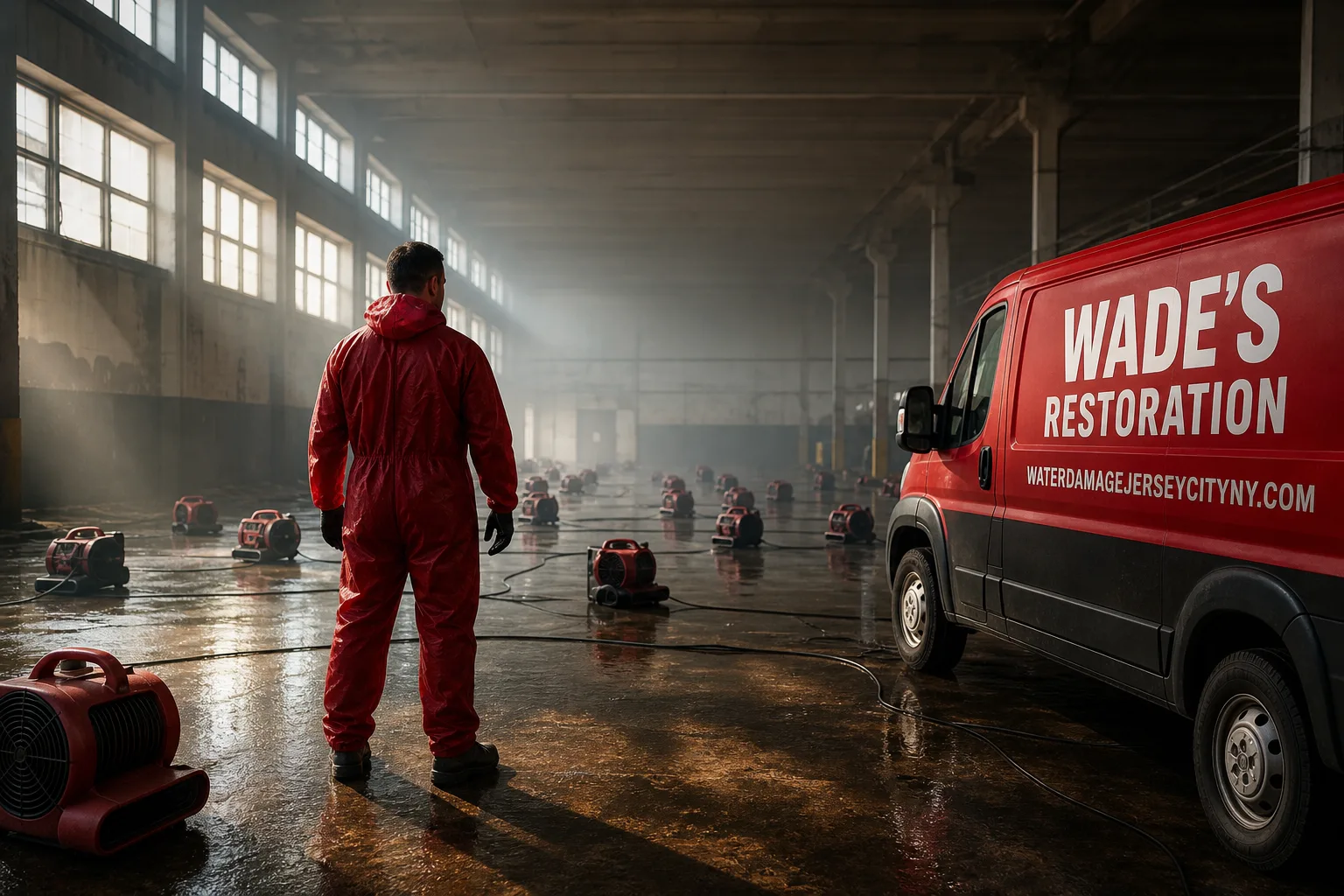
Free visual inspection and a written scope of work before any mitigation begins - photos, moisture readings, and drying logs go in your claim file
The scope we write is the scope we bill. Anything new gets shown to you, in writing, before we touch it.
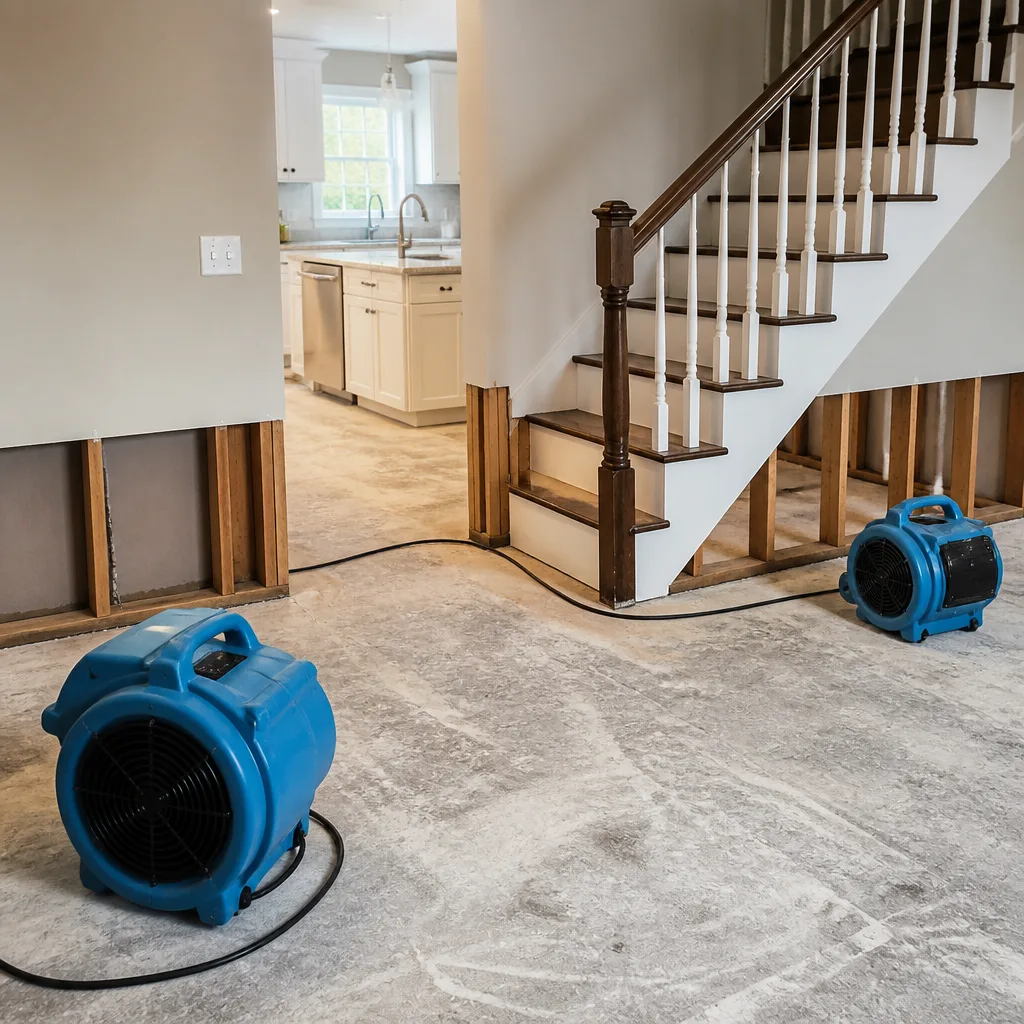
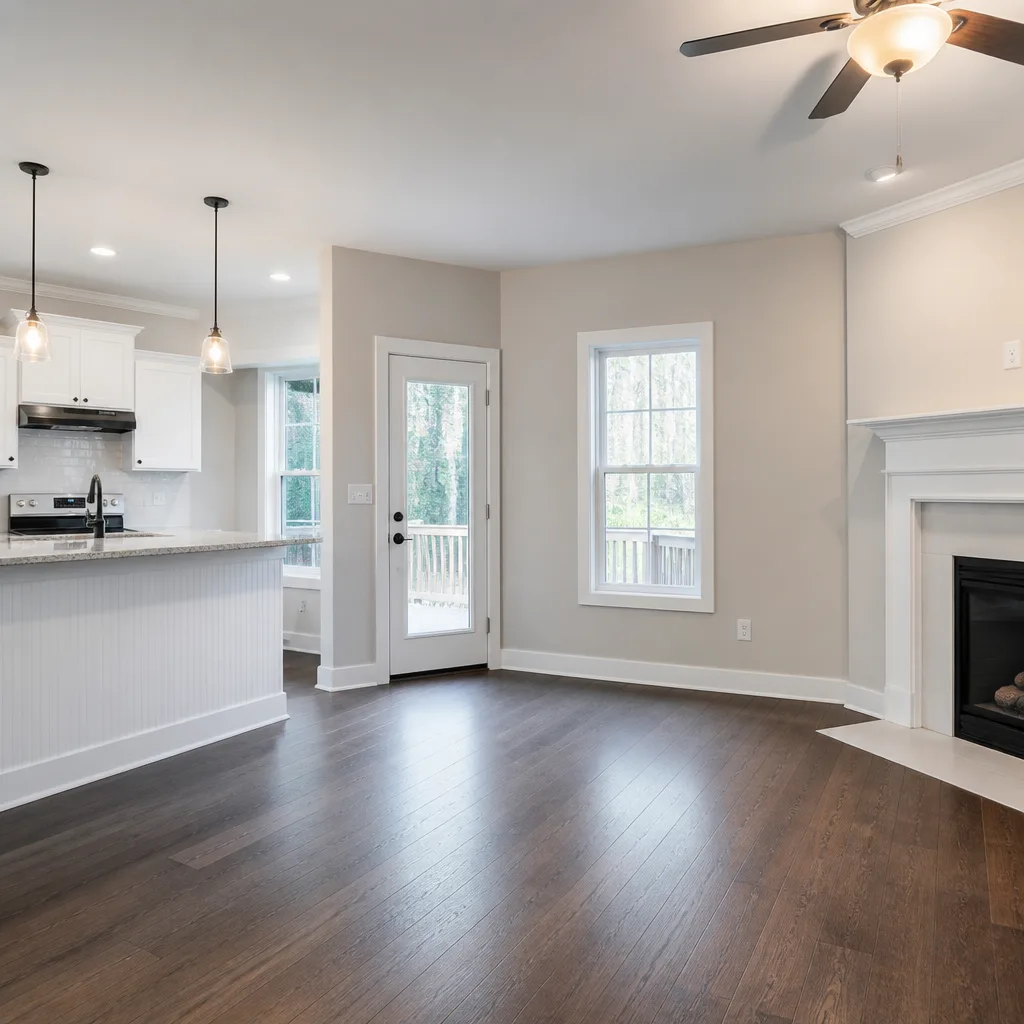
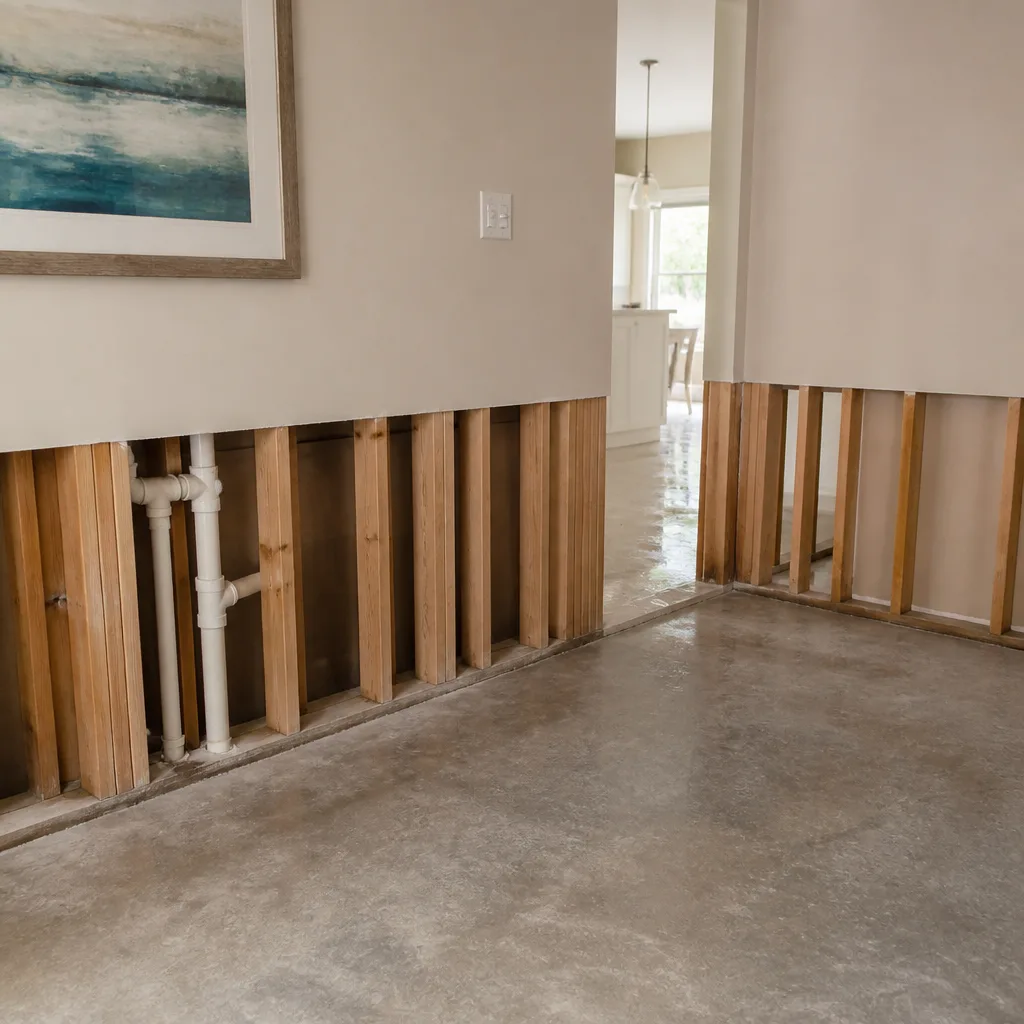
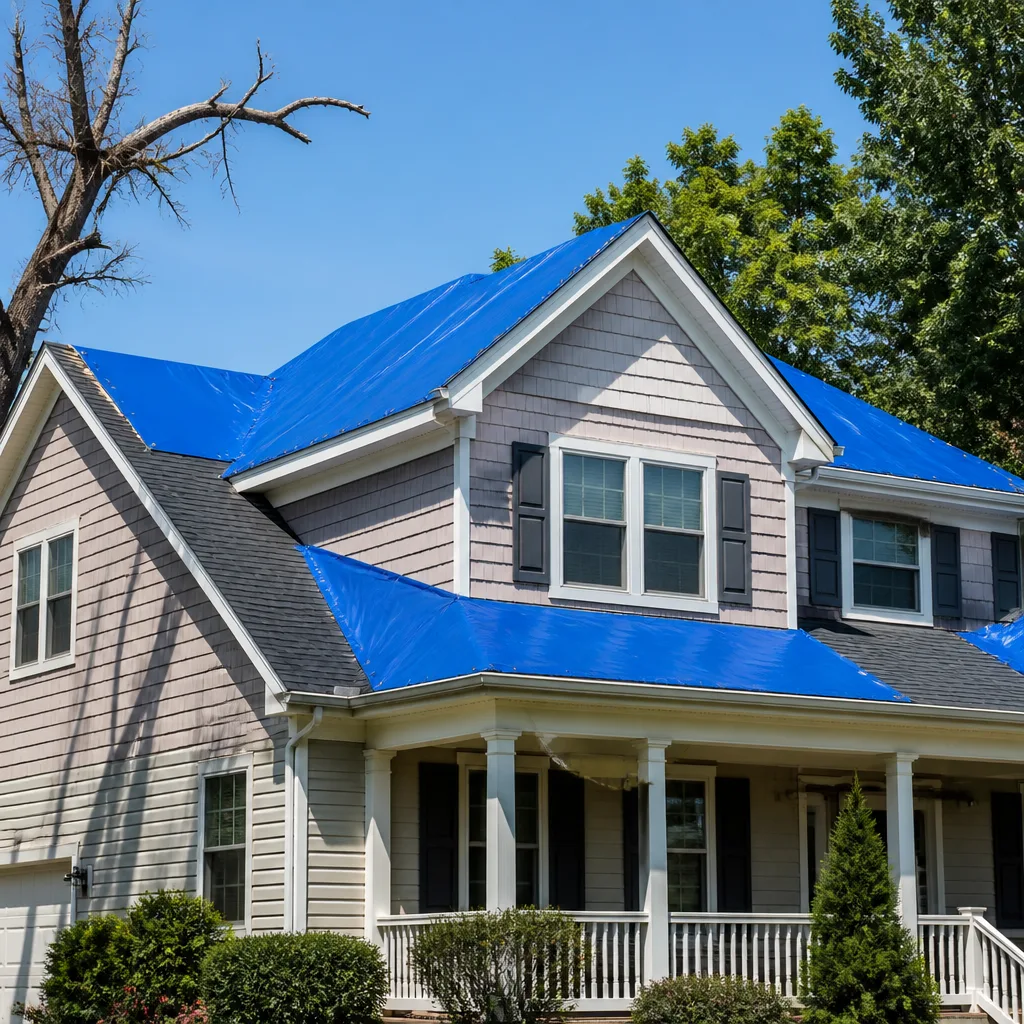

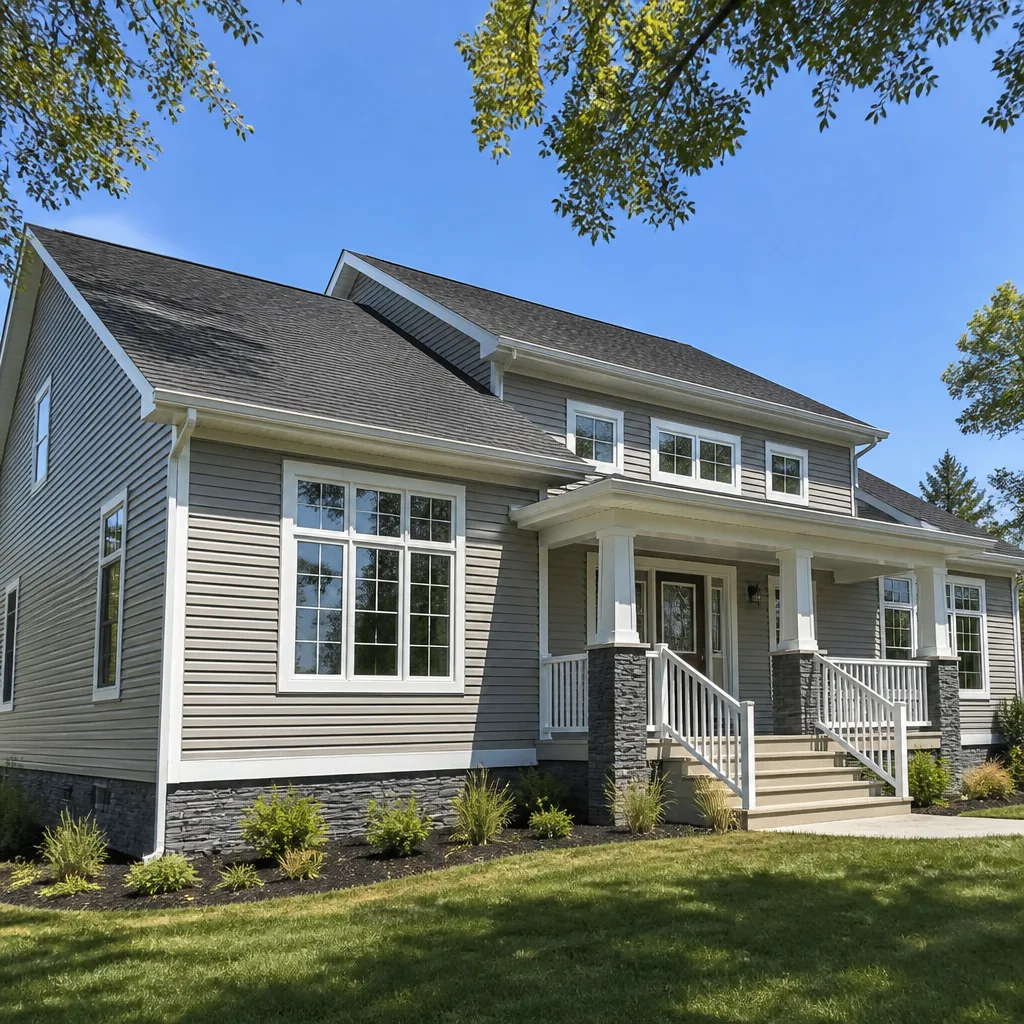
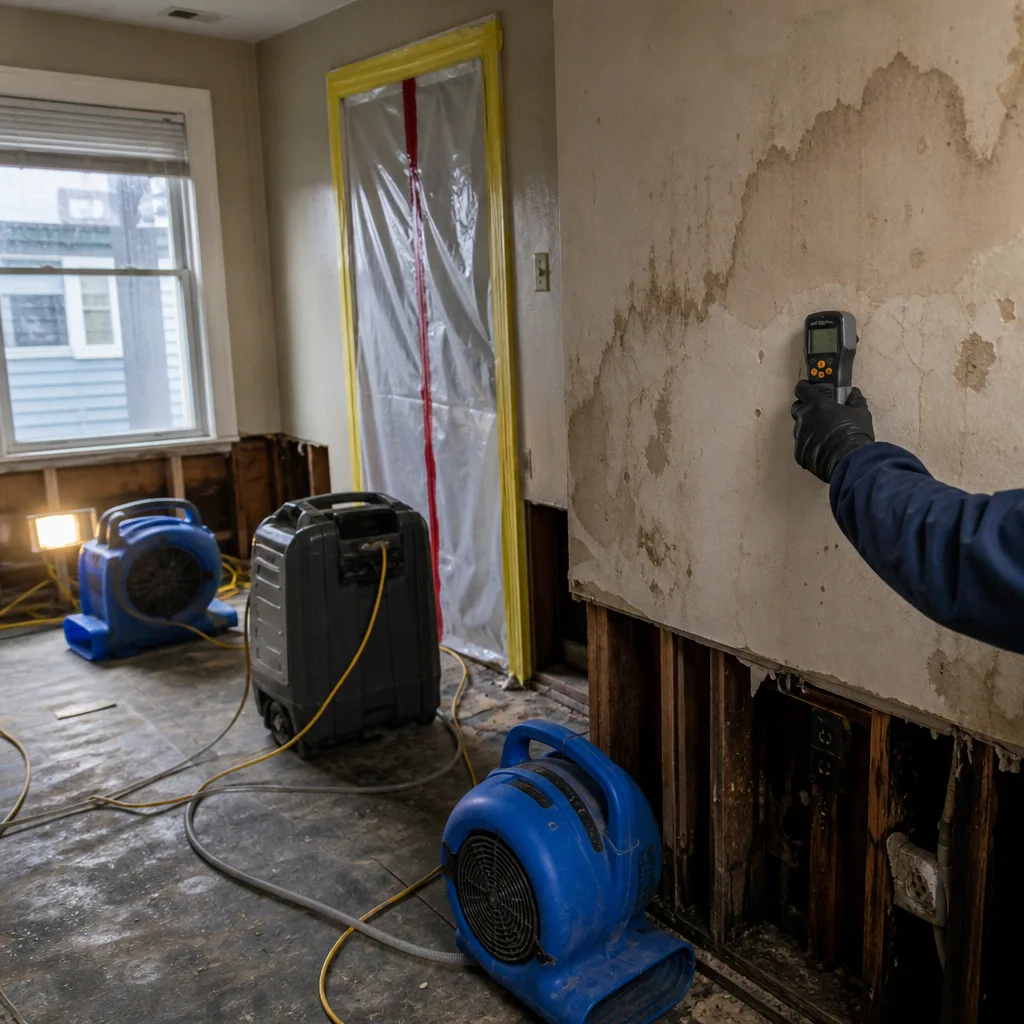 Before
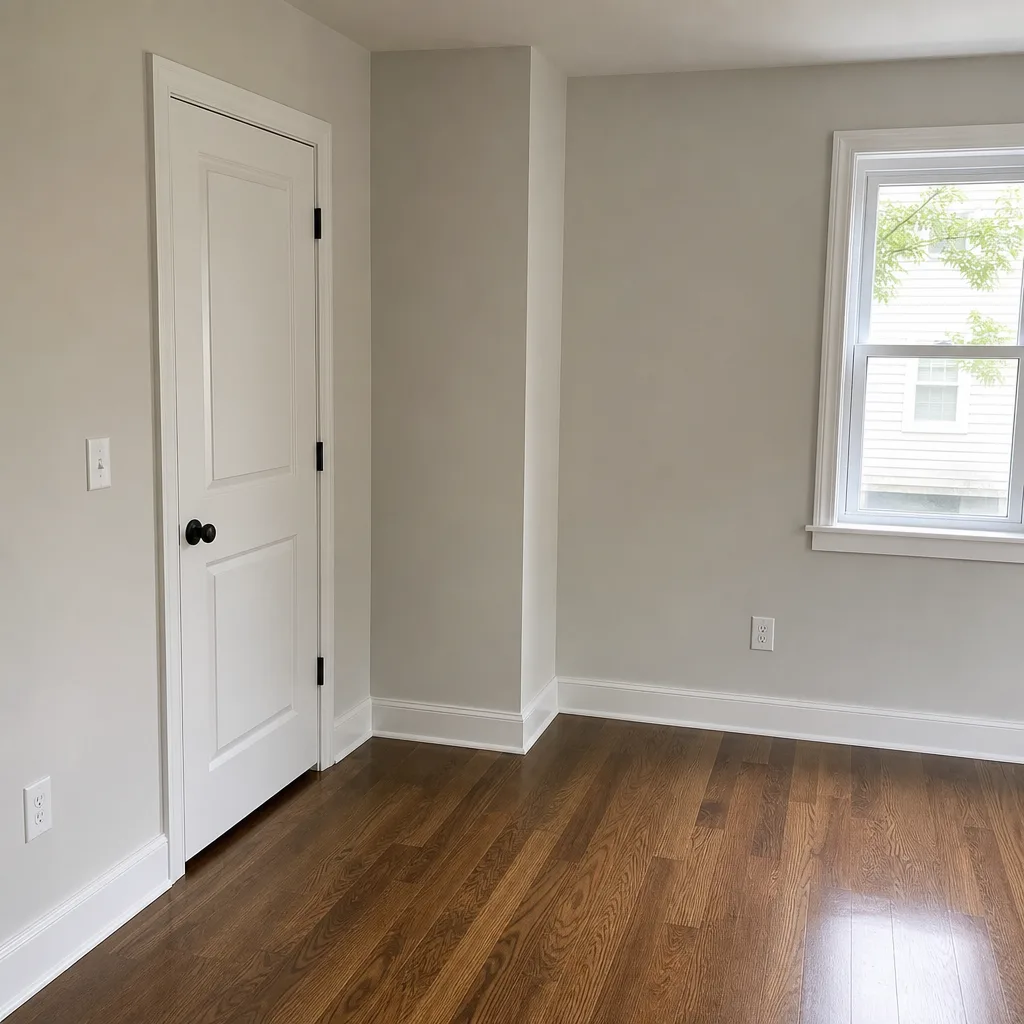 After
After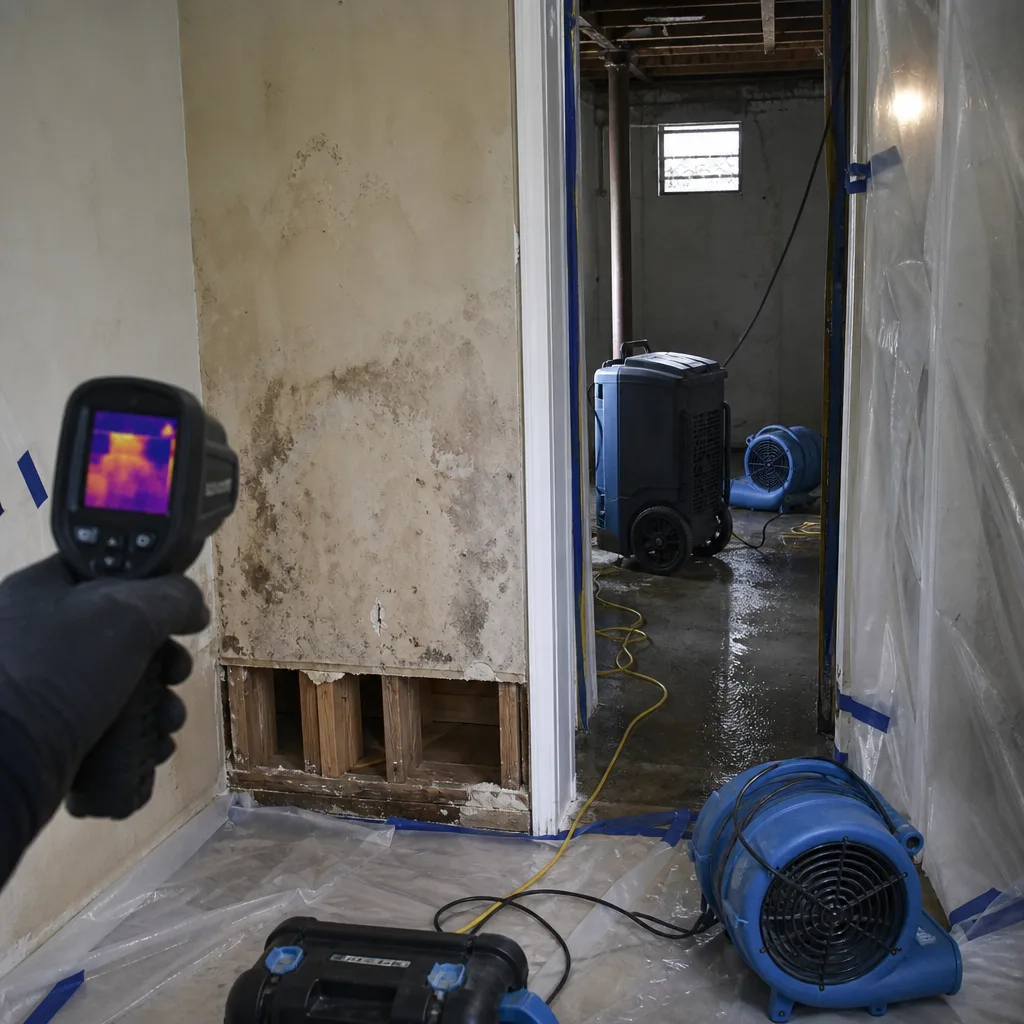 Before
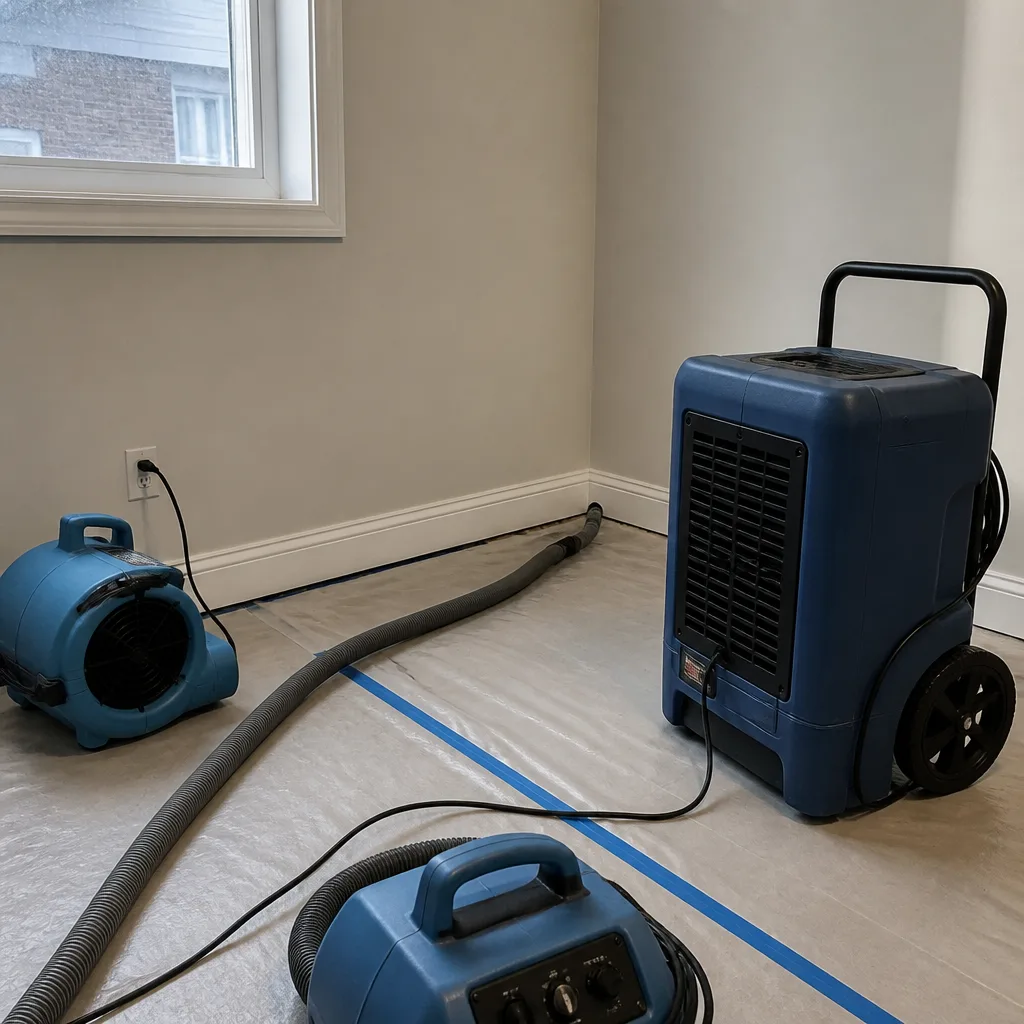 After
After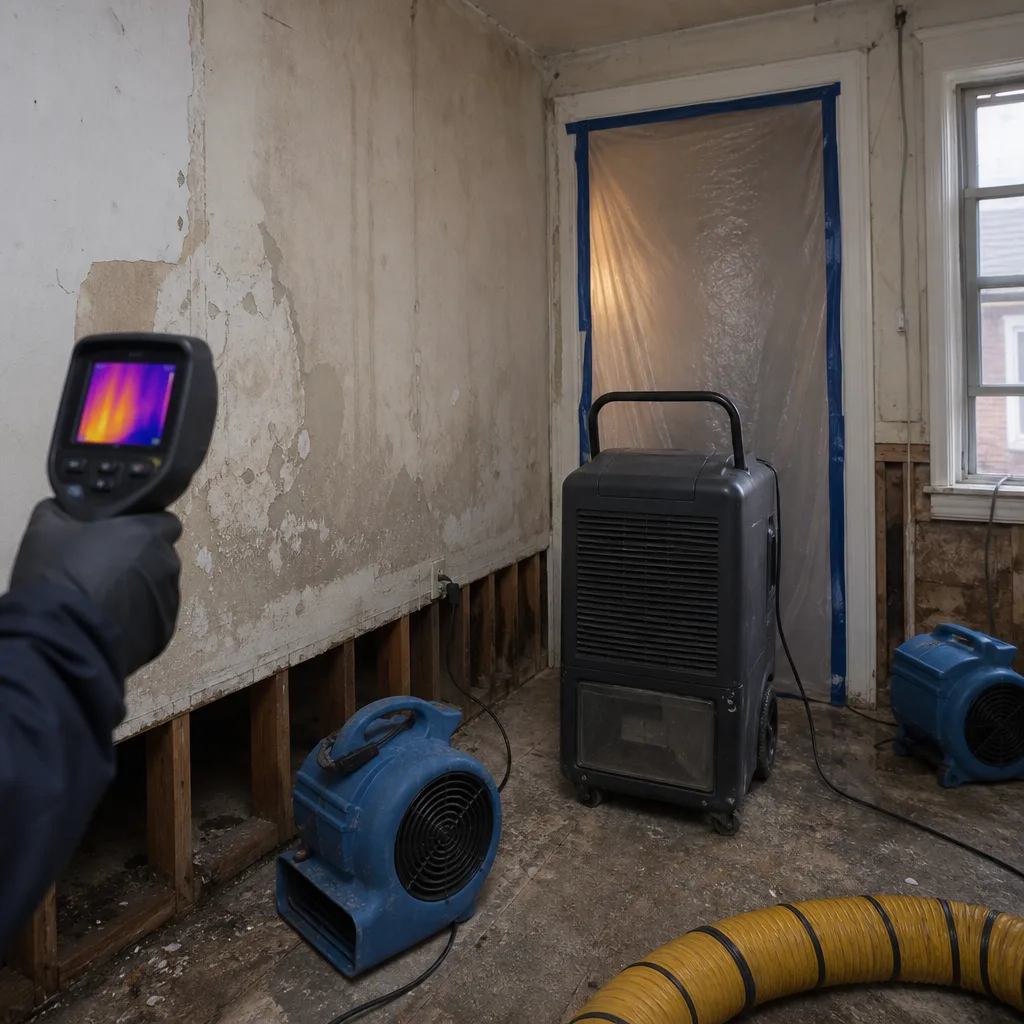 Before
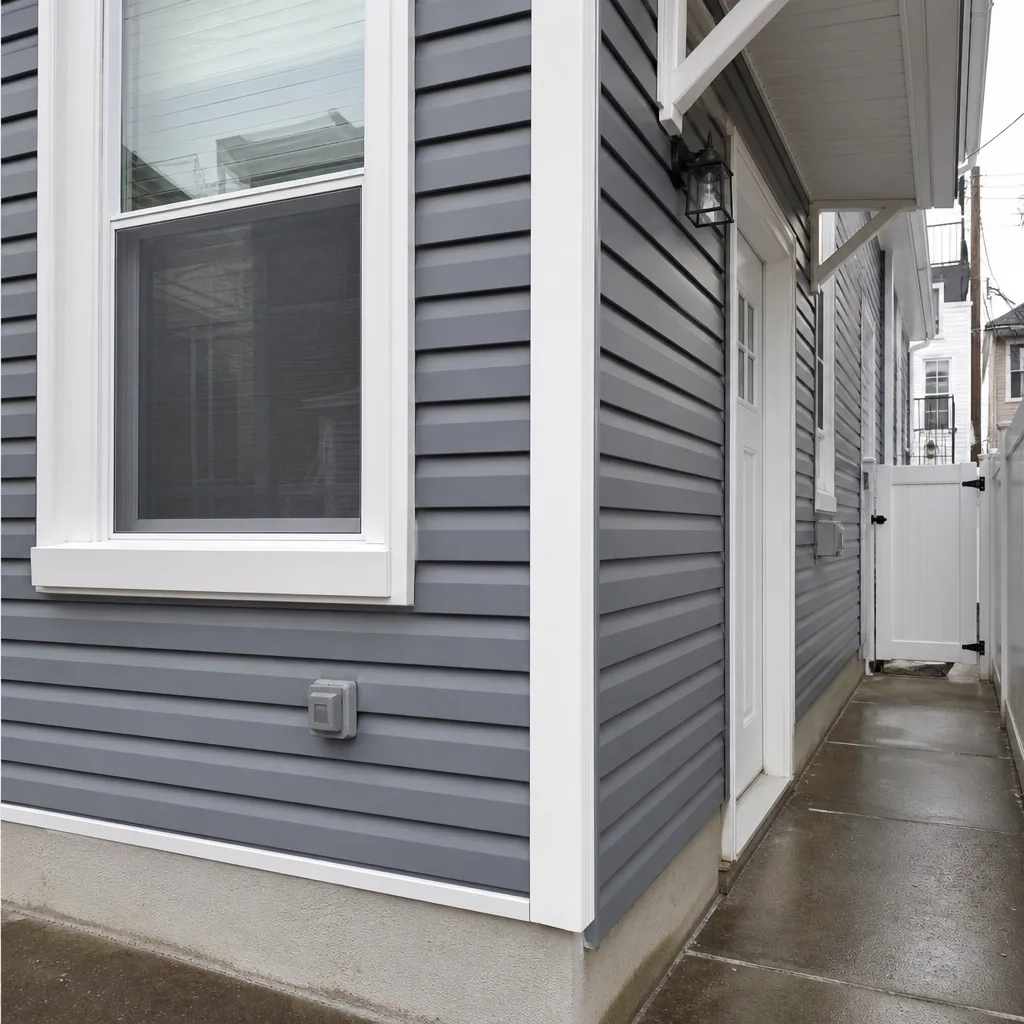 After
After24/7 Emergency Storm & Disaster Restoration in Jersey City
When a nor’easter pushes Upper New York Bay over the seawall or a summer squall drops three inches on the Heights in an hour, you need someone who answers the phone and moves. That’s us. Wade’s Restoration runs crews in Jersey City around the clock, with a live person on the line at (201) 903-9581 every single time you call, no answering service, no voicemail maze. The first hour after a storm decides whether you’re drying a basement or replacing everything in it. Water from the Hudson or Hackensack carries salt, silt, and sewage that soaks into wooden framing and century-old masonry faster than most homeowners realize. We get extraction running inside the hour whenever possible, because we know what the alternative costs. Your call brings a free visual inspection, a straight answer about the damage, and a written scope before any work starts.
Understanding Storm & Disaster Restoration Severity in Jersey City Properties
Storm damage in Jersey City comes in distinct categories, and they demand different responses. Clean water from a cracked window frame or roof leak is Category 1, manageable if caught quickly. But once floodwater from the Hudson River or backed-up storm drains enters your home, you’re dealing with Category 2 or Category 3 water, the kind that carries contaminants from the street, the sewer system, or the bay. In Jersey City’s converted brownstones and pre-war row houses, this water seeps into rubble-stone and unreinforced-brick foundations through capillary action, wicking upward and outward long after the visible standing water is gone. Moisture mapping with thermal imaging shows us where water has hidden inside wall cavities and under hardwood floors that look dry on top. Without aggressive structural drying, those wall cavities become mold colonies in less than 48 hours. The severity question is rarely about how much water you can see; it’s about how much is hiding behind plaster, inside lath, and under the floor. That’s why we track moisture levels daily with hygrometers and document everything in a log you get at the end of the job.
Why Jersey City Property Owners Choose Wade’s Restoration
- 45-minute response commitment for storm emergencies. When water is entering your home, Wade or a senior crew lead heads out immediately. We measure our response in minutes, not days.
- A real person answers the phone at 3 a.m. Not a call center. Not a callback queue. Someone who knows Jersey City’s flood patterns and can make decisions right then.
- IICRC-certified crews. Our people carry WRT and ASD certifications for water damage, and FSRT for fire and smoke. That’s not a badge on a website. That’s practical knowledge applied to your walls and floors.
- Free visual inspection, no trip charge inside Hudson County. That’s a standing offer. If it turns out the damage is minor, you owe us nothing for the visit.
- Direct insurance billing and adjuster communication. Wade talks to your adjuster so you don’t have to translate construction details over the phone. We’ve done it for years and we’re good at it.
- One team from extraction to reconstruction. The same crew that pulls the water also handles the rebuild. No handoffs to subcontractors you’ve never met.
Our Storm & Disaster Restoration Process
Inspection & Assessment
We walk the entire property, inside and out, with thermal imaging cameras and moisture meters. For storm damage, that includes the roofline, windows, below-grade openings, and any points where wind-driven rain could have entered. You get a plain-English summary of what we found.
Extraction & Stabilization
We remove standing water with truck-mounted extraction units, then stabilize the building envelope. That often means emergency board-up over broken windows and roof tarping to stop further water entry. For coal-cellar access points in the Heights and Journal Square, we carry pre-cut plywood bulkhead covers as standard first-response equipment.
Drying & Dehumidification
Then come the Dri-Eaz dehumidifiers and XPOWER air movers, placed according to a drying plan that accounts for room volume, wall material, and ambient humidity. We take moisture readings every single day and adjust the equipment layout. You get the full log at completion.
Cleaning & Sanitization
Saltwater surge and Category 3 floodwater leave behind contaminants that fresh water doesn’t. We use antimicrobial treatments and specialized cleaning agents to address what the flood carried in, not just the water itself. This step matters more in Jersey City than inland because the source water frequently includes bay brine and storm-sewer discharge.
Post-Sandy Code Compliance & Specialty Treatment
Jersey City requires elevated mechanical systems in many flood-zone properties. If your storm scope intersects with relocated HVAC, water heaters, or electrical panels, we coordinate the restoration work around those code requirements rather than treating the house like it sits on high ground in the suburbs.
Repairs & Restoration
The final step brings the home back to pre-loss condition, often with improvements that make it more resilient. We handle insulation replacement, drywall, trim, flooring, and full reconstruction when the damage extends that far. The scope is written and agreed before work begins.
Need Emergency Storm & Disaster Restoration in Jersey City Now?
Crews minutes away, answering live 24 hours a day. The sooner we start, the less it costs.
Working With Your Insurance Company
Storm damage claims in Jersey City are common enough that insurance carriers know the drill, but that doesn’t mean the process runs itself. We document everything from the first hour: photos of every affected room, moisture readings before and during drying, and a line-item scope of work written in the language adjusters expect. Wade talks directly to your adjuster. You don’t get stuck relaying messages between two sides that don’t understand each other. That direct communication is the single biggest time-saver on storm claims, and it’s one of the main reasons we’ve kept working in this city through Sandy, Irene, and a dozen lesser storms since. Our Storm & Disaster Restoration team knows what carriers require for approval, and we document for the claim as if we were handling it ourselves.
What We Provide Your Insurer
- Thorough documentation of the loss
- Photos of all damage, room by room
- Moisture readings and drying logs
- A detailed, line-item scope of work
- Direct coordination with your carrier
Built for Jersey City’s Loss Calendar
Jersey City’s storm damage year has a rhythm, and we’ve learned it by working here. January and February bring deep freezes that crack supply lines in uninsulated crawlspaces and burst radiators in pre-war apartment buildings across the Heights and Bergen-Lafayette. When a heating pipe lets go on the fourth floor of a converted brownstone, it takes the ceilings below with it. Spring thaw saturates the filled-marshland substrate under Bayfront and Greenville, and that groundwater pushes hydrostatic pressure against basement walls for weeks, not days. A March rainstorm can keep a basement weeping long after the skies clear. Summer brings the thunderstorm season, brief but violent, when street drainage in low-lying areas near Liberty State Park backs up and sends Category 2 water through basement stairwells and old coal chutes. October and November are nor’easter months, the ones that push the Hudson over its banks in Paulus Hook and send surge up into the storm drains along Washington Boulevard. Each season has its own failure mode, and our equipment and staffing reflect that. We run extra pumping capacity when the spring thaw starts and we stage in Jersey City ahead of forecast nor’easters. That’s not a marketing strategy. That’s what years of actually working here teaches you.
Storm & Disaster Restoration Across Jersey City’s Neighborhoods
The Heights and Journal Square are the coal-cellar zone. On any storm call there, we’re looking for below-grade access points before we even check the roof. Those original cellar openings were built for coal delivery, not modern flood conditions, and they funnel water directly into basements when storm drains back up. In downtown and Paulus Hook, the problem is often wind-driven rain and glass-curtain-wall failures in newer towers, where a single breached window seal can channel water down interior chases and across multiple floors. Newport and Exchange Place high-rises present a different beast: underground parking garages in FEMA flood zones, shared mechanical infrastructure, and utility rooms that serve dozens of units from one central point. When the surge comes, the entire building feels it. Bergen-Lafayette and Greenville mix single-family homes built on former Meadowlands fill with older municipal infrastructure that doesn’t always keep up with a heavy storm. We’ve worked every one of these neighborhoods long enough to know the buildings and the failure patterns. That means when we roll up to a converted brownstone on Highland Avenue, we already know what’s likely behind the water line before we open the door.
Specialized Storm & Disaster Restoration Services We Offer in Jersey City
Flood Damage Restoration
Flood damage in Jersey City isn’t the same as flood damage in an inland town. Saltwater from Upper New York Bay and the Hudson River changes how we treat every surface it touches. We rinse aggressively, dry slowly where the masonry is old, and document moisture levels in walls that might stay damp for weeks. If your property sits in one of the FEMA Special Flood Hazard Areas that cover much of downtown, Liberty Harbor, and Newport, your mechanical systems are likely already elevated to meet post-Sandy code. Our scope of work accounts for that from the start.
Emergency Board-Up
A storm that rips out a window or blows in a door leaves your home open to weather, animals, and opportunistic theft. We board up within hours of your call, using plywood cut to fit the opening, not the nearest big-box standard. For below-grade coal-cellar entries in the Heights and Journal Square corridor, we carry pre-cut bulkhead covers made for this exact purpose. The board-up isn’t a temporary patch; it’s a structural stabilization that gets you through to permanent repair.
Storm Damage Cleanup
Debris, water, mud, and whatever the storm left behind. Storm damage cleanup in Jersey City often includes removing the silt and organic matter that surge water deposits in basements and ground-floor units. We clear it, then we clean it, and then we dry it. Skipping the sanitization step in a saltwater flood is how homes end up with mold behind baseboards six months later. We don’t skip it.
Roof Tarping
High winds and flying debris take a toll on Jersey City’s older rooflines, especially the flat and low-slope roofs common on brownstones and row houses. We tarp damaged sections to keep rain out while permanent repairs are scheduled. The tarp is installed to hold against the next nor’easter, not just the next nice day.
Debris Removal
After a storm, debris removal on your property might be as simple as hauling away broken branches or as serious as clearing storm-deposited materials from a basement that took on bay water. We handle it, with clear hauling and disposal protocols that meet local requirements.
What happens when you call
- 1
A real person answersNo phone trees - you reach a local pro.
- 2
You get an upfront price rangeHonest numbers before anyone is dispatched.
- 3
A background-checked tech heads outLicensed & insured, dispatched right away.
- 4
You approve before work beginsNothing starts until you say go.
Storm & Disaster Restoration Costs in Jersey City, NJ
Jersey City storm restoration pricing depends on what actually happened, but you deserve real numbers. Emergency storm cleanup and water extraction for a typical single-family basement flood runs $1,800 to $4,200, depending on square footage and how long the water sat. When emergency board-up is needed, plan for $250 to $700 for most window and door openings, with coal-cellar bulkhead covers running $350 to $900 depending on size and access. Roof tarping generally lands between $500 and $1,500 for typical residential rooflines. Full flood restoration including drywall replacement, insulation removal, antimicrobial treatment, and rebuild commonly ranges from $6,000 to $25,000 in Jersey City, with saltwater damage at the higher end due to the additional rinsing and corrosion treatment steps. The single biggest cost variable is time: water that sat for 24 hours costs more to fix than water that sat for two. That’s why we note it again. Call (201) 903-9581 for a free inspection and a written scope. Estimates are free, and we’ll tell you honestly if this is a cleanup job or a full restoration.
We Also Serve Cities Near Jersey City
If you are a property owner in Jersey City or its neighboring communities, we’ve likely worked on your street at some point. We serve Hoboken, Union City, Weehawken, and Harrison with the same crews and the same 24-hour storm response. Each of those cities has its own flood quirks and building challenges, and we know them all.
Jersey City Storm & Disaster Restoration Questions, Answered
How fast can you actually get to a storm damaged property in Jersey City?
We commit to a 45-minute response for storm emergencies in Jersey City, and we usually beat that. Wade or a senior crew lead leaves immediately when the phone rings at (201) 903-9581. We pre-stage in Jersey City ahead of forecast nor’easters, so we’re often already in your neighborhood when the storm hits.
Will my insurance cover storm and flood damage in Jersey City?
Most homeowners policies cover storm damage like wind, fallen trees, and rain-driven water entry, but flood damage from storm surge or sewer backup typically requires a separate flood policy. That’s why we document everything from the first hour and communicate directly with your adjuster. We write scopes that match what your specific policy covers, not what a generic storm restoration company assumes. Call (201) 903-9581 and we’ll walk you through what your policy likely covers.
Why do Jersey City flood restoration jobs require different equipment than neighboring Hoboken or Newark?
Jersey City’s floodwater often contains salt from Upper New York Bay, the Hudson River, or the Hackensack River. Saltwater intrusion requires more aggressive rinsing of affected surfaces and different drying protocols than freshwater flooding. Standard residential dehumidifiers won’t cut it. We run Dri-Eaz and Phoenix commercial units sized for salt-laden air and continuously monitor with hygrometers. The equipment package we roll with in Jersey City isn’t the same as what’s needed 10 miles inland.
What does post-Sandy code compliance mean for my storm restoration scope in Jersey City?
After Hurricane Sandy, Jersey City adopted ordinances requiring mechanical systems like water heaters, furnaces, and electrical panels to be elevated above the base flood elevation in designated flood zones. When we restore a Jersey City property, that code language affects where we can place new equipment and how we route ductwork and wiring. If your prior equipment was non-compliant, our scope accounts for bringing it up to code, not just replacing what was there. That’s a Jersey City reality many restoration companies miss until the inspector shows up.
How do you handle a coal-cellar flood inlet during a storm in the Heights or Journal Square?
We carry pre-cut plywood bulkhead covers as standard truck stock, because coal-cellar access points in the Heights and Journal Square are a leading flood inlet. Our first action is to stop the water entry, then extract what’s already inside. Crews without those covers lose critical hours running to a lumber yard while water keeps coming in. We don’t lose those hours. Call (201) 903-9581 the moment you see water entering a below-grade opening.
Does saltwater storm surge change the category of water damage in my Jersey City basement?
Yes. Surge water from the Hudson or Hackensack is Category 3 water, the most contaminated category, because it contains sewage, street runoff, and marine organic matter. It doesn’t matter that it came from the bay and not a toilet backup. The treatment protocol is the same: extraction, aggressive cleaning, antimicrobial treatment, and structural drying. Salt adds a corrosion layer to the equation because it attacks wiring, fasteners, and metal HVAC components.
Why does my Jersey City basement stay wet for weeks after a nor’easter, even after water extraction?
If you’re in Bayfront or Greenville, your home sits on former Meadowlands fill that drains poorly and holds groundwater against your foundation. That creates hydrostatic pressure that pushes moisture through concrete and masonry walls long after the storm passes. Extraction removes what’s on the floor. Drying the walls and the surrounding soil takes longer and requires sustained dehumidification and sometimes specialty drying mats. We monitor the moisture levels daily and keep equipment running until the readings tell us the walls are actually dry, not just looking dry.
What certifications do your Jersey City storm restoration crews hold?
Our crews carry IICRC certifications in Water Damage Restoration (WRT), Applied Structural Drying (ASD), and Fire & Smoke Restoration (FSRT). We’re also RIA-affiliated and IFA-recognized. Those credentials mean our people are trained to current industry standards, not just reading from a script. When you ask us about moisture mapping or Category 3 protocols, you’re asking people who’ve been tested on exactly that.
Serving Jersey City, NJ - Our Local Coverage Area
We’re based in the Jersey City area and know this community well. Use the map below to see our service coverage - if you’re nearby, we can almost certainly help.
The Jersey City Storm Restoration Partner Who Knows This City
Jersey City is one of the few US cities where damage restoration contractors must routinely handle saltwater storm-surge intrusion from two distinct directions. Storm surge off Upper New York Bay and the Hudson River pushes in from the east. The Hackensack River and former Meadowlands fill pushes from the west. That means a single nor’easter can flood a downtown high-rise from the bay side while flooding a Greenville basement from the river side within the same hour. No other city we work in has that same double-front exposure. Add in post-Sandy ordinances requiring elevated mechanical systems, and you have a restoration environment that demands local knowledge over generic procedures. When the surge hits a converted brownstone in the Heights, we know to check the coal-cellar entry first. When it hits a Newport condo tower, we know to look for water travel through shared mechanical chases. This isn’t knowledge you can download from a training manual. It comes from working this city’s buildings through enough storms to know where they fail.
At a converted brownstone on Highland Avenue in the Heights, our crew responded to a nor’easter that sent Hudson River surge through the original coal-cellar access point, flooding the finished basement with Category 3 water. We immediately installed emergency board-up over the below-grade opening, then deployed Dri-Eaz dehumidifiers and XPOWER air movers after extracting several inches of brackish water. Because the mechanical systems had been elevated to comply with post-Sandy ordinances, we were able to focus structural drying and antimicrobial treatment on the century-old rubble-stone foundation walls, returning the family to their home with clean moisture readings in under a week.
Need storm restoration now? Call Wade’s Restoration at (201) 903-9581. We answer live, 24 hours a day. Free inspection, no trip charge in Hudson County, and a written scope before work starts. Senior and veteran discounts always apply.
Written by Wade Ferris, Owner at Wade’s Restoration, serving Jersey City since 2007.