
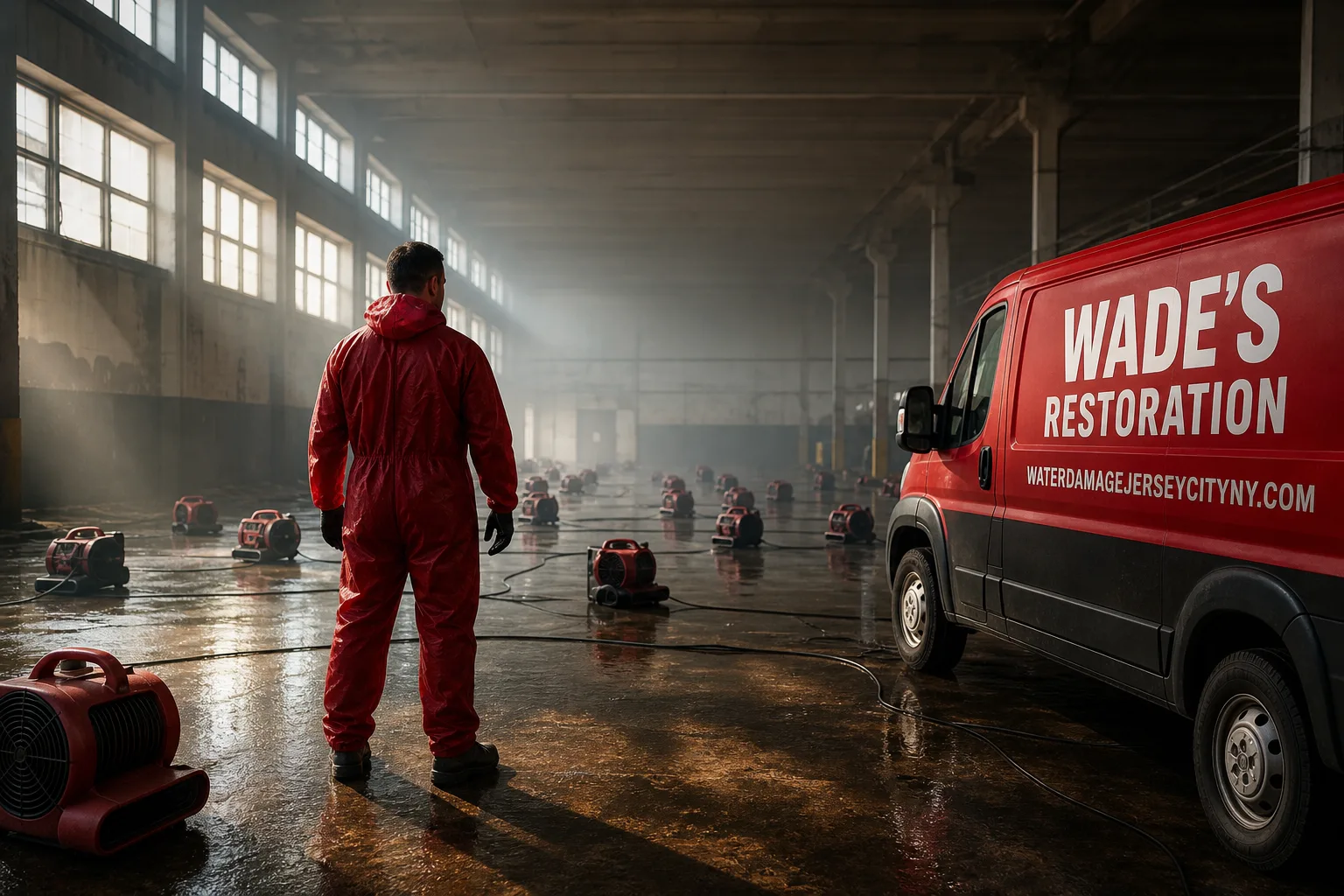
Free visual inspection and a written scope of work before any mitigation begins - photos, moisture readings, and drying logs go in your claim file
The scope we write is the scope we bill. Anything new gets shown to you, in writing, before we touch it.
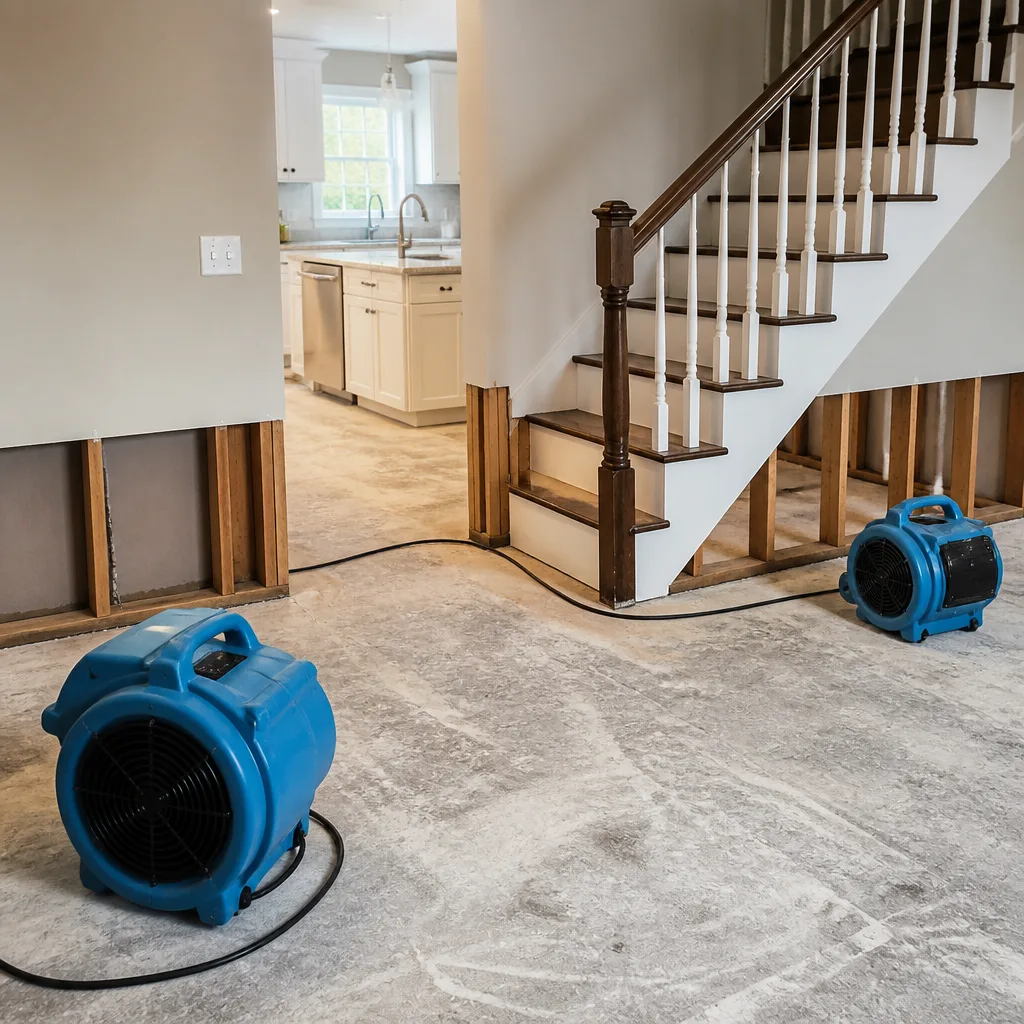
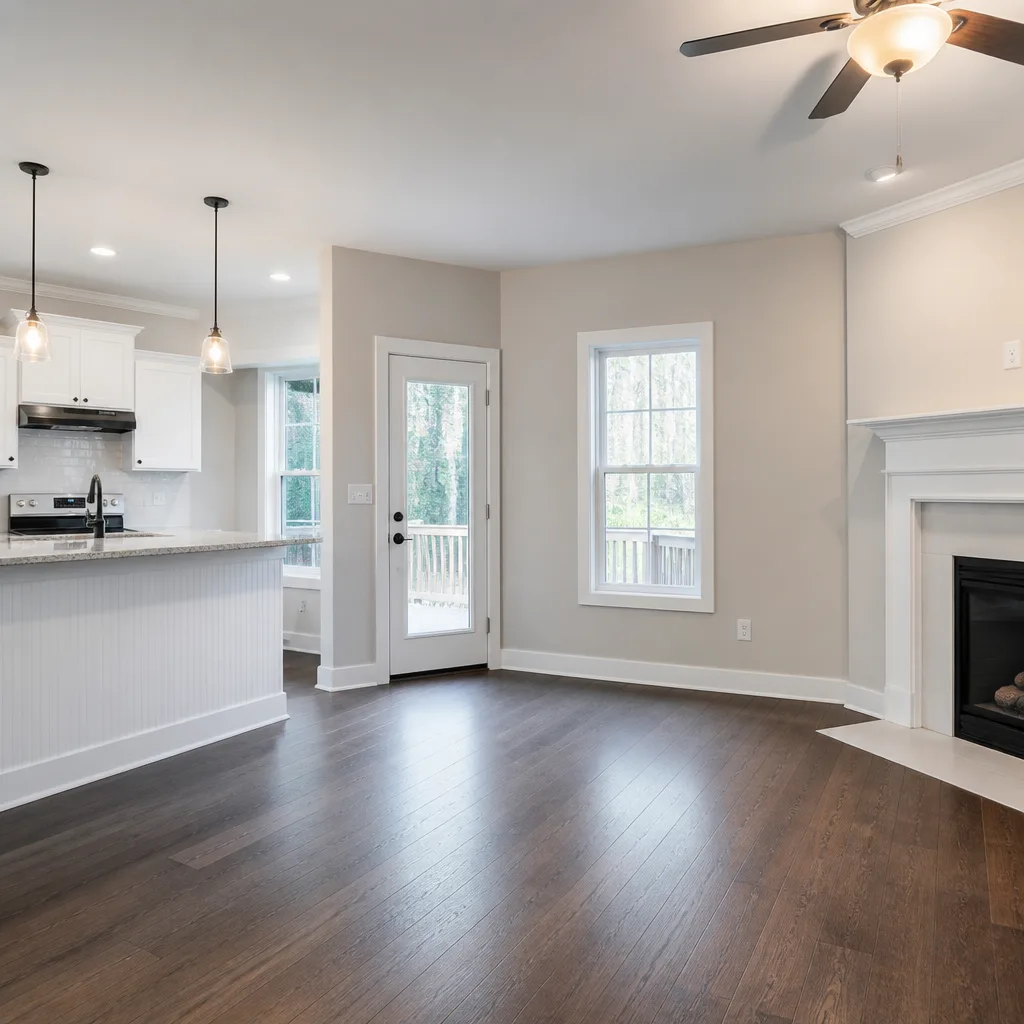
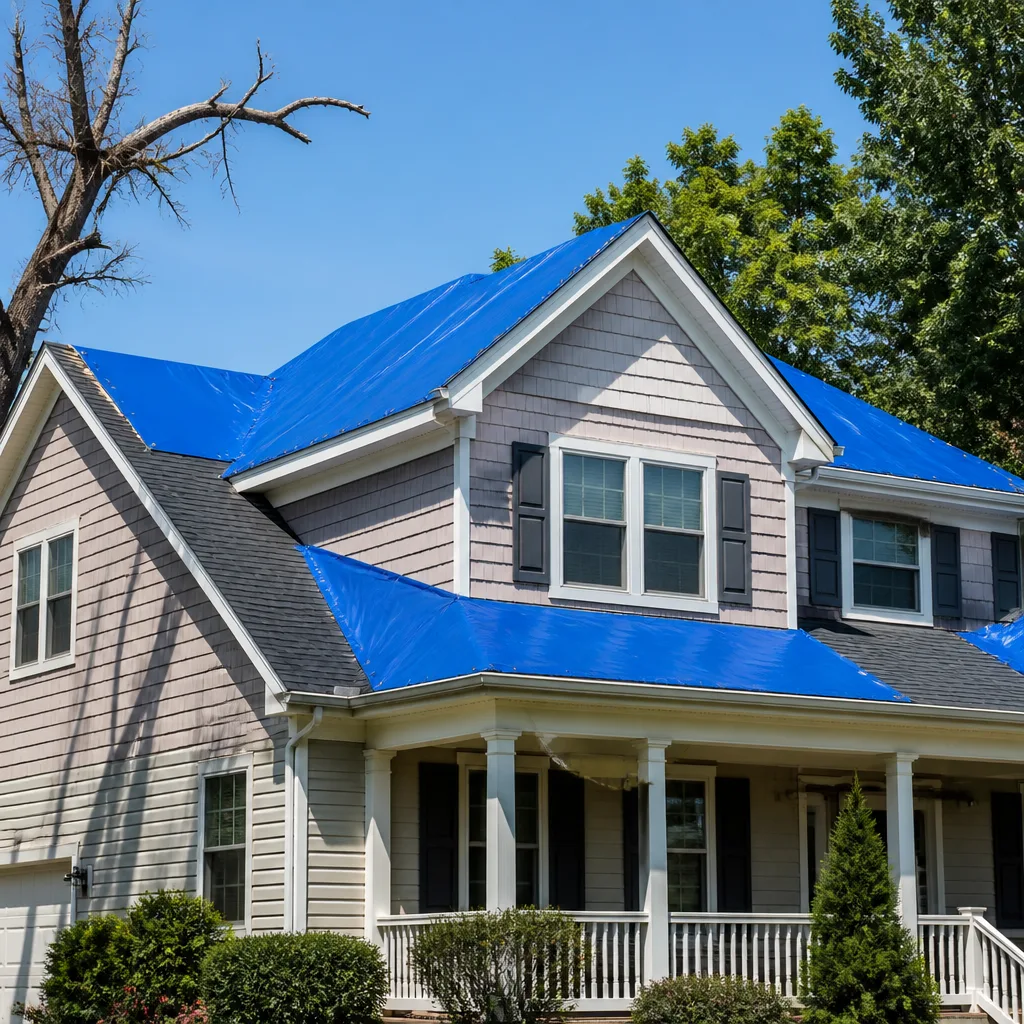
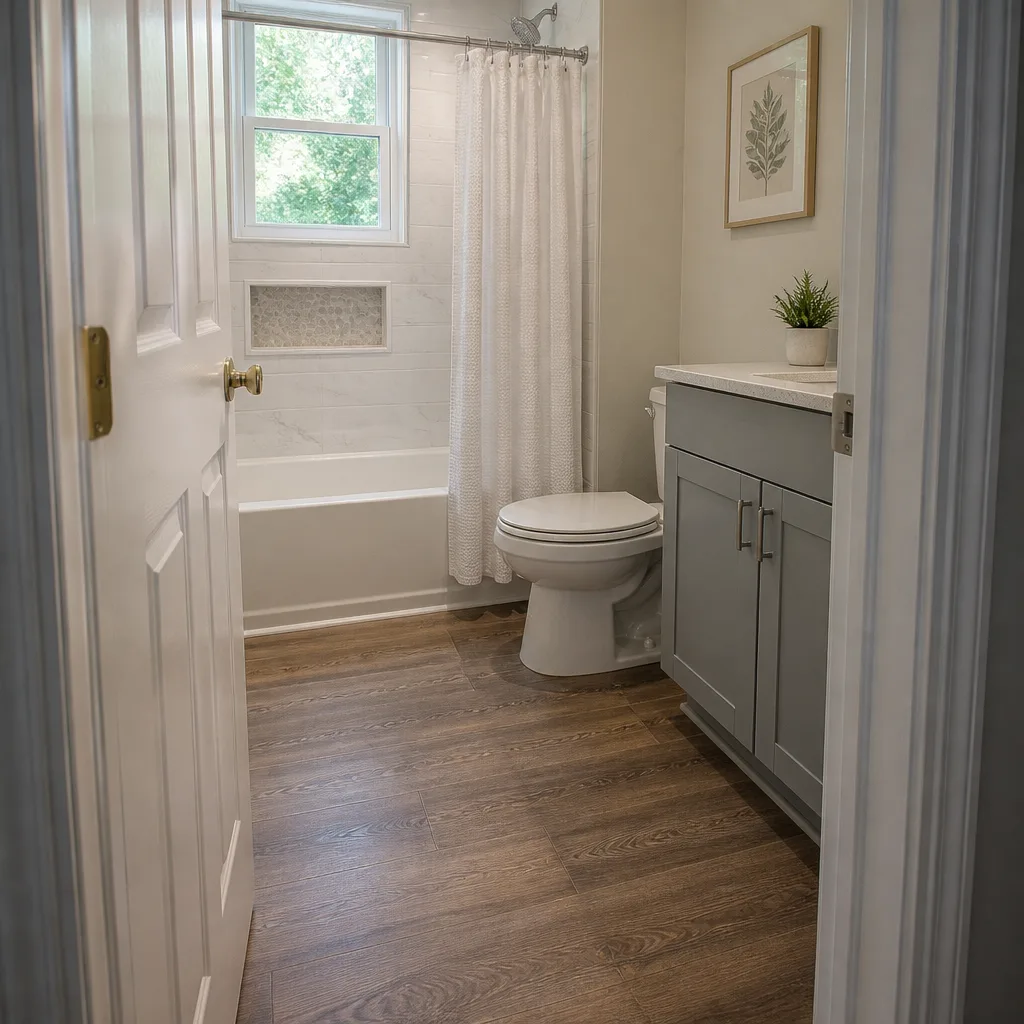
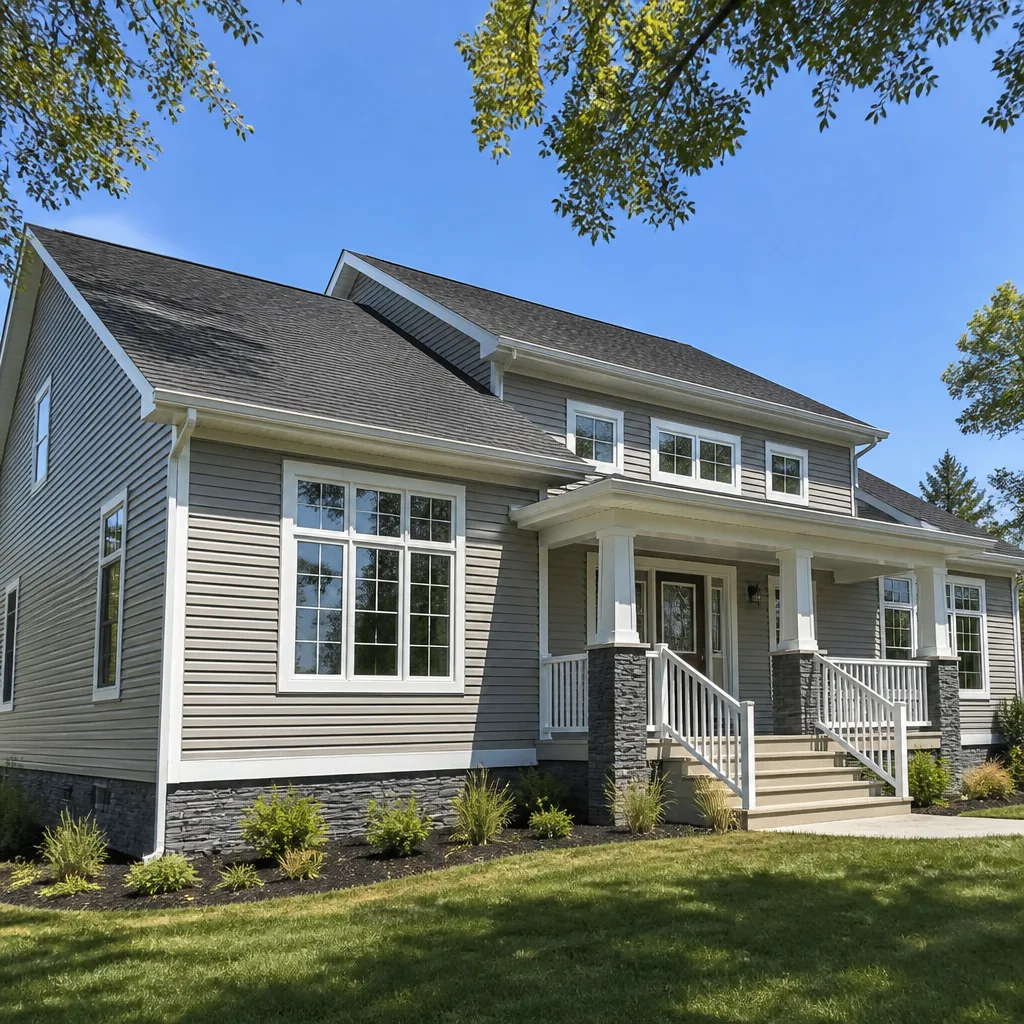
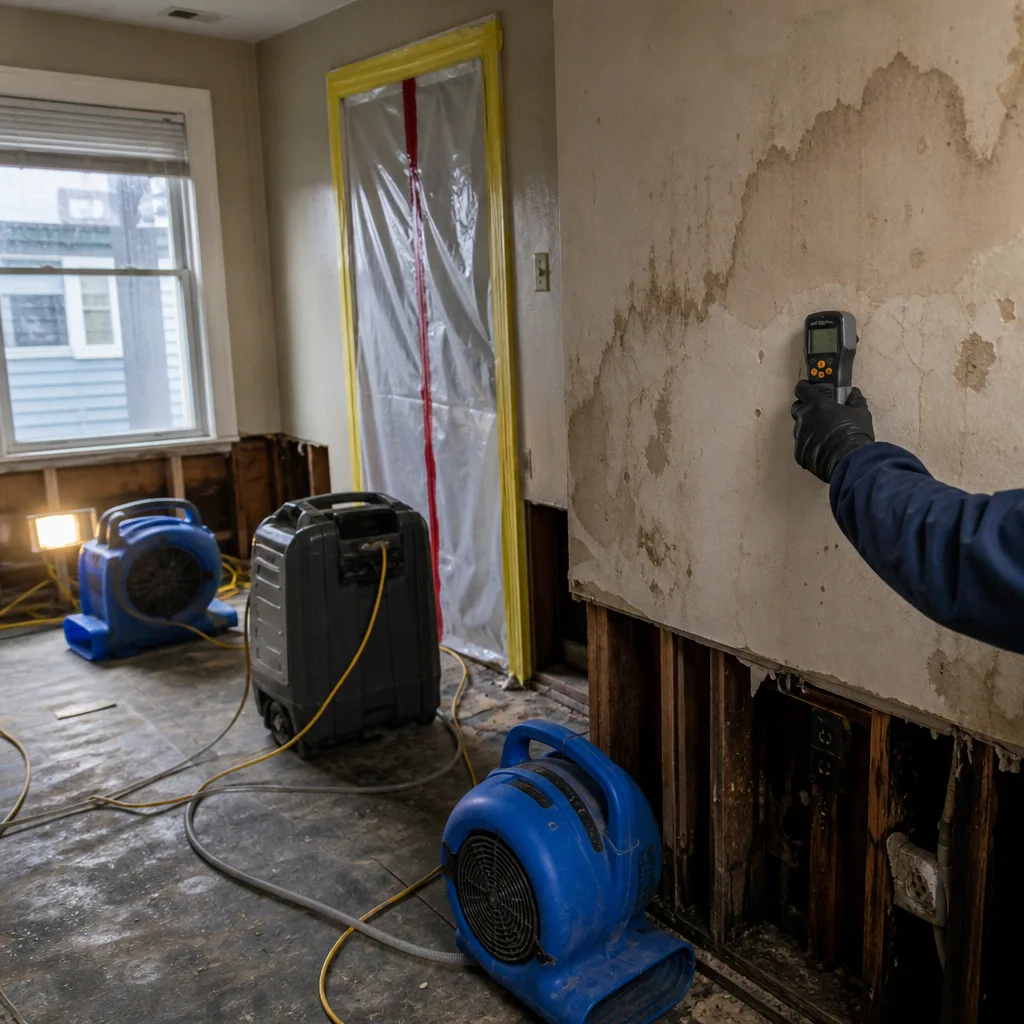 Before
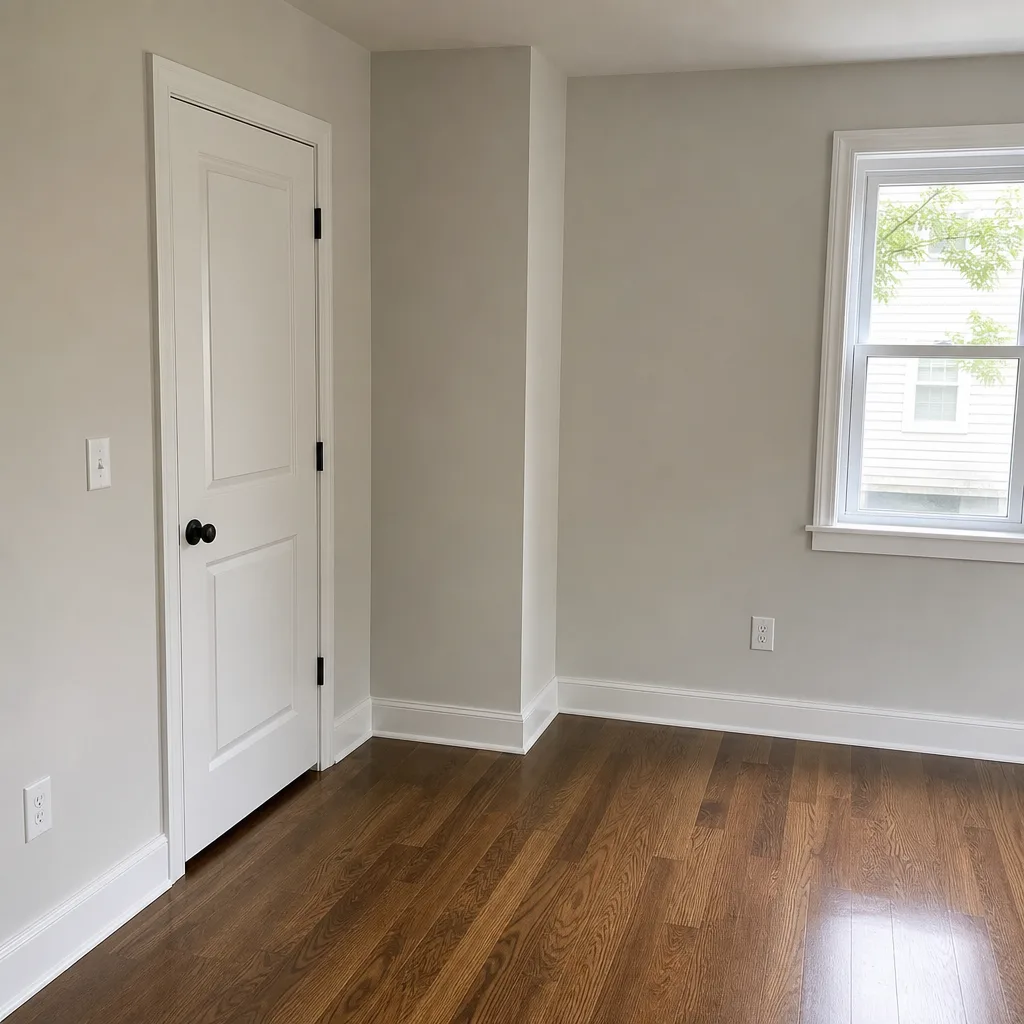 After
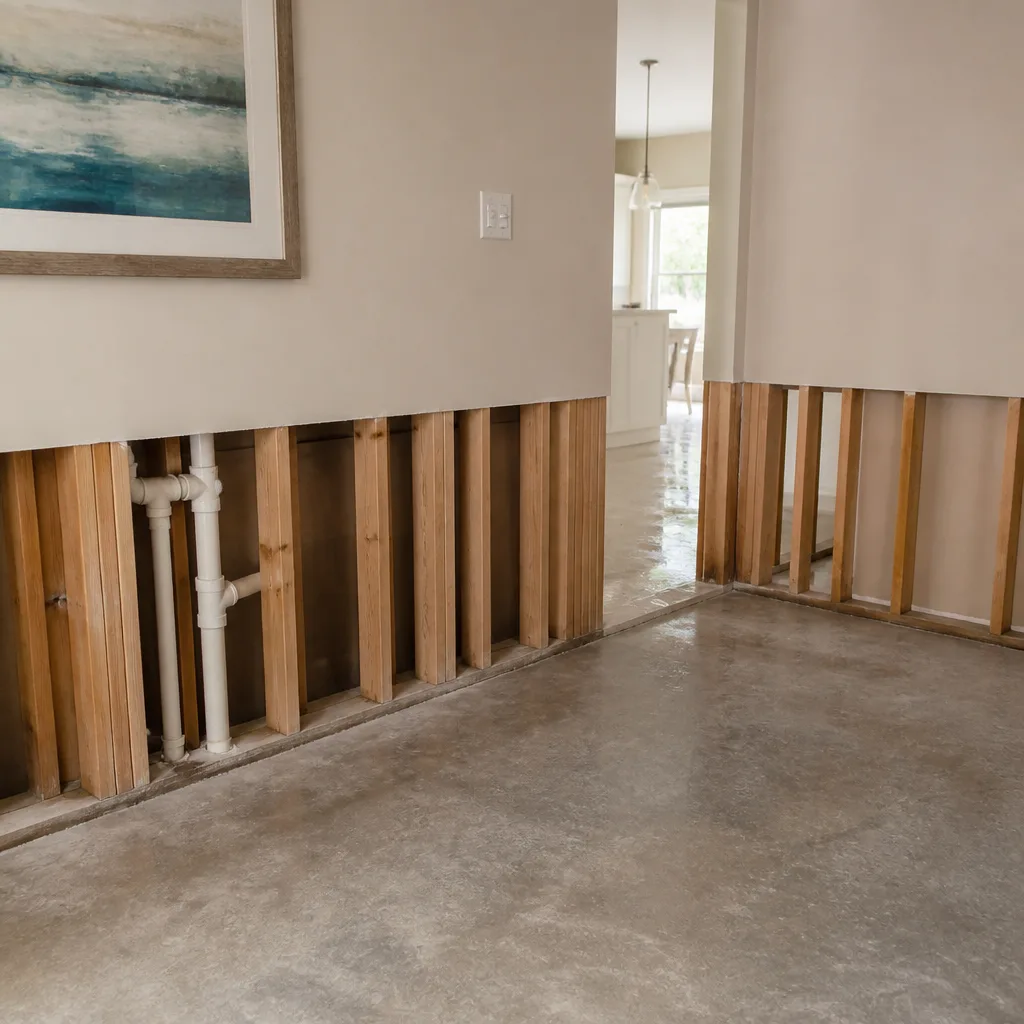
After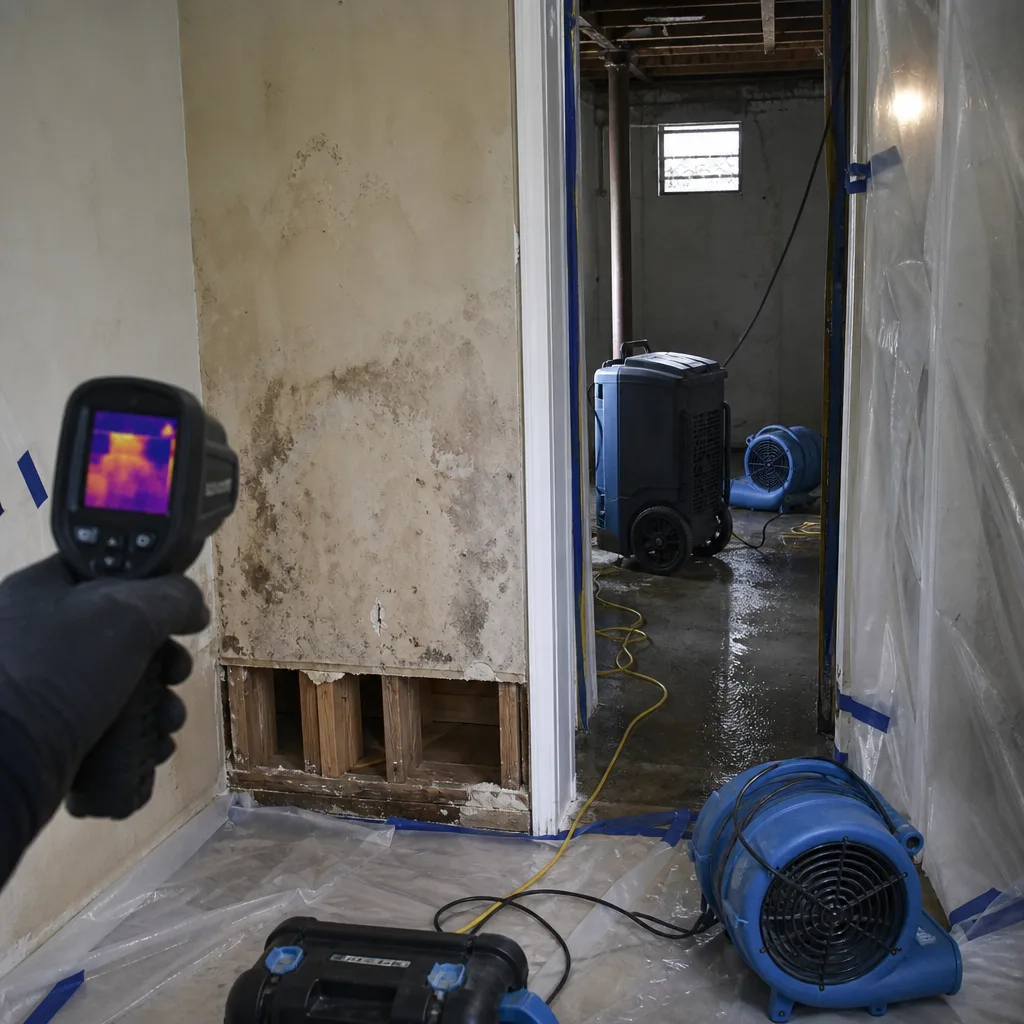 Before
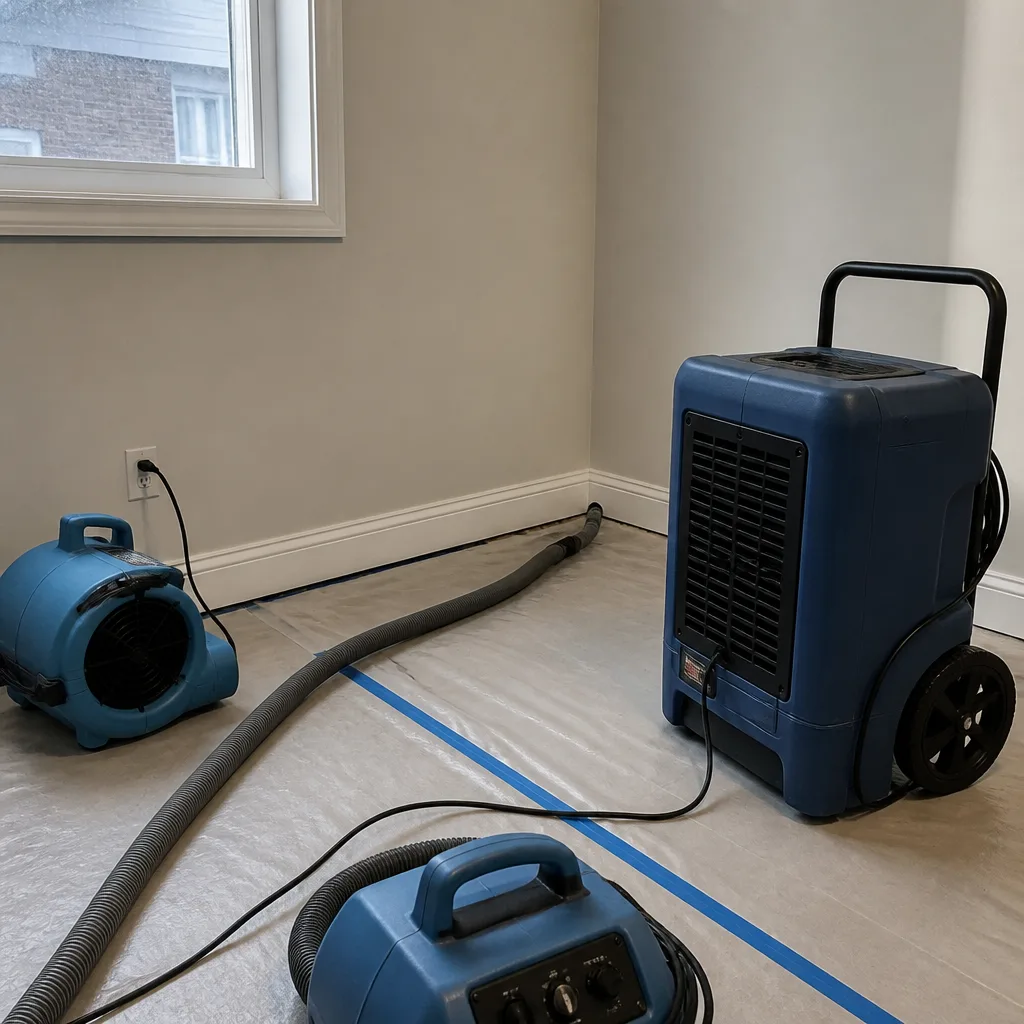 After
After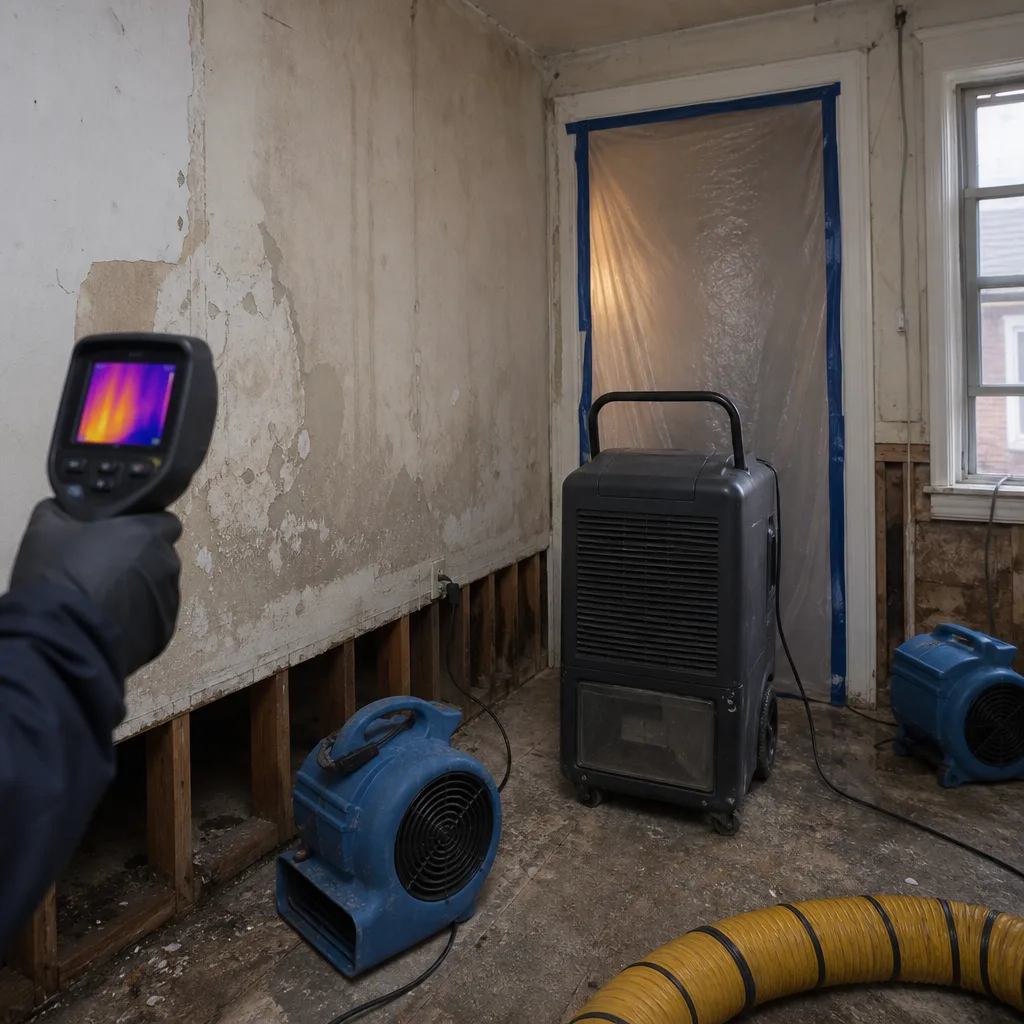 Before
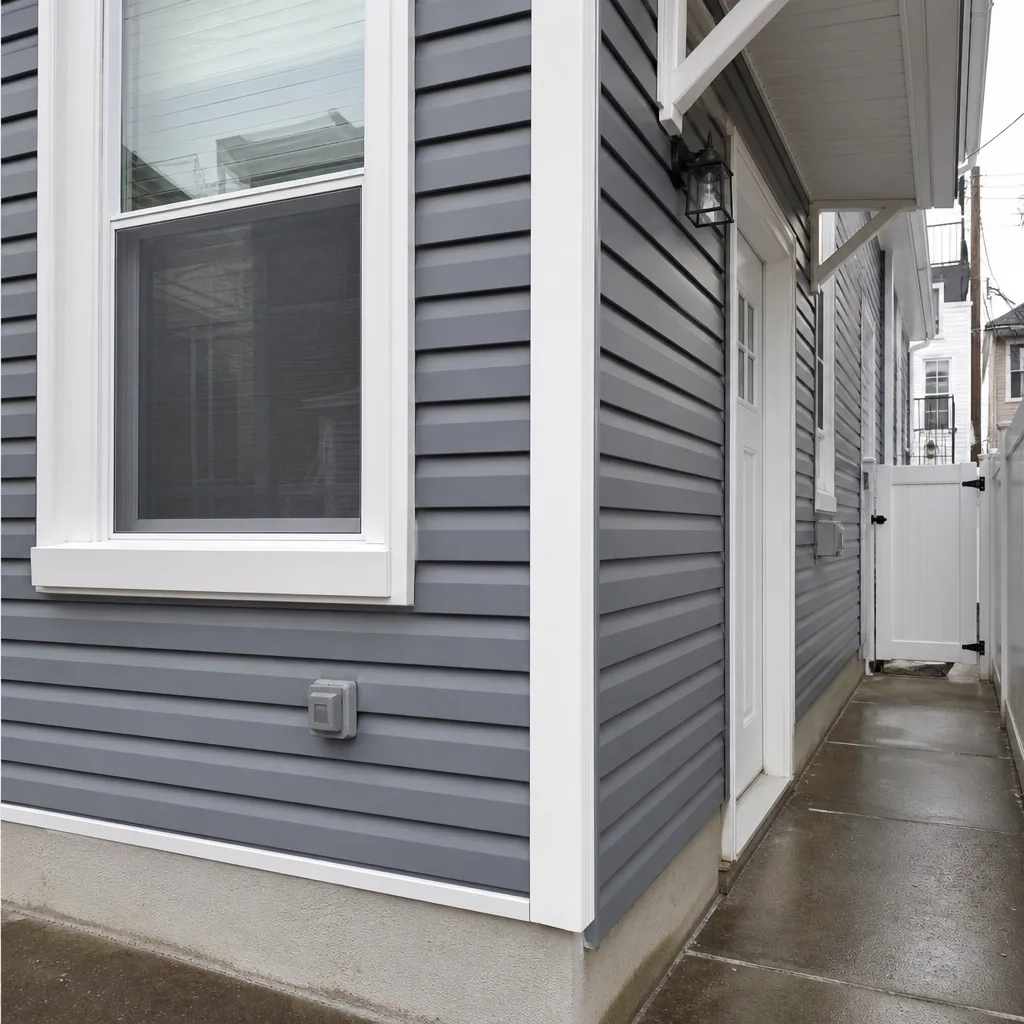 After
After24/7 Emergency Fire & Smoke Damage Restoration in Long Island City
A kitchen fire in a Hunters Point condo or a transformer blowout in a Dutch Kills loft leaves more than charred walls. Soot gets into everything, and smoke odor embeds in concrete, drywall, and upholstery within hours. If you’re calling from Long Island City right now, you’ll reach a live person at (201) 903-9581. Not a voicemail tree. We answer, we ask what’s burning or what burned, and we get a crew moving toward your building. The first hour matters because acidic soot residue starts etching metal, glass, and finished wood almost immediately. The sooner we start containment and air scrubbing, the less you’ll lose to permanent staining and odor. Every job starts with a free visual inspection, and we’ll walk the unit with you before any equipment goes in.
Understanding Fire & Smoke Damage Restoration Severity in Long Island City Properties
Fire damage in Long Island City splits into two very different problems depending on which part of the neighborhood you’re in. The converted factory and warehouse lofts built between 1910 and 1930 burn differently than the glass towers that went up after 2010. In the old industrial stock, smoke travels through open cast-iron column bays, original brick party walls, and the voids behind dropped ceilings. Soot residue in these buildings is often protein-based from kitchen fires or synthetic from electrical fires in aging conduit, and each requires a different cleaning chemistry. In the newer high-rises, smoke migrates through shared HVAC risers and elevator shafts, which means your unit can smell like smoke even when the fire was three floors down. Severity in Long Island City also hinges on what’s beneath the floor. Most of these converted lofts have original vinyl-asbestos tile hidden under polished concrete overlays. Any restoration that cuts into subfloor, breaks into walls, or disturbs pipe insulation triggers NYC and EPA asbestos testing requirements before drying equipment can legally run. That’s not a delay. It’s the law, and skipping it puts every occupant at risk.
Why Long Island City Property Owners Choose Wade’s Restoration
- Wade Ferris answers his own phone. You’ll talk to the owner, not a rotating cast of call-center agents reading scripts.
- Response inside the hour. For fire and smoke calls in Long Island City, we aim to have a crew at your building within 45 to 60 minutes, depending on traffic on the Ed Koch Queensboro Bridge or through the Midtown Tunnel.
- IICRC-certified crews. Our people hold FSRT and WRT certifications, and we train specifically on the converted industrial stock that defines this neighborhood.
- Free visual inspection, always. No trip charge inside our own county. We’ll look, we’ll document, and we’ll give you a written scope before any work starts.
- Direct insurance billing. Wade talks to your adjuster himself. You’re not relaying messages between two sides.
- One team from board-up to finish-out. The same people who set containment carry the job through to paint and trim. Nothing gets lost in handoffs.
Our Fire & Smoke Damage Restoration Process
Inspection & Assessment
We walk the property and map exactly where smoke went. In converted lofts, that means checking the column bays, the ceiling voids, and the subfloor beneath any concrete overlay. We document everything with photos and moisture readings before touching anything.
Emergency Stabilization & Board-Up
If the fire department pulled windows or the fire breached a wall, we secure the opening that same day. Board-up in our Long Island City service area also has to account for street-level access and building security, especially in mixed-use buildings with ground-floor retail.
Containment & Air Scrubbing
We set negative-air enclosures around the affected area and run HEPA air scrubbers. In pre-war loft buildings, we also seal HVAC returns and shared shafts so soot doesn’t keep migrating into neighboring units while we work.
Asbestos Testing & Abatement Coordination
Before any subfloor cutting or wall breakthrough happens in a 1910s to 1930s Long Island City loft, we stop and test. If vinyl-asbestos tile or transite panels are present, we bring in a licensed abatement subcontractor and document the chain of custody. Skipping this step is an EPA and NYC violation, and it’s one of the fastest ways to turn a $4,000 cleanup into a six-figure liability.
Smoke & Soot Removal, Odor Deodorization
We clean surfaces by residue type. Dry soot gets HEPA-vacuumed and dry-sponged. Synthetic soot needs different chemistry than protein soot. Then we treat the odor at the source, not with masking agents. Thermal fogging, ozone, and hydroxyl generators go in only after surfaces are clean, because fogging over soot just bakes it in.
Contents Cleaning, Pack-Out & Structural Repair
What can be restored gets cleaned on site or packed out to our facility. What can’t gets documented for your claim. Then we handle our Reconstruction & Cleanup in Long Island City: drywall, trim, flooring, paint. One crew, one scope, one warranty.
Need Emergency Fire & Smoke Damage Restoration in Long Island City Now?
Crews minutes away, answering live 24 hours a day. The sooner we start, the less it costs.
Working With Your Insurance Company
Most Long Island City condo and co-op policies cover fire and smoke damage, but how the claim goes depends heavily on documentation from the first hour. Adjusters look for detailed photos before anything is disturbed, a line-item scope, and proof that proper protocols were followed. We provide all of that. Wade deals with your adjuster directly, and when the adjuster needs a second set of moisture readings or a photo of the charred subfloor before we cut, we send it same day. The 90-Day Done Right Promise is written into every fire restoration contract we do in Long Island City. If something isn’t right within 90 days, Wade comes back and makes it right. That’s in writing, not in a brochure.
What We Provide Your Insurer
- Thorough documentation of the loss
- Photos of all damage, room by room
- Moisture readings and drying logs
- A detailed, line-item scope of work
- Direct coordination with your carrier
Built for Long Island City’s Loss Calendar
Fire and smoke losses in Long Island City don’t spread evenly through the year. January through March, we’re responding to space heaters in pre-war lofts with original wiring that was never meant for 2026 electrical loads. The brick walls hold cold, and tenants push old systems hard. April and May bring the first window-unit air conditioner starts, which means overloaded circuits in converted factory buildings where a hundred units share infrastructure that predates modern codes. Summer heat stresses transformers in the aging industrial corridors along the Newtown Creek edge, and when one blows, everyone in the building smells it. September through November is short-circuit season as the weather turns and moisture finds its way into conduits. December brings cooking fires, candle fires, and holiday lighting run through power strips that were older than the tenants. In the southern and eastern sections of the neighborhood, where FEMA Flood Zone AE sits close to Newtown Creek, any heavy rain carries a secondary fire risk: water meeting live electrical in basement-level mechanical rooms. That’s a fire cause and a water cause at the same time, and the restoration has to treat both.
Fire & Smoke Damage Restoration Across Long Island City’s Neighborhoods
Hunters Point, especially the waterfront towers along Center Boulevard and the older warehouse conversions on the side streets running down to the East River, gives us a steady stream of kitchen fires in high-end units. The finishes are custom, the cabinets are built-in, and the smoke damage threatens surfaces that are expensive to replace and hard to match. Dutch Kills, north of Queens Plaza, still has a strong run of 1920s and 1930s factory buildings turned into condos and artist studios. Those are the jobs where asbestos testing almost always comes back positive, and where smoke hangs in the masonry longer than you’d think. Queens Plaza and Court Square are mixed-use: commercial kitchens at street level, residential lofts above. A restaurant hood fire sends smoke straight up through shared walls into apartment units, and the odor removal has to happen fast before it moves through the building. Further east toward Blissville and the Newtown Creek corridor, we see more industrial fires and transformer events, plus basement mechanical rooms that flood in heavy rain and then short out. Each area has its own building DNA, and the restoration has to match it.
Specialized Fire & Smoke Damage Restoration Services We Offer in Long Island City
Fire Damage Cleanup
Charred drywall, burned framing, and structural compromise all come out. In the converted factory lofts of the Court Square and Dutch Kills corridors, cleanup also means managing the dust from cutting into century-old plaster and masonry. We contain, we clean, and we don’t take down anything load-bearing until an engineer says so.
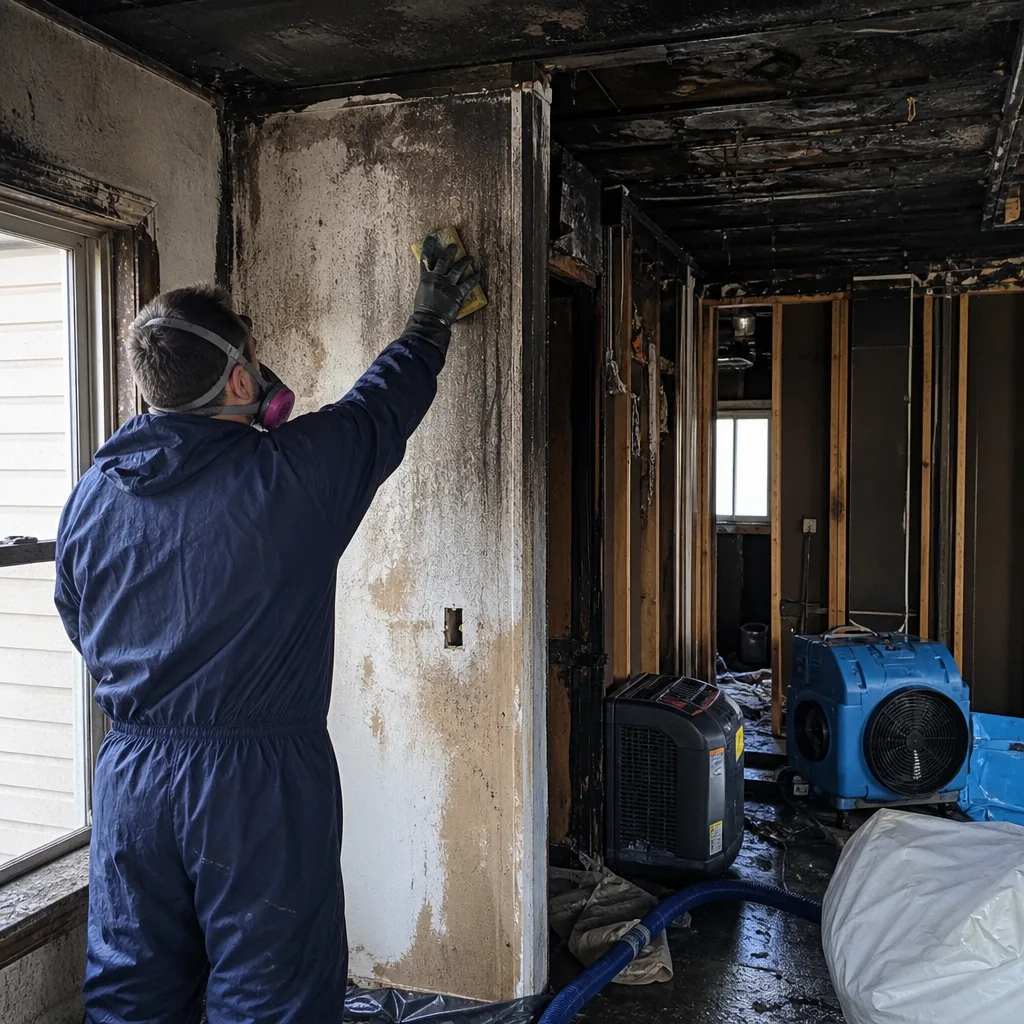
Smoke & Soot Removal
This is where Long Island City’s building stock forces extra care. Soot from a kitchen fire in a Hunters Point condo with custom cabinetry is protein-based, and it’s aggressively acidic. Soot from an electrical fire in an old industrial loft is synthetic and oily. You can’t clean both with the same process. We identify the residue type first, then we treat every surface it touched, including inside cabinets, behind switch plates, and in the voids above the ceiling.
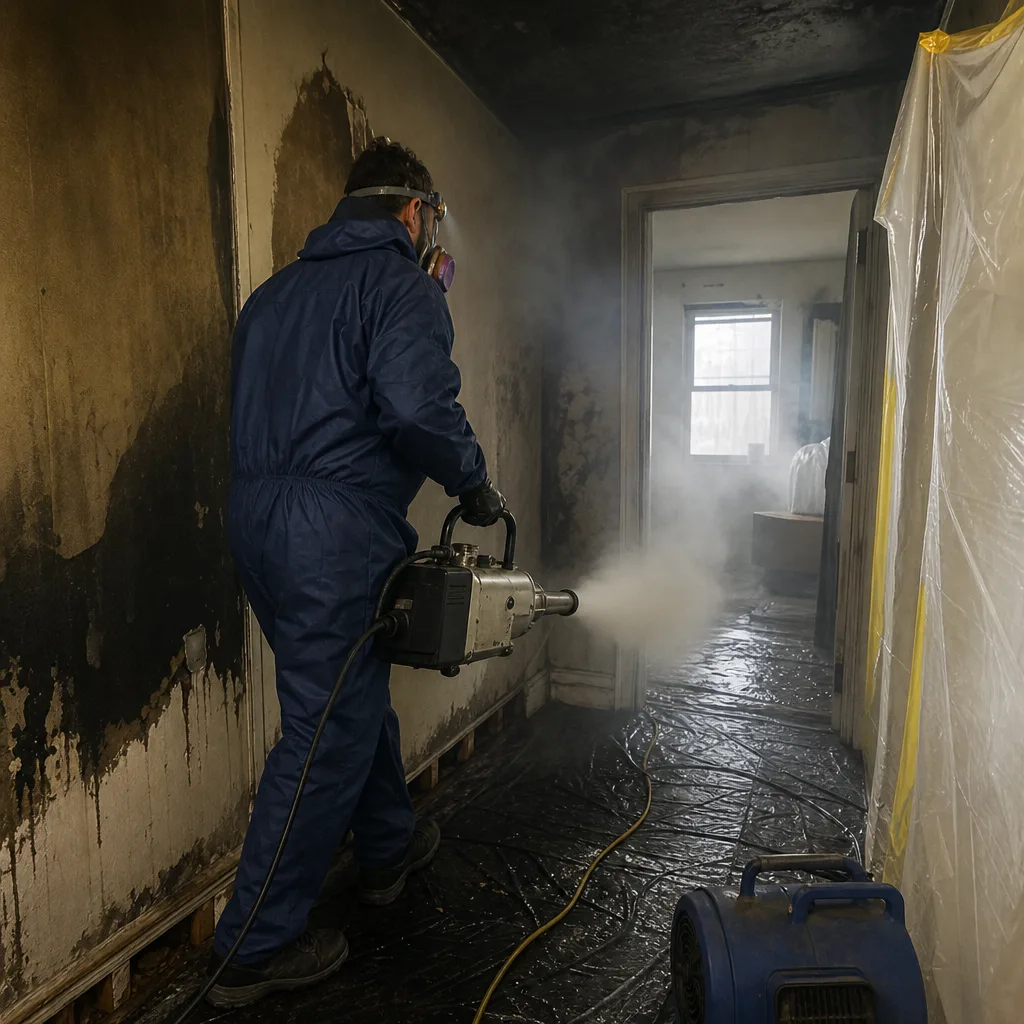
Odor Removal & Deodorization
Smoke odor in a Long Island City loft doesn’t leave when the visible soot is cleaned. Masonry, concrete, and the original millwork in pre-war buildings all trap odor molecules. We use hydroxyl generation and ozone treatment only after surfaces are clean, because fogging over soot seals the problem in. In buildings near the Newtown Creek corridor, we also test what else was in the smoke. Fires involving industrial materials can leave residue that needs our Sewage Cleanup in Long Island City team to assess antimicrobial treatment before finish-out.
Contents Cleaning & Pack-Out
For a high-rise unit with custom furniture, art, and designer finishes, pack-out is the move. We inventory, photograph, and move contents to a controlled facility where they get cleaned, deodorized, and stored until your unit is ready. You get a full itemized list. Your adjuster gets the same list. Nothing disappears into a warehouse in New Jersey with a vague promise.
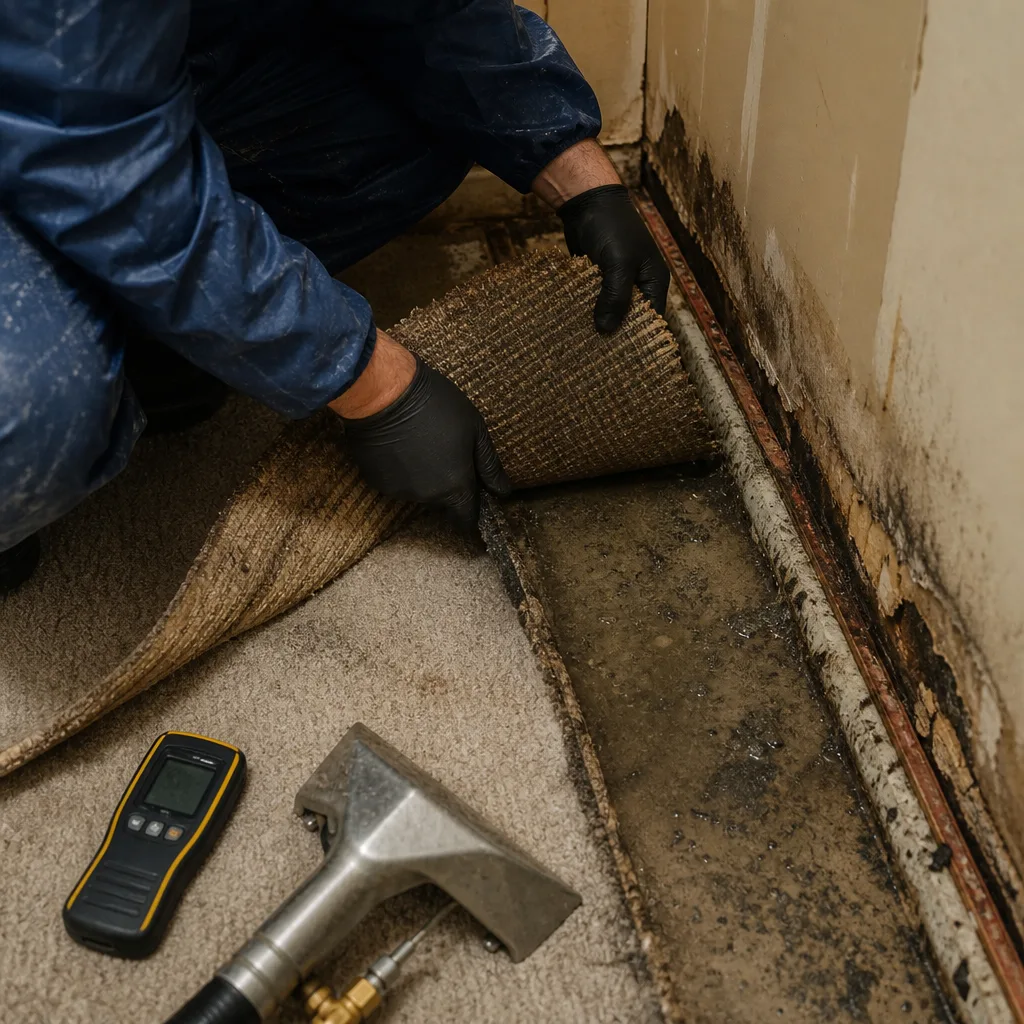
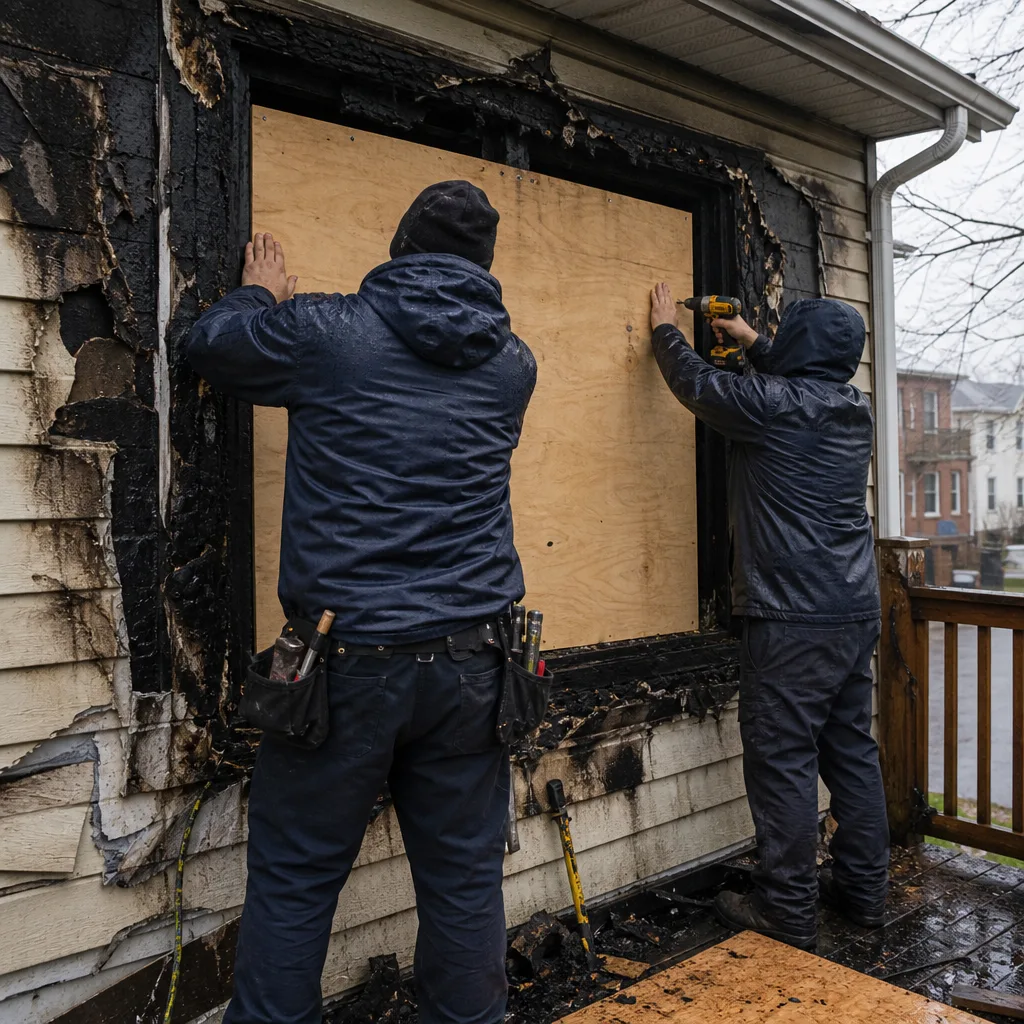
Emergency Board-Up & Tarping
If the fire department made entry through a street-level window or a rooftop opening in a Long Island City loft building, we board and tarp it same day. In mixed-use buildings with retail at street level, security is the priority. A boarded opening is a magnet at night, and we use steel if the situation needs it.
What happens when you call
- 1
A real person answersNo phone trees - you reach a local pro.
- 2
You get an upfront price rangeHonest numbers before anyone is dispatched.
- 3
A background-checked tech heads outLicensed & insured, dispatched right away.
- 4
You approve before work beginsNothing starts until you say go.
Fire & Smoke Damage Restoration Costs in Long Island City, NY
A typical kitchen fire in a Long Island City condo with moderate smoke damage to one or two rooms runs $4,000 to $10,000 when the work includes soot cleaning, odor treatment, drywall repair, and repainting. Smaller grease fires limited to a single wall and a range hood might come in between $1,800 and $3,500. Larger losses involving structural repair, full pack-out, and asbestos abatement coordination in a converted factory loft routinely exceed $25,000. If asbestos testing comes back positive, the abatement is a separate subcontractor line item, and on Long Island City’s pre-war stock that can add $3,000 to $15,000 depending on scope. Insurance covers most of this when the fire was sudden and accidental. Negligence exclusions exist, but the claim still starts with documentation, not with a guess. Call (201) 903-9581 for a free visual inspection and a written scope. You’ll know the line items before anything is signed.
We Also Serve Cities Near Long Island City
Our crews serve the full western Queens and Manhattan-facing corridor. If you’re just across the Pulaski Bridge or over the Queensboro, we’re already in your neighborhood. We handle fire and smoke work in Astoria, Sunnyside, Woodside, Maspeth, Greenpoint, and the larger Queens and Brooklyn area. Call the same number, and we’ll route a crew from the closest job site.
Serving Long Island City, NY - Our Local Coverage Area
We’re based in the Long Island City area and know this community well. Use the map below to see our service coverage - if you’re nearby, we can almost certainly help.
Long Island City Fire & Smoke Damage Restoration Questions, Answered
How does proximity to Newtown Creek change fire and smoke restoration in Long Island City?
Fires in the industrial zones near Newtown Creek can carry synthetic soot and chemical residues that a normal residential fire doesn’t produce. If the smoke pulled from a warehouse or industrial process, the residue may need antimicrobial treatment and specialty deodorization before finish-out. We test and treat accordingly, and we document it for your insurer.
Do all LIC fire jobs in converted factory buildings require asbestos testing before drying?
No, but any job that breaks into walls, cuts subfloor, or disturbs pipe insulation in a pre-1930s building does. In practice, that’s most fire restorations in these buildings, because charred material has to come out. We test before we cut, every time.
Can you restore custom wood doors and smart-home openers after smoke damage in a high-rise tower?
Yes. We clean and refinish wood doors, and we repair or replace smart-home opener components that soot has corroded. In high-rise towers, shared HVAC can push smoke through units far from the fire, so we check the system before we call it done.
How soon after a fire in a Long Island City loft can you start odor removal?
Same day, after the unit is safe to enter and we’ve set containment. The longer soot and odor sit on surfaces, especially in masonry and concrete lofts, the deeper the odor penetrates. We start air scrubbing and dry cleaning the same visit.
What does pack-out look like for a high-end Long Island City unit with custom finishes?
We inventory everything, photograph each item, and move contents to a controlled facility for cleaning, deodorizing, and storage. Your custom millwork and built-ins stay in place and get treated on site. You get a full itemized list, and so does your adjuster.
How fast can someone actually get to Long Island City after I call?
Usually 45 to 60 minutes, depending on bridge and tunnel traffic. We answer the phone live 24/7, and a crew gets routed from the closest job site. Call (201) 903-9581.
Will insurance cover fire and smoke restoration in a Long Island City condo?
Most condo and co-op policies cover sudden and accidental fire damage. What changes the outcome is documentation. We provide photos, moisture readings, drying logs, and a line-item scope from the first day. Wade talks to your adjuster directly so you don’t have to.
What should I do in the first 30 minutes after a fire in my Long Island City unit?
Get everyone out and call 911 if it’s still active. Once the fire is out, don’t touch walls, don’t plug anything in, and don’t try to wipe soot, which grinds it into surfaces. Call us at (201) 903-9581. We’ll walk you through it and get a crew moving.
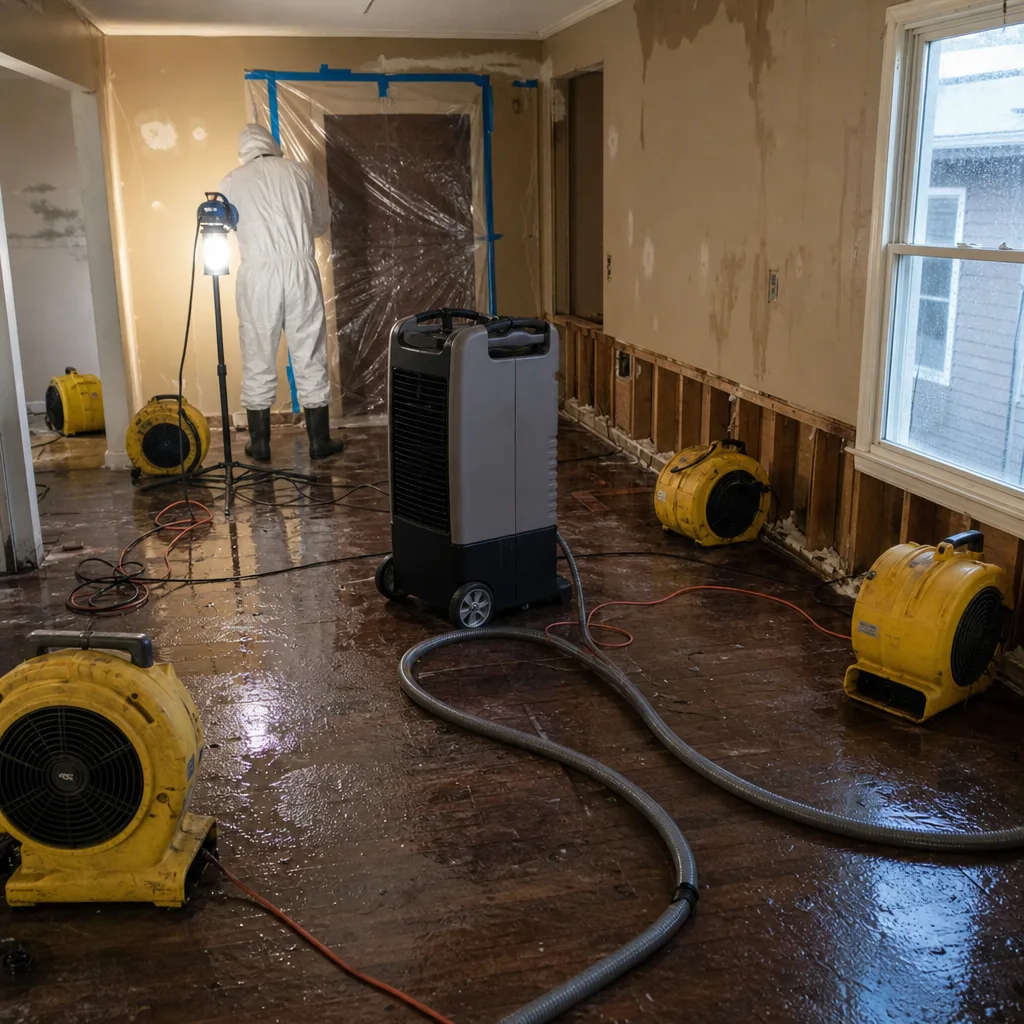
In a Hunters Point loft condo after a kitchen fire, our crew set containment and built a negative-air enclosure. Then we mapped smoke migration through the original cast-iron column bays while running Phoenix air movers and a Dri-Eaz dehumidifier. The developer’s polished concrete had trapped a 1920s vinyl-asbestos tile floor, so we stopped before cutting out charred subfloor, called the abatement subcontractor, and only then pulled moisture readings and began pack-out of smoke-damaged contents. That’s how Long Island City Biohazard & Crime Scene Cleanup protocols work in these buildings. You stop, test, and document. Skipping the test costs you the job, and the liability lands on you.
For Fire & Smoke Damage Restoration in Long Island City, call Wade’s Restoration at (201) 903-9581. Free visual inspection, no trip charge inside our own county, and a written scope before any work starts. Ask for Wade. He’ll answer.
Written by Wade Ferris, Owner at Wade’s Restoration, serving Long Island City and greater New York City.