
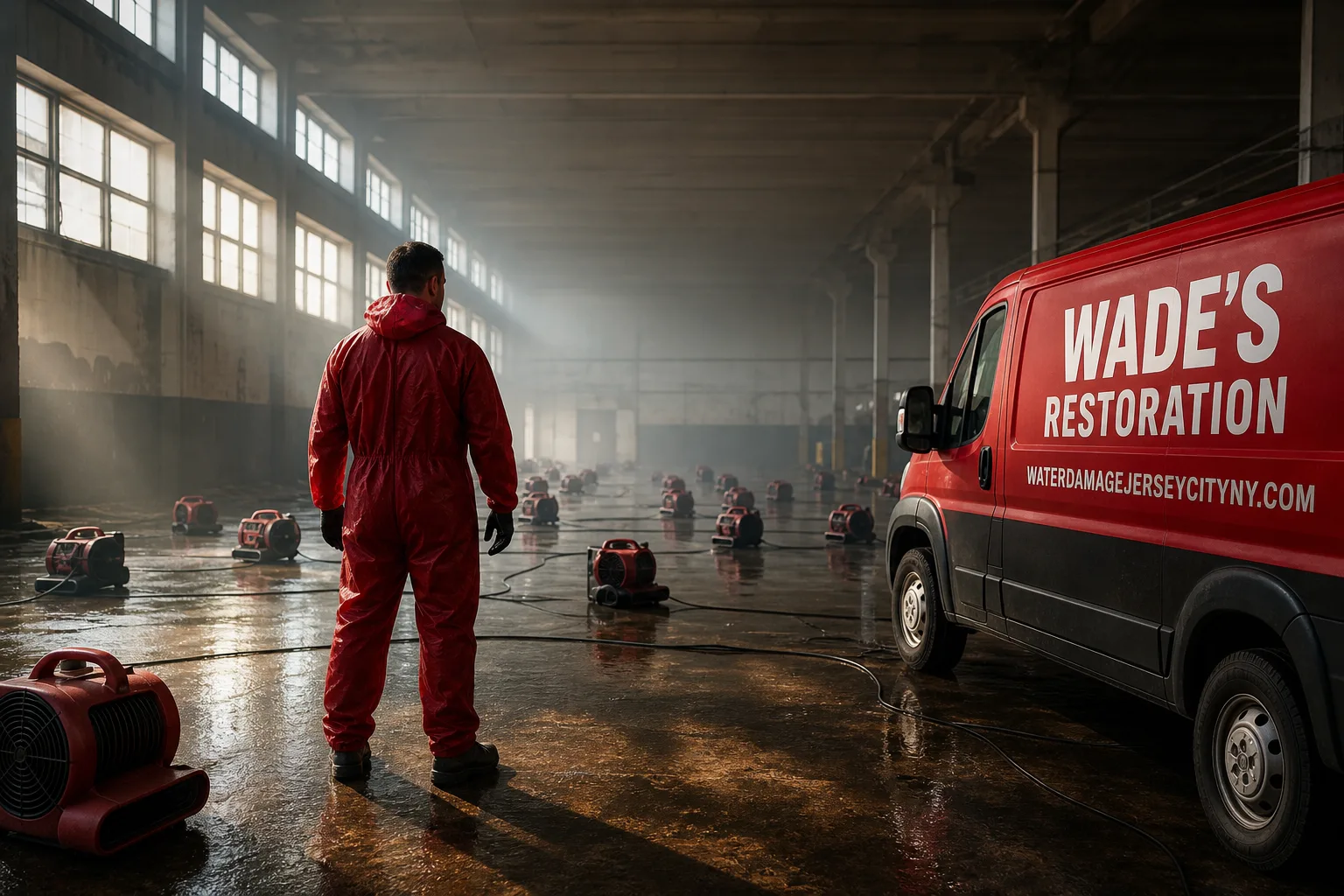
Free visual inspection and a written scope of work before any mitigation begins - photos, moisture readings, and drying logs go in your claim file
The scope we write is the scope we bill. Anything new gets shown to you, in writing, before we touch it.
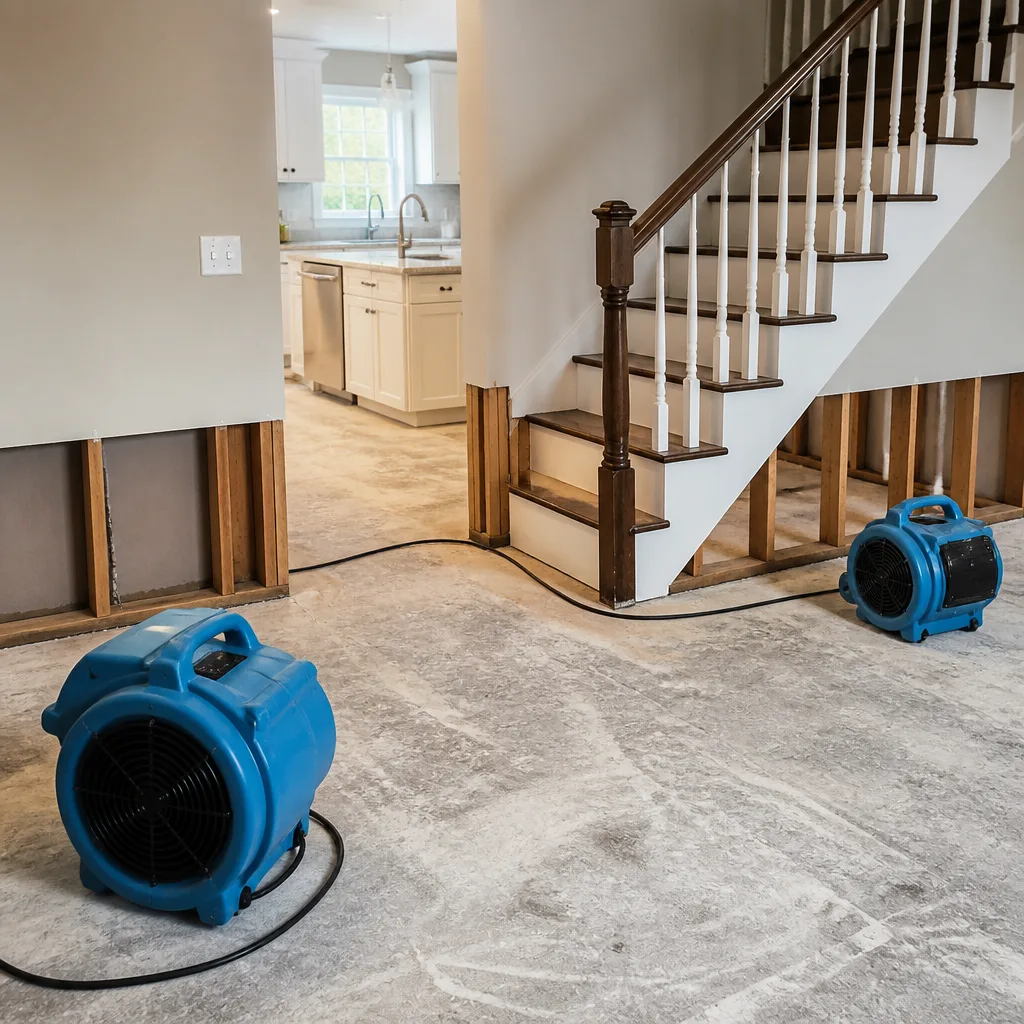
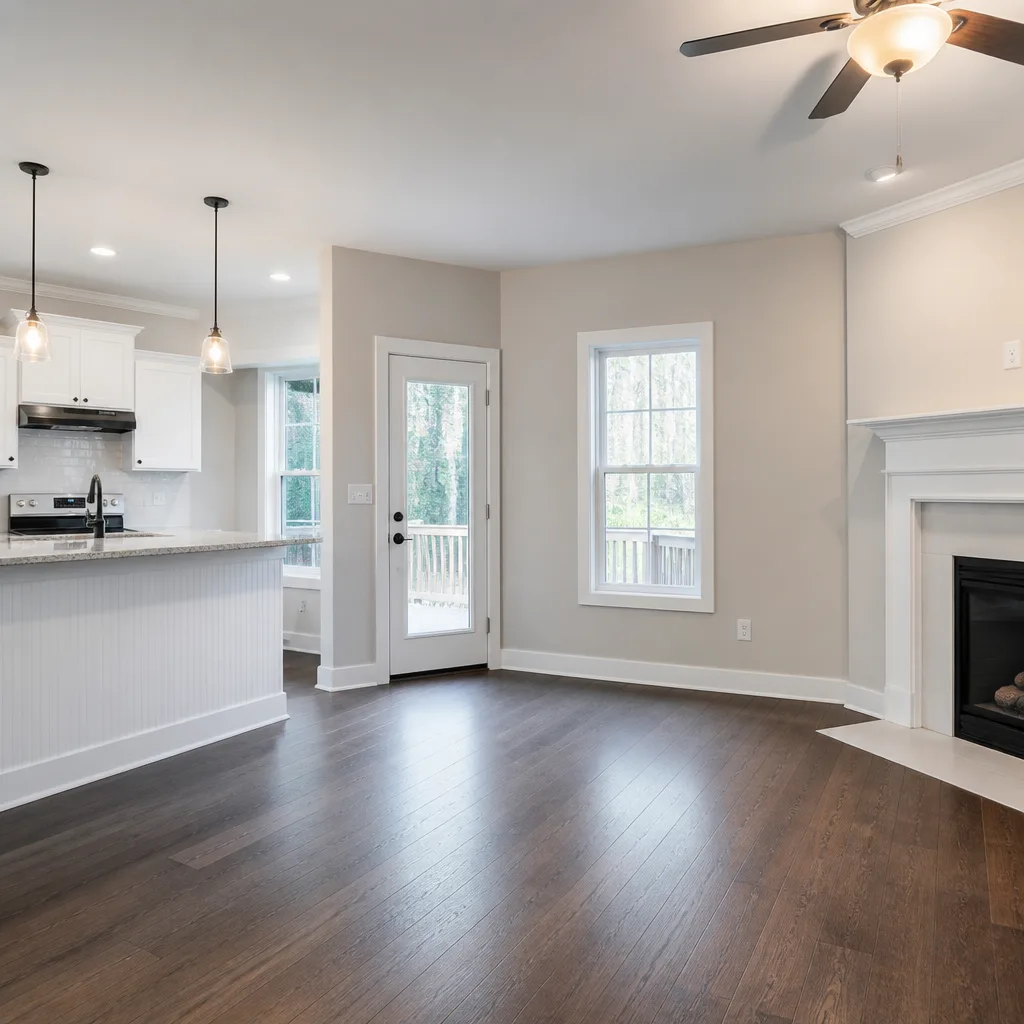
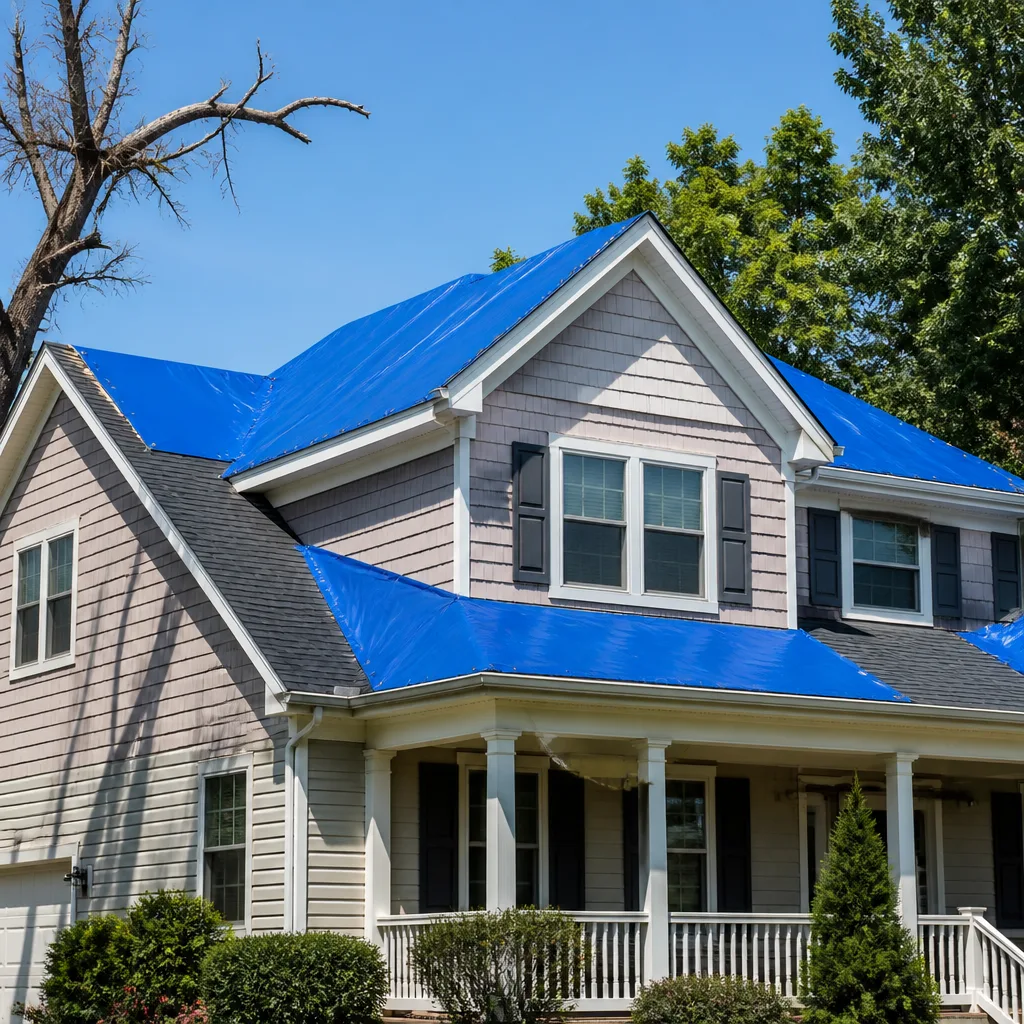
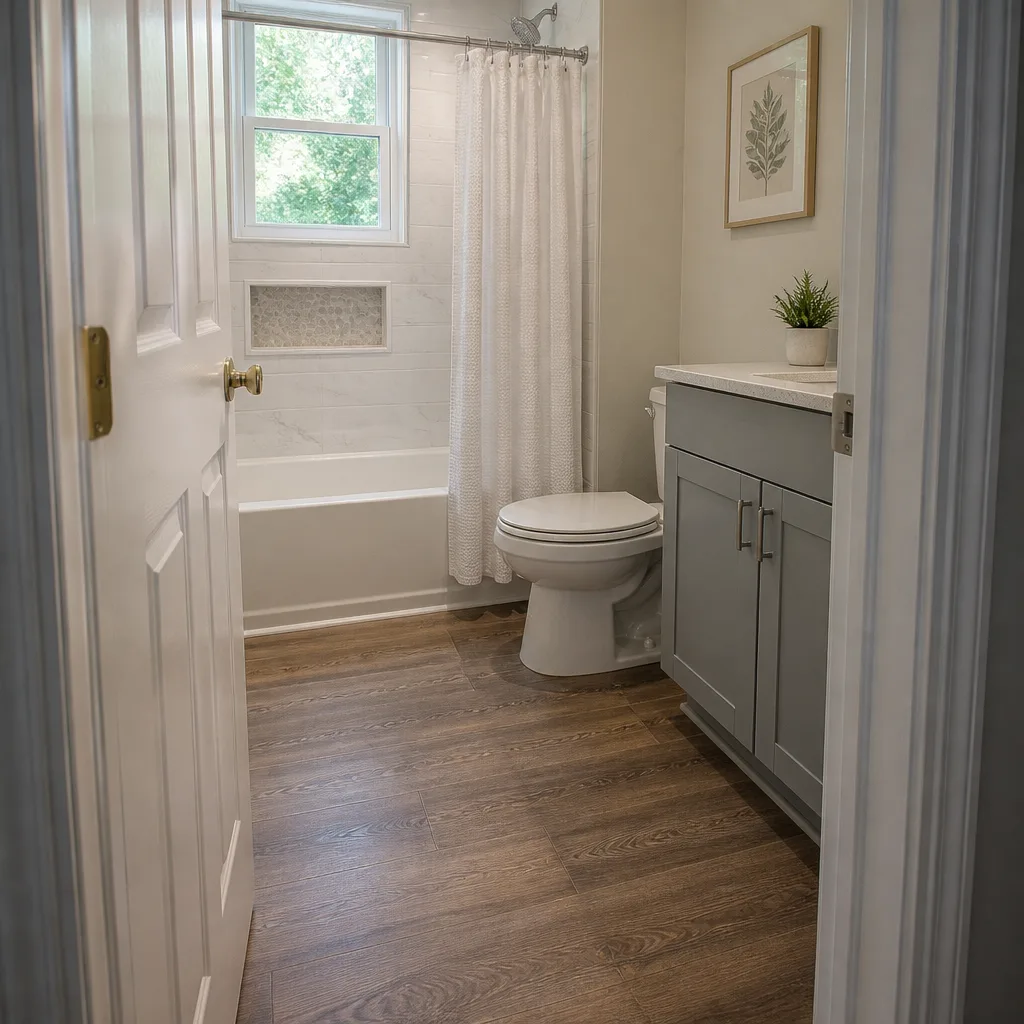
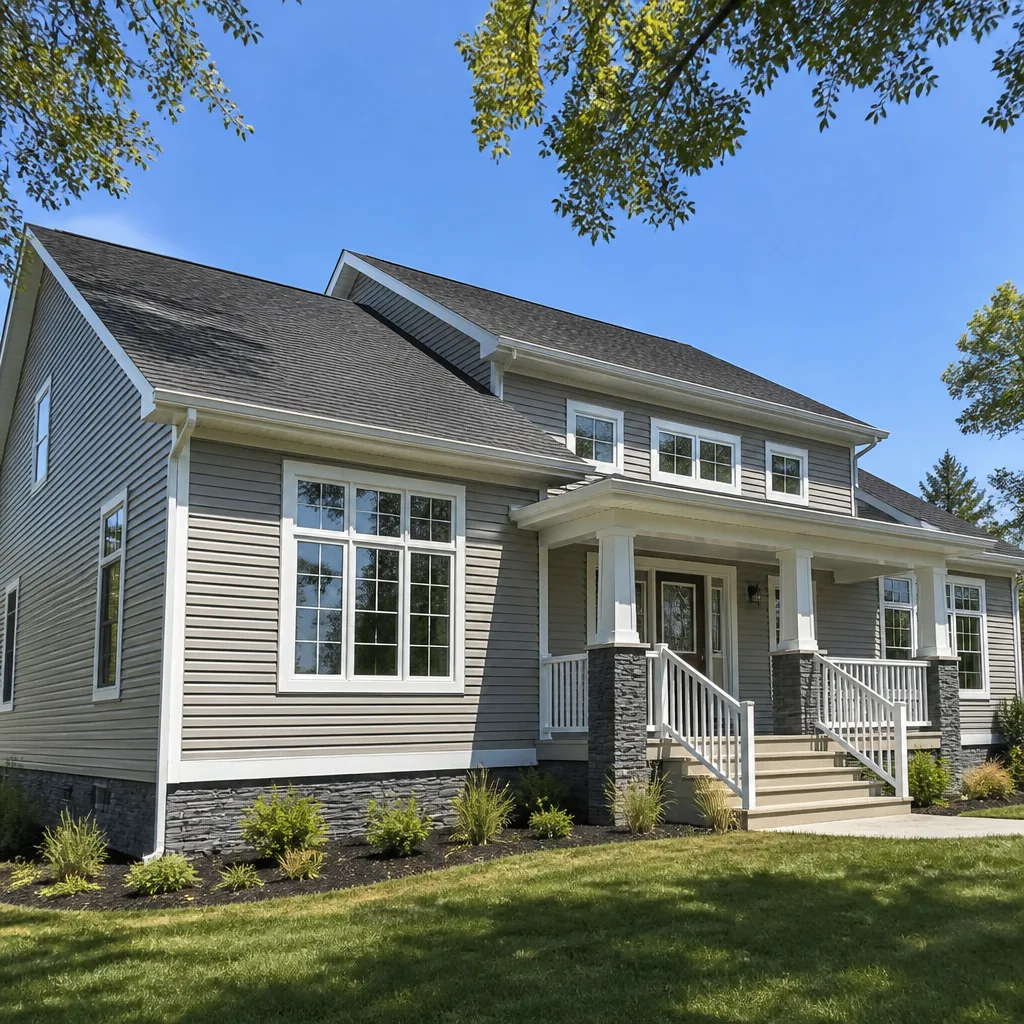
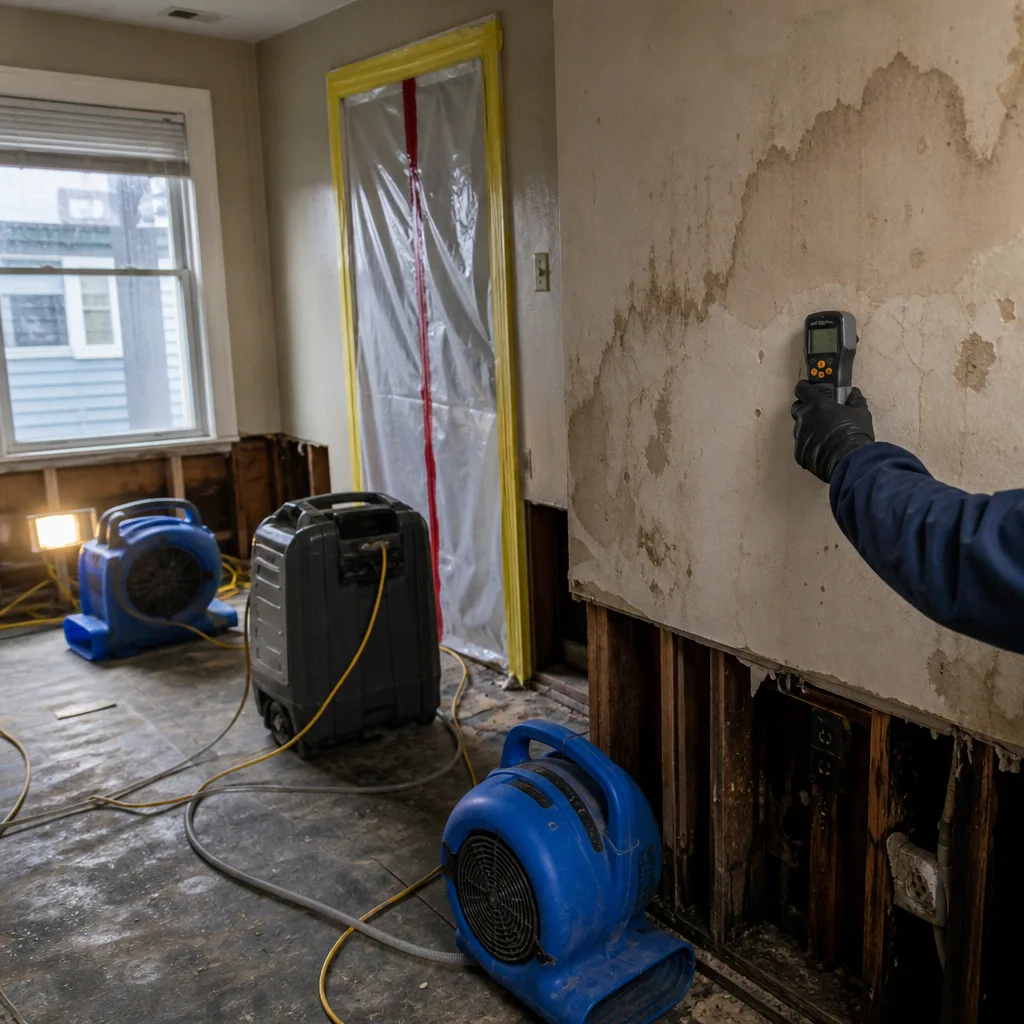 Before
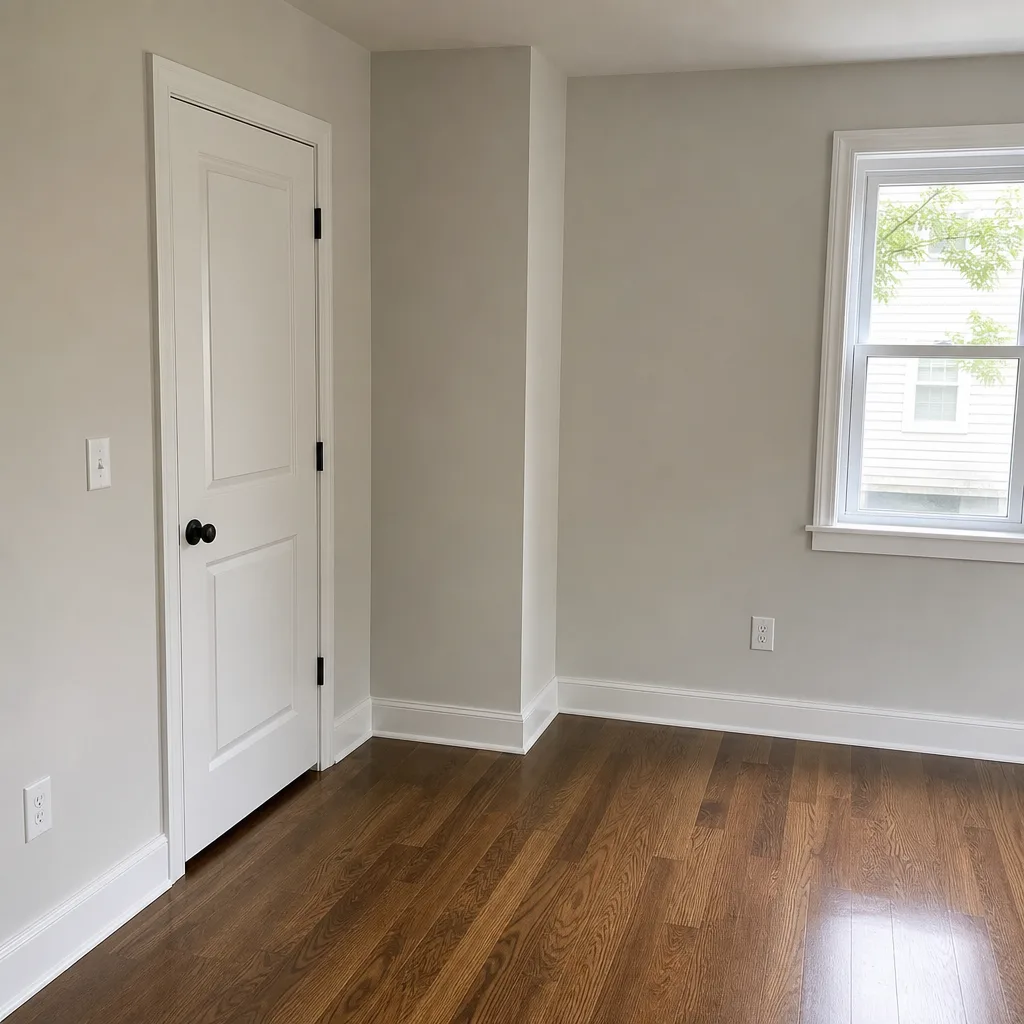 After
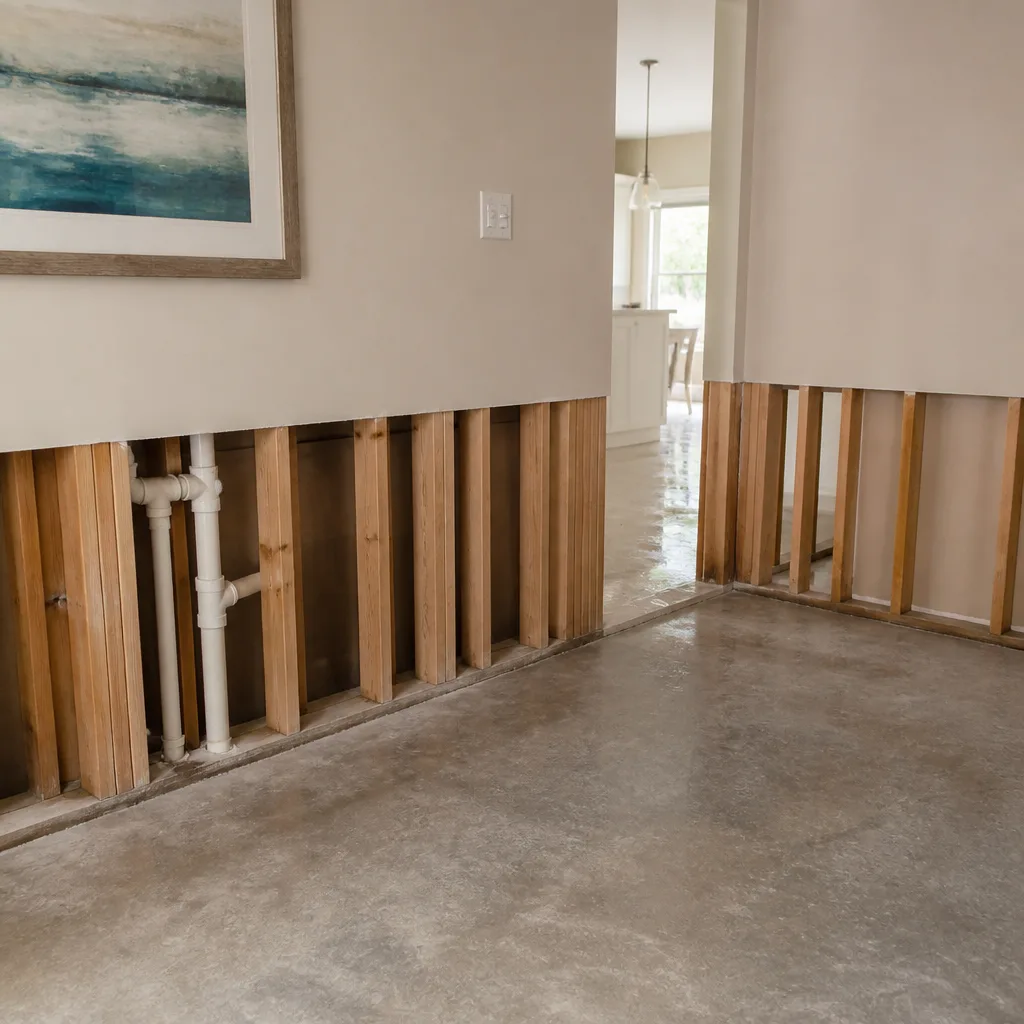
After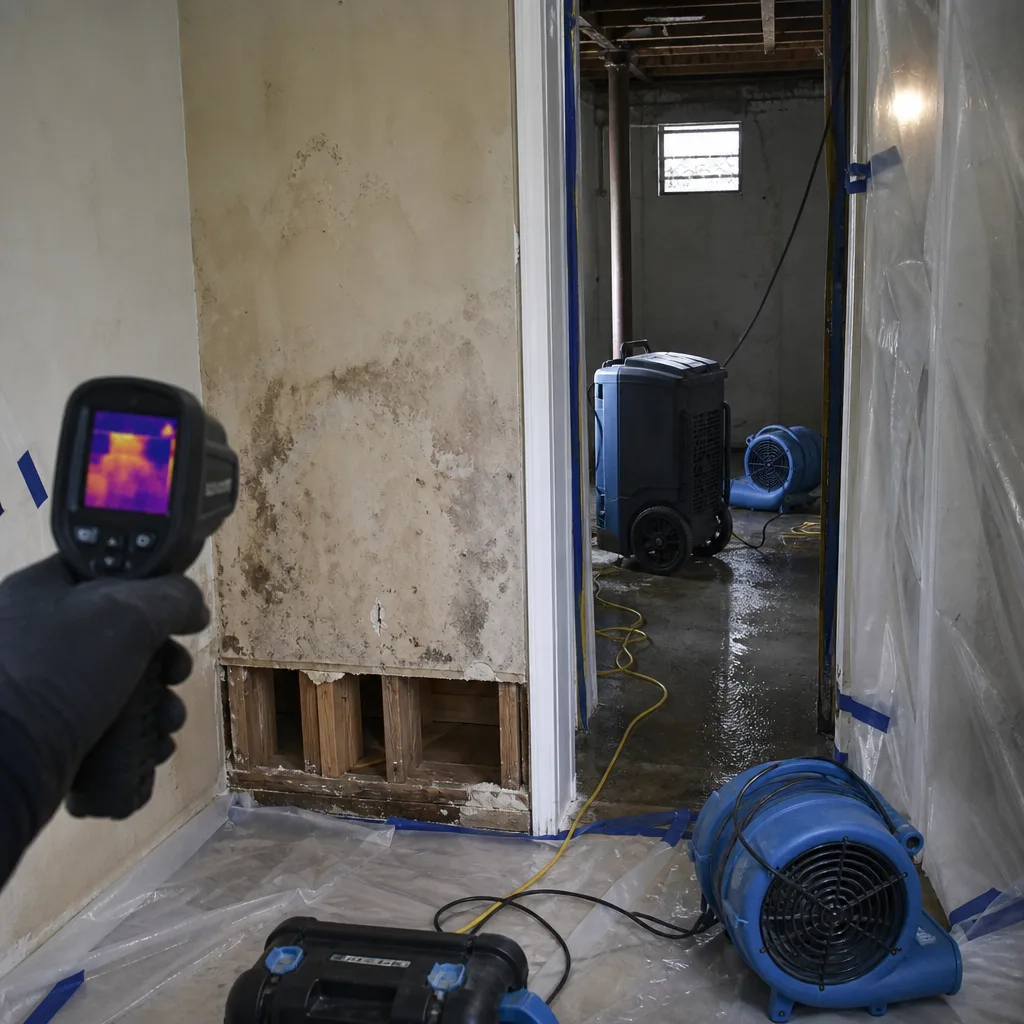 Before
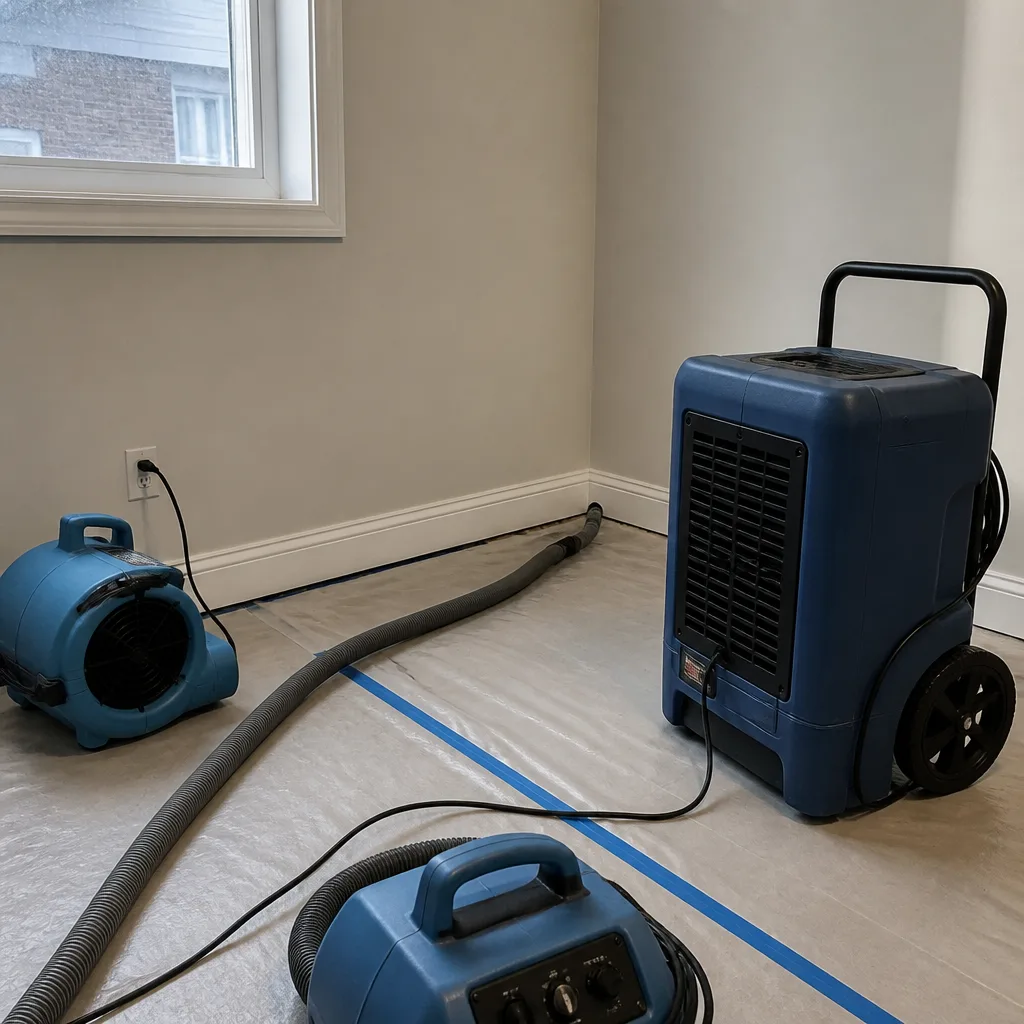 After
After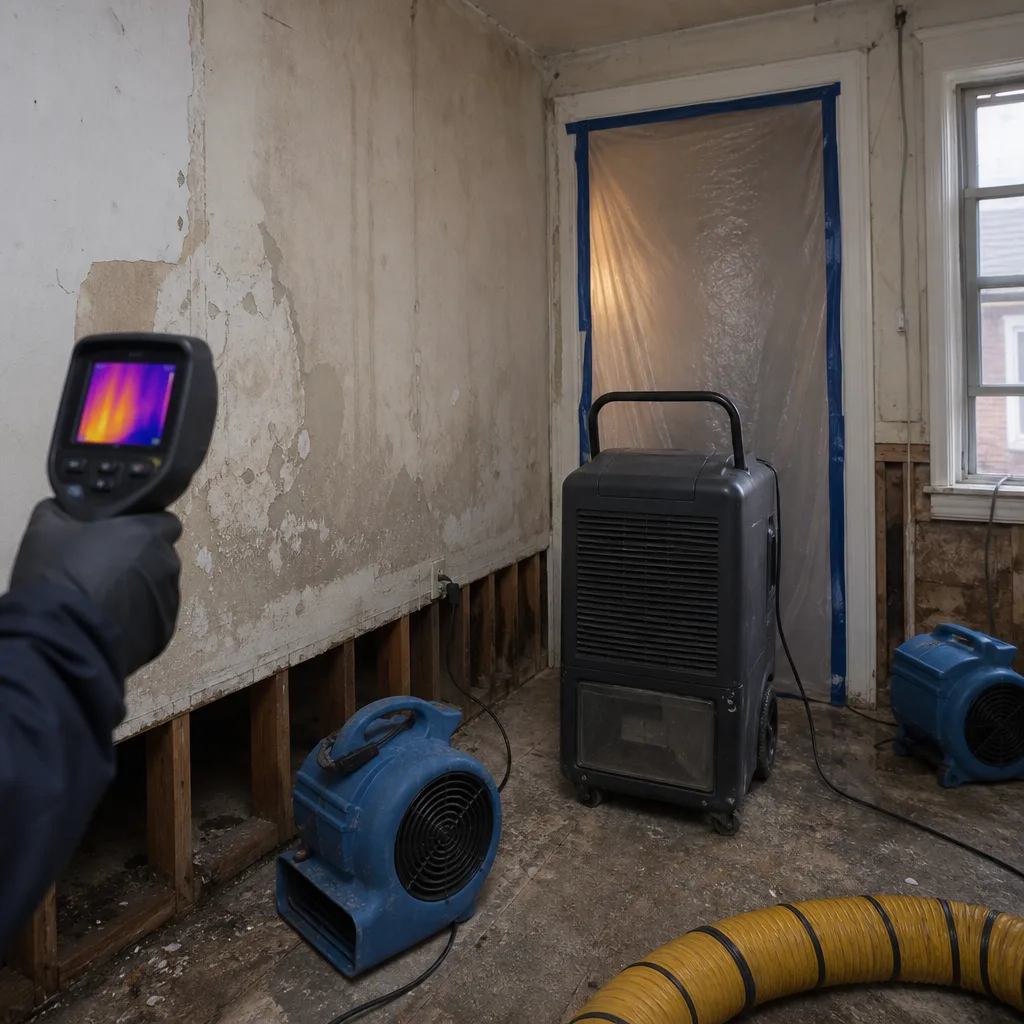 Before
 After
After24/7 Emergency Commercial Restoration in Kearny
Commercial water or fire damage in Kearny needs a response measured in minutes, not days. We answer live at (201) 903-9581 around the clock, and Wade’s crews can be on site anywhere from the Passaic Avenue corridor to the industrial blocks off Schuyler Avenue inside 45 minutes of your call. The first hour sets the boundary between a cleanup and a rebuild. Standing water in a Kearny storefront basement starts wicking into drywall, inventory shelving, and original lath-and-plaster walls immediately. Smoke from an electrical fire in a pre-war mixed-use building moves through shared wall cavities fast. We start with a free visual inspection, take moisture readings on the spot, and get extraction running the same visit.
Understanding Commercial Restoration Severity in Kearny Properties
Most Kearny commercial losses start with water, and the severity of that water dictates the entire job. Category 1 water comes from a clean source like a broken supply line. Category 2 carries contaminants from washing machines or sump failures. Category 3 is the one Kearny knows too well: Passaic River backflow, sewage-tinged storm surge, or anything that has sat in a flooded basement longer than 48 hours. That water carries pathogens and demands full containment, disposal of porous materials, and antimicrobial treatment before drying even begins. The complication in Kearny is the age of the buildings. Many commercial spaces off Kearny Avenue and along Midland Avenue sit in structures built before 1940, with balloon framing and original plaster walls that hold moisture stubbornly. Moisture mapping becomes essential because water travels laterally behind plaster long after the visible puddle is gone. A basement that flooded during a routine nor’easter can still be reading 22 percent moisture content in the wall cavities two weeks later. That hidden moisture is where mold starts, and in Kearny’s slow-draining Meadowlands soil, the drying window is shorter than it should be.
Why Kearny Property Owners Choose Wade’s Restoration
- 45-minute response commitment. We know a flooded basement off Belgrove Drive cannot wait for a regional franchise to route a truck from another county. Our crews stage locally and head out as soon as you call.
- A live person answers, always. No voicemail tree, no answering service. You get a human who can make decisions on the phone, including Wade himself most hours of the day and night.
- IICRC-certified crews. Our lead restoration techs hold WRT, FSRT, and AMRT certifications. We run Dri-Eaz dehumidifiers, XPOWER air movers, and Phoenix drying systems, and we know how to read the data they produce.
- Free visual inspection, no obligation. We will tell you if a Category 1 basement cleanup is straightforward or if you are looking at full pack-out and structural drying. No charge for that assessment in our county.
- Direct insurance billing. We document from hour one, bill your carrier directly, and deal with the adjuster so you do not spend your week relaying messages between two sides.
- One team, start to finish. Extraction, drying, demolition, rebuild. You will not get handed off to a subcontractor crew you have never met.
Our Commercial Restoration Process
Inspection & Assessment
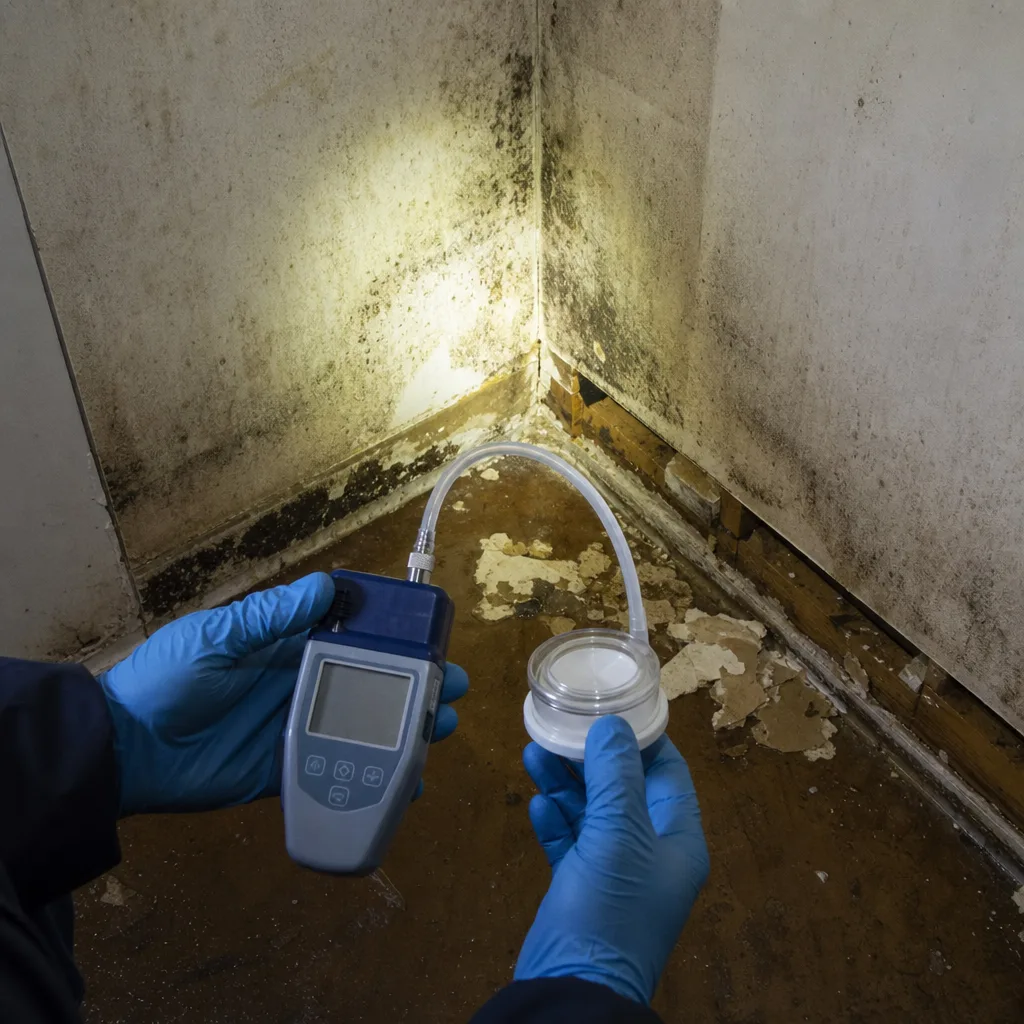
We walk the full space, map moisture with thermal imaging and hygrometers, and identify the water category. You get a written scope before any work begins, including what we can restore and what has to go.
Extraction & Stabilization
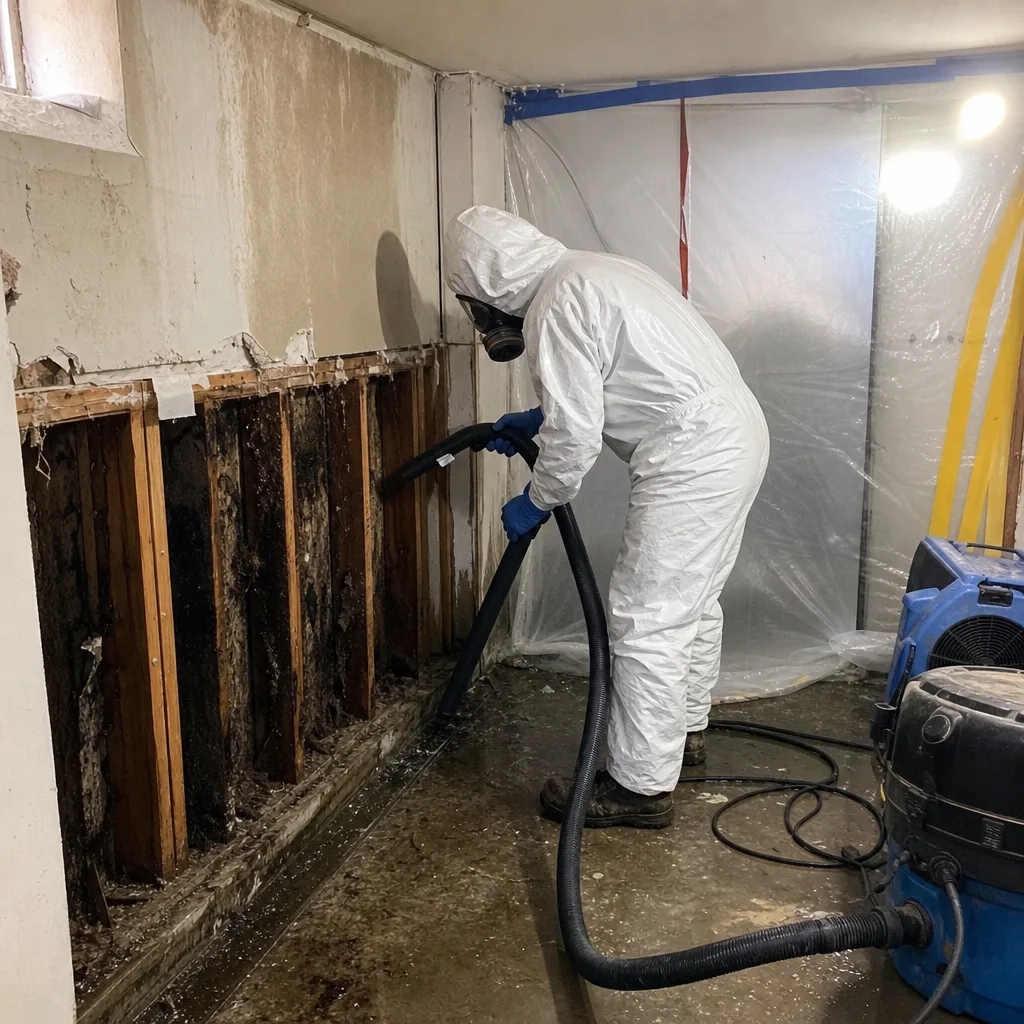
Standing water comes out with truck-mounted and portable extractors. We remove saturated materials that cannot be saved and set up containment to keep the mess off your inventory and equipment.
Drying & Dehumidification
We place Dri-Eaz dehumidifiers and XPOWER air movers according to the moisture map, not by guesswork. Drying logs are recorded every eight hours, and we hand you the full log when the job closes.
Cleaning & Sanitization
Category 2 and 3 water jobs get antimicrobial treatment on all affected surfaces. We run HEPA air scrubbers during and after demolition to keep mold spores and dust out of your breathing air.
Document & Inventory Recovery
We pack out salvageable inventory, freeze-dry critical documents when possible, and provide a full itemized list with photos for your insurance claim. Mold inside cardboard is usually invisible, so we assess before we discard.
Repairs & Restoration
Once drying is verified, we rebuild. Studs, drywall, paint, flooring, electrical. The same crew that extracted the water puts your space back together, and the 90-Day Done Right Promise covers the entire job.
Need Emergency Commercial Restoration in Kearny Now?
Crews minutes away, answering live 24 hours a day. The sooner we start, the less it costs.
Working With Your Insurance Company
We have handled hundreds of commercial claims where the property owner was caught between an adjuster asking for documentation and a restoration company asking for a deposit. You have enough to manage without becoming a claims processor. Our team photographs every affected area before demo starts, records moisture readings daily, and produces a line-item scope that speaks the language adjusters expect. We talk to your carrier directly, including walking the site with the adjuster when they come out. If you already have a written estimate from another restoration firm, bring it to us for a free second opinion. No charge, and if we can do the same work for the same or less, we will tell you straight.
What We Provide Your Insurer
- Thorough documentation of the loss
- Photos of all damage, room by room
- Moisture readings and drying logs
- A detailed, line-item scope of work
- Direct coordination with your carrier
Built for Kearny’s Loss Calendar
Kearny’s flood risk is not a summer problem. It runs year-round, and the calendar changes the damage profile. January and February bring deep freezes that burst supply lines in unheated basements and rear additions, especially in commercial buildings where the heat gets dialed down overnight. March and April produce spring thaw and saturated ground, which pushes groundwater into below-grade stockrooms through cracks in century-old foundations. Summer thunderstorms dump inches of rain in an hour, and Kearny’s combined sewer system backs up under the load, sending Category 3 water up through floor drains in basements along Kearny Avenue and Johnston Avenue. September through November is nor’easter season, when tidal backflow from Newark Bay pushes up the Passaic and Hackensack rivers and floods commercial basements even without a named storm. Sandy in 2012 and Ida in 2021 were not outliers in Kearny. They were extreme versions of the routine flooding this town lives with.
Commercial Restoration Across Kearny’s Neighborhoods
Kearny’s commercial restoration needs shift block by block. Along Kearny Avenue, the storefronts sit in connected row buildings where water from one unit’s burst pipe migrates through party walls into the neighboring shop within hours. We have dried out three adjacent basements from a single supply-line failure on that corridor. The blocks around Midland Avenue and the high school mix older retail with two- and three-family attached homes, and here we see the same flooded-basement pattern as the residential stock: repeated inundations, deferred drying, and mold already established behind plaster before the latest event. Down near South Kearny and the industrial stretch off Schuyler Avenue, the buildouts are larger and the losses tend to involve warehouse stock, loading docks, and flat roofs that channel water directly into interior drains that back up during heavy rain. The Arlington section in the north end has its own pattern of pre-war mixed-use buildings with finished basement units that sit at or below the storm-sewer overflow threshold. Each neighborhood needs a slightly different approach, but the constant is speed. Water does not care which side of the Belleville Turnpike you are on.
Specialized Commercial Restoration Services We Offer in Kearny
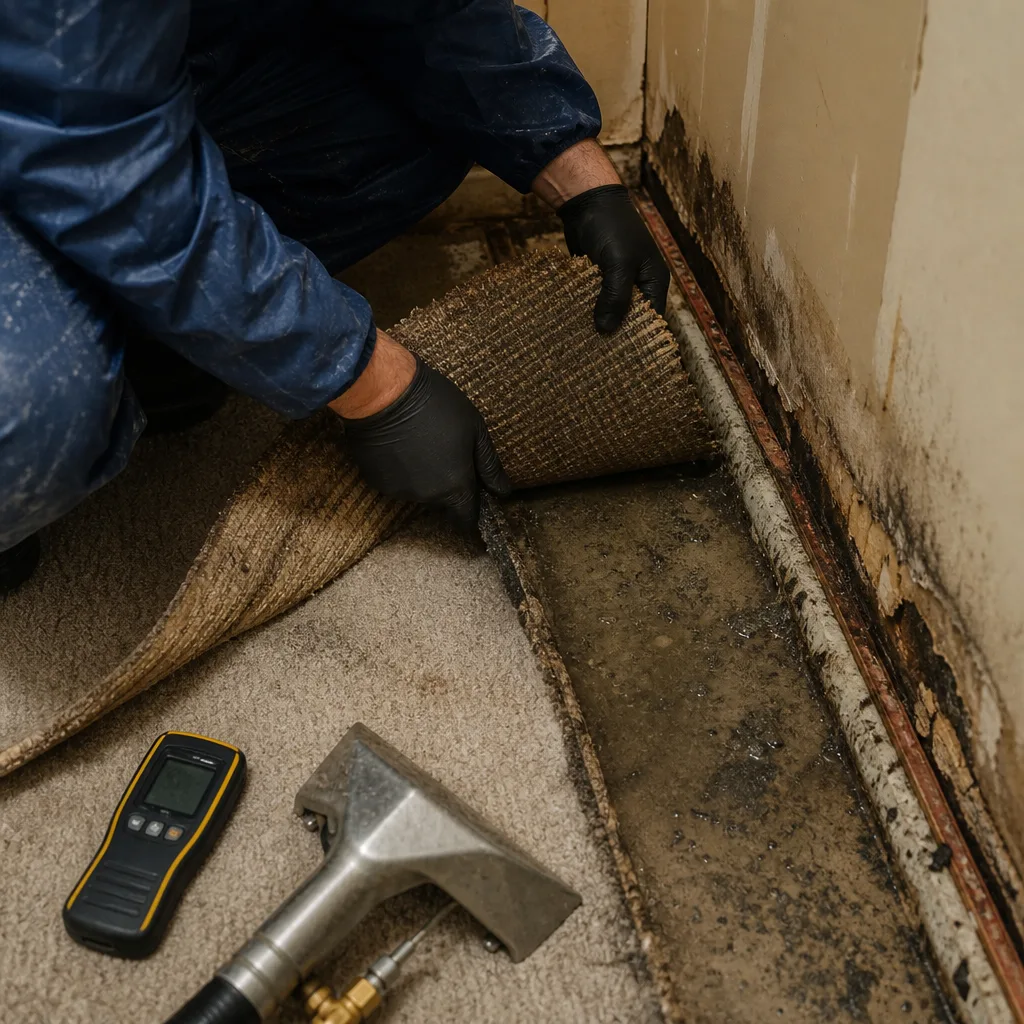
Multi-Unit & HOA Restoration
Kearny’s two- and three-family attached stock means a water event rarely stays in one unit. A basement sump failure in the rear unit of a three-family row house can put Category 2 water into the shared boiler room and the adjacent unit’s storage area. We scope the whole building, not just the unit that called. For HOAs, we coordinate directly with the property manager and the board, provide per-unit documentation, and bill the master policy where applicable.
Business Interruption Minimization
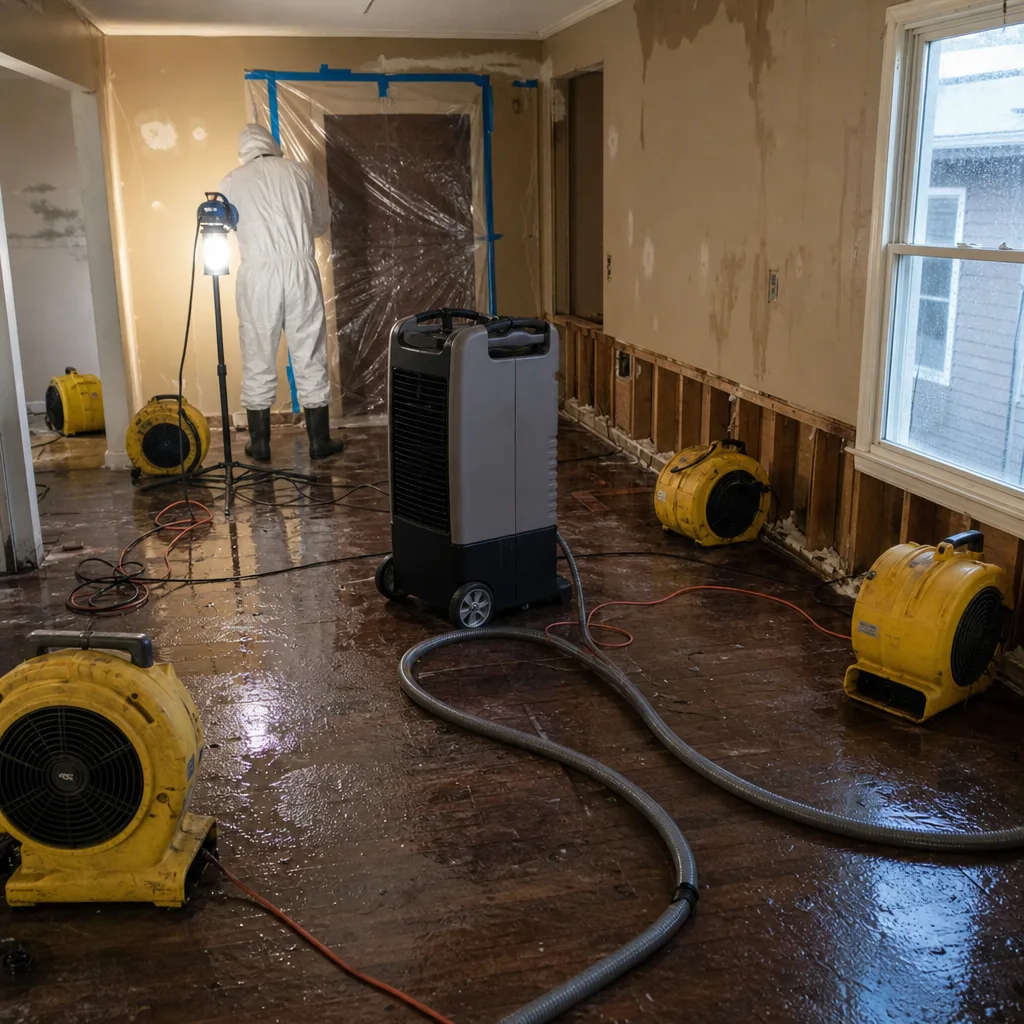
Every day a Kearny storefront is closed costs real money. We work nights and weekends when needed, set up temporary barriers so you can operate the front of the shop while we dry the back, and give you a realistic timeline from day one. Our field vignette: on a three-story mixed-use row off Kearny Avenue, our crews extracted two feet of Passaic River backflow from a basement stockroom, then set up four Dri-Eaz dehumidifiers, seven XPOWER air movers, and a Phoenix drying system. Moisture mapping showed 28 percent in the original lath-and-plaster walls, so we cut containment and completed structural drying over five days, logging readings every eight hours until the shop could restock.
Document & Inventory Recovery
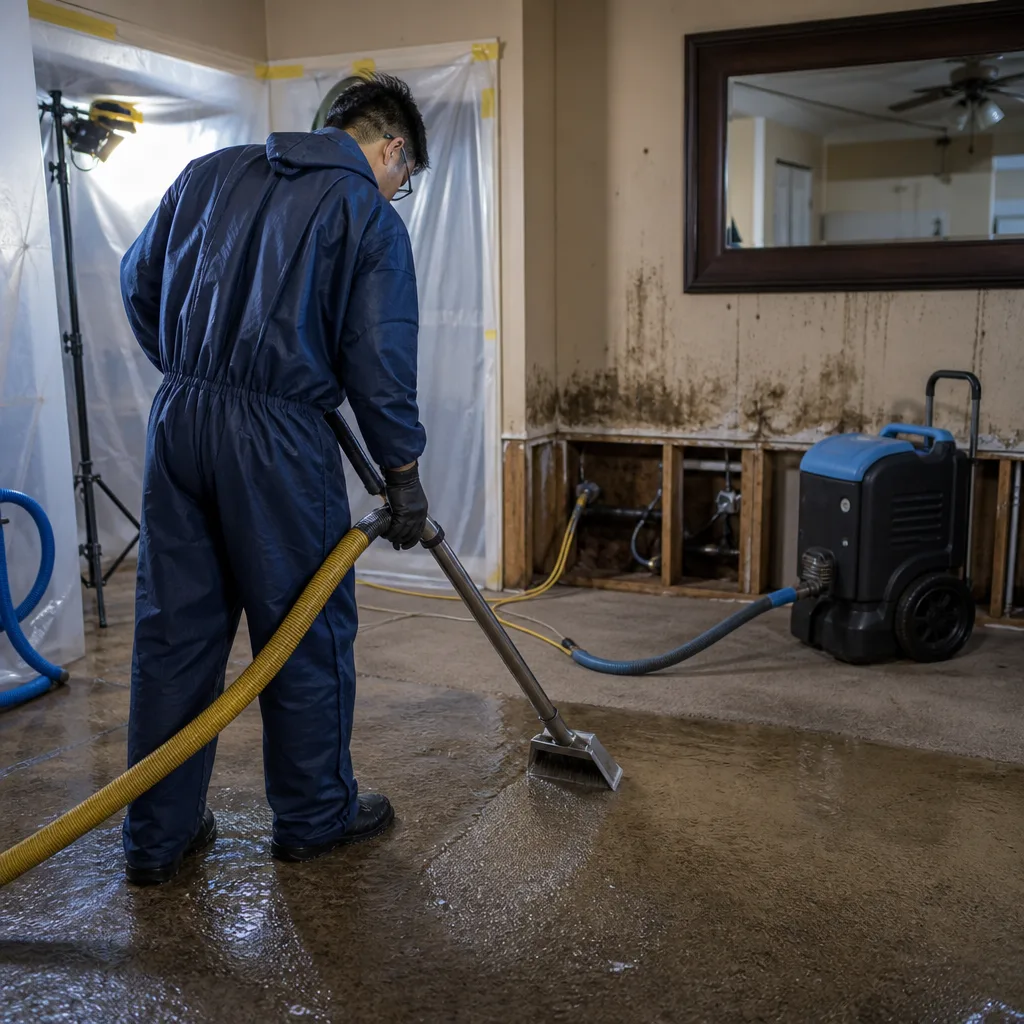
Paper files, retail stock, electronics, and stored inventory all need different handling after a flood. We assess before we discard. Some documents can be freeze-dried. Some inventory can be cleaned and returned to the shelf. But anything porous that has been soaked through with Category 3 water is generally a loss, and we will document it thoroughly for your claim rather than hand you back a moldy box and call it saved. That honesty is part of the written scope you get before work starts.
Office & Retail Restoration
Storefronts along Kearny Avenue and offices in the mixed-use buildings off Passaic Avenue share one vulnerability: basement storage and mechanical rooms. When those flood, the retail space above stays open but the furnace, electrical panels, and stock sit in water. We extract fast, dry aggressively, and keep the interruption to the upper floors minimal.
Industrial Facility Cleanup
South Kearny has been an industrial district for a century, and many of those buildings sit on filled wetlands with slab floors that heave and crack. Water pushes up through those cracks during any sustained rain. We handle large-scale extraction, debris removal, and structural drying for warehouse and light-manufacturing spaces, including coordinating with your operations team to keep loading dock traffic moving where possible.
Large-Loss Response
When a fire in one Kearny rowhouse commercial building spreads smoke and water damage through three adjacent storefronts, that is a large-loss event. We bring additional crews, run multiple drying systems, and manage the claim as a single coordinated job so the insurance process stays sane.
What happens when you call
- 1
A real person answersNo phone trees - you reach a local pro.
- 2
You get an upfront price rangeHonest numbers before anyone is dispatched.
- 3
A background-checked tech heads outLicensed & insured, dispatched right away.
- 4
You approve before work beginsNothing starts until you say go.
Commercial Restoration Costs in Kearny, NJ
What does commercial restoration actually cost in Kearny? A straightforward Category 1 water extraction in a single storefront basement with no structural damage typically runs $2,500 to $5,500. A Category 3 sewer or river backflow job with containment, antimicrobial treatment, and full structural drying lands between $8,000 and $18,000 depending on square footage and how much plaster has to come out. Fire and smoke restoration with soot cleanup, ozone treatment, and partial rebuild starts around $12,000 and can exceed $60,000 on a large mixed-use structure. Document and inventory recovery is priced per item and per box, usually $40 to $150 per carton depending on the salvage method. Multi-unit and HOA jobs get scoped per unit so each owner and the association can see exactly what their portion is. The free visual inspection is the fastest way to get a firm number. We will tell you what the insurance carrier is likely to cover, what is out of pocket, and what can wait.
We Also Serve Cities Near Kearny
We handle commercial restoration throughout the Meadowlands basin and the Passaic River corridor, including Harrison, Jersey City, Secaucus, and Union City. Same crews, same live answer, same written scope before work starts.
Serving Kearny, NJ - Our Local Coverage Area
We’re based in the Kearny area and know this community well. Use the map below to see our service coverage - if you’re nearby, we can almost certainly help.
Kearny Commercial Restoration Questions, Answered
How does Kearny’s flood-plain location change the scope of work for a commercial restoration job versus a town like Harrison?
Kearny sits between the Passaic and Hackensack rivers on filled wetlands, which means floodwater enters commercial basements during routine rain events, not just named storms. In Harrison, a flooded basement is often a one-time event from a broken pipe. In Kearny, we frequently find water damage layered over incompletely dried prior events, with mold already colonized in wall cavities behind original lath and plaster. The scope grows because we have to remove what the last job left behind before we can dry the current event.
What’s the difference between Category 1, 2, and 3 water in a Kearny basement that floods during a tidal backflow event?
Tidal backflow from Newark Bay pushing up the Passaic River is Category 3 water. It carries sewage, salt, and whatever the river picked up on the way in. Category 1 is clean water from a supply line. Category 2 has some contamination, like washing machine discharge. Category 3 requires full containment, disposal of porous materials like drywall and cardboard stock, and antimicrobial treatment. If your floor drain backed up during a storm, treat it as Category 3. Call (201) 903-9581 and we will assess it on site.
Can you restore a Kearny commercial space that has flooded multiple times in one year, or does it eventually need to be gutted?
We can restore most spaces, but there is a point where repeated Category 3 flooding makes remediation cost more than a full gut. If a basement has flooded three or four times in a single year and the previous dryings were incomplete, mold can be deep in the studs and joists. The honest answer sometimes is that the space needs to be stripped to the frame, sealed, and rebuilt with flood-resistant materials. We will tell you that before we sell you another drying cycle. The free visual inspection is how you find out.
How do you handle business interruption during a commercial water extraction in Kearny’s older row-house storefronts?
We work around your operating hours when possible. In a row building off Kearny Avenue, we can contain the basement, run drying equipment down there, and keep the retail floor open above. Air scrubbers run quietly enough for customers to browse. If the damage is on the sales floor itself, we give you a day-by-day timeline before work starts so you can reschedule deliveries, notify staff, and tell customers when you will reopen.
What happens to documents and inventory in a Kearny storefront after a sewer backup?
Sewer backup is Category 3 water, which means paper and cardboard are almost always a loss. We photograph everything before it moves, provide an itemized documentation list for your claim, and freeze-dry any document that is irreplaceable and not fully saturated. Hard goods like tools or sealed containers can often be cleaned. Open shelving, wooden crates, and anything fabric generally cannot. The assessment happens before disposal, and your adjuster gets the full record.
How fast can you actually get to a commercial property in Kearny?
We commit to 45 minutes from your call for emergency response anywhere in Kearny. Crews stage locally, and Wade himself answers the phone most calls. If it is two in the morning and the Passaic is rising, someone is already awake and on the road.
Will my commercial insurance cover flood restoration in Kearny?
Most commercial policies cover water from broken pipes and sewer backups, but flood coverage from river surge or tidal overflow is usually a separate policy through the National Flood Insurance Program. We bill your carrier directly for covered losses, deal with the adjuster on site, and give you a clear picture in writing of what is covered and what is not before work starts.
What should I do in the first 30 minutes after a commercial flood in Kearny?
Cut power to the affected area if you can do it safely from a dry panel. Move what you can lift out of the water. Do not run fans or air movers before extraction, because that pushes humid air into wall cavities and makes things worse. Then call (201) 903-9581. The first 30 minutes are about preventing the damage from spreading, and every minute after that is about drying what is already wet.
Written by Wade Ferris, Owner at Wade’s Restoration, serving Kearny and the Meadowlands basin since 2007.