

Free visual inspection and a written scope of work before any mitigation begins - photos, moisture readings, and drying logs go in your claim file
The scope we write is the scope we bill. Anything new gets shown to you, in writing, before we touch it.
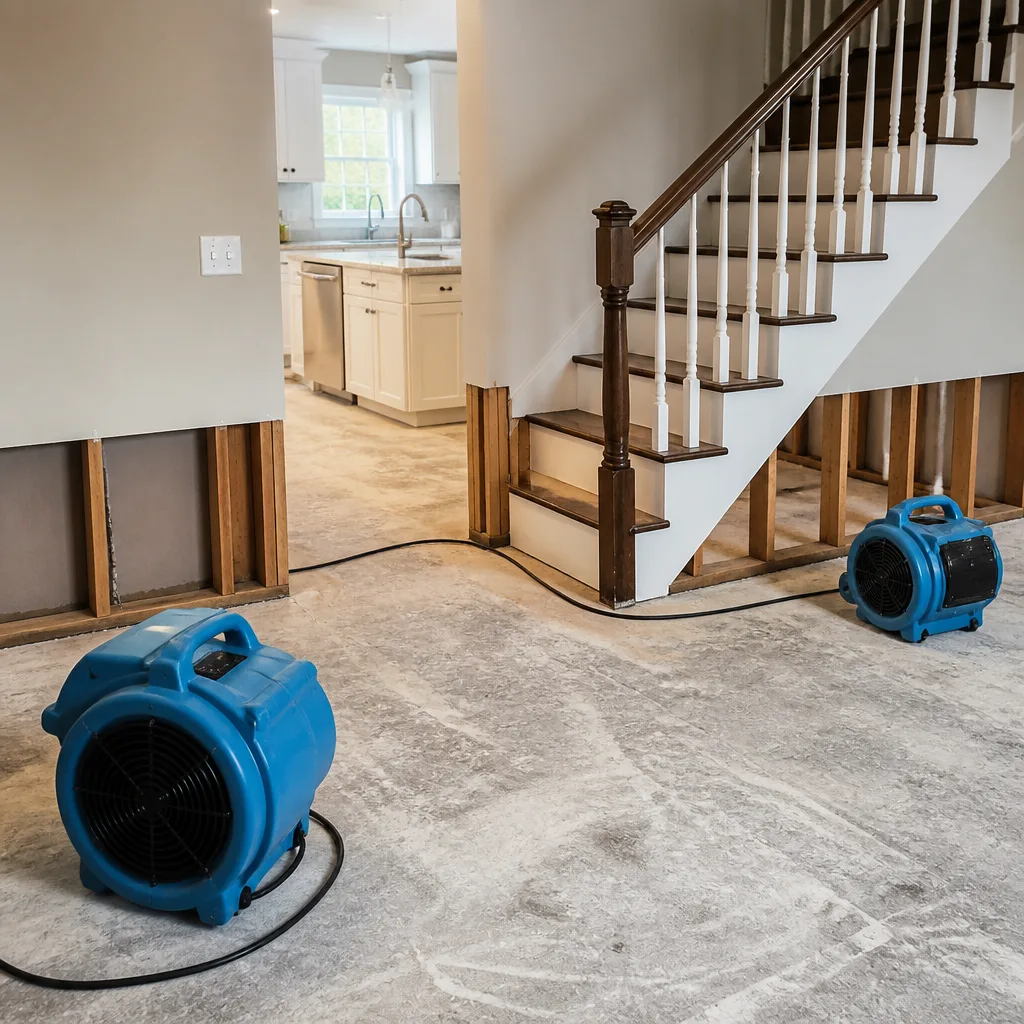
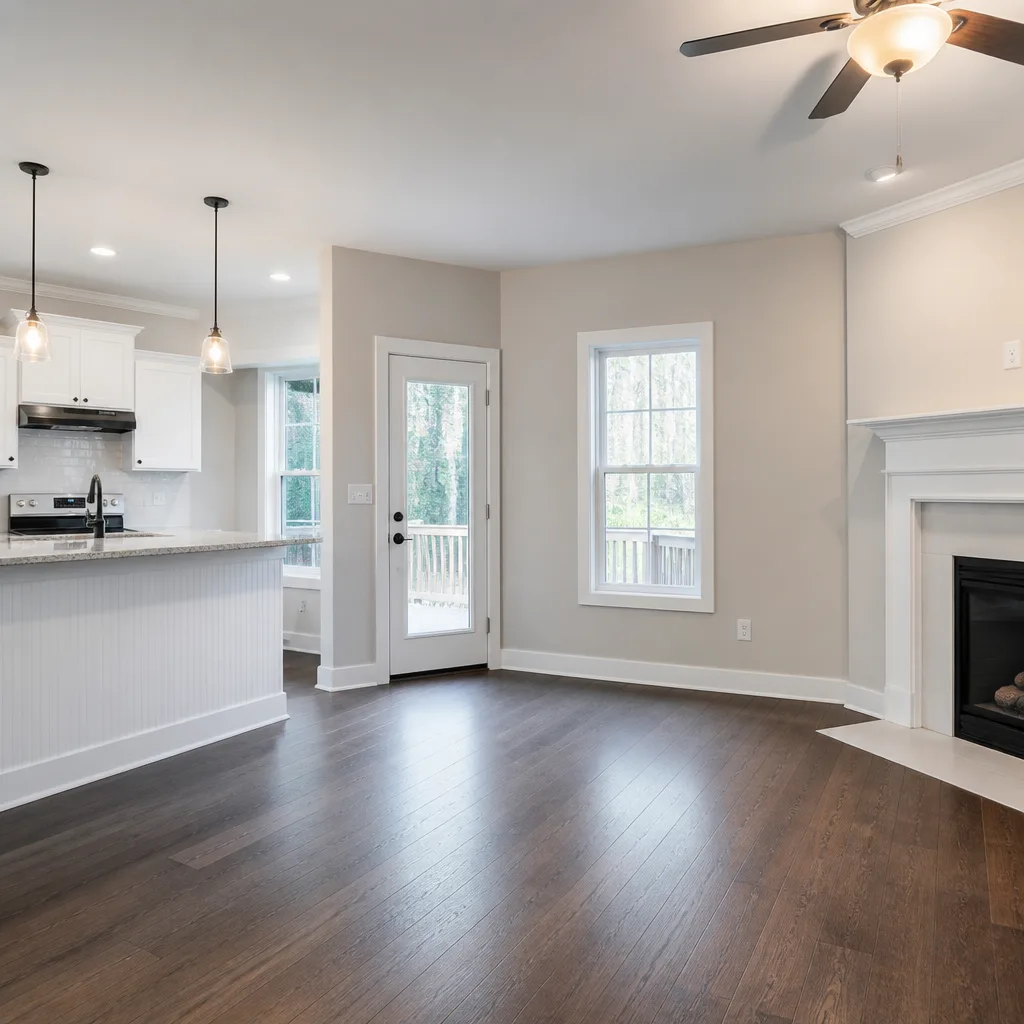
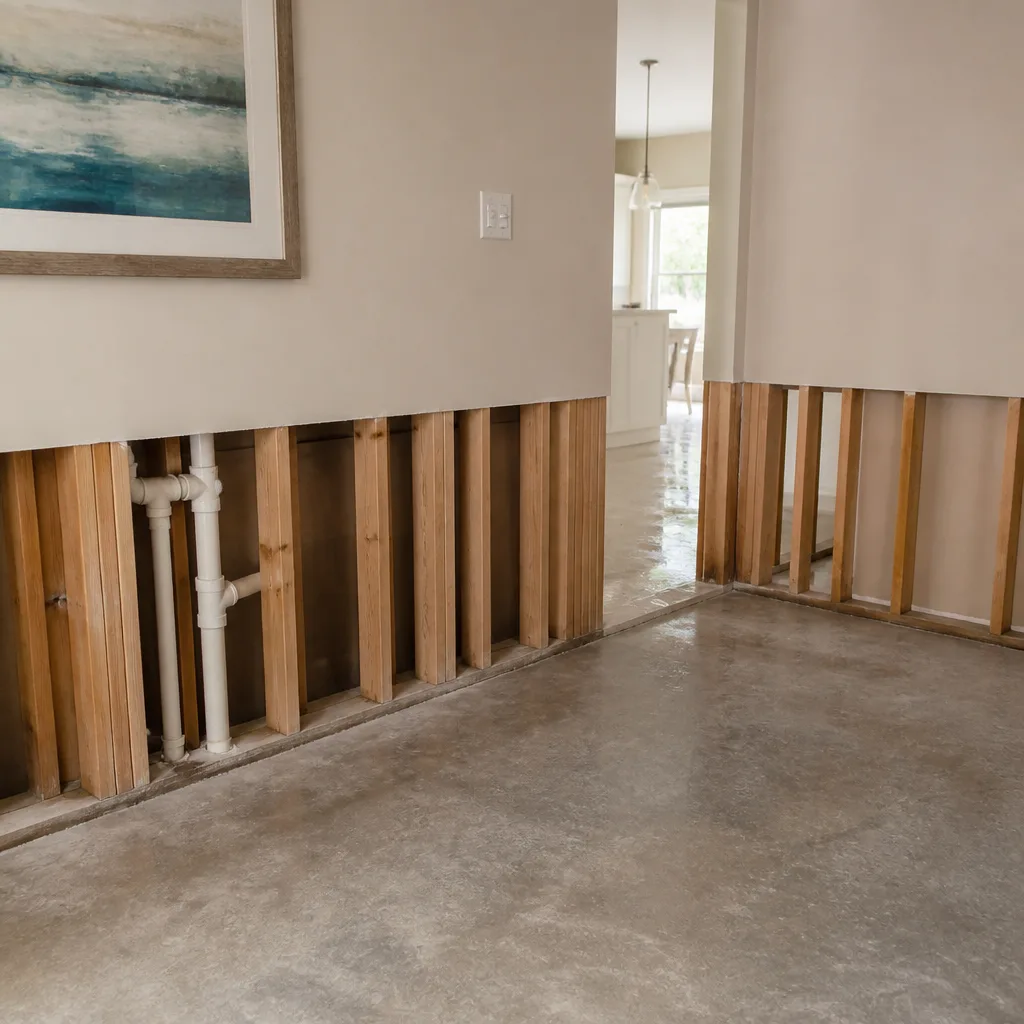
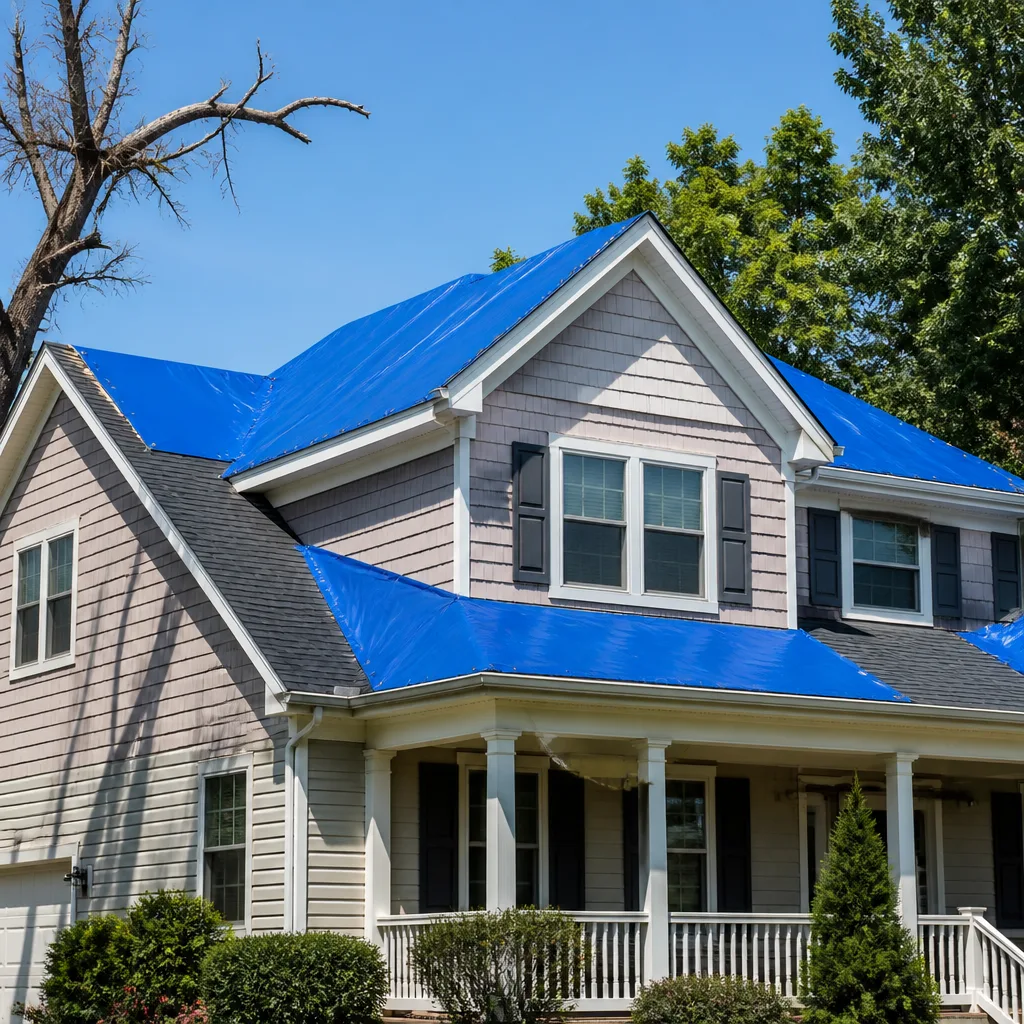
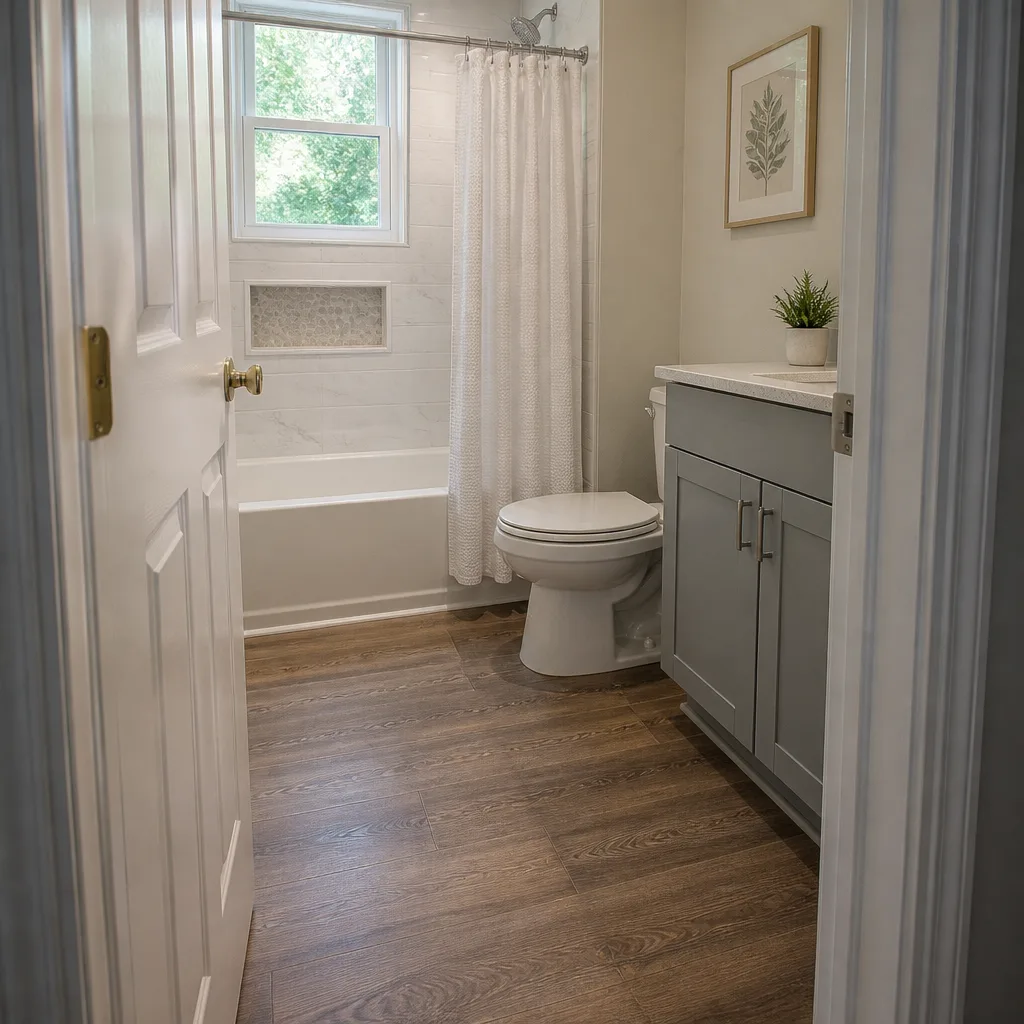
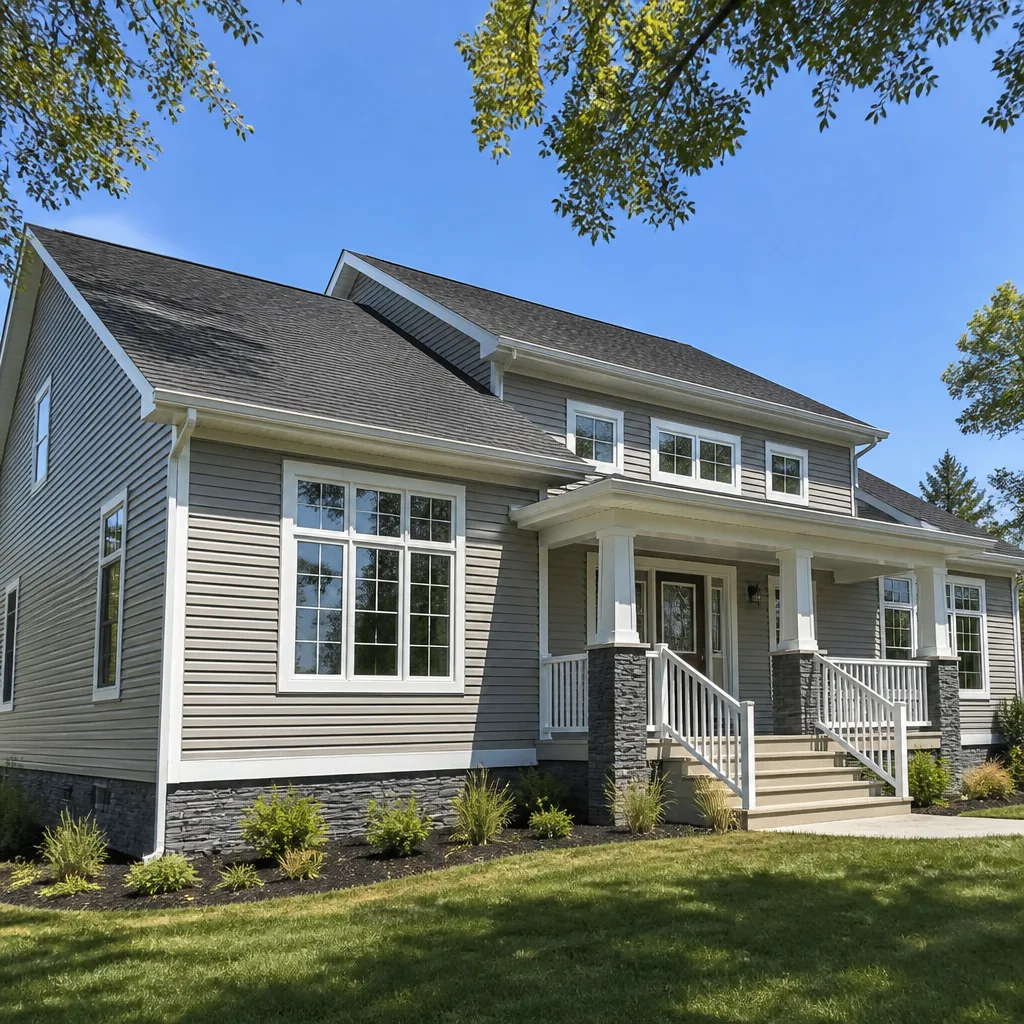
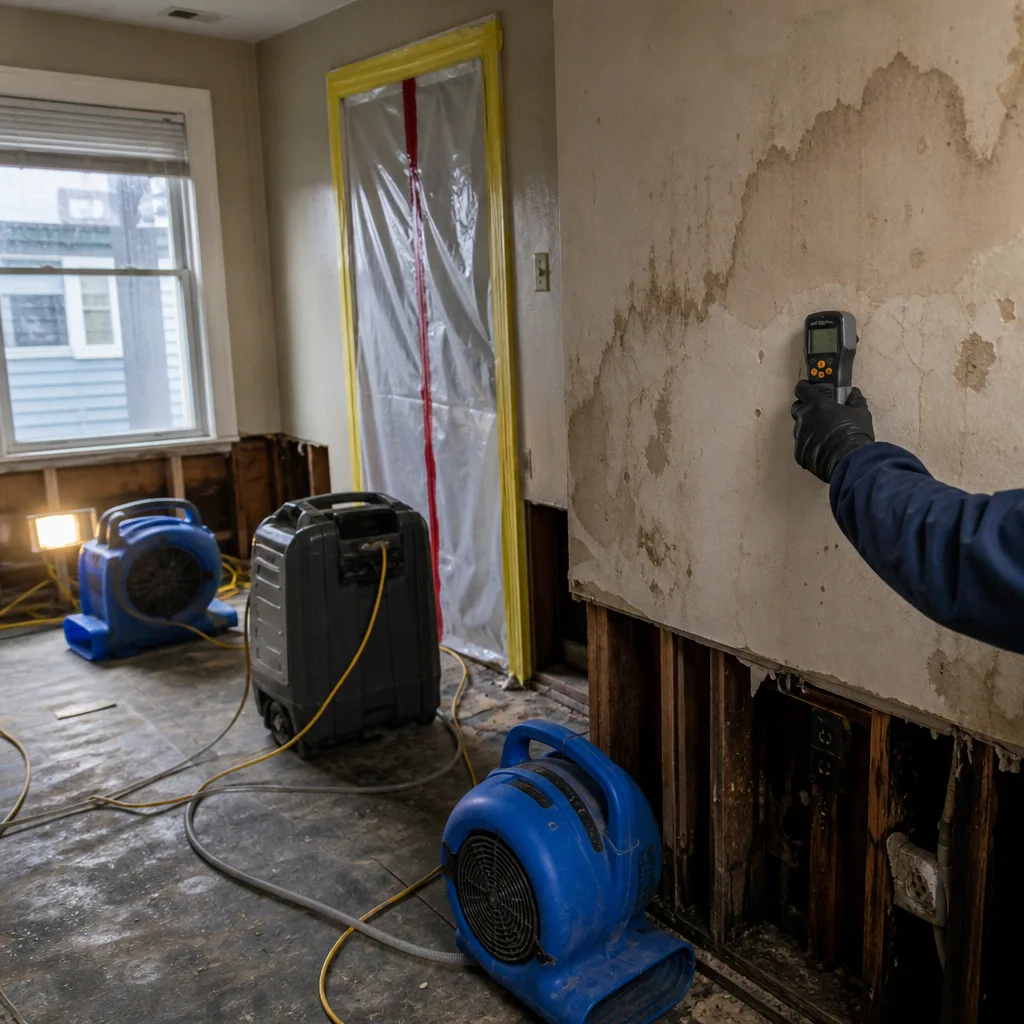 Before
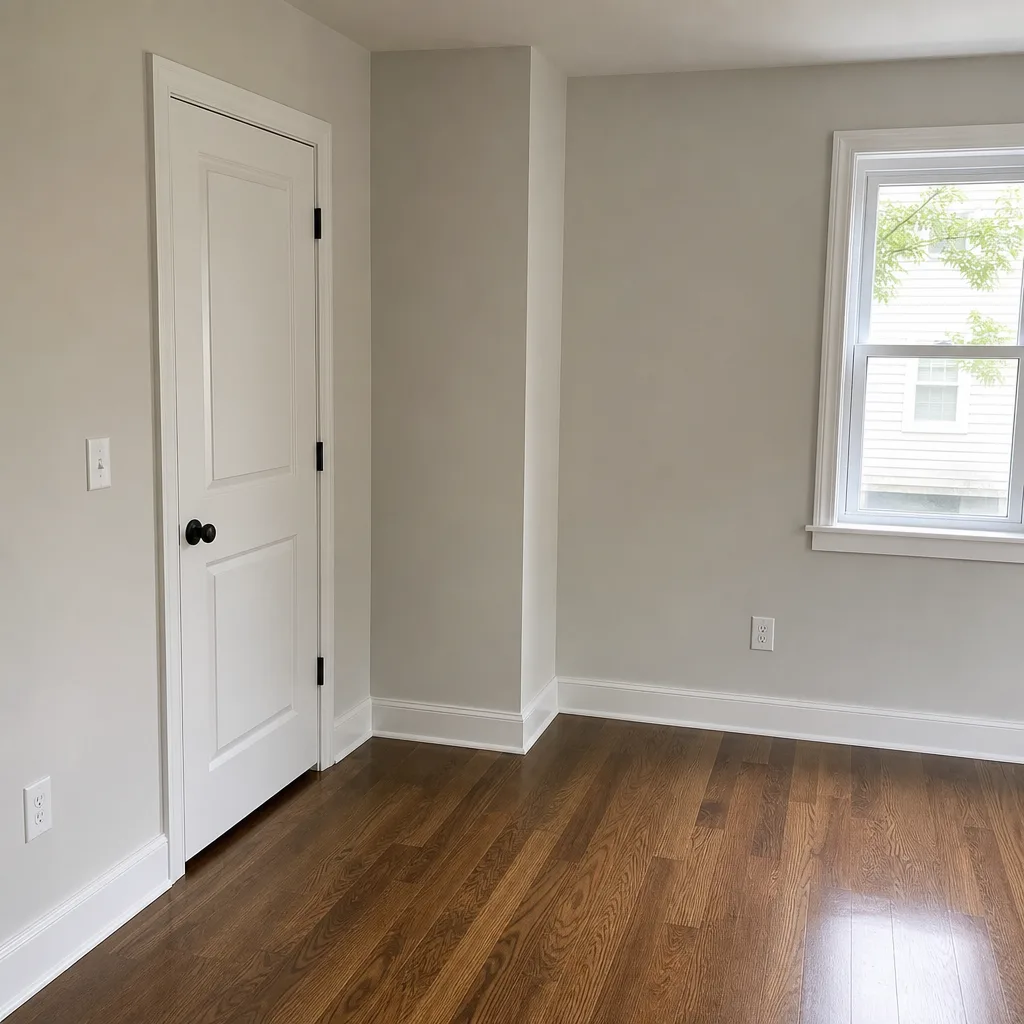 After
After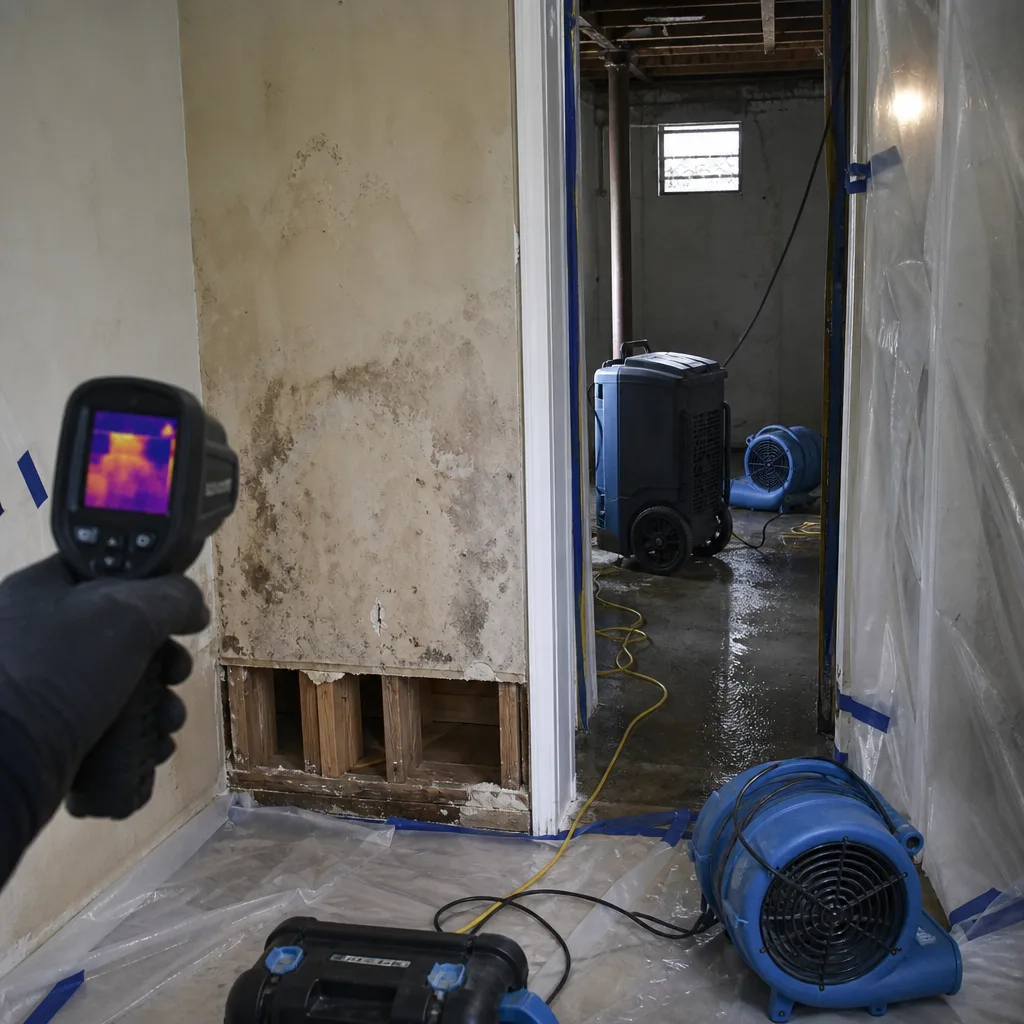 Before
 After
After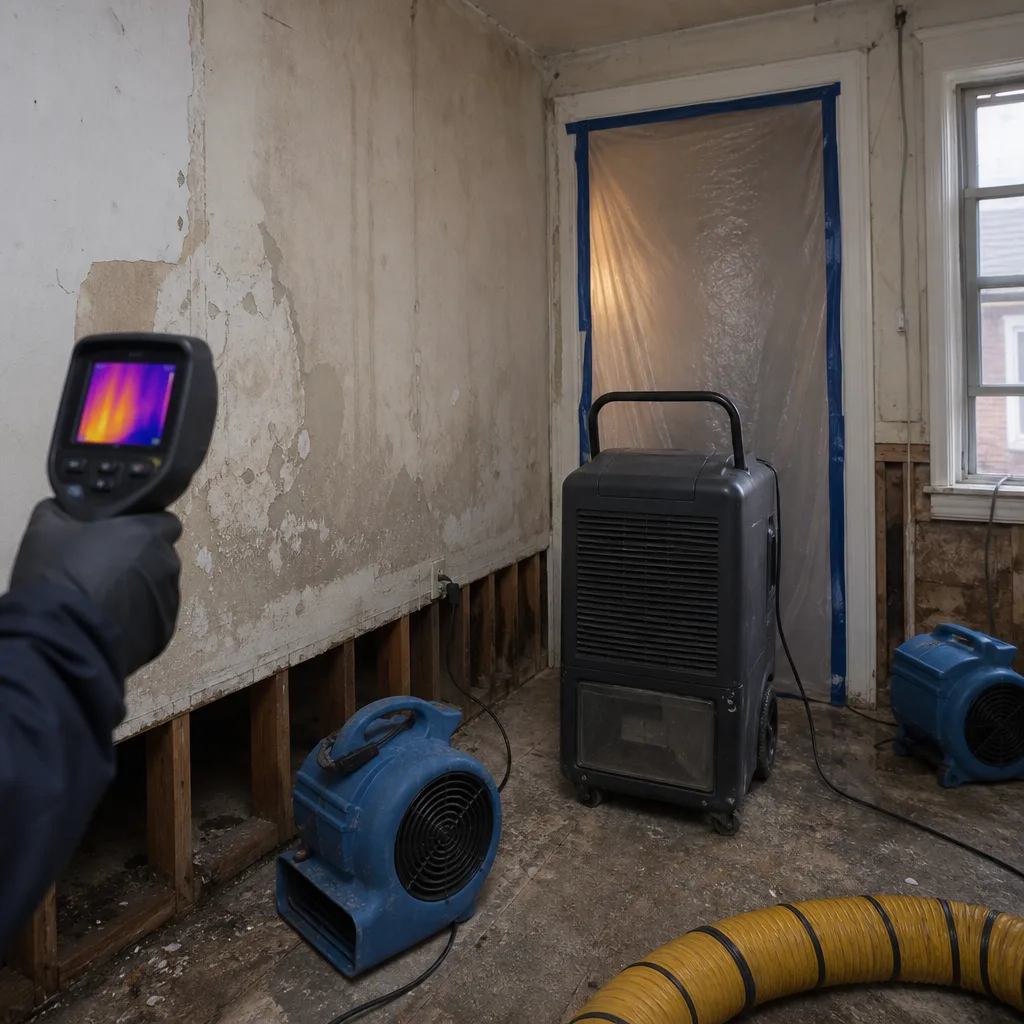 Before
 After
After24/7 Emergency Water Damage Restoration in Kearny
Water damage restoration in Kearny typically costs $1,800-$6,500 depending on the size of the affected area, water category, and how long standing water sat before extraction. Most flooded basements in Kearny’s two- and three-family row houses run $2,400-$4,200 when we’re called within the first few hours. That number climbs fast if water sits overnight. Call (201) 903-9581 now. Wade answers his own phone, 24/7, and he can have extraction running inside the hour because he’s minutes from Kearny Avenue, Belgrove Drive, and the river wards, not an hour up the Turnpike.
The first hour is what saves floors, drywall, and the framing behind them here. Kearny basements built on filled wetlands don’t drain naturally, so water that comes in stays in. By hour six, baseboards are wicking. By hour twelve, drywall’s soaked through and mold spores that were already dormant in the wall cavities from the last flood start blooming. Every job starts with a free visual inspection and moisture readings, and Wade hands you the full drying log when the job’s done. That’s not something most companies do.
Understanding Water Damage Restoration Severity in Kearny Properties
Kearny’s housing stock changes how we classify and treat water damage, and knowing the category matters for safety and for what insurance will cover. Category 1 water is clean, like a burst supply line. Category 2 is grey water, like a washing machine overflow that’s sat for a while. Category 3 is black water, which is what most Kearny basement flooding actually is. The combined sewer system backs up through floor drains, the Passaic River tops its banks, and what comes in carries sewage, silt, and whatever the Meadowlands water table pushed up through the slab. That water is dangerous and the affected materials get cut out and bagged for disposal, not dried and reassembled.
The severity question is also structural. Most row houses off Kearny Avenue and along the river wards are balloon-frame construction from the 1920s through the 1940s. In balloon framing, wall cavities run continuously from the basement sill up to the attic. Water that enters the bottom plate can wick up two or three stories through the same cavity, and no fan placed in the basement will reach it. That’s why we run moisture mapping with penetrating meters and thermal imaging on every structural drying job here, not just when the surface feels wet. If the cavity reads above 16% moisture content at the sill plate, we’re pulling baseboard, not guessing.
Why Kearny Property Owners Choose Wade’s Restoration
- Wade himself is on the road in under 45 minutes for water emergencies in Kearny. Not a call center. Not a subcontractor. The man whose name is on the truck.
- A live person answers the phone at 2 a.m. Wade carries his cell and answers it. No voicemail, no automated tree, no “please hold for the next available representative.”
- IICRC-certified crews doing the drying work, with WRT and ASD certifications on structural drying and water extraction. That’s the industry’s real standard, and we hold it.
- Free visual inspection, no trip charge inside the county. Wade will walk the basement, take readings, and tell you honestly whether you need full restoration or just a cleaning. A written scope before any work starts, so the number he says is the number you sign.
- Direct billing to your insurance carrier. Wade deals with the adjuster directly, so you’re not the one relaying messages between two sides. Photo documentation from the first hour.
- One team from extraction to reconstruction. You won’t get handed off to a different crew for drywall. The people who dry the basement are the people who rebuild it, and Wade vouches for the whole job with his 90-Day Done Right Promise in writing.
Our Water Damage Restoration Process
Inspection & Assessment
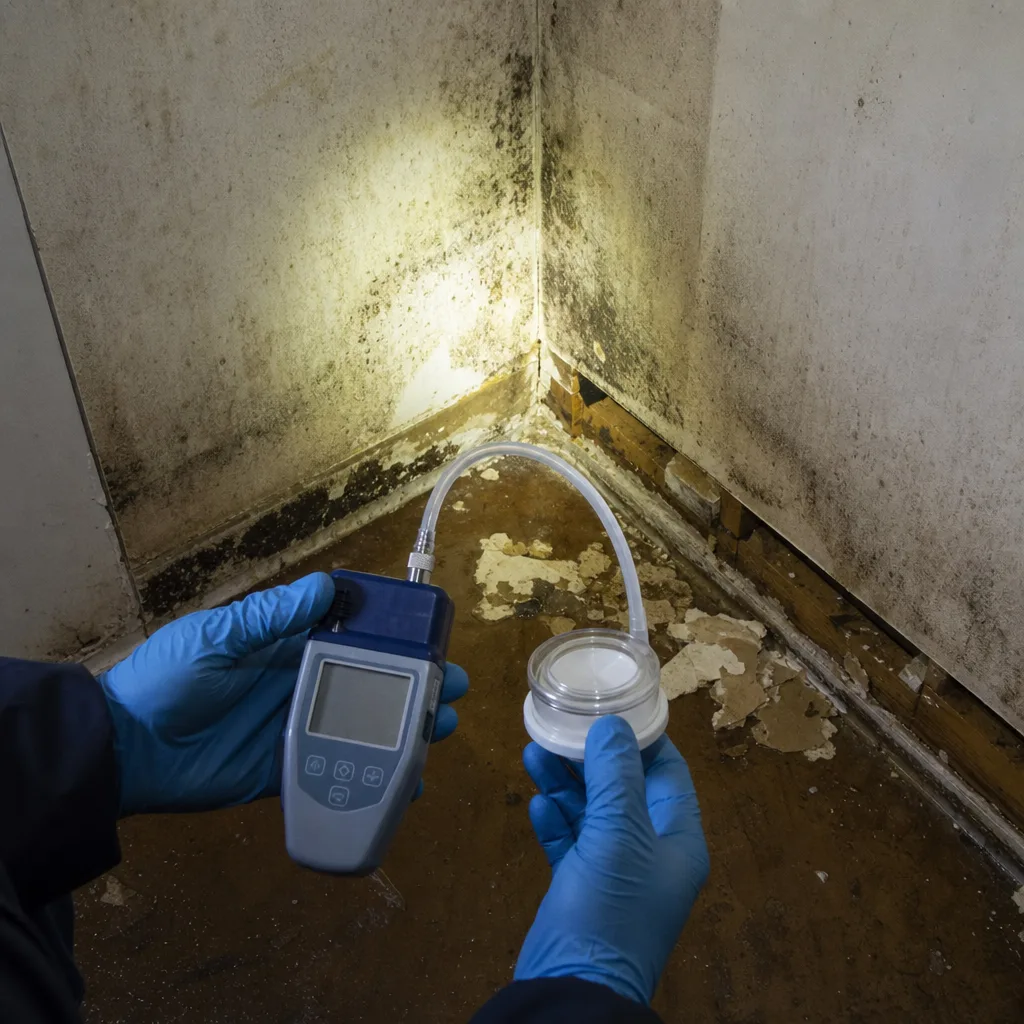
We walk the entire affected area, not just where water is visible. Thermal imaging and penetrating moisture meters find what’s hiding behind plaster, under flooring, and inside wall cavities. Every finding goes into a written scope you see before any work begins.
Extraction & Stabilization
We get standing water out fast with truck-mounted and portable extraction units. On Kearny basement jobs, we’re often cutting baseboard and pulling saturated carpet pad within the first two hours, because wait time here means black water wicks deeper into sill plates and framing.
Drying & Dehumidification
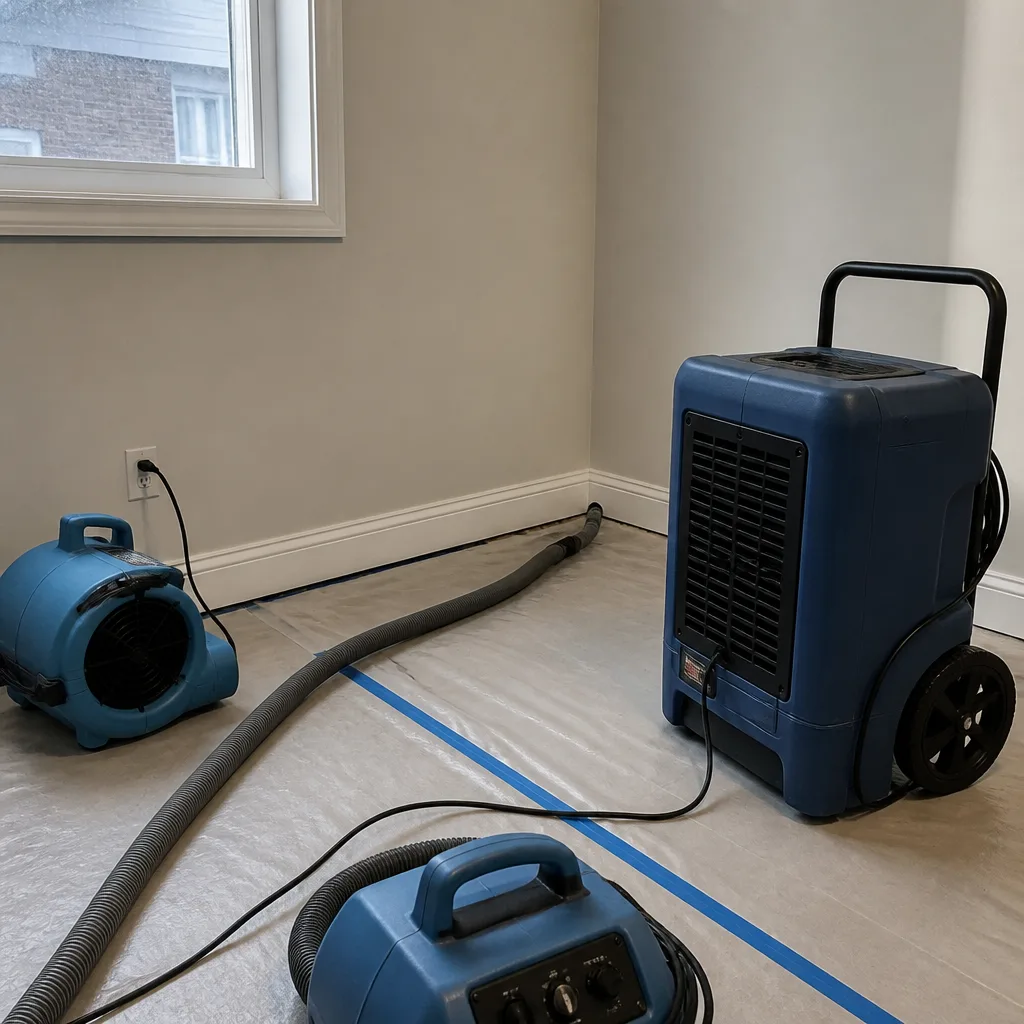
Dri-Eaz dehumidifiers and XPOWER air movers are set up in a calculated pattern, not scattered randomly. Drying chambers get built where needed. Wade’s crew takes moisture readings every single day and logs them all, so you see the numbers dropping, not just a patched wall.
Cleaning & Sanitization
After drying, all affected surfaces get cleaned and treated. For category 3 water from Kearny’s combined sewer overflows, this means antimicrobial treatment on framing and removal of contaminated materials that can’t be properly cleaned.
Mold Prevention & Verification
Because Kearny basements re-flood so often, we verify the cavity is actually dry before closing anything up. Sub-slab readings, wall cavity checks, humidity logs. The last thing we want is to rebuild a wall that still has moisture trapped behind it, waiting to bloom the next time the Passaic rises.
Repairs & Restoration
New drywall, flooring, trim, paint. Whatever got removed gets rebuilt, and the whole job carries the 90-Day Done Right Promise. If it’s not right, Wade makes it right. That’s in writing on every water damage restoration contract.
Need Emergency Water Damage Restoration in Kearny Now?
Crews minutes away, answering live 24 hours a day. The sooner we start, the less it costs.
Working With Your Insurance Company
Most homeowners in Kearny have coverage for sudden and accidental water damage, but the claim process goes smoother when documentation exists from the very first hour. That’s where we come in. Wade’s Restoration photographs every affected area before a single piece of drywall gets pulled. We log moisture readings, catalog damage room by room, and build a line-item scope of work that adjusters recognize because it follows the same estimating standards their own software uses. Wade talks to your adjuster directly, so you don’t have to spend your evenings playing phone tag with a claims department. When the adjuster has questions, he answers them. When they want a re-inspection, he walks it with them. The point is simple: you hired us to fix your house, and dealing with the insurance headache is part of that job.
What We Provide Your Insurer
- Thorough documentation of the loss
- Photos of all damage, room by room
- Moisture readings and drying logs from every single day of the job
- A detailed, line-item scope of work
- Direct coordination with your carrier and adjuster
Built for Kearny’s Loss Calendar
Kearny’s water damage season doesn’t look like most towns. January and February bring deep freezes that burst supply lines in uninsulated rim joists and rear additions, especially in the older balloon-frame homes near the river. When a pipe lets go in a two-family house on Schuyler Avenue, it runs down through the floor and soaks both units before anyone notices. March and April bring snowmelt and spring rain, and the water table under Kearny rises until basements that sit below grade start weeping through the slab and cove joint. Water doesn’t pour in, it just appears, a quarter-inch at a time, until storage boxes are ruined and nobody can say exactly when it started.
Summer is thunderstorm season, and Kearny sits low enough that a stalled storm cell over the Meadowlands can overwhelm local storm sewers in 40 minutes, pushing category 3 water up through floor drains. Fall brings the nor’easters and the real Passaic River flooding. Hurricane Sandy in 2012 and Hurricane Ida in 2021 weren’t anomalies here; they were the same problem Kearny has always had, at a bigger scale. Half the calls Wade gets are from people who thought they fixed this last time.
Water Damage Restoration Across Kearny’s Neighborhoods
Kearny is a patchwork of tight residential grids and riverfront blocks, and the flooding pattern changes block by block. The Manor Section, up by Kearny Avenue as it climbs toward North Arlington, sits slightly higher and tends to see more burst pipes and roof leak damage than river flooding, though the old cast-iron drain lines in those prewar homes fail steadily and soak the same basements every few years. Down in the Arlington section closer to the Passaic, it’s different. Those blocks flood during moderate rain events because the combined sewer system backs up into basements through floor drains, and the water that comes in is category 3. Two-family houses near the Kearny border with Harrison and East Newark take it the hardest, because fill soil that was never properly compacted lets water push up through the slab, separate from anything the sewer is doing.
Over near Belgrove Drive and the commercial strips, we see a lot of old three-family walkups where a top-floor supply line bursts and runs down through three finished units before anyone finds the shutoff. Those are the jobs where drying has to happen across multiple apartments at once, with containment separating the unaffected units. And the neighborhood streets north of the Belleville border, the older single-family blocks, have their own pattern: original 1920s foundations, no perimeter drain tile ever installed, and slab moisture that never truly dries. When a homeowner there says the basement smells musty three weeks after the last company finished, it’s because nobody took sub-slab readings before reinstalling the carpet.
Specialized Water Damage Restoration Services We Offer in Kearny
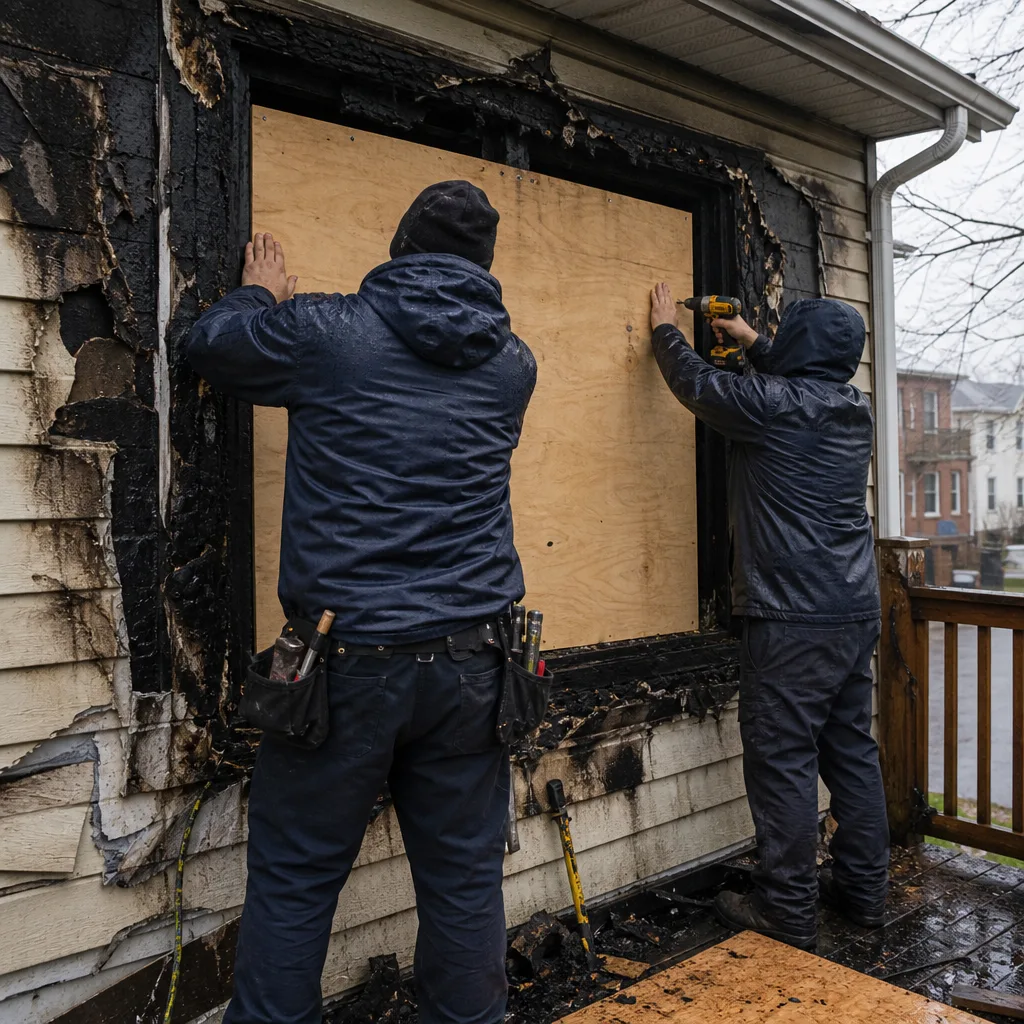
Emergency Water Extraction
Standing water gets truck-mounted and portable extraction units on site within the hour. In Kearny basements, speed matters more than in most towns because black water sitting over filled-wetland soil keeps wicking upward for days if it’s not pulled. We get the water out and cut the wet materials the same day.
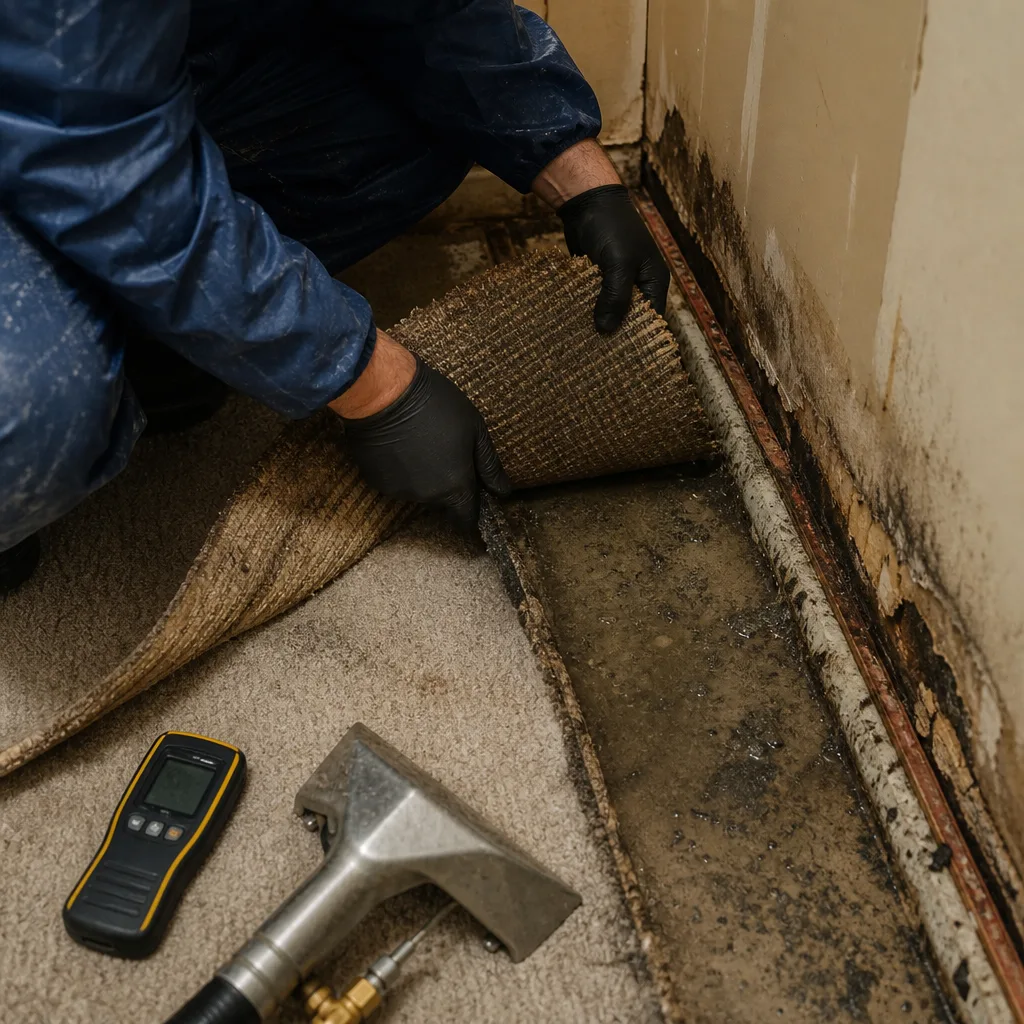
Structural Drying & Dehumidification
Wade’s crews run Dri-Eaz dehumidifiers and XPOWER air movers on a planned pattern, with moisture readings logged every 12 hours until the framing hits pre-loss condition. On balloon-frame row houses, this means checking wall cavities up to the second floor, not just the basement where the water pooled.
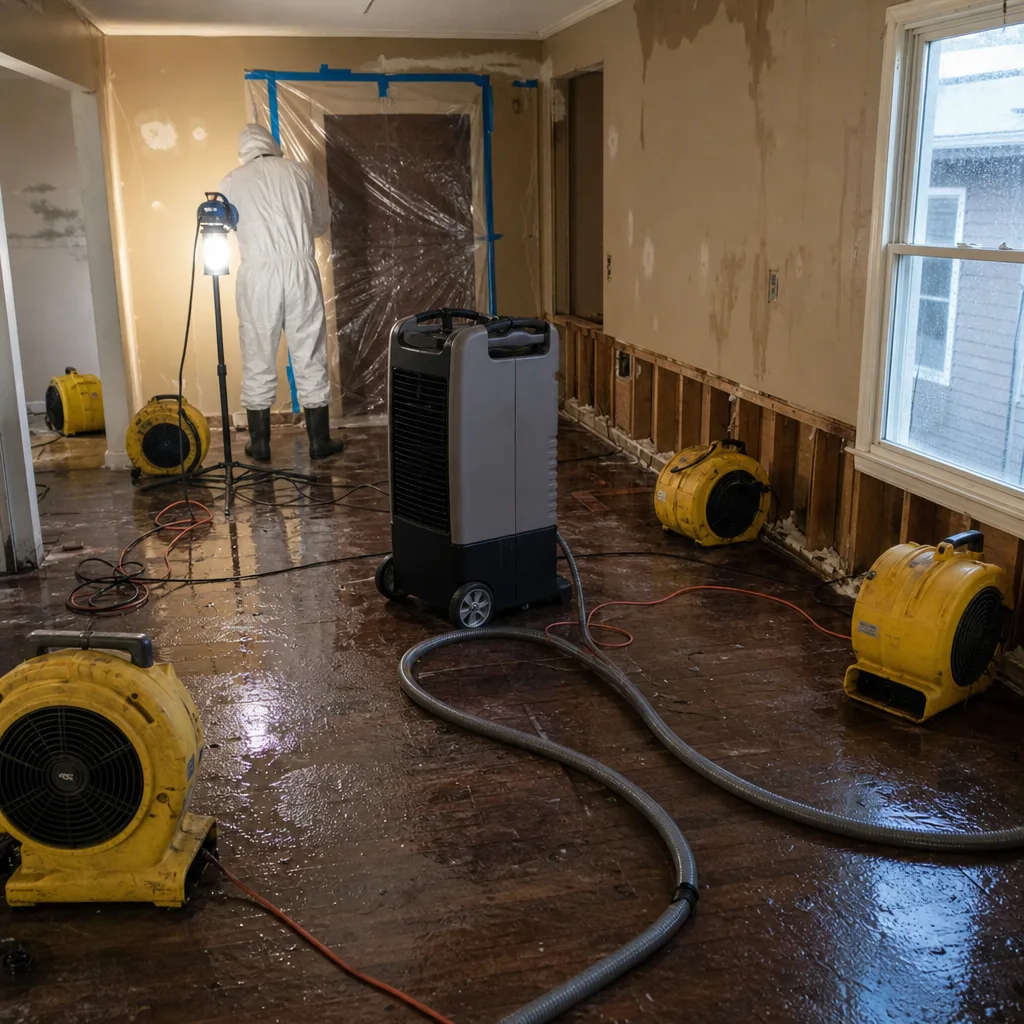
Flood Cleanup
When the Passaic or Hackensack tops its banks and Kearny basements fill with river water, this is a full contamination cleanup, not a mop-up. Category 3 water gets extracted, contaminated materials get cut out and bagged, and the structure gets sanitized before anything gets rebuilt. We have done this in Kearny after Sandy, after Ida, and after every moderate nor’easter that pushed the rivers over their banks in between.
Burst Pipe Restoration
Frozen supply lines and failed cast-iron drains send clean and grey water through walls and ceilings in a hurry. We find the full extent of the migration with thermal imaging, dry the cavities, and rebuild. In older two-family homes, a burst pipe in one unit almost always means damage in the unit below, and we handle both.
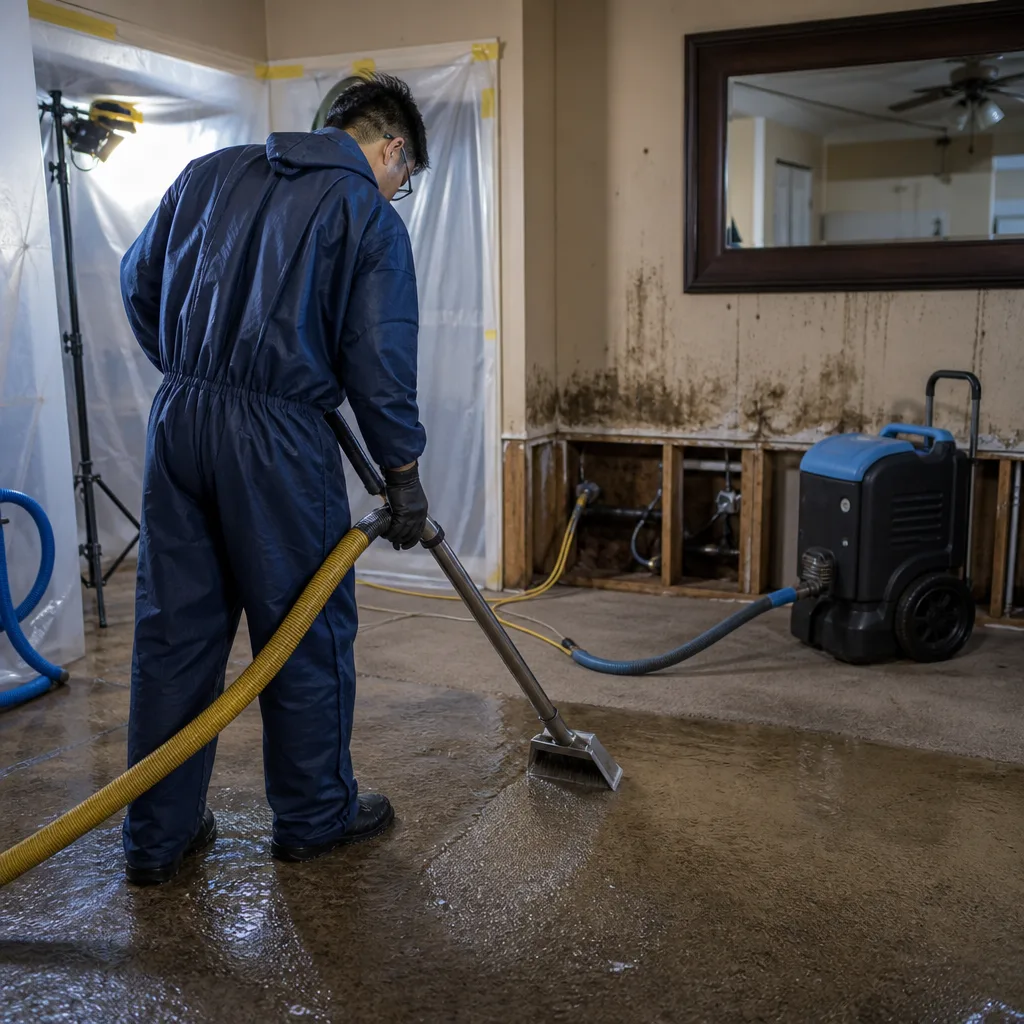
Basement Water Removal
This is the core of water damage restoration in Kearny. Basements below grade, floor drains older than the homeowner, a water table that stays high in the Meadowlands basin. We extract, dry, and verify with sub-slab readings, so the basement is actually dry when we leave, not just dry on the surface.
What happens when you call
- 1
A real person answersNo phone trees - you reach a local pro.
- 2
You get an upfront price rangeHonest numbers before anyone is dispatched.
- 3
A background-checked tech heads outLicensed & insured, dispatched right away.
- 4
You approve before work beginsNothing starts until you say go.
Water Damage Restoration Costs in Kearny, NJ
Actual pricing in Kearny runs from about $1,800 for a contained burst pipe with quick extraction and drying, up to $6,500 or more when black water fills a finished basement and we’re pulling drywall, cutting out contaminated materials, and rebuilding. The big middle ground, which is what most Kearny homeowners face, is $2,400-$4,200. That covers extraction, structural drying, baseboard removal, and repairs on a typical two-family row house basement that took in water from a floor drain backup or a moderate river flood. What moves the price: the water category, the square footage, how long it sat, and whether the wall cavities in balloon-frame construction are involved. Insurance covers sudden and accidental events in most cases, minus your deductible. The free way to know your exact number is to call (201) 903-9581. Wade walks the property, takes readings, and hands you a written scope before any work starts. No obligation, no trip charge inside the county.
We Also Serve Cities Near Kearny
We handle water damage restoration in Harrison, Jersey City, Secaucus, and Union City too. The flood patterns are different in each one. Harrison sits higher in places, Secaucus has its own wetland problem, and the older housing stock in Union City brings different challenges. But the core work, getting water out fast and drying the structure completely, stays the same. If you’re in a neighboring town with water coming in, call (201) 903-9581 and Wade will head out.
Serving Kearny, NJ - Our Local Coverage Area
We’re based in the Kearny area and know this community well. Use the map below to see our service coverage - if you’re nearby, we can almost certainly help.
Kearny Water Damage Restoration Questions, Answered
Why does my Kearny basement flood even during moderate rain when my neighbor in Harrison stays dry?
The short answer is that much of Kearny sits on filled wetlands at lower elevation than Harrison, with a higher water table and storm sewers that back up into basements through floor drains during even moderate rain. When the Meadowlands basin saturates, the water has nowhere to go except up through your slab or back through your drain line. Harrison has more natural high ground and different storm infrastructure. Your neighbor isn’t just lucky; his house sits on better geology.
How soon after a Passaic River flood should I call for water extraction to prevent mold?
You should call within the first 24 to 48 hours, and ideally within the first few hours. Mold spores activate on wet drywall and organic materials within 24 to 48 hours, and Kearny’s extended inundation period, where waters recede slowly over filled-wetland soils, widens the mold growth window. The longer water sits, the more material gets cut out. Call (201) 903-9581 as soon as you can safely access the space.
Is the water in my flooded Kearny basement considered clean, grey, or black water?
In most Kearny basement flooding, especially anything involving the Passaic River or storm sewer backup, the water is category 3 black water. It carries sewage, silt, bacteria, and whatever the combined sewer system pushed up through your floor drain. Even if the water looks clear, any backup from a floor drain connected to the combined system is treated as contaminated. We cut out affected materials and sanitize framing, we don’t just dry and hope.
Why does my row house basement smell musty again just weeks after a prior water damage company dried it?
Most likely, the prior company dried only the visible surface. On Kearny row houses built with balloon-frame construction, water wicks up inside wall cavities from the sill plate, and no floor fan reaches it. If they closed the wall without verifying cavity moisture with penetrating meters, mold that was already in the lath and plaster from the last flood keeps growing. The damp smell returns when the wall heats up and releases moisture. We check cavity readings before closing anything up.
How do I check if my basement apartment is at risk of re-flooding during the next storm?
Look at your floor drains. If you have no backflow preventer installed, a moderate storm can push water up through that drain and into the apartment. Also check whether prior drying work was completed before sub-slab moisture readings confirmed the soil had stopped wicking upward. And if you live in one of Kearny’s lower sections near the river, written elevation data from FEMA flood maps will tell you how many feet above the local water table your finished floor sits. A free inspection from Wade includes all of this.
How fast can you actually get to my house in Kearny?
Wade answers his own phone at (201) 903-9581 and he is on the road within 45 minutes for water emergencies in Kearny. Not a dispatch center. The actual owner, the man whose name is on the truck. For a flooded basement, that speed means extraction starts before the water has time to wick deeper into framing.
Will my insurance cover water damage from Passaic River flooding?
Standard homeowners policies cover sudden and accidental water damage from things like burst pipes and supply line failures. Flood damage from rivers usually requires a separate flood insurance policy, commonly through the NFIP. What most Kearny homeowners don’t know is that sewer backup and floor drain overflow may be covered under an endorsement on your policy. We help you figure out what’s covered and document everything for the claim regardless of the source.
Can my family stay in the house during water damage restoration?
For clean water events like a burst supply line, usually yes. For category 3 black water flooding, which is most Kearny basement flooding, we recommend you stay out of the affected area entirely while extraction and sanitation are happening. Once containment is up and the contaminated materials are removed, the rest of the house is generally safe to stay in while drying continues. We’ll give you a straight answer for your specific situation when we inspect.
Written by Wade Ferris, Owner of Wade’s Restoration, serving Kearny and the surrounding communities since 2007.