
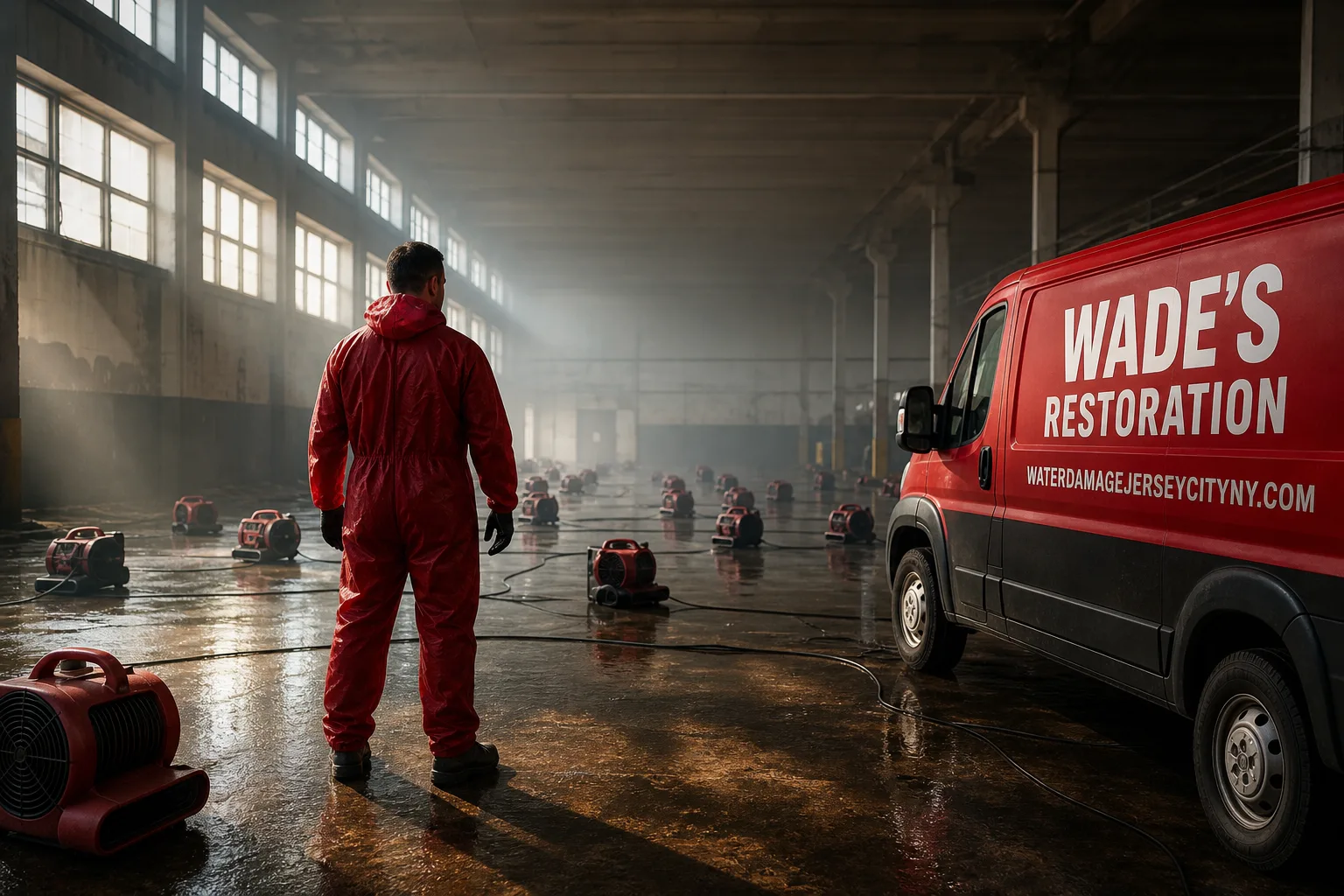
Free visual inspection and a written scope of work before any mitigation begins - photos, moisture readings, and drying logs go in your claim file
The scope we write is the scope we bill. Anything new gets shown to you, in writing, before we touch it.
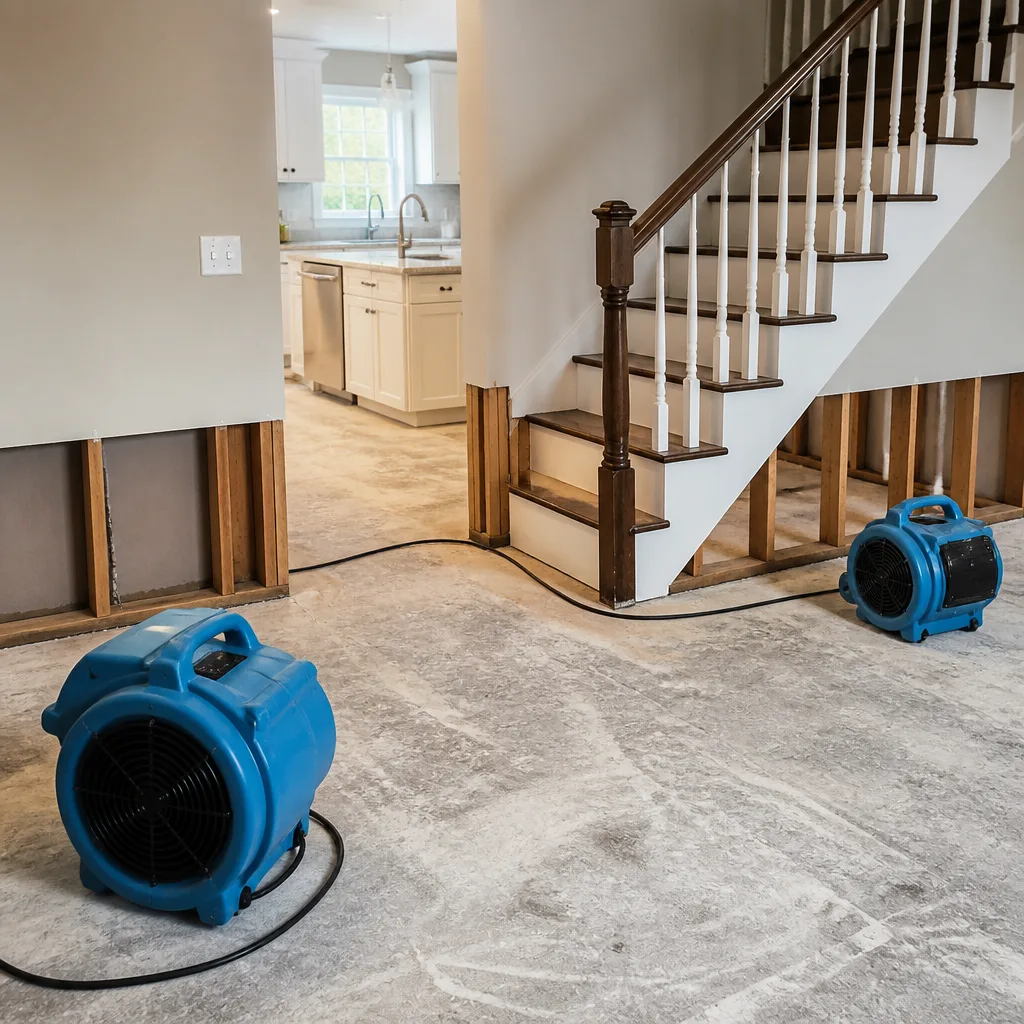
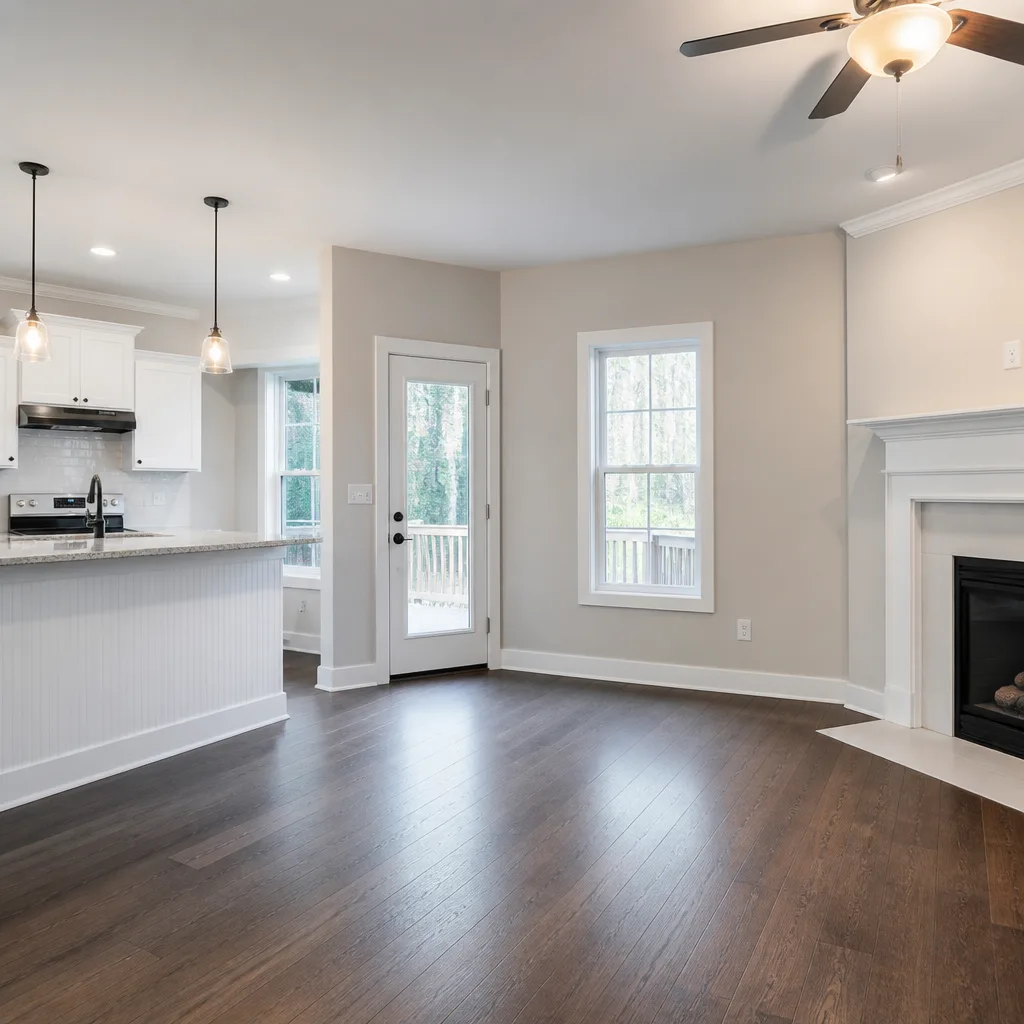
 Before
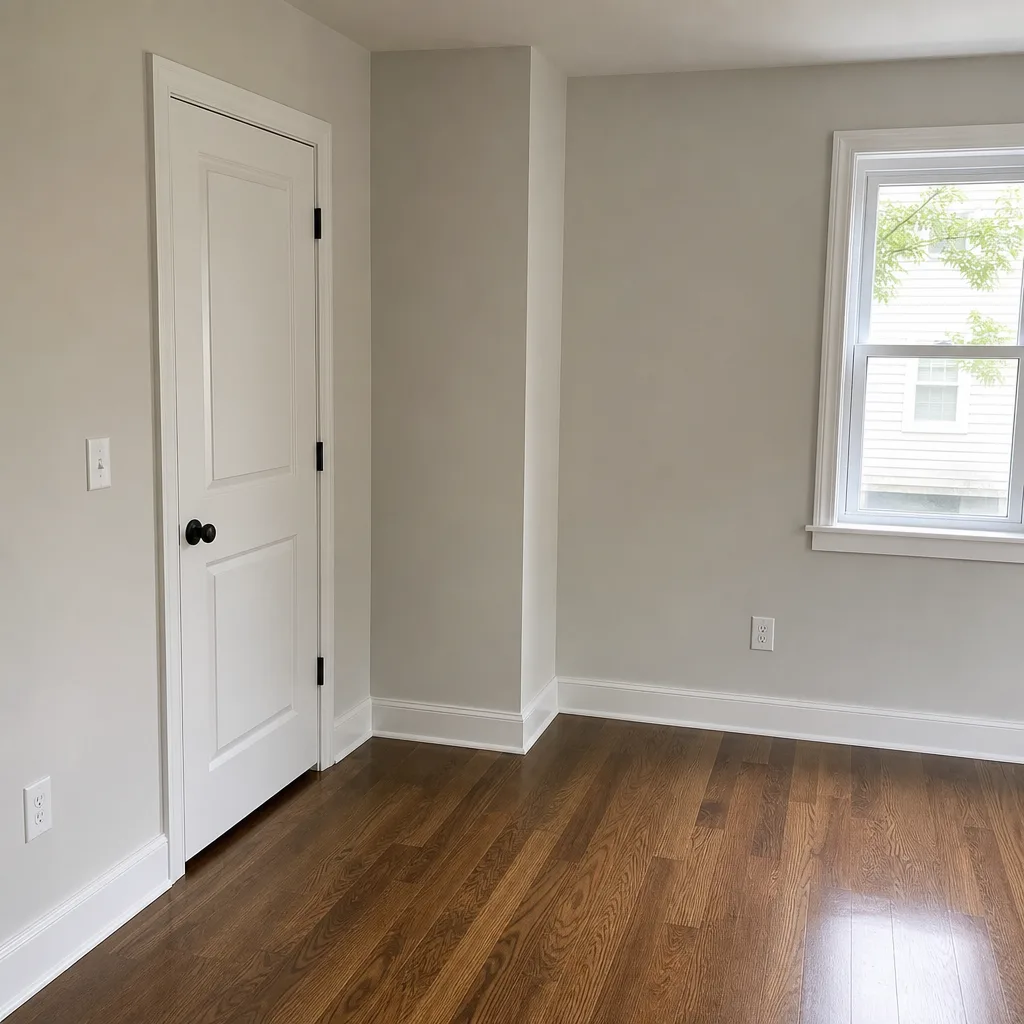 After
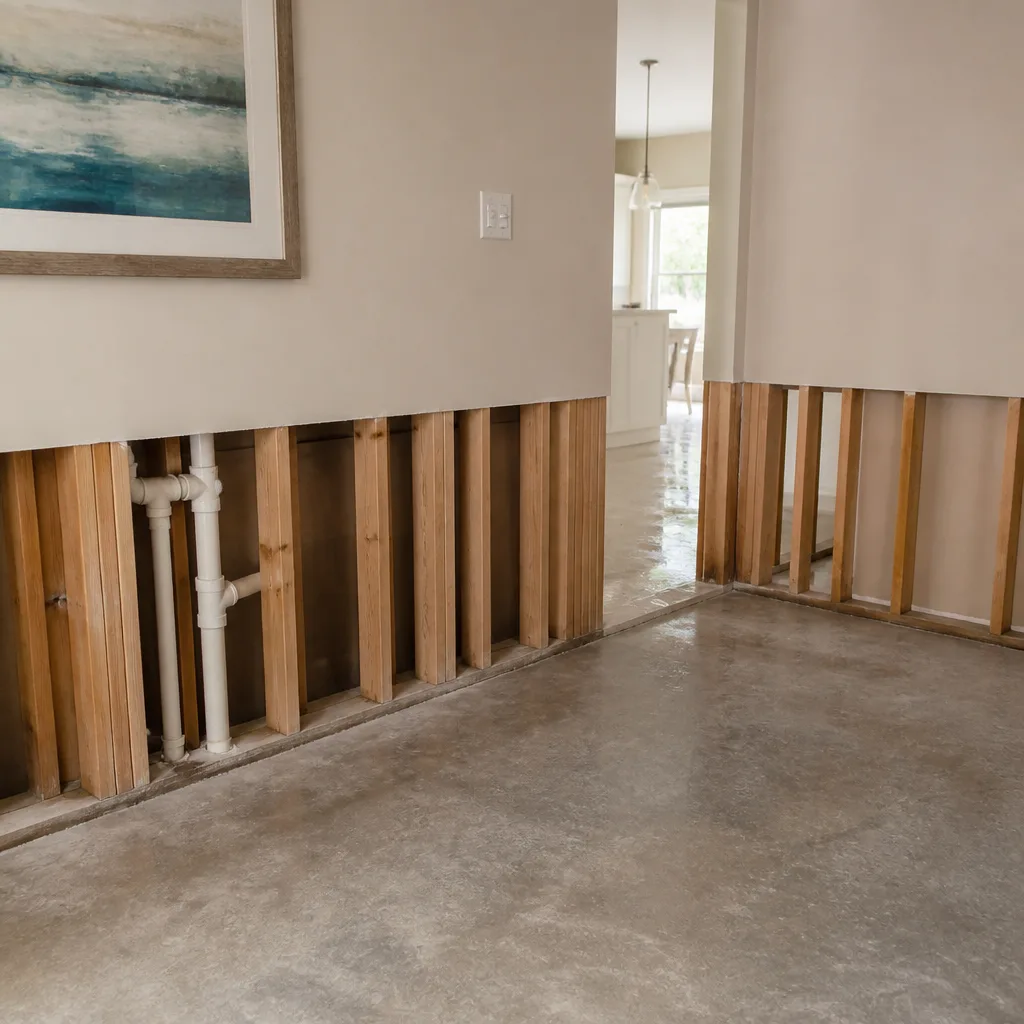
After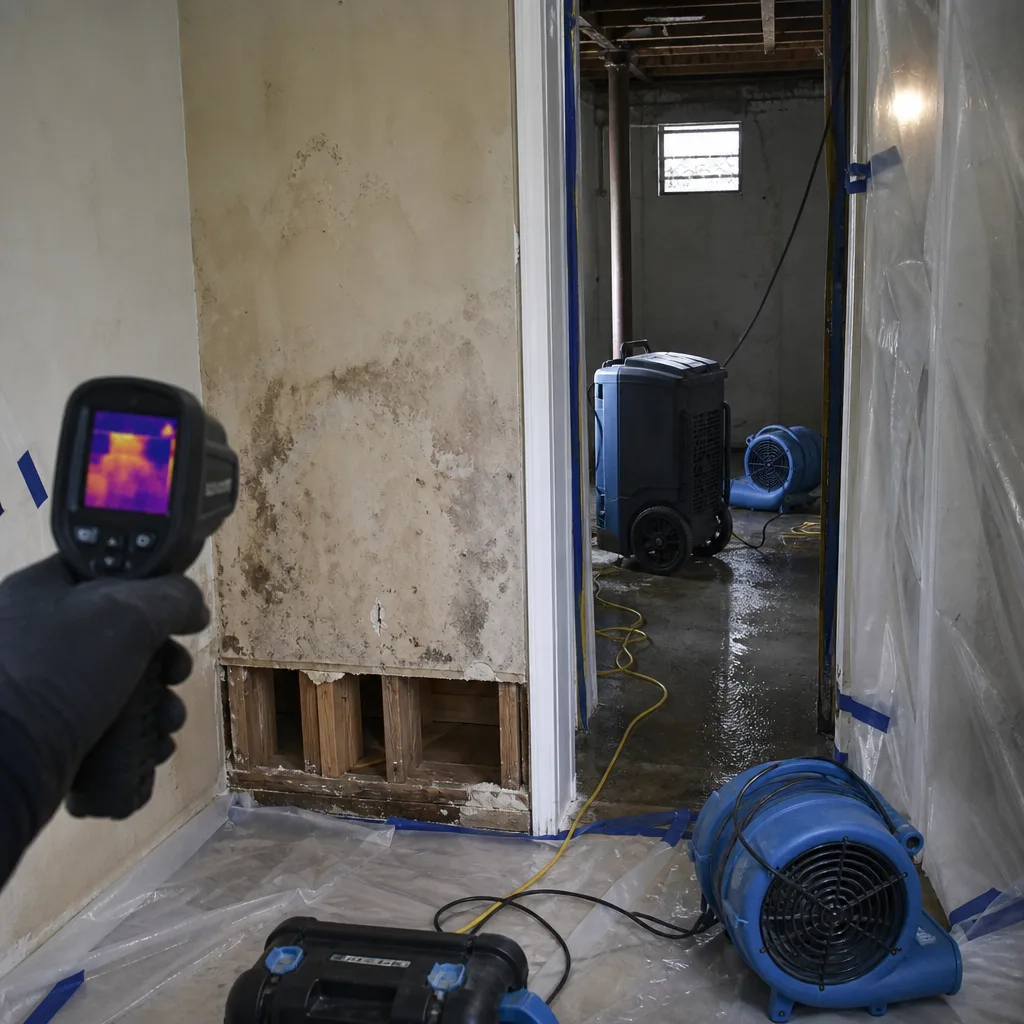 Before
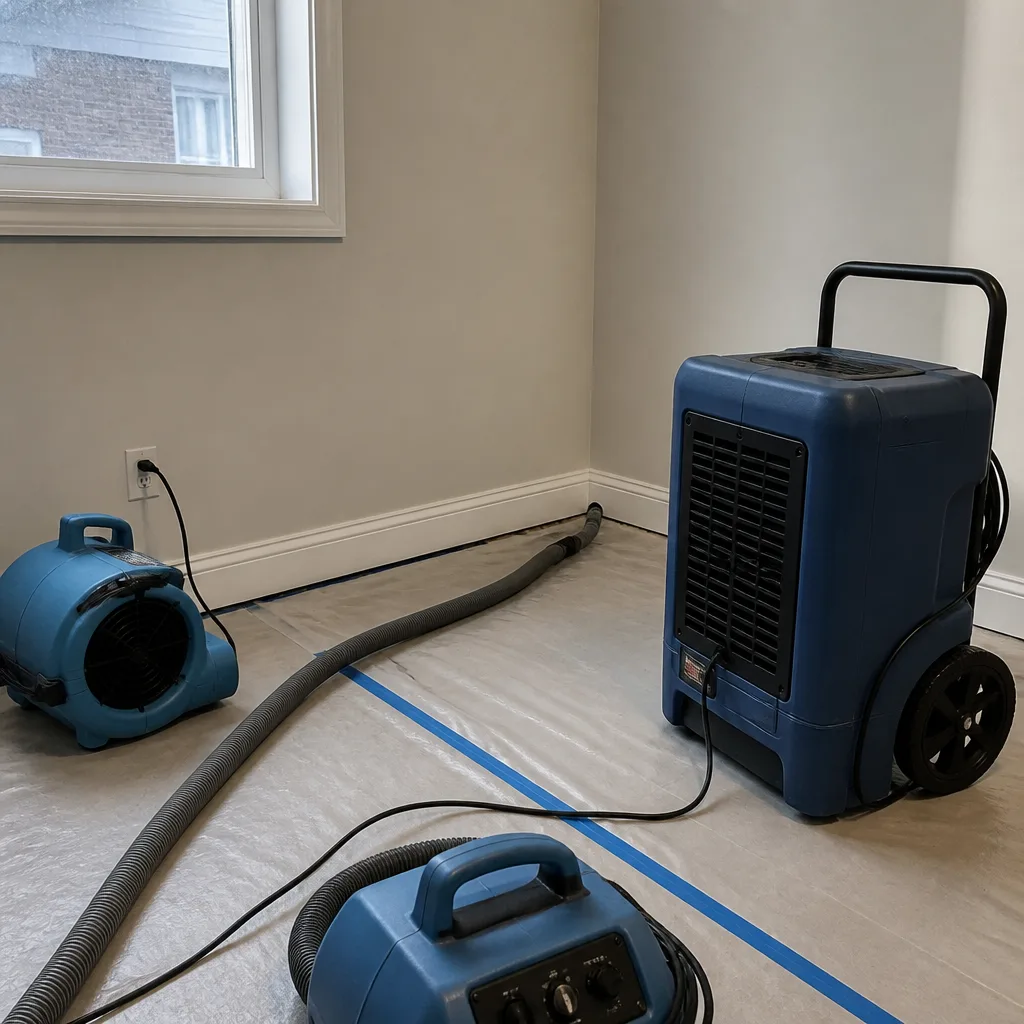 After
After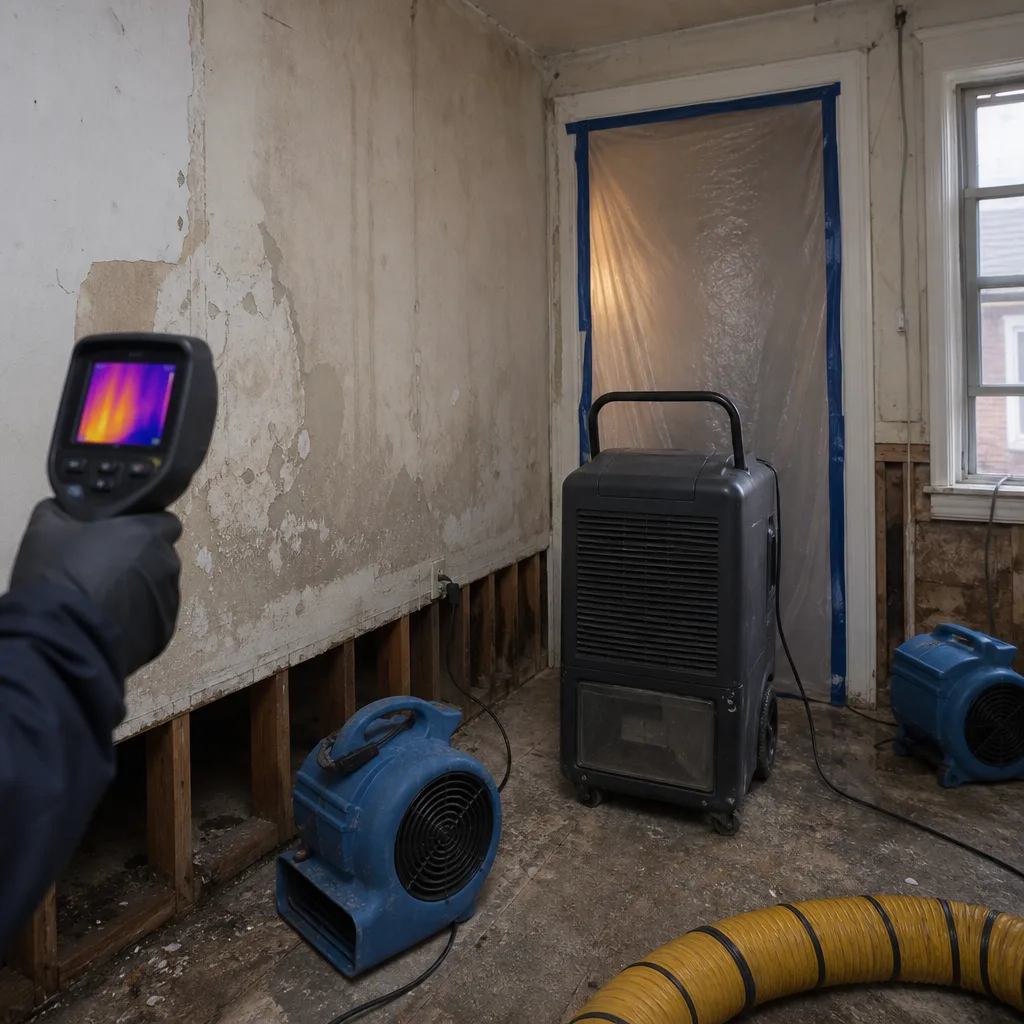 Before
 After
After24/7 Emergency Storm & Disaster Restoration in West New York
Storm damage in West New York doesn’t wait for business hours, and neither do we. Wade Ferris answers his own phone at (201) 903-9581, any hour, any day, and can have a crew on the road to your building within the hour. The first hour after a storm breach matters because water moves fast through stacked units in this town’s brick apartment buildings. Wind-driven rain that gets behind a brick veneer tonight is wicking through a concrete slab floor by tomorrow morning. We offer a free visual inspection before any work starts, and if you’re inside our service area, there’s no trip charge. Ever.
Understanding Storm & Disaster Restoration Severity in West New York Properties
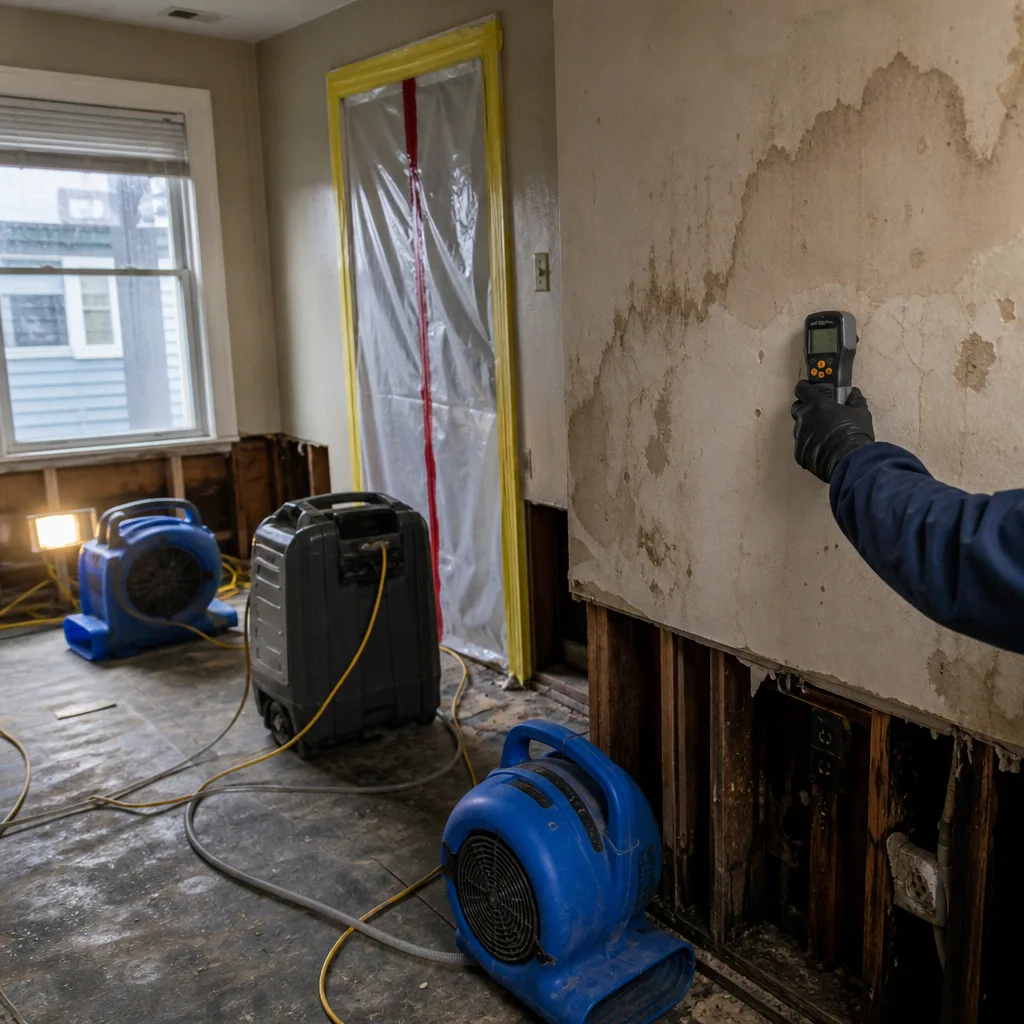
Storm restoration in West New York means working inside a very specific kind of building stock. Most of this town is 4-to-7-story brick apartment buildings put up between the 1940s and 1970s, with flat tar-and-gravel roofs, aging fenestration, and concrete slab floors separating stacked units. That construction changes how storm damage behaves. A roof membrane breach on a six-story building isn’t a one-apartment problem. Water migrates downward through floor assemblies, following conduit chases, pipe penetrations, and cracked slabs, showing up as stains two or three floors below the actual entry point. We use thermal imaging cameras and penetrating moisture meters to map that migration path, then set up containment per floor and run structural drying with commercial-grade dehumidifiers and air movers before any material gets removed or saved. The goal is drying in place where we can, targeted demolition where we can’t, and never opening up more wall than the moisture map says we need to.
Why West New York Property Owners Choose Wade’s Restoration
- Wade answers the phone himself. You’re not getting a call center or a national dispatch queue. The owner picks up, hears what happened, and heads out.
- 45-minute response commitment. For storm emergencies in West New York, a crew is on the road within 45 minutes of your call, usually faster.
- IICRC-certified crews. Wade’s team carries WRT, FSRT, and AMRT certifications, and we run Dri-Eaz and Phoenix equipment on every job.
- Free visual inspections. We look before you commit. A written scope comes before any work, and you approve it first.
- Direct insurance billing and adjuster coordination. Wade talks to your carrier so you don’t have to relive the damage on the phone five times.
- One team from tarp to trim. The same crew that boards up your windows handles the drying, the rebuild, and the final coat of paint. No handoffs, no dropped threads.
Our Storm & Disaster Restoration Process
Inspection & Assessment
Wade or a senior lead walks the building with you. We map moisture with thermal imaging and hygrometers, document every affected room, and write a line-item scope you can read before anything gets touched.
Extraction & Stabilization
For floodwater and storm surge, we extract standing water immediately with truck-mounted and portable extraction units. For wind damage, stabilization means emergency board-up, roof tarping, and sealing breaches before the next weather system arrives.
Drying & Dehumidification
Commercial dehumidifiers, high-velocity air movers, and in some cases injectidry systems for wall cavities. We take moisture readings every single day and hand you the full log at the end. Almost nobody in this trade does that. We do.
Cleaning & Sanitization
Stormwater isn’t clean water. We treat affected surfaces with appropriate antimicrobials, run HEPA air scrubbers where needed, and dispose of contaminated materials properly. For thorough decontamination, we follow up with our Sanitization Services in West New York.
Specialty Treatment for Storm Damage
This is where West New York’s age shows. We assess wind-rated doors and windows, re-secure loose flashing, clear clogged roof drains, and document any structural concerns for your engineer or insurer.
Repairs & Restoration
Drywall, flooring, paint, trim, roof membrane patches, window and door replacement where the storm forced it. The crew that dried the building is the crew that rebuilds it, handling full Reconstruction & Cleanup - West New York property owners can trust. Wade’s 90-Day Done Right Promise covers the work in writing.
Need Emergency Storm & Disaster Restoration in West New York Now?
Crews minutes away, answering live 24 hours a day. The sooner we start, the less it costs.
Working With Your Insurance Company
Storm damage claims in West New York get complicated because of the multi-unit, multi-policy reality of this town’s housing stock. When a roof breach on a six-story building affects four apartments, you’re dealing with four adjusters, four deductibles, and four different carriers. Wade handles that. From the first hour, we photograph everything room by room, log moisture readings daily, and document every piece of material we remove and why. Our estimates follow industry-standard line-item formats your adjuster recognizes. Wade talks to your adjuster directly, answers their questions, and sends the documentation they ask for. You shouldn’t have to become a claims expert while your ceiling is drying.
What We Provide Your Insurer
- Thorough documentation of the loss
- Photos of all damage, room by room
- Moisture readings and drying logs
- A detailed, line-item scope of work
- Direct coordination with your carrier
Built for West New York’s Loss Calendar
West New York sees a very specific storm damage rhythm through the year. Nor’easters in the fall and winter hammer the flat-roofed brick apartment buildings along Boulevard East and the interior streets off 60th, peeling membrane seams and ponding water on clogged drains. January deep freezes burst aging galvanized supply lines inside 1950s steam-heat systems, and a single burst fitting on the fourth floor can soak the third, second, and first floors before the first tenant notices. Spring thaw brings runoff down the Palisades grade into garden-level and below-grade units, particularly along the lower streets west of Boulevard East toward the river. Summer thunderstorms dump water faster than West New York’s dense rooftops can shed it, and the lower riverside blocks carry the documented Hudson River storm-surge risk that Hurricane Sandy made unmistakable. We plan our year around those events, and you should too. Fall rooftop drain clearing is cheaper than a December nor’easter demolition job.
Storm & Disaster Restoration Across West New York’s Neighborhoods
West New York crams about 50,000 people into barely one square mile, and that density shapes how we respond. Along Boulevard East, the taller pre-war and mid-century buildings facing the river catch the worst wind loads, and our roof tarping crews know the access challenges those rooftops present. Over near the 60th Street corridor and the blocks behind it, we see the classic 1950s and 1960s brick apartment buildings with flat tar-and-gravel roofs, and we’ve done enough work there to know which buildings pond water and which drains clog first. The lower-numbered streets near the waterfront, including the blocks around Donnelly Memorial Park and down toward the river, carry the storm-surge exposure, and after a hard storm we stage extraction equipment there first. The interior blocks near Public School No. 1 and the 57th Street retail strip have their own pattern: older fenestration, original single-pane windows, and wind-driven rain getting behind brick veneer. Knowing the difference between a Boulevard East high-rise response and a 60th Street mid-rise response is the difference between a clean dry-out and a building-wide mold problem. Our Storm & Disaster Restoration team has run both enough times to know what to bring before we park the truck.
Specialized Storm & Disaster Restoration Services We Offer in West New York
Storm Damage Cleanup
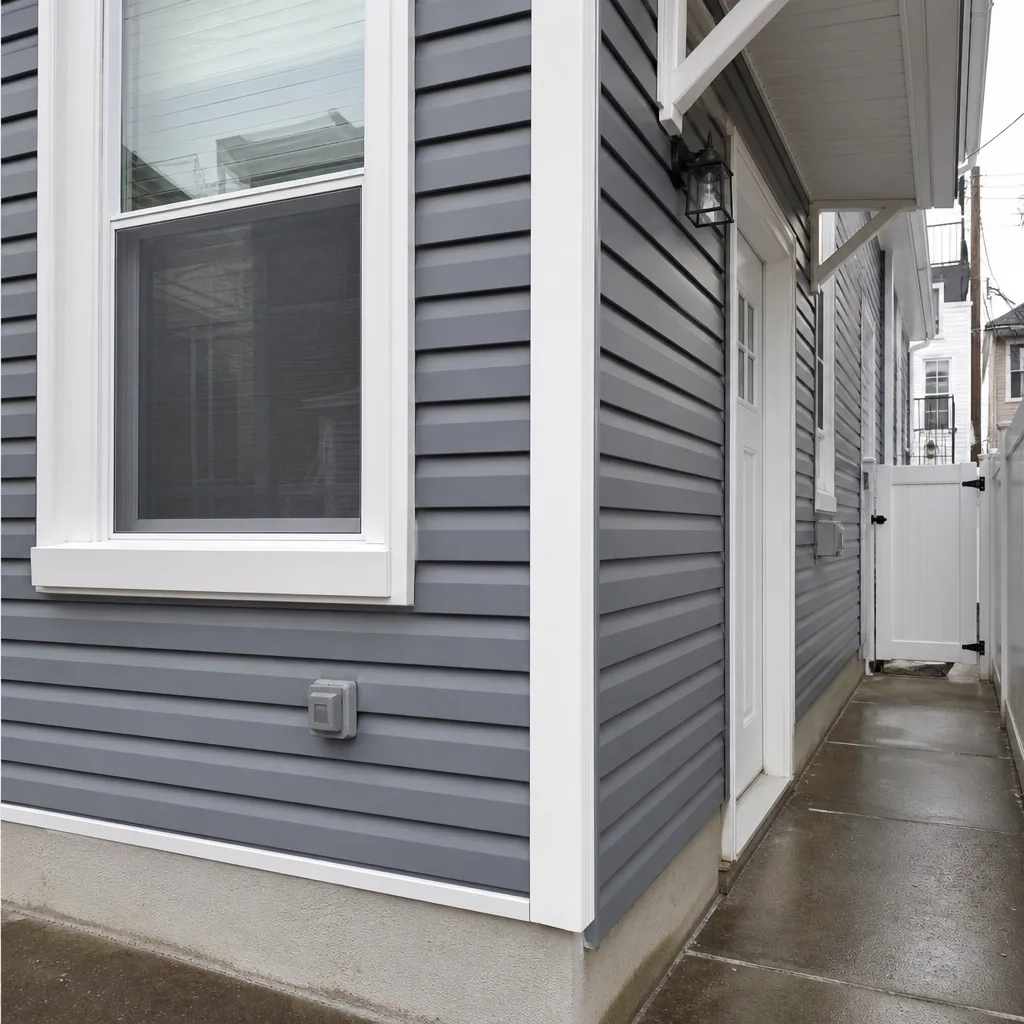
After the wind stops and the rain moves out, the real work starts. We remove debris, inspect for hidden water entry behind brick veneer and under membranes, and document everything for your claim. Waiting a week to inspect window and door seals is how a small leak becomes a four-unit mold job.
Flood Damage Restoration
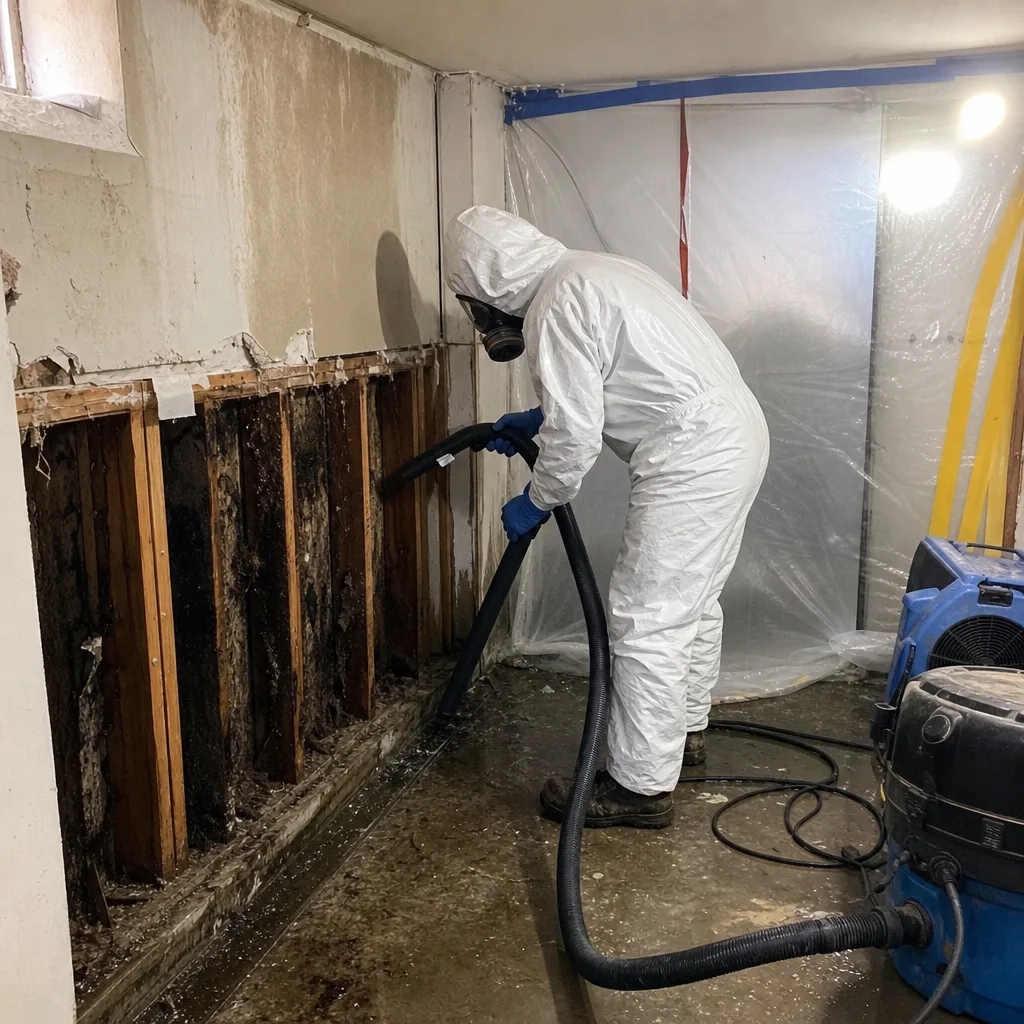
For the garden-level and below-grade units along West New York’s lower blocks, surface runoff off the Palisades combined with Hudson River storm surge means Category 3 water. Our team handles Category 3 extraction, containment, and full sanitization per IICRC standards, with moisture readings on shared walls to catch migration even when the water looks contained to one unit.
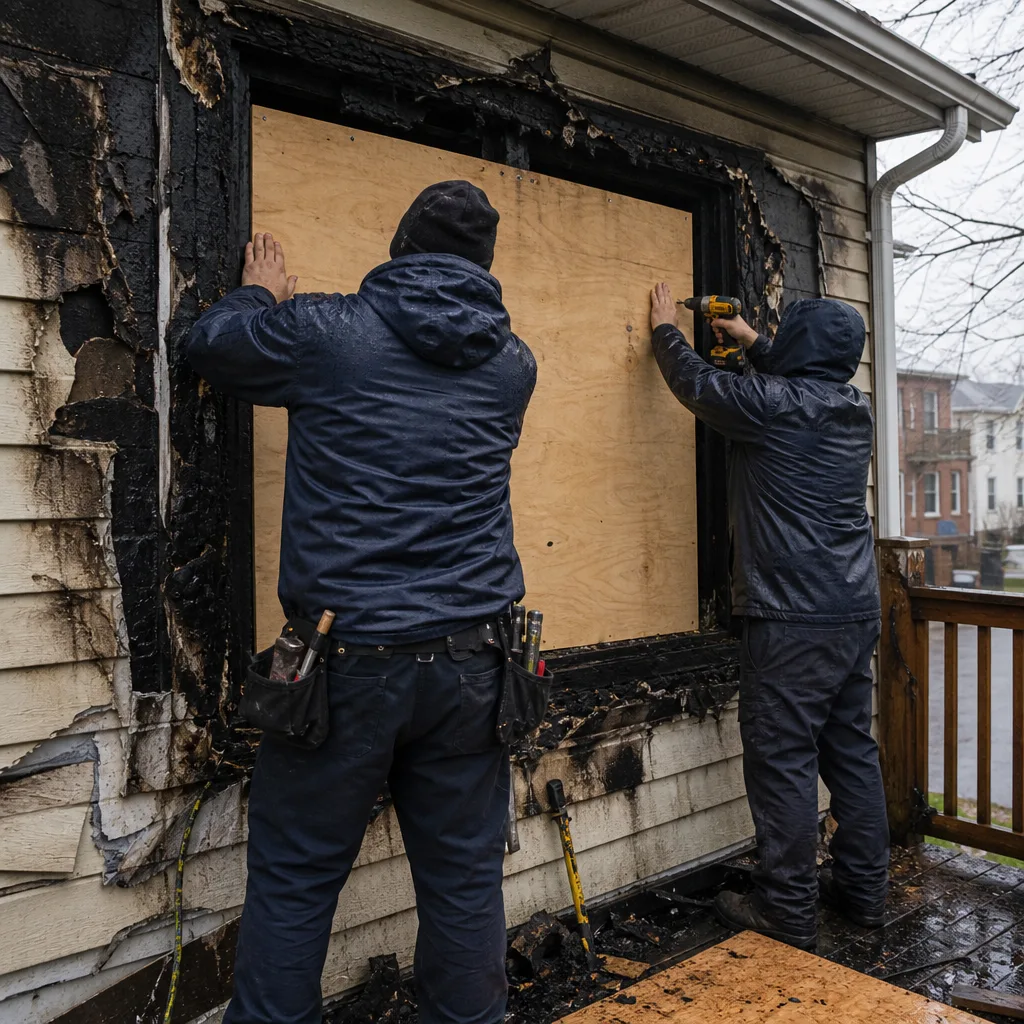
Emergency Board-Up
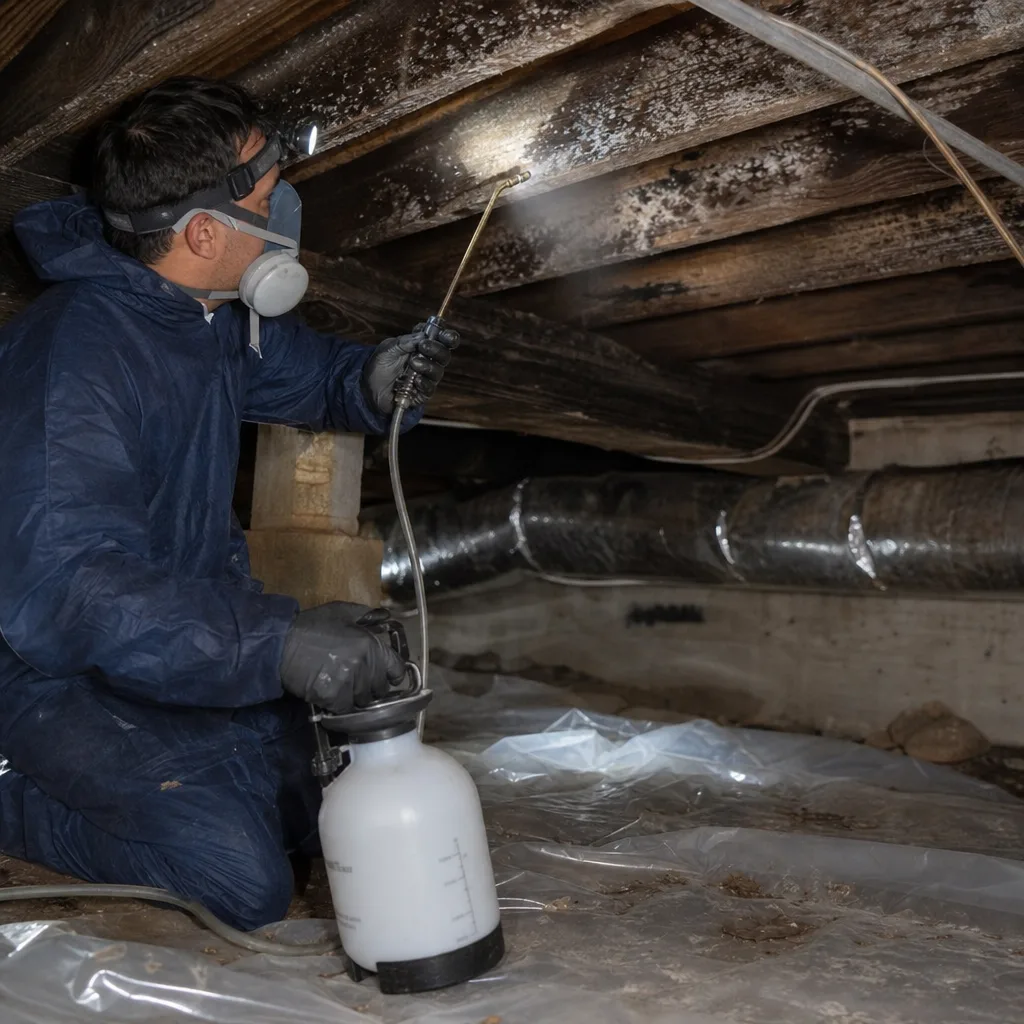
Broken windows and compromised entryways in West New York’s mid-century apartment buildings leave tenants exposed to weather, people, and further storm damage. We board up fast, with measured cuts and proper fastening for wind load, and we coordinate with building management and insurers on the permanent repair scope.
Roof Tarping
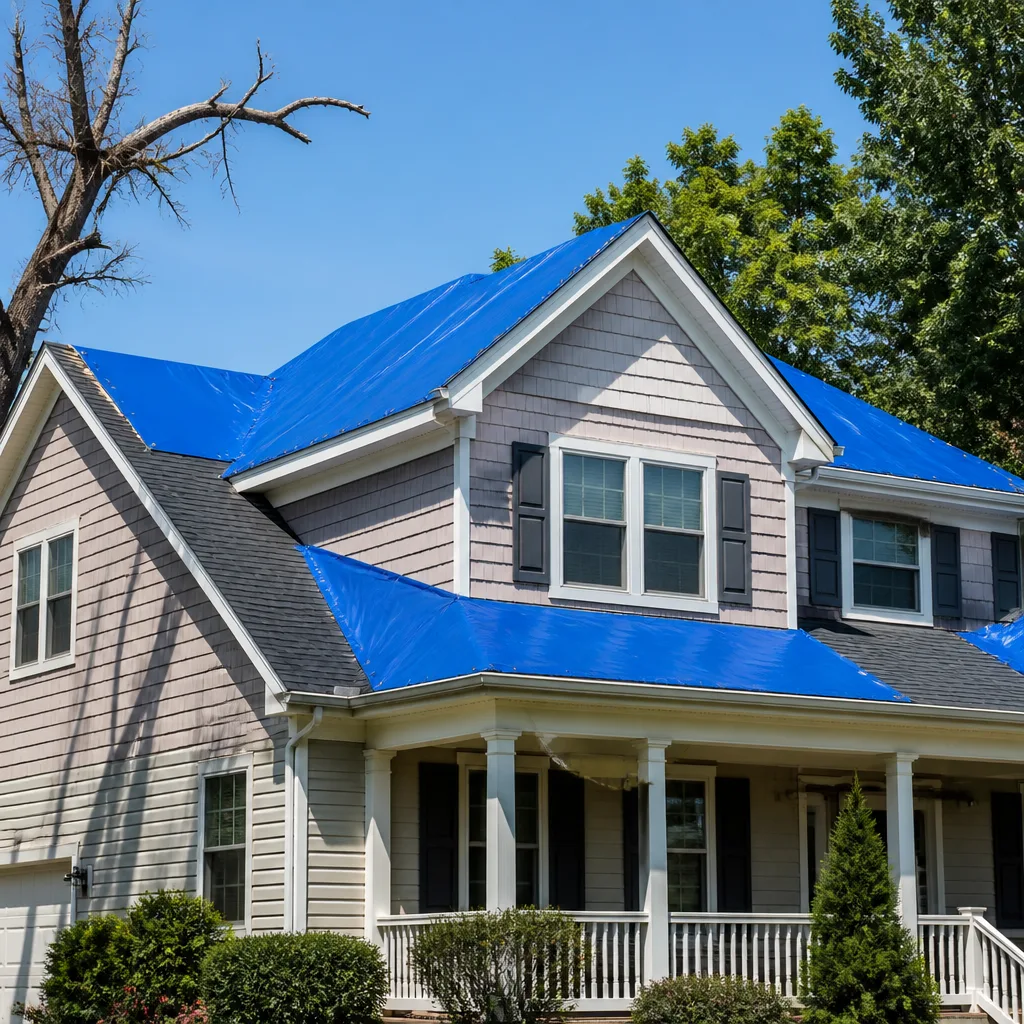
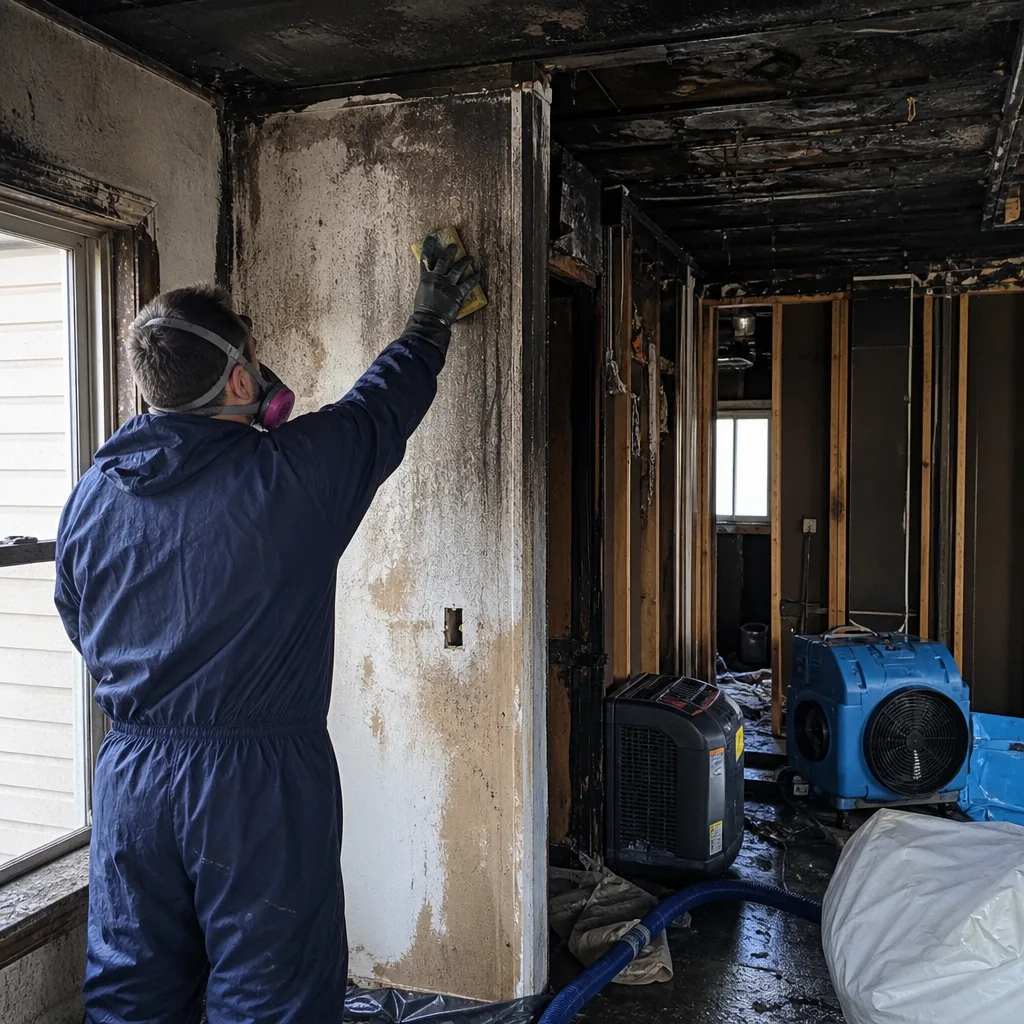
Flat tar-and-gravel roofs on 1950s and 1960s buildings are the most common storm breach point in West New York. We tarp to stop active water entry, secure the tarp against West New York’s wind exposure, and document the condition of the roof membrane for your adjuster. The tarp doesn’t end the job; it buys time for the right permanent repair.
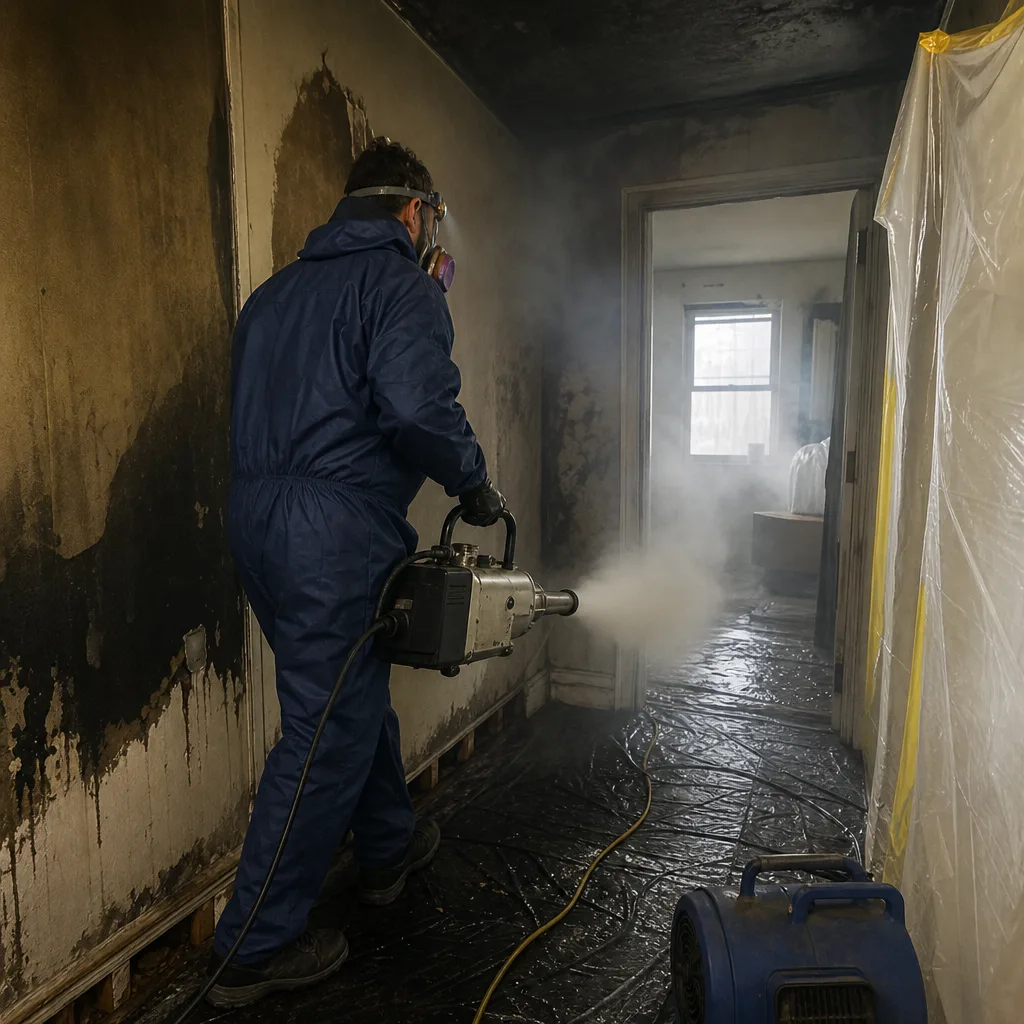
Debris Removal
Storm debris in West New York’s tight streets and alleyways blocks drains, piles against garden-level windows, and complicates access for residents and emergency crews. We clear it, document what we removed, and include it in your claim scope. No extra charge for decisions Wade can make on the spot: he says so.
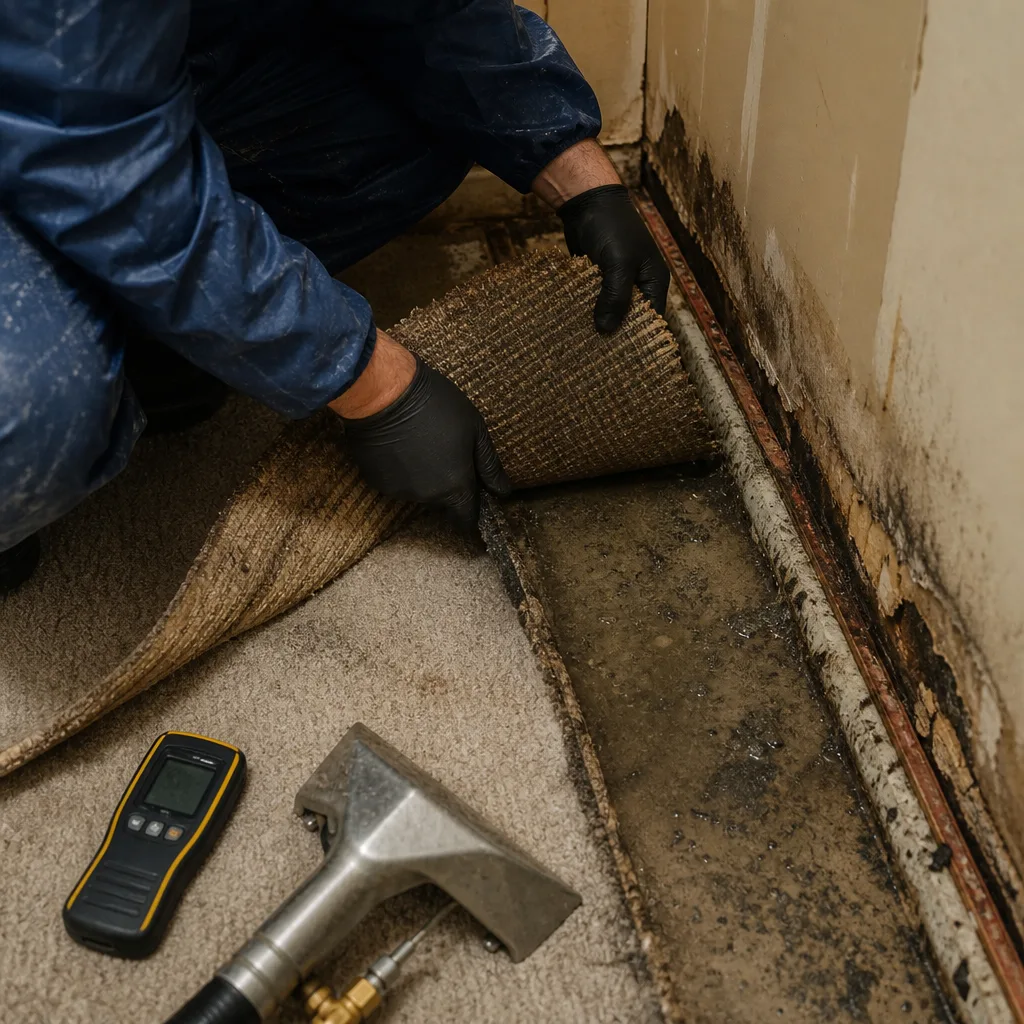
Wind Damage Repair
West New York’s older buildings often have original 1950s and 1960s fenestration that was never built for the wind loads we see today. We repair or replace wind-damaged windows and doors, recommend impact-rated upgrades where appropriate, and pull permits when the work requires it. A failing door seal is not just a draft: it’s the opening that lets a nor’easter inside your building.
What happens when you call
- 1
A real person answersNo phone trees - you reach a local pro.
- 2
You get an upfront price rangeHonest numbers before anyone is dispatched.
- 3
A background-checked tech heads outLicensed & insured, dispatched right away.
- 4
You approve before work beginsNothing starts until you say go.
Storm & Disaster Restoration Costs in West New York, NJ
Honest pricing matters here, because West New York’s multi-unit buildings make storm restoration more complex than the single-family suburbs. Emergency board-up in town runs $350 to $900 per opening depending on size and location height. Roof tarping for a typical flat-roof mid-rise in West New York lands between $1,200 and $4,500 depending on roof area and wind exposure. Flood extraction and structural drying for a garden-level apartment starts around $2,800 and can reach $9,000 or more when multiple units and shared walls are involved. Full storm restoration, including rebuild, frequently runs $12,000 to $60,000 on multi-floor losses where three or four apartments are affected. Insurance covers most storm damage when the cause is a covered peril, and we bill your carrier directly. The free visual inspection gives you a firm written scope before you spend a dollar. Call (201) 903-9581 and Wade will walk the building with you.
We Also Serve Cities Near West New York
Wade’s Restoration runs storm and disaster restoration across Hudson County’s dense urban fabric. We serve West New York and the surrounding communities of Jersey City, Hoboken, Harrison, and Kearny, with crews ready to respond to storm events anywhere in the county. Dispatch is coordinated from the brand’s New York City office, but the crews working your building are local, and Wade is the one who answers the phone.
West New York Storm & Disaster Restoration Questions, Answered
How does West New York’s building density change the scope of a storm water damage restoration compared to a single-family home?
In a single-family home, one roof leak means one homeowner, one insurance policy, and one drying plan. In West New York’s 4-to-7-story brick apartment buildings, stacked units with shared walls and concrete slab floors mean that same leak typically affects three or four apartments, involves multiple owners or a building management company, and touches several insurance policies at once. Restoration crews here work floor-by-floor with containment per unit, separate moisture logs for each affected space, and direct coordination with multiple adjusters.
What wind rating should replacement windows and doors meet in a West New York apartment building, and why does it matter before a storm?
For West New York’s exposure along the Palisades and the Hudson River waterfront, replacement fenestration should meet design wind pressures consistent with the IBC wind zone for this area, and impact-rated assemblies are worth considering on the taller Boulevard East buildings and any facade facing open water. The reason it matters before a storm is simple: once wind-driven rain gets behind brick veneer, it migrates through concrete slabs and shared walls before any tenant sees a drip, and the restoration is far more expensive than the upgrade would have been.
After a nor’easter, how do you determine which materials in our West New York apartment need to be removed versus dried in place?
We use thermal imaging and penetrating moisture meters to map the actual water content inside materials, then apply IICRC drying standards to each affected area. Gypsum board that reads above acceptable moisture levels after structural drying gets removed and replaced. Hardwood and concrete slabs can often be dried in place with the right equipment. The daily moisture log we hand you at the end documents every reading and every material decision, so your adjuster sees the reasoning, not just the result.
Our 1960s brick apartment building in West New York has a flat roof that ponds water - what storm restoration steps do you take before another heavy rain?
We start with a roof inspection focused on drain function and membrane condition, then clear clogged drains and tarp any areas where ponding has compromised the membrane seams. Inside, we thermal-map the top-floor ceilings and walls to find where past ponding has already migrated, and we dry and remediate those areas before the next system arrives. The safest move before storm season in West New York is getting those rooftop drains cleaned while the weather still allows it. Call (201) 903-9581 and Wade will take a look.
Does Wade’s Restoration handle storm surge flooding in West New York’s lower riverside blocks, including Category 3 water?
Yes. Storm surge and riverine flooding in West New York’s lower riverside blocks is Category 3 water, which carries sewage, hydrocarbons, and biological contaminants. Our crews follow full IICRC Category 3 protocols: personal protective equipment, containment, extraction, removal of porous materials that absorbed contaminated water, and thorough sanitization. We document everything for your insurer and bill directly, so you are not fronting the full cost of a Biohazard & Crime Scene Cleanup in West New York-level surge cleanup while the adjuster reviews the file.
How fast can a crew actually get to West New York?
Wade answers the phone live, 24/7, and a crew is typically on the road within 45 minutes of your call. For storm emergencies during a nor’easter or surge event, response volume is high, so calling early matters. The first hour after a storm breach is when the water damage is smallest and the drying plan is easiest to keep tight.
Can we stay in our apartment while storm damage restoration is underway?
It depends on what happened. If the damage is limited to one ceiling and drying is contained, yes, often you can stay. If we are running commercial dehumidifiers and air movers in a Category 3 flood situation, or if multiple units are involved and electrical or structural integrity is in question, you should plan on temporary relocation until the affected areas are dry and safe. Your insurance policy may cover lodging under loss-of-use provisions, and we will help document that for your adjuster.
What should I do in the first 30 minutes after storm damage hits my West New York building?
Call (201) 903-9581. Then, if it is safe to do so, shut off electricity to affected areas, move valuables out of standing water, and take photos of everything you can see. Do not enter deeply flooded areas, and do not touch standing water in lower riverside blocks after a surge event without proper protection. We will be there fast, and we will take it from there.
Storm & Disaster Restoration for West New York’s Mid-Century Brick Apartments
West New York’s housing stock was built between the 1940s and 1970s, and it was built to different standards than today’s codes. The flat tar-and-gravel roofs, original fenestration, and shared-wall construction that define this town’s apartment buildings create storm damage patterns that a generic restoration company from the suburbs simply has not dealt with. When rooftop drains clog each fall on 1950s buildings along interior blocks, ponding water exploits aged membrane seams, and by the time a ceiling stain appears on the top floor, moisture has already wicked down through two or three more floors. That single visible stain is often a four-unit job with four separate insurance claims. We know how to scope that work because we have done it here again and again.
On a windy stretch of 60th Street, hurricane-force gusts peeled back a section of membrane on a 1950s six-story brick apartment building’s flat roof. Our crew arrived before the next nor’easter, tarped the roof to stop the active water intrusion, then used thermal imaging for moisture mapping that showed moisture had wicked down through the top three floors. We set up containment on each affected floor, ran commercial dehumidifiers and air movers for structural drying, coordinated with four different insurance adjusters, and restored each unit to pre-loss condition, all before mold could bloom beyond the visible stains. That is the kind of job West New York throws at you, and it is the kind of job we are built for.
Wind-rated doors and reinforced window assemblies are a recurring topic on our walkthroughs in West New York. The original 1950s and 1960s fenestration was never tested for the wind loads this town catches off the Hudson, and once wind-driven rain gets behind the brick veneer, the damage is inside the wall before you ever see a drip. Waiting until after a storm passes to inspect door and window seals costs building owners far more than the reinforcement would have. The same is true for flooded garden-level units: treating one as a single-apartment cleanup ignores the reality that surface runoff funneled down the Palisades grade means adjacent below-grade units share the same water table. We cut open baseboards and run moisture readings on shared walls on every garden-level job in West New York, because hidden mold behind a shared wall is a far larger, multi-unit mitigation waiting to happen.
This town needs a storm restoration company that understands mid-century brick apartments, multi-policy coordination, and the unforgiving timeline that water follows inside a stacked building. Wade Ferris has been doing this work since 2007, and every job carries his 90-Day Done Right Promise in writing. If it’s not done right, he makes it right. Ask anyone on your street. To wade is what you do through a flooded basement at two in the morning, and it happens to be his name.
Serving West New York, NJ - Our Local Coverage Area
We’re based in the West New York area and know this community well. Use the map below to see our service coverage - if you’re nearby, we can almost certainly help.
Call Wade’s Restoration for Storm & Disaster Restoration in West New York
Wade answers his own phone. You’ll hear his voice, not a queue. He’ll ask what happened, tell you honestly what he thinks, and head out to look. The visual inspection is free, there’s no trip charge inside the county, and seniors and veterans always get 10 percent off. If you have a written estimate from another company, bring it and Wade will give you a free second opinion. Call (201) 903-9581 now, before the next storm system moves in. Here is his cell. That’s how this works.
Written by Wade Ferris, Owner at Wade’s Restoration, serving Storm & Disaster Restoration in West New York and surrounding Hudson County communities since 2007.