
Last updated August 26, 2026
Free visual inspection and a written scope of work before any mitigation begins - photos, moisture readings, and drying logs go in your claim file
The scope we write is the scope we bill. Anything new gets shown to you, in writing, before we touch it.
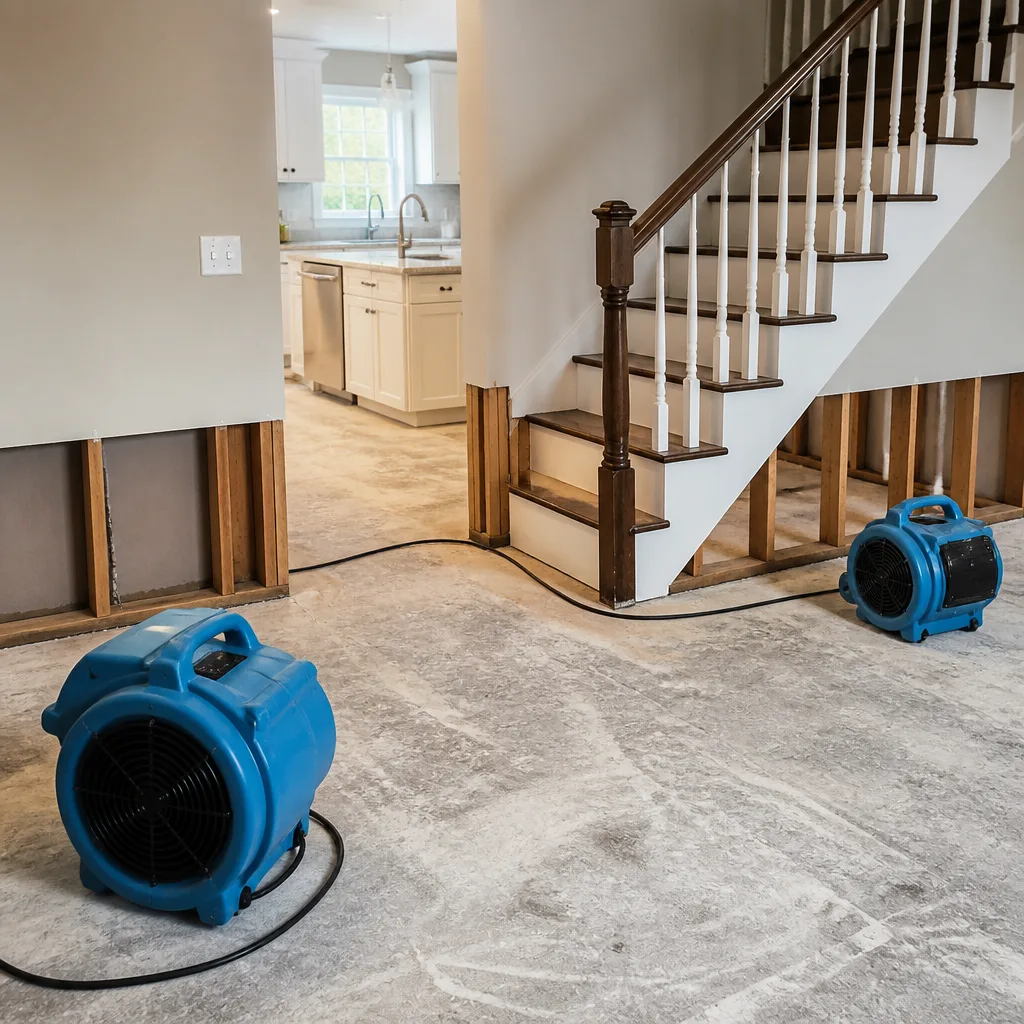
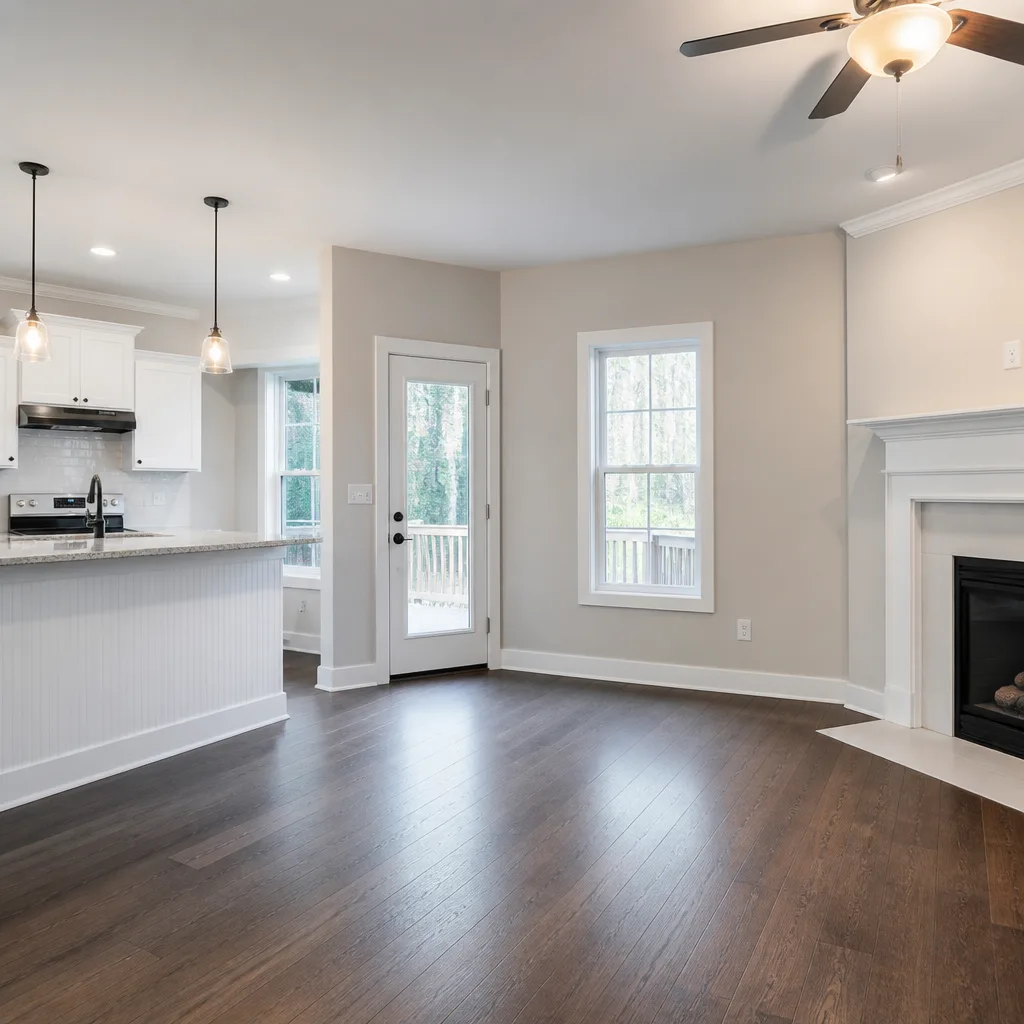
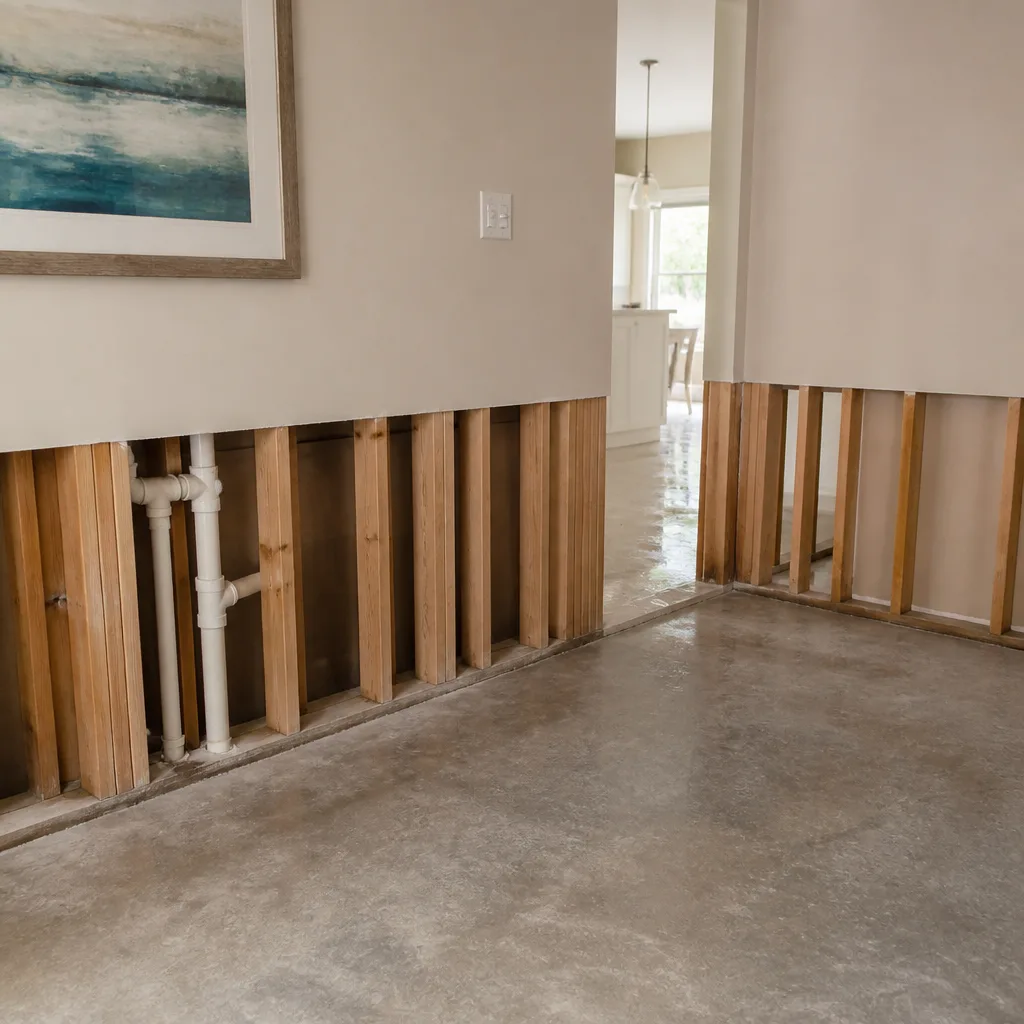
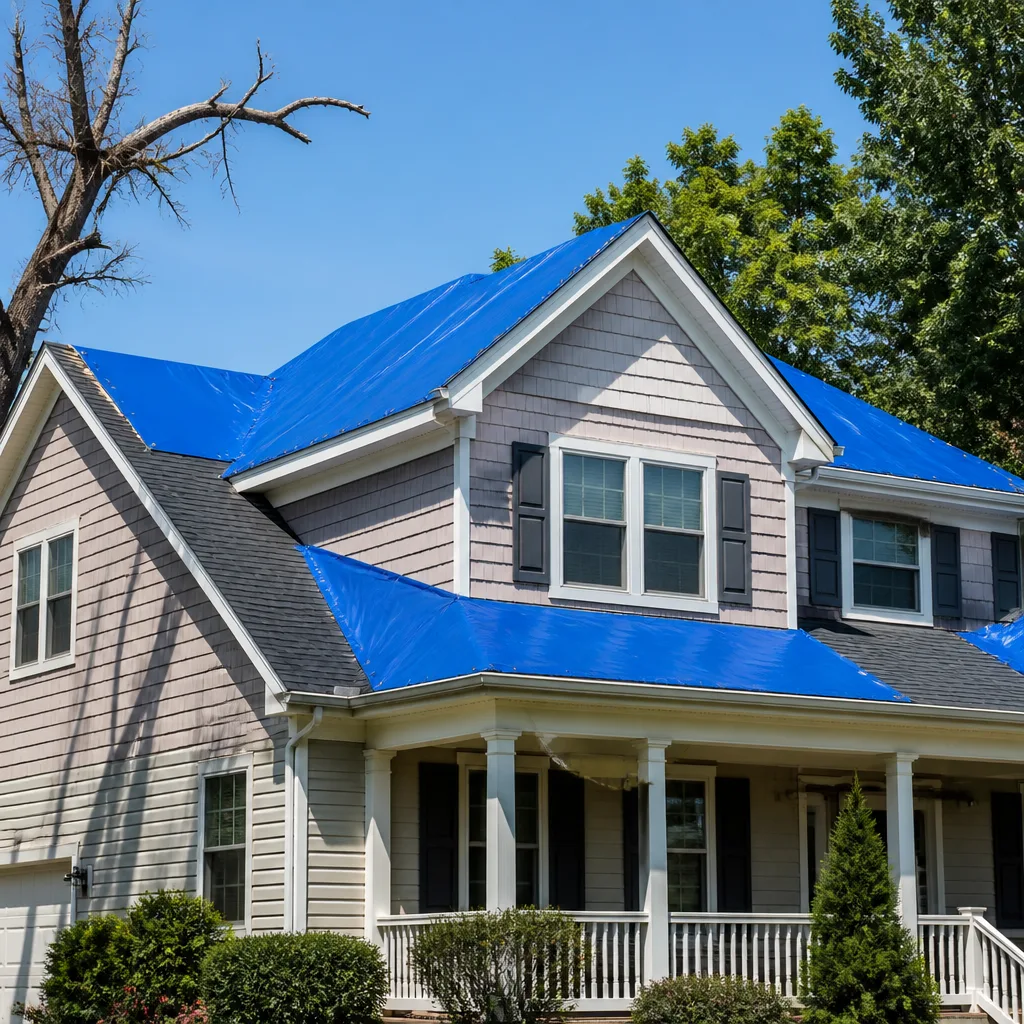
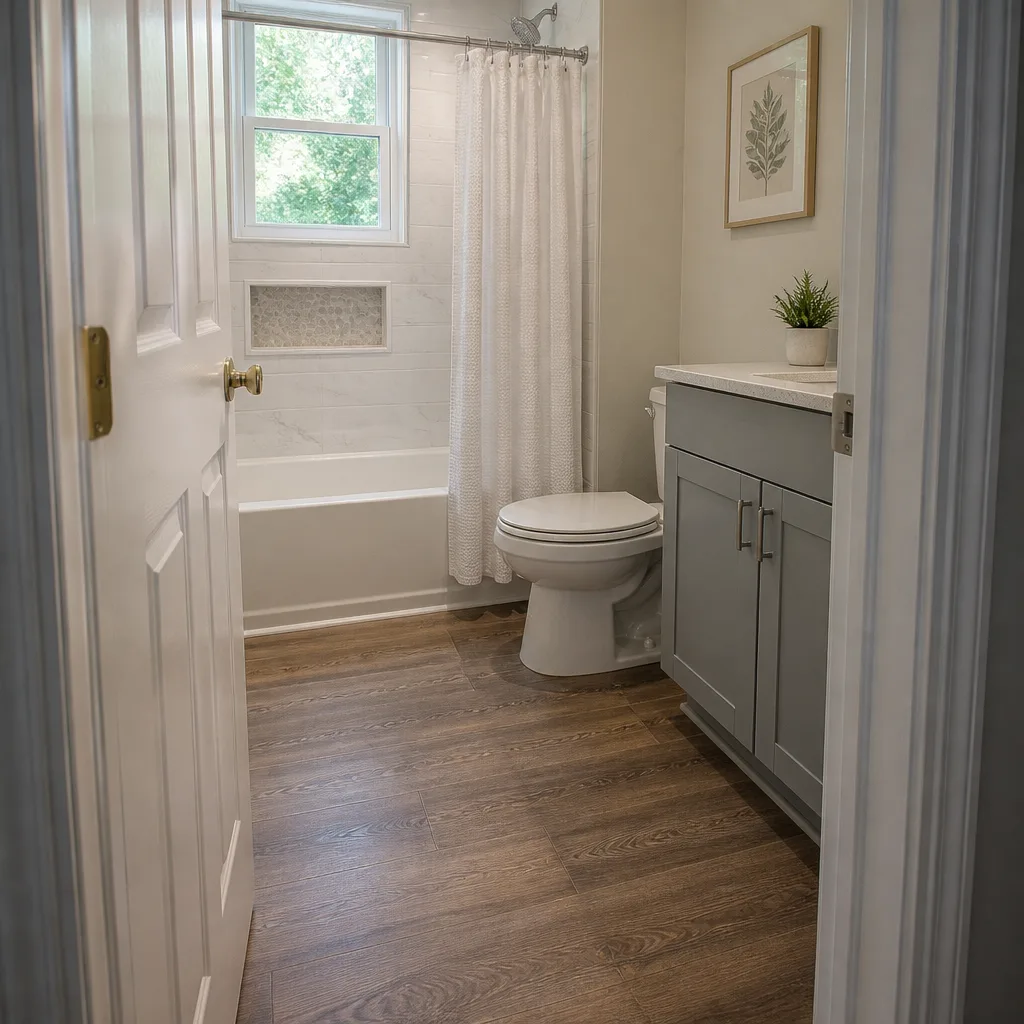
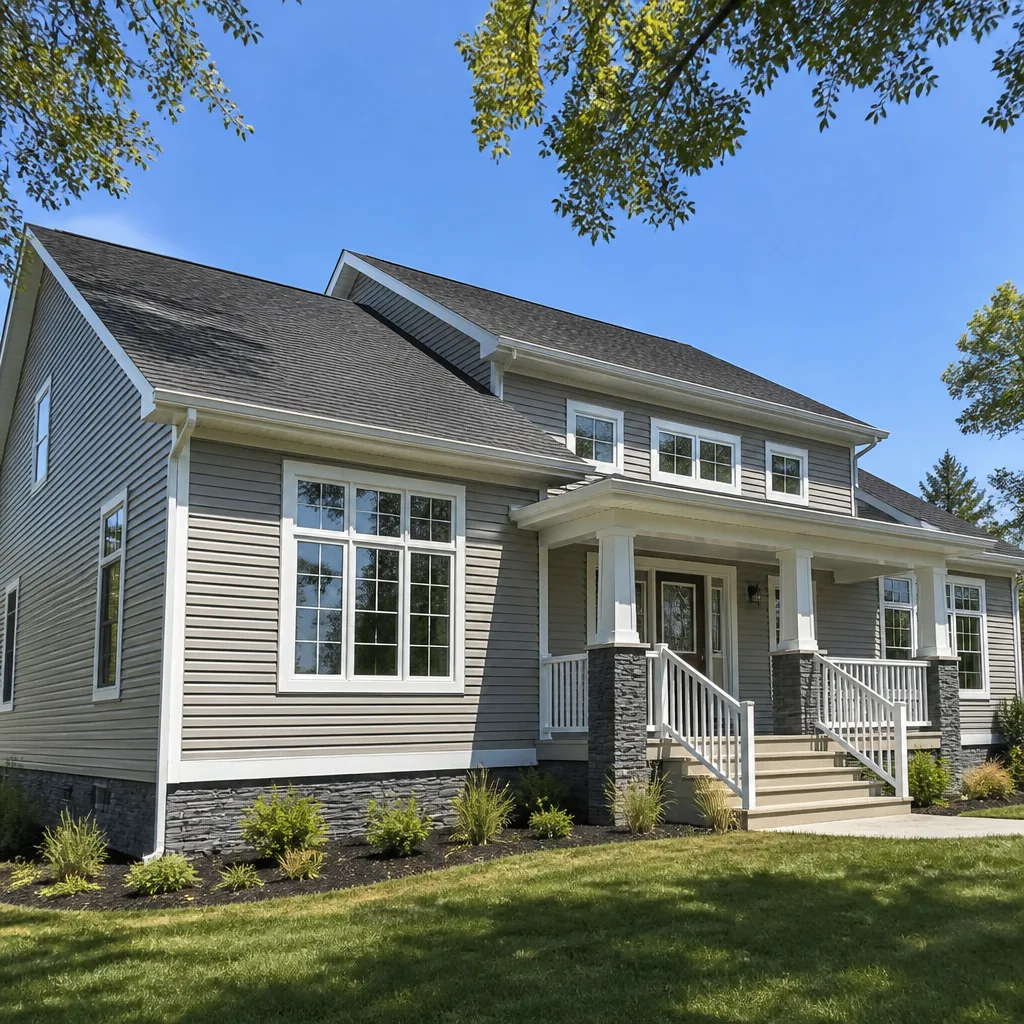
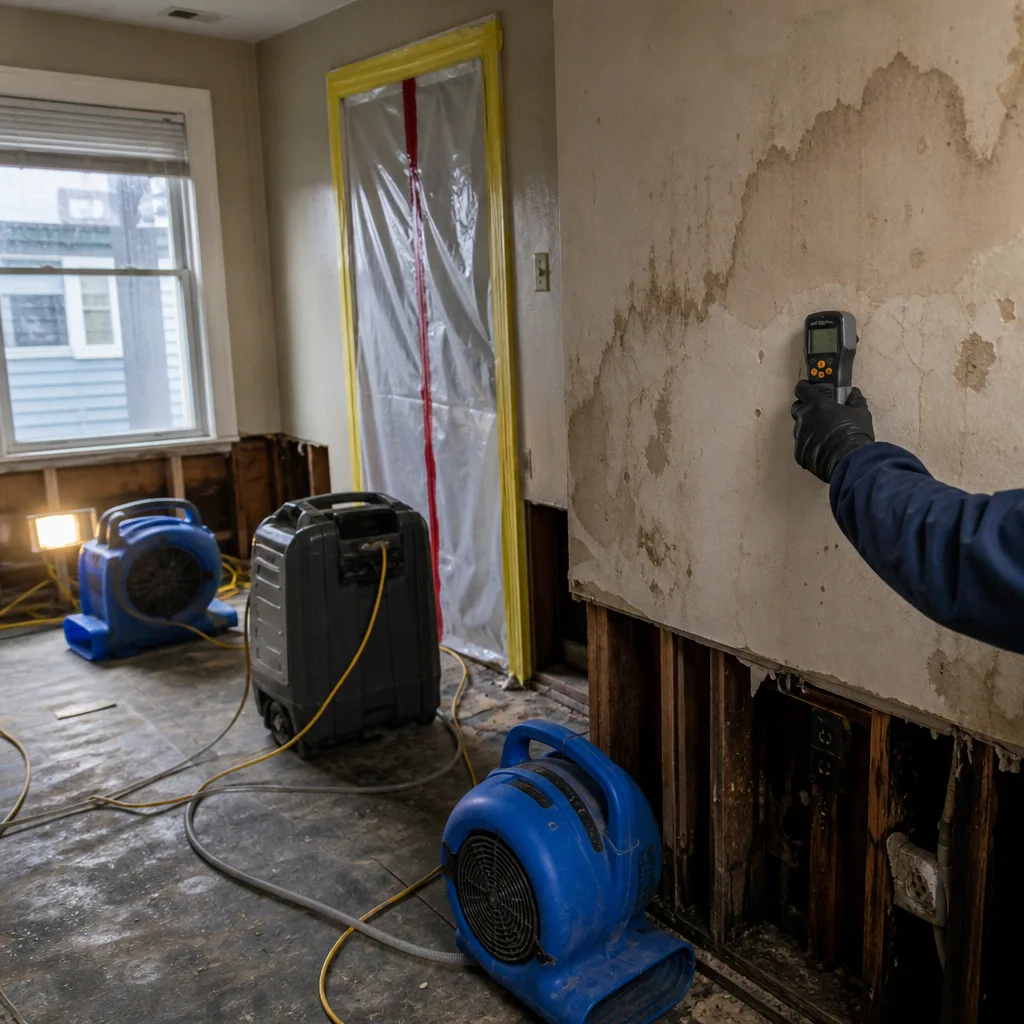 Before
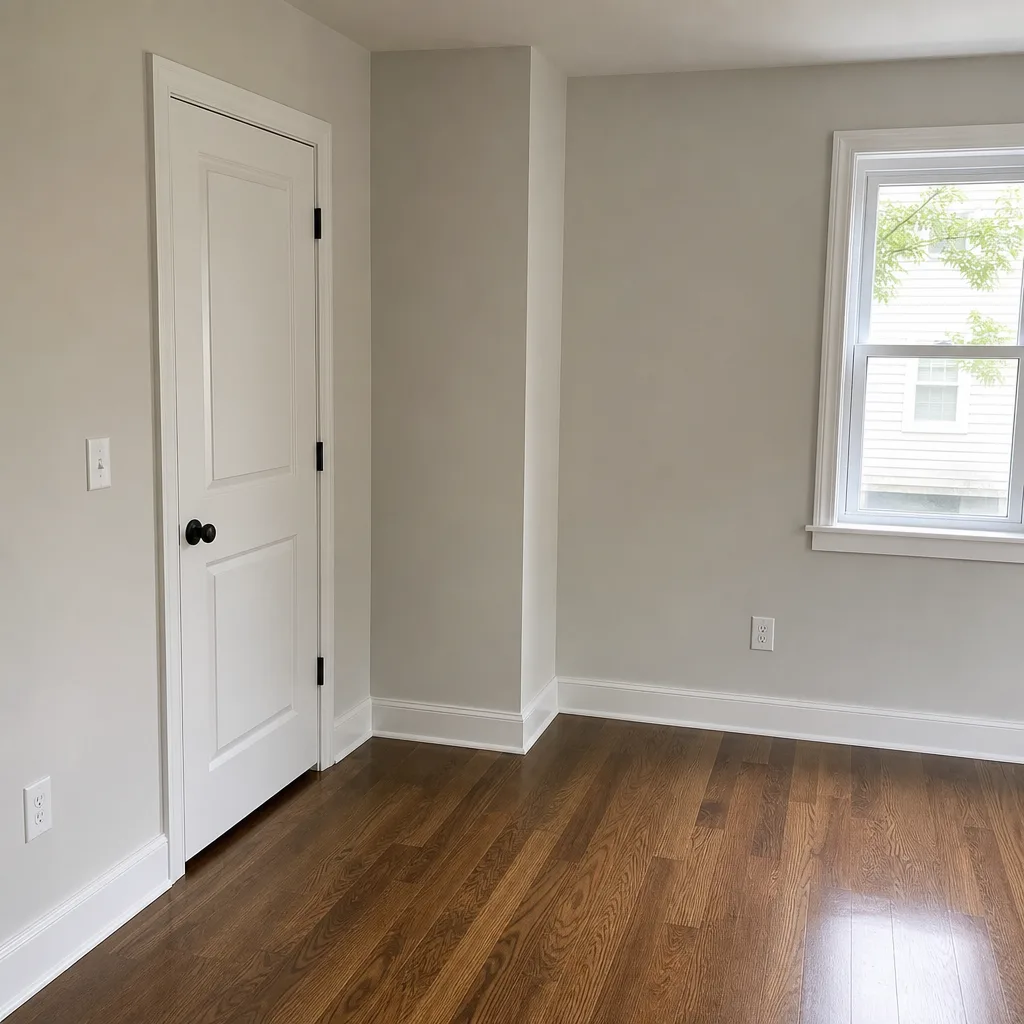 After
After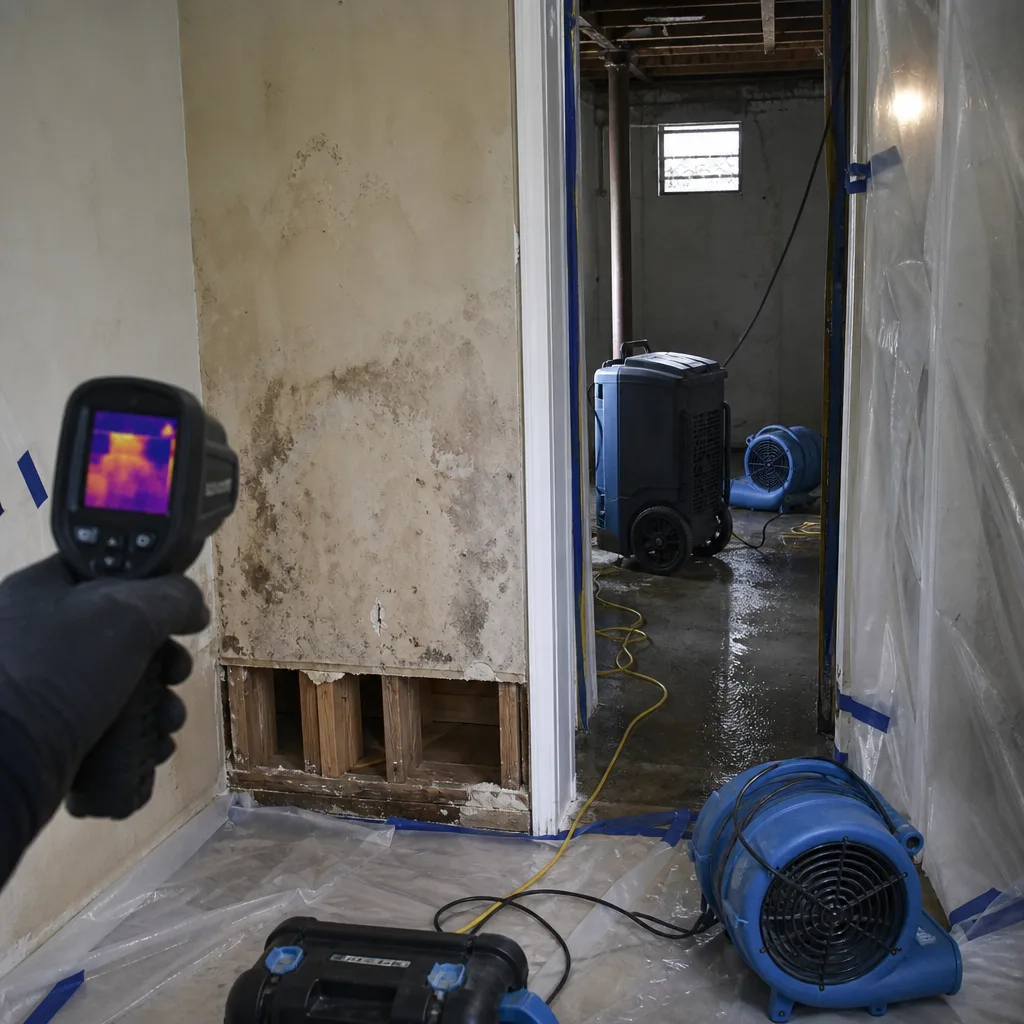 Before
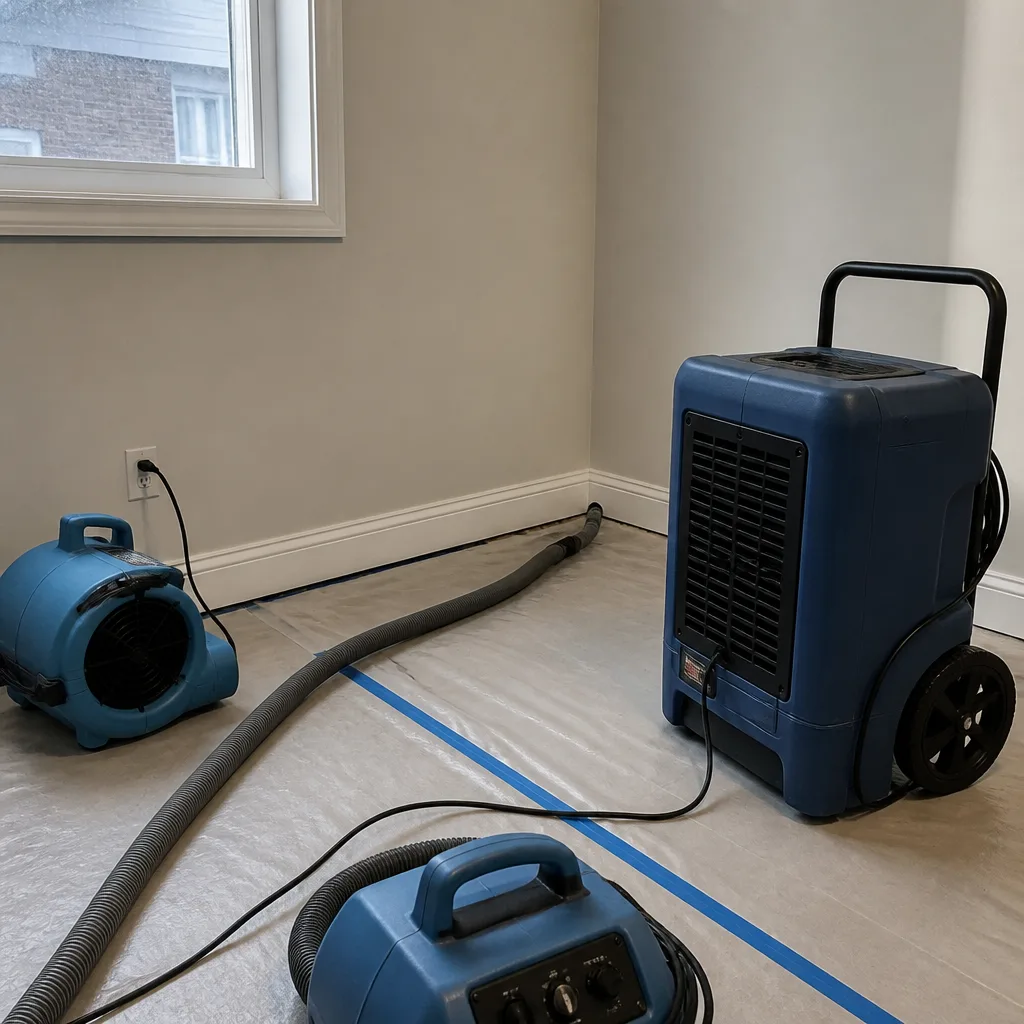 After
After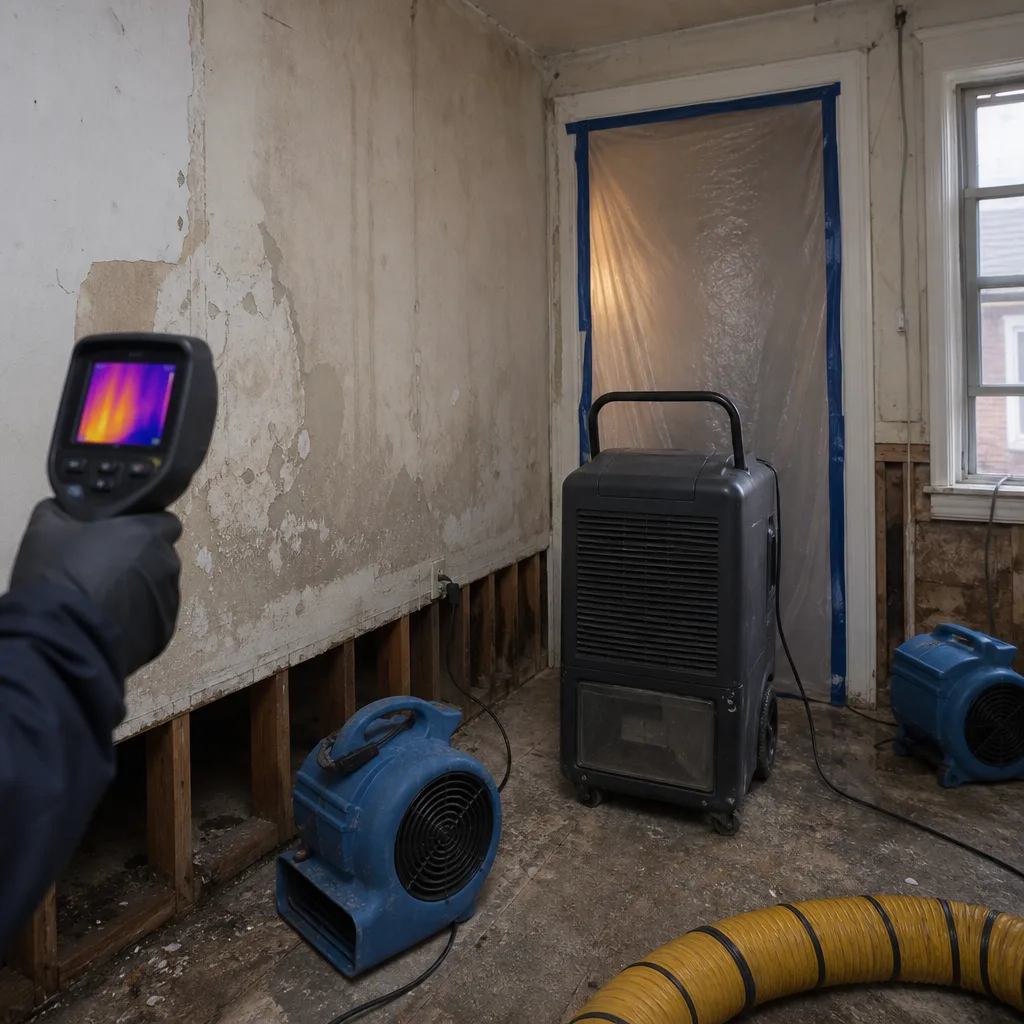 Before
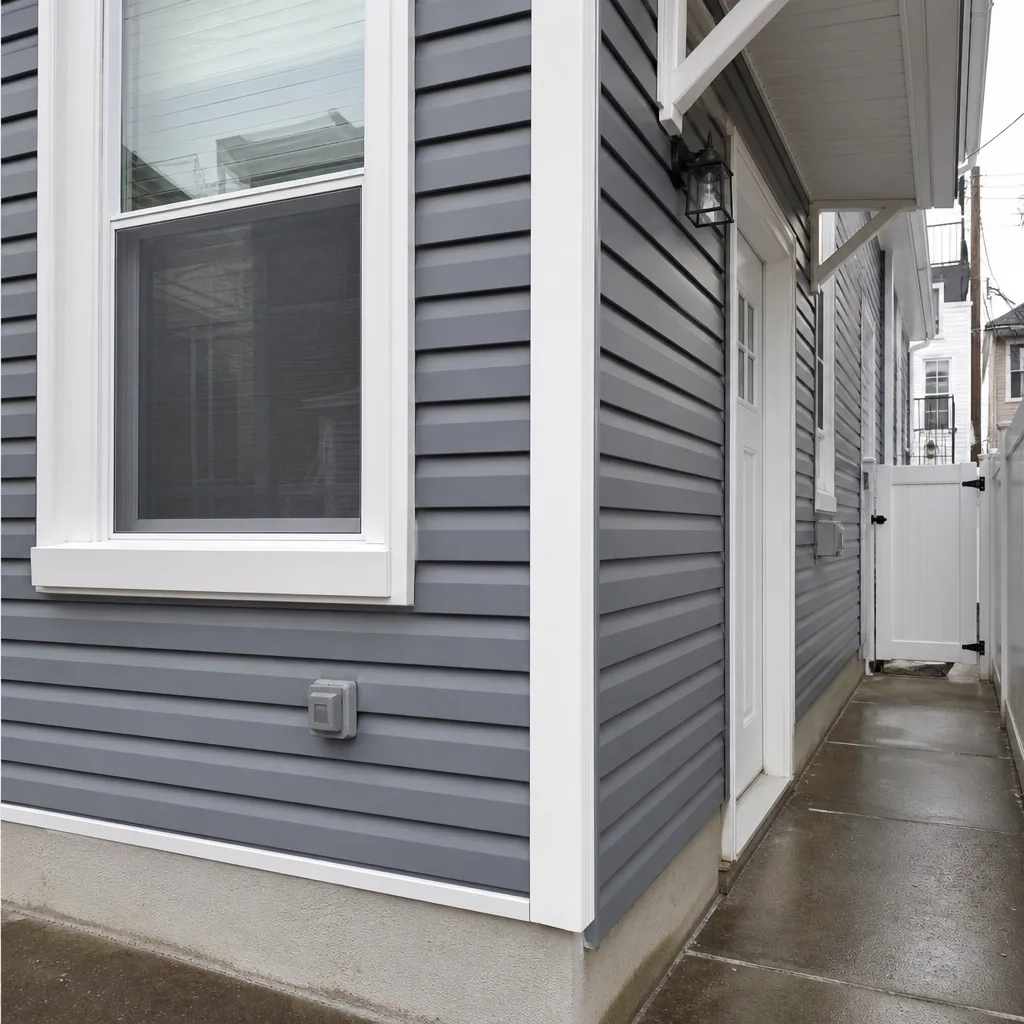 After
AfterThe Complete Guide to Damage Restoration in Jersey City
Jersey City sits on what was once the Hackensack Meadowlands, and that soil still moves, still holds water, and still makes your foundation work harder than a homeowner in a drier city ever has to think about. Add in pre-war brownstones with plaster walls and century-old cast iron pipes, plus a water table that sits stubbornly high, and you get a city where a small leak is rarely just a small leak for long. This guide is written for the homeowner who wants to understand what actually happens when water, fire, or mold shows up in a Jersey City property, from the first phone call to the final inspection, with damage restoration warning signs every Jersey City homeowner should know. You’ll learn the local factors that shape the work, the timeline of a proper restoration, what documentation you should expect, and where things go wrong when corners get cut.
Quick Answer
Damage restoration in Jersey City is the process of removing water, cleaning up fire and smoke residue, or eliminating mold, then repairing the affected structure so it’s safe and dry. Because of the city’s high water table, dense housing stock, and older building stock, this work requires local knowledge of how moisture moves through masonry, balloon-framed walls, and shared party walls. A proper restoration follows a clear sequence: emergency mitigation first, then drying and documentation, then repairs that account for the specific materials in your building. For details on staying compliant, see our guide to damage restoration permits, codes & inspections in NJ.
Table of Contents
- Why Jersey City’s Geology Makes Water Damage Different
- What Pre-War Brownstones and Row Houses Do When They Get Wet
- What a National Chain’s Truck Will Do vs. What a Local Owner Actually Documents
- Shared Walls, Basement Apartments, and the Liability Puzzle in Hudson County
- The Full Restoration Timeline, Phase by Phase
- What Does Damage Restoration Cost in Jersey City?
- Common Mistakes to Avoid
- When to Call a Professional
- Frequently Asked Questions
Why Jersey City’s Geology Makes Water Damage Different
The ground under Jersey City is not solid rock. Much of the city, especially the eastern wards near the Hudson and the low-lying areas around the Hackensack River, was built on filled marshland. That fill is a mix of soil, ash, construction debris, and organic matter that compacts unevenly and holds water like a sponge. When you add a water table that sits just a few feet below street level in many neighborhoods, you get basements that are effectively sitting in a slow-moving underground stream.
This matters on two fronts. First, any crack in a foundation wall or floor slab is not just letting rain in, it’s letting groundwater in, and groundwater never stops. A French drain that might work fine in a drier suburb works overtime here because the hydrostatic pressure is constant, not seasonal. Second, the fill itself shifts. Buildings settle unevenly, which opens hairline cracks in foundations and around pipe penetrations. Those cracks are where water, sewer gas, and mold find their way in.
What we look for on every Jersey City water job is whether the water came from above (rain, a burst supply line, an overflowing tub) or from below (groundwater intrusion, a failed footing drain, a sewer backup). The source changes the remediation strategy entirely. Cleaning up after a supply line break is mostly about drying and replacing what got soaked. Cleaning up after groundwater intrusion means you also have to solve the drainage problem or you’ll be back in the same wet basement next month.
What Pre-War Brownstones and Row Houses Do When They Get Wet
Most of the housing stock in Jersey City’s historic districts, Downtown, Bergen-Lafayette, the Heights, Journal Square, was built before 1940. These buildings are framed and finished with materials that respond to water very differently from the drywall-and-lumber assemblies in a modern suburban house.
Plaster walls are the biggest variable. Old plaster is a three-coat system of lime, sand, and horsehair or fiber over wood lath. It’s dense and holds water against the framing. When a plaster wall gets soaked from a leak above, it takes longer to dry than drywall and it’s more likely to develop mold behind the surface. You can’t just poke a moisture meter through and call it dry; the lath behind it can stay wet for weeks. Old growth lumber, which most pre-war framing is, absorbs water slowly and releases it slowly. That’s good for dimensional stability but bad for drying times.
Balloon framing is another factor. In a balloon-framed row house, the wall studs run continuously from the foundation to the roof, with no fire blocking between floors. That means water from a third-floor bathroom leak can travel down inside a wall cavity and pool at the bottom of the first-floor wall without ever showing a stain until the damage is done. A fire in a balloon-framed house can also spread vertically faster than in modern platform framing. Both are reasons the work has to be done by people who understand the building type, not just the equipment.
Old cast iron waste pipes deserve a mention. In a city with this much pre-war housing, we see a lot of cracked or corroded cast iron. When those pipes fail, the water is not clean. It’s sewage and it requires a specific remediation protocol, not just a shop vac. For a full explanation of how we handle water extraction and structural drying in these older buildings, see our guide on Water Damage Restoration in Jersey City.
What a National Chain’s Truck Will Do vs. What a Local Owner Actually Documents
Here’s the honest version of how this industry works. A national franchise restoration company dispatches a crew, usually within the hour, which is good. That crew is trained on a standard protocol. They’ll set up fans and dehumidifiers, take some moisture readings, file the insurance paperwork, and move on to the next job. Most of them do competent work. But the people who own that franchise are often not the people in your house, and the person in your house may not be the same person who comes back tomorrow.
What that model doesn’t always give you is a line-by-line record of what got wet, how wet it was, what was done about it, and whether it’s actually dry. The documentation is what separates a defensible insurance claim from one that gets denied or reduced. If your adjuster can’t see a daily moisture log showing the progression of drying across three or four days, they have no reason to approve the full scope of work. They’ll approve the demo and the drying, but they may push back on the rebuild if there’s no record showing the structure actually dried down to the target.
Wade Ferris started this company in 2007 because he saw too many homeowners in Jersey City get a fast crew, a big invoice, and no documentation. His approach is built around the daily moisture log. Every day, someone is taking readings with a professional-grade meter. At the end of the job, the homeowner gets the full log. Not a summary, the actual readings, date-stamped and signed. Almost nobody else in the trade does this, because it creates accountability. It means if a wall wasn’t dry enough before the drywall went back up, there’s a written record that says so.
The equipment matters too. We run Dri-Eaz and Phoenix dehumidifiers, Injectidry systems for drying inside wall cavities without tearing out all the plaster, and XPOWER air movers, B-Air dryers. These are the brands the IICRC and RIA standards are written around. A homeowner shouldn’t need to know what these are, but when the adjuster sees the log and the equipment list, the conversation changes. That’s what Wade’s Restoration home stands for: giving the homeowner the same documentation the insurance company gets, so there’s no information gap.
Shared Walls, Basement Apartments, and the Liability Puzzle in Hudson County
Jersey City is dense. Row houses share party walls. Condo buildings stack units vertically and horizontally. Many homes have basement apartments, legal or otherwise. That density creates restoration problems you don’t get in a single-family house on a quarter-acre lot.
When water damage happens in a shared wall, the water doesn’t know which side of the property line it’s on. A leak from one unit’s supply line can soak the drywall and insulation in the neighbor’s unit. A slow roof leak in a row house can travel along the roof deck and present in the house two doors down. This is where liability gets complicated. Who pays for the drying equipment when the moisture reading on the other side of the wall is elevated but there’s no visible damage yet? The correct answer is that you document it now, because the mold that grows behind that wall in six months will be a much bigger problem and a much harder conversation with an insurance company.
Basement apartments present their own issues. If a basement unit floods and there’s no secondary egress, the situation is not just wet, it’s potentially life-threatening. Sewage backups in garden-level units are a health hazard, not a cleanup project. In these cases, the right move is always evacuation first, then professional remediation with the right personal protective equipment. For mold in these below-grade spaces, the protocol is different than in a well-ventilated upper floor because the relative humidity is already near the threshold where mold grows, even without a leak. We cover these scenarios in depth on our Mold Remediation in Jersey City page.
The Full Restoration Timeline, Phase by Phase
Every restoration job follows a sequence, and understanding that sequence before the truck arrives gives you a realistic picture of what’s coming. Here’s what a typical water damage restoration in Jersey City looks like, start to finish:
- First call and dispatch (within the hour): You call, a live person answers - not a voicemail system. Wade Ferris answers his own phone, and he can usually have extraction equipment running inside the hour for Jersey City addresses.
- Assessment and documentation (hour 1-2): The crew arrives, takes initial moisture readings, photographs everything, and maps the affected area. This is the baseline that everything else is measured against.
- Water extraction (hours 1-4): Standing water is removed with truck-mounted or portable extractors. The faster this happens, the less structural damage you’re dealing with.
- Drying setup (day 1): Air movers and dehumidifiers go in. The number and type depend on the square footage, the materials, and how long the water has been sitting.
- Daily monitoring (days 2-5): Someone comes back every single day, takes moisture readings, moves or adjusts equipment, and logs everything. This step is where the quality of the job is actually determined.
- Drying target reached (typically days 3-7): When the readings show the structure is dry enough to rebuild, the equipment comes out. The drying log gets handed to you and to your insurance company.
- Scope of repair and rebuild (days 7-21): Demolition of unsalvageable materials, then reconstruction. In an older Jersey City building, this may mean matching plaster, lath, and trim profiles that aren’t sold at the home center.
- Final inspection and documentation (final day): A walkthrough, the completed moisture log, and the written Done Right Promise that covers the work for 90 days.
Fire restoration follows a similar sequence but starts with smoke and soot mitigation, not water. Smoke penetrates porous surfaces differently depending on the material - plaster, solid wood, and unfinished masonry all absorb smoke differently. Fire damaged buildings in Jersey City also often have water damage from the fire suppression itself, which means the restoration is really two jobs running at once. We’ve written a detailed breakdown on Fire & Smoke Damage Restoration in Jersey City.
What Does Damage Restoration Cost in Jersey City?
Costs depend on the category of water, the square footage affected, the materials involved, and the drying time. Here’s a rough breakdown for this market, based on the work we see in Jersey City homes:
- Emergency water extraction: $400 to $1,200 for a typical basement or single-room job, including the initial equipment setup.
- Structural drying (per day): $150 to $300 per day for the equipment, monitoring, and log documentation on a standard job.
- Mold remediation (contained area): $1,500 to $4,000 for a typical bathroom or basement wall section, including containment, removal, and post-remediation verification.
- Mold remediation (whole basement): $5,000 to $15,000 depending on square footage, finish level, and whether the source of moisture also needs repair.
- Fire and smoke cleanup: $3,000 to $25,000 depending on the severity, with kitchen fires at the low end and structural fires at the high end.
- Sewage backup cleanup: $2,000 to $8,000 including disposal, sanitation, and drying of the affected space.
These are honest ranges, not quotes. The only way to get a real number is for Wade to walk the property, take readings, and put a written scope in front of you before any work starts. No trip charge inside Hudson County, and a free second opinion on any written estimate you’ve already gotten. Senior and Veteran discount is 10%, applied automatically, not treated like a favor.
Common Mistakes to Avoid
- Waiting to call because you think it’ll dry on its own. In Jersey City’s humidity, a soaked wall or carpet will not dry on its own fast enough to prevent mold. The 24 to 48 hour window is real, and it’s shorter in a basement near the water table.
- Using a shop vac and box fans and calling it done. A shop vac removes standing water, but it doesn’t address the water inside the wall cavities, under the baseboards, or behind the plaster. That hidden moisture is where the real damage is happening.
- Letting the insurance company’s preferred contractor do the work without getting your own documentation. The mitigation company the insurer sends works for the insurer, not for you. You are entitled to your own independent assessment, your own moisture readings, and your own log.
- Replacing drywall before the framing behind it is actually dry. This is the most common cause of recurring mold we see. The wall looks fine for six months, then the musty smell comes back.
- Ignoring the source of the water. If groundwater is coming in through a foundation crack, every cleanup is temporary until the drainage is fixed. The cleanest basement in Jersey City will get wet again if the water has a way in.
- Painting over water stains with regular paint. Water stains bleed through standard latex paint and the underlying moisture problem remains. The right approach is to dry, seal, and then repaint.
- Not verifying the contractor’s address and license. This city is full of trucks with no fixed address and no published license number. If you can’t verify who you’re hiring, you can’t hold them accountable.
When to Call a Professional
You should call a professional the moment you see standing water that covers more than a few square feet, smell a musty odor you can’t locate, see visible mold larger than a dinner plate, or experience a sewage backup. You should also call if water has been sitting for more than 24 hours, because the drying job is now beyond what a homeowner can do with fans. If you’ve had a fire, even a small kitchen fire, the smoke has traveled further than the visible damage suggests, and a professional assessment is worth it. Wade’s Restoration offers free estimates in Jersey City, call (201) 903-9581. Wade will come out himself, take the readings, and tell you honestly whether you need full remediation or just a targeted fix.
Frequently Asked Questions
Wade’s Restoration can usually have extraction running inside the hour for Jersey City addresses, because Wade answers his own phone 24/7 and lives here. Not an answering service, not a call center, just his cell. Call (201) 903-9581 and you’ll get a person, and that person can be on the road immediately.
Most homeowner policies cover sudden and accidental water damage, fire damage, and the resulting restoration work, but coverage depends on the source of the water and how quickly you responded. The documentation matters a lot. Wade deals with the insurance adjuster directly, so you’re not stuck relaying information between two sides, and the daily moisture log he provides is exactly what adjusters need to approve the full scope.
The answer depends on the moisture readings and the category of water. If the water came from a clean supply line and was addressed within 24 hours, a thorough drying and cleaning may be sufficient. If the water was from sewage, groundwater, or sat for more than a couple of days, full remediation with containment and material removal is usually the only way to prevent mold. The honest way to know is to get the readings, not a guess. Estimates are free.
Two things: the high water table and the age of the building stock. The water table in much of Jersey City is within a few feet of the surface, which means basement walls and floors are constantly fighting hydrostatic pressure. Combine that with pre-war stone and brick foundations that were never waterproofed to modern standards, and you get basements where the relative humidity hovers near the mold threshold even without a leak. Any added moisture tips it over the edge fast.
A water damage restoration typically takes 3 to 7 days of drying, plus 1 to 3 weeks for repairs depending on the scope. Fire restoration takes longer because of the smoke mitigation and the rebuild. Mold remediation depends on the size of the affected area; a single wall section can be done in 2 to 3 days, a whole basement can take a week or more. Every job is different, which is why the written scope before work starts matters.
Wade personally deals with the insurance adjuster on every job. He knows how to present the documentation, the readings, and the photos so the claim is processed fairly. You aren’t the middleman, and you aren’t the one trying to explain to an adjuster why a wall that looked dry was actually at 22% moisture content. That’s his job.
The Bottom Line
Damage restoration in Jersey City is not a generic service. This city’s filled marshland geology, high water table, pre-war building stock, and dense shared-wall housing all shape how water, fire, and mold behave in your home. The work requires local knowledge, honest documentation, and an owner who is accountable to the neighborhood, not a franchise manager in another state. If you’re dealing with water, fire, or mold, act fast, document everything, and call a local company that will pick up the phone. You can also browse more guides & resources on our blog. Wade Ferris has been doing this work in Jersey City since 2007, with a published address, a license number, and a 90-Day Done Right Promise in writing on every job. Call (201) 903-9581 for a free estimate, no trip charge inside Hudson County.
Written by Wade Ferris, Owner at Wade’s Restoration, serving Jersey City since 2007.