
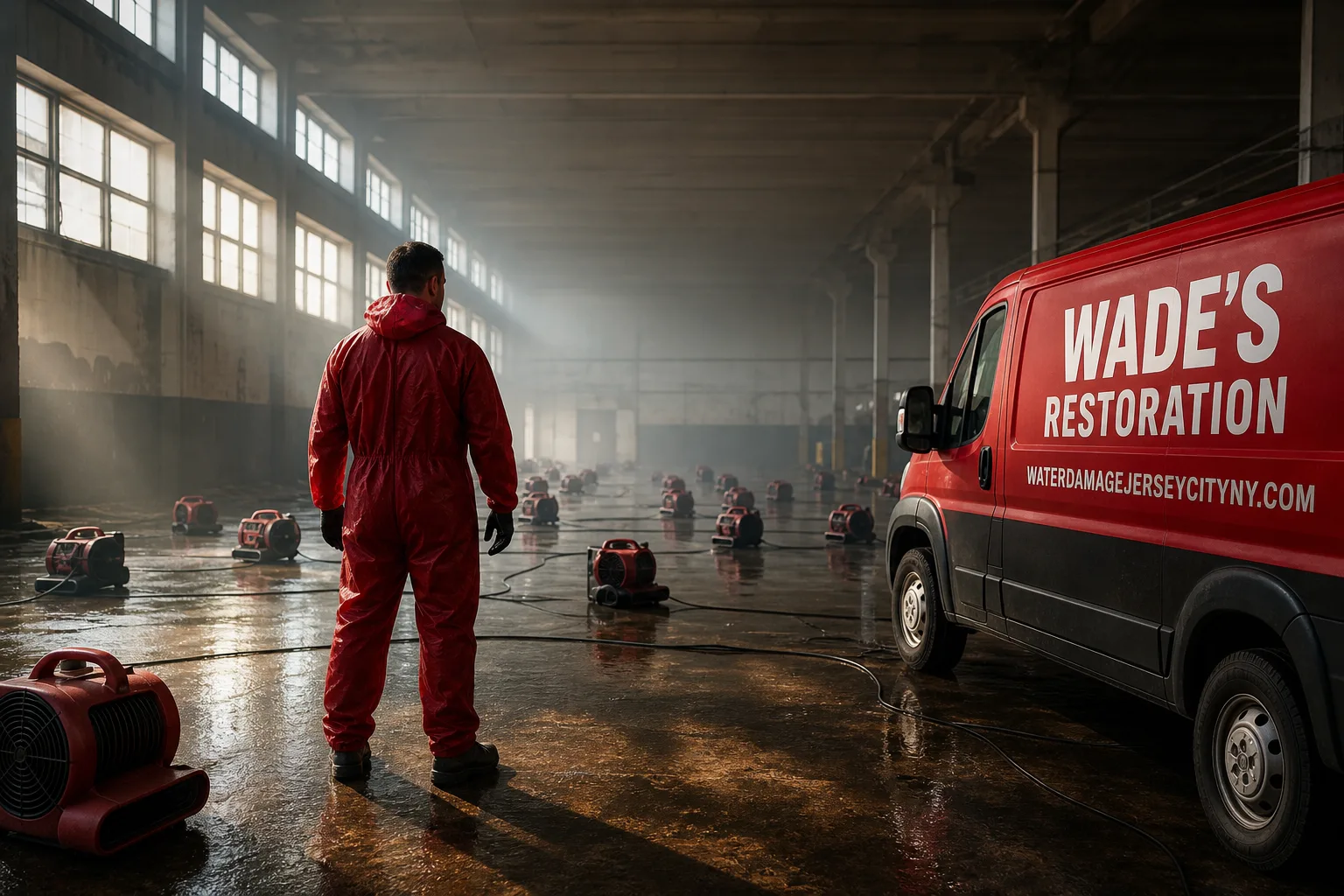
Free visual inspection and a written scope of work before any mitigation begins - photos, moisture readings, and drying logs go in your claim file
The scope we write is the scope we bill. Anything new gets shown to you, in writing, before we touch it.
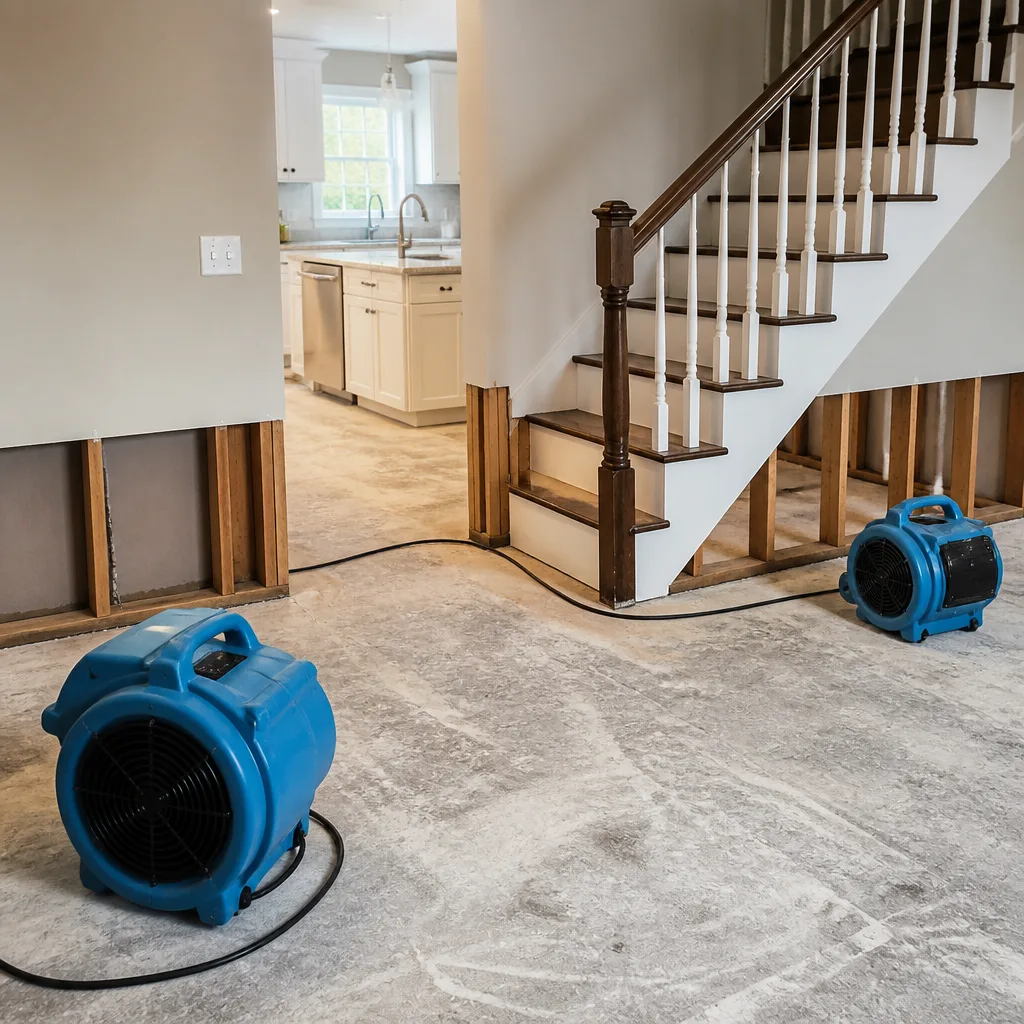
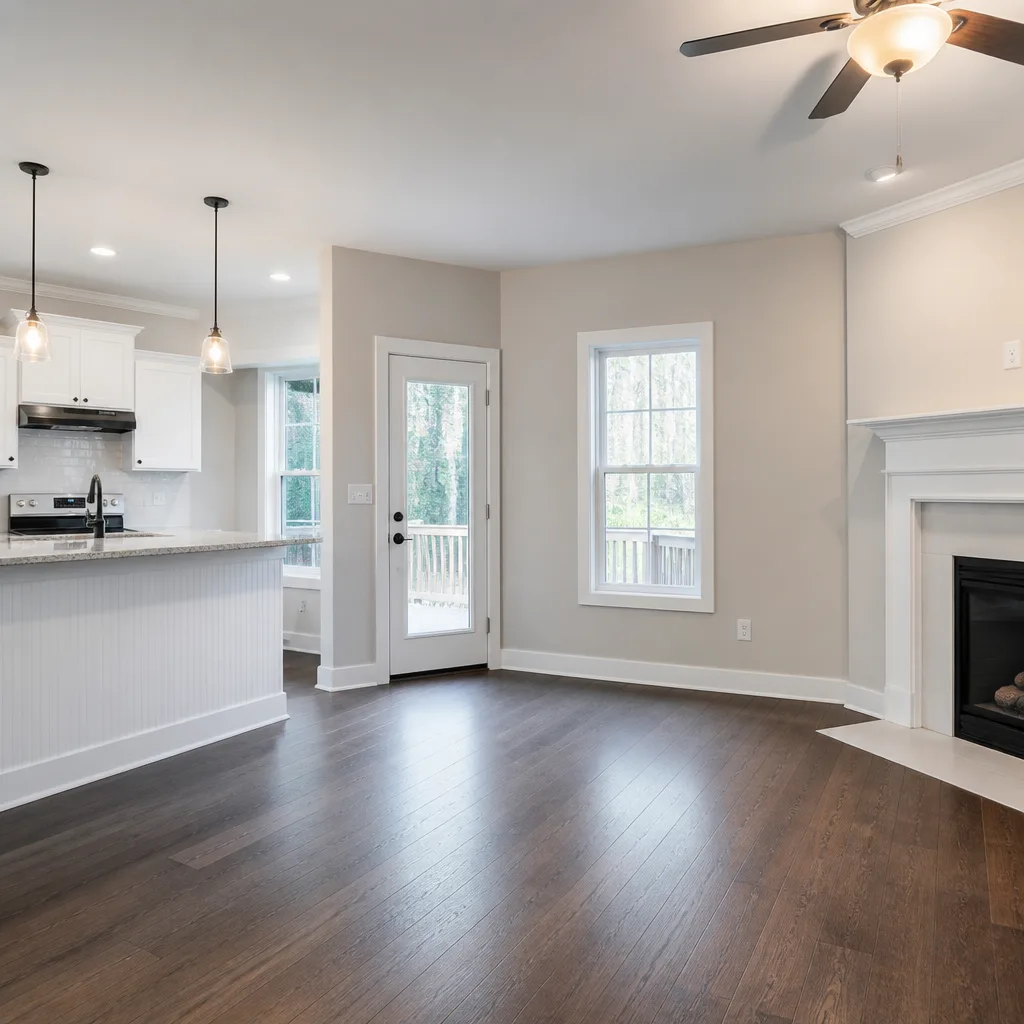
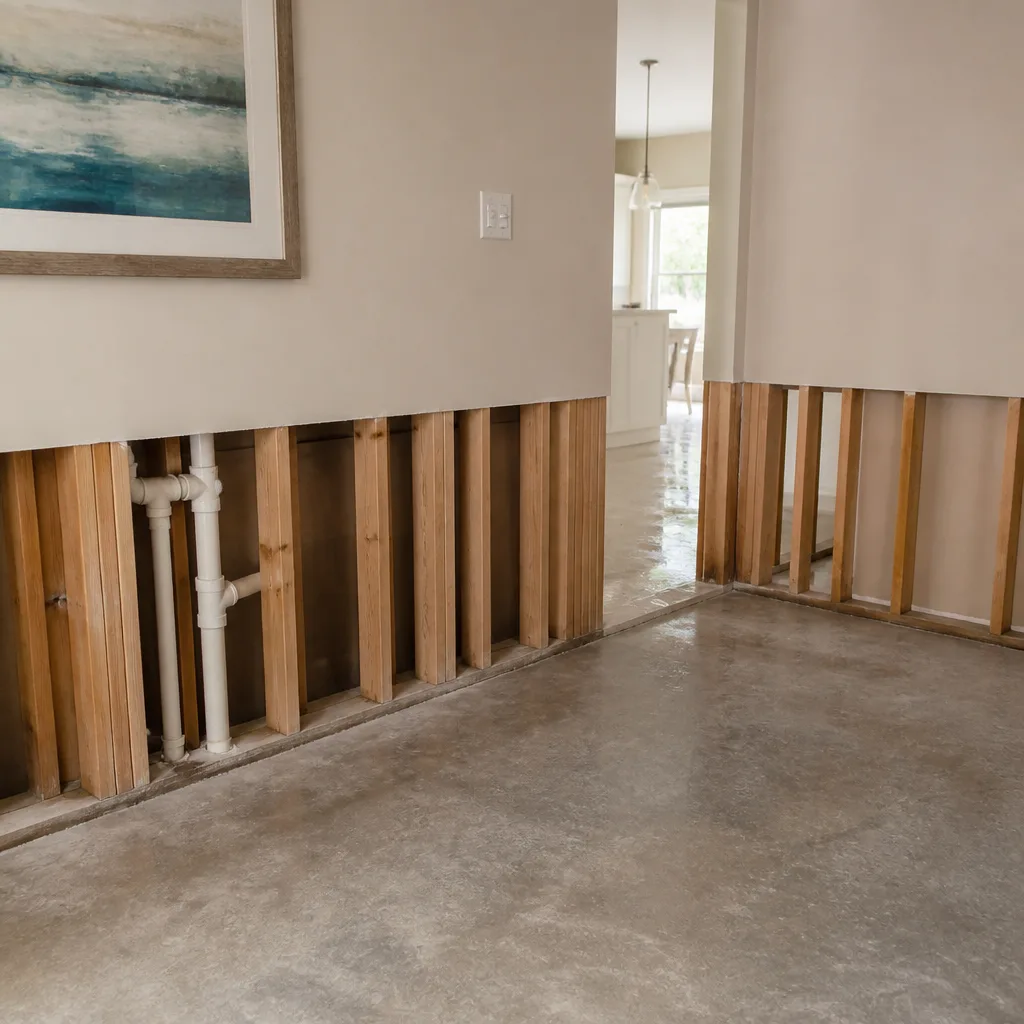
 Before
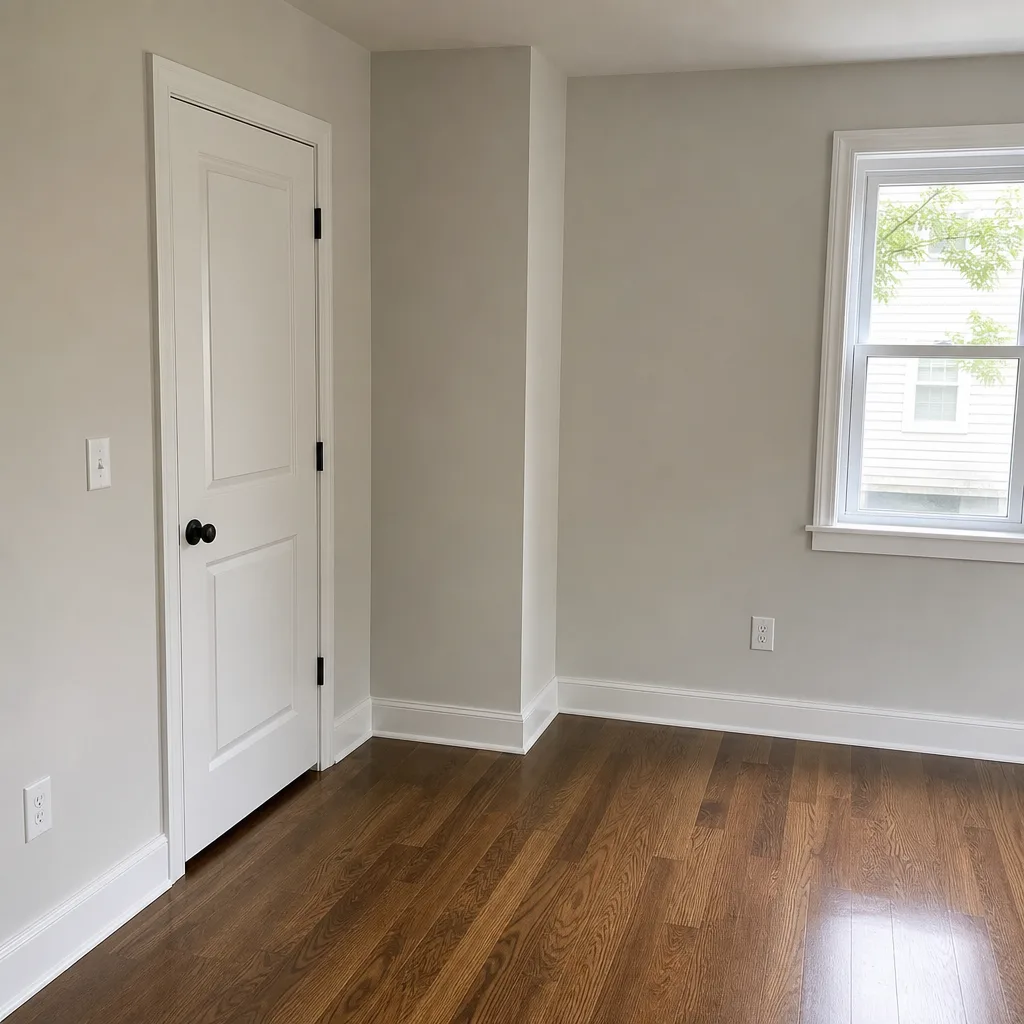 After
After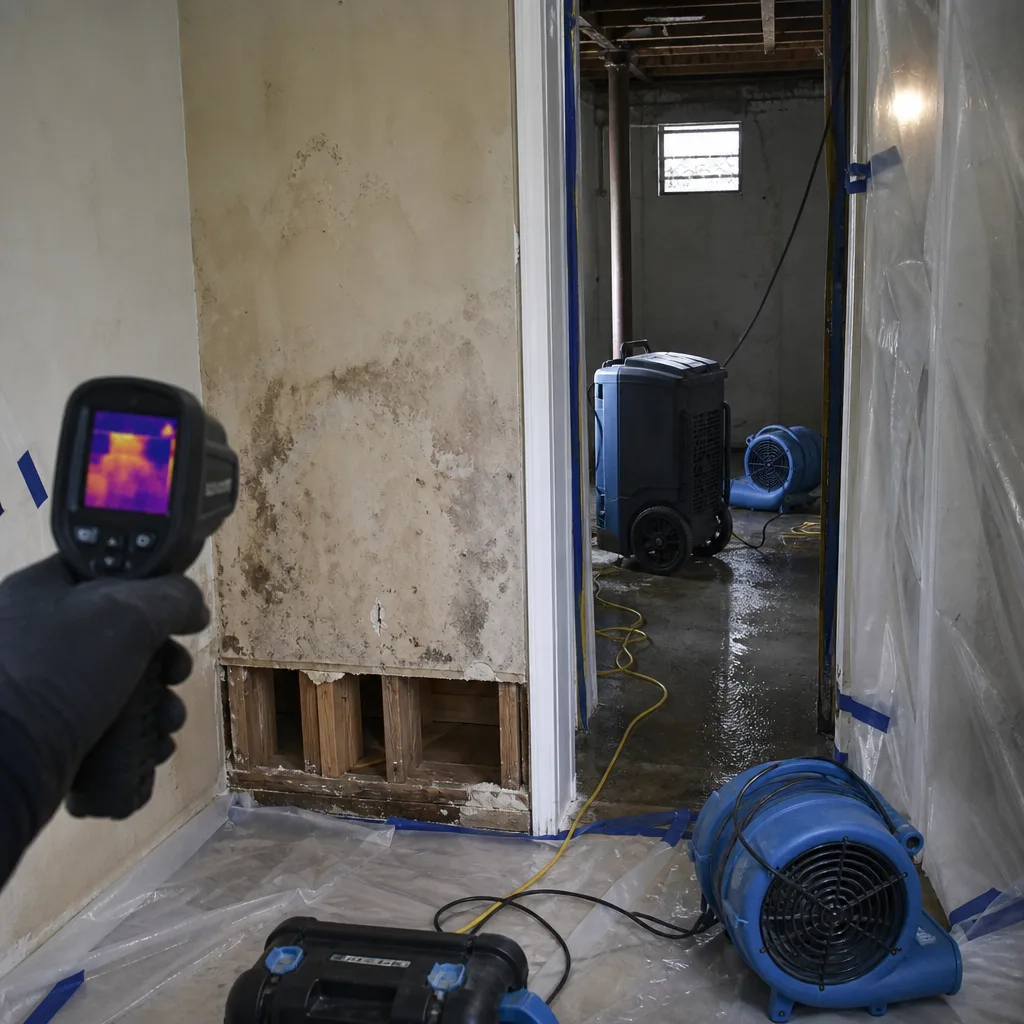 Before
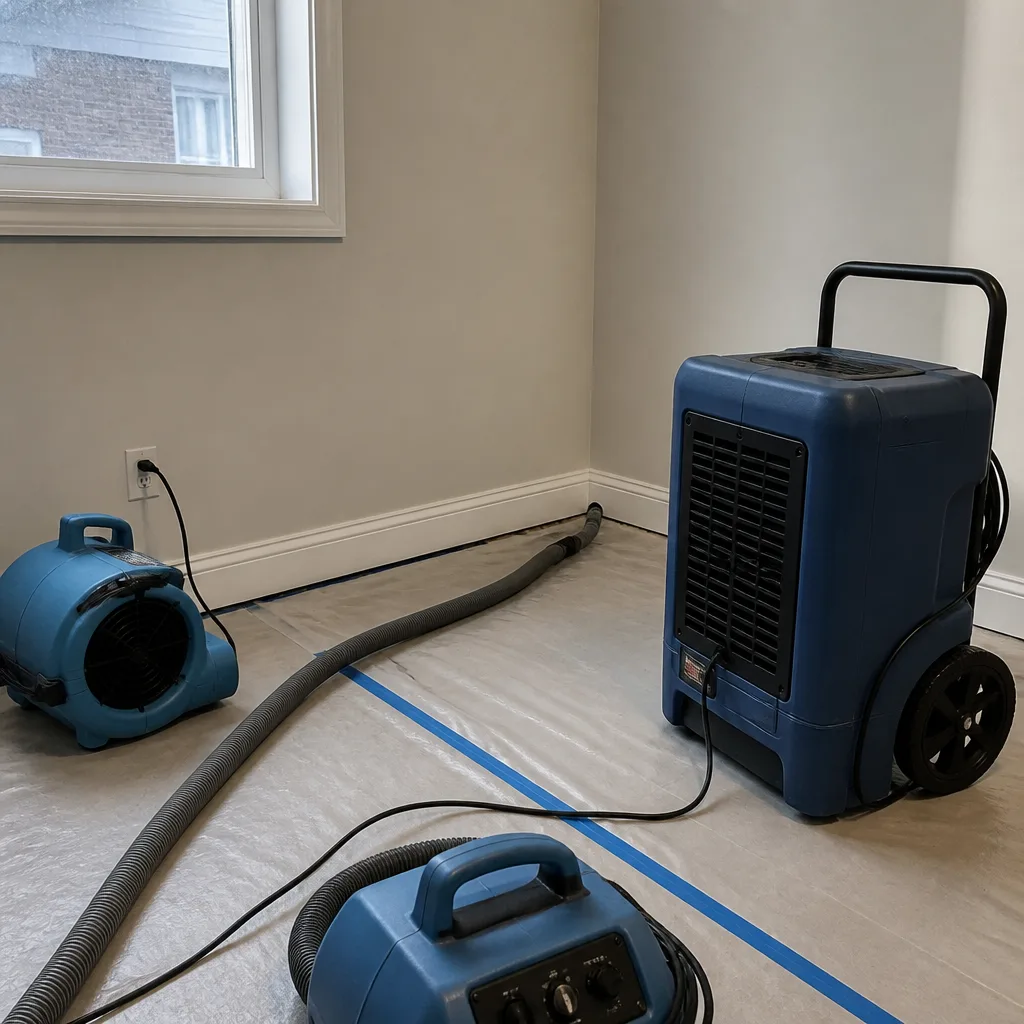 After
After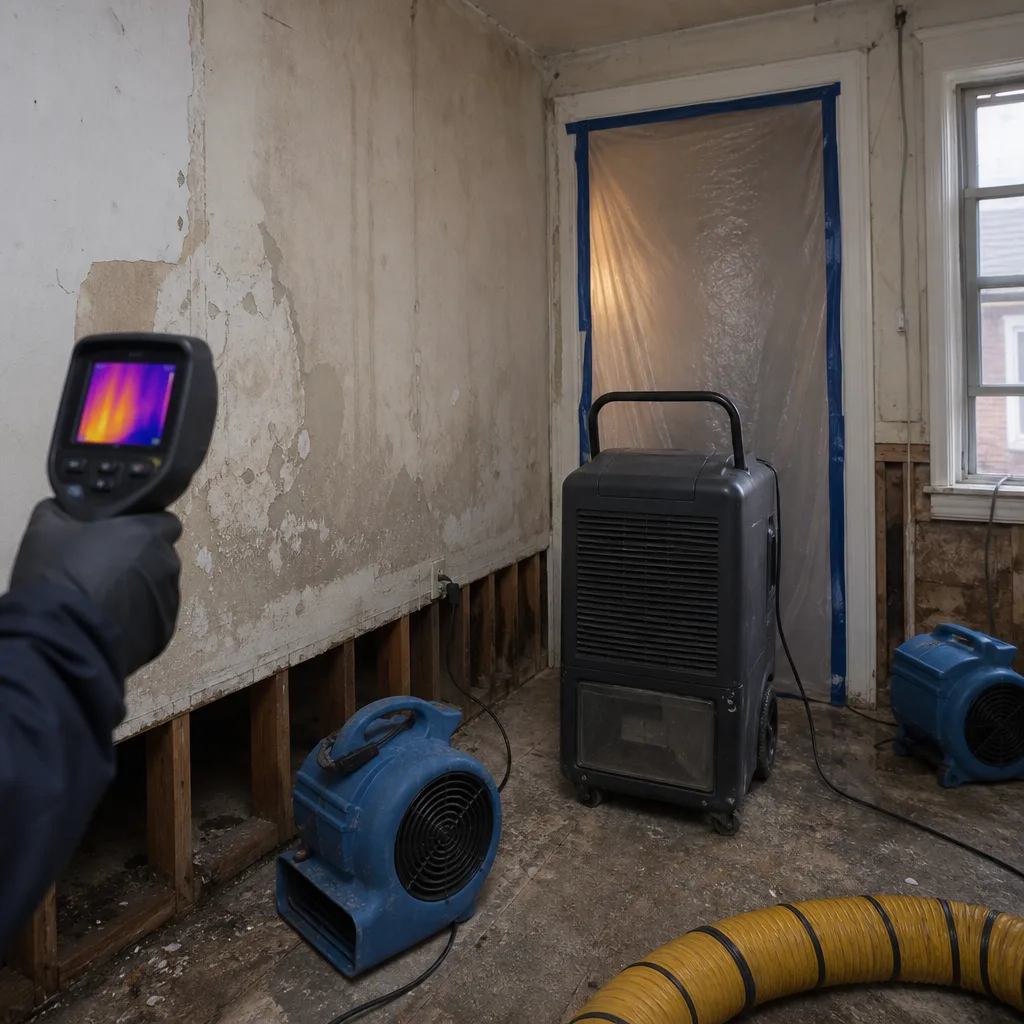 Before
 After
After24/7 Emergency Storm & Disaster Restoration in Bayonne
Storm damage in Bayonne moves fast. Saltwater intrusion, wind-driven rain, and surge flooding don’t wait for business hours, and neither do we. If water is coming into your row house on Avenue B or wind has torn a section of roofing off a three-family on 45th Street, call (201) 903-9581 right now. Wade Ferris answers his own phone, day or night, and he can have a crew at your door in Bayonne within the hour with extraction pumps, moisture meters, and containment supplies. The first hour after a storm determines whether you’re looking at a dryout or a full gut-and-rebuild. Every minute saltwater sits in wall cavities, it’s corroding wiring, feeding mold that’s been dormant since Sandy, and wicking up through lime plaster. We’ll walk the property with you, show you what we’re seeing on the moisture readings, and give you a straight answer about what needs to happen next. No voicemail, no answering service, no call center in another state. Just Wade, or one of his crew, on the road toward Bayonne.
Understanding Storm & Disaster Restoration Severity in Bayonne Properties
Bayonne’s housing stock changes how storm damage behaves. Most of the city is attached brick row houses built between 1900 and 1945, sitting on full basements that are barely above the tidal water table. When storm surge or nor’easter flooding pushes water into those basements, it’s rarely clean rainwater. It’s Category 2 or Category 3 water, contaminated with sewage, harbor sediment, and salt, and it wicks into original lime plaster walls fast. Moisture mapping with thermal imaging shows saturation patterns that differ from inland New Jersey, because saltwater holds moisture longer and corrodes the steel lintels over windows and doors. We classify every storm loss by water category, map the moisture boundaries, and set containment before demolition begins. Soot from a fire sparked by downed lines lands differently in a pre-war row house too, it migrates through shared wall cavities into the neighbors’ unit. That’s why our process starts with a full assessment, not just a pump and a promise. Bayonne homes hide damage in places that newer, detached houses don’t have.
Why Bayonne Property Owners Choose Wade’s Restoration
- 45-minute response commitment: When you call from anywhere in Bayonne, we tell you exactly when the truck rolls. Wade’s crew is minutes away, not dispatched from a regional hub in another county.
- 24/7 live answer: A real person picks up. Usually Wade himself. You won’t sit through a phone tree while water rises in your basement on West 8th Street.
- IICRC-certified crews: Water damage techs hold WRT and ASD certifications; fire and smoke work is handled by FSRT-certified restorers; mold jobs are run by AMRT-trained crews. The codes matter, and we carry them.
- Free visual inspection: After any storm, you get a thorough walkthrough with moisture readings and thermal imaging at no charge. You’ll see what we see, in writing, before any work is authorized.
- Direct insurance billing: We photograph everything, log every moisture reading, and bill your carrier directly. You’re not left holding paperwork while your adjuster and our office play phone tag.
- One team from extraction to reconstruction: The same people who pump out your basement are the ones who rebuild the walls. No handoffs, no blaming the last contractor, no gaps in responsibility.
Our Storm & Disaster Restoration Process
Inspection & Assessment
We arrive with moisture meters, hygrometers, and thermal imaging cameras. Wade walks every room, maps the water category and saturation boundaries, and marks what can be saved versus what has to come out. You get a written scope before anything is torn open.
Extraction & Stabilization
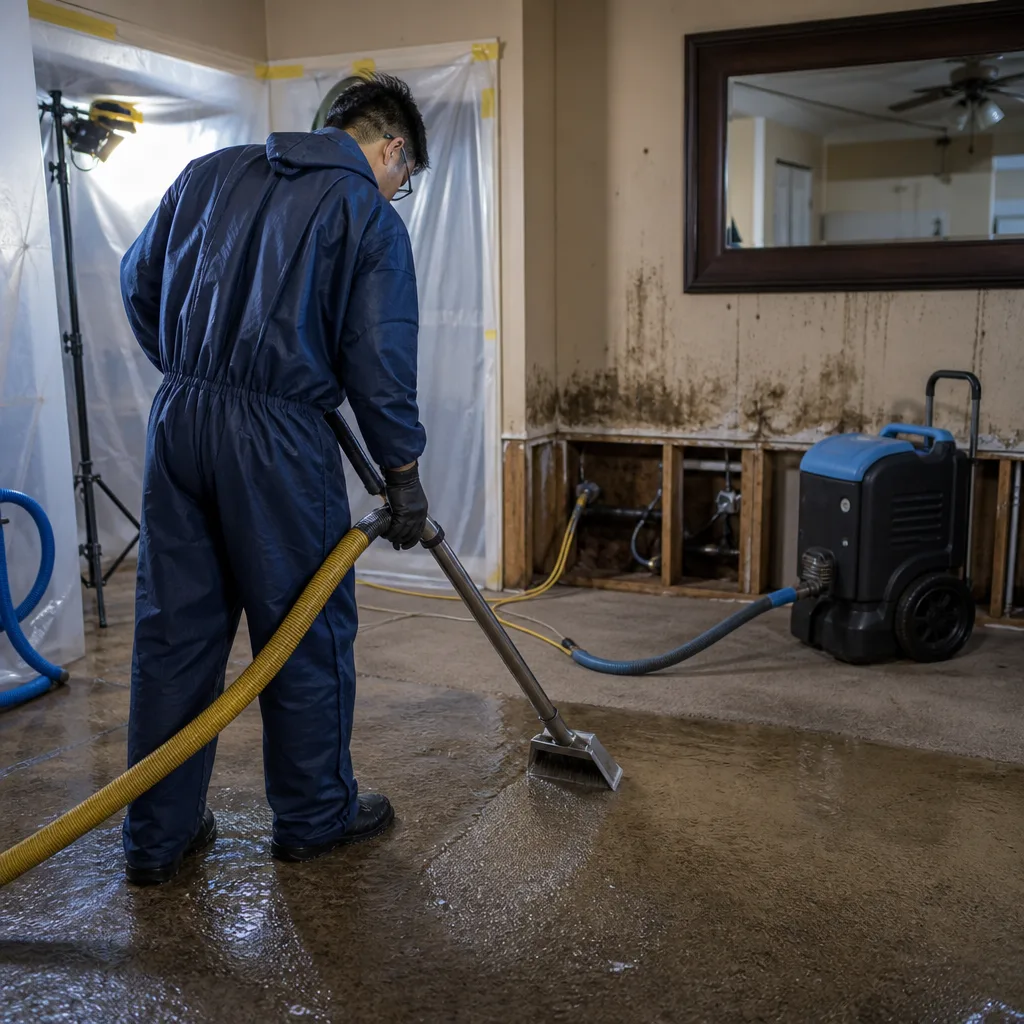
Standing water comes out first with truck-mounted extraction units and submersible pumps. We board up broken windows, tarp damaged roofs, and brace any compromised structural openings so the property is secure and weathertight immediately.
Drying & Dehumidification
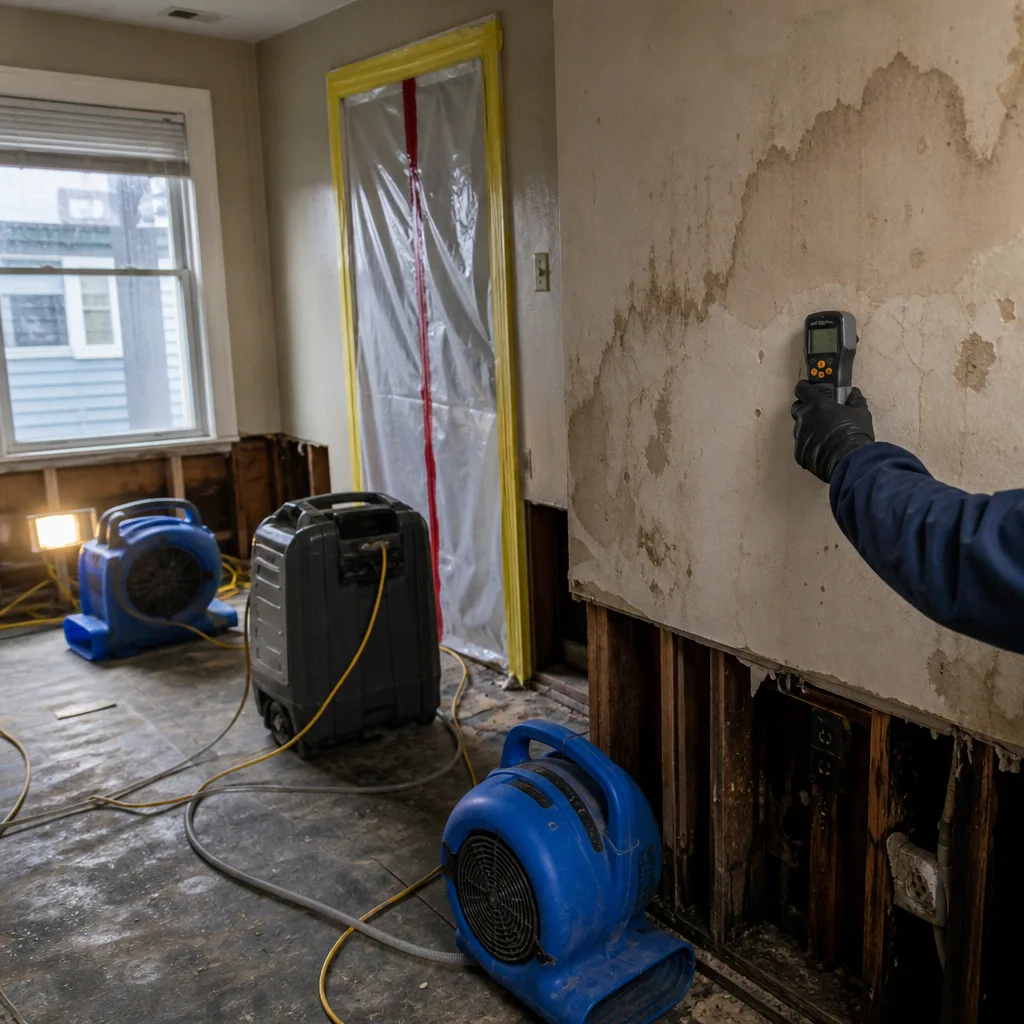
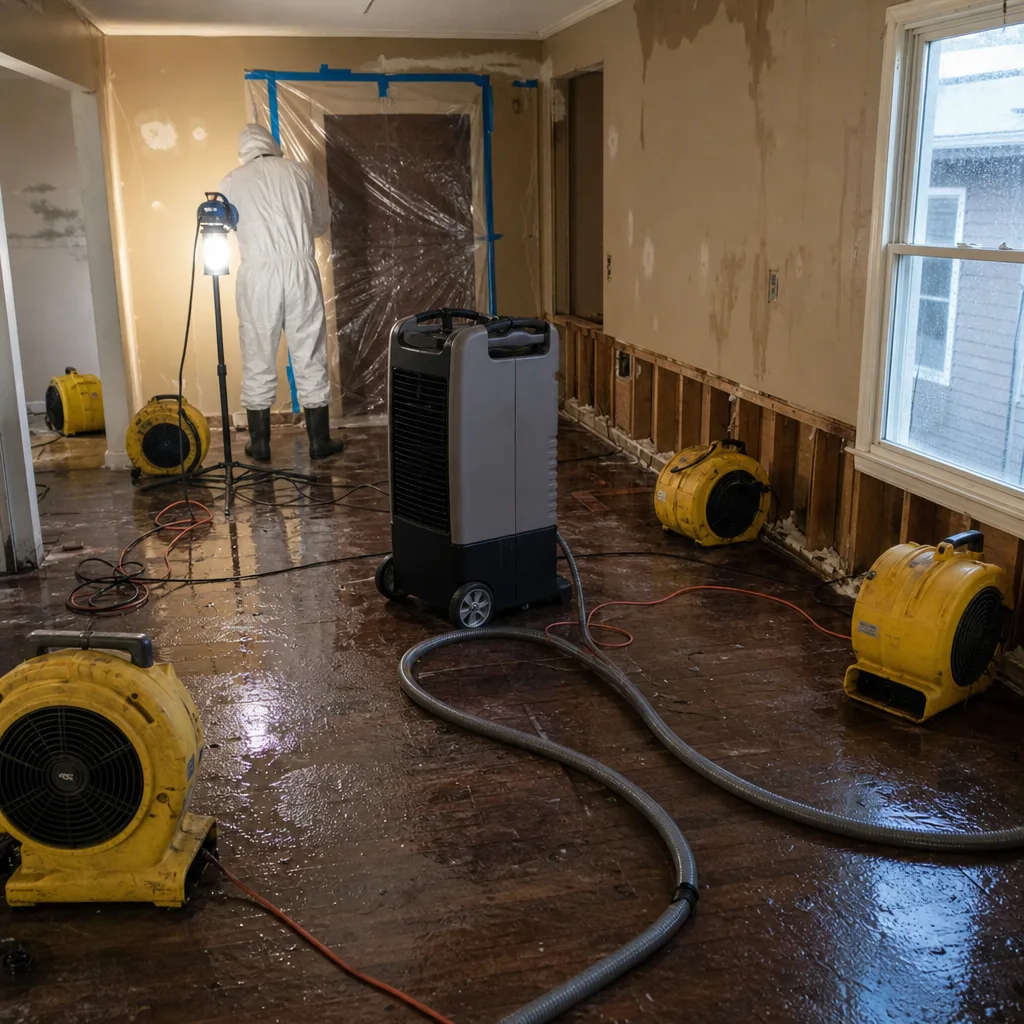
Dri-Eaz dehumidifiers and high-velocity air movers are placed based on the moisture map, not scattered randomly. In Bayonne’s attached row houses, we run drying logs daily and check wall cavities where saltwater lingers longer than freshwater.
Cleaning & Sanitization
Every surface in the affected area is cleaned with antimicrobial treatments appropriate for Category 2 or 3 water. Salt residue is flushed from wall assemblies and electrical chases, because salt left behind keeps corroding long after the visible damage is gone.
Salt & Corrosion Treatment
Bayonne-specific step: we inspect electrical panels, HVAC coils, and steel lintels for salt-accelerated corrosion even when they never sat in standing water. If corrosion is found, we document it, remediate the affected materials, and flag it for your adjuster.
Repairs & Restoration
Rebuild happens with the same crew. Drywall, flooring, trim, paint, and any wind-rated door or window replacements are handled to Bayonne’s code requirements, with permits pulled when required. The job isn’t done until you say it is, and that’s backed in writing.
Need Emergency Storm & Disaster Restoration in Bayonne Now?
Crews minutes away, answering live 24 hours a day. The sooner we start, the less it costs.
Working With Your Insurance Company
We’ve handled enough storm claims in Bayonne to know that adjusters respond to documentation, not adjectives. From the first hour on site, we photograph everything, log every moisture reading, and build a line-item scope that matches what your policy actually covers. Wade talks to your adjuster directly, so you’re not the one explaining why Category 3 water in a pre-war row house needs more than a fan and some bleach. We submit the drying logs, the photos, and the scope, and we’ll walk the adjuster through the property ourselves if they come out. Saltwater corrosion claims are easier to get approved when a certified restorer documents the mechanism, not when a homeowner guesses at it. We’ve been doing this since 2007, and we know what sticks.
What We Provide Your Insurer
- Thorough documentation of the loss
- Photos of all damage, room by room
- Moisture readings and drying logs
- A detailed, line-item scope of work
- Direct coordination with your carrier
Built for Bayonne’s Loss Calendar
Bayonne’s storm damage follows a rhythm, and we’ve learned it over the years. Late summer and early fall bring Atlantic hurricane remnants and nor’easters that push surge up Newark Bay and the Kill Van Kull into the low-lying waterfront blocks near the east side and the southern tip. Winter deep freezes burst supply lines in unheated basements and crawlspaces of 1920s row houses on Avenue C and Broadway. Spring thaw brings basement seepage as the water table under the peninsula rises, and summer thunderstorms dump flash flood volumes that the combined sewer system can’t always move out fast. Each season has its own damage signature in Bayonne, and we keep the right equipment staged for the season that’s coming, not the one that just passed. A January pipe break in a pre-war brick building is a different job than an August surge flood, and we treat them that way.
Storm & Disaster Restoration Across Bayonne’s Neighborhoods
Response routes matter when you’re trying to get a crew to a flooded basement fast. From the low-lying blocks off Broadway near the Kill Van Kull, to the dense three-family streets around 45th Street and Avenue C, to the longer-established blocks near 8th Street and the park, we know which buildings have the shallow basements, which blocks flood first in a nor’easter, and where the pre-war row house stock is oldest. The Bergen Point neighborhood at the southern tip catches surge from both the Kill Van Kull and Upper New York Bay, and we’ve pulled seawater out of basements there that newer contractors would have called a Category 1 when it was clearly a Category 3. The streets south of the Bayonne Bridge have their own microclimate for storm damage, salt exposure, and wind loading. Skyline Drive and the higher elevation blocks near Route 440 see less flooding but more wind damage, downed trees, and roof failures during coastal storms. Every neighborhood in Bayonne has a loss pattern, and we drive them all regularly.
Specialized Storm & Disaster Restoration Services We Offer in Bayonne
Storm Damage Cleanup
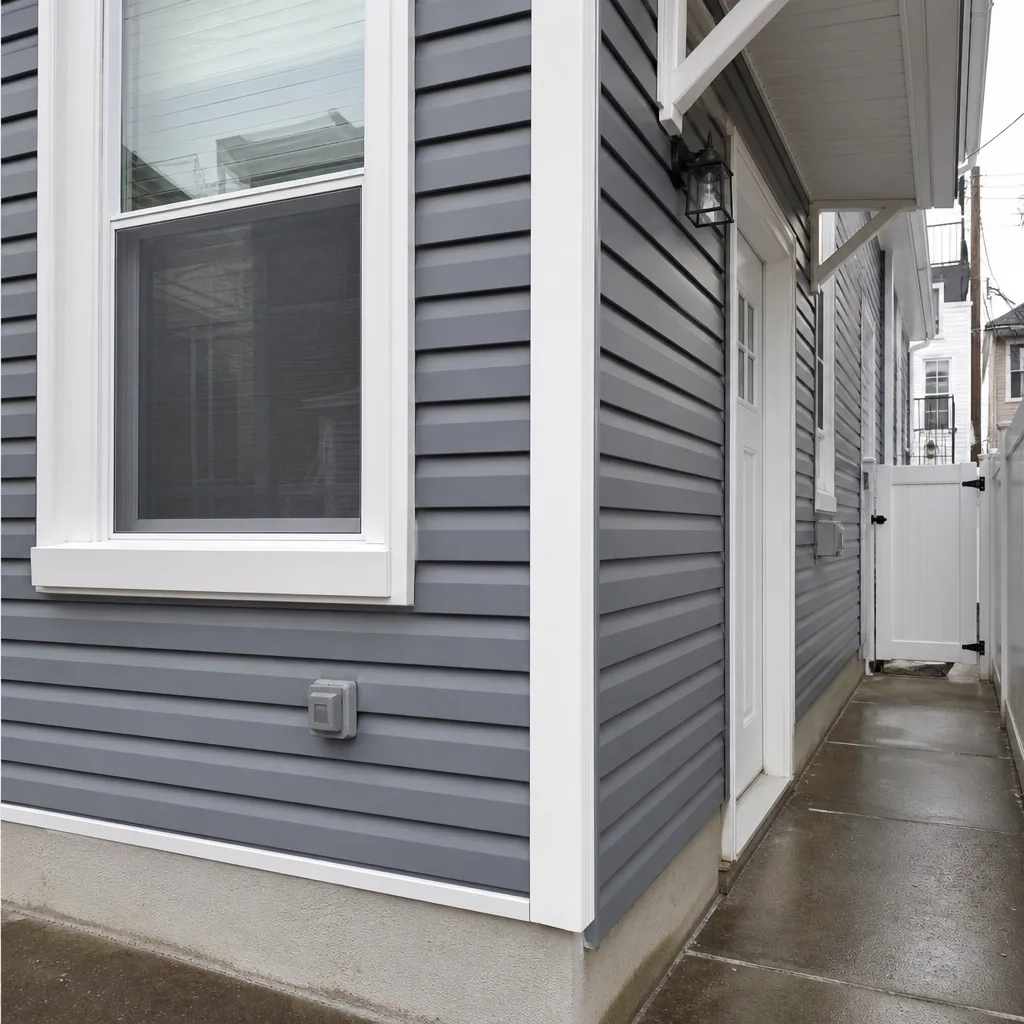
Downed trees, blown-in debris, shattered glass, and wind-loosened building materials all come out fast. We clear the site, secure the structure, and separate what can be cleaned from what has to be replaced. In Bayonne’s attached row houses, we also check the shared wall cavities where wind-driven rain travels between units.
Flood Damage Restoration
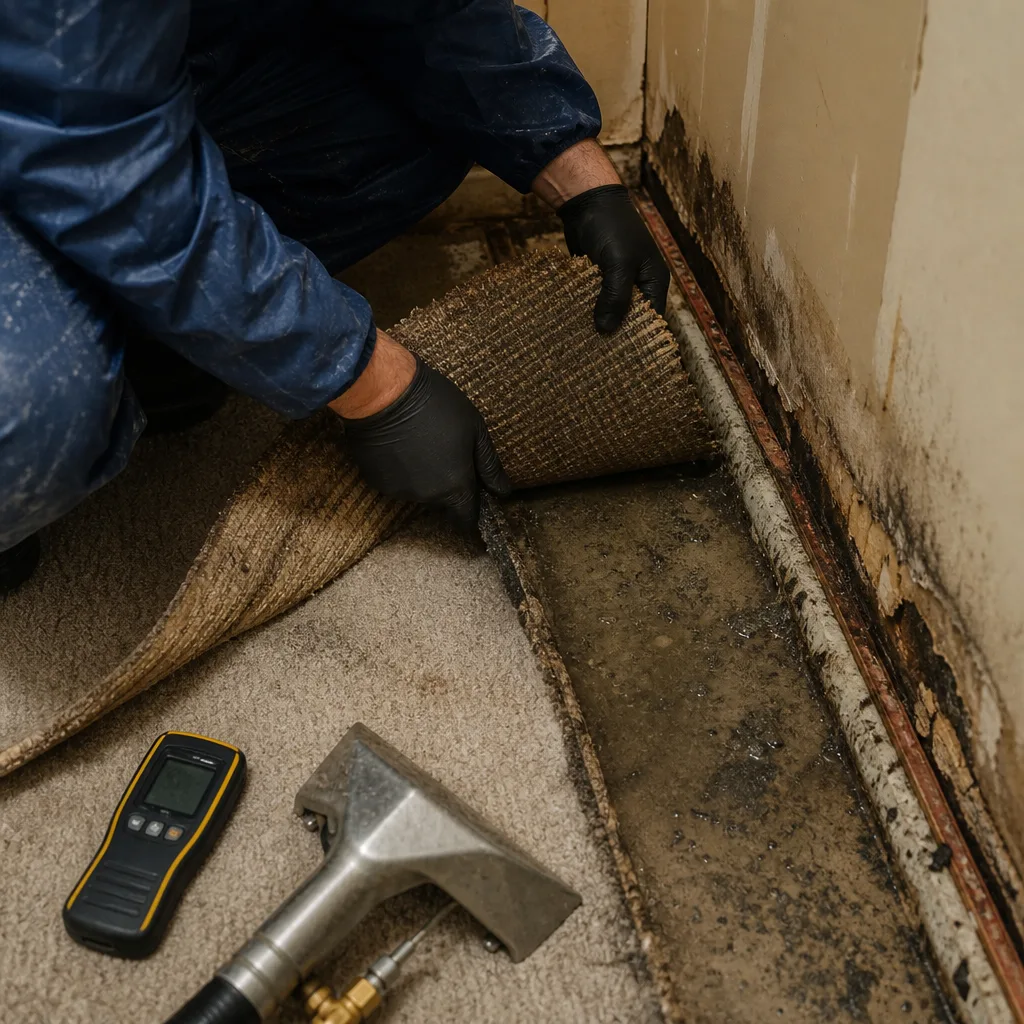
Surge water, nor’easter flooding, and flash flood backup all get the same disciplined approach: extract, map the moisture, set containment, dry to a documented standard, and treat the salt residue that Bayonne’s tidal flooding leaves behind. We don’t just dry the surface and call it done. Wall cavities, electrical chases, and under-floor spaces all get checked.
Emergency Board-Up
Broken windows and wind-torn door openings need immediate boarding, not just for security but to keep rain out and preserve evidence for your claim. We board up with plywood cut to fit the odd-sized openings in pre-war brick buildings, not a one-size-fits-all slab. No charge for the assessment when you call us first.
Roof Tarping
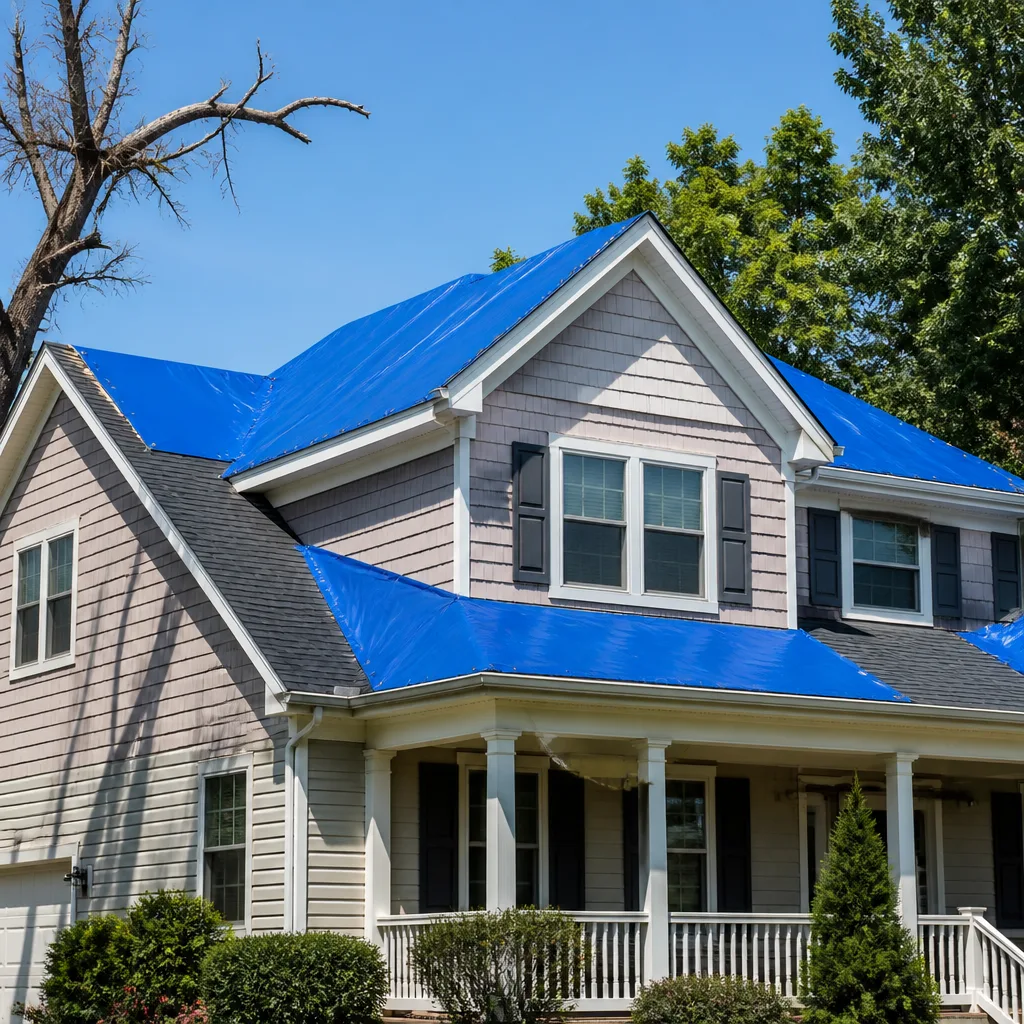
A torn section of roof on a Bayonne row house can let water into three units at once. We tarp with reinforced polyethylene secured to withstand the wind loads that coastal storms bring, not just stapled on like a campground fix. Temporary tarping stops the bleed while we scope the permanent repair.
Debris Removal
Storm debris in Bayonne isn’t just branches. It’s broken brick from parapet walls, asphalt shingles, sections of wooden cornice, and sometimes the neighbor’s shed. We haul it all, photograph it for the insurer, and get the property back to a clean, safe condition fast.
Wind Damage Repair
Bayonne’s pre-war row houses take wind loads seriously. Replacing a storm-damaged door or window on a brick row house here often triggers wind-load requirements that an inland contractor would never consider. We handle wind-rated door and window replacements, structural reinforcement, and the permit paperwork that comes with it.
What happens when you call
- 1
A real person answersNo phone trees - you reach a local pro.
- 2
You get an upfront price rangeHonest numbers before anyone is dispatched.
- 3
A background-checked tech heads outLicensed & insured, dispatched right away.
- 4
You approve before work beginsNothing starts until you say go.
Storm & Disaster Restoration Costs in Bayonne, NJ
Here’s what storm work actually costs in Bayonne, based on the jobs we run regularly. Emergency board-up and roof tarping typically runs $350 to $900 depending on how many openings and the roof pitch. Water extraction and drying for a typical flooded basement in a Bayonne row house runs $2,800 to $6,500, with saltwater jobs trending higher because of the additional corrosion inspection and antimicrobial treatment. Full Category 3 flood restoration including demolition, drying, and rebuild of a finished basement runs $8,000 to $22,000. Wind damage door replacement on an attached brick building, including any required wind-load anchoring and permits, runs $1,800 to $4,500 per opening. Storm debris removal for a typical residential lot runs $400 to $1,200. Insurance covers most of this when the damage is sudden and storm-related, though saltwater corrosion claims sometimes need our documentation to move. The free inspection gives you a written scope and a firm number before anything is authorized.
We Also Serve Cities Near Bayonne
Wade’s Restoration handles storm and disaster work throughout Hudson County and the surrounding area. If you’re in Jersey City, Harrison, Kearny, or Hoboken, the same 24/7 live answer and 45-minute response applies. Call (201) 903-9581 and you’ll get Wade or one of his crew, not a call center.
Bayonne Storm & Disaster Restoration Questions, Answered
Why does Bayonne flood damage require different drying protocols than inland New Jersey cities?
Bayonne sits on a peninsula surrounded by tidal salt water on three sides, so floodwater here carries salt that inland flooding doesn’t. Saltwater dries slower than freshwater because the dissolved salts attract and hold moisture, and salt residue left inside wall assemblies keeps wicking humidity for months. The salt also accelerates corrosion on electrical panels, HVAC coils, and steel lintels even when those components never sat in standing water. Our drying protocol for Bayonne storm jobs includes flushing salt residue from wall cavities and inspecting metal components for corrosion that wouldn’t appear in an inland city.
How do I know if my Bayonne row house was properly dried after Hurricane Sandy?
If drywall was patched and painted without moisture mapping and structural drying, the answer is probably no. Many Bayonne basements and wall cavities were never dried to standard after Sandy, which is why a minor pipe break or basement seep today can uncover black mold that’s been growing in wall cavities since 2012. We find this all the time. When we open a wall for a “small” water job in Bayonne and find 80% saturation and entrenched mold colonies behind a cosmetic patch, we document it for your insurer and expand the scope to match what’s actually there. Call (201) 903-9581 for a free inspection with moisture readings you can see yourself.
What wind-load requirements apply to replacing a storm-damaged door on a Bayonne brick row house?
Bayonne’s attached brick row houses are subject to specific wind-load provisions in the building code for replacement doors and windows, particularly in exposed locations near the water. Unpermitted work that fails to meet anchoring and panel requirements can fail inspection when the next coastal storm exposes substandard installation. We handle wind-rated door and window replacements with the anchoring details and permit paperwork done correctly the first time, so you’re not paying twice.
Can saltwater flooding in Bayonne damage my electrical panel even if it never got wet?
Yes. Salt spray and saltwater vapor from a flood event can carry chlorides into electrical enclosures, and those chlorides accelerate corrosion on bus bars, breakers, and connections even when the panel itself was never submerged. This is a Bayonne-specific failure mode that contractors unfamiliar with tidal flooding routinely miss. We inspect panels after every flood job for salt-related corrosion, document what we find, and flag it for your adjuster before it becomes a fire hazard.
What should I do immediately after storm surge water enters my Bayonne basement?
Shut off the electrical service at the main breaker if you can do so without standing in water. Don’t walk through standing surge water, it’s contaminated with sewage and harbor sediment. Call (201) 903-9581. The first hour is when extraction and containment make the biggest difference in cost and scope. Don’t wait for an adjuster to call back, and don’t just run a box fan. Saltwater wicking into lime plaster walls in a pre-war Bayonne row house gets exponentially harder to dry every hour it sits.
How fast can someone actually get here from Bayonne?
We aim for 45 minutes or less to anywhere in Bayonne. The crew is staged locally, not dispatched from a regional office across state lines. When you call, Wade or one of his team tells you exactly when the truck is rolling, and we’ve been on the road within 15 minutes for priority calls on the peninsula. Speed matters more in Bayonne than most places because saltwater damage compounds faster than freshwater damage.
How long does storm drying and restoration actually take?
Most Bayonne storm flood drying takes three to seven days, depending on how long the water sat, whether saltwater was involved, and whether the wall cavities in your pre-war row house have been wet before. Sandy-era mold or pre-existing saturation extends the timeline. Full reconstruction after drying runs one to six weeks depending on scope. We give you a written drying plan with daily moisture logs, so you can see the numbers move and know exactly where the job stands.
Can we stay in the house during storm restoration?
It depends on the scope. A contained dryout in an isolated basement with the rest of the house sealed off often allows you to stay upstairs. But if we’re opening Sandy-era wall cavities and finding Category 3 contamination or entrenched mold, the affected floor needs to be vacated until clearance testing passes. We’ll give you a straight answer within the first hour, based on what we find, not what sounds convenient.
Serving Bayonne, NJ - Our Local Coverage Area
We’re based in the Bayonne area and know this community well. Use the map below to see our service coverage - if you’re nearby, we can almost certainly help.
Storm & Disaster Restoration in Bayonne: Built for a Saltwater Surround
Bayonne is a peninsula. Newark Bay to the west, the Kill Van Kull to the south, Upper New York Bay to the east. That geography isn’t a scenic footnote, it’s the defining fact of every storm restoration job in this city. Saltwater from surge flooding and nor’easter tidal push doesn’t just wet the building. It leaves chloride residues that keep corroding electrical panels, HVAC coils, and steel lintels long after the visible water is gone. Contractors who treat a Bayonne flood like an inland New Jersey flood will dry the surface, patch the drywall, and hand you a bill while the salt keeps eating your house from the inside. We’ve been called in behind those jobs. After a nor’easter pushed surge water up Newark Bay into a 1920s brick row house on Avenue C, our crew found the homeowner had patched drywall after Sandy without structural drying. Moisture mapping showed 80% saturation in the wall cavities. Once we set containment and opened the walls, we pulled black mold colonies that had been entrenched since 2012 and had to remove salt-corroded wiring before structural drying could even begin. That job ran Dri-Eaz dehumidifiers and Phoenix air movers around the clock for days, and the rebuild included replacing steel lintels that were rusting from the inside out. Bayonne isn’t just another stop on the route, it’s a city where the water never fully leaves. Our Storm & Disaster Restoration team has been through enough nor’easters and surge events in Bayonne to know that every flood job here is a salt-residue remediation job, whether the homeowner knows it yet or not. If you’re in Bayonne and you’re looking at water where it shouldn’t be, don’t call someone who’s going to learn about saltwater the hard way on your dime.
Written by Wade Ferris, Owner at Wade’s Restoration, serving Bayonne since 2007.