
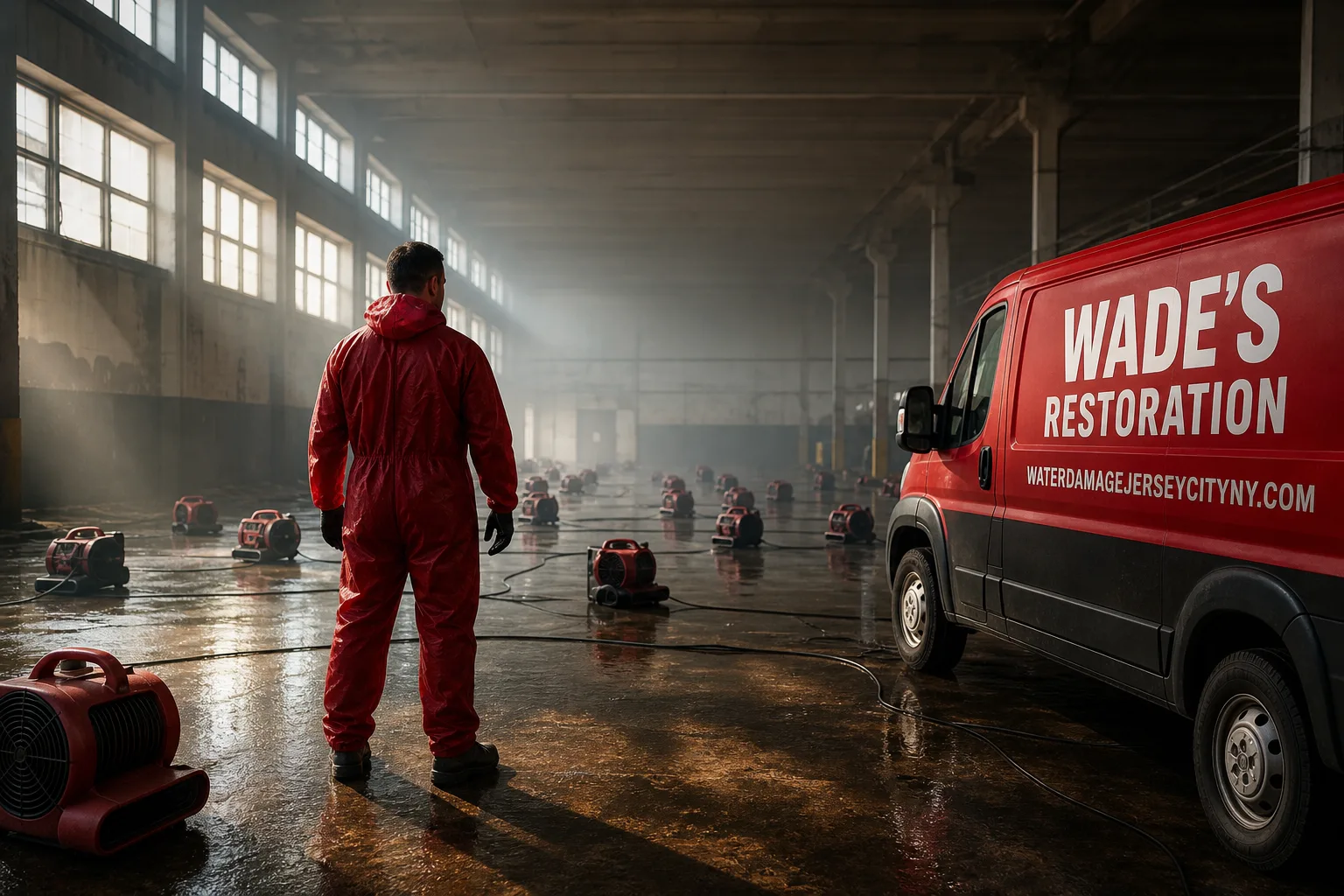
Free visual inspection and a written scope of work before any mitigation begins - photos, moisture readings, and drying logs go in your claim file
The scope we write is the scope we bill. Anything new gets shown to you, in writing, before we touch it.
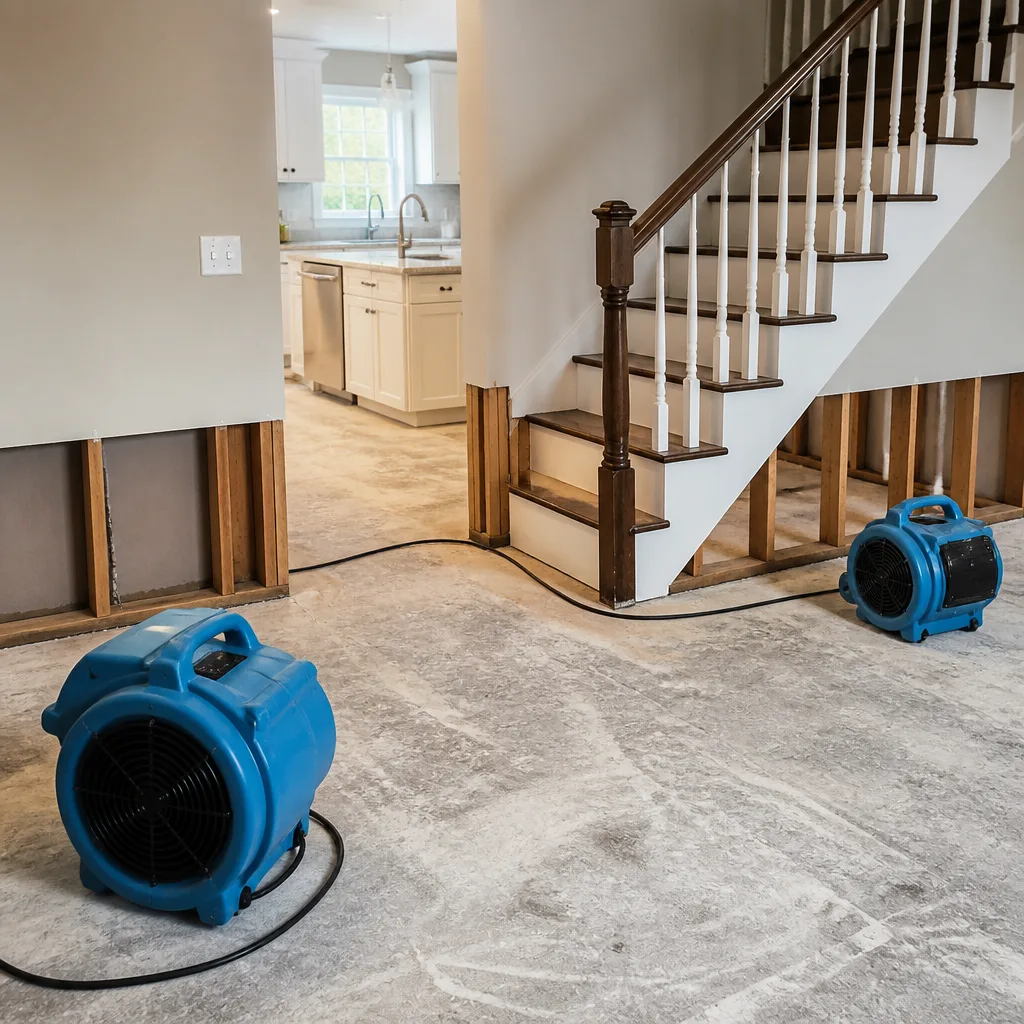
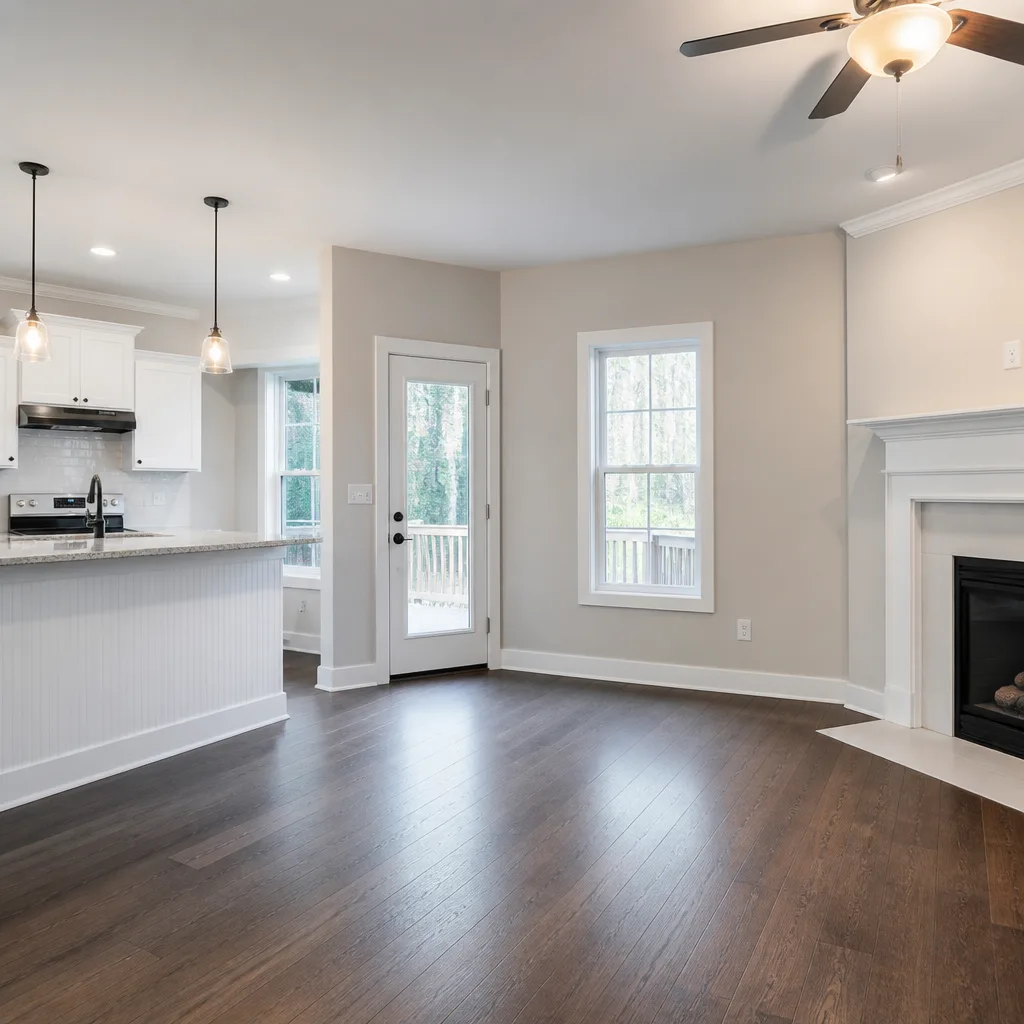
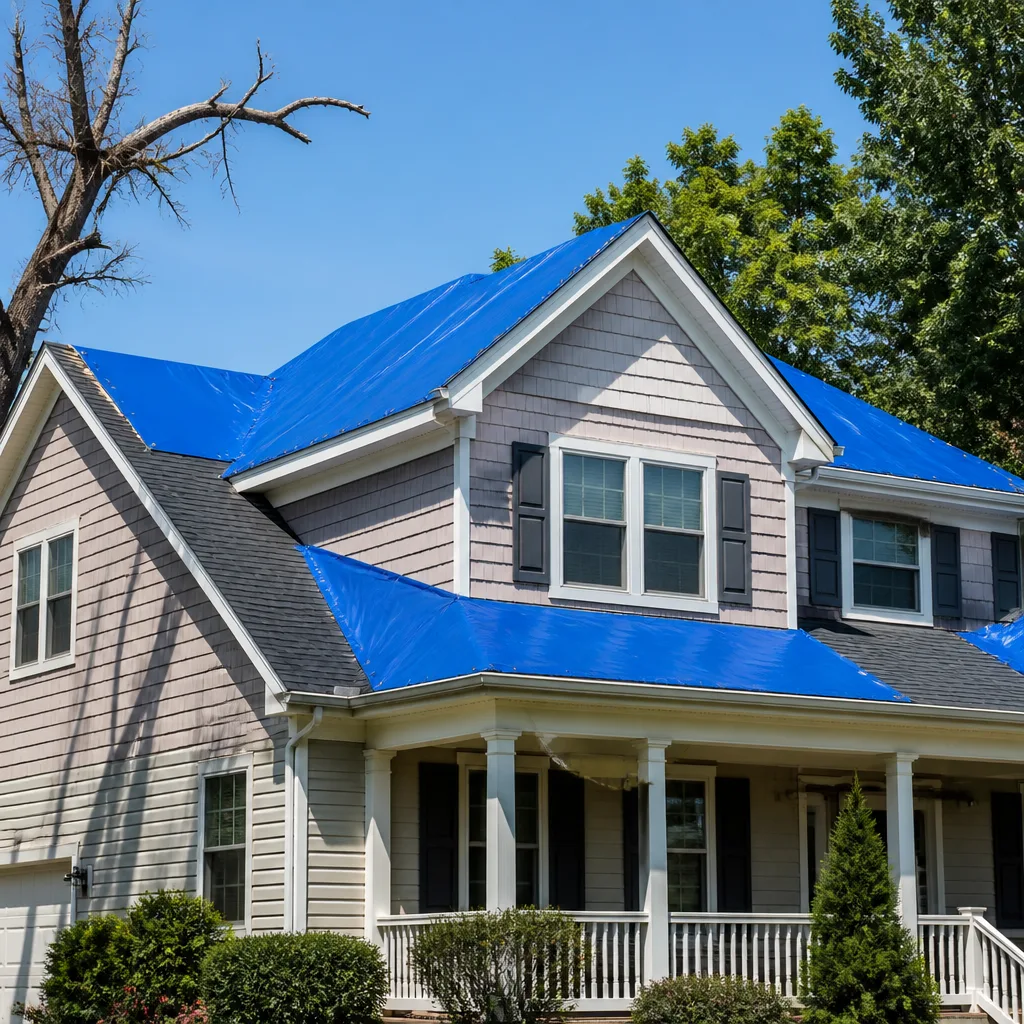
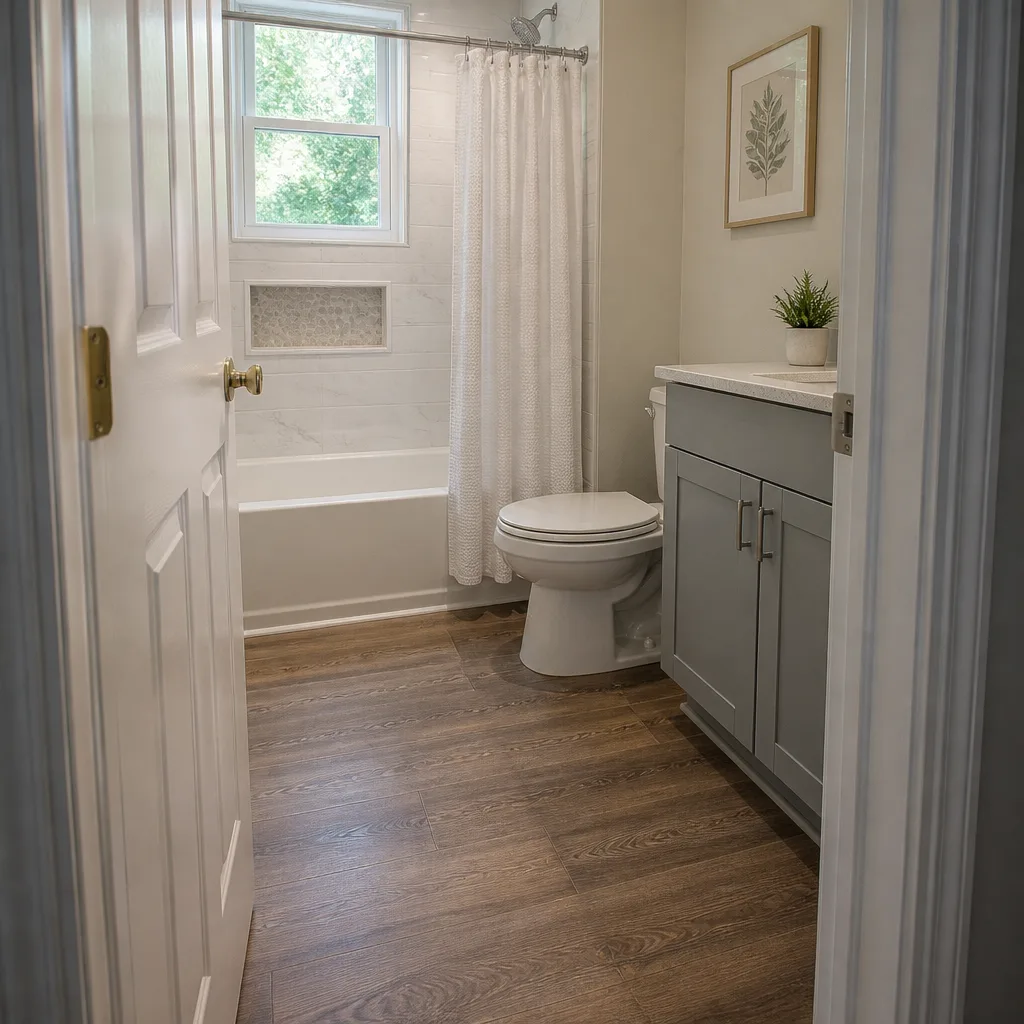
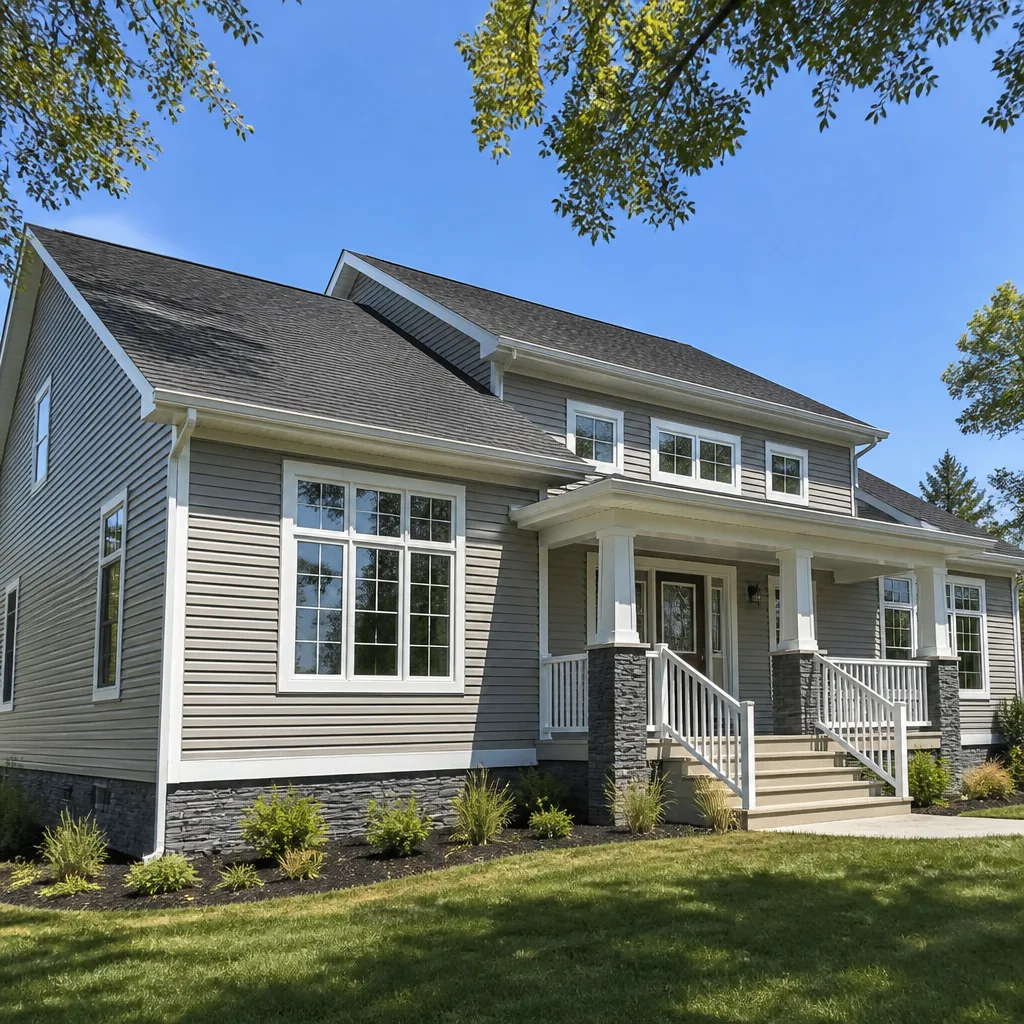
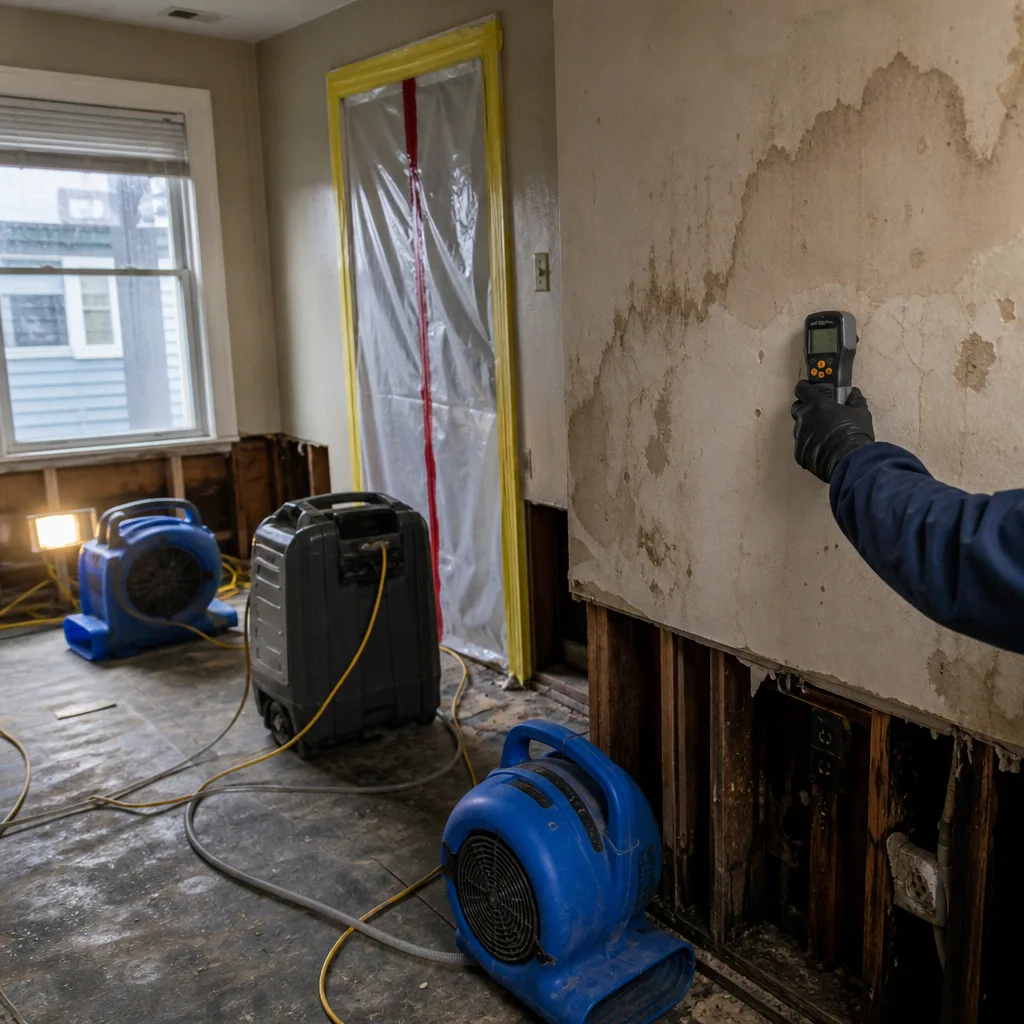 Before
 After
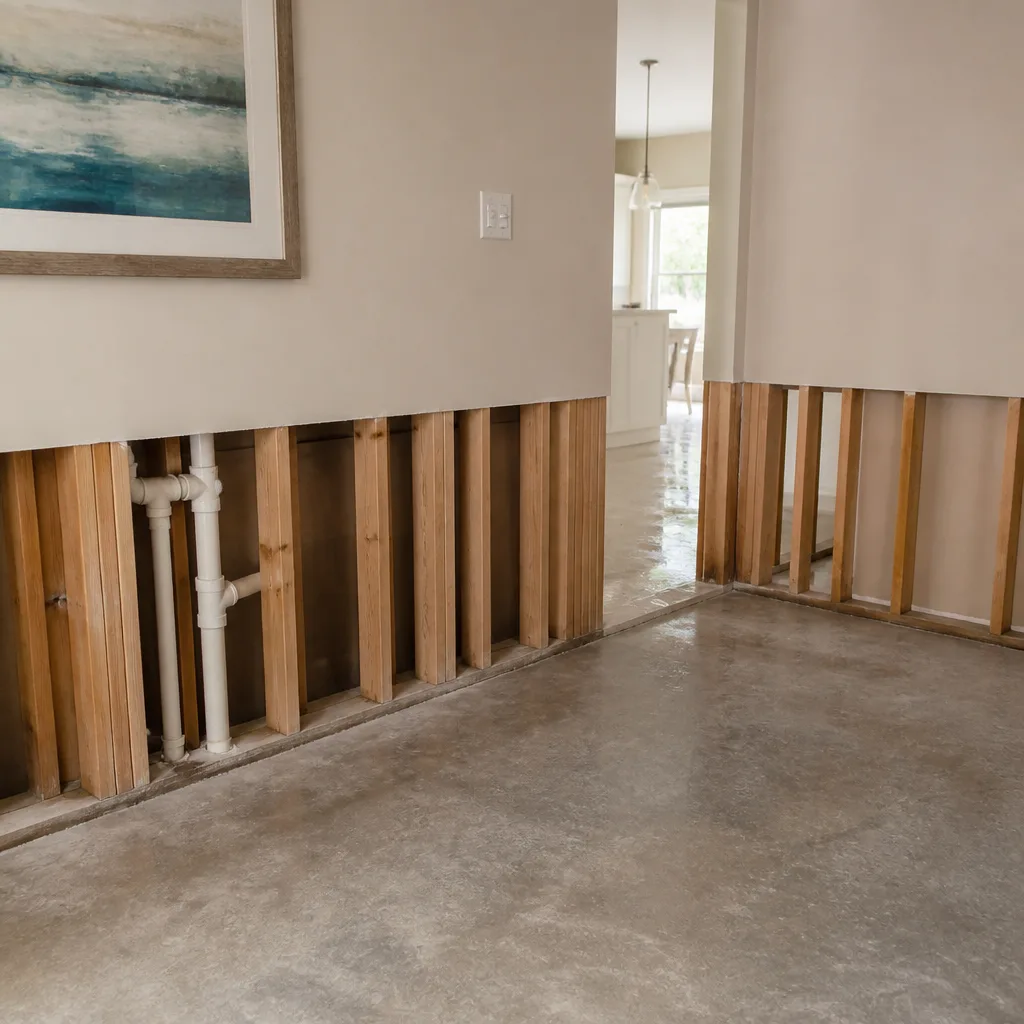
After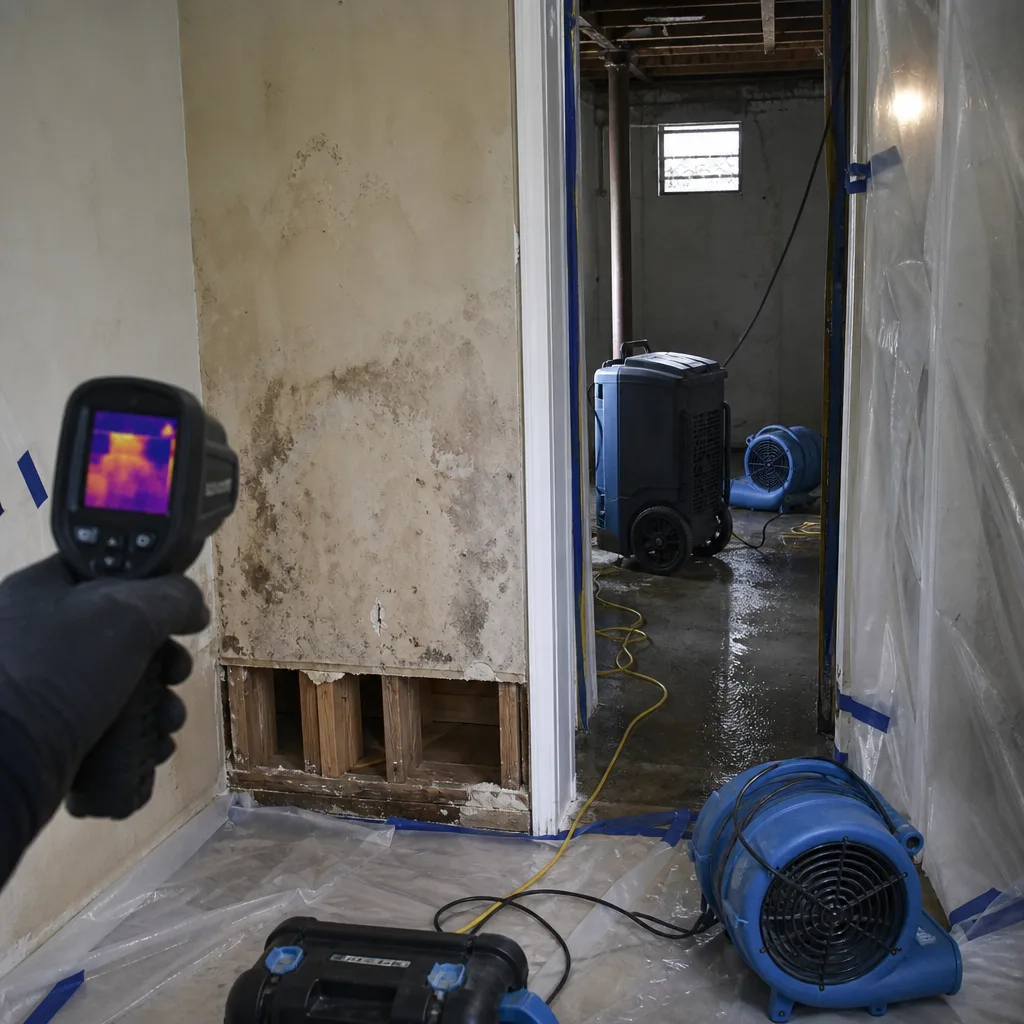 Before
 After
After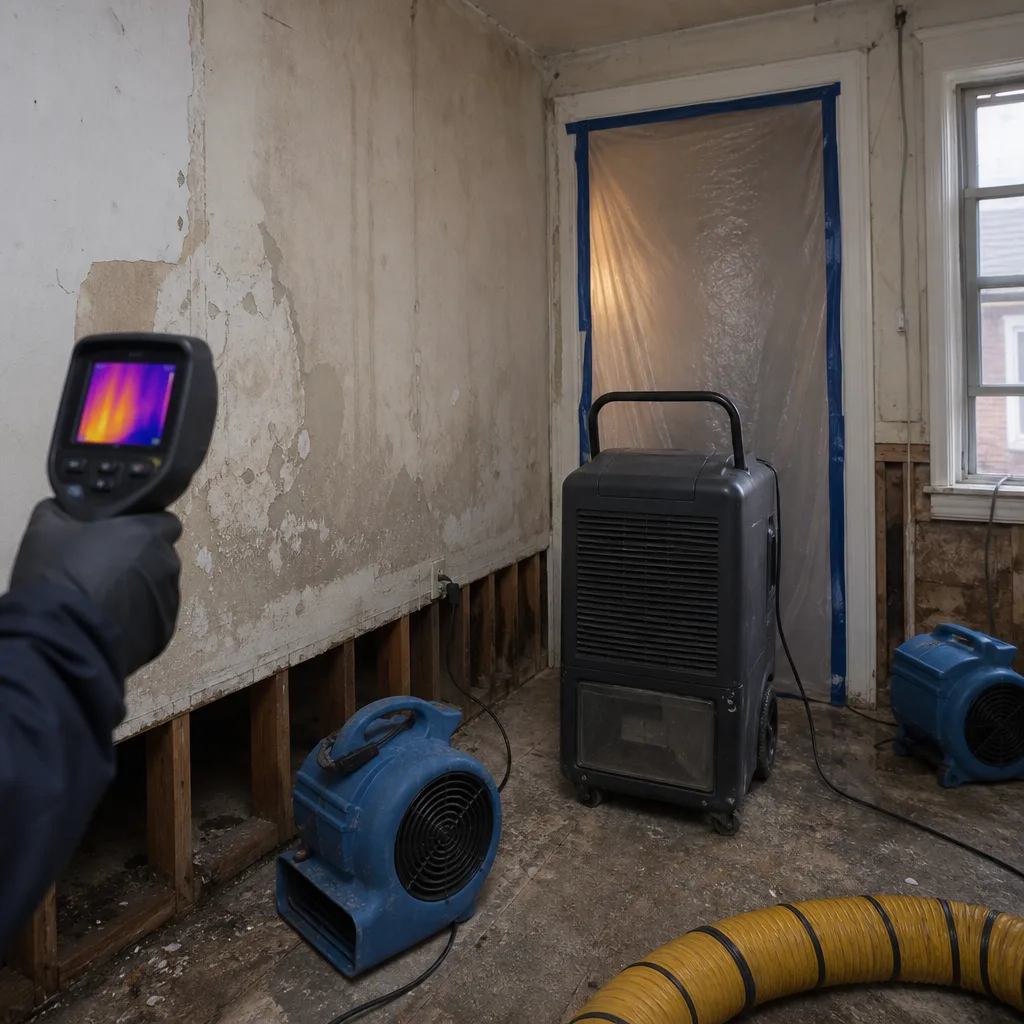 Before
 After
After24/7 Emergency Reconstruction & Cleanup in Bayonne
When a storm tears through Bayonne or a supply line lets go in a 1920s row house basement, the damage doesn’t wait for business hours and neither do we. Wade Ferris answers the phone himself, 24 hours a day, at (201) 903-9581. That’s not a call center. That’s the owner. If your home needs emergency reconstruction or cleanup in Bayonne, we can have a crew at your door within 45 minutes of your call, starting with a free visual inspection. The first hour matters more than most people realize. Water that sits past the first hour wicks up drywall, finds its way into lath and plaster cavities, and soaks into the joists. Saltwater from storm surge is worse: it starts corroding steel lintels, BX cable, and panel boxes almost immediately. The faster we extract, the less gets torn out and the lower the final bill. Call now. We’re already on the road.
Understanding Reconstruction & Cleanup Severity in Bayonne Properties
Bayonne’s housing stock is overwhelmingly brick row houses and two- and three-family attached homes built between 1900 and 1945. These structures handle water damage differently than modern wood-frame construction. The full basements sit close to the water table, and many foundation walls are brick or stone with lime mortar that wicks moisture upward. When a Category 1 water loss, meaning a clean supply line break, hits one of these basements, the water doesn’t just pool. It travels up through the plaster walls, behind original baseboards, and into joist pockets. A Category 2 loss, like a washing machine overflow or sink backup, carries biological matter that feeds mold within 48 hours. Category 3, which includes saltwater surge and sewage, is a different animal entirely. Salt residue stays in wall cavities and keeps corroding metal long after the visible water is gone. That’s why our Bayonne reconstruction work nearly always involves moisture mapping with thermal imaging, plus opening cavities to check what’s happening behind the plaster. We don’t guess. We measure. We hand you the moisture log when the job is done, every single day’s worth of readings.
Why Bayonne Property Owners Choose Wade’s Restoration
- 45-minute response commitment. We’re not “scheduling a window.” When you call, Wade heads out. Crews are staging in the Bayonne area and ready to move.
- 24/7 live answer. You get a real person on the phone, every time. No automated system. No answering service. Overnight, weekends, during a nor’easter.
- IICRC-certified crews. Our techs carry WRT, FSRT, and AMRT certifications. They know how to dry a 1920s lath-and-plaster wall without destroying it.
- Free visual inspection. We don’t charge to show up inside Bayonne. We look at the damage, tell you what needs to happen, and put a scope in writing before any work starts.
- Direct insurance billing. We coordinate with your adjuster, provide the documentation they need, and bill the carrier directly where coverage applies.
- One team from extraction to reconstruction. The same crew that pulls the water out is the crew that hangs the new drywall. No handoffs, no finger-pointing.
Our Reconstruction & Cleanup Process
Inspection & Assessment
We arrive, walk the property, and document everything. Thermal imaging shows where water migrated inside walls. We test the plaster, check the electric, and mark what’s salvageable versus what has to go. You get a written scope before any work starts.
Extraction & Stabilization
Standing water comes out first. We use truck-mounted extraction and submersible pumps for flooded basements. If there’s structural instability, we shore it up before anyone enters. Saltwater gets a fresh-water flush to pull the chlorides out of wood and masonry.
Drying & Dehumidification
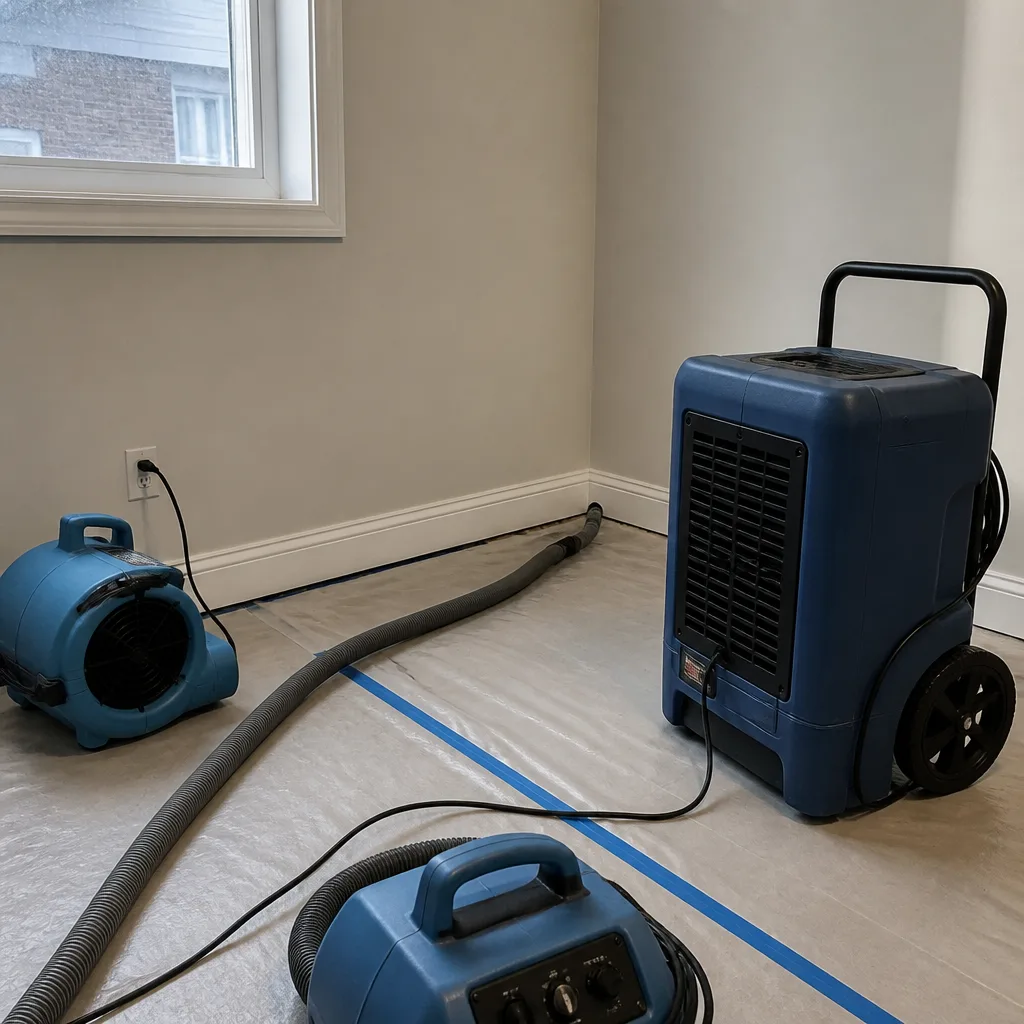
This is where Bayonne’s pre-war homes need experience. We place Phoenix and Dri-Eaz axial air movers and LGR dehumidifiers strategically, then adjust daily based on hygrometer readings. Lath and plaster dries differently than drywall, and force-drying it too fast causes cracking.
Cleaning & Sanitization
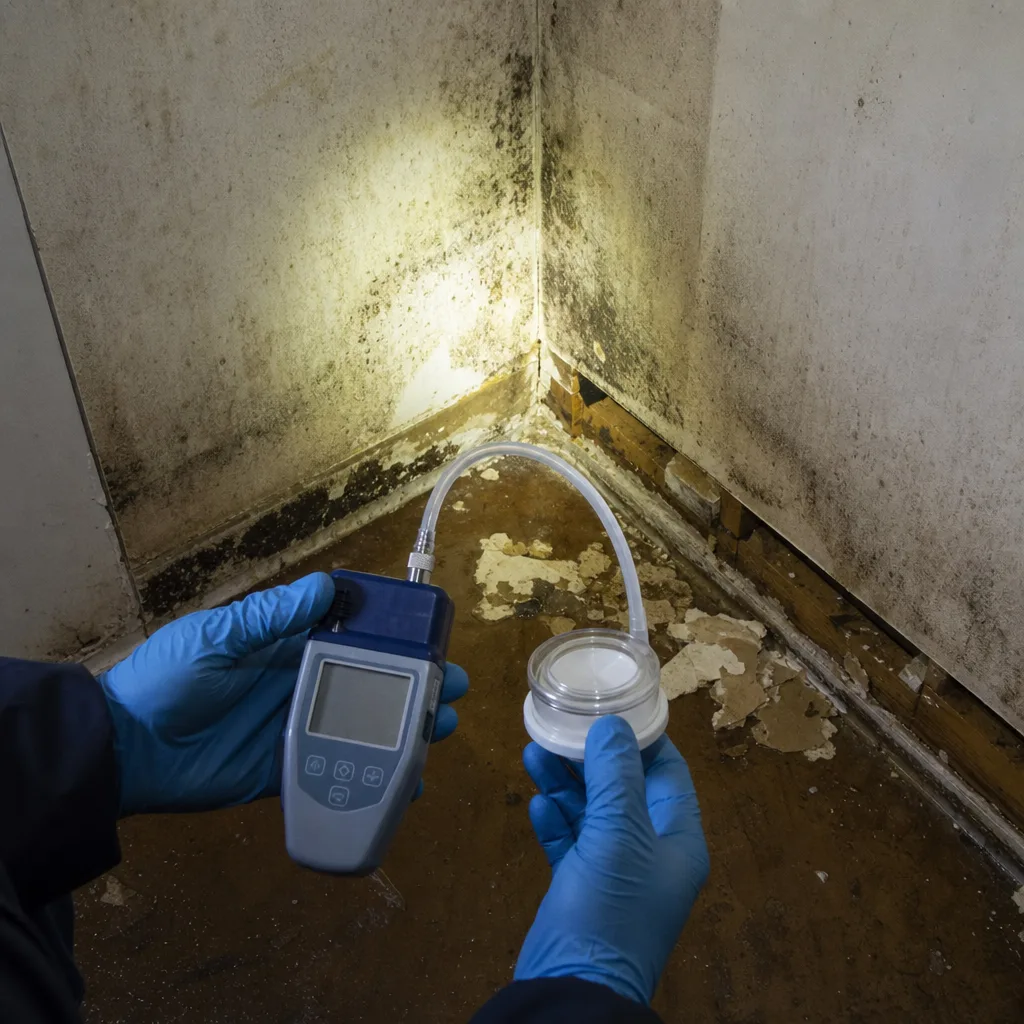
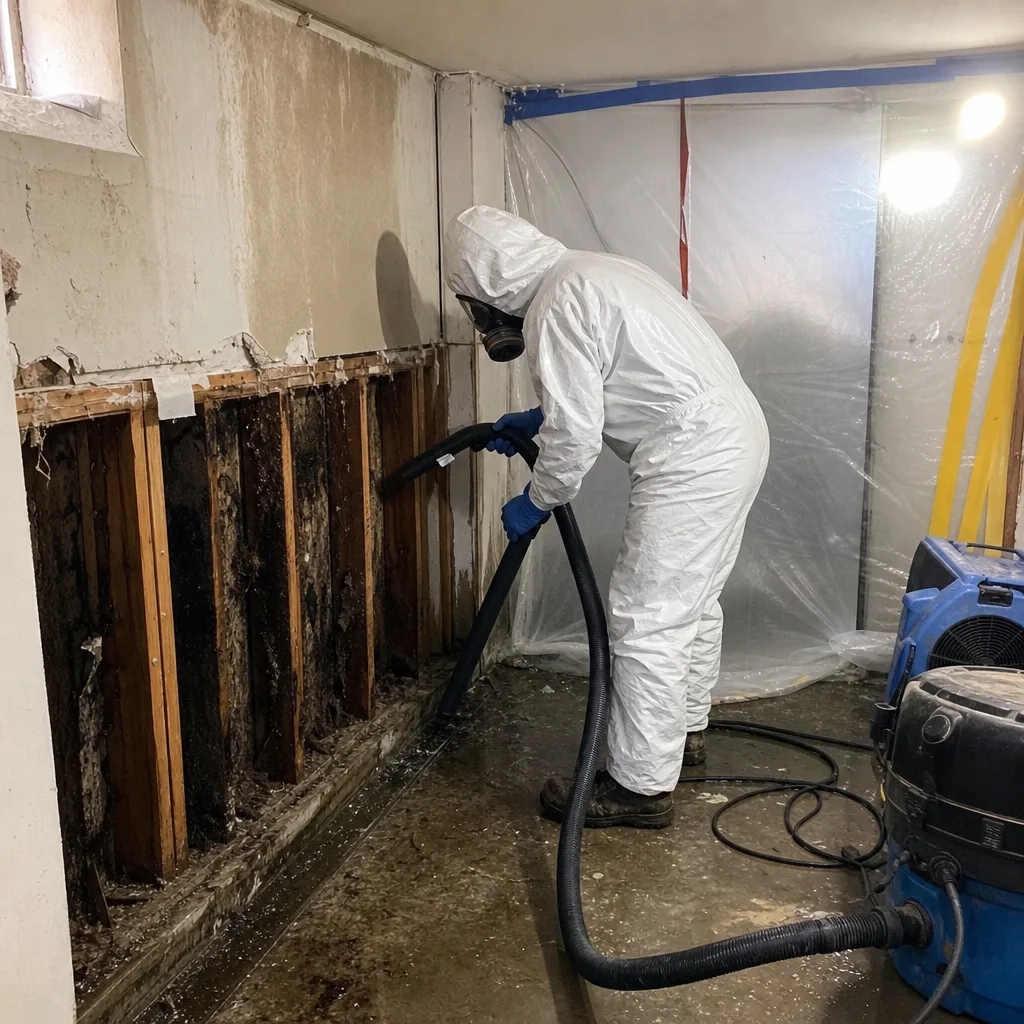
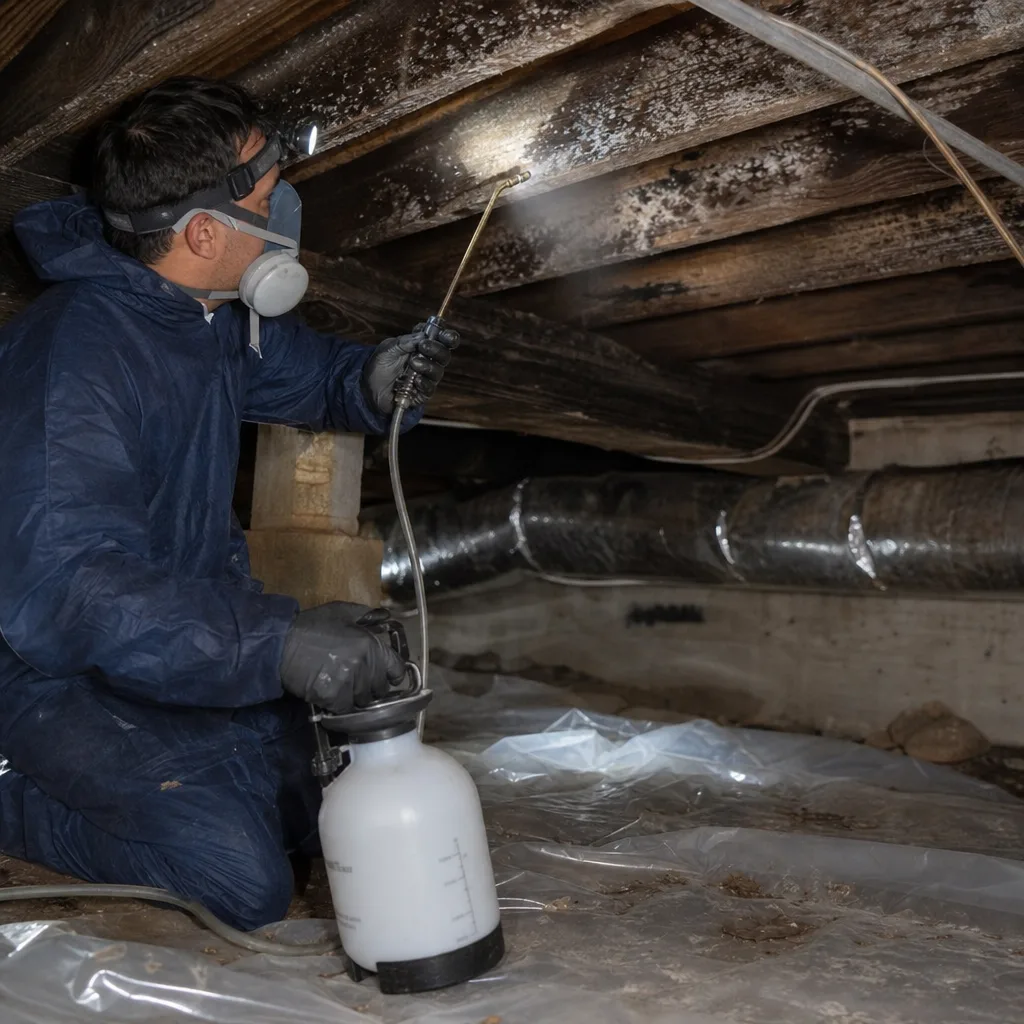
HAEP filtration, HEPA scrubbers, and antimicrobial treatment for affected surfaces. If mold is present, we set containment barriers and run negative air. Contents get cleaned on-site or packed out to our facility depending on the damage.
Reconstruction-Specific Treatment
This is the step where we address what Bayonne’s salt air and storm history leave behind: corroded lintels, oxidized panel boxes, swollen door frames, and failed wind-rated door tracks. We replace what failed, reinforce what didn’t, and match the local wind-load certification.
Repairs & Restoration
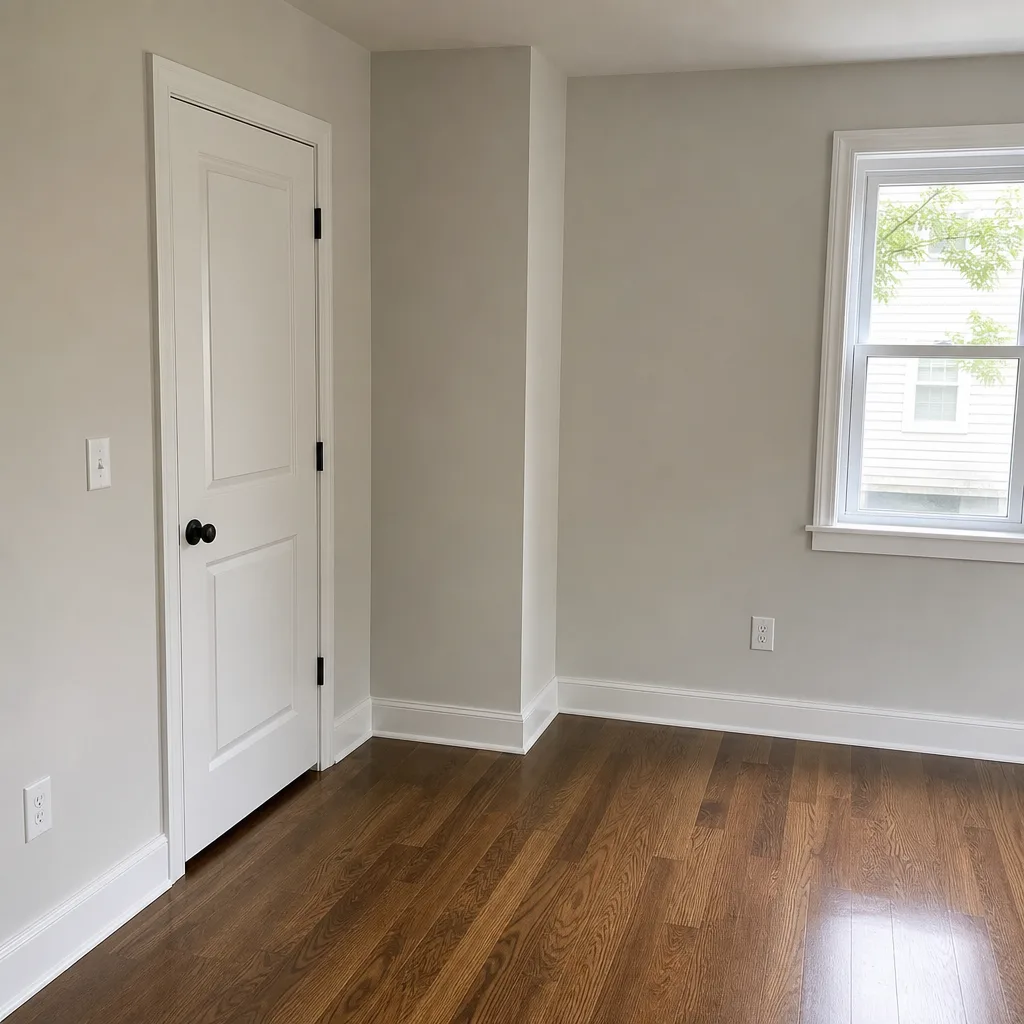
Drywall, flooring, trim, paint, doors, and finish work. We restore the room to pre-loss condition, then walk you through the full documentation package. Our 90-Day Done Right Promise applies to every water, fire, and mold restoration job: if it’s not done right, Wade comes back and makes it right, in writing.
Need Emergency Reconstruction & Cleanup in Bayonne Now?
Crews minutes away, answering live 24 hours a day. The sooner we start, the less it costs.
Working With Your Insurance Company
Insurance claims in Bayonne have a wrinkle that inland towns don’t: pre-existing Sandy damage. Adjusters know the history. When a new water loss hits a home that took surge water in 2012, the carrier is going to ask what was already there. Our documentation answers that question. We photograph everything from the first hour. We log moisture readings daily and hand you the full record. We write a line-item scope that separates the new loss from the old damage, so your claim isn’t denied because of something that happened before you owned the home. And we talk to your adjuster directly. You’re not the one stuck relaying technical questions between two sides.
What We Provide Your Insurer
- Thorough documentation of the loss
- Photos of all damage, room by room
- Moisture readings and drying logs
- A detailed, line-item scope of work
- Direct coordination with your carrier
Built for Bayonne’s Loss Calendar
Bayonne’s exposure to water damage follows the seasons, but the salt in the air makes every season worse. January and February bring deep freeze cycles that burst supply lines in unheated basements and crawl spaces. Those same basements then seep when the spring thaw raises the water table, which sits unnaturally close to the surface across the peninsula. Summer brings flash thunderstorms that overwhelm the combined sewer system, pushing Category 3 water up through floor drains in low-lying blocks. And from August through November, nor’easters and the tail end of hurricane season drive surge up Newark Bay and into the Kill Van Kull, flooding the same waterfront row houses that took on water during Sandy. Each cycle compounds the last. Salt residue from a flood six years ago keeps corroding steel until the next water event exposes it. Our Reconstruction & Cleanup crews know what to expect on these blocks. We’ve opened enough Bayonne walls to know what we’re going to find behind them.
Reconstruction & Cleanup Across Bayonne’s Neighborhoods
Constable Hook, the industrial peninsula that juts into Upper New York Bay, is where we see the heaviest storm surge damage. The row houses near 1st Street and the waterfront take wind-driven rain and salty floodwater head-on, and many of them were incompletely dried after Sandy. Bergen Point, the southern tip of the city along the Kill Van Kull, gets wave action from three directions during a nor’easter. Those attached brick homes have shared brick party walls, which means water in one unit migrates into the neighboring unit through the joist pockets. Midtown Bayonne and the blocks along Broadway sit slightly higher, but their full basements still flood when the storm drains back up. The housing stock throughout the city is the same pre-war brick, and the same original lime plaster. What changes is the water source: salt surge at the points, sewer backup in midtown, pipe breaks everywhere in January. Our crews stage in Bayonne and know these routes. We know which blocks need wind-rated door replacement after a storm and which just need track repair. We see the same homes after every weather event, and we keep notes.
Specialized Reconstruction & Cleanup Services We Offer in Bayonne
Full-Service Reconstruction
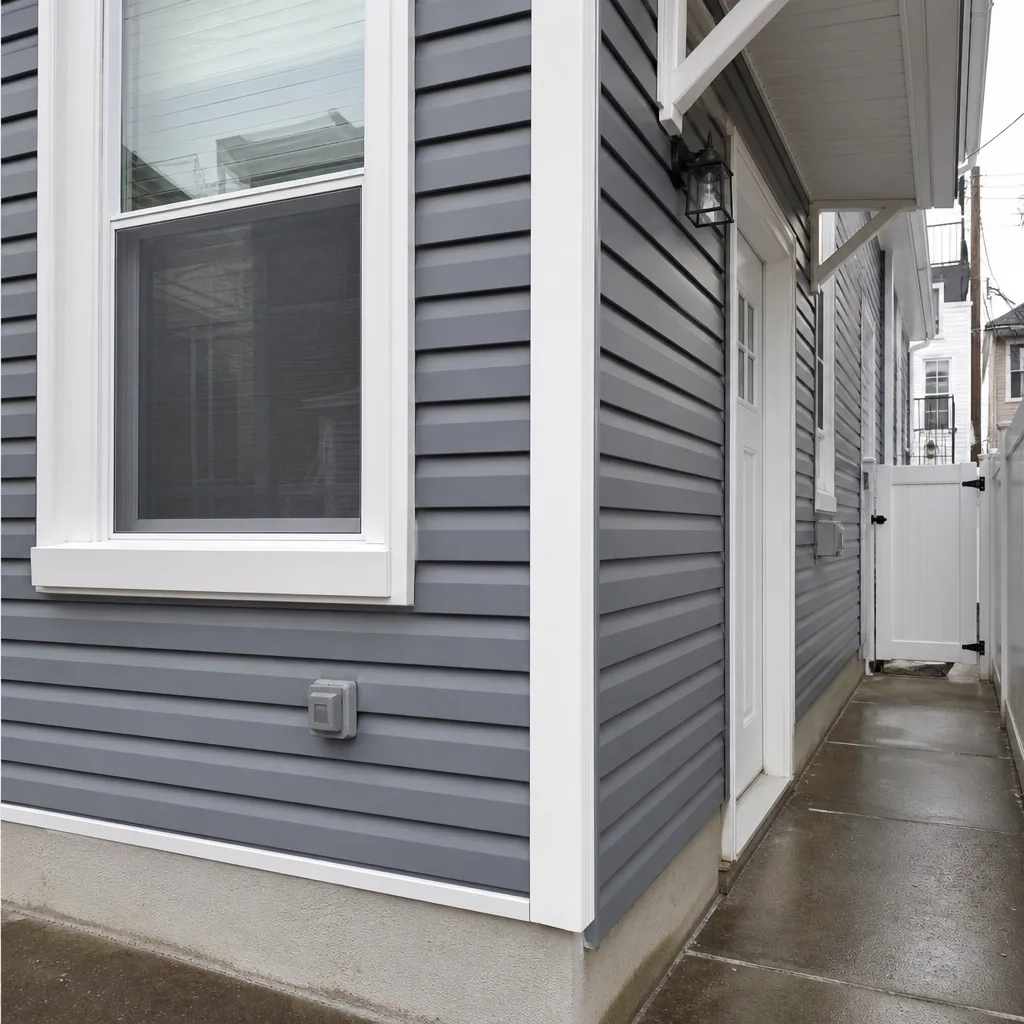
When a Bayonne row house takes surge water or a fire, the rebuild isn’t a drywall-and-paint job. It’s structural work: replacing corroded steel lintels above windows, sistering water-damaged joists, rebuilding stair stringers, re-hanging doors that no longer square. We handle the full rebuild from framing to finish trim, including the wind-rated components that Bayonne’s coastal exposure requires.
Drywall & Flooring Repair
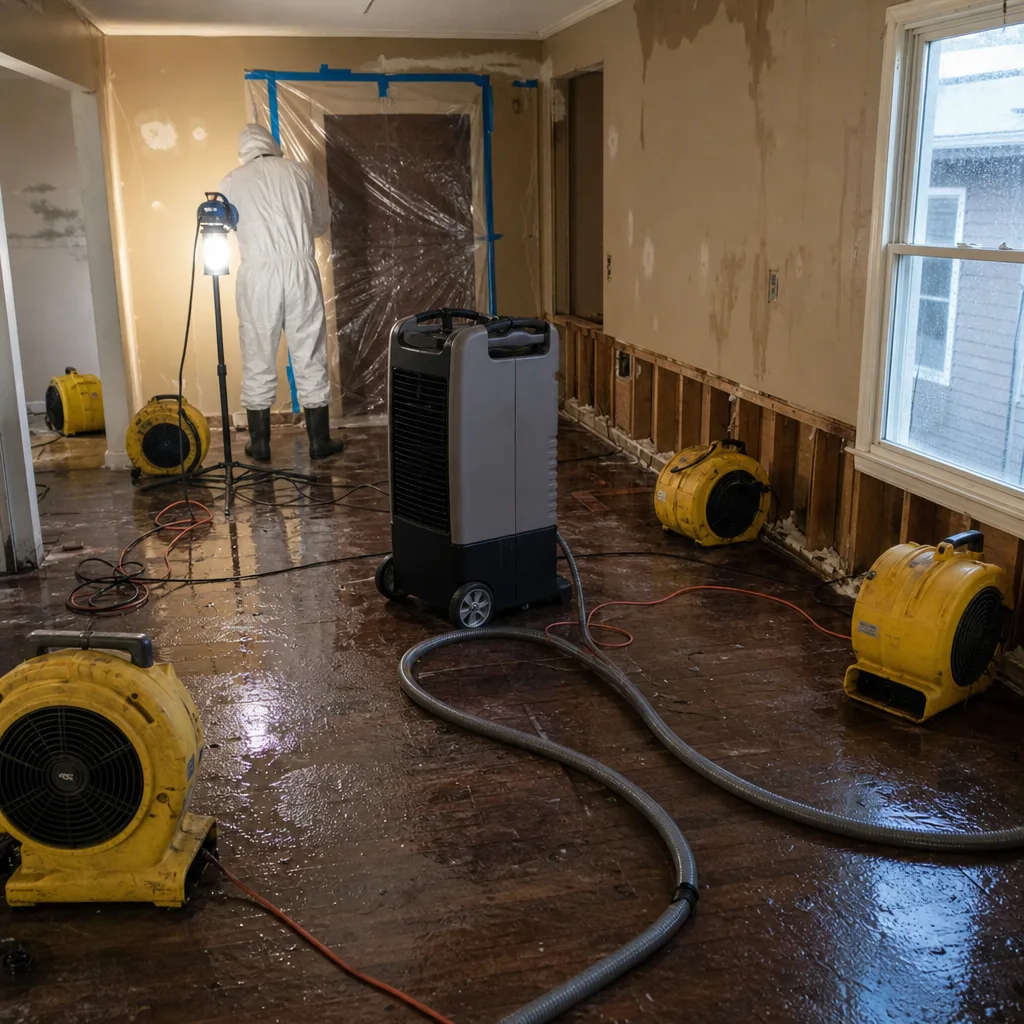
Bayonne’s original homes have plaster walls, not drywall. But after repeated water events, many rooms have been patched with gypsum board over the old plaster. We match the existing surface, whether that means repairing the original lath and lime plaster or replacing damaged drywall sections and skim-coating to blend. Flooring runs the same range: original hardwood in the older homes, engineered plank in recent renovations, tile over concrete in basement-level units. We restore what’s salvageable and replace what isn’t.
Contents Restoration & Pack-Out
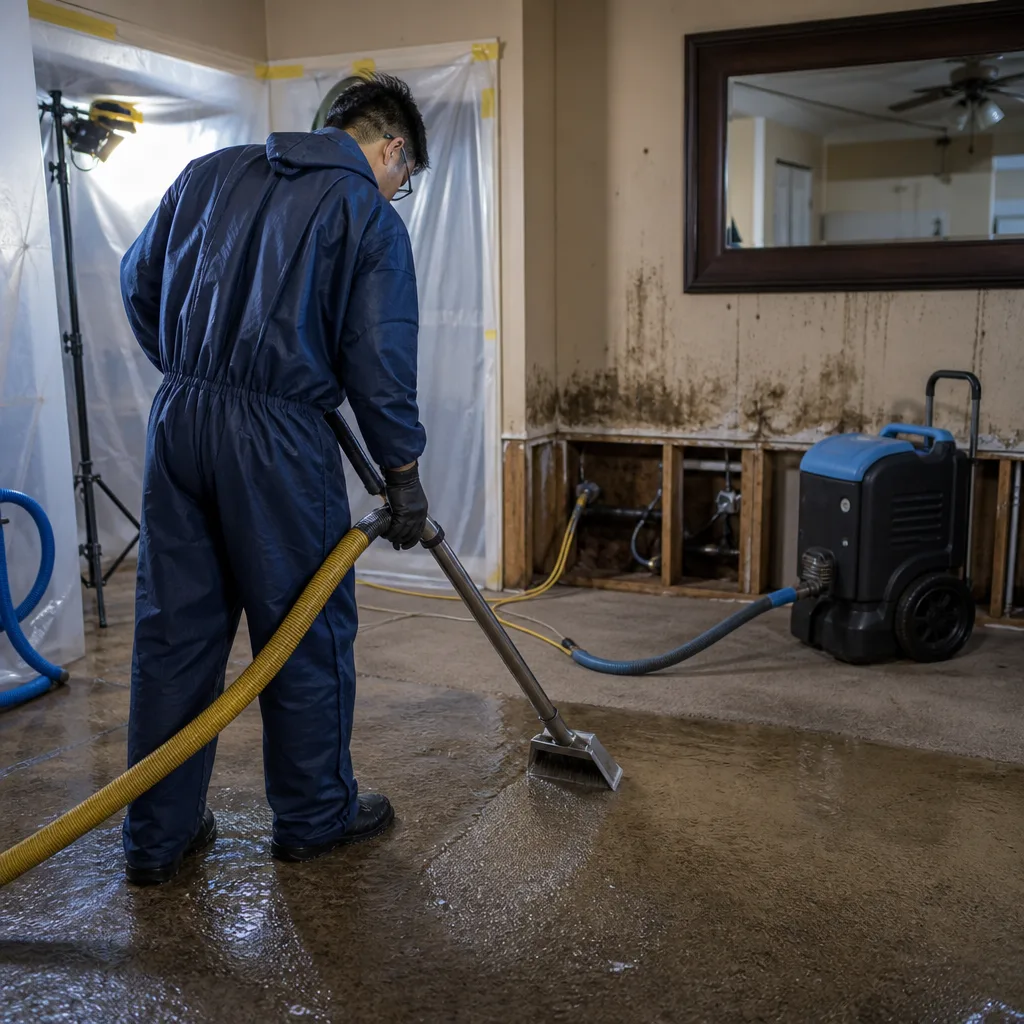
When a basement floods in one of Bayonne’s two-family homes, both floors are affected. We pack out contents, clean and deodorize salvageable items at our facility, and document everything for the claim. Furniture, clothing, documents, electronics. If it can be saved, we save it. If it can’t, we document that for your insurer too.
Carpet & Upholstery Cleaning
Post-flood and post-fire, carpet and upholstery hold odors that normal cleaning won’t touch. We run truck-mounted hot water extraction, then dry with air movers and dehumidifiers. For smoke-affected textiles, we use ozone and thermal fogging where appropriate. For a saltwater-damaged carpet, the pad almost always has to go, but the carpet itself can often be cleaned, dried, and re-installed.
Post-Construction Cleanup
After a Bayonne rebuild, the dust is a different animal than new-construction dust. It’s a mix of old plaster, lead paint chips, and soot, and it gets into everything. We clean every horizontal surface, vacuum the duct returns, wash the walls, and leave the home ready to live in. This is the last step before you move back in, and we do it right.
What happens when you call
- 1
A real person answersNo phone trees - you reach a local pro.
- 2
You get an upfront price rangeHonest numbers before anyone is dispatched.
- 3
A background-checked tech heads outLicensed & insured, dispatched right away.
- 4
You approve before work beginsNothing starts until you say go.
Reconstruction & Cleanup Costs in Bayonne, NJ
Every job is different, but here’s what we actually see in Bayonne. Drywall repair after a supply line break in a typical row house runs $1,800 to $4,500, depending on how far the water wicked up. Full basement dryout and re-drywall after a sewer backup runs $5,000 to $12,000. A full gut-and-rebuild of a flooded Bayonne basement, including new framing, electric, drywall, flooring, and wind-rated door replacement, typically runs $18,000 to $45,000. What moves the price is what’s behind the walls: if we find pre-existing Sandy mold or salt-corroded wiring, the scope grows. That’s why our free visual inspection matters. We show you exactly what needs to happen before you spend a dollar. We write the scope, you approve it, and that’s the price. No phone-call quote followed by a door-knock surprise.
We Also Serve Cities Near Bayonne
Wade’s Restoration crews work throughout Hudson County and the surrounding area, including repairs and rebuilds in Jersey City, Harrison, Kearny, and Hoboken. Same response commitment, same written scope, same owner who answers the phone.
Serving Bayonne, NJ - Our Local Coverage Area
We’re based in the Bayonne area and know this community well. Use the map below to see our service coverage - if you’re nearby, we can almost certainly help.
Bayonne Reconstruction & Cleanup Questions, Answered
Why do Bayonne row houses need wind-rated door reinforcement even if they’re not on the waterfront?
Because Bayonne’s entire peninsula is exposed to wind-driven rain during coastal storms, not just the waterfront blocks. A standard hollow-core exterior door will fail under the wind loads that a nor’easter pushes through the Kill Van Kull. When the door fails, the threshold gap and the weatherstripping take the full force of the rain, and Category 3 water pours into the vestibule. Wind-rated doors and proper track reinforcement are code-level protection for any Bayonne home with an exterior door facing the water, which is nearly every row house on an east-west street.
What happens if we don’t fully dry the cavity after a Category 2 greywater backup in a Bayonne basement?
The moisture stays in the wall cavity, the lime plaster and old plaster wick it up, and mold colonies establish inside the joist pockets within 48 to 72 hours. In a Bayonne basement, where the relative humidity already runs high from the surrounding water table, the cavity may never dry on its own. What starts as a washing machine overflow becomes a full mold remediation job behind original plaster walls, and the cost to tear out and restore those walls is far higher than the cost of drying them properly the first time.
Can our original 1920s lath-and-plaster walls be saved after a saltwater flood, or do we have to tear them all out?
Often they can be saved, but only if the water is dealt with immediately. Lath and plaster walls have a lime base that’s actually somewhat resistant to mold, but the lath strips behind the plaster hold moisture and salt. If we get in within the first day, we can drill weep holes, flush the cavity, and dry it in place. If the wall has already sat wet for days, the lath swells and pulls away from the studs, and the wall has to come out. The salt is the real enemy: even after drying, salt residue left in the cavity pulls moisture from the air and keeps the wall damp indefinitely.
Why do my contractor’s moisture readings on the same wall keep coming back different from week to week?
Because relative humidity in a Bayonne basement changes constantly with the water table, the tidal cycle, and the weather. A pin meter pressed into the same plaster surface will read differently on a dry day versus a humid day. What matters is the trend over time, and that’s why we log moisture readings daily and hand you the full record. If a contractor is giving you inconsistent numbers without logging them, they’re not measuring, they’re guessing. A Dri-Eaz thermal imaging camera gives us a visual map of where the moisture actually sits inside the wall, which removes the guesswork.
How does insurance claim documentation differ for Bayonne reconstruction jobs that involve pre-existing Sandy damage?
The carrier is going to look at any new water claim in Bayonne with a detailed history in mind. If your home was in the surge zone during Sandy, the adjuster knows that. Our documentation separates the new damage from the old: we photograph everything before we touch it, we map the exact extent of the new water migration with thermal imaging, we log daily moisture readings, and we write a scope that isolates what this event caused versus what was already there. That’s the difference between a denied claim and a covered one. We deal with your adjuster directly, so you never have to argue a technical point you’re not equipped to argue.
How fast can Wade’s Restoration actually get to a Bayonne address?
Inside 45 minutes, most days. We stage crews in the Bayonne area, and Wade starts driving the moment he hangs up the phone. For a severe flood or fire, the first crew is on-site within the hour, and additional crew members follow. The sooner we start extraction and drying, the less gets torn out and the more gets saved. Call (201) 903-9581 now. If it’s after midnight and water is still coming in, call anyway. Wade will answer.
What certifications do your crews hold?
Our technicians are IICRC-certified in water damage restoration (WRT), fire and smoke restoration (FSRT), and applied microbial remediation (AMRT). We’re also RIA-affiliated and IFA-recognized. Certification isn’t a badge on the wall; it’s the reason we know how to dry a pre-war Bayonne plaster wall without destroying it.
What should I do in the first 30 minutes after a flood or pipe break in Bayonne?
Shut off the water at the main. If the water is near any electrical outlets or panels, shut off the power at the breaker and don’t enter the water. Move what you can lift to a dry area. Don’t use a household vacuum to remove water. Then call (201) 903-9581. Don’t wait until morning. Every hour the water sits in a Bayonne basement, it wicks further up the plaster walls and into the joists, and the salt in the air from the harbor accelerates the corrosion.
On a row house near 1st Street in the Constable Hook section, we opened a ceiling after a Category 1 supply line break and found black mold entrenched since Sandy’s surge. The homeowner had patched cosmetic cracks in 2013 without structural drying. Our techs ran moisture mapping with a Dri-Eaz infrared camera, set containment barriers, and pulled 14 feet of salt-corroded BX cable before drying the cavity to a pre-loss condition over nine days. That’s what we mean when we say we know what we’re going to find in Bayonne walls.
If you need Reconstruction & Cleanup in Bayonne, call Wade at (201) 903-9581 for a free estimate. He’ll pick up the phone.
Written by Wade Ferris, Owner at Wade’s Restoration, serving Bayonne and Hudson County since 2007.