
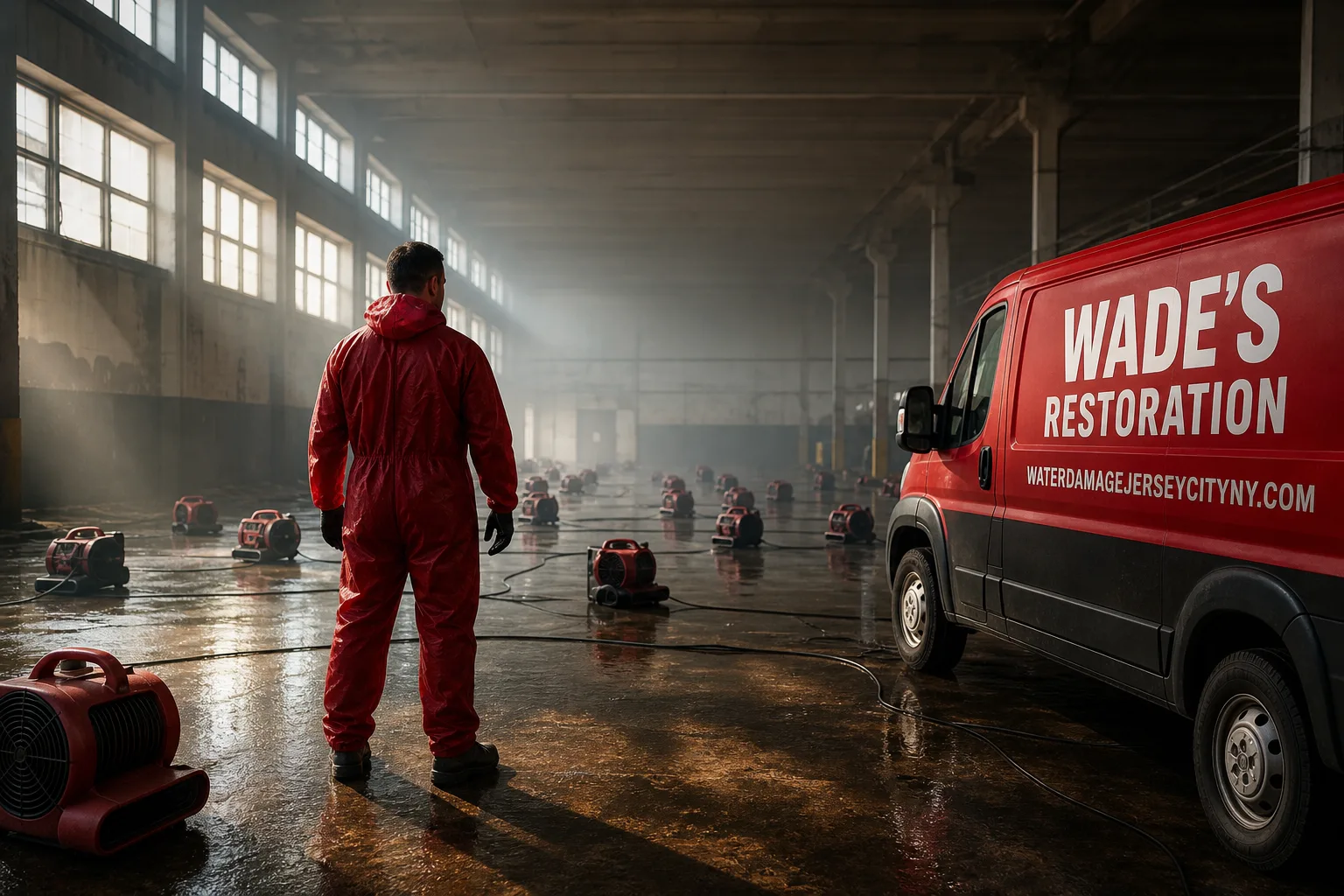
Free visual inspection and a written scope of work before any mitigation begins - photos, moisture readings, and drying logs go in your claim file
The scope we write is the scope we bill. Anything new gets shown to you, in writing, before we touch it.
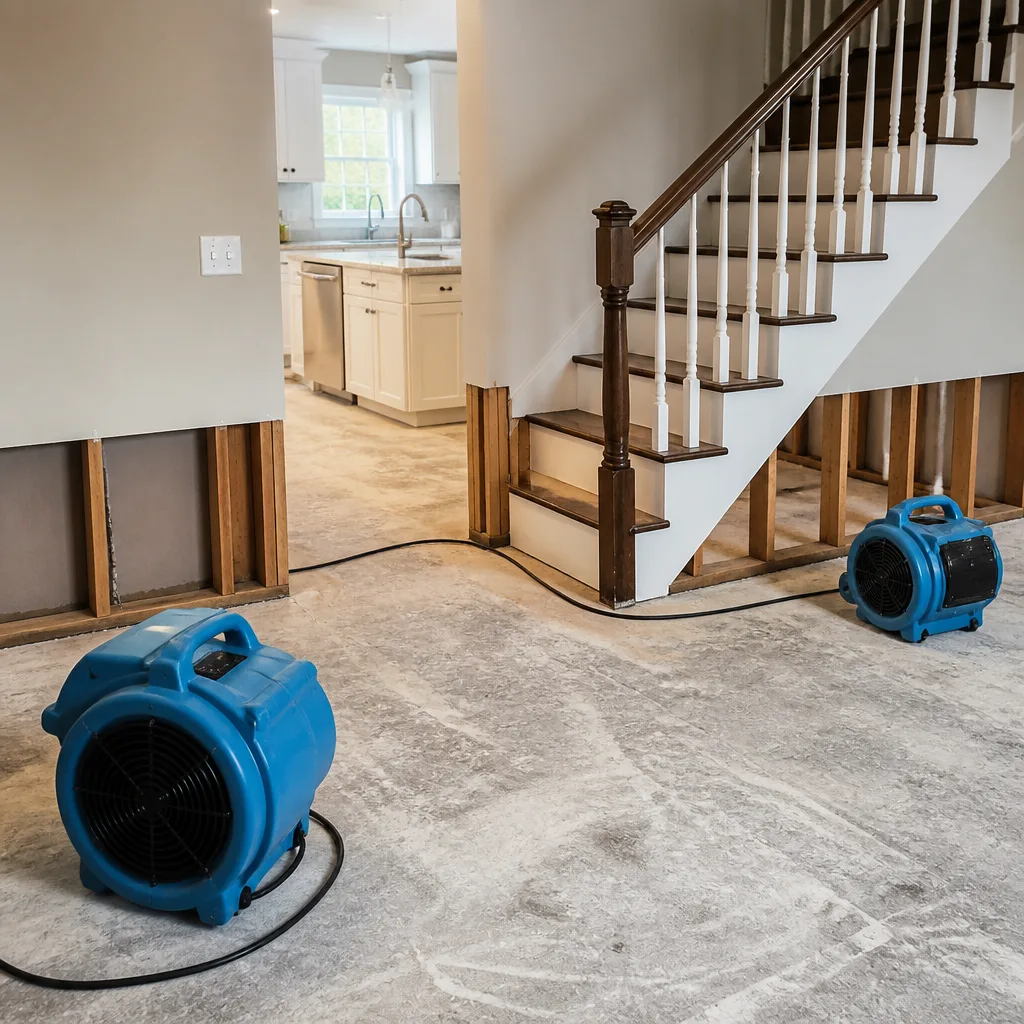
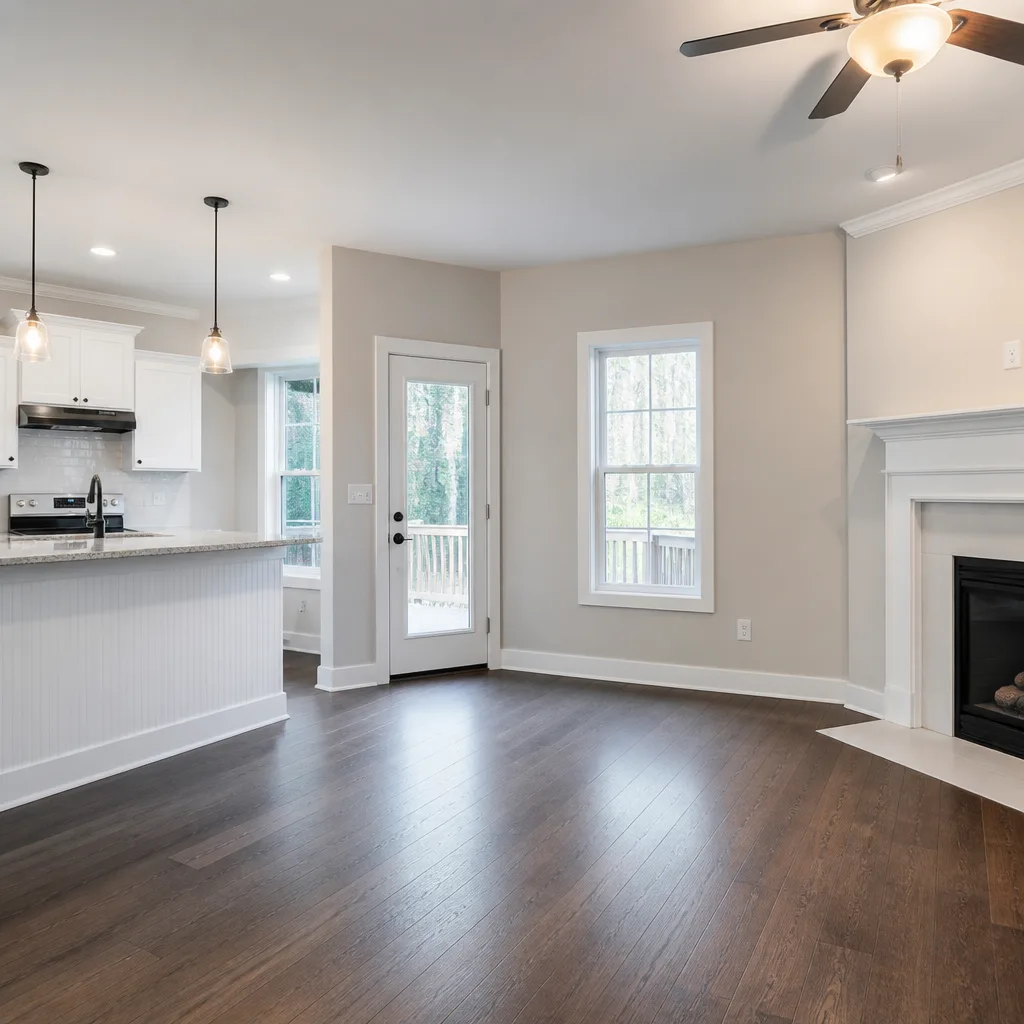
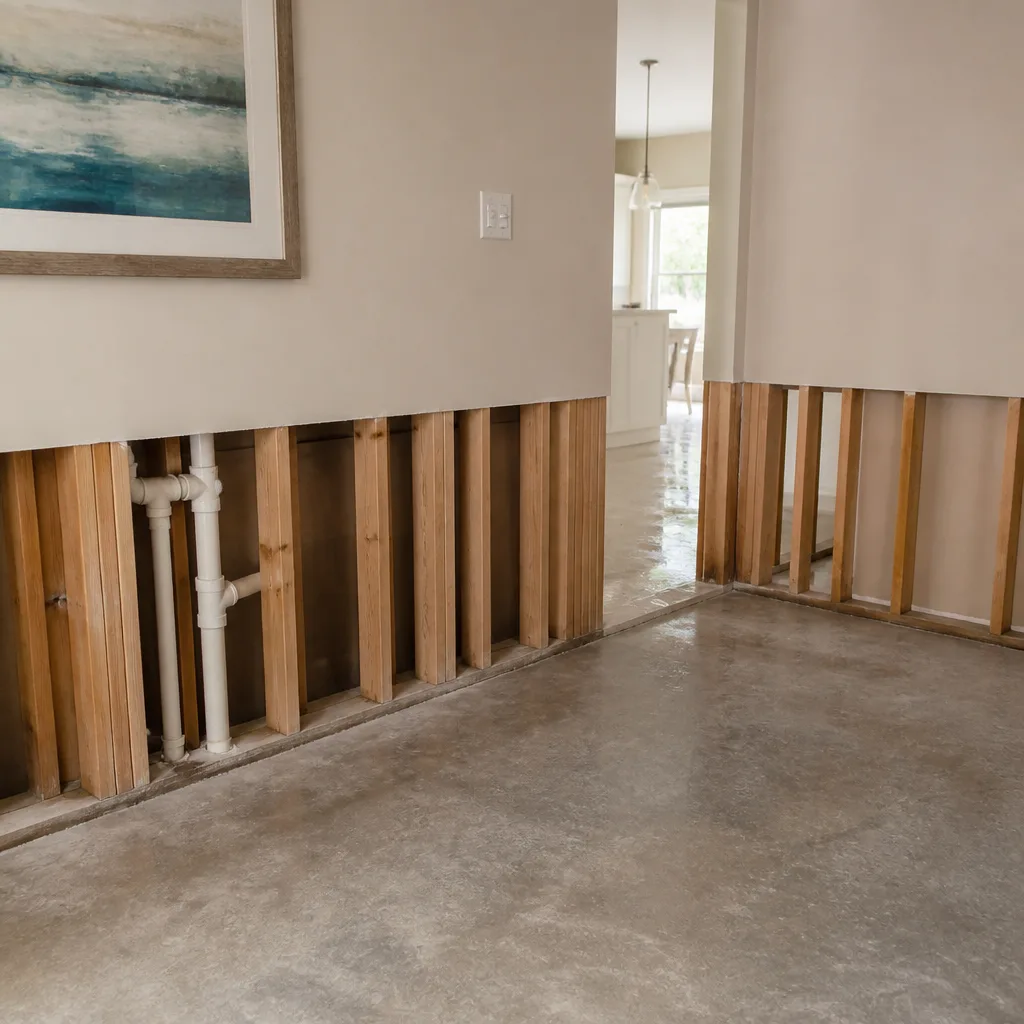
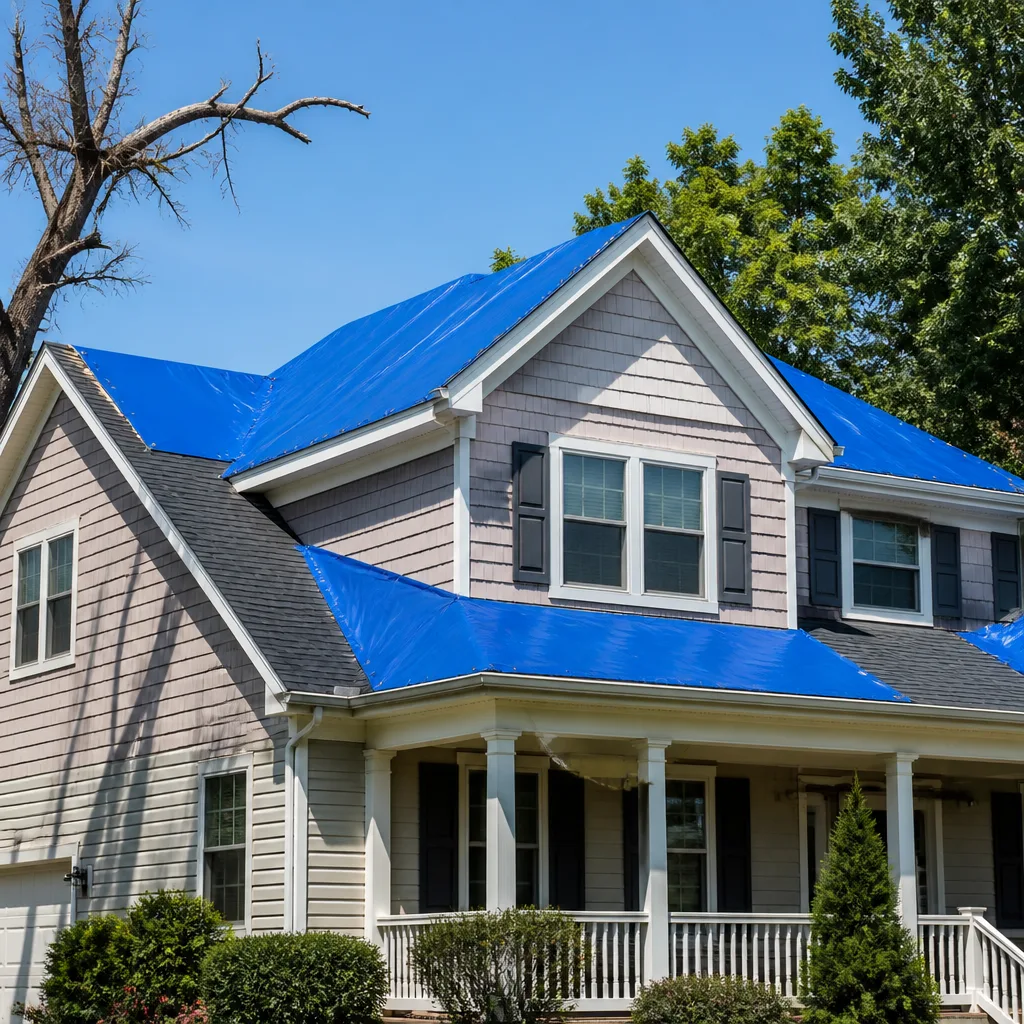
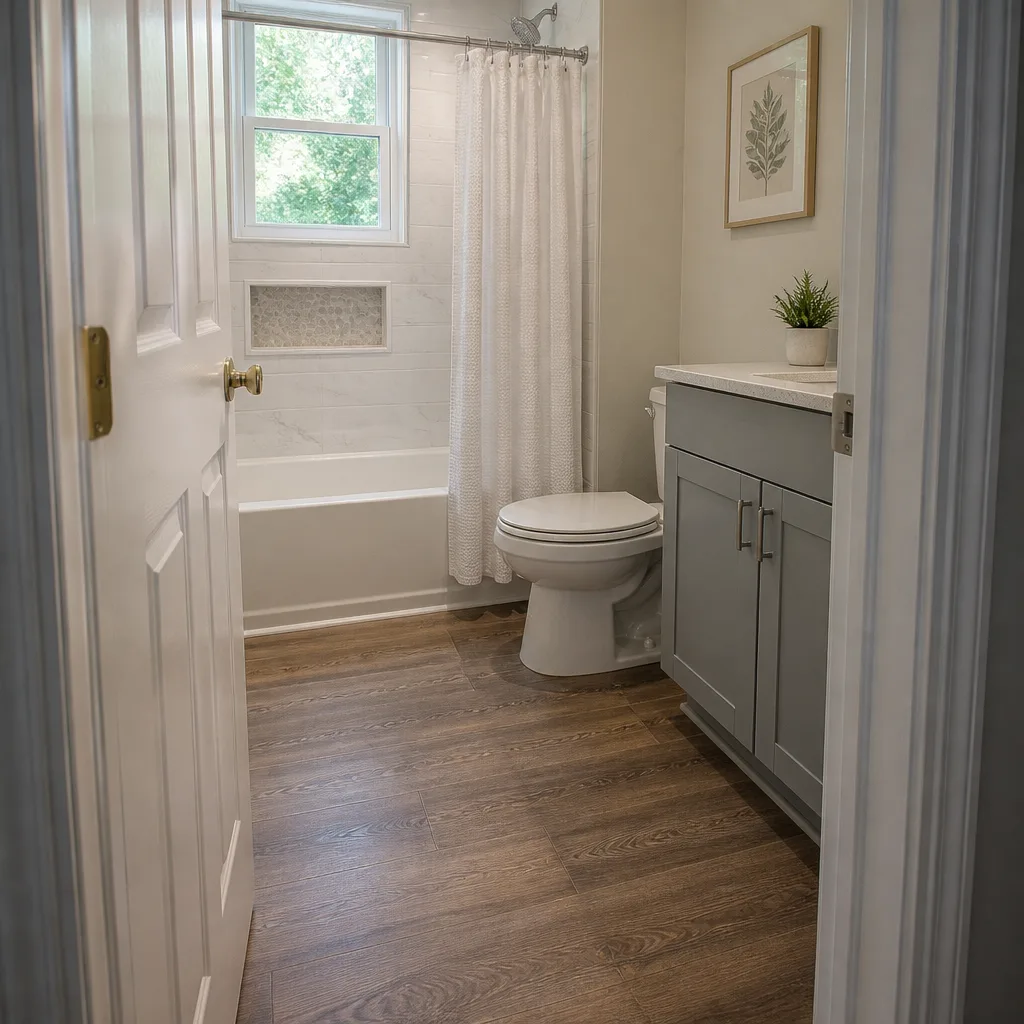
 Before
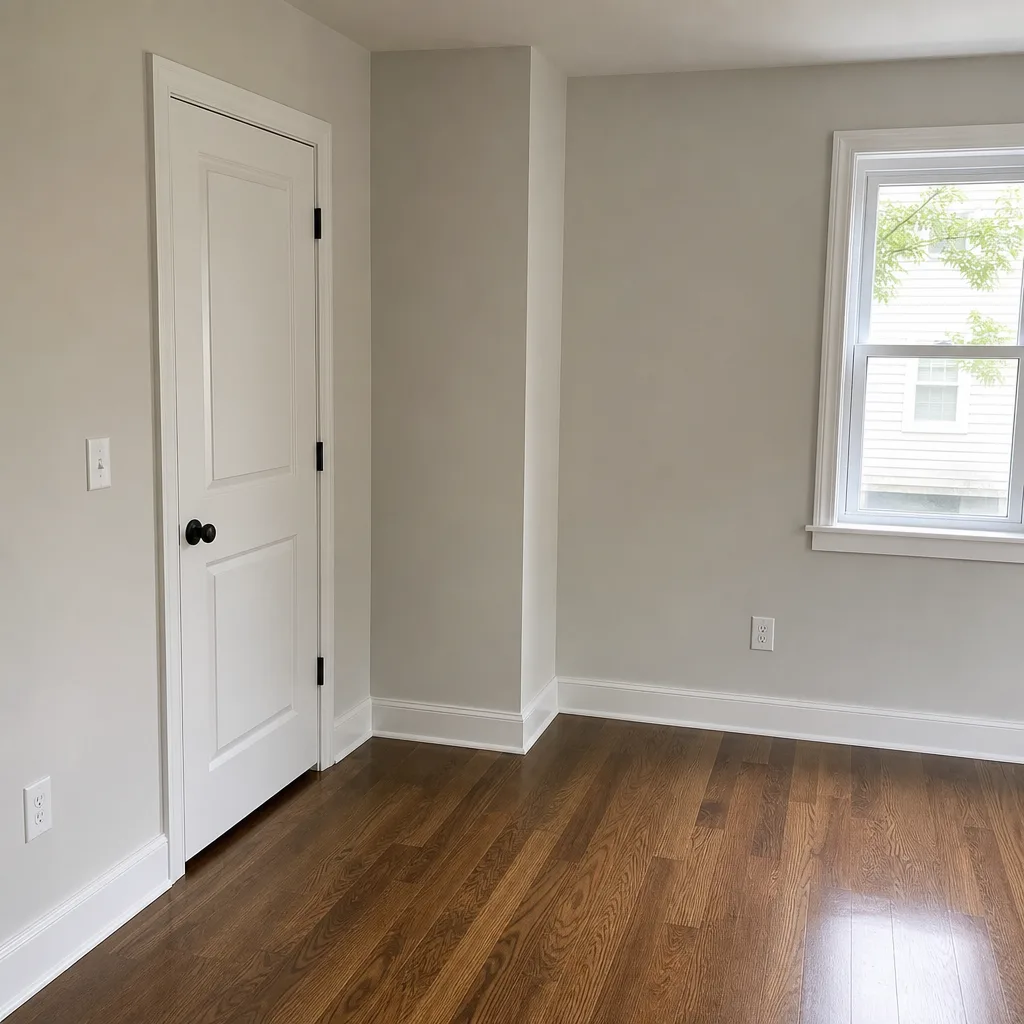 After
After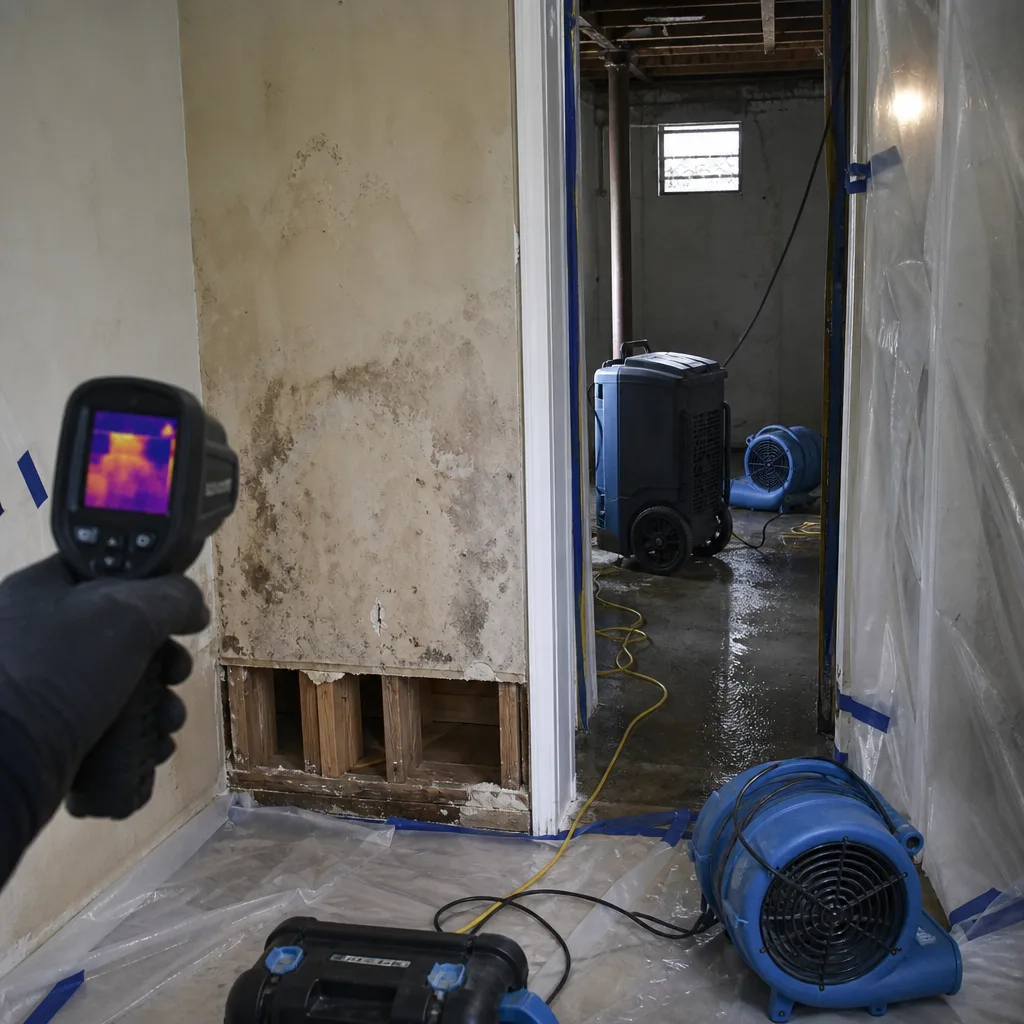 Before
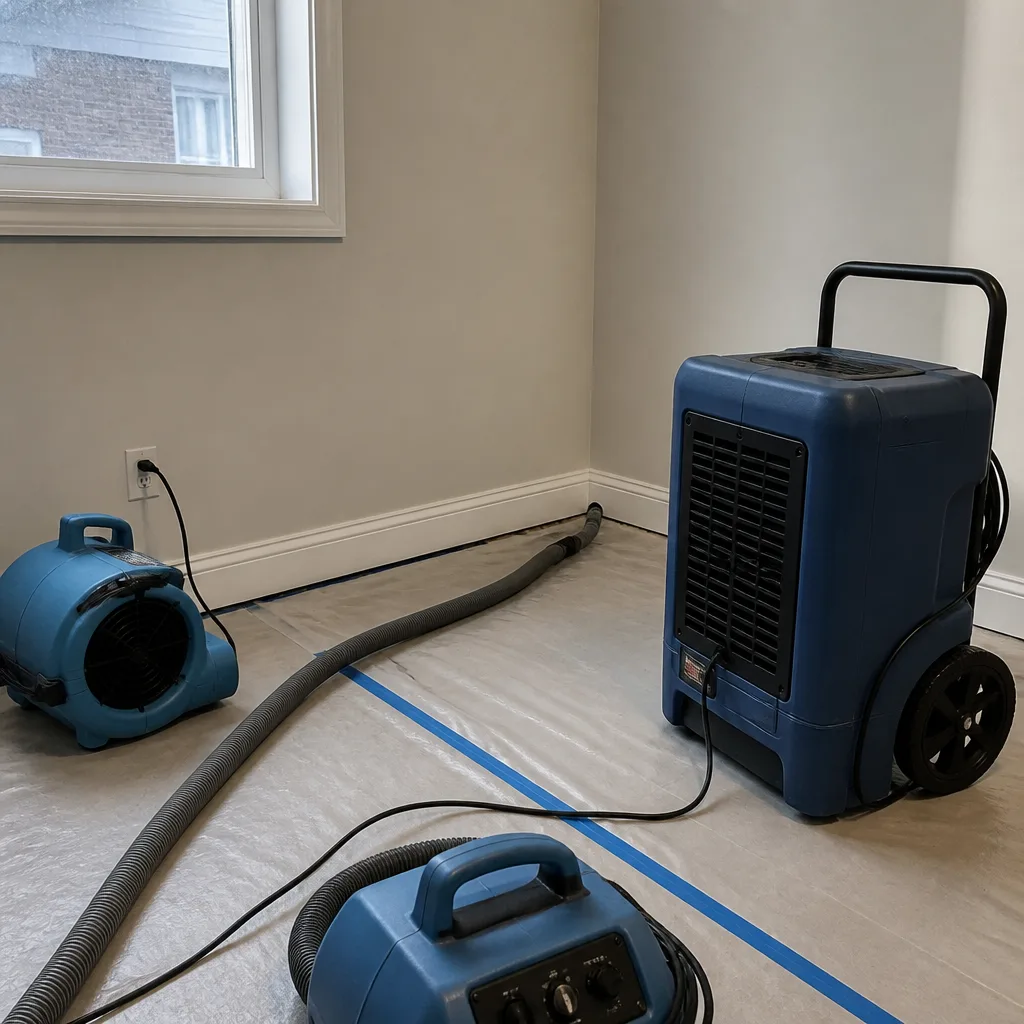 After
After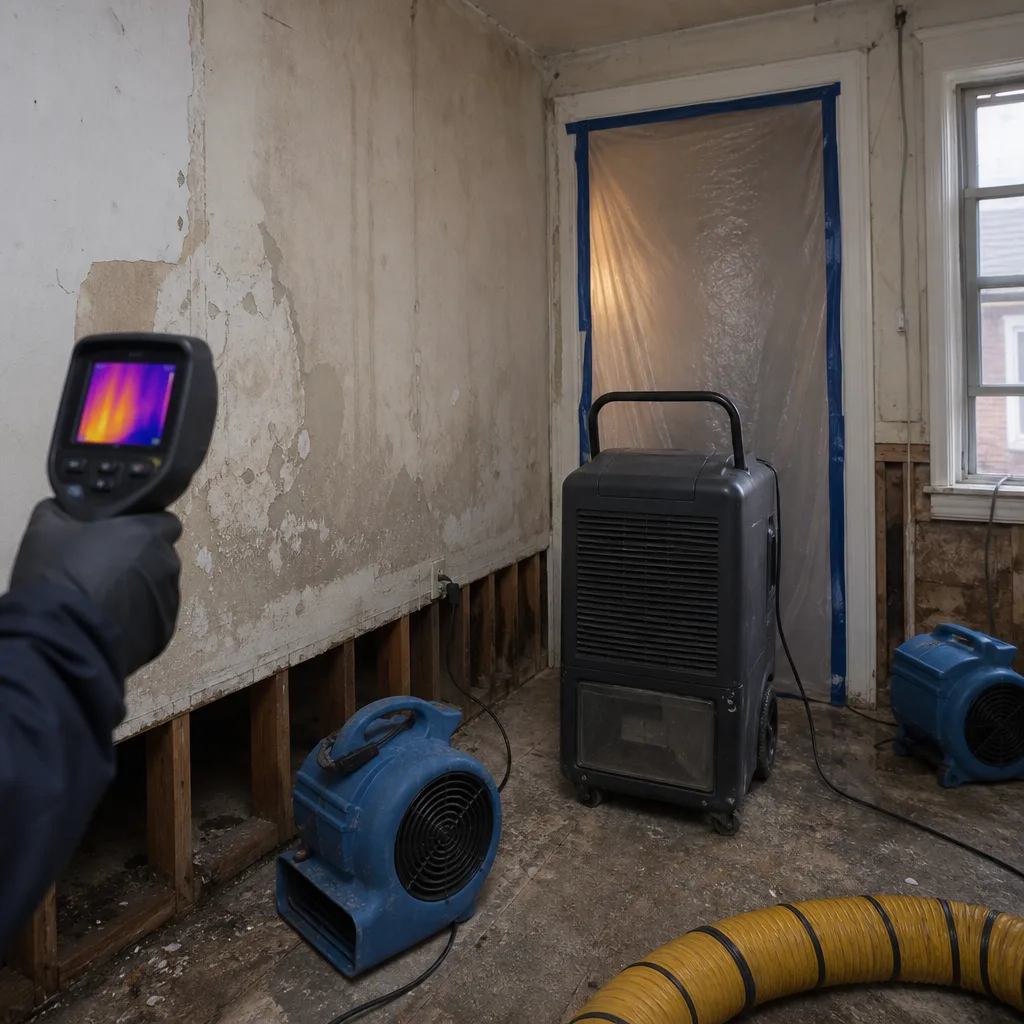 Before
 After
After24/7 Emergency Mold Remediation in Financial District
Mold remediation in Financial District typically runs $1,800 to $6,500 for a contained basement or apartment treatment, with complex post-flood cases involving hydrostatic pressure or compromised mechanical rooms reaching $12,000 or more. We answer the phone live at (201) 903-9581, 24 hours a day, and can have a crew at your building anywhere in Financial District within 45 minutes. That first hour matters: mold colonies double every 24 to 48 hours in the humid conditions common below grade here, and the longer spores are airborne, the further they travel through shared chases and HVAC risers in pre-war towers.
Wade’s Restoration is not a franchise call center. Wade Ferris owns the company, answers his own phone, and shows up on site. That has been true since 2007. If you have water in a Financial District basement or a musty smell in a converted skyscraper apartment, call now. The visual inspection is free.
Understanding Mold Remediation Severity in Financial District Properties
Mold jobs in Financial District fall into familiar categories depending on what is feeding the growth. A surface-level issue, like condensation mold on a bathroom ceiling, often means a contained cleaning, anti-microbial treatment, and ventilation correction. But the majority of calls we handle below Chambers Street are structural: water infiltration through a foundation wall, a failed sump, or a slow leak behind pre-war plaster that has been feeding hidden mold for months or years. Those require full containment, negative air pressure, removal of damaged drywall or plaster, air scrubbing with HEPA filtration, and clearance testing before anyone occupies the space again.
In FiDi specifically, our crews frequently encounter a severity level that uptown Manhattan rarely sees: sub-slab dampness from reclaimed landfill. When the ground itself is saturated, a basement slab stays wet from below no matter how many dehumidifiers run. Mold behind baseboards, under vinyl plank flooring, or inside wall cavities will return unless the moisture source is stopped at the foundation or slab level. We map moisture throughout the affected area, not just at the visible stain, because what you can see on a wall is often the smallest part of the problem here.
Why Financial District Property Owners Choose Wade’s Restoration
- 45-minute response commitment. Wade keeps crews staged in the Financial District area so that when you call, someone is already close. He does not route calls through a national dispatch board.
- 24/7 live answer, always a person. No voicemail tree. No answering service in another state. Wade himself carries the phone overnight, and he answers it.
- IICRC-certified crews, WRT and AMRT. Water damage restoration and applied microbial remediation are not fringe skills. Wade’s people hold current IICRC certifications and follow the S520 standard for mold remediation.
- Free visual inspection. You get eyes on the issue and an honest assessment before any work is scoped. No trip charge in our own county, ever.
- Direct insurance billing. We submit documentation, photos, moisture logs, and line-item scopes to your carrier. You are not the go-between.
- One team, start to finish. Containment, removal, drying, treatment, and rebuild all handled by the same crew. Nothing gets lost between subcontractors.
Our Mold Remediation Process
Inspection & Assessment
We start with a visual walkthrough and a moisture map of the affected area, using thermal imaging and hygrometers to find water behind walls and under slabs. In Financial District buildings, we pay particular attention to basement slabs, elevator pits, and mechanical rooms that sit at or near sea level.
Containment & Stabilization
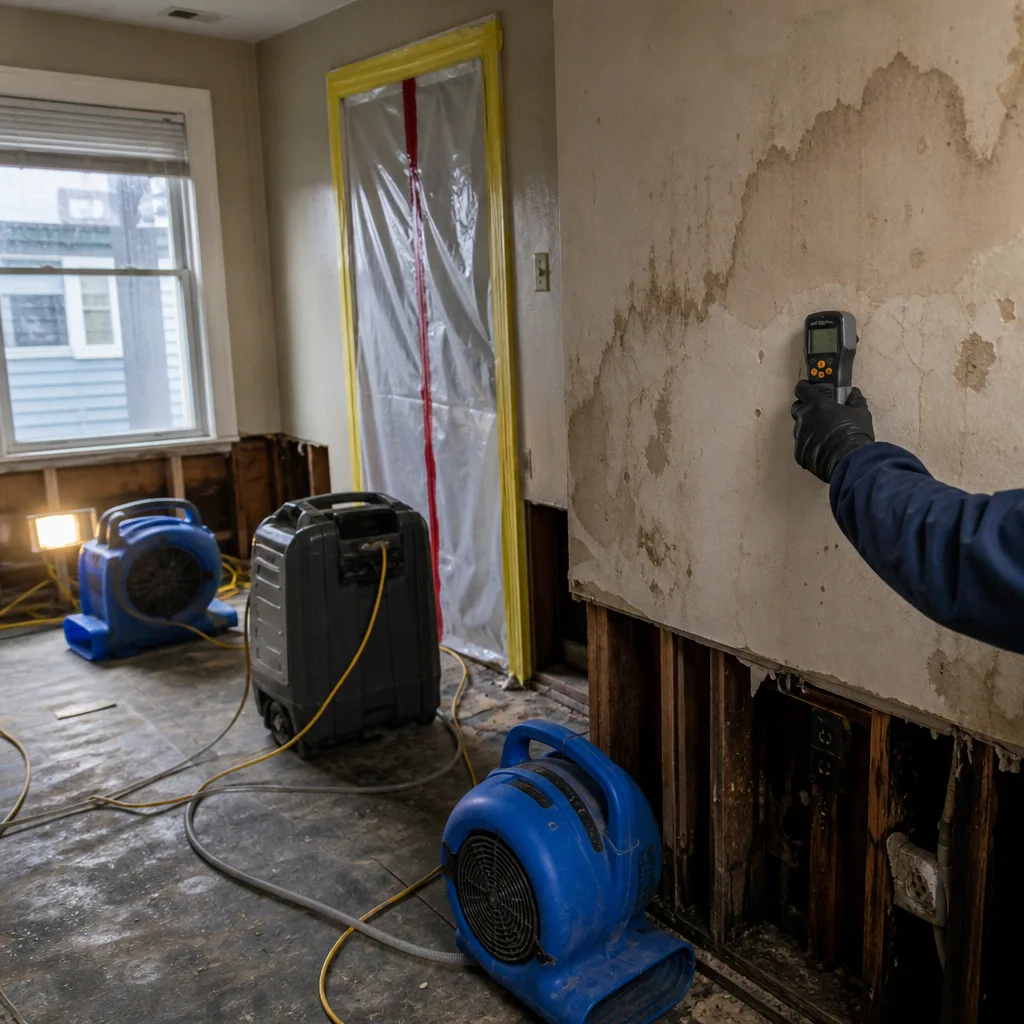
Before any mold is disturbed, we seal the affected area with polyethylene sheeting and run HEPA air scrubbers under negative pressure. This stops spores from migrating through shared corridors, stairwells, and HVAC risers while we work.
Water Source Elimination
Mold is a symptom. We locate and stop whatever is feeding it, whether that is groundwater seepage through a foundation wall, a leaking drain line in a pre-war chase, or condensation from an untested riser.
Removal & Cleaning
Water-damaged drywall, insulation, carpet, and porous materials get bagged and removed following IICRC S520. Non-porous surfaces are HEPA vacuumed, scrubbed with antimicrobial treatment, and dried thoroughly.
Drying & Dehumidification
We run Dri-Eaz dehumidifiers and air movers until we hit dry standard on the moisture meters, not just “looks dry.” In FiDi basements, this step often extends because ground moisture from landfill keeps coming back until the slab and foundation are addressed.
Clearance & Restoration
Once the area is dry and clean, we re-test air quality and surface samples before removing containment. Then we rebuild: drywall, trim, paint, flooring. One crew, one Warranty, one name on the work. Covered by the 90-Day Done Right Promise.
Need Emergency Mold Remediation in Financial District Now?
Crews minutes away, answering live 24 hours a day. The sooner we start, the less it costs.
Working With Your Insurance Company
Mold claims are where adjusters get careful, and being organized changes the outcome. Wade’s Restoration documents everything from the first hour: photos before anything is touched, infrared moisture maps, daily drying logs, and a line-item scope that separates water damage restoration from mold remediation, because your policy treats them differently. If the mold stems from a covered water event, like a burst pipe or storm surge, remediation is often included. If it is from long-term seepage or neglect, it may not be. We do not guess. We give your adjuster the evidence, and Wade talks to them directly so you are not relaying information between two parties.
What We Provide Your Insurer
- Thorough documentation of the loss
- Photos of all damage, room by room
- Moisture readings and drying logs
- A detailed, line-item scope of work
- Direct coordination with your carrier
Built for Financial District’s Loss Calendar
Financial District mold problems follow a seasonal rhythm that differs from almost anywhere else in Manhattan. Nor’easter season runs October through March, and every storm pushes surge toward the harbor mouth before any other part of the city. When a nor’easter or tropical system floods a FiDi basement, mechanical room, or lobby level, the visible water is gone within days, but the moisture trapped in concrete, behind drywall, and under subflooring is just beginning its work. Mold blooms arrive two to six weeks later.
Spring brings heavy rain and rising groundwater, which is a worse problem here because the district sits on reclaimed landfill. The saturated fill transmits moisture into foundation walls months after a storm. Summer thunderstorms drive flash flooding in low-lying mechanical spaces, and the heat accelerates spore growth. Meanwhile, the city’s aging infrastructure means a water main break under a Financial District street can send water into vaults, cellars, and sub-basements with almost no warning. When we get called to FiDi, unless it is an obvious plumbing leak, the first question is always: where is the water actually coming from, and is it still coming?
Mold Remediation Across Financial District’s Neighborhoods
The buildings change block by block in Financial District, and so does the mold problem. Around Stone Street, we work in low-rise historic structures with shallow cellars and old brick foundations that wick groundwater upward. Along Water Street and South Street, where converted office towers meet the East River, basement mechanical rooms and parking garages sit below the Sandy flood line, and we treat mold and moisture that have been recurring since 2012. In the residential conversions near Wall Street and Broad Street, the issue is often vertical: a leak or flood on one floor moving through a shared utility chase and resurfacing as mold on a floor above or below. Around Battery Park and the residential buildings near the Battery, the combination of river air, high humidity, and aging HVAC systems produces condensation mold in vents and mechanical closets that most general contractors mistake for a simple housekeeping issue.
What ties the neighborhood together is the ground under it. FiDi sits on centuries of landfill, loosely compacted and highly permeable. When the harbor rises, the fill saturates, and basements across the district leak from below, regardless of how recently a building was gutted or how expensive the renovation was. That is the condition we plan for on every job here.
Specialized Mold Remediation Services We Offer in Financial District
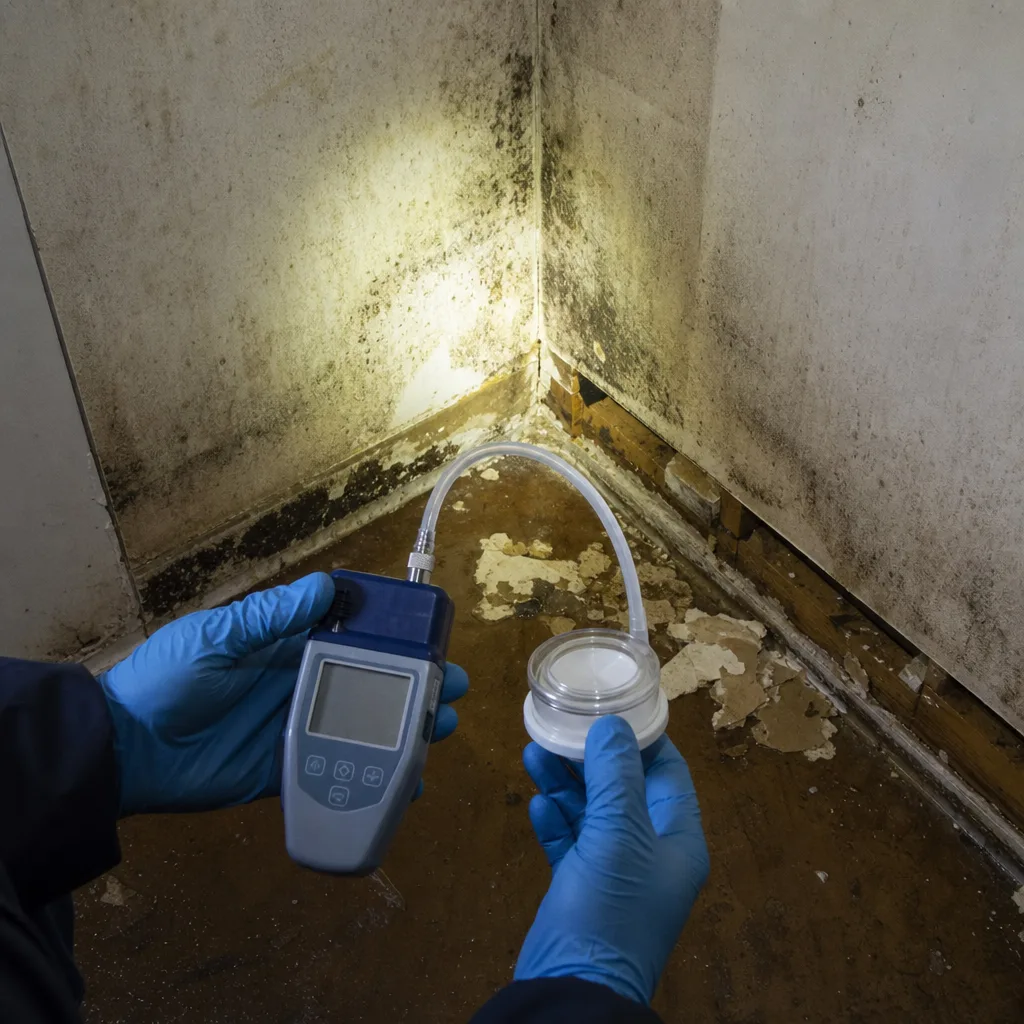
Mold Inspection & Testing
Most Financial District residents do not need a full remediation on the first visit. They need to know whether the dark spot in the corner is active mold, old staining, or just grime. We inspect first, take air and surface samples when warranted, and send them to a third-party lab for analysis. You get a written report that tells you what you are dealing with before anyone starts cutting drywall. And if the inspection shows no problem, we tell you that too. Wade’s second-opinion offer is real: bring us an estimate from another company, and we will review it at no charge.
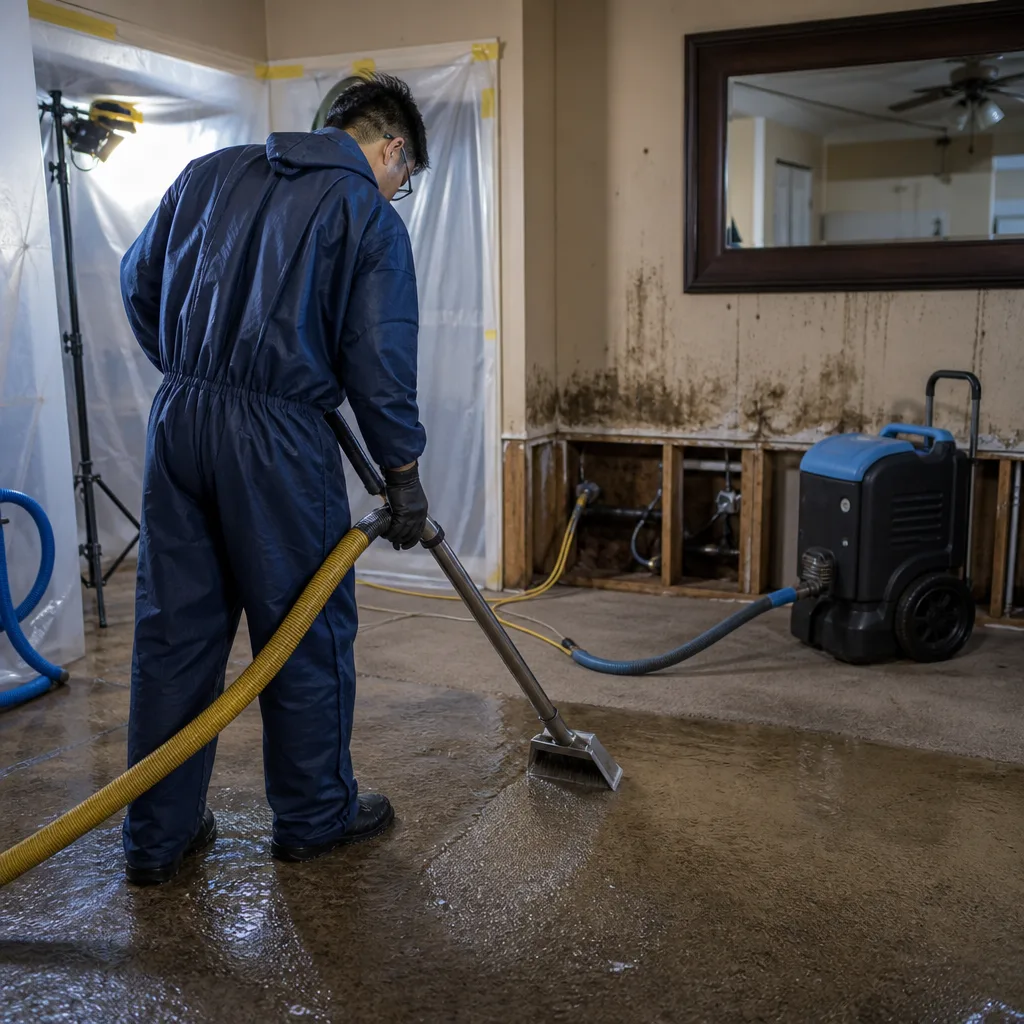
Mold Removal
For active mold growth, containment matters more than chemicals. We set up HEPA-filtered negative air machines, bag and remove contaminated porous materials, and treat remaining surfaces with antimicrobial agents. In pre-war FiDi buildings, this work gets complicated fast: plaster chases hide mold behind decorative moldings, and we often have to remove sections of lath and plaster to reach hidden pockets. We do the removal carefully, matching the building’s original character when rebuilding.
Black Mold Remediation
“Black mold” is the term tenants and owners use for Stachybotrys chartarum and similar toxigenic species, and it is common in chronically damp basements and behind walls with slow plumbing leaks. It is not inherently more dangerous than many other molds, but it is a sign of a water source that has been active for a long time. Our approach does not change much based on color: contain, remove, dry, treat, and verify. What changes is urgency, because toxigenic molds warrant more aggressive containment and faster clearance testing.
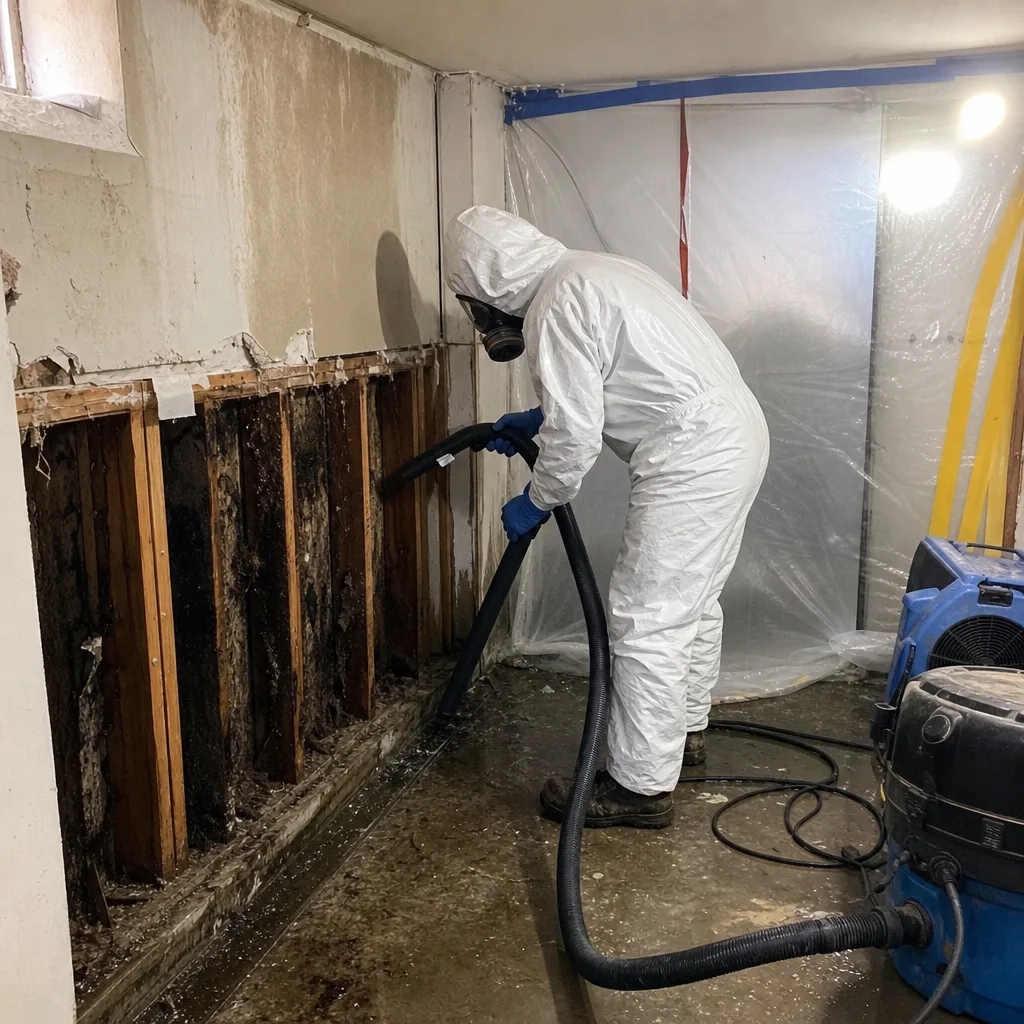
Air Quality Restoration
After mold is removed, the air in the space still carries spores until it has been scrubbed. We run HEPA air scrubbers and, in cases where HVAC systems are involved, inspect and clean ductwork and risers. In Financial District towers with shared vertical risers, this step is not optional. Mold from one apartment can and does spread through a building’s mechanical shafts. We test the air before we remove containment, and we show you the lab results.
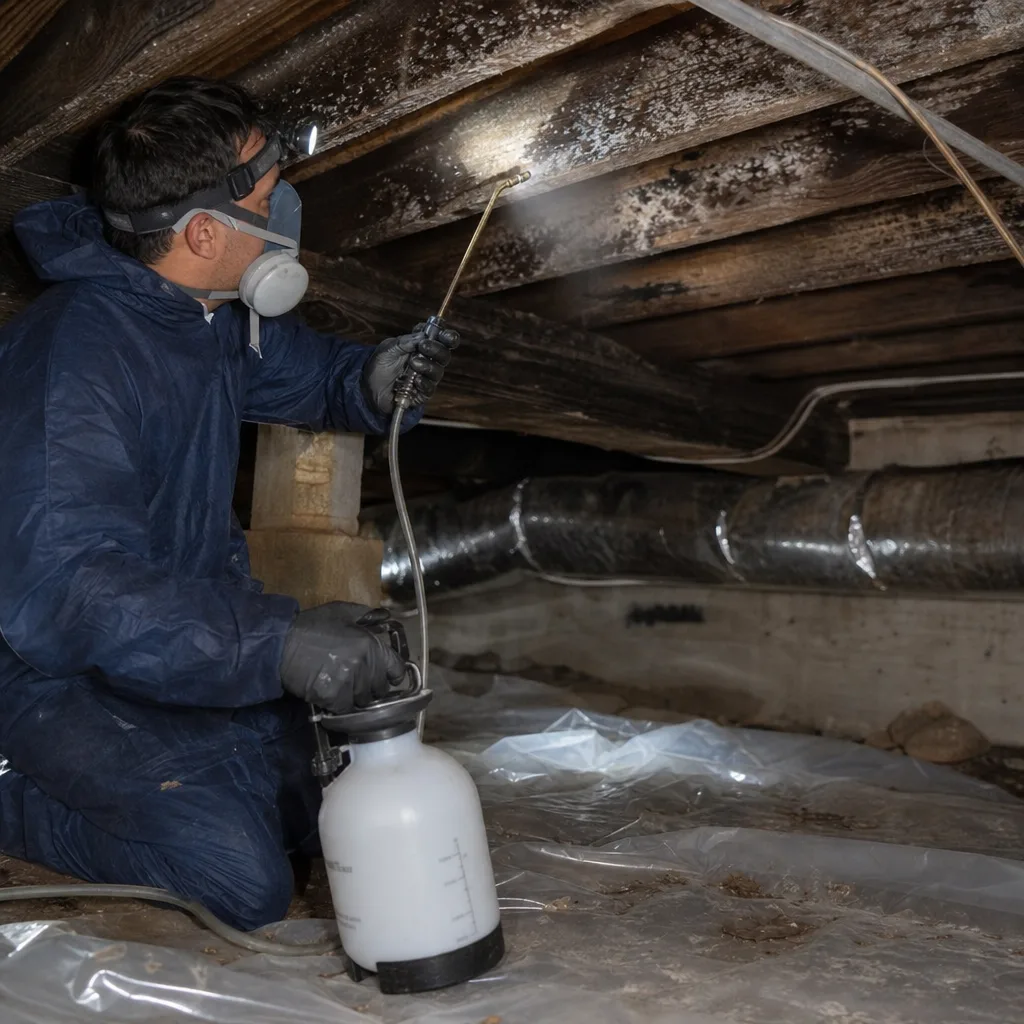
Crawl Space Treatment
Some Financial District townhouses and older low-rise buildings have shallow crawl spaces with dirt floors or exposed foundation walls. These spaces are humid year-round in FiDi because of the saturated landfill. We install vapor barriers, encapsulate where appropriate, add drainage or sump pumps if needed, and treat existing mold on framing and subflooring. Done right, a treated crawl space knocks down humidity throughout the entire building.
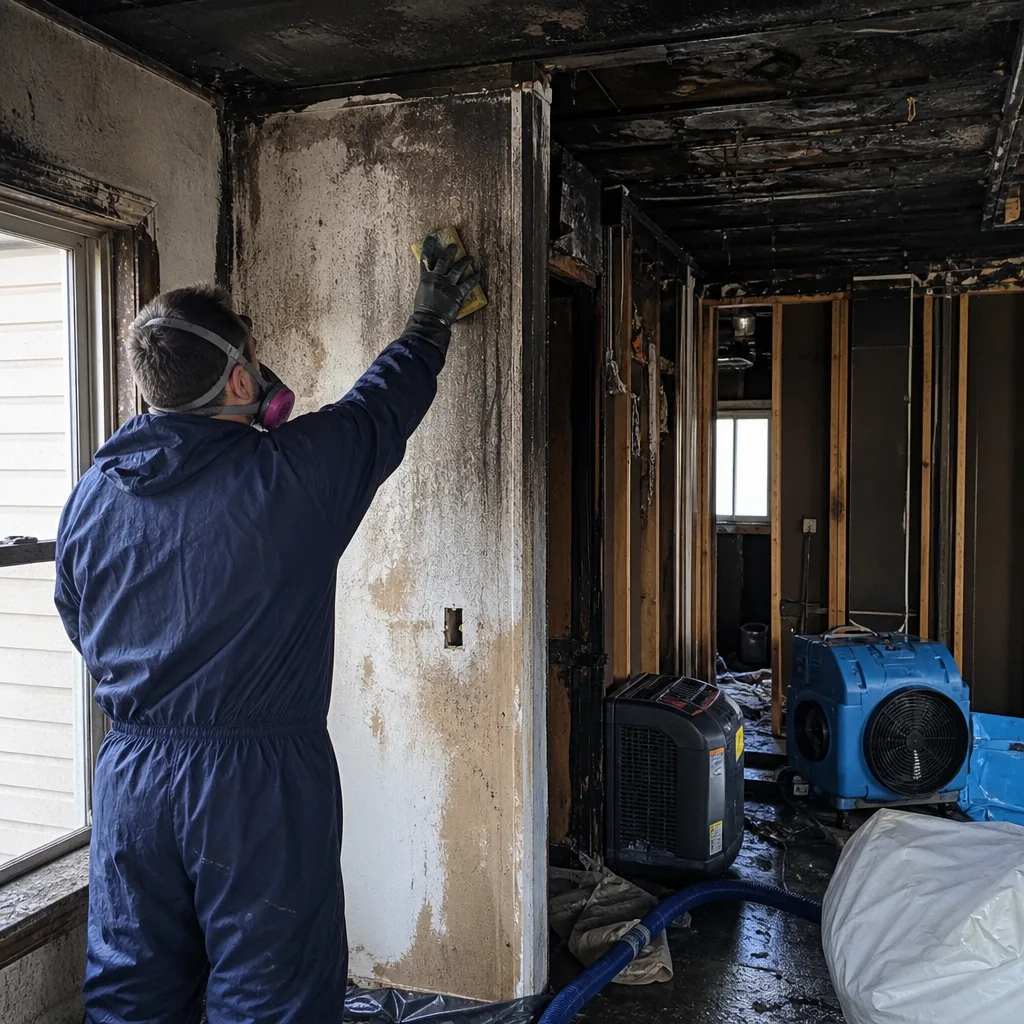
Moisture & Humidity Control
Mold cannot be permanently solved without controlling moisture. In Financial District, that often means addressing groundwater at the foundation, not just running a portable dehumidifier. We install interior drainage systems, sump pumps, and vapor barriers where the building’s construction allows, and we recommend mechanical ventilation and dehumidification for chronically damp basements and mechanical rooms. Moisture control is where we stop mold from coming back.
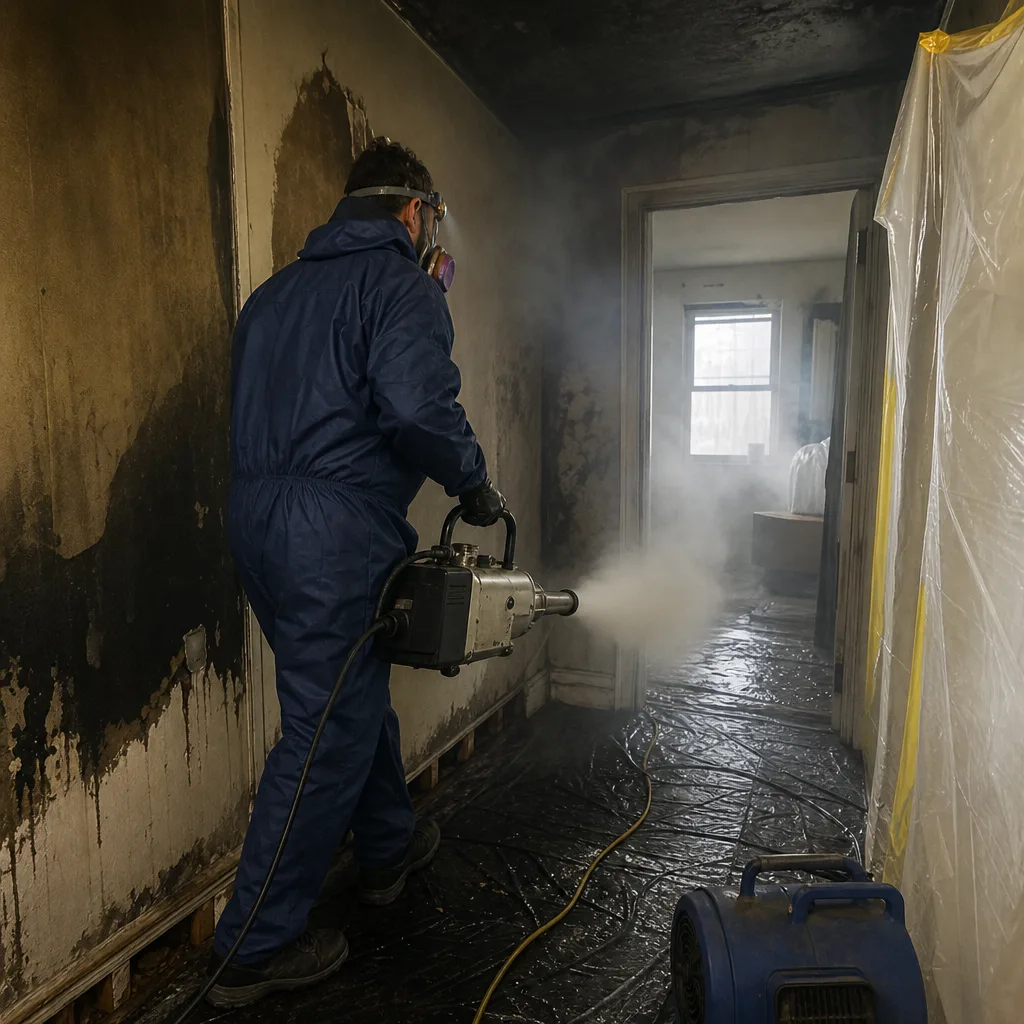
What happens when you call
- 1
A real person answersNo phone trees - you reach a local pro.
- 2
You get an upfront price rangeHonest numbers before anyone is dispatched.
- 3
A background-checked tech heads outLicensed & insured, dispatched right away.
- 4
You approve before work beginsNothing starts until you say go.
Mold Remediation Costs in Financial District, NY
Expect to budget $1,800 to $3,500 for a small, contained mold job in Financial District: one room, surface growth, no structural water damage, no foundation work. A full basement remediation with containment, drywall removal, drying, treatment, and rebuild typically runs $4,000 to $9,000 depending on square footage and how much material comes out. When foundation seepage or hydrostatic pressure is involved, costs start at $8,000 and can reach $15,000 or more, because the water source has to be engineered out, not just cleaned up. Stachybotrys remediation in an occupied residential tower costs more than the same square footage in a vacant basement, because occupant protection and negative air containment are non-negotiable.
Insurance covers mold remediation when a covered water event caused it. If your policy excludes mold or the growth stems from long-term seepage, the work is out-of-pocket. We give you a written scope with a firm price before any work starts. No surprises once the crew is inside. Call (201) 903-9581 and we will inspect the space for free, then give you a number you can plan around.
We Also Serve Cities Near Financial District
Wade’s Restoration serve mold remediation clients across Lower Manhattan, Midtown Manhattan, Long Island City, and Midtown West. If you live just outside Financial District and have water or mold concerns, call the same number, (201) 903-9581. The same live answer, the same local crew, the same written Promise.
Serving Financial District, NY - Our Local Coverage Area
We’re based in the Financial District area and know this community well. Use the map below to see our service coverage - if you’re nearby, we can almost certainly help.
Financial District Mold Remediation Questions, Answered
How fast can you get to Financial District for a mold emergency?
Within 45 minutes, around the clock. Wade keeps crews staged near the Financial District because most calls here come from a failed sump, a burst pipe, or post-storm flooding, and those get worse by the hour. Call (201) 903-9581 and a live person answers immediately.
Why does mold return so quickly in FiDi basements even after professional remediation?
Because the mold source is groundwater, not a surface spill. Financial District sits on reclaimed landfill that saturates every time the water table rises, and hydrostatic pressure pushes moisture through foundation walls and up through the slab. If a remediator dries the walls but does not stop the water behind them, mold returns within weeks. We inspect the foundation and install drainage, vapor barriers, or sump systems where the ground is the problem.
Do post-Sandy building modifications in FiDi affect how we handle mold claims?
Yes, and it catches a lot of owners off guard. Many buildings moved their main electrical gear above the flood line after Sandy, but left fuel oil tanks, sump pits, and secondary mechanical systems at the original flood elevation. When a nor’easter hits, those lower systems flood and silently rewet newly remediated areas. We look at what was modified and what was not before we finalize a scope.
Can mold from one apartment spread through a pre-war FiDi skyscraper’s shared HVAC risers?
Yes, it happens regularly. Pre-war towers in Financial District have shared vertical chases and risers that run from basement to roof. If mold in a basement or lower-floor apartment reaches the chase, spores get distributed upward through multiple floors. That is why containment and air scrubbing have to be done right on every job, and why we often inspect and clean ductwork and risers as part of a full remediation.
What role does moisture mapping play in a FiDi mold remediation?
Moisture mapping is the difference between a real fix and a surface cleanup. We use thermal cameras and hygrometers to measure moisture in walls, floors, and sub-slab areas you cannot see. In Financial District, it often reveals wet foundation walls behind finished panels, which is exactly where mold hides and exactly why the previous remediation failed. You get a moisture log at the end of every job.
How does the IICRC standard for mold remediation differ in a flood-prone area like FiDi?
The standard does not change. What changes is how often we hit conditions that test its limits. IICRC S520 assumes you control the water source first. In FiDi, that can require drainage, encapsulation, or slab work before standard remediation steps apply. A company that skips source control and goes straight to bleaching the wall is not following the standard, even if they say they are.
Will insurance cover mold remediation in Financial District?
Depends on the source of the water. If a covered event, like a burst pipe or storm surge, caused the mold, most policies cover remediation. If it is long-term seepage, lack of maintenance, or pre-existing growth, many policies deny the claim. We document everything and coordinate directly with your adjuster. You get a straight answer early, not after the check clears.
What should I do in the first 30 minutes after finding mold in my FiDi apartment or basement?
Stop trying to clean it. Disturbing mold releases spores into the air and spreads the problem. Close off the area if possible, shut down HVAC circulation if you can access the controls, and call us at (201) 903-9581. We will walk you through what to do over the phone and have a crew on the road.
Written by Wade Ferris, Owner at Wade’s Restoration. Wade has answered his own phone and stood behind his work since 2007.